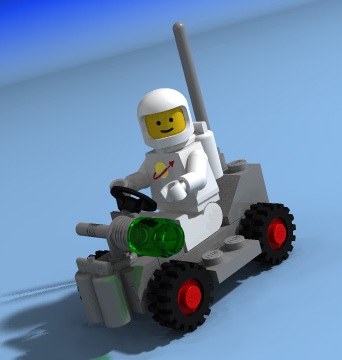
In my many space travels as a legospaceman, I never ran into a civilization that didn’t speak lego
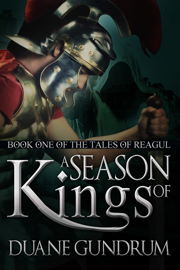
I came across one of those little struggles that I didn’t anticipate while writing A Season of Kings. For those who have been following the story line of the first book of the epic, The Tales of Reagul, it involves several villages from Roman times that are transplanted onto the planet Reagul. A part of the story line is that previous civilizations have been transplanted to this planet earlier than Rome, so there are hints of people from Sumer, Egypt and many other civilizations of earlier history.
One of the first encounters involves Sarbonn, as the young man Spurias, who comes across some of these people. But it dawned on me that someone from Sumer would be speaking Sumerian, not Latin or some derivation of local Roman languages. So, I’m stuck with that old Star Trek problem of “how do people who have never met in their history actually communicate with each other?” Unlike Star Trek, there’s no actual “universal communicator” that everyone is carrying around with them, which means I either have to establish some communication process created by the original aliens (and some back story as to why they’d use something like that any way), or I have to figure out some way to develop a class of people in their societies that would actually be able to translate. Of course, I could go with the old Star Trek method of just assuming everyone speaks English and figure no one will care either way, but that just seems like such an easy cop out (even Star Trek had to eventually explain this situation to its viewers because people don’t allow “yeah, just let it happen” to provide them with justification.
So, I’m analyzing the different ways I can deal with this situation.
One of my biggest problems as a writer is that quite often it is very difficult to nail down the genres in which I write. It was easy in the beginning of my career when I wrote Innocent Until Proven Guilty, which was mystery/suspense. But then I started branching out on other types of books and things got, well, kind of confusing. Let me give you a bit of a run-down, and you’ll see what I mean:
Innocent Until Proven Guilty: A murder takes place in corporate America and then an executive frames another for the murder. Works well as mystery/suspense.
Leader of the Losers: A dystopian future where poverty and class distinction has been solved by eliminating the “losers”. Definitely science fiction.
72 Hours in August: During the 1991 August Coup in the Soviet Union, a plan is hatched to start a nuclear war before the coup is over. Suspense, but also historical, and kind of a mystery as well.
Destiny: The Tales of Reagul story that starts the whole series, except it takes place 3000 years after the beginning of the epic. Story begins with a space battle, turns into a fantasy trek across a mysterious land and then ends with another large space battle. Science fiction? Fantasy? Both?
Deadly Deceptions: In South Korea, a counterintelligence agent uncovers a blackmarketing operation that might actually be masking a major espionage cover-up. Guess that’s a suspense novel, or a thriller, or also a mystery.
The Ameriad: A humorous Greek epic that spoofs the Iliad and the Odyssey by turning the icons of American society into the “new” gods. No idea where this one belongs.
Absent Without Leave: A military criminal investigator uncovers a 20 year old crime that started with the framing of his father and leads to the political future of Texas politics. Mystery, maybe? Thriller? Suspense?
The Teddy Bear Conspiracy: A CIA agent, running an operation to defeat the Colombian drug lords, finds himself targeted by his own people, forcing him to finish the mission alone while someone within his organization is trying to kill him and take over the project. Suspense?
Thompson’s Bounty: A time-traveling Coast Guard cutter encounters 16th century pirates and is sucked into a battle between two naval commanders. Science fiction? Naval warfare?
A Season of Kings (my next novel): The first official book of the Tales of Reagul, which tells the story of a planet where science and magic are intertwined. Most of the story is fantasy, but the whole premise comes from an alien experiment, which basically makes it science fiction.
Those are just the tip of the iceberg, and I’m finding it really hard to market my books because none of them really fit into any solid genre. Or few of them do. I won’t even try to figure out where Plato’s Perspective fits in, as it’s a novel with the protagonist named Plato who may or may not be the actual Plato, and the novel’s point in time may be a bit confusing as well. It could end up being philosophy, science fiction, fantasy, mainstream, history, etc. I’m sure you get the idea.
One of the longest projects I’ve ever worked on has been a world-building one called Reagul. I originally conceived of the land of Reagul in a computer game I designed back in the early days of computer games. It was called Prisoner of Z’anth, which involved an American soldier during the Vietnam War who comes across a mysterious artifact in the jungle that points to a sinister organization working behind the scenes of the war. As he battles his way through enemies, he comes to a portal they are protecting that takes him to the land of Z’anth, a realm completely in Earth’s middle ages but filled with dragons and strange creatures, as well as humans who know nothing of Earth. The story in Z’anth opens up to a revelation that this land was once linked with Earth many years ago, and that an alien race may have been responsible for why all of these people are on this planet. The game itself concludes with a final battle against an evil sorcerer who wishes to control everything around him and is now intrigued to discover there’s a world (Earth) he has yet to conquer.
A few years later, I created another game called Lessons in Death, which took place in the year 3000, when Earth has been taken over by an emperor who seeks to subjugate the known universe. The peace-loving Eden System comes under attack, and a young female ensign from Eden named Laura begins a quest to destroy the emperor and the empire. It starts out as a space battle and then becomes a medieval sword and sorcery tale on a planet that comes to be known as Reagul. As you might suspect, Reagul is none other than the original Z’anth.
This game eventually became my novel Destiny, which is basically the introduction to the Tales of Reagul, whish strangely begins 3000 years after the saga actually begins in the first series of the Tales of Reagul. Let me explain.
During the early days of the Roman Empire, an alien race of beings called the Minions takes a large group of Roman citizens from different locations across the empire and moves them to the planet Reagul. As you start to discover, this is not the first time they have done this to human civilizations, having done this with the Egyptians before and the Greeks soon after. They have also transplanted creatures from other planets, running experiments to see how different species interact with each other.
At some point, the Minions are called home to fight a war that has been taking place in their home solar system. Realizing they must leave soon, they train a young man in their ways, basically giving him the knowledge of a civilization that is thousands of years ahead of anything ever seen before. His new knowledge makes him so powerful, he becomes the first wizard/sorcerer of Reagul, and his name is Sarbonn. After the Minions leave, Sarbonn attempts to continue their work of protecting the planet, but he also starts to discover that he’s not the first one they’ve trained, as he begins to discover hints of something referred to as the Dark One, a former trainee who has become so powerful that he has gone insane and seeks to destroy all life through a process of chaos and destruction.
But Sarbonn, oblivious to this future danger, trains two young sorcerers who become his “children”. Over the years, all is fine, and the kingdoms of Reagul begin to grow with the usual sorts of skirmishes that happen when humans try to create civilizations in different places but are close enough to influence one another. Then the process begins to fall apart.
One of Sarbonn’s “children” decides that because he is so powerful he should be ruling mankind instead of serving it, so he begins a war of aggression that eventually leads to him becoming the emperor of Reagul. Finally, Sarbonn and his other son must confront this upstart, which leads to a cataclysm like none ever seen before.
Meanwhile, the shadow of the Dark One continues to spread its tentacles, planning and waiting for the right moment to strike.
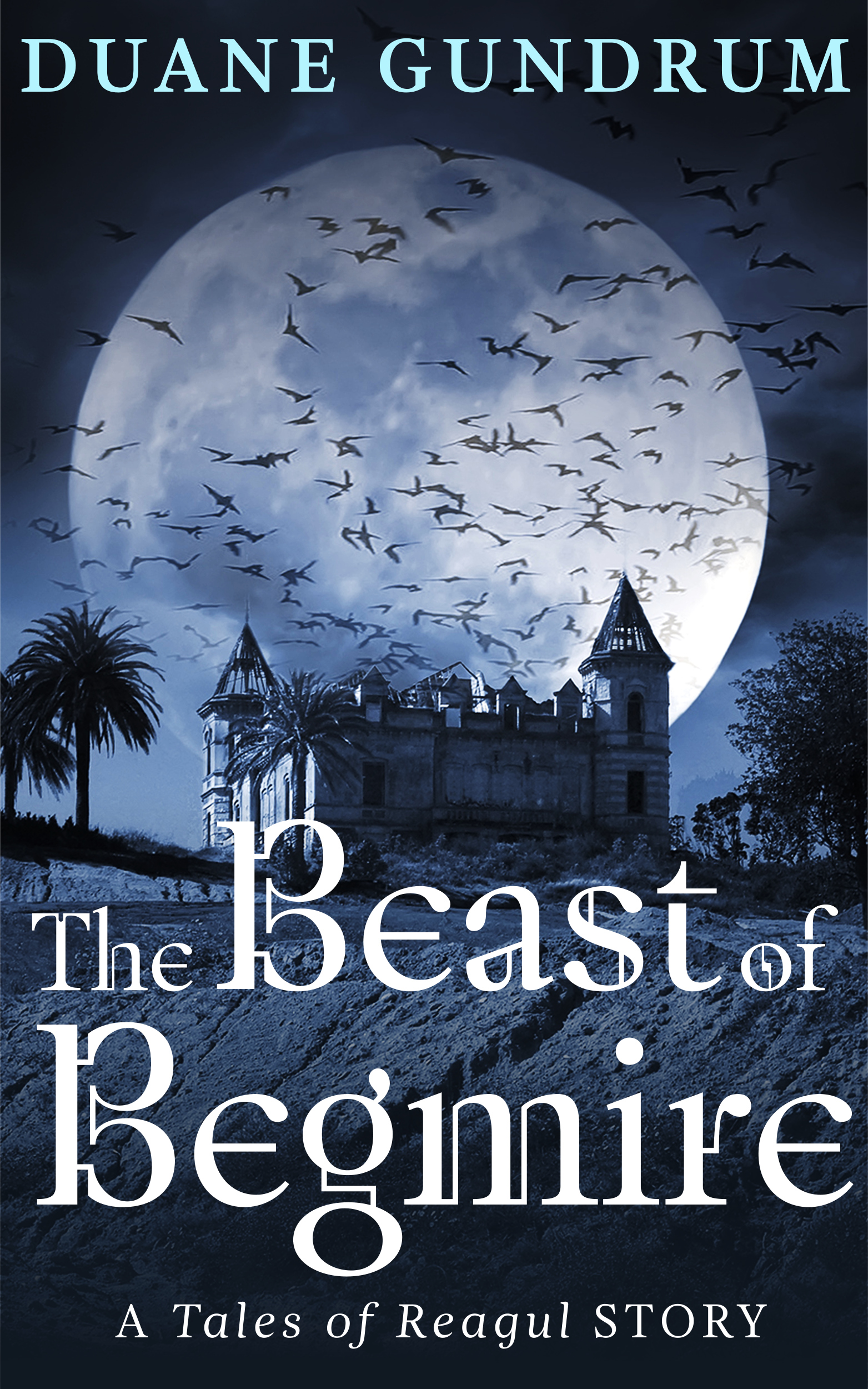
The first novel will be released later next month, and it’s called A Season of Kings. Later this month, the first teaser will be published, which is called The Beast of Begmire, which tells the story of a mysterious sorceress who comes in battle with the Dark One some time after the events of the first three books.
Secretly, I always imagine she's posing for me....
A few years ago, I was teaching English in South Korea. Unfortunately, during this time, I had very limited access to American television shows. Sure, I could pirate them, but I’m not the kind of person who does that, so I was limited by whatever I could purchase from Seoul entertainment stores. And the selection was awful. However, one thing I kept seeing each and every time I went to the store was the dvd collections for Jennifer Love Hewitt’s Ghost Whisperer. Now, I had never seen the show before, so it didn’t really interest me, but I am a science fiction fanatic, so I kept looking at that package every time I went there. Finally, one day the first season was on sale (this is when they were still making the show, around Season 3). So, I figured it wouldn’t be the worst investment ever, and I bought the first season.
Having lots of free time, I diligently watched through the season, and then I was somewhat hooked, so I bought Season 2. And then I kept going until I came home from Korea and continued watching it until it went off the air.
Now, I should probably make a bit of a disclosure for those who have never watched Ghost Whisperer. It’s a quirky show. It’s not going to get any Emmys (at least I don’t think it did during its run). It’s a show about a woman who can talk to the dead, but basically it’s really a show about the woman with a really strange, charmed life, who just so happens to also talk to the dead. Now, I make this distinction because that distinction is necessary. This woman has the most Barbie-like existence in the history of television. She interacts with people in a way that really seems only important to the character played by Jennifer Love Hewitt, and whenever there’s an important conflict, the only real thought the writers and directors were probably thinking was: “How can we make this come out right while still making Jennifer Love Hewitt look really hot and cute?”
Because that’s what is special about the show. It shows 4 or 5 seasons of the cutest girl on television interacting with everyone else who may or not yet realize she’s the cutest girl on television. There are ghosts, of course, but they really only serve as scenery and distractions, to make you forget that the show is really about the cutest girl on television. And she’ll pout every now and then, which believe it or not, makes her seem even cuter.
What’s fascinating about the show is that it deals with some really heady issues that sometimes go into jump the shark territory of television, like the Buffy-like moments where Jennifer Love Hewitt comes head to head against the evil old guy of evil who seems to want to make all the dead people stay undead instead of go to the happy place that Jennifer Love Hewitt uses her cuteness to send them to. And during that confrontation, instead of just offing her with a big anvil, like any other diabolical evil guy would do, he ends up talking to her, seeing her pout, and then kind of turns into a wishy washy evil genius who then disappears for awhile until rating seasons comes back again.
Essentially, you get the main attributes of Ghost Whisperer. The cute girl wins out all the time.
But I didn’t come to talk about that show itself, but about Jennifer Love Hewitt. You see, during that show, even though (spoiler alert!) her husband dies during the show and comes back as some other guy who dies during the show but is allowed to live as her ex-husband reincarnated until they can find a way to just start using the old actor again (because everyone forgot it was another guy whose body he took over), the whole show manages to be about the angst of the cutest girl on television.
When the show ended, I felt a part of me died, too, because then I realized my cute girl factor of television would be missing input. And then I found out that she had a brand new show, called The Client List. Which surprisingly is about her being a massage therapist who gives happy endings to her customers. You’d think this show would be somewhat gritty, but it’s not. Instead, it ends up being about (surprise) a cute girl who just so happens to be a massage therapist who gives happy endings to her customers. And man, they really push the cuteness factor in this show.
I watched the first episode of the show and found myself laughing out loud because, first, it’s preposterous and, second, it’s equally ridiculous. Her husband left her the day she started a new job at a massage parlour, and instead of moving to cheaper housing, she decides she’s going to keep her kids in the same two parent housing they’ve had by giving handjobs to her customers. Well, I think that’s what she’s doing, as they don’t actually go into detail about what happens after she rubs down the bodies of the male models who serve as her clients. And yes, I did say male models because once she starts giving the “expensive” rub downs, her clientele goes from being ugly old men to being supermodel male models who you’d expect to pop up in a Madonna video. Not exactly sure why these guys would ever need a masseuse like her and in this particular out of the way place, but apparently Hollywood didn’t think the audience really needed realism here.
So, we get to see her pout when things don’t go right, and we get to see her come to work in all sorts of sexy get-ups that you’d expect a female escort to be wearing, if she worked for a high-fashion call girl outfit. But instead, she works for a massage place (that’s next door to a Karate studio) and does the $5000 an hour call girl dressing regardless.
What’s interesting is that they never felt the need to actually point out what she’s doing for this serious bank she’s getting from this job. She’s either giving handjobs (and getting far more money than ANY handjob masseuse EVER got) or she’s having sex with them at the massage parlour, which seems kind of strange as they haven’t made the show out to be “that” kind of show YET.
But in all, what I think really happened was they found another way to bring Jennifer Love Hewitt back to living rooms to exploit that cuteness factor of hers. What’s even funnier is that the hype for the show centered around Hewitt’s interviews where she talks about how it might be about time for her to find a boyfriend, and all I can think to myself is that no man lives in that fantasy world that she has constructed for herself, in which guys are all supermodel guys and all love listening to her and doing things that practically no human is capable of pulling off in a relationship. Her world is constructed just so that Jennifer Love Hewitt fits into it, kind of like that little girl fantasy world of dolls and stuffed animals that someone eventually has to grow out of (or become a real princess in some fantasy land probably located in Eastern Europe somewhere).
In all, I want to thank Jennifer Love Hewitt for letting me explore her world with her again for at least one more hour a week. I mean, it’s not a real world, and the people are never as scripted as they are on this show, but hey, that’s what makes it so much more enjoyable.
Okay, here is the next in the series of commentaries on writing. Today, I thought I would talk about the genre of fantasy, because a lot of writers seem to be finding themselves falling into this one a lot. Therefore, it’s probably important to point out one of the failings that often separates a writer from anyone who might want to read any of that writer’s writings. Today, we’re going to focus on the desire to make fantasy overly fantastic.
Let me start by including a little scene I’m going to concoct for the nature of pointing this out. In this scene, the Princess C’lagrisha’nte is planning for her royal wedding to the prince of the Grishandens Empire. Let’s listen in:
Zvastran’cha, the Secondary Triumphant Parlour Midwife Maid, picked up a Hee’chanta vase and poured water onto the Bracklit plant before moving onto the array of Sxraxxan tapestries that were overlayed upon the Royal Foundry of Makkappala. Before she could reset the seal, Vleekorando Vrippzee approached her with his Lantee spear at a position of rest and tapped his Bryee visor twice, indicating his displeasure at the events that occurred over the Kalamaster Ceremonies of Trijent’a. It was obvious that a future gathering of the Proxilia Council was most likely to result in the Second Rigor of Nixtraxa. Which, of course, meant blah blah blah
What we have here, in the words of a great Southern prison warden is “a failure to communicate”. At one point, it’s really cool to add all of this visual scenery and fantastical elements that show we’re not in Kansas anymore, but at some point the amount of unknown verbage starts to become noise, and the reader turns off most of the visuals because they stop making sense. Add in numerous characters that all have really bizarre names, and you end up with a tale that becomes so easy to toss out the window, that the chances of you ever getting anyone to finish it are very limited. It doesn’t matter if the writing is stellar, and the story is great; at some point, the amount of confusion is going to overwhelm the reader, and the story ends before it ever gets told.
A solution to this problem is to introduce foreign elements into your world sporadically while including familiar sensations alongside the foreign ones. The little inclusion I used to explain this problem isn’t even that bad, to be honest. I’ve read some stories where I’ve gone entire paragraphs where I had no clue what the writer was talking about because EVERYTHING on the page was so foreign that at some point I gave up trying to figure out what a Hgjasfjsfjlijn was and just started thinking about a wonderful lunch I had the day before. If you fill your story with enough elements like that, causing your reader to abandon your story, you may have defeated your reason for writing in the first place, which should always be kept at the forefront of everything you write: You’re communicating, and as long as you can continue doing that, you’re on the right track to storytelling instead of just filling pages with gibberish that will eventually be ignored.
One of the more exciting aspects of being a novelist is that every now and then you actually get to sit down and write a novel. Imagine that. Well, I’ve been giving the prospect a lot of thought lately, and now I finally realize what is going to be the next novel.
The working title: Mapping the Silence of Dreams
Genre: Fantasy
Premise: The next realm of exploration is Mindspace after a discovery is made that links the dream world that everyone travels to when they fall asleep. All along we thought it was a realm that existed within each person’s mind, but now we know that everyone travels to this same place, yet are separated by their own barriers their minds construct to protect them. Well, now that we’ve begun to explore it, we start to realize there’s something else in Mindspace. Something alive. Something that’s been waiting. And it’s ready.
The novel is based on a short story I wrote years ago and stashed away in a drawer but always wanted to do more with. Well, now it gets its chance.
I begin writing it on Monday, which is the start of National Novel Writing Month (NaNoWriMo), where the goal is to write a novel (50,000 words) in one month. Last year, I wrote Plato’s Perspective during the contest.
A few of my friends will be participating this year.