Category Archives: Uncategorized

Apple and Adobe fighting is a lot like when Mommy and Daddy were fighting cause Daddy Slept with the Waitress and Lied about it after

Okay, maybe not the same. At least I don’t see Apple or Adobe having to sleep on the couch or sneak into your room to ask “Is Mommy Still Mad?”.

It’s been really bizarre lately to listen to the fight between Apple and Adobe about whether or not Flash has broken up the family. Mommy and Daddy, stop fighting, Flash will be good and stop getting into trouble at school if you just stop fighting!

Okay, again, that doesn’t seem to work, but let’s put some history into perspective here because both Apple and Adobe seem to have forgotten how the relationship used to work. You see, I used to work as a computer technician years ago for a university, and I remember when Adobe was the big boy in the computer software bin. Adobe Photoshop was the big kid on the block, and I distinctly remember an Adobe sales rep talking to us about Adobe when me, a PC technician, asked, “why are you still making software for Apple?” Back then, I really didn’t see a future for Apple, and honestly, neither did 99 percent of the rest of the planet. But the rep told me that Adobe continued to make its software for both platforms because Apple still did make good computers, and as long as they continued to make quality software for Apple, they were still going to be around to make those good computers. She told me that it was important for Adobe to continue to support both platforms because both platforms were important for different aspects of the creative community.

Flash-forward a decade, and I was shocked to hear Steve Jobs actually trash talking Adobe, which made me wonder if he even remembered how hard certain companies were working to keep Apple as a viable manufacturer of computer equipment. Back then, I don’t think Adobe would have suffered all that much if it dropped Apple as its main platform for its software, but they never did, and they continued to work with Apple to keep making software that helped Apple become the main type of machine for creating design applications. Somehow, something happened that has really put a real wedge into the middle of what used to be a really cohesive agreement.

All I can think is that Apple has completely forgotten how important Adobe is to its software line, especially with its personal computers. If they’re planning to focus on only iPads, iPods and iPhones, then it makes complete sense, but if they’re still planning to make quality computers, why are they doing everything possible to derail their own future? If other manufacturers of multi-platform software see Apple’s encounters with Adobe as a forerunner of their own future encounters with Apple and Macintosh, then Apple is doing everything possible to destroy its own future as a computer manufacturer.

Look, sometimes Mommy and Daddy get back together for the good of the kid, so perhaps Apple needs to start thinking ahead rather than picking fights with former partners. Of course, sometimes Mommy leaves Daddy so Daddy can hook up with Angelina Jolie after she breaks up with her crazy ex-husband, even though everyone said Daddy was nuts for dumping a hottie like Jennifer Aniston, so if that’s the case, we understand. But someone please think about the children….

Thumbs up for new Court Yard Hounds CD

Most people are probably wondering who the hell is Court Yard Hounds, which is part of the interesting approach to this band. First off, the band is essentially two women: Emily Robinson and Martie Maguire, who you might know as the two back-up singers for the Dixie Chicks. Natalie Maines has been taking time off, so the two of them decided to release their own music while waiting for Maines to jump back on the music wagon again.

It’s a really interesting CD, too. The first release of “The Coast” has been climbing the charts lately, and it’s a pretty cool song. The other hit they have going for them on the album is “See You in the Spring”, which is a duet between Robinson and Jakob Dylan. But so far the really power ballad on the CD, in my opinion, is Ain’t No Son, which is this song that starts off very nice and sweet in typical country style and then kind of just erupts. The fascinating thing about these musicians is that, like their last album, Taking the Long Way, their music is really hard to pin to one genre; sometimes it has no tie at all to anything you’re used to. Ain’t No Son is one of those kinds of songs. It starts out with a sweet, little fiddle/banjo jingle and then just builds into something hard to describe.

The only thing missing is Maines’s distinct voice. Robinson, who does the main vocals on all of the songs but Gracefully (which is sung by Maguire) sounds a lot like Sheryl Crow without that distinctive Crow guitar. But the variation is definitely worth the journey until the Dixie Chicks reunite again.

Survey results indicate that people lie a lot

Coredata did a survey in Australia the other day where their results indicated that if people had better access to TV shows, movies and music, in a method much like bit torrent (how they illegally download them now), then they’d be more likely to pay for the stuff they currently steal. Yeah, right. Let’s unpack this survey a bit to see what was really being said here.

First, it was conducted in Australia, so let’s put that part into perspective. The survey results people want to cross apply this to everywhere, including the US and Europe, but the survey was conducted in Australia, meaning that people who don’t have steady access to a lot of western material, especially US shows, movies and music, are, of course, going to have to turn to whatever mechanism they can in order to get the material. When I was in South Korea, I couldn’t get US shows, so the only way to get them was to either buy them through iTunes (and lie that I was actually in the states at the time I got the material), or to download it illegally. Not much of a choice. Yeah, if it was legally available, I would have probably paid for it that way. But it wasn’t, so I did without (unlike others who would have pirated it).

Now, let’s unpack another part of this and pretend that this survey was done in the US. Sure, if I was a pirate, and someone asked me what it would take for me to buy my stuff legally, I’d say that if they made it more available, and easier to obtain, I’d probably buy it. But if I’m already doing it illegally, chances are pretty good that when they produced it in an easier way for me to get, I’d probably still steal it because I’m a piece of crap already, so why would I suddenly gain a moral backbone and start doing things legitimately? Answer…I probably wouldn’t. And that’s what’s not being discussed in this survey because what no one wants to admit is that people today have an expectation that intellectual property should be free, so they’re going to do what they can to keep getting that stuff free.

Unfortunately, the cart is already out of the stable, or whatever metaphor seems to work. Today’s generation doesn’t see anything wrong with piracy, or at least enough of them that are already pirating stuff don’t seem to see a problem. The RIAA’s attempts to stop illegal downloading of music isn’t a deterrent to these people; it’s an inconvenience. To them, the RIAA is outdated and being stupid in its actions. I don’t see any sort of process that is going to change that opinion because the Internet was developed with the idea that it creates free information, and as a result, should be perceived as a free for all environment. Old styles of control are coming in direct contact with new media that has no central authority of control, so there’s going to be a battle for a very long time until one side wins completely. And unfortunately, I don’t think the old ways are going to win out because the old people, people like me who still buy the music they listen to, are slowly disappearing, and we’re not being replaced by enough younger people who feel the same way. Instead, we’re being replaced by people who think it should all be free, and we’re seen as stupid for paying for the products that we do.

Itunes is a good example of a market that is holding its own, but is eventually going to implode on itself. I still buy television shows every now and then on iTunes, but every time I do so, I feel stupid for doing so. Hulu.com offers television shows for free, sometimes the same ones I might actually buy. Little by little, Hulu is suffering for trying to be in the middle of this war, as was seen when Comedy Central pulled its shows off of Hulu, thinking it would just get the Hulu people to come to Comedy Central’s site. But that didn’t happen; people just stopped watching the Daily Show online, because their access to it through Hulu was removed. But the problem with the iTunes model is that the prices are sometimes astronomical. They still try to get $2.99 for a television show, which is ridiculous. I sometimes pay $1.99 for the weaker version of the same show, but even that seems like too much money. The problem with Apple is they are seriously greedy bastards who think they have such a great product that they can overcharge and get it. Read some of the comments on iTunes movies and shows, and you’d be shocked at how pissed people get at Apple for their control mechanisms they use to squeeze every dime out of their customers.

So, this leaves us still in a nether world of the Internet where we have people who think that all of this should be free, so they are basically pirating all of this stuff on the backs of the rest of us who are paying for it. But that can’t last as a sustainable market process because people like me start to get pissed that we’re being overcharged to pay for the pirate market. I”ve bought very few CDs in the last few years because the prices just haven’t been what I find myself comfortable with. The newest CD to come out, which I would have bought, was the new one from Court Yard Hounds, an offshoot of the Dixie Chicks. But to buy it on iTunes is $13, and that’s ridiculous when a long time ago we were promised that CDs would cost us $9.99. Itunes should be even cheaper because it doesn’t even require any packaging, but instead they decided to go with greed instead of attract their customers. So I won’t buy it. And that is why more people will end up pirating it, leading to prices going up even further until something happens, like the industry collapses.

Cause when people aren’t paying for it, that’s all that can happen. So unless people want to go back to the idea of music being wandering minstrels performing for the king and the local ale house, someone should really think about this because the old ways aren’t working, and too many stupid people are making the decisions for too many others, which means that if you understand game theory, the result is a bankrupt marketplace, and while those of us who like anarchy and chaos might like this, I’m going to go out on a limb and think that perhaps that’s the not the best alternative for everyone else.

Is there life after Facebook?

The Internet is all ga-ga (not Lady Gaga) over the fact that Facebook is getting ready to make another announcement today. The crazies on CNN.com (the fans, not the reporters) are now getting into a huge argument over what the announcement is, but not surprisingly the biggest parts of that thread cover two areas:

1. Should Facebook create a “dislike” button?

2. What will be the next Facebook to follow Facebook?

The first question is kind of funny because it’s basically a “I hate the features of Facebook, but I am too absorbed by Facebook to stop using Facebook” complaint. In other words, people want a way of controlling what messages they receive, but in reality the messages they receive are set by the type of friends that they have, so the easy way to fix that is to change the types of friends you have, and well, that doesn’t happen so easily.

What Facebook probably could use, rather than a “dislike” button, is a “I don’t care” button, so that when someone sends you a message about how many farm animals they’ve found on their imaginary farm, you could click, “I don’t care” and hopefully NEVER receive another message of that type again. I say this realizing someone is probably reading this post thinking, “man, I wish there was an “I don’t care” button RIGHT NOW.” But I digress….

The second thing is more significant because Facebook is slowly reaching it zenith of useability, meaning that there’s only so much more you can do with it before someone builds a better mousetrap, and we all go somewhere else. It’s what happened to Myspace (remember that dinosaur from SO LONG AGO?), and it’s probaby what’s going to happen to Twitter once people realize that following someone’s 120 character (or whatever) post is really not all that interesting.

But that means people will start gravitating towards something else. Most likely, the kids are already using it, but the rest of us haven’t discovered it because we’re all not as cool as the kids. By kids, I don’t even mean the college kids, so most of you in college reading this thinking I’m talking about you, I’m not. Sure, you’re cool. Cooler than me, obviously, but we’re talking about a demographic that is generally not in our midsts. Which is what cool is all about anyway because “cool” is always that area of the Internet just out of our reach, and once we reach it, it’s not cool anymore.

That’s what happened to Myspace. And that’s what’s going to happen to Facebook because everyone already uses it, and CNN is talking about. Remember Gundrum’s Law: If CNN is talking about it, it stopped being cool a long time ago.

So, what’s next? I don’t know myself because I’m not cool, and I won’t find out about it until it’s a few months away from not being used anymore. So, when I get around to telling you what’s cool, remember that it’s time to jump ship because I’m only a few hours ahead of CNN, and that doesn’t really say much.

The US Government’s Problem with the Census

There was another article today about how the Census is trying to target students to fill out their census cards because of the “need”. Every time there is an article of this nature, there is this commentary on how the census is necessary because without it our areas lose funding for roads, schools and all that. But here’s the problem that the government keeps running into: The information they’re asking has nothing to do with funding for roads, schools and all that. The questions they are asking are personal, have more to do with personal demographics, and because of that, have a tendency to cause people to become more pissed off the more they look at the questions.

Look, if the government was asking people about where they lived and ended it at that, I’m sure the majority of people would probably have very little problem with it. But they want to know my ethnicity, race, how much money I make, and questions of that sort of nature. The questions they are asking are identity questions, not accountability questions, and that causes people to start getting suspicious because those are the questions that are usually asked when a governmental entity is trying to pry.

If I answer “white”, “Native American” or “race of the Avatar people, even though I never saw the movie so I don’t really know what planet they’re from”, how does that make a difference in the money that my county is allocated for road repairs? Do we get more money if we have more Avatar-race people? Do we get less? That’s the question that hasn’t been answered once by the government, yet every public relations campaign is all about how important it is that people return their Census information cards.

And then you get the loonies, like Glen Beck, who claim you shouldn’t fill out any information at all, except for your address, because Constitutionally, that’s all the government is really supposed to be able to ask. That sounds fine until you read most articles that cover these sorts of stories; it usually has a mention that if you only put that information in, SOMEONE is going to come to your house to get the rest of the information, that you are legally obligated to answer the questions. And believe it or not, that pisses people off.

From a rational choice perspective, meaning people do what’s easiest and most logical, someone who feels uneasy about giving out so much information to the government (for whatever reason) is going to choose to not return the card because then there’s not GUARANTEE that someone is actually going to come out and strong arm a citizen for the “required” information.

Part of the problem is that the media has been in cohoots with the government on this due to the tin foil hat syndrome that seems to follow the issue. Think about that for a second. Whenever the government claims that some nut case is protesting the Census, the media laughs and talks about how people are just being paranoid. But is it really paranoia if the rationality behind the Census doesn’t make a lot of sense to people? What the government is having to deal with these days is a public that doesn’t feel represented any more. And that’s dangerous. We have congressional leaders that represent their own best interests, not the interests of the people they are supposed to be representing. Historically, the census mainly affects those people. It decides what districts get more people to represent; it doesn’t give people more representation. The people representing them are still elites, and unfortunately, changing the sheets still maintains the same elite status for the power structure that is still in place.

If you wanted to attract people to the Census, you might want to find some way to make the government more representative, but that’s never been a thought every ten years. We haven’t increased the number of representatives for many decades now, and there are no plans to do so in the immediate future. So we’re mixing up the marbles even further and allowing the elites to change their colors every ten years without really affecting the membership of the elite club.

So, when some formerly unemployed guy knocks on my door every ten years and flashes a badge that he won’t be able to wear after the Census is over, I have a hard time thinking that he’s representing me when he does so. He doesn’t even represent himself. He’s representing a power structure that has been in place for a very long time that justifies itself by pretending that it’s working for us, when it’s really working for itself. To be honest, the only positive thing about the Census is that if I don’t turn in my card, someone gets employed for three months because someone needs to come out and question me. Otherwise, the only benefit of the Census is that the people in power are then told to “represent” different lines on a map, even though they will still be in power.

I’ll leave you with my usual criticism of Census government because it mirrors my other pet peeve of stupid people who always pop up whenever it comes to representation. I’m talking about the people who always vote who then comment: “If you don’t vote, you don’t have a right to complain.” This is one of those statements that makes a huge assumption that voting actually makes a difference rather than causes one to choose between two already predestined outcomes that were chosen for us in the first place. I’ll say this again: Voting does not equal democracy. Lottery equals democracy, but John Adams decided to ignore the lottery portion of democracy when he was putting the big plan together some odd 200 years ago. He liked the democracy part of Athens; he just didn’t like the part that completed the equation.

Anyway, I’m ranting now. Time to take my medication that makes it all seem better again.

Writing is SO Easy that ANYBODY can do it…apparently

Turns out that reality (not so much of a) star Heidi Montag has announced that she is “writing a movie”. Really? It’s that easy? Does she even know how to read?

This is one of those things that really bugs me about people who don’t write. They seem to believe it’s SO easy. For those of us who are actually writers, it tends to really piss us off that someone who is a celebrity for no real reason other than that she has had too many boob jobs, is convinced that she’s now going to pen a GREAT script for a movie. The incredulous part that stems up is mainly attributed to the very nature of stating she’s “writing a movie”. Who says that? Does she even know there’s a script involved?

Bah, this sort of thing really bugs me. Here’s the article.

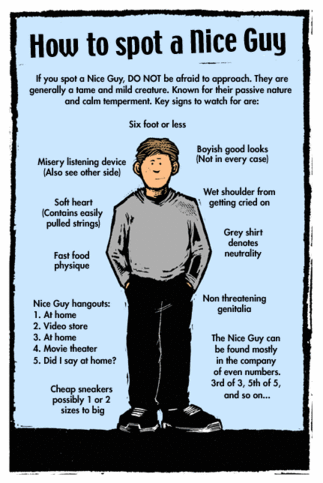
The media still doesn’t understand “nice guys”

One of my pet peeves is how the media still has no grasp on the concept of “nice guys”. A few weeks back, I read a reprint of an article on CNN, which was all about how some girl was upset that she can’t seem to find a nice guy. Then it went on to ridicule every guy in the world because SHE keeps picking “bad boys” when she really wants a “nice guy”. I wrote a response that got a lot of “likes” on CNN, where I essentially stated that the reason she is never going to find a nice guy is because she looks for bad guys and then blames nice guys for not being easier to find. You don’t find what you’re not looking for.

The interesting thing was a CNN writer contacted me and wanted to interview me about my thoughts on this for an article she was going to write. She never got back to me, but interestingly enough, her “article” that she was going to write appeared on CNN today. Here it is, by Stephanie Chen. As I never got to comment before she wrote her story, I definitely have a few things to say about this particular issue and the very concept of nice guys in general, so here goes:

This article pretty much proves to me that mass media is never going to understand the concept of nice guys because it’s a lot like sending a French chef to write an article about Arabic pottery. They don’t know anything about the topic, so trying to be the archaeologist on a nature dig is never going to get the real story. It’s just going to get more and more people confused.

This article shows the problem immediately in that it goes to sources that are not nice guys to explain why nice guys need to be more like them in order to succeed. One of the interviewees wrote a book on how to “score babes”. Yeah, that’s going to really indicate to the diminishing numbers of “nice guys” how they should interact with women in order to do whatever it is they think nice guys are really intending to want to be doing with women. Just because Captain Kirk slept with a bunch of green alien girls in Star Trek doesn’t mean that every member of the Federation can only succeed by taking a “Be like James T. Kirk” seminar on interspecies dating. Okay, I’ll try to keep away from the geek references….

Part of the problem with these essays on why nice guys fail is this belief that we’re all failing because they don’t see us in clubs trying to pick up women like the rest of the bad boys who seem to get a lot of action. Maybe we’re nice guys because that’s something we don’t normally do. If our purpose was to do anything to get a little action, then I’m going to go out on a limb, but that’s probably going to remove the very nature of what makes us part of being nice guys in the first place.

If women are really interested in finding nice guys, I’m sorry but it’s really up to them to go looking for them. They’re not going to find them at clubs. Sorry, but that’s now where they hang out. Most nice guys wouldn’t last a half hour at a club because we’re the ones who feel really awkward because we’re alone, and our usual nature isn’t to become the life of the party at a party where we’re not normally invited. The sad thing is: I’ve had this conversation with a lot of women who are constantly looking for “nice guys”, and they never get it. Oh, they say they get it, and they nod appreciatively, but they always go back to their ways and end up with the guys they can’t understand how they always end up with. I’d pull out my hair in frustration, but there’s not a lot of it left these days, so I have to be careful about that.

Yet, the media keeps reporting that in order for “nice guys” to do well, they have to stop being nice guys, or do things the “other guys” do in order to not be seen by women as “nice guys”. In other words, women looking for nice guys will not go after a nice guy, so you have to pretend to be a bad guy in order for a woman to see you as the nice guy you are. Does any of this sound a bit dysfunctional?

So, what’s the solution? Well, if you’re a woman, the solution is so freaking simple but you’ll NEVER go there. I’ll go out on a limb here but MOST women have guy friends they confide in and consider really nice guys. Well, instead of asking those “nice guys” where to find a nice guy, look right at them right now. There they are. They’re right in front of you. Probably liking you but to afraid to say anything because they figure you’ll stop being their friend. But there they are. And they’ll be there until you either notice them or someone smarter than you notices them and then you start to wonder why you could never find someone like them.

For guys, well, if you’re a nice guy, do what I did. Give up. It’s not worth the hassle. It’s a lot less of a headache when you don’t put yourself out there trying to pretend to be something you’re not. I’m a nice guy, and I’m happy with what I am. I don’t really need to “score” or find anyone to achieve personal happiness. Sure, if the right person came along, or I was friends with the right person and she noticed me, that would be great. And we’d live happily ever after.

But if that doesn’t happen, I’m not going to worry about it. But I’m going to let you in on a little secret. I’m not going to be worrying about you either. If you can’t figure out where to find a nice guy, you probably don’t deserve one in the first place.

Building Worlds as a Part of the Writing Process

A few years ago, I read a book by Richard Bartle, titled Designing Virtual Worlds. As an avid game designer and player, the idea of building worlds has always fascinated me. As a writer, however, designing a world has always been a process that has existed within me, and it has often made crafting a story one of the more difficult projects. In the beginning, when I first started writing, designing a world was simple. It was essentially Earth with different people in it. Oh, sure, every now and then there’d be a dragon instead of a rhino, but honestly when it came down to it, I wasn’t really designing anything; I was recreating what was already there.

As I matured as a writer, I came to realize that the world one crafts is as important as the story itself. Since then, I’ve created a couple of worlds that have existed as part of my writing. Two of them are important enough to discuss here, so I’ll introduce them now.

Reagul was my first real virtual world that I created. It was originally a part of a science fiction/fantasy hybrid I wrote over a decade ago that takes place in the era of Earth 3000 A.D. The Earth has become an empire, and one of the planets in its sphere of control is the medieval-like planet of Reagul. It was during the writing of the novel Destiny that I started to realize that Reagul was more imortant than just a setting for a large part of this novel. It took on a life of its own, and later it became the centrally located planet for the series of stories that became the book, The Tales of Reagul.

Reagul was a fascinating place because it was an experiment of an alien race known as the Minions, who were testing on human subjects from the young planet Earth. During the first century B.C., the aliens transplant a Roman collection of villages from Earth to the new planet. This series of villages grow up to become the central characters of the stories that take place on Reagul. A large number of short stories I wrote have been published in that series, even though most magazines at the time never knew there was a connection between any of these stories. In it, a whole literature was born that has continuously moved the history of this planet, which has nearly 3000 years of history before it reaches the point where it coincides with the first novel (the previously mentioned Destiny).

I figured that I would probably only write one major series in my lifetime, and it was going to be the Reagul series. And then the Soldier came along.

The Soldier was a character that started showing up in some of my earlier writings, first published in Lost Worlds magazine. That first story was mainly about a soldier who has been traveling since separated from his army, but even as I was writing, I realized there was something wrong with this guy, that he was much more than just a normal soldier. That’s when I started to realize that he was on a quest for something, something for which he was going to be spending the rest of his life looking. This item became the Deck Const, which then became the central talisman in my latest novel Rumors of War.

The Soldier is unique because his story is a world all by itself. He lives in a dystopian future where civilization has crumbled, representing an army of a nation that no longer exists. At the same time, his journey has been chronicled long before he was ever born, and many more people know as much about him as he does about himself, even though they have never met him. He becomes a mysterious character, even to himself, but at the same time is on a linear path, seeking out something that will bring civilization back together, while at the same time giving him a reason to exist.

The world of the Soldier is one of those that I often found myself returning to because it was so interesting. At times, he finds himself in a Hobbesian nightmare of a society that has fallen apart, but every now and then he comes across glimmers of hope in the waste lands, and often he is the instrument that brings forth that hope to others.

The point is that it is not just enough to write about a place and call that a “world”. There is so much more to the process than that. The people within that world are just as important to the world as the world itself. The Soldier couldn’t live in Reagul; he just wouldn’t belong, and he’d change that world into something much different than it is. At the same time, the sorceror/wizard Sarbonn (which is from where the name of this site emerged) could never have existed in the Soldier’s world. Both worlds are products of their people and their environment.

This is why so many science fiction stories set on bizarre worlds just don’t seem to work. The writer was spending so much time focusing on the world, or the character, that he or she never realized that the two needed to fit together somehow, and quite often they do not. Harry Harrison’s Stainless Steal Rat is a product of his environment and fits it so well. Asimov’s Mole fits into the Foundation universe that he created (which by the same measure his robots never fit into the Foundation universe, which is why the end of his Foundation series seems more forced than the earlier part of the series; you can’t force one series into another, or one world into another where they do not belong).

An example of a strong failure of this approach is the Fallout series, especially the recent one (Fallout 3). It was a great universe (or world) with the ultimate Dystopian wasteland, but then in one of the add-ons, they decided to add aliens to a universe where they really didn’t belong. Granted, in each story there was always a mention of an alien crash landing, but it was always a technique to give the player an out of control, overpowered weapon with many questions left unanswered. With the alien add-on, it took a Dystopian nightmare and turned it into an alien blaster story. They just didn’t belong in the story, and it diminished the universe as a result.

As a writer, there’s always that fine line that has to be traveled, and once one goes over it, it’s the literary equivalent of “jumping the shark”, even though I’m using the term incorrectly as “jumping the shark” was never really meant to be about going too far (it was always about trying to regain what you had before by doing something stupid). But that’s for another column.

One thing that’s interesting about building a new world is that sometimes that world can get out of one’s control. Star Trek is a good example, as is Marion Zimmer Bradley’s “Darkover” series. Both were great universes where the author/creator designed something magnificent. Then the fans took over. In Roddenberry’s case of Star Trek, the fans became such nitpickers that Roddenberry couldn’t make a decision without someone quoting a previous episode as to why a new episode was in error. With Bradley’s “Darkover”, the fans started creating sequels to the story, and it got to the point where the universe was somewhat out of Bradley’s creative control.

In the end, what can be said about building worlds is that there must be a reason we do it. Some would say we do it to explore our own universe, while others might say we do it to branch out and see things we can never imagine in our own world. For me, it was just a lot of fun, and the characters sometimes just make it all worthwhile.

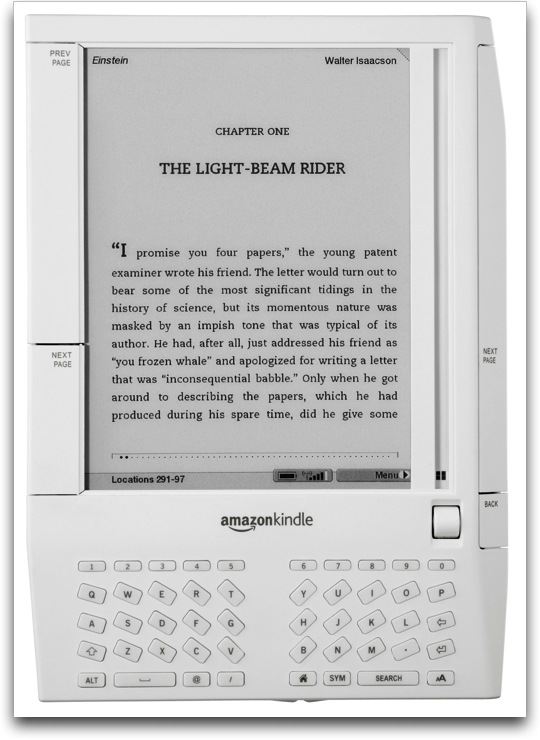
Why the Kindle never took over the world

I was in Best Buy this evening, and I was looking an iPad. I wasn’t planning to buy one, but they had three models of it on display, so I decided to take a few minutes to see if it was really an impressive product. None of the main features of it caused me to be all that impressed. And then I started looking at the iBook reading section of it (they happened to have Stephen King’s Under the Dome installed on it, which is ironic because I was planning on buying that on an electronic reader the second I got one (as I really don’t like lugging that HUGE book around, even though I currently own it). Wasn’t all that impressed. I didn’t see anything about it that the Kindle didn’t already do.

Which got me thinking. I don’t own a Kindle right now, but I do have a Kindle reader app on my iPhone. So, I can actually read Kindle books on my iPhone.

Which then got me thinking even further. I started to wonder why Amazon’s Kindle hasn’t made the impact that it probably should.

Let me explain. The Kindle is an excellent device for what it does. From the reviews I’ve read about it (including the testimonies), it is a great reader. Unlike the iPad, it doesn’t suffer from the sun glare if you’re using it outside, and it’s very much like an actual book in that you can read it for hours and not get uncomfortable like you will if you’re reading a computer screen (something practically every other e-reader suffers from). With that in mind, you’d think that the Kindle would be selling like hot cakes. So, why isn’t it?

Well, the answer to that question is found in Amazon’s strategy itself. And it’s one of the most bizarre strategies I’ve ever seen for a company that is trying so hard to set the standard for e-readers.

You see, Amazon wants to corner the market on e-readers and e-books, much like Apple has tried to corner the market on music with its iTunes platform. And Apple would have succeeded if it had done it earlier, but Apple put out iTunes AFTER there was already an MP3 market for music established. People were already burning CDs to MP3s and putting that music on MP3 players. Apple came along and then tried to corner the market on something that was already out of control. And surprisingly, they actually got their foot in the door, but it’s a door that’s been wide open for a very long time.

But books are a different story. There has literally been no e-book market because each company that puts out a reader is a company that has no ability to corner the market because controlling the reader doesn’t also mean controlling the content. And that’s where they all fail. But Amazon had a chance to do it because it is probably the one company out there that has a huge market that serves the reading community. If they would have put out an e-reader and made it easily available, they could have owned the whole e-reader market. And they almost did when they released the Kindle, but they then did one of the stupidest things they could have ever done. They made it so you had to buy the Kindle directly from them on their site.

And that practically killed their chances for world domination. I think of myself as a good example to explain why this was such a failure. I buy books from Amazon all of the time, but I refuse to buy a Kindle, mainly because I’ve never seen one in person. I’ve never held one in my hands. In other words, Amazon wants me to buy their equipment unseen and untested, specifically on trust alone. And I don’t trust them because they want me to spend $259 or $450-something for an e-reader that I’ve never seen in person before. And they’re asking a lot of people to trust them and buy their product without ever having a chance to test it. Unfortunately, that’s a business plan doomed to failure. Sure, they’ll sell a few, but they’re not going to sell the number they need to in order to gain the market share they want and need.

So, Amazon is mainly going to have to focus on trying to get people to buy the books they sell online through their site as Kindle books, but they then made it possible for anyone to have their own Kindle-like product, so they made it even less possible that people are going to buy a physical copy of a Kindle. Which then means someone who has a Kindle reader, but not a Kindle, probably has a device that can then probably handle other programs (or apps) as well, which means any company that puts out a book in a cheap format can easily gain their business.

Apple has now jumped into this market and is trying to create its own iBookstore which it hopes to control like the iTunes marketplace. Not going to happen because there are already so many other more trusted places to get book content that Apple is never going to be the “go to” place for that. It’s just going to further saturate the market with more places to find e-reader books, and thus, it will make it that much harder for e-books to take off because there will not be any one format. People will become so frustrated with trying to tap into this market that they’ll just consider it one of those unrealized areas of content and continue to buy books in hard copy.

But Amazon could have won the war right from the start if they would have done one thing, and that’s license other companies to sell their Kindles. Imagine the business they would have gained if they would have had Best Buy selling Kindles. If they would have dropped the price to about $199 and then put them in every Best Buy, they would practically own the e-reader business across the country, and who knows….the world. But they didn’t do that. There were no apps being made for the Kindle, so the only way to read books on it would have been to buy them from Amazon. It was a win-win situation, but they didn’t think it all of the way through.

Instead, we have more and more readers coming out and no way to figure out how to get the books onto those readers, so those readers are going to fail overall, and manufacturers will figure that it was the customers not wanting to buy books for devices, when in fact it was a failure of the devices to capture an audience that was willing to then buy content.

That’s why the Kindle never took over the world, even though it probably could have.