Category Archives: Business

“The First One Is Free” and “Foot in the Door” as gimmicks don’t work with television shows

Crouching Captain, Hidden Ratings

A new trend has started with networks and their television shows. Instead of trying to hook you with their television shows by airing them and then creating buzz (or creating buzz first and then airing them), they’re trying a new process of trying to hook people by presenting one episode in one location and then hoping that will lead to return viewership in their usual location.

An example: A new series, Marvel’s Inhumans, was going to start this season. But rather than air it on television (where the show would actually appear), they decided to have it appear in IMAX as a theater presentation and then show up on television. It bombed horribly. Imagine that. Turns out, people don’t want to go to the movies to watch a television show. What a shocker. When IT was released a week or so later, IMAX removed Inhumans and put in an actual movie.

Another example is Star Trek’s Discovery. While I’m one of those who loves the idea of a new Star Trek show, this one isn’t going to be on the regular network but is being used to sell CBS’s long running pay station, as it will only air there (and on Netflix if you’re overseas). The first episode will air pretty much everywhere, and then after that you need to pay the fee to watch content on CBS’s online site.

In case you don’t know this, CBS’s paywall site has been around for years. I signed up for it ages ago when I wanted to watch a couple of shows that were hard to find, especially when I cut my cord. But after about a year, I realized it wasn’t really giving me anything superior to Hulu, so I discontinued it. I don’t intend to start it back up again just to watch one television show. Just isn’t worth it.

But CBS is convinced that Star Trek is just a strong property that it will result in huge sales of its paywall channel. We’ll see what happens, but I’m not really holding my breath.

People who watch television generally want one of two things: Make it free, or make it convenient. Free is easy, but to make something convenient, you need to avoid making it a hassle to have to go through another service just to watch television programming. So far, most of these companies haven’t done that well. CBS certainly hasn’t. So, we’ll see what happens.

What’s most annoying about the Equifax Data Breach

By  now (September 8, 2017), most people have heard that there was a data breach at Equifax that has made over 143 million Americans vulnerable (about half of the entire country). Read more about it here.

Equifax hasn’t done itself any favors since the breach. First, it waited a month to let anyone know that their security was compromised. Second, 3 of its executives decided to cash out stock in the company a few days after discovering the breach. And third, in order to sign up for the “free” protection services, you have to agree to their Terms of Service, which basically say that you agree to arbitration and lose the right to participate in any class action lawsuit. None of those revelations sound good for the company.

But what makes this breach most annoying to the average American is that there was no way we could have avoided being involved. Most of us don’t do business with Equifax. We don’t open accounts with them. They open accounts ON us. We are their product, and we don’t have a choice in the matter.

Yet, we’re the ones affected. We’re the ones who will be cheated out of our money and thrown into the poorhouse if this runs the course it most likely will run. Equifax will protect Equifax long before it protects any of us. It’s entire model is not built on protecting consumers, but in reporting on consumers to big companies that give them business.

This is a lot like Facebook, even though you may not realize it. Facebook’s product is us, not its web site. Without us, Facebook has no business. Equifax is exactly the same way. The big difference is: Most of us choose to be on Facebook to take advantage of its use of us. So very few of us EVER chose to do business with Equifax, aside from the few people who wanted to monitor their credit before this all happened.

So, let this be another example to you that there are those companies out there who see YOU as a their product and aren’t willing to give you a single cent in order to exploit you. Feel good about that because it’s only going to get worse. Nuff said.

The Fear of Pissing Off Your Audience While Trying to Get One in the First Place

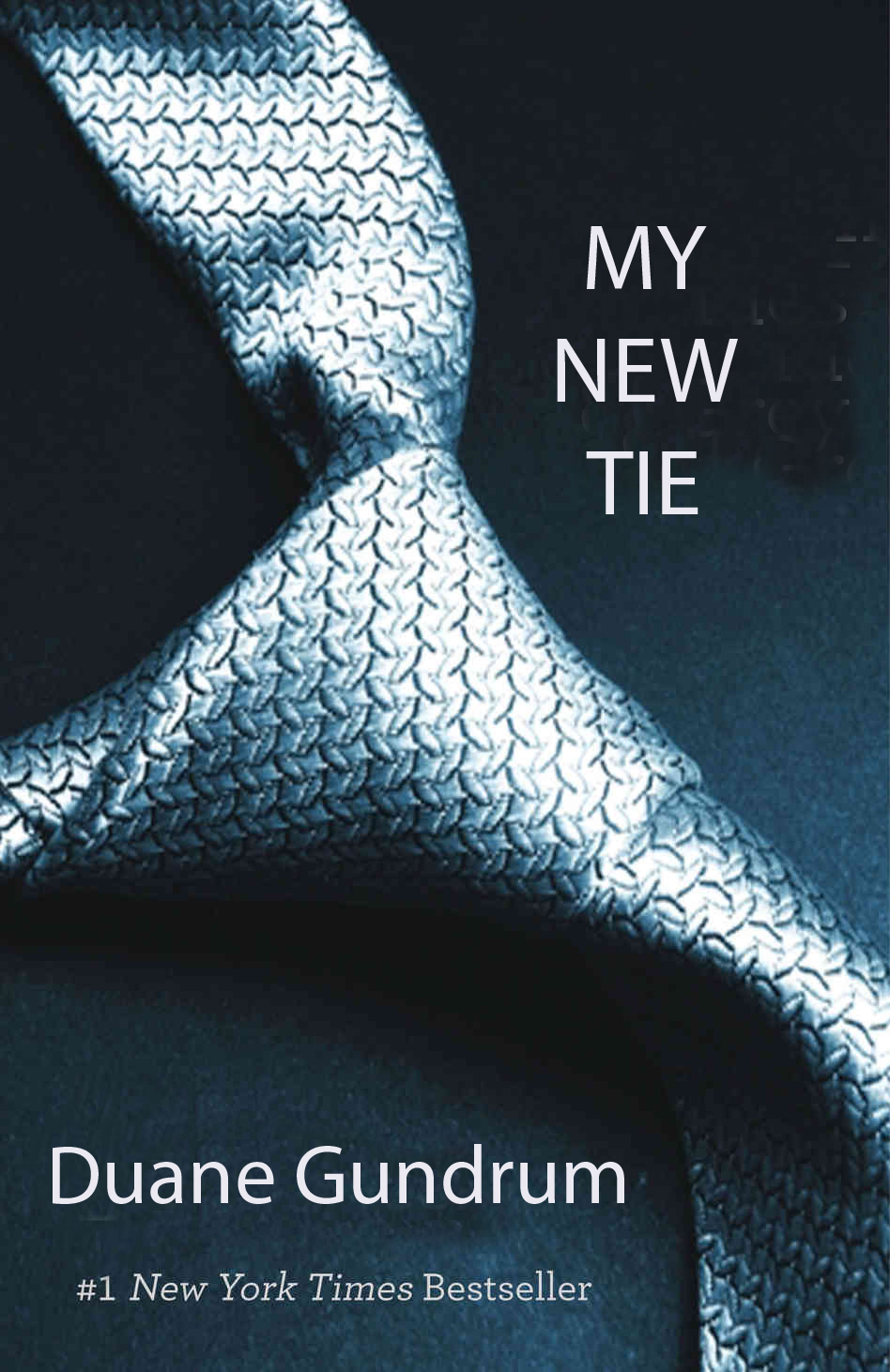
The cover of my new book. Someone told me it looks like something they may have read, but I’m not seeing it.

One of the problems of being political or taking a political stance is that chances are pretty good that you’re going to end up pissing off someone when you didn’t intend to do just that. As a writer, my goal is always to entertain as many people as possible, so whenever I deal with political issues, I get scared that whatever I’m going to say is bound to cause an audience member to dislike me. And these days, when someone dislikes you, that person tends to stop following and you never hear from that person again.

Therefore, it becomes a dilemma.

Because if one focuses on this type of fear then a writer is bound to water down whatever he or she has to say and only say the things that he or she hopes the audience is interested in hearing. And I can only imagine how bland and boring that might turn out to be.

The other day, I posted a tongue in cheek comment about something, and one of my politically correct “friends” corrected me and told me that I had to be careful, because saying such things can be construed to be wrong. I didn’t respond, but part of me was thinking: “Hey, I said what I said because it was something I wanted to say. If it bothers you, just ignore it or go frack yourself.” I didn’t say that because I’m a complete coward, but it did cause me to think.

And then the next week, that same person posted something that was completely one-sided, told in a tone that she knew best and anyone else who disagreed was obviously stupid. Basically, she did exactly what she told me not to do and then didn’t think anything of it. I then started to notice she does that all of the time.

Some people are like that. They are good at criticizing, but not so good at avoiding the behavior they criticize in the first place.

But then, she’s not a writer worried about people not continuing to read what she writes, and I am. So, there’s the dilemma.

Which kind of brings me to wondering how it is possible for polemic people to write the types of articles they do, knowing that people are going to be annoyed at what they write. I’m thinking about people like Ann Coulter, Michael Moore, and Tomi Lahren. The first two have completely established audiences that they’re probably never going to lose, but like the latter one, it leaves me wondering what kinds of risks is someone like Lahren willing to make in order to remain somewhat relevant in a very hostile media atmosphere. And part of me is also constantly wondering if part of the appeal is physical attractiveness as well, because if there wasn’t that, I kind of wonder at how many followers someone like her would have if the audience isn’t already cemented.

Social media seems to be one of those weird animals in that some people just come to it naturally and do really well right out the gate, whereas others, like me, take to it slowly and never really seem to reach the audiences they dream of achieving. It’s like the market for writing novel e-books. I’ve been writing for decades, and the readers I have tend to be the same readers who found me some years back. Others, I’ve seen them publish their first book and suddenly they’re selling them faster than Amazon can print them. Okay, Amazon doesn’t exactly print them, but you get the idea. I hope.

Some people just do really well with little effort while others succeed without trying. I’m starting to believe that that is how social media works for some people as well. While some people have the added benefit of being attractive to, well, attract others, those of us like me, toad-like in appearance, pretty much have to fight for each stride of existence. Okay, not toad-like, but I will admit that when my picture is put next to Brad Pitt’s, people tend not to stop and think: “Wow, I can’t tell them apart.” Definitely not. Brad’s got nothing on me!

Anyway, so the point is that getting an audience can be pretty tough and then once you do, it’s like walking on egg shells to make sure that you don’t lose any of your listeners. People can be pretty fickle about such things, and once you’ve lost a member of your audience, you tend to never get that person back.

So, if this bothers anyone who happens to be reading this, understand that it was someone else who said it, not me. I would never say anything to piss you off. Really. I’m just that kind of guy.

Please don’t go!

ASMR: One of the strangest phenomenons to hit Youtube

So, a couple of months ago, I was having trouble falling asleep at night, so after a bunch of frustrated attempts to sleep, I did what any 21st century geek would do: I turned on my computer and Googled something that had to do with sleep. And that was how I came across a video of a woman on Youtube who whispered and made unique sounds while trying to help the viewer fall to sleep. That was also the first time I had heard the term “ASMR”.

ASMR, or lesser known as “autonomous sensory meridian response” is a really niche segment of the Youtube population that caters specifically to people filming videos of themselves talking to the camera while making various sounds that are supposed to activate “tingles” in audience members. So, this could be anything from scratching a piece of paper to extremely elaborate presentations of mixing jugs of water back and forth. Sometimes, the purpose is to help someone sleep or relax, and other times it’s just to evoke some kind of response from the person watching the video. And those responses can be all sorts of different types.

After a bit of time of crawling down this rabbit hole of ASMR, a couple of things start to become apparent.

  1. The people involved in this phenomenon are like most Youtube channel owners. They want subscribers, which causes them to have to do more and more things that differentiate them from other people doing the same sorts of things. In the beginning, I was following a couple of the artists who were doing very generic, sleep type of videos, but then I started to notice as their time line stretched into the present, they were doing more and more elaborate types of presentations. Rather than just speak to the audience, I started to see role play presentations where the artist would pretend to be a doctor, a nurse, a police woman, a vampire, or pretty much anything else you might imagine. The ASMR activity would remain similar, but the antics would become much more involved in the script than the results the artist was originally trying to achieve.
  2. The subscriber aspect of the system favors women more than men demonstrably. While I did observe a few men who were doing regular ASMR videos, the majority of the material coming out on Youtube was strictly women. Young women. And very attractive women. Which then led me to start to observe that more and more of the highly successful ASMR artists tended to have a very interesting history, where their videos began as generic, fun videos and then slowly became much more sexualized, somewhat PG-rated. It practically opened up a separate category of ASMR, which I began to call “Kidnap ASMR” where a woman would roleplay that she has “captured” the viewer and was now doing ASMR stuff to him/her. This type of thing ranged from crazy girlfriends kidnapping someone she was in love with to female police officers “arresting” someone and interrogating the person for “ASMR activity.” Some became quite innovative, like artist “Innocent Whispers” who orchestrated a series of videos where she pretended to be an officer of the FBI, “Federal Bureau of the Internet” and she was investigating individuals who were brought to her so that she can ascertain their level of ASMR response. To this day, I’m still trying to figure out if her purpose in the roleplay was to “catch” people for their ASMR interests or to do research for her somewhat weird federal agency.
  3. There seems to be no end to the types of sensory responses that ASMR artists are capable of exploring. When I first started watching these videos, the type of “noise” the artists would focus on was usually some type of tapping (fingers on surfaces, devices on other devices and on the microphones themselves), and then as those videos became somewhat generic all sorts of alternative sound-generating possibilities were explored. One recent video focused on fire, as one woman continued lighting matches over and over again so that the listener/viewer experienced both the visual aspect of the fire and with an extremely expensive microphone also experienced the auditory sound of the fire erupting each and every time the match was struck.
  4. Whispering is a huge segment of this activity as well. Very rarely does the artist raise her voice above light speaking. Most of the time, whispering is how the artist communicates with the listener. My experience so far has caused me to believe that the whispering creates a much more personal experience between the speaker and the listener.
  5. Most often, the atmosphere is one of positive energy. Quite a few ASMR artists tend to focus on trying to make the listener feel better in some way, whether the reaction be a state of hypnosis, better ability to sleep, feeling good through positive affirmations or any other positive type reaction. I’ve seen a few specific ASMR videos that are designed to be the complete opposite (such as “negative affirmations” where a woman basically insulted the listener nonstop) but those are rarities and seem to be more fetish-based than a part of the overall scheme that ASMR tends to represent. Quite a few ASMR videos are designed around the concept of making the listener feel better.
  6. There can often be a lot of humor incorporated into ASMR. What probably leads to a lot of the hits that ASMR artists receive (and the large numbers of followers/subscribers) has to do with the personality of the artists themselves. Humor is often one of the strongest points of the better known ASMR artists. Humor becomes a huge part of the bantering of the artist as she communicates with her following. However, I have noticed that when humor is the intent of the actual video, it tends to not do as well, which suggests that incorporating humor is good, but focusing on it doesn’t yield the same positive results.
  7. ASMR is not limited to Americans, or even English speakers. One phenomenon I’ve noticed is that quite a few artists are from variously diverse places across the planet. Some of the better known ones are Eastern European, Korean and Japanese. However, quite a few of the ASMR videos tend to be in the English language, and if an artist does not strictly do English language videos, there will be a few here and there as the artist starts to become better known. However, as a lot of ASMR can be conducted without any words whatsoever (tapping, inaudible whispering, etc.), a number of non-English speaking ASMR artists can strive and do well with non-specific language videos.
  8. The microphones themselves are quite unique. Before studying this are of Youtube, I thought I knew something about microphones. But I was wrong. I knew nothing, Jon Snow. What they use in a lot of ASMR videos is this type of microphone I have here as a picture. It is almost like a person that the artist is speaking to (including ears). Quite a few artists play with the “ears” and it can sometimes be a bit weird (well, to me). However, the microphones are extremely expensive and are set up to handle stereo recordings, which means that when the artist moves to the left side of the screen, if you’re listening with headphones, you are going to hear her voice come out of the left speaker, so that it can actually feel like the person is walking around you as she is two dimensional on the screen. This microphone in the picture is about $600. I’ve seen some of the microphones (including one that’s a representation of a person’s head) run for close to ten thousand dollars. Obviously, some of these artists are extremely invested in this activity.

So, this has been my adventure so far in studying ASMR. I got into it once because I was having trouble sleeping, and then the communication scholar in me started to see this as an untapped area of exploration that I believe more people should be aware is happening around them. The phenomenon is relativity new (still pretty much in its infancy in comparison to other phenomena), but I suspect its continued evolution might lead to all sorts of interesting perspectives and insights.

The Problem With National Intelligence and Classified Information

One of my pet peeves has been the concept of classified information. It’s commonly used as a gatekeeper to give some people access to information and keep others away from it. When people talk about it and think about it, it’s often considered of significant importance that this information is kept classified and away from other people who don’t have access. Strangely enough, no one really seems to think about it from the perspective of wondering why we keep all of this information classified in the first place.

In the old days, and I mean like the 1940s, classified information was important because it meant keeping it away from the Axis powers who meant to do us harm. During the Cold War, it was to keep the information away from the evil KGB and their cronies who were out to do all sorts of harm to the US people. I guess now it’s being kept from terrorists who, of course, mean to do us harm.

What I find myself asking more and more these days is why is the stuff we keep classified actually being kept classified. And almost always, the reasoning seems to fall short of any test of logic.

I was looking at the requirements for working for the State Department the other day and noticed that to be in practically any position, including a mechanic, you need at least a Secret clearance level. And this immediately started putting my thinking process through the obvious channels of one thing leads to another. I thought, why does a mechanic need a Secret clearance? And then you go through the usual Kevin Bacon approaches to connecting dots and start thinking “well, he might be working in the motorpool one day when some guy with Secret information might be talking about secret things.” And then you realize how absurd that is because the guy with Secret information shouldn’t be talking around people who don’t have clearances in the first place. And that got me thinking, what exactly would someone in the State Department be talking about that should be classified? And basically, it kept coming back to even more questions that bothered me because in each case, the “Secret” information appeared to me to be information that might be embarrassing if it got out but generally not something detrimental to the country itself.

And that’s what I’m starting to realize is the reason for most of our classifications today. We make things Confidential or Secret because we really don’t want anyone else to know what it is we’re tracking or talking about. Yet, the information we’re talking about probably shouldn’t be classified in the first place.

We live in a country that values its freedoms. But in order to truly value those freedoms, the people of that country need to know what their leaders are actually doing. But we don’t. Because they classify everything to make sure that we don’t know what they’re doing.

Does this protect our country? Not in the slight. As a matter of fact, it makes our country even more vulnerable because its people are putting others into power based on limited knowledge of what might really be going on. And we’re told that it’s better this way because what’s really doing on is too important for everyone to know what’s going on. It’s kind of one of those vicious cycles that doesn’t ever get any better.

So, who are we supposed to be protecting this information from? The Russians? The Chinese? The North Koreans? It all sounds good in theory, but in reality, so little of that information that is classified these days would make a difference if any of those entities actually knew what was going on. Well, maybe the schematics of how to build a nuclear device, or something like that, but that’s not really what we’re classifying. We’re classifying conversations between people who couldn’t build a nuclear device if their lives depended on it. They’re bureaucrats who really don’t have a lot of intricate knowledge about anything.

I sometimes think the majority of the stuff they classify is just to appear more important than they really are. And this mentality feeds upon itself and often makes things even worse.

Back when I was in the service and working in that field, I used to see things become classified that had just been printed in the New York Times. But because some bureaucrat read it, he would then type up the same article and then declare “SECRET” or even “TOP SECRET” and make sure only those with high clearances were able to read it. But the newspaper article would still be out there, being read by anyone who bought it, including parakeets who had it lined on the bottom of their cages. And as sad as this seems to admit, people were threatened with being brought up on charges because of disclosing something that they might have actually read in the newspaper but some other bureaucrat only read it in a security briefing (because of that doofus who classified it in the first place).

I’ll come out and just say what I believe here, but I think way too much information is deemed classified in a society that should be a lot more open with its information. We classify farm reports, trade manuals, articles from newspapers (as previously mentioned), financial forecasts, political meetings, patents, treatments for diseases and illnesses, phone call records, as well as so much more information all in the guise of protecting “national security.” And honestly, what’s the benefit?

To be honest, I don’t perceive this changing any time soon because bureaucrats love to think of themselves as more important than they really are. That’s never been different in our civilization. The greatest impediment to evolving knowledge is when we hoard knowledge and evidence, yet we seem to do that more and more these days.

Customer service is becoming an artifact of a time that has long since passed

The other night I was watching Game of Thrones on HBO Now through my Apple TV (yes, how many products can I mention in one sentence?). Up until now, Apple TV and HBO Now has been a great service where I’ve really enjoyed the shows and the quality used to bring them to me. However, on this evening (and the following week), I discovered that the sound for Game of Thrones is horrible, to the point where I couldn’t hear the dialogue at all. I ended up turning up the sound on my television to practically maximum and still couldn’t hear what anyone was saying. When the show ended, the sound kicked back in and nearly blew out the speakers in my TV. Both weeks, I’ve been unable to hear the sound on this one show. I can hear it fine on every other show, both on and off the HBO Now service.

So, I sent an email to the customer support people at HBO Now and received one of those “we thank you for contacting us but we’ll have a real person get back to you later” responses. A day later, I received the most generic response ever, indicating that NO ONE read the email, but it was filtered through some program that must have caught the word “sound” or “volume” and then told me to go through the FAQ they have about how to handle problems with adjusting the volume with an Apple TV. Really? In other words, no human is EVER going to deal with the issue. In other words, having a customer support system is a joke and an insult to anyone who may ever feel the need to use it.

If this was just a one-off situation, I’d just chalk it up to that sort of thing. But no, I’m starting to run across this ALL THE TIME. An example: Electronic Arts, the company that is constantly competing with Comcast for the worst customer service on the planet. Some years back, back when the Internet was young, I used to play Star Wars: The Old Republic. And then I quit. A couple of years later, I decided to play it again. Except there was a problem. Let me explain.

When I first played Star Wars: The Old Republic (SWTOR), it was owned by Electronic Arts, but it was billed by its subsidiary company Origin. Sometime during that period when I was no longer playing the game, someone breached Electronic Arts’s servers and stole a bunch of accounts. One of them was mine (inactive at the time because I wasn’t playing any games that Electronic Arts owned). Someone tried to buy FIFA (some soccer game) on my stolen account, but was thwarted by the fact that my credit card had expired a year or so before the transaction was attempted. By the way, EA somehow has translated that to believing its crack crew of cyber security experts had “stopped” the transaction and did a great service to me. Keep in mind, the only “stop” that was conducted was my bank saying, no, that credit card hasn’t been valid for a long time now. Anyway, to make a long story short, EA incorporated Origin into its service as its process of charging everyone for everything, so when I went to reactivate my account for SWTOR, EA refused to let me put any credit card information onto the account because my credit information was now “flagged”, which really translates to “we tried to let a thief fraudulently charge a game to your account and the transaction failed, so we now have to flag your account as one we can never allow you to make charges on again, even though our customer service people have given back access this account to you, no longer the thieves.” All attempts to “fix” this account have failed, as I have escalated the issue to the top echelons of EA, and each time it gets rejected based on…well, no one really knows why. It just keeps getting rejected. And then I get a really friendly email from EA stating: “So, is there anything else we can help with at this time?” I guess just rejecting me isn’t enough. They want to rub salt in the wound, too. For the record, the people at SWTOR have been very kind, but have resigned to the fact that if EA can’t fix it on their end, the issue is out of the hands and incapable of being fixed. Sure, I could start up a new account, but I have a ton of maxed characters on this account and a lot of game money in their banks, or possession. Starting over is not something I desire to do, so I’ve pretty much just stopped playing the game. I could play by buying a monthly game card (for game time), but that means I have to pay the maximum price to play the game each month, which is a direct insult to someone who was a member of the game when it first launched.

Strangely enough, gaming companies do this sort of thing a lot. Sony is a good example of this. I had an Everquest account back in the day, but when I stopped playing, somehow my account then became “flagged”. I can’t get my account back now. It’s like I was doing horrible things in the game and am now banned. But I’m not the sort of player who does any of those kinds of things, but as usual, I can’t even get them to tell me why the account was banned, meaning it was probably compromised during the time I was gone, or it was breached during one of those early periods when entire batches of accounts were breached at once by overseas hackers and rather than deal with each case one by one, they just banned everyone as a consequence.

The point is: Customer service is almost nonexistent these days. Because of automation and outsourcing, we now have a situation where if you ever need customer service for a game or product, chances are pretty good that you’re going to end up very dissatisfied. There are some good companies still out there, but they are becoming rarities, and one thing I’m starting to recognize is that when someone recommends a company to me for good service, it’s usually because they had good service from that company YEARS ago and probably haven’t had a recent situation they’ve had to deal with concerning that company. I’ve had a few encounters like that recently where I went with a company because of past, good experiences, only to discover that they’re currently a crapfest when it comes to dealing with customers.

Just saying.

The Problem of Dealing With Race By Invoking Historical Ancestors

Race seems to be a big issue these days. I guess that’s a good thing. It means people are thinking about the concept and discussing it with others. At least that’s my hope. In some cases this is massively necessary because it helps deal with oversights that have been going on way too long. In other cases, not so much. What I see is that in those types of cases racism as a concept is used as a process to silence others or to beat people over the head in an attempt to collapse all disagreements under the blanket of racism, even if the individual artifacts we’re discussing may have had little to do with racism (which is why blanket criticism is used).

But this post isn’t really about that. Like I said, I’m glad people are addressing racism. There’s just way too much of it present in this day and age, even though a lot of closeted racists would really like to put forth the idea that racism is gone (so they can stop being rightly accused of being racists, or at least apologists for the same). What this post is really about is one of those commentaries that shows up in these discussions, and quite often this commentary comes in groups of people who don’t actually deal with racism in any way.

I know that sounds confusing, but let me explain. People who address and call out racism are quite often those who are directly affected by it. Racism directed toward race is more often addressed by African-Americans in U.S. society because let’s be honest: African-Americans are far more the targets of racism here than most other demographics. Sure, any minority race and/or ethnicity is a potential target for racists, so I don’t want to make an argument that assumes otherwise. But overall, African-Americans are going to have a better chance of perceiving racism more than a Caucasian because racists are pretty one-sided when it comes to this dichotomy. Sure, an African-American can be a racist, but part of what makes racism as powerful a weapon as it is is because it also has a mechanism of power to be used against the victim. A group of African-American racists standing around the streets of Wall Street aren’t going to chase a non-African-American away from Wall Street because the background of Wall Street doesn’t support such an attempt to alienate the victim, but a group of Caucasians targeting a non-Caucasian on a street of Wall Street might cause someone from that targeted demographic to think that Wall Street isn’t a safe place to hang around. The point is: Racism involves power, but it also requires power in order to be effective.

As an academic, I find myself around a lot of people who quite often invoke specific arguments whenever it comes to the idea of racism. I’m also a moderator on a very active current events message board, so I see all sorts of commentary that comes from that origin as well. And what I’ve come to observe is something I don’t believe a lot of people realize seems to be happening around them. And specifically, this sort of racism that is happening today is also very localized in its temporal vicinity (the time it inhabits right now). As a result, people today who are frightened of being perceived as race-challenged (or “racists” for lack of a better term) will do everything possible to avoid being cast as villains in this dynamic. As such, it’s not surprising to hear someone say something along the lines of “I’m not a racist because I have a friend who is black.” Okay, that one is kind of obvious because we’ve all heard that one and know how it’s almost become a punchline to a joke no one wants to admit making.

No, part of the problem stems from an argument that orchestrates how a lot of people who are a part of the problem that they don’t even acknowledge exists. We all know the argument, even though we don’t think much about it because we discard it because of its simplistic nature when we should have thought about and realized why it makes things worse rather than explain things away. You know you’ve heard this argument whenever you hear someone say “Well, my ancestors are from Europe, so I wasn’t responsible.” It’s one of those arguments made in hopes of closing off conversation (and hoping the topic changes as well). But think about it. If someone’s ancestors were from South Carolina, does that make that particular individual responsible for racism that happened 150 years ago and several generations ago as well? Probably not. But that’s only if you feel that responsibility ends with theoretical people who may or may not have been personally involved. Are people complaining about stuff that happened in the 1860s? I don’t think they are. We all know that horrible things happened back then, and we all pretty much agree today that if we could change things, we would make sure they didn’t happen again. Or would we?

And that’s where that argument that gets made loses its traction. There are problems happening today, and rather than deal with them today, we have people saying they shouldn’t have to be responsible because they weren’t around 150 years ago. But again, the problems exist today. What are any of us doing to change things here and now? I would argue “not a lot” because if we were all doing something to make things better, my belief is that things would be better.

Instead, we have ghettos, slums, income disparities, fenced off housing, more cops than educators, hostility towards certain populations, massive corruption in places that should be making a difference, and finger-pointing rather than any desire for accountability. An example is the City of Detroit. It practically collapsed due to white flight and inner city corruption. Instead of solutions that work to fix these problems, we end up with right versus left rhetoric, race baiting and people who support corrupt leaders because to not do so means giving ground to racist rhetoric. In other words, NO ONE is seeking to fix the problems, and the few who are seem to basically be drowned out by the people who find more importance in criticism and looking for scapegoats.

So, what’s the solution? Well, let’s stop caring about what the color of someone’s skin is and start looking at how we can make the neighborhoods of people prosperous and worth living in. That means also changing our criminal codes so that “crimes” that don’t hurt people stop being crimes. If “drugs” are seen as a problem, convict people to treatment programs rather than criminal institutions. Some aren’t going to be fixed the first time, but a responsible civilization doesn’t give up after the first time. It keeps trying until it works.

We also need to change our financial circumstances to benefit all. Yeah, a lot of very rich people are going to hate that. But having a few pissed off people and a civilization filled with thriving individuals seems like a good trade off. This A. Rand society of doing well and screwing over everyone else needs to end.

We need to stop going to war because some group of people don’t think like we do. Different thinking people should be interesting, not enemies. The reaction is that we need to do this because there are people out there trying to kill us. They’re trying to kill us because we always go to war against people who don’t think like we do. That tends to lead to diminishing returns. Change the thinking; change the outcomes. It can be pretty simple. Of course, the naysayers will say no because they only know the institution that we are currently in and like the frog in a well who sees only the circle of light in the sky, we’re never going to see constellations in the paths of other wells if we never get out of the well we’re currently stuck in. Just saying.

Or we can keep doing the things we’re doing and hope that somehow things get better. But they won’t. So good luck with that. I’ve given up trying, so I’ll be playing video games while the world crumbles around me. At least I can accomplish something with a high score. They don’t give Nobel Peace prizes for that, but I guess that’s just cause I don’t own an army that kills a lot of people. Yet.

The Problem with Bernie Sanders Isn’t Exactly Bernie Sanders

There’s been a lot of talk recently about Bernie Sanders as an alternative to Hillary Clinton for those who really don’t like Hillary Clinton as a candidate. Sanders has done a great job of showing that he’s an “outside” candidate that doesn’t go along with corporate greed and all of that. As someone who basically isn’t all that fond of Hillary Clinton, I was seriously looking at Sanders as an alternative, but then I started thinking. What makes anyone think that Bernie Sanders is going to be that much better of an alternative to Hillary Clinton in 2016 than Barack Obama was a better alternative to Hillary Clinton in 2008?

Think about it. Part of the reason why so many people like me don’t like Hillary Clinton is because she’s as close to a corporate follower as you can get (aside from being a current Republican). When she takes office, she’s going to give Wall Street exactly what Wall Street wants because she needed Wall Street to get elected, and let’s face it: She’s a freaking elite who is going to do for the elites what elites generally do for elites. She’s not one of us. Hell, even Bernie isn’t one of us. We don’t have one of us running for office, and when one does, he or she is so far marginalized that we never hear from that person again.

Obama was going to be the outsider response to Hillary Clinton in 2008. Unfortunately, what happened once he took office was he discovered that Washington doesn’t do anything different than the way Washington likes to do things. Wall Street doesn’t comply. Politicians don’t change their ways. And the rich don’t stop doing what they do in order to embrace new ideas. No, things stayed pretty much the way they have always stayed.

Some things got better. But marginally. Not so that students mired in student loan debt were relieved. Students loans were addressed, mainly to spread more margarine on the butter so that things didn’t really change, but people got to say “hey, look, change!”

That’s what’s going to happen with Bernie Sanders. He’ll get to the White House (if he wins) and see that the Republicans aren’t going to allow any changes. Hell, the Democrats in office aren’t going to allow any changes because they’re filthy rich millionaires that don’t want to rock that apple cart any more than they have to. Wall Street will continue to rape the American people, and politicians will take their payments while pretending to care about doing something about corporate greed.

Change isn’t going to happen until government holds corporate greed hostage, and that’s never going to happen in our system. We live in a capitalist system that rewards greed. How do you change the system from within if everyone who makes change is receiving kickbacks from the system in the first place?

So, we can all vote for an outsider, but he’s either going to become an insider, like Obama did, or he’s going to remain an outsider (more like a Carter) who can get absolutely nothing done. That’s kind of the problem.

Saturating the Market

According to MacRumors, two facts seem to be driving positives and negatives concerning Apple’s Ipad. First, the Ipad seems to be beating all of its competition in this market. And second, the tablet market is drying up quickly. This is one of those revelations that have been predicted for some time to come, but now that it’s upon us, one wonders where we go from here.

You see, back when the Ipad was introduced, the common statement from the complainers was that there was no tablet market, and that Apple was just making a high tech entry into a market that’s never going to come. Well, all of those people were proven wrong as Apple sold a ton of those tablets, and the market opened up for them. Fast forward to about today, and we’re starting to notice that the tablet market has kind of dried itself out.

Most of the people who were ever going to buy one bought one. Apple attempted to do with Ipads what it does with Iphones and get people to upgrade every year, but honestly that hasn’t happened. I know that my very first Ipad, which was the Ipad 2, is still capable of doing anything a current generation of Ipad can do. I did upgrade, however, buying the Ipad Mini, but even that hasn’t evolved into anything all that great. And I’ll let you in on a little secret: I got rid of both Ipads about a year ago, realizing that I wasn’t really using them. Now, I have no need for one, or desire. And I’m one of those Apple fans who buys an Apple product almost as soon as they make them.

Apple’s newest product is the iWatch, or whatever it’s called, and I see zero reason for wanting one of those. Let’s be honest here. Watches are so 1980. I haven’t worn one in over a decade. Putting Apple’s name on one doesn’t lead me to wanting one. So, I’m sitting this one out.

As I’ve done with a lot of recent Apple products. Maybe it’s the whole Steve Jobs thing, where I would buy something he hyped. He’s not around any more, and Tim Cook doesn’t really do anything for me tech-wise, so I’m not really updating anything. I have an Iphone 4, and it does everything I need. They’re currently on iPhone 6. Don’t see anything about it that causes me to jump for joy.

My question is whether or not others feel the same way. In order for Apple to be as powerful as Apple always has been is to make sure that people like me are still buying their stuff. Granted, I still own Apple TV, and I’m watching HBO Now on it, but is that enough? This is a company that made its bread and butter off of overpriced laptops that run an operating system that I can’t stand, so do they have what it takes to keep the company going strong?

Has Apple planned anything for when they have saturated the market, meeting the needs of its usual corps of customers? Is there a 3.0 strategy, or are they going to wither as they did back before Jobs came back to run the company again?

Inquiring minds wanna know.

Getting pulled in by Amway’s Pyramid Scheme Crap

wealth povertyRecently, there’s been a lot of talk about Amway (headquartered in Ada, Michigan) because it was ridiculed on the very popular Netflix show House of Cards. As a result, Amway has responded, as well as Dick DeVos (the son of one of the co-founders of Amway). Basically, what it boils down to is that the company claims it is being misrepresented and everyone who has ever dealt with the company (judging from the comments on each one of these stories) feels the representation is more than deserved and probably overdue as well.

So, obviously, you’re probably wondering what Duane thinks about this whole thing. And fortunately, I have not only an opinion, but a story that sounds a lot like many of the stories that people have been telling in the comments section of each of those stories. You see, Amway has become a really powerful company that basically sets the tone for most of the discussions over this issue. The little people, like us, rarely get a word in because we don’t have the money to pay for media access like the people who run the pyramid schemes in the first place.

So, let’s go back some years ago when I was working as a low level executive for a major hotel chain. I was in their security department and out of the blue I received a phone call from someone who acted on the phone like he was a really good friend of mine. At the time, I had a lot of business associates who I kind of knew, so I was polite, and he then talked about a business opportunity that might benefit me in the future. As I was somewhat looking for a new job at this time (and most likely that was how the guy found me), I responded positively and ended up meeting this guy and his wife at another hotel in the city where some meeting was taking place. As I’m sure you suspect, that meeting was one of those Amway meetings. Little did I know at the time that it was just a part of their elaborate scheme. However, it did provide me with some insights into their financial toolkit.

What was interesting was that this was during the time when Amway’s name was dirt to most people. So the company being hailed was some other named company that claimed to have no connection with Amway. As a matter of fact, when this symposium started, and I heard the sales pitch, I turned to my “friends” and asked them if this was “Amway” and they said no, that there was definitely no connection. When they gave me a ride back home, all of the crap in their car (tissues and everything else, and I mean a ton of crap) all had the name “Amway” on them. In other words, the company was still recruiting people, but it was using another name to do it.

I will say that they use a really hard sale approach and those two that recruited me really used a guilt concept approach to try to rope me into their scheme. All I remember was how uncomfortable I was being in their car for the ride back (also remembering how they had thought it was a better idea to drive me, rather than me meeting them by driving my own car). They took an extra long way back to my work place (as it was literally down the street), and I remember them trying to sell me on the whole approach over and over again.

The next few days, I couldn’t get them to stop calling me. I told them I wasn’t interested, and that seemed to make no difference to them at all. They tried every foot in the door approach they could, and it got to the point where I found myself yelling at the phone, telling them to stop calling me. This was before the age of caller ID being prevalent on phones, so you’d pretty much have to answer the phone for anyone who called, and call blocking was still a decade or so away.

What I can say is that their products were mediocre at best, yet their markup was huge. When they explained the “business model” the first thing I thought was “pyramid scheme” because you had to be higher up on the pyramid in order to actually make any serious money, which meant so few people would actually be making money in this business.

The sad thing is: Amway is not the only company doing this sort of thing. Years later, I was back in school and someone contacted me about a job opportunity (I had been trying to find a job during this time, so obviously my name was found through some job site). I showed up and it was identical to the Amway meeting from before EXCEPT there were a bunch of “group leaders” who were escorting all of the marks. What I noticed was that for each male mark there, there was a hot female “group leader” who was that person’s contact. For the women (and there weren’t a whole lot of them), there was an attractive guy “group leader” assigned. I think I was the only one not assigned this way because the person who targeted me had gotten me through a business connection. But all I remember thinking was “wow, this is a freaking cult”. And its business model was identical to Amway except it felt more like it was spur of the moment, where the designer had attended an Amway meeting and thought, “hey, I can do this, too and do it so I’m on top of the pyramid when it starts”. What I specifically remember about this meeting was a computer printed sign as the markee on the main building and then driving by a week later to see that all of the signs for this “business” were gone and the place and a”for lease” sign was now on the front lawn.

I guess the point is that no matter how much these places try to pretend they’re legit, they’re basically bottom feeding and out to screw you. I remember talking to a lot of people who were at both meetings and they were almost always paycheck to paycheck or “get rich quick” thinkers. I also remember at the second meeting that one of the “group leaders” spotted me talking to other people and she quickly put a stop to it, apparently not wanting any of their marks to actually compare notes.

Now, I can’t say that these places don’t work for some people. But I’d feel a lot better if I read a lot more literature on these business models to hear successes, instead of what I do see. An example is the comments section of both articles I linked in this article on MLive’s site. Every now and then, one guy named David starts talking about how great his experiences were with these organizations. and then you realize he’s the one positive response out of 113 responders, which makes you wonder whether or not he’s not part of the organization’s PR rather than someone honestly responding to these stories.

All I can say is that had I taken the bait back then, my life would be so much worse than it is now because when people are after you only for your money, they don’t care what happens to you when you’re destitute and without options. Just look at the leaders of these businesses and their political choices. If you’re poor and without lots of money, they are certainly not the people to whom you’d turn, which is ironic because for the most part, they got rich off of people with very little.