Monthly Archives: September 2010

Civilization V Review–A Lot Like An Old Friend Who Can’t Remember Your Name

I’ve been a big fan of the Civilization PC game series since the very first one came out. Sid Meier is considered one of the gods of computer gaming, and there’s a good reason for it. He completely understood what gamers like, and he brought that experience to each and every one of us who paid money to pay that series of games.

Civilization I was a great game that introduced us to the idea that you could make a great board game into a wonderful computer game. It literally invented the term “just one more move” for gamers who realized it was getting late, and they had to stop or they’d never get any sleep.

Civilization II pretty much redesigned the game from scratch and realized that there was no way it could just rest on its laurels. It had to do much more, and it did. Most gamers who are familiar with the series will argue that this was the zenith of the series, and the game just didn’t get any better.

Civilization III didn’t do a lot for me. It was okay, but I still loved Civilization II.

Civilization IV was the real successor to Civilization II. It really enhanced the graphics engine, and when they released the expansion pack, Beyond the Sword, the game was just amazing.

And then they released Civilization V. I’ve played it now for a few days, and I have to say that it’s obvious that it’s a sequel, but at the same time it’s also somewhat obvious that the designers of this game were not the designers of the previous games. Or they are, but they all had Alzheimer’s while designing it (apologizes to anyone who suffers from, or knows anyone suffering from, Alzheimer’s) because it’s like they forgot some of the elements that made the originals so great. They really dummied the game, and I couldn’t believe they did it. It’s like somewhere down the line some executive at Firaxis decided that they had to appeal to the console crowd with the new game. They weren’t happy being one of the greatest selling game franchises ever; they wanted to do so much more. And they did it by doing so much less.

There are so many places in the game where I found myself thinking, why would you do this? When I was having conversations with world leaders, I kind of expected that there would at least be a tool tip or something explaining to me what the hell a Treaty of Secrecy might mean before I had to decide yes or no whether or not to grant one. Civ IV did that. But not Civ V. Instead, you make a blind choice and then look it up on the Civilopedia, where all the information is contained, and suprisingly, it’s extremely vague. It’s like they had Todd, the guy who goes to get sodas for the group when they’re busy making the game, decide on what to put in the game information and then they forgot to let him play the game first to at least be able to fill in some of that information.

The whole game feels that way sometimes. And some of the bigger issues that happened in the earlier games are just glossed over. Religion is not an issue any more. Most stuff is gone. Now, you just gather up culture, like you’d gather health ups in a first person shooter, except they just kind of gather on their own over time. Yeah, it’s really dummied down.

The game is somewhat okay, but there are no real ways to customize a game. The interface for customization appears almost as if they decided to release the game and then fill it in later. There is also no way to design the world, like the famous World Builder in Civ IV. The fans on the message boards say that Firaxis is going to release that at a later date. That’s really ominous, the kind of thing I’d expect from a money grubbing company like EA, rather than Firaxis.

The game’s okay, and wonderful if you’ve never played a Civilization game before, but I’m somewhat underwhelmed. I’m sure the patches and addons will add more, but honestly, we’re purchasing a game on the assumption that the designers and the game community will fill in the blanks. That’s a horrible situation to be in, and I’m very disappointed in the whole Sid Meier franchise. I used to believe they were a lot like Blizzard and Bioware, in that they could do no wrong.

I hate to be proven wrong.
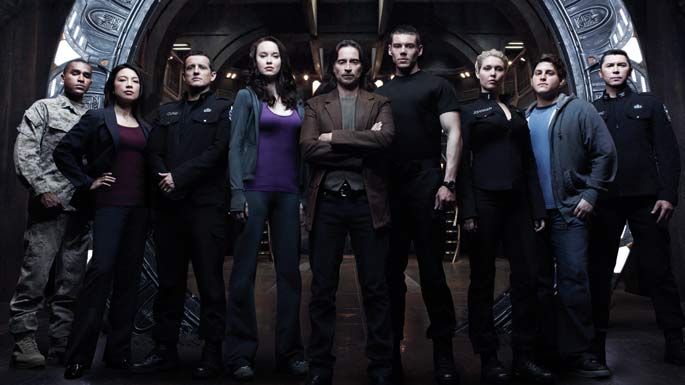
Stargate Universe is Back–Intervention

Well, the second season of Stargate Universe has premiered. For those who may have been following my blog, or had conversations with me about this show, you know that I haven’t been the greatest fan of the first season. First off, I love Stargate, and by that I mean both of the previous series Stargate SG1 and Stargate Atlantis. So I had a lot of hope for this show because I loved all things Stargate. But the first season was so flawed in so many different ways. The acting was all right, probably the only positive they had, but the writing was atrocious, and it was like they were just phoning in the whole thing. I never saw so many “let’s solve a huge conflict by going to a commercial and then coming back as if everything was solved off screen” moments in a show before. It was becoming a joke of what it could actually be.

So, when they left us with a cliffhanger for the end of Season One, I half expected them to come back and resolve the whole thing by some act of the gods that wouldn’t make any more sense than the rest of the episodes. But fortunately, they didn’t. Surprisingly, the first episode was not bad. But then, true to form, they went back to stupid resolution processes that keep causing me to pull out the few hairs I have left on my head.

The episode started out with a stand-off between the bad guys of the Lucian Alliance and the crew of the Destiny, the ship that has been the headquarters of this third installment of the Stargate enterprise (no, not that Enterprise). Anyway, the bad guy Varro ends up being a not so bad guy and saves the crew from being slaughtered but marooned on some desolute planet instead (geez, what a pal, eh?), and then he gets marooned, too, for going against the new crazy leader who takes over after Kiva dies from a gunshot during a gunfight with Colonel Telford, who also was shot in the stomach during the exchange. Anyway, the upshot is that the Lucian Alliance guys become all bad ass like and threaten to kill everyone, but Rush does a double cross, like he always does, and manages to play chicken with the Lucian guys by threatening to let some pulsar kill most of the people on board, except for where Rush and a few stragglers are holding up.

Meanwhile, TJ, who was pregnant last time we checked, and shot when Varro went nuts trying to, well, I really still don’t understand what he was trying to do when he started fighting his own people and grabbing for a machine gun that managed to kill everyone, including Elmo who was innocently recording his show at a nearby soundstage next door to the Stargate set, ended up on some planet they had been to before where they left half the civilian crew. Some aliens brought her there and it ends up being one of those situations where she’s kind of there and not there, but she’s going to be sent back, but her baby has to stay. That’s the deal. Or agreement. Or whatever. So TJ comes back, realizes that she lost her baby, because everyone on the ship thinks that she actually lost it on the ship, but in reality it’s living happily on some strange planet out in the Gamma Quadrant, or wherever it is they were.

So, here’s my thoughts. The show had some interesting action and character dilemmas. The Sergeant Grier character is becoming one of the most fascinating characters of all. He’s twisted, an asshole, but he’s so freaking loyal to Colonel Young that you have to just admire the man in his own violent way. Plus, the actor plays this character so well. I mean, I hate the character big time, but at the same time he grows on you in a pretty fascinating way.

The baby thing with TJ is completely understandable, although cowardly writing, in my opinion. They felt they had to get rid of the pregnancy, and I really think the decision was made to avoid having a baby they had to keep working with on the series each and every episode, because you know it would be that important if she had to keep it. It would be a constant set of episodes where her one defining line would be: “I have to protect my baby!” And honestly, I want to see her character grow without having to fall into such an old Hollywood, phoned in sort of characterization.

The Lucian Alliance guys bring an interesting dynamic because now we have a whole bunch of new characters who are now on the ship. Sure, they’re in lock-up right now, but you know they can’t stay there. They’re either going to be integrated into the crew, a la “the Maquis” from Star Trek Voyager, or they’re going to become further adversaries. Plus, one or two new actors might get pulled from them to become regulars, and some of them were actually pretty good, including the woman who takes over as their leader at the end. Unfortunately, they’re previous female leader died, and she could have been a fascinating character to build upon for the show.

They introduced the alien race (the one that saves TJ and keeps her baby) again, which means that they may have a much larger focus in the series. If not, they’re a bad plot save device. I’m hoping there’s something more going on because they hint that they’ve been paying attention to the Destiny crew and only jumped in when they had to do something to save TJ from death (she was dying from the gunshot would in the crazy machine gun spray by Varro’s bizarre heroics).

Rush is becoming a very conflicted character now. Before, he was trying to take the Destiny. Now, he’s sort of on the side of the good guys, so who knows where his loyalities and his motivations will lie for the future. I don’t think they ever really played out the end of the conflict between Rush and Young. Saying they’ll work together “for the sake of the crew” is okay, but logic dictates that there should have to be more to it than that.

Complaints: They’re still doing the last minute saves by Deus Ex Machima, and that’s getting on my nerves. Grier and Lt Scott were in one of those no win situations where they were stuck outside the ship, unable to get to a hatch to get back in before the pulsar hit. Even the annoying kid Eli couldn’t save them, so they were presumed dead. Then out of the blue they are safe, and they state that they were lucky enough to be shielded from the pulsar by where they were located. OH GREAT! No, that’s stupid. Don’t set up an imminent death moment and then say, oh we were saved because the pulsar just barely missed us, letting all of this happen off camera. This is continuously bad writing, and I was hoping they had fired all of those bad writers from the first season.

Unfortunately, those types of writing moments are what continue to bring down what can be a good show, because the season premiere was not bad. I enjoyed it. I just need them to be a bit more consistent and realize that the audience is not a bunch of teenagers who are constantly fooled by coin tricks.

Overall, I’m hoping this is a sign of better things to come this season, and even with reservations, I’m going to continue watching…for now.

Storms, power outages, and putting it all into some kind of perspective

Last night, I was sitting down to watch the season finale of Warehouse 13. It’s a quirky show that I’ve learned to like, and I was looking forward to see how they handled the final character arc they were playing out. Ten minutes into it, the cable provider’s satellite message appeared instead of the signal and indicated that it was having trouble connecting. Ten minutes after that, the message changed to “Acquiring Signal” and then suddenly all of the power went out.

So I sat in my apartment for fifteen minutes, thinking the power would eventually pop back on, but it never did. I found a flashlight to help me maneuver around the very dark apartment, and then figuring it was late enough, I went to bed.

The next morning, the power still was not on. Now, in the past I might have panicked and started thinking about all of the stuff in my fridge melting and going bad. But instead, I thought I get paid on Friday, and so what if I end up having to rebuy all of my groceries on that day. It’s not that big a deal.

Today’s a work day, so I got dressed in the pitch dark blackness and then went out to start my car. Well, I discovered a new problem: My garage door does not open without actual electricty. My garage is not attached to the apartment, so there was absolutely no way to get into it. My housing complex never bothered to include a key to the garage, so I realized I was not getting into my car. The housing complex’s manager’s office was also completely empty; apparently someone figured that with the power being off, it wasn’t a good deal to come into work on time. I guess they figured NO ONE would be interested in talking to the manager’s staff on a day when the entire complex was out of power. But oh well.

So I walked to the bus and took it to work. Haven’t done that in over a year, and it’s a very long walk to the bus, but I did it.

But all during this time I was walking, I examined the ramifications of the downed power grid. For about twenty minutes of walking, there was absolutely no power at all, although I did hear a generator working on one of the buildings. And then suddenly there were lights at about the twenty minute mark from where I lived. This area was not hit by the loss of power, or at least they had their power restored since it happened.

And this got me thinking about how little prepared so many people are for simple little hardships like this. I had a few flashlights in my apartment, so I was at least able to see. One of them burned out really fast, which told me that I had bought a pretty crappy flashlight. The others worked better, but it’s no fun finding out your flashlight is a cheap piece of crap when you need it most. It reminded me of some of those horror movies where someone’s in the dark, turns on her flashlight, and then a few seconds later it goes out. Makes the scene even scarier than if she never had light in the first place. But I digress.

What was interesting to me is that I’ve been through a few power outages over the years, including a few earthquakes that took place in California. And each one of those events caused me to prepare a little bit more for the next time. Each new scenario I came across made me feel a little bit more prepared for the next time, and that always felt good.

This time, I didn’t feel like I was really lacking all that much, and there was very little reason to panic. I did, however, hear quite a few muffled fights going on between couples and families in my apartment complex. This new entrance of events did not bode well for quite a few of them. And I wondered if this would cause them to be more prepared next time, or would it just cause them to complain a lot until things came back under normal, and then they’d be unprepared for next time as well. I don’t really know how they’ll handle it.

And that leaves me wondering about how well people are prepared for handling bad situations that they might come across. I know people have a tendency to go off like poffy hairdressers every time something doesn’t work out the way they planned, but what if something happens that occurs over a length of time? How do people handle that, and can they? I’ve been watching this BBC show “Survivors”, which is about a fictitious disaster that happens, leaving a small segment of the British population alive. It took place in the 1970s, but it was interesting how poignant those events were and how relevant they could be for today. If something happened that took away our sense of normalcy, how well would we handle ourselves? Would we live long and prosper (sorry, bad Vulcan humor) or would we end up panicking until we wasted away or died?

Unfortunately, I don’t have the answers to that. I’d like to think we’d never have to find out, but I fear that the answers aren’t ones I’d really like to hear.

Why war happens in this day and age, a primer on making change

There’s been a lot of talk about war lately. It seems that whenever international diplomacy starts to fall apart, or easy answers to complex questions don’t seem all that available, talk of war starts up, and people begin to think that this is the solution to everything. It rarely is, and on an unconscious level, I think most people realize that. But in the end, it tends to be the final vestige of common sense, and then we find ourselves engaging in war talk which leads, not surprisingly, to war.

But few people seem to think about why we find ourselves talking about war, except in simplistic terms, like “they started it” or “they gave us no other choice.” Unpacking such comments can often lead one to realize that such proclamations are the same kinds of claims we made when we were children, when that one kid threw a rock at us and “forced us” to engage in a fight. We all know that walking away was an option. We also know ten or twenty other alternatives that didn’t lead to “knocking his block off”, but for some reason the escalation of hostilities seemed to be the only one we chose.

But is it as simple as that? I don’t think so. I think there’s a part of that, but it still doesn’t explain why a nation would want to go to war. People don’t think collectively like that unless something happens that puts them into a disturbed state of mind (like being bombed unprovoked by another country, invaded in the middle of the night, or where hatreds between two peoples has gone on so long that no one is capable of thinking any other way). So, if we put this sort of thing on the shoulders of the leaders, the ones who make these sorts of decisions for nations, then perhaps we might figure out why we see so much war today.

One of the problems historians have with modernists is that people who think in terms of “today” often think that we’re in some kind of enlightened age where things today are so much different than they were in earlier eras. We see that we have so much more technology, so we sort of assume that our thinking has progressed just as well. Well, it hasn’t. If you examine most wars happening today, you’ll see the same sorts of horrific actions occurring today as existing back in the days of barbarism. Soldiers still pillage. Soldiers still rape. Soldiers still run off with the spoils of war. And no, there isn’t a nation around that is so enlightened that it hasn’t done these things. Wars in Africa have been decimating the infrastructure of those countries. The UN has been accused of, and has definitely stood on the sidelines of, numerous rapes that have happened as a consequence of war. The United States had a run of American soldiers removing the relics of Iraq during its most recent war, and in some cases soldiers had to be forced to give back these items as we had to keep reminding ourselves that “civilized soldiers don’t do that sort of thing”. Only very recently did we return some of the spoils of war from Iraq’s palaces, as some military units in the United States had them on display as “trophies” of the war.

So, our thinking isn’t any more enlightened than its ever been. In some cases we act better, but when it comes down to the nitty gritty actions of war, we look the other way when things start to fall apart. That’s a natural consequence; no one wants to think they are part of the problem but somehow always part of the solution.

Which brings me back to leaders. When leaders don’t get along with other leaders and can’t seem to find easy solutions to complex problems, they do what they’ve always done: They declare war. Or they just attack. You’d think that centuries having done this over and over that we’d figure out how to stop this, but we’ve never been all that good at learning from history. Or even our own pasts.

But what’s significant about this is that we’re still following a model that is no longer relevant for today’s time. In the old days, just a few hundred years ago, leaders of nations used to duke it out on the battlefield over all sorts of stupid reasons. (“You stole my girlfriend, so we’re going to wage an epic war.”) But for so many centuries, wars were fought between the nobles of their subsequent empires. A king would declare war, and then all of his nobles would rally behind him and fight. Sure, lots of soldiers would fight as well, but the important fighting was the accumulation of nobles. If a king wanted to go to war, he had to convince all of the people who would actually be going to war that they needed to go to war. So those people would take to the field and fight. That was war.

Today, we don’t have that model. None of the leaders who declare war, or who help that leader decide on war, actually fight any more. The nobles are now very rich men (some women, although not that many) who are part of an aristocratic infrastructure that has no connection to the military. Instead, our military consists of a lot of people who are not part of the economic elite. When we go to war today, we send a lot of very poor people out with the skills to decimate the very poor people in the militaries of other nations. No more do we send out nobles on horses, leading the charge.

This means that the people who decide to go to war are most likely not the people fighting it. Think about that for a moment. If you didn’t have to fight a war, what would stop you from deciding to go to war? Sure, some might have kids fighting in those wars, but look at our legislature when Iraq and Afghanistan wars started. Very, very few sent their own kids. Instead, they sent the kids of other parents. There was absolutely no risk to them. Only benefits. And the economic elites didn’t send their kids either. They received only benefits.

But that’s just the western nations. What about all of those other third world nations? Same thing. Their leaders are rarely fighting the wars. Instead, a lot of brainwashed, or patriotic (call them whatever they are), young people fight those wars for them. When you have this model in place, there’s absolutely no reason to avoid war. As long as the enemy doesn’t destroy your infrastructure and your continuation of being able to rule and enrich yourself, there’s nothing to lose. Even the economic elites of Iran and Afghanistan have suffered minimally, having stopped being rewarded by their former leaders and now enriching themselves through the corruption of having themselves selectively placed in positions that allow them to do so.

With this in place, why wouldn’t a leader want to go to war? That’s the question that no one seems to ask. Instead, they allow themselves to be rallied towards more wars. As long as you have standing armies that need to be used in order to be seen as useful, you are always going to see petty wars being fought for the purpose of justifying existence.

Until people stop accepting this as the way things are, the model has no reason to change itself.

Stewart/Colbert hold a real rally, but no one will probably take them seriously

Jon Stewart of the Daily Show is planning to hold a major rally in Washington, D.C. that is a direct response to some of the stupidity that has been happening by pundits and/or politicians like Glenn Beck and Sarah Palin. The theme of the rally, being held on October 30, is “Rally to Restore Sanity”. Stephen Colbert, not one to miss out on the fun, is holding a counter rally at the same time, in the same location, titled: “March to Keep Fear Alive.”

The significance of this event (these events) is that politics and media have gotten stupid lately. So, what better way to hold them in check but to call them out on it.

The problem that I perceive is that the news media doesn’t even realize that it’s being ridiculed for how bad they’ve gotten. What is most likely going to happen is some pretty face is going to announce the success of this “event” and treat is as if they’re somehow “in” on the joke. I think that’s what pissed me off the most about whenever the news covers Stewart and Colbert. They so often are NOT “in” on the joke, but the actual butt of it, and I’m sorry but laughing about it doesn’t make it any different when they go back to doing exactly what they were doing that caused the ridicule in the first place.

Unfortunately, this is a one time event. Which means that the media will get right back to being stupid again.

The Struggle of the Independent Film Creator

Small Change Movie 

I have a friend of mine who makes movies. They’re independent films, but at the same time they’re very well done and obviously put together by someone who understands how to make movies. The interesting thing is that he’s relatively unknown, and the chances are pretty good that he will be completely unknown for the rest of his career. But not because he’s not any good. It’s because independent movie makers generally have about zero percent chance of making it these days.

He’s currently in the process of completing his latest film, which he made for about $15,000. Now, if you didn’t make movies, you might think that’s a lot of money. I mean, it’s more money than I have to spend. I mean, let’s face it: With my expenses for online porn, I really don’t have a lot of money to spend on anything else. Oh wait, did I say that out loud?

Anyway, he’s made a few movies before that didn’t do very well because there’s a certain amount of stigma that comes with being an independent film producer. Those of us who watch movies are very critical, and for some reason, we want high-quality, big budget productions, even when the movies being made aren’t big budget productions that can afford to have such high-quality. Yet, we expect it, so if a movie doesn’t blow $15 Million on its budget, we’re probably not going to watch it.

Which means, fewer and fewer independent films get made. Which also means we get more and more crappy remakes because Hollywood has never really been all that innovative when it closes off the spigot of new visions, which often can’t afford such budgets.

Think about one of the biggest independent successes in our time: Clerks. It was made on a shoestring budget that was essentially paid for on the director’s credit card. Granted, he made it back in huge returns, but most independent movie directors don’t succeed that way. Generally, they go into serious debt, pawn the car and then live the rest of their lives in dire destitution.

The old way of breaking into the industry was to do a shoestring budget film and then have it shown at one of the independent film festivals. Well, if you notice the current crop of movies that show up at these independent film festivals, you might be interested to know that the definition of “independent” is becoming very skewed lately. Nowadays, big stars figure on breaking out of their connections to the big studios, so they fund huge independent films, and THAT is what shows up at these festivals. The low budget guy has been forced out by the big names with deep pockets that make movies often with venture capital funding.

Our ability to see new ideas is slowly being turned off so that the future is going to be nothing but Explosion Man VII types of presentations.

My friend is currently trying to do all of the work that big budget films have hundreds of people doing the work. It’s kind of amazing to see how he goes through such stress just to try to get his movie into its first movie theater.

Is it a perfect movie? Probably not. I mean, what film ever is. But it’s probably going to be something different than what you normally get to see. And it’s completely independent, and unfortunately it’s part of an endangered species that we could easily support by actively looking for independent features and supporting them. But we won’t because we’re finicky movie watchers, wanting stuff that’s only perfect and highly produced with lots of Hollywood money. And that’s why we’ll lose in the end. It’s like appreciating a mom and pop store, but never going there, always shopping at the local Wal Mart and talking about how we have to do something to save the local mom and pop stores. Sadly, so many people do exactly that.

So, here’s your chance. I guarantee that somewhere in your community someone is trying to get an independent movie seen. Support that person or lose that creativity forever. I mean, it really is your choice, and in a day where we don’t even get to choose who we get to vote for, you have to grab onto those little opportunities while you can. Or you lose them. But remember, it was your choice.

(the image is of the poster for Small Change, the independent movie that was the impetus of this article)

Poverty is getting worse in America, but no one seems to care

It was reported again today that poverty is getting worse in America. The info came from the Census Bureau this time. Seems that in 2009, poverty jumped to 14.3 percent from 11.3 percent in 2000. Unemployment is also worse. Yet, you wouldn’t know this from the pundits who want to do everything to convince us that everything’s fine, or everything’s just on a downswing, just waiting to start swinging back up to prosperity.

But there’s no evidence of that. We’ve had a couple of HUGE stimulus packages and MAJOR bailouts of industries and banks. Hasn’t done anything but make a few more millionaires into mega millionaires, and the job outlook doesn’t look any better, and poverty looks like it’s becoming more of the norm.

So what are we supposed to do with this information? Riot in the streets? Jump off the nearest bridge? I’d like to know because I don’t really have an answer. There are two political parties in power that will continue to be in power NO MATTER WHO GETS ELECTED, and these two parties are acting like it’s no big deal. Oh sure, they’ll complain if it might get more of their people into office, but in reality, they don’t care. Because everyone of them have jobs. We’re paying for them. They have jobs pretty much for life because the system is designed to keep them in power and to allow them to decide how much we get to pay them. We, on the other hand, have little to no power, and we have to listen as they argue about how much they should be able to charge us for the privilege of letting them serve on the government payroll.

Oh, we can get upset, but it won’t do any good. They’ll still be in power no matter how mad we get.

And people will still continue to get poorer, and the jobs will continue to disappear from us because the corporate heads of most companies have discovered there’s profit in not paying people. There’s even profit in bankrupting your company, cheating all of your customers, and in some cases, pretending you have a real company and charging people to rip them off before they go bankrupt themselves and the criminal gets even wealthier.

No, there are no jokes in this post because there’s really nothing funny about it. Those who might actually be reading this will just file it away to never be used again and then go back to wondering about whether or not Lady Gaga will wear something bizarre during her next television appearance. Instead of paying attention to who really runs the country, they’ll think about who they want to vote for on the next American Idol, or who to vote off the island.

Meanwhile, the poverty rate will continue to rise, and unemployment will continue to dip, while someone in government (doesn’t matter which party) will spin it to make it seem like everything’s better, even though everything’s not.

Kind of sad. I’ll close with a picture of cute puppies because that’s probably more important to people anyway.

Solving the Middle East Problems is like Dating a Supermodel Who Sees You Only as a Friend

It’s 2010, and politicians are still trying to solve the “Middle East Crisis”, and they’re doing so by doing exactly what everyone has done before and hoping for different results. As we all know by now, by the overused analogy by Einstein, doing the same thing over and over and hoping for different results is the definition of insanity.

We really need to face it: We’re not going to solve the crisis in the Middle East by doing what everyone has tried to do in the past. Getting people to talk is not a solution. It’s not even a stop-gap until we come up with a solution. One side hates the other so much it wants to kill everyone on the other side. The other side is so angry at the other side for hating it throughout history that they’ve pretty much resorted to the same tactics of killing those guys as well. Everyone involved remembers EVERYTHING bad that ever happened, and wants justice and retribution for every bad thing that happened. Neither side remembers a single bad thing they have done, so they don’t seem to see any problems but the ones being caused by the other side.

A major part of the problem is that everyone who tries to negotiate peace does so as if everyone involved has the goal of actually achieving peace. That’s not what they want. Maybe 60 years ago that might have been the case, but some decades ago, it became much more about achieving small, specific goals. All peace negotiations were centered around not achieving those goals in hopes of achieving peace. Bad idea. Not sustainable. Obviously, because now they’re back to killing each other again.

So, how do you solve the problem? Well, here’s what you don’t do: Don’t act as if getting them back to the negotiating table is actual progress. Both sides are usually willing to talk. Neither side is actually willing to do anything to create an atmosphere of peace. They both want their own gains and the demise of the other side. You really don’t have much room to negotiate when it comes down to that.

So, again, what is the solution?

Work it out over time by investing in the future of both entities. This means just giving up on the current actors involved because face it: They’re not going to do anything to further peace. But that doesn’t mean their offspring can’t be influenced. But you have to do it by setting a new paradigm and a new way of looking at things. You also have to go out of your way to not engage the parents in any way, to show future generations that we don’t reward bad people for doing bad things. Until we start to engage this way, we’re always going to be stuck with the current generation that is only going to continue to think in the ways of the erroneous past.

So, how do you do this? I mean, the parents are still around. You can’t just ignore them, right? Actually, I think you can. That’s not to say we can’t still engage them in the hopes of getting them to see the light, but we should go into every negotiation with the belief that the parents are really the problem, so we’re probably not going to achieve any success from them any way. However, we should constantly let it be known that we’re investing in their future, not in them because we’ve already seen that no matter what we do, they’re just going to screw up the future regardless.

This doesn’t mean we just disengage. What it means is that we take a different approach in all things foreign affairs. Our goal should be to start influencing neighbors everywhere by a process of dealing with foreign countries on an honest, straight-forward approach. I know this is a lot different than the old CIA-overthrowing dictators technique we used before, but it may take a generation or two to convince people of our resolve, but once on that path, we’d have a chance of influencing the rest of the world in a new way of handling international affairs. This might also bring to the table the future generations of these countries in the Middle East whose parents we gave up on after realizing that they are never going to understand anything but hate.

I know I’ve made a lot of jokes on how to handle international affairs (Puppy Diplomacy and the Elmo Theory of Containment), but I’m pretty serious about this. I originally called this approach the Friendship Over Time (FOT) Theory, and it’s a mathematics-based foreign affairs approach that involves iterative contacts with countries rather than incremental approaches and our current method of unilateral tit for tat (but never following it up) diplomacy.

As the title of this post indicates, our current process is a lot like dating a supermodel who is only capable of seeing you as a friend. It sounds like a great idea, and it might make you look good when you’re out on a date, but in the end, you’re going to go home every night hating yourself, wondering why she can never see you as anything better. For women, it’s a lot like dating me. Okay, that doesn’t make sense, but I assure you there’s a really funny joke in there somewhere.

Right now, Secretary of State H. Clinton is trying to make a name for herself by deluding herself into believing that bringing the Middle East heads of state to the table is actually accomplishing something. Instead, what it is going to do is set up a new process of disappointment that will most definitely lead to hostilities, broken promises and further deterioration of potential peace in the Middle East. I really wish people could see that instead of leading us down a false path of hope, thinking that somehow people who hate each other are somehow going to change their natural way of being.

Humor Writing Gets Very Little Respect These Days

I’m a humor writer. Been one for a number of years now. Sometimes it involves fiction; other times it’s incorporated into non-fiction. Either way, it is something I enjoy doing.

What I have discovered is that no matter what genre or style I utilize it in, it rarely gets a lot of respect by anyone in those respective fields. And that’s what I’d like to talk about today.

First, as most people who attempt to write humor know, good humor is very difficult to write. You either know what you’re doing, or you don’t. Those who don’t know how to write good humor end up writing really bad humor, but think that they’re funny. Such writing is very difficult to read, and quite often these conversations go something like:

You: “Um, I really like what you did with this piece.”

Attempted Funny Person: “What did you find funny about the piece?”

You: “Um…” Which quite often is followed by you dropping one of those smoke pellets that were used in cartoons and really bad spy films, where you make your get-away, realizing that if you don’t disappear quickly you’re somehow going to have to answer that unanswerable question.

Which then leads to the mistake so many people make when they think that humor must be so easy to write, and anyone can do it, even though they personally can’t do it themselves. This culminates in the erroneous postulation that humor is never to be taken seriously, so therefore it is not important enough to be used by “real” writers.

And this is the problem I find myself in today. As a serious writer of fiction (when I fall into my self-important moods), I find that some of my best fiction has been the type that has been developed through humor. My latest novel is probably the best novel I have ever written, and it is a full-fledged story of humor, involving a Greek epic of ridiculous proportions. Having said that, I have also discovered that when I discuss this novel with other people, they don’t take it, or me, seriously. They hear the “humorous” parts and immediately fall into this belief that both me and the novel are not to be considered serious, as in writing and writers. The fact that it is some of my best writing ever does not seem to make a difference. The fact that it involves some of the strongest uses of metaphor and allusion that I have seen in most modern day novels does not seem to cause anyone to consider it seriously. To everyone who looks it over, it’s a 300 page joke that doesn’t deserve that much attention.

I’ve discovered this to be the case with most humor I write. And people don’t even seem to realize that much of the humor I put forth has very serious implications when dealing with important issues. It’s just a different aperature to observe such circumstances. But because it made someone laugh or smile, it’s not to be taken seriously.

 This happens with my nonfiction writing as well. In a recent article, I attempted to deal with the concepts of cults and religions by pretending to create my own cult. The responses I received were usually derision and not very serious themselves. The fact that seriously important issues were being broached in an absurd way should have given people a reason to think about their own normal concepts, but instead of doing so, they saw a “ha ha” moment, and nothing was seen as being in any way serious.

Sadly, most humor writers, especially ones who write so that issues can be approached from a different perspective, are rarely taken seriously, except by very few readers who seem to “get” it. It’s like a conversation I had about science fiction on television, in which I was trying to argue that some of the greatest drama of our time has been covered by the science fiction genre. A person responded to me with: “I prefer real dramas, like Gossip Girl, so I don’t have time for science fiction.” Unfortunately, she wasn’t joking.

I find that same sort of criticism with humor. And no matter how many times I try to joke about it, it still manages to bother me.

What is the future of the literary magazine?

I’ve been wondering this question for a bit of time now with the emergence of the Internet as the place where everything seems to be centered in writing these days. In the old days, to be a writer, you first finished your education (generally), then you started publishing in literary magazines, then to commercial, high paying magazines, and then you started to work your way into getting that novel published. Granted, some people took an easier path, but mostly this was the formula for success.

The Internet has kind of changed all of that. Now, anyone can claim to be a writer and try to make his or her way without any previous work. This has developed a whole sense of a lot of junk that has been thrown into the mix, making it almost impossible for a writer to get recognized and even worse, that much harder for a reader to figure out what is worth reading. Bookstores start to gravitate away from the old formula, and the next thing you know (or we currently know) bookstores only publish commercial fiction that is churned out by publishers who are only willing to invest in already established names or, even worse, celebrities who are now writing books. Like Nancy Grace’s new book. Or Glenn Beck’s. Or the autobiographies of unimportant important people which were really written by other people. This leads to events like Tyra Banks announcing she’s writing her new book Modelland, which really excited only about four people, all of them employed by Tyra Banks.

Which brings it back to me. It’s my blog, so why not?

At one point, I was actually making a name for myself in the literary magazine marketplace. Editors started to know me. Sometimes they even commented on my published work when they saw me in another magazine. It used to be a really close-knit community, and I was breaking into it.

And then I stopped writing for about a decade and a half due to a really strange relationship I had with a woman. It took me that long to realize I needed to get back to writing, and here I am. But no one remembers me any more, so it’s like I’m starting over again.

Recently, one of those editors contacted me and published one of my later pieces of work in his literary magazine, a science fiction one. A success. Yay. But it leaves me wondering if this old model of publishing is still viable today. Don’t get me wrong. I’ll include it on my vita like I normally would, but I wonder if the publication of this story in this ‘zine is really going to contribute to my eventual success. Oh don’t get me wrong. I’d still have it published there cause I like the editor and support his continued attempts to build an audience for what he does best. But I’m still wondering if there’s a career out there for me because there are so many writers these days, and basically you’re competing with anyone who has access to a computer today.

It makes me wonder if the age of being a writer is somewhat over, unless you already made it famous before or you’re some kind of marketing genius capable of making a name for yourself in the sea of endless writers.