Monthly Archives: October 2010

Why the Democrats Are Having So Much Trouble in This Election

If you read the newspapers or watch that silly contraption all the new kids are talking about called a “television” set, you might discover that a lot of people think the Democrats are having a bit of a problem heading into the midterm elections. The blame is interesting. Some say it’s the fault of Obama for not living up to his expectations, or because he did things he shouldn’t have done (like that whole Health Care thing I keep hearing about from the intellectual minds of our time, like Sarah Palin and Christine O’Donnell). Others say it’s because the president’s party tends to lose seats any way during a midterm election, even though two of our recent presidents didn’t (but who pays attention to recent facts when it comes to spouting off statistical information that is out of date?).

But I have a different perspective that might explain why the Democrats are losing seats, or at least are heading into the election with the prospect of losing both the House, and possibly the Senate. I say this knowing that both sides will completely disagree with me, even though I’m right, but this happens every election, and then when it comes to me saying, “I told you so”, everyone lies and says they knew it already, even though they were saving the complete opposite right until what I predicted actually happened. I’m not even going to make a prediction here. I’m just going to tell you what’s already happened, which is pretty funny because people are so good at putting their fingers in their ears and singing “lalalalala” no matter how much they should just listen.

The Democrats are heading into this election losing seats because of two factors. The simple one is obvious. People are pretty pissed, and they need to lash out at someone. The Democrats are in charge of the presidency, the Senate and the House, so who do you think the people are going to lash out at? The Republicans who aren’t actually in charge? Even if the Republicans are responsible for EVERYTHING that’s wrong right now, the people don’t see that. They see who has power and that’s who they’re pissed at.

Now, having said that, I should also point out that the statistical phenomenon of people voting locally but being angry nationally should have actually saved the Democrats from a massive retribution from the people. Unfortunately, another vector is involved in the equation, and that’s the one that I think is making all of the difference.

You see, when Obama ran for president. he was swept into power by a dynamic force of change that was promised by a lot of his biggest fans. I’m not talking about his own team, or even Democrats in general. I’m talking about a lot of people who were so pissed off at the US because of the Bush Administration that they were so enamored by an outsider that they started to invent godlike status to his name. When Obama was swept into office, it was less of an election and more of a piety-filled coronation. People who wanted him were so in love with him that they made it out like he was no only going to do good things, but he was going to usher in a new age for America so that we would be the new Camelot on the hill, and every nation would worship this nation, and its new messiah for all of its greatness.

The media fell into it as well. The articles that were written about him were so gushing that I was beginning to be sickened by the coverage, and I was actually a fan. It was this admiration of him that completely threw Hilary Clinton under the bus, leaving her almost a roadkill on the way to the White House.

Well, those people who bought into this illusion started to wake up when they started to realize there was nothing glowing about Obama but the fantasy of what he was going to be doing. None of the great things happened. Even his biggest legislative achievement has been seen to be so controversial that almost everyone who ushered it in wants absolutely nothing to do with taking credit for it. Right now, Obama is helping his fellow Democrats by sending out his wife because she’s more popular than he is.

The problem the Democrats have right now is that they have a sobering electorate that now needs to be mobilized the last few weeks before the election. How do you do that? How do you convince a bunch of formely drunk drinkers that they need to go out and do it all again, except this time they have to pay for their own beer, and we’re going to be carding everyone going in and breathalizing everyone on the way out? You really can’t.

Instead, they’re facing an election where everyone is having to fend for themselves, and the only record they have to rely on is the one that everyone realizes was part of the drunken party atmosphere. Let’s face it. The Democrats haven’t done anything to gain the advantage going into November other than to not be the Republicans. That’s a pretty shitty herald to have to hang on your head going into an election.

The bigger problem is that the country is waking up to the fact that our elected leaders are a bunch of lawyers who are really only interested in what’s best for themselves. The promises don’t yield results, and the business of politics has shown itself to be a pretty sick animal.

Unfortunately, the people also realize that they’re left with a choice of two candidates in most races that are pretty crappy. And people aren’t really excited about yet ANOTHER election where the better of two evils is the electoral choice. There’s a very poignant Simpson’s episode where two evil aliens are discovered to be the real Clinton and Bob Dole during the 1992 election. Someone yells out: “I’m voting for a third party” and one of the aliens laughs at him, saying: “Sure, throw away your vote!” That’s where Americans are today, and it’s probably not a great position to be in if you’re walking to a voting booth in November.

Now, a voting critic would probably then say, don’t vote, but that’s not my advice. If you find that you abhor the candidates, go into the booth and vote for the issues that are of interest to you. Not every issue in an election is a vote for a candidate. Take advantage of your right to vote, go in there and vote for the issues that mean something to you and then leave the candidate crap blank. When someone here’s you complain and asks you if you voted, you can say you did; you just didn’t vote for any of the shitty choices that you were given. Until this country enacts a law that says you have to have 50 percent of the population vote for you, and not just the majority of the people who bothered to show up, then we might have people in office who realize they have to do something to actually earn a vote. But I don’t anticipate that happening any time soon.
The Rent is Too Damn High and Other Third Party Fun

After the fall of the Berlin Wall, after the collapse of communism in Eastern Europe, there was an immediate move to capitlism and democratization. If you read any normalized history or political book about the period of change, you read it as a collective move of the populations towards democracy, but that’s not really what happened. What really happened was it was a move towards capitalism. Democracy was just one of those buy one get one free things that came with capitalism. During the Cold War, people were interested in the things capitalism could bring, like food and shelves filled with products. They thought democracy had to be part of the deal, so they accepted it freely. It was only after they realized what democracy actually was that a lot of these newly “free” countries started moving back towards authoritarianism. The interesting part is that they still wanted capitalism; democracy just wasn’t all that important.

It is probably important to point out that one of the first things that came from this new formed freedom of democracy was a new sense of political parties. It might surprise you that one of the most popular political parties to arise was the Beer Party. Its platform was simple: “Vote for us and you get lots of beer.” They actually got a lot more seats than almost every other non-main political party. In the Czech Republic, they were so powerful they actually shared power in the coalition government.

Why am I talking about this? Well, in the United States, we don’t really have third parties that have any power or significance, but we do have third parties. Most of the time they’re marginalized and looked over as a joke, like the Green Party or the Communist Party, but in some cases they actually gain a bit of standing, like the Reform Party. And then they become marginalized like the rest of them and no longer stand for anything.

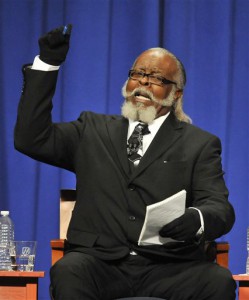
Yet, every now and then one of those parties comes along that has a leader who is so outrageous that he or she essentially becomes bigger than the party. This was discovered at the recent debate for the governorship of New York, when the debate was practically won by Jimmy McMillan, who is the governor nominee from a party called, wait for it…The Rent is Too Damn High Party. And as expected, Jimmy made every attempt to utter that phrase during his one opportunity to speak to the masses during the debate.

The strange thing is that he came off as the most interesting and most popular of the speakers during the debate mainly because he came off as being completely nuts. Will that translate to votes? Probably not, but it sure would be interesting if it did.

Which brings to mind a situation that happened when I was in California. There was an interesting individual who was running for president during the 2008 election. He was this guy that used to hang out at Carls Jr every morning, and by coincidence so did I. I had this theory that crazy people used to hang out at Carls Jr every morning and…um, I mean crazy people AND I used to hang out there. Anyway, so during the Obama election, I was minding my own business and this guy comes over to my table and says: “Aren’t you a political science professor?”

Now, other than the fact that I used to walk around with my graduate graduation attire on every day after I graduated, I have no idea how he figured that out, but I said yes, I was. So, he started to tell me about how he’s been running for president for the last 20 years, and the media never pays any attention to him.

Then he proceeded to pull out a briefcase with all of his papers. Okay, it wasn’t really a briefcase. It was a Manila envelope that was tattered with paper hanging out all over the place, but he called it his briefcase, so I’m sticking to that. He then began to show me, in no uncertain terms (well, uncertain if you’re certifiably nuts) the linkage between the Kennedy election, 911, and something called the Koala Bear Effect. I listened to him for about an hour, before I realized I was slowly beginning to understand and believe him, so I bid him fairwell and then ran home, screaming.

I wrote an article about this for the local newspaper, and then immediately started receiving inquiries from larger newspaper reporters, wanting to know how I was able to find this guy, as they’ve been looking to interview him for years now but never could. I said that he eats at Carls Jr every morning, and they didn’t believe me. Eventually, the calls stopped coming. I realized then and there that some reporters are extremely lazy when it comes to following up on a lead.

The point is: There are third parties out there that have some very interesting people running for office. And yes, there are nutcases out there, too. But as long as we keep focusing only on the main runners, we’re never going to change the system or even have new ideas. Unfortunately, there’s no one out there even trying to make a difference.

So, until the next election, all I can say is that yes, the damn rent is too high. Unfortunately, no one is planning to do anything about it.

My Blueprint for Fixing the American Political System

One of the problems inherent in trying to fix the American political system is figuring out what’s wrong with it that needs fixing in the first place. Often, these arguments get bogged down in partisan politics that end up with someone claiming that getting rid of the other side, or something equally as ludicrous, is the solution. I’m not going to argue any of that nonsense. Instead, I would like to tackle this subject as objectively and as usefully as one can.

First, the political system in the United States is not broken. There. I said it. Which might make you think that this discussion should be over, and then we can all get back to our Dancing With the Stars and Lindsay Lohan meltdown watching. But no, there’s more that needs to be said here.

I’ll repeat: The political system in the United States is not broken. It works just as it was designed. This should not be surprising to anyone who understands politics. Political systems are designed to work in a certain way, and even the most corrupt systems are designed correctly. It’s what’s done with them that matters the most. And that’s where the problem with our system comes in.

I’ll let you in on a little secret. The US system was not designed to work with this many people. It was the perfect system when we designed it because our government was really small. So was our population. But both have grown over the last two hundred years and some change so that our ability to do a lot of the things it was intended to do has diminished. When we first started, a member of Congress represented about 30,000 people. Today, a member of Congress represents about 703,0001 people. There have been no indications that anyone in government has any intentions of increasing the number of representatives, nor in addressing this particular issue. The main reason for this is because if more representatives were added, it would cut down on the power that current representatives yield. Asking a politician to give up power is like asking a child to give up his or her toys. It’s not going to happen.

And that’s where our problem starts. No one in government is willing to do anything about changing the problems, and I mean most problems, not just the first one listed here, because it would threaten their current bases of power.

So, let’s look at a few ideas I have for how we could make changes to make our system work, and then after I go through and tell you why it won’t happen, I’ll then address how we can actually make it happen, something no one seems to ever want to discuss. Unfortunately, most of these issues tend to get bogged down in the first two thoughts (what needs to be done and why no one will do it) and rarely do we entertain the actual process of how we can actually make it happen.

So, here we go.

1. Term limits. The biggest problem we have in government is the corruption of those who have the most power. The way to end the corruption is to remove people from the ability to overuse that power, especially for their own benefits. Term limits do just that. Why don’t we go there? Well, politicians who don’t want to lose power are very good at convincing people that the system stops working if their expertise is not involved. Yet, if a politician dies, a politician replaces that politician almost overnight. That argument has no merit whatsoever. What they’re really telling you is that they need you to believe they are expendible, but they’re not. Get rid of the incentive to pay off someone who is going to be in power for decades, and you end the ability for that person to become entrenched in a power base.

But that’s only a small start.

2. Lottery elections. Remove the elective influence of lobbyists, and you end their power forever. A lottery is a system where anyone can be chosen for a job. Politicians love to try to convince people that you need to have skill to be a politician. You don’t. Anyone can be one. That’s why the qualifications are so low. When we started this whole government, we put people into power who had very little political experience. Political experience is gained quickly once in office. Once you remove the throngs of politicians from the political mess, you no longer need experts capable of navigating through the mess because the mess disappears when the “other” politicians aren’t there to have to be cajoled to do what needs to be done. You don’t need an expert to maneuver through a series of amateurs if there are no longer political experts to have to worry about. Term limits eliminates the experts. Lottery elections make it so anyone can serve in government.

And that’s the important part. Serving in government should be a service, not an occupation.

3. More representatives. That should be a no brainer. As long as you don’t have people protecting power bases, you send more people to government to represent you better. Right now, my congressman has no clue about me, nor does he care. Nor will he care, even if I try to get him to care. I’m not already powerful, nor am I rich. Therefore, I am unimportant to him. That needs to change, but it won’t as long as we continue doing the things we’re doing. Being a representative should be like jury service, except it lasts for a few years. If you can’t afford to leave your occupation for a few years, you can take your name out of the election hat. Simple as that. Except, unlike juries, people tend to want to serve in government (which is why we have elections right now), so we’d probably actually have a lot more people willing to put their name in the hat. Well, let’s fix juries as the same time. If you want to serve in government, you also have to serve on juries. You don’t get out of one if you want to serve on the other. Might make the country a bit more interesting.

4. Change our system of government to that of proportional representation. Our winner take all system doesn’t work with so many people right now. We need proportional representation. We’re one of the only democracies, or representative democracies that doesn’t have PR. I find it pretty funny that when the US goes to a foreign country and helps them establish a new government (like we did with many Eastern European countries after the fall of communism, and during the Cold War itself after World War II), we almost always install a PR system, not our own. Why is this? Well, because ours is too complicated, and as diplomats have argued over the years, a winner take all system like ours is too easy to lead to corruption and dictatorship, or a dictatoral oligarchy (Aristotle’s aristocracy that has turned corrupt).

An interesting story, but when New Guinea was switching from a winner take all system to a PR system, they were suffering from horrific apathy of voting. After the switch, numbers that were in the 20 percentile, went up to the 90 percentile of voting participation. It dropped back down to the 80s and 70s, but that’s still well over twice the percentage we get in the US.

Okay, so what are the problems of converting to these simple little ways? Well, the people already in power today won’t do it. The two political parties say they represent the rest of us, but the second you threaten them with a potential loss of power, they argue that they are the true representatives and won’t even discuss it. PR is not even on their radar. Nor is lottery voting. If it threatens their power, they aren’t interested.

That’s why it will never happen by trying to install change from within.

This means you have several options for the future.

1. The first option is business as usual where nothing changes. People will continue to have less control over their political lives and will constantly be voting for the lesser of two evils. The only change that will ever take place is if some demagogue comes along and rallies the country to move in his or her direction. This is the kind of thing that has led to Hitlers and Mussolinis. Not really the best directions. It should be said that when you move towards a dictatorship, only two have ever really been considered enlightened and beneficial towards the people. One ended when the leader gave up government freely and went back to plowing his farm. The other never ended and led to dynasties that lasted nearly a thousand years, and the benefits were really only received by the aristocratic class anyway.

Without the dictatorship, things will continue to move forward as they are, and eventually the system will collapse through economic ruin. But if we’re lucky, it won’t happen in our lifetimes.

2. The second option is revolution which causes an immediate, violent change. I’m not a real advocate of this direction, although some revolutions, like the Velvet Revolution, were not very violent, but there’s no way to know how that’s going to happen until you let things run their course, and once a mob goes on its own, no one has control of it to keep it civil. So, you get whatever happens.

3. This is the option I think is probably the best, and that’s change through government. We have two ways of changing the Constitution, because in order to do anything of this magnitude, that’s what’s going to have to happen. One way is a constitutional amendment, but that requires getting those in power to actually change things. Probably not going to happen.

The other way is a constitutional convention, which is a huge gathering where everything is put on the table. With a huge grass roots movement that gains enough steam to call for one of these, the changes can happen. But this would be the only way to do it.

Unfortunately, there are two obvious problems. One, is that you don’t know that you’d have enough of a following to create the change you want, and the second is tied to the first in that a constitutional convention is a dangerous vehicle that might change things far more than you originally intended. We’ve only ever had one constitutional convention in this country, and that managed to completely change the government as we knew it (we used to be under the Articles of Confederation…the constitutional convention created our current system of government). So, you could be opening up a whole big can of worms.

But as things are right now, perhaps a new can of worms is exactly what is needed. To let things go on as they are is foolish.

But I suspect that’s exactly what we’ll do.

1(source: Reporternews.com)

A Few Comments That Need To Be Said

I thought I would take a moment and just make a few comments that need to be said. Unfortunately, only my stuffed animals read my blog. Well, my stuffed animals and my imaginary girlfriend…from Canada…and maybe that mysterious group of government assassins who have been trying to replace my nonfat milk with soy products, but you probably get the point.

1. If a news article is ever written about me that includes the phrase, “and police searched the wood chipper for signs of the body” then let’s just say that I’ve probably reached a saturation point of relevance and should immediately be put to sleep. Or if police were searching the wood chipper for signs of ME, then let’s just say that I’ve probably got worse problems than anything I might complain about on my blog.

2. I’m convinced Craigslist has no further relevance or importance now that they have removed the adult ads. I’m sorry, but it has no purpose any more. I attempted to put up a personal ad the other day, and it never showed up. The system said I did everything right, but it just never made it to the production side of the house. This has convinced me that all the site was ever really good for was advertising fake personal ads that were really a cover for underage girls selling sex to dirty old men and local law enforcement. Or it was local law enforcement trying to pretend to sell potential sex to dirty old men to put them in jail for wanting sex with underage girls. Or it was NBC trying to snare dirty old men trying to find sex with underage law enforcement officers, or something like that. Either way, underage girls were involved and so were dirty old men, so do the math, and you can probably figure it out. Let’s just shut down Craigslist for good. It doesn’t make sense any more.

3. No politicians are honest. At all. Oh, they talk a good game, but they’re really only interested in pretending to be something they’re not so they can get a job they probably don’t deserve. We should force them to create Craigslist ads instead, and then we can hire the underage girls to run our government. I’m just saying….

4. The “check engine soon” light on your car is a boldface liar. It doesn’t want you to check your engine. It wants you to bring your car back to the dealer so they can charge you $99 to tell you that they need to charge you $299 to replace a sensor that tells you to check your engine soon. What they’re really doing is replacing the light in the sensor so that it will go off two days after you leave the dealer’s shop. Mine did. And now it goes off for a week, goes on for a week, and then repeats the cycle. There’s nothing wrong with the engine, other than it has a faulty sensor that keeps telling me to check the engine soon. Or perhaps my engine is just lonely and wants friends. Maybe I should get a sensor that goes off whenever I’m in public that says “check duane soon…he needs friends”. And then people can pay me $99 for me to tell them they need to pay me $299 so that I’ll tell them to pay me $99 very soon.” I’m just saying….

5. The lives of celebrities aren’t important to the rest of us. It’s one thing to follow the news and be interested in celebrities. It’s another to have it thrown in our faces nonstop as if it’s important. I was tuning into the news the other day, and the point-counterpoint was all about Lindsay Lohan and Paris Hilton. I’m sorry, but there’s the economy, the wars in Iraq and Afghanistan, the election around the corner, and all sorts of actual news stories that are really news. We really don’t need too political partisans going back and forth about what kind of role model Lindsay Lohan is presenting for young girls who don’t even know who she is because she hasn’t been relevant in about a decade now. Same with Paris Hilton. Since her last actual television reality show, she hasn’t been relevant, significant or even interesting in a very long time now. The people who remember her are no longer capable of being influenced. The ones who are capable of being influenced really have never heard of her and probably think she’s some old woman who their parents might have found interesting. It’s amazing how socially irrelevant celebrities become in a few years.

6. The publishing industry sucks. No two ways about it. I get so discouraged trying to make it as a published novelist, only to find out that Snooki or Tyra Banks is being given a huge publishing contract to churn out drivel that my pack of monkeys (who write Shakespearean sonnets…remember them? The ones who if they write enough gibberish will eventually duplicate a Shakespearean sonnet) could have written just as well. Bah, I get so upset at this sort of thing.

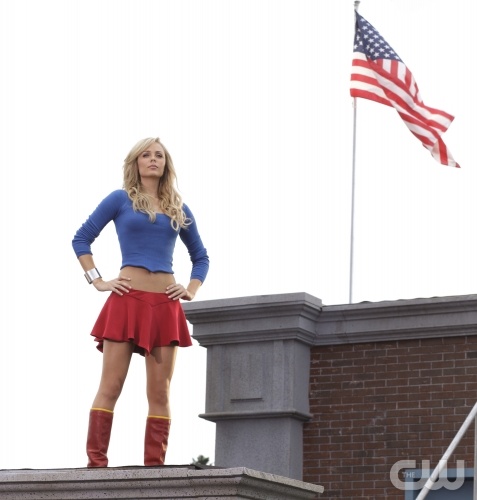
Smallville–Supergirl episode misses mark on its target demographic

First off, the latest episode of Smallville was interesting. The emphasis of the episode was that Clark needs to prove himself, or something like that, and that only Kara, his cousin is capable of doing so, so she reveals herself as Supergirl (not the name she uses) and pretty much has herself targeted instead of the future Superman.

Some immediate comments: It was great seeing the actress who plays Kara back again. It’s also kind of cool that they touched on the fact that Clark still can’t fly, and for a second he did…right before crashing down and burning. Oh well. Baby steps.

The problem with the episode is more in what they were trying to do than it what they did. There’s always been a freakish element to the show that I think is inherent in the people who develop the show. A couple of times they’ve gone with the whole leather aspect of the superhero costumed characters just cause it was kind of hot and innovative. Not to mention that all of the actors/actresses are hot as well, so it makes sense that they take advantage of their best attributes.

Last season, they went the fetish route with an attempt to create a false superhero identity for Lois Lane, in that her character was named Stilleto, and she dressed in black leather, in a sort of catwomanish costume with black stilletos. It was pretty obvious that they were going the full nines in attempting to make her fetishy hot. And they succeeded. They even threw in a few S&M jokes as well to even out the look.

This episode they went the full monty, so to speak. The main villain for the episode was followed to an S&M bar by Lois, who then dresses up as a dominatrix so she can get into a scene with the guy and then blackmail him into giving up his vendetta for the Blur (Superman/Clark). There was the obligatory scene where Lois walks through the dungeon atmosphere and people are doing all sorts of freakish things while pounding music is playing in the background. Then she puts the guy in handcuffs, pours hot wax on his chest and then elicits two hot women who help her take photos of the guy in bondage. Then she uses the photos to ruin the guy’s credibility.

Okay, here’s the complaint I have. First off, if they’re interested in appealing to the fetish crowd, which is the only reason you do in your face bondage sorts of scenes in a network television show, well, you’re going to get that crowd interested in your show. You’re not going to get the Bible thumping crowd, so you have already decided on your audience appeal. Well, then your next move should not be to try to discredit that same crowd by showing that once you reveal the photos, you’ve discredited your character. In other words, you can’t show the scenes, expect to excite your audience and then turn around and tell your audience that it’s not acceptable behavior. If you do, you’ve basically pissed off every potential audience member you could ever hope to attract. The Bible thumpers are going to hate you for going all fetishy, and the fetish crowd is going to hate you for going all moralistic and anti-fetish. Basically, you lose on all counts.

The whole CW thing lately has been to be as innovative, fetishy and sexually-aware as possible, and that’s great. But if you’re going to do it, go all the way. I don’t mean show nudity or go nuts with the sexual content, but at least show that if your emphasis is to show it, don’t ridicule it as well.

Having hung with that crowd for some time now, I find the ridicule from mainstream television to be really counter-productive because it’s been no secret that a lot of creative types are into all sorts of interesting persuasions (or lifestyles). As such, they find themselves having to sneak it into mainstream material and then pretending that it’s just innovative but vanilla at the same time. Well, it’s not. And unfortunately, they’re never going to convince the mainstream people who hate them that they should embrace them, so either go all the way with it and be proud, or don’t do it. Save it for people and innovators who are willing to take a risk and a chance with the idea. Otherwise, you force it right back into the closet again, because if the people who really believe in it aren’t willing to back it up, then who will?

One of the interesting things about Buffy when it was on the air was that it was never scared to just “go there”. It never apologized for it, and it went on with life like everything was normal when they did go there, and they did go there enough times to cause people in those communities to really appreciate it. I think that’s what the CW wants to do, but they’re too frightened to do so. Instead, they keep sniping from the shadows, hidden in closets and hoping that people will think they’re innovative so that they can sneak out and wave their pistachio banners for everyone to see. But that’s never going to happen as long as they keep hiding in shadows.

Not the greatest episode, but there’s a lot of promise there for the future. Here’s hoping they continue to try to innovate without hiding behind their intentions.

I’m Suspecting Amazon Doesn’t Actually Understand Writing

For a bit of time now, Amazon has been trying to herald the move towards electronic books, essentially ushering in a new medium for which books will eventually become the primary method of production. The Kindle, which is not a new story, was supposed to be their attempt to usher in this new era, and so far, it is doing a pretty damn good job of leading the industry. Sure, the iPad is an attempt to steal back some of that thunder, but it doesn’t take a rocket scientist to figure out that right now Amazon is in the driving seat with the capability of calling a lot of future shots.

Which is why I found it shocking that Amazon released the following statement:

Generally speaking, writers have two options when they sit down to create a new piece that can be distributed through conventional channels. They can author a short, attention-grabbing magazine-length feature that doesn’t require the reader to invest more than a few minutes of their time, or they can craft a long, 50,000-plus word novel that is meant to be absorbed over multiple sittings.

Now, if you’ve never been a professional writer before, this may sound quite innocent, and maybe even informative, but if you have any knowledge of the publishing business, and I mean ANY, you know that there are far more than two options an author has when sitting down to write a new piece. Basically, Amazon is stating a writer can choose from a short story or a novel, and now they have somehow managed to invent something in between that.

Writers have been writing all sorts of variations of those two models for centuries. Publishers have been publishing variations of far beyond those two models for centuries as well. Just recently, the whole unmentionable (by me, mainly) epic of Twilight released a novella, which just so happens to be a book that is too small to be a 50,000 normal novel and too big to be a short story. Sounds vaguely familiar, doesn’t it? Yes, writers have been tackling this genre long before Amazon came onto the scene.

To me, it appears that Amazon is attempting to somehow create a new category to invent a brand new revenue stream, even though that category has existed long before Amazon became a web site, back in the days when an Amazon was often referred to women I dated who used to beat me up when I didn’t comform to their expectations (but that’s a completely different article, of course). We don’t need this new category, especially when Amazon already charges different prices for different books based on the expectations and demands of the specific publishers.

To indicate they are somehow inventing a brand new length of writing after 4000 years since the first human scribbled some carvings on a cave is somewhat insulting to the rest of us. It’s not like they need special programming to release an e-book that has fewer pages than a “normal” e-book. The whole announcement sounds like a non-announcement to me, but more of an attempt to remain in the news now that everyone and his brother is releasing an e-reader and selling it at Best Buy.

(sources: TMC Net, Amazon’s web site)

How Do Anarchists Vote During an Election?

There’s been a lot of talk about elections lately, and whenever that happens the topic of voting tends to rear its nasty head as well. For people living in western societies, where they tend to be heavily weighted towards voting, there is a certain satisfaction that comes from the concept of enfranchisement (voting). Unfortunately, the concept of not voting is rarely given the respect it deserves, and quite often the idea is seen as horrific and counter-productive. I’d like to take a moment to talk about just that.

It’s understandable why not voting isn’t given a whole lot of respect, and we don’t have to go much further than history to figure out why. Throughout most of the history of us as a people, we’ve been struggling for the ability to make our voices heard. More often than not, the people in power have done everything to control who gets a say in the bigger picture, and the years have been a series of steps towards allowing everyone the ability to be properly represented when it comes to making decisions. In the olden days, kings made all of the decisions, and the people who chose kinds were the rich, elites who controlled pretty much everything. Fortunately, we don’t live in that sort of dynamic any more.

Or do we?

In the old days, a group of elites would get around and decide amongst themselves who should be the next king. Sometimes, they emphasized these decisions with violence, but in the end it was usually a class decision, often supported by economic clout. Today, anyone can run for office, and those people are decided by the whims of the people. However, it should be pointed out that so few of us have any say so in any of these decisions whatsoever. Quite often, to even be considered, a candidate must already be known by enough people to make it onto the ballot. In order to do that, the potential candidate must already be part of the elite class itself, because so few others have even a smidgen of a chance of being recognized by others when it comes to elections. This means that economic clout is necessary to get a person recognized, and before you know it we’re right back where we started with economic elites pretty much deciding who gets to run for office, and even more important, who gets taken seriously. We’ve even gone so far off the deep end that a number of our future leaders are choosing themselves based on their own economic clout, buying their ways onto the ballots, and because they have such connections already, we’re left to choose between them and other people considered viable by other economic elites.

Now, let’s take the argument even further, and let’s look at it from the perspective of someone like me, someone who hates the very nature of power itself. You see, I have a real problem with people who want to be considered the elites over the rest of us. I don’t see my elected officials as people who are trying to help me, but I see them as people who see themselves as special, who see themselves as individuals who think they deserve to rule over others. Because elected office is simply that, a vie for power. No one ever took a position of power because he or she was trying to be one of us, but quite often someone will pretend to be one of us in order to become lord of us (the recent debacle of Christine O’Donnell is exactly an example of that where she has been trying to say that she is “us” in hopes of ruling over “us”). Sure, every now and then you get an enlightened, potential leader, but most of the time it is some person who has felt that his or her education and experience makes him or her worthy of vying for power. And then once in that position that person becomes untouchable and set apart from the rest of us.

Don’t get me started on the eventual move towards dishonesty and corruption, but that seems like a natural progression that I think psychologists could easily link between the typical behavioral patterns of someone who seeks power and someone who abuses one’s position. I’m not surprised that so many of our leaders of government come from the professions of law and business.

But what this means to me is that I’m not a fan of anyone who purports that he or she should be representing me because honestly, no one can best represent me but me. And I wouldn’t in a million years ever say that I would be the best person to represent other people because I only know how to represent my own interests, and yes, I would be just as corrupt as everyone else out there in politics, because I would mainly be looking out for what I consider my own best interests. Sure, I would want to help people and do good things, but that doesn’t mean I deserve to be in power any more than the guy who sweeps the street outside where I work each day. What makes me more worthy of power than that guy?

Yet, a whole bunch of people think they deserve to go into government to make decisions for the rest of us. I find this wrong. I feel that any time someone decides to vie for power, that person should be feared because I have yet to come across a politician who was really interested in the desire to help another person by personally sacrificing one’s own well being, because that is what would be necessary for me to believe that a politician can best represent me. Instead, I find almost everyone of them to be much more interested in assisting themselves, and if you’re lucky enough to be part of the rising tide of those boats, then you’re going to benefit as well.

So, I find myself not wanting to participate in elections. Yet, I’m constantly condemned because I say I don’t believe in voting for the people running for office. People heard me complaining about the Bush Administration, so they tell me I should be voting for Democrats. But Democrats aren’t all that interested in doing anything specifically for me, unless I happen to be lucky enough to benefit in specific things THEY want for themselves. The last two years haven’t been all that great for the country, but then that doesn’t mean that the Republicans are going to make things any better for me either. They’re interested in taking care of their own, much as my definition of any politician would fill. So, voting for any of them is a useless cause because I don’t believe any of them should be in power to begin with.

So what is a quasi-anarchist to do? There are no solutions to this problem other than to compromise and give up on what one believes because the status quo isn’t going to offer anything better.

What would make things better, in my opinion? A lottery of elections. I don’t have a problem with people serving in government. I have a problem with people wanting to be in power. But a lottery would make it available to everyone, and anyone. But that will never happen because the people who want power will never give up power to the masses.

You see, I believe in democracy. If we lived in one, I think it would be the greatest government we could ever have. I just don’t believe in the fantasy we try to sell ourselves about what we think is our democracy.

But I do vote. I vote every election. I just don’t vote for people. I go into the booth and choose the yes and no votes for issues I find to be important enough for me to want to decide. That’s democracy to me. But whenever I see a name behind a position, I ignore it.

I just wish people would stop condemning me every election because I don’t want any of the people that want me to vote for them.

My Adventures of Gardening in the Concete City


One day in the Spring, I sat in the garden and looked at a wilting plant that was supposed to be a thriving abundance of vegetables I had planted earlier in the season. But there was no life, just a drooping, dying plant that had been picked clean by aphids and predatory insects. My months of nurturing this garden amounted to a complete and dismal failure. On this day, I sat down next to this dying plant and pretty much gave up. Not just on gardening, but on pretty much everything.

It’s not just you. It’s me.

Those were her last words to me. Not good-bye, not a fight, and not anything of any substance. Just an apology and then she cut the string on the two cans we used to communicate between us.

You see, this garden was to be my refuge from a life that wasn’t going as I had planned. I had such high ideals and plans for myself that should have put me in a much different place than where I ended up. My bestselling novels didn’t amount to the selling of any books, my occupation had stalled and sort of retreated because my desires were loftier than my accomplishments, and the relationship I had cultivated with the girl of my dreams had failed, miserably. The only thing that could have made this moment worse was rain.

It’s not just you. It’s me.

And then it rained. And then it poured. And then it thundered and lightning’d all over the place, as if to not only remind me that sometimes life sucks, but that sometimes life sucks times a million. Then the storm destroyed what was left of my garden. And all metaphors for a sucky life just sort of laughed at me. And I sat in the rain and got drenched.

The garden was supposed to be my way to forget about it all. Things hadn’t been working out (see above), so I lived in this house that had a really nice area for a garden. There wasn’t one there before, so I thought what a cool idea it would be to expend all of my energy trying to breathe life into some plants. I went to the store, bought a bunch of vegetables I thought might be tasty to munch on one day, and I toiled the soil, or so they say, or at least I think that’s what farmers say. I mean, I had no experience in farming. None. I might have watched Little House on the Prairie once, but that was about as close as it came. And I didn’t really pay all that much attention to the farming on that show when I did watch it, so I didn’t really have a lot of usable experience here. But I was going to garden.

And garden I did.

I hoed and hoed and planted and planted and watered and talked to the plants, and then I waited. Meanwhile, I hoed some more and watered and talked and all that sort of stuff.

You see, I didn’t want to deal with my life. I fell into a depression that was just getting worse each day. The logical thing would have been to get back out there and start regaining back some of what I had lost, but I sort of gave up. All that I really had was my gardening. And I figured if that was all I could do, then that was all I was going to do.

But it never grew. The garden died almost as soon as it started to grow. It was like nature was waiting for it to sprout and then pounced on it almost immediately. It didn’t stand a chance.

I was never going to be a gardener.

During that storm, I sat in the rain and just let the world pound down on me. I figured it was doing what the universe wanted to do to me any way. At some point, I went back into the house, tossed the gardening stuff I had with me into the trash and then went to bed. That night, I figured I had nothing left worth working for, and probably nothing left worth living for. The storm had washed away anything worth continuing.

The next morning, I puttered around the kitchen for a bit and then wandered out into the backyard to see what damage the storm had done to my obliterated garden. Hopping through the defunct garden was a little brown bunny, sniffing away, looking for something to eat.

“You’re too late,” I said. “The storm already killed it.”

The bunny just stared at me for a second, probably wondering if I was a threat, and then it hopped away, never to be seen again.

It’s not just you. It’s me.

I went back into the house and made some breakfast for myself. Somehow, it didn’t seem as bad right then as it did the night before.

The Man Who Would Be Dad

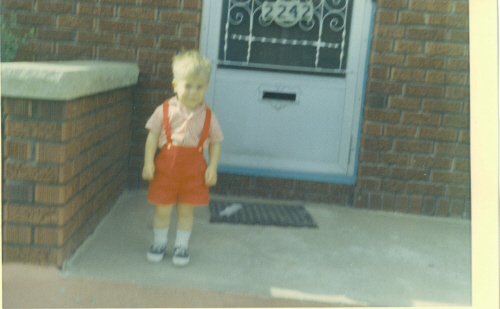
Like many others of my generation, I grew up without a dad. I ended up being of that household that was lumped into “Unwed mother”, which often gave the impression that it was the fault of the mother that the father never stuck around. But that’s obviously for another article.

Not having a dad made things interesting in that earlier days in school were often spent explaining why there was no dad around. So, I used to invent all sorts of reasons why my dad was never around. As I grew up in the late 60s, early 70s, one of my earlier fantasies was that my father was missing in action from Vietnam, and that one day he would return. As years went by and he never returned, that fantasy switched from MIA to killed in Vietnam, because no one wants to have to wait forever. And then the fantasy sort of faded into some obscure belief that he must have been a veteran that may or may not have gone to Vietnam, and then it no longer really seemed to matter.

The fact is: My dad left when I was about one or two years old. He started by shouldering his responsibilities, and then he just disappeared, the common joke of “went out for smokes and never came back.” For years, I was convinced that it must have been something I did. Then it was a condemnation of my mom. And then, finally an acceptance that neither one of these possibilities were the case. I came to the realization that my dad was an asshole. He had responsibilities, and he decided he didn’t want anything to do with them.

For years, I was convinced that he would come back, because all sons want to think that their dad would care enough to come back. But he never did. Unlike other great stories of child abandonment, there’s usually that poignant story of how the dad showed up one day, did some magnanimous thing and then left again. But that never happened. He never came back. He never cared.

A friend of the family told me that she had seen him in town, kind of ran into him at a supermarket and said hi. He looked all embarrassed, responded quickly and then slinked away into the shadows, never to be seen again. Years later, I realized how very much like him that probably was.

Even more years later, I became a counterintelligence agent, which is only important to this story because becoming something like that means that I had at my fingertips the ability to find pretty much anyone I wanted to. Lumped with the skills that also come with that ability, I knew for the longest time that if I really wanted to know where he was I could find him. But I chose not to. At the time, I often told myself that it was because I wouldn’t like what I found, and another part of me believed he was probably already dead.

After I left government service, I decided, on a whim, to find him. So I went back to my mad skills of finding people and found him. Well, I didn’t exactly find him. I found his gravestone. He died in 1985, twenty years after I had been born.

For years, I had always imagined that he was secretly watching me, observing my accomplishments as I checked off a list of important moments in my life, like attending West Point, my military career, my education, my published novels, my victory in the struggle over whether to choose paper or plastic in the checkout line, etc., but he died before any of that ever happened. So he never would have known.

So I made a pilgrimage to his grave site, even if to complete some symmetry of the whole thing. And that’s when I saw it.

Kenneth Duane Gundrum

Loving Father

You’ll Be Missed