Tag Archives: Business

The Music Industry Just Doesn’t Get It…They Lied to Us

You would think with the amount of money that goes into music studios that they would have actually hired someone who is capable of telling the executives what is really going on. Instead, we have a bunch of studio heads that are so convinced they understand the pulse of the consuming public that they don’t have to listen to anyone, and for some reason they’re losing more and more money every year.

The problem emerged in the beginning when music went from albums to CDs and then online. The old paradigm consisted of music studios finding talent, packaging it and then filtering it out to radio stations that then opened the doors for people to rush to record stores to purchase the brand new content. Well, somewhere down the line that model fell apart, mainly because a few little promises made never came through, and then the industry changed overnight as a result.

What I’m talking about was a promise that the music industry made to consumers when albums were on the out and CDs were coming in. The simple promise was that CDs, which were cheaper to make than albums, were going to be cheaper for customers. This was the selling point to get people to give up their vinyl albums and welcome CDs. The promise was that CDs would cost $9.99 all of the time. Well, when CDs first came out, that WAS the price, and then quickly they started to increase to $13.99 and other such prices. Now, if you’re lucky, a CD can be found “on sale” for $9.99 off of the retail price of much more.

We were lied to. Oh, the naysayers will claim such a promise was never made, but for those of us who were paying close attention back then, the promise definitely was made. Instead of following the plan, executives realized that consumers are stupid, or so they thought, so they just went back on their word and sold CDs for what they figured they could get, rather than for how much it was promised.

A funny thing happened right after that. The Internet showed up. You see, if that never happened, the music industry would still be the major entity it was a few decades ago. But no one anticipated that a couple of geeks at universities wanting to talk to each other would lead to something so powerful and so overwhelming. But the Internet happened, and the music industry was in the wrong place at the right time.

The consumer population was kind of pissed at the music industry at this time because of the whole lie thing, and then when the next generation realized that it could get all of this expensive technology for free, they jumped on it. So two things happened at once. The music industry cheated the older customers by lying to them while the younger customers grew up with a new paradigm where they got everything for free. You see, if the music industry hadn’t lied to the older generation, they might have actually had powerful allies on their side. Instead, they had a bunch of pissed off customers who decided to just let the music industry fend for itself. Where these people could have been the “moral” guides to the younger generation, who wants to be the moral guides to people who are doing something you figure the bad guys deserve anyway?

Well, the music industry sat it out, thinking things would fall back in place, but their real ally, musicians jumped ship on them as well. Oh sure, the established musicians were in their corner, but consumers are a fickle sort, dumping old artists for new ones because music really doesn’t have standards that are controlled by executives. Music is music and people will seek it wherever it can be found.

And a lot of future musicians realized that if they wanted to make it in the industry, there was a new direction to take, one that required they take their music directly to the people. This opened up the industry to everyone, and as more and more independent artists showed up, the music industry had less and less control over the content.

That’s kind of where we are today. The music industry is trying to save itself by reestablishing the controls, but no one really cares anymore. There was an attempt to force streaming content under draconian rules, but music executives are starting to realize that this isn’t leading to sales. What the music industry never realized was that the future was going to be somewhat of a free for all because if you can’t trust the industry to do what they promise, then you look elsewhere for results.

Recently, I bought a CD for the first time in about a year. Yeah, it’s been that long. I’m still pissed. It was Taylor Swift’s new album, and it was on sale for $9.99. Imagine that. Anyway, it’s a great CD, but it’s probably the only one I’ll buy for at least another year. I’m one of their solid customers, and it’s taken a long time to bring me back to the market. Before I stopped buying music, I used to buy three or four albums a week. They’ll never regain the market share they had before. It’s just not going to happen.

Like I said, the music industry lied back when it needed to win over its customer base. So, hopefully as these executives find new jobs mowing lawns, or whatever it is unemployed music executives are capable of doing, they’ll remember it was really their fault. And they should keep in mind that if they promise to mow someone’s lawn and then go back on their promise, they’re probably not going to get paid. The real world is kind of mean that way.

Caveat Emptor is why American is no longer the world leader it was

The other day, I bought a package of 16 chicken sandwiches from Costco. It was the really good kind with cheese. Anyway, I was all happy about it, thinking that 16 sandwiches should hold me for quite some time. So merrily, I began my odyssey of eating sandwiches for various meals, convinced that I would be a chicken-eating happy camper for some time to come. The other day, I put the last chicken sandwich in the microwave, thinking nothing of it, until I realized that it was the last one. It was then that I started to think back on the recent events of my life, and realizing that unlike other people, I didn’t think about the mad affair with the twin blondes from Sweden, the narrow escape from death I had fighting ninjas who were hell-bent on keeping me from their attempt to destroy our American way of life, nor did I reflect upon my invite to the White House where President Obama asked me to fix that small problem he was having in the Middle East. No, my reflection went straight back to that purchase of 16 chicken sandwiches and my realization that I had not in fact eaten 16 chicken sandwiches since buying that package. In fact, I could only remember eating 8. It was then that I realized I had probably been cheated, fooled and/or bamboozled by yet another American greedy corporation. I had been cheated of chicken.

You see, what I realized was that this chicken selling company had done was package 8 separate chicken meals and then count each packaged sandwich as two meals. When they put the content stuff on the side of the larger package, they decided that each package included two chicken sandwiches, even though the package appeared to be one, tasted like one, and fooled me into thinking it was one. Yet, for credit purposes, they were able to put “16” on the box, counting each of those sandwiches as twice as much food as it really was. No one would know better because when you had that many sandwiches, you wouldn’t know you were down to your last one until you had already gone through more than one man could possibly count at one time. Okay, I’m being a bit ridiculous, but the simple fact of the matter is: They told me I had more food than I actually had.

And I’m pissed.

You see, this happens a lot. The soda companies have been doing this for years, and it has been driving me nuts. I am currently drinking a single bottle of diet Pepsi right now. When I read the contents on the side of the bottle, the manufacturers are actually claiming that I am drinking 2.5 servings of soda right now. They are wrong. I am drinking 1.0 servings of soda right now because no logical person on the face of the freaking planet actually shares a bottle of soda with 1.5 other people. Nor do they poor only 1.0 servings and then put the other 1.5 servings back in the fridge. No, most people open up the one bottle and chug the whole thing down as one serving. This 0.5 crap is just that. Crap.

This also happens with potato chips. Buy a package of chips and that bag of chpis that you are planning to eat alone is actually 2 or 3 servings of chips that they give you the caloric data for one serving, so you think you aren’t eating as much. But everyone knows that one person sits down and pretty much munches down the whole bag.

Somewhere down the line, people who sell us stuff stopped being honest with us. Granted, they weren’t really always that honest with us to begin with, but even further down the line they got worse. The old line of caveat emptor “buyer beware” has always existed, but at some point the honesty should have gotten better, not worse. I remember a time when if you bought something, you were guaranteed to get satisfaction from the manufacturer for the life time of the product. Not any more. Now, when you buy something, Best Buy wants to change you an extra $60 to guarantee that the item will work past the first year. In other words, you can’t trust any company concerning any product because the only guarantee you get from the manufacturer is that it was so cheaply made that you either need to insure it past a year, or you’ll have to buy a new one in a year.

This is my belief why America has lost its way in the international marketplace of products. Years back, you would mention an American product and there was a certain satisfaction that you bought something of quality. Whenever you heard “Made in China” that was an indication that you went the cheap route. Now, any product you buy today is considered the cheap route because NOTHING is guaranteed to be good. If you buy a Japanese car, expect it to accelerate and kill you. If you buy an American car, well, just expect everyone to laugh at you because American car companies haven’t made good cars in decades. Oh, we say they do because we’re all patriotic and all that flag lapel wearing kind of crap, but in reality, when someone mentions an American car, we laugh at them because American cars are generally overpriced, gas guzzlers and overpriced. America no longer stands for quality and good prices. It really doesn’t stand for anything any more.

So, I’ll probably go back to Costco and buy 16 more chicken sandwiches, but at least I know I’m really buying 8. I just like to know when I’m being cheated so I can at least live a little better with myself.

More Common Comments on the Day’s Events

Just thought I would mention that most of my new posts tend to go on Open Salon these days. If you’re following me, that’s probably the best place. Some of my more original stuff appears on my main blog site, and I apologize if some of that doesn’t make it over to Open Salon. I’m discriminatory on where some stuff goes and others does not. Anyhoo. On to the day’s comments….

1. Egypt. There’s really no way to avoid this story right now, nor should we, yet it’s amazing how many attempts are conducted to do just that. In case people don’t realize it, Egypt (or more likely Tunisia) has opened the door to a post-Huntington fourth wave of democratization in the world. For those wondering what I’m talking about, Samuel Huntington’s The Third Wave postulated that democratization occurred in three huge waves over history, starting with the US revolution being the first wave, the period after World War II being the second wave, and the eventual fall of communism (predicted in his book, even though we’re past that period of time now and he was right) was the third wave. I’m anticipating a fourth wave, which was touched off with the collapse of Tunisia, and now with Egypt, there’s every indication that it might create a wave of further democratization in the Middle East.

But there are some important points to consider. Just because an Islamic-based nation (or influenced nation) moves towards democratization does not mean it moves towards more positive relations with the United States. Unfortunately, we’ve been seriously influenced by a lot of statistical inferences over time, like the infamous duality of “no two nations in a democracy have ever gone to war” and “no two nations with a McDonalds have ever gone to war.” Political scientists and media hounds have been repeating those lines for decades, even though neither one of them is completely accurate. They just sound good and make people think that as long as other nations move towards democracy that everything is going to be all right.

Well, the simple fact of the matter is that the United States has a long history of backing some pretty evil people, and it’s in a lot of those places where this fourth wave of democratization is taking place. Just because two nations are democracies does not mean they will be friends. And another misstep of information: Being a democracy does not necessarily mean a system that exists under the economic policies of capitalism. Sure, they can go well together, but it doesn’t mean they have to. We’re just so used to it being that way because that’s what we grew up with. Athens wasn’t really a capitalistic society, and it had the first accepted democracy. So we need to be really careful when we throw around terms, because they bog us down with tiny details that tie our hands when we need to be very flexible.

For those who eschew democracy, or even anarchy, this is an interesting period of time, but we need to realize that just because a people demand democracy doesn’t mean they’re going to get it. The US revolution brought about our democratic republic. But the French Revolution, while it brought about a short period of democracy, also brought about Napoleon and years of dictatorship and warfare. We need to be really careful about these things.

But we should support democracy wherever it appears, even if it doesn’t benefit us personally. I doubt the democracy of Egypt is probably going to be the greatest thing for the United States in the beginning, because we stood by the evil dictators through thick and thin. But after years of supporting their freedom (in the future, not in our past), we might develop a friendship with an emerging democracy. And if we ever want to have good relations with Muslim and Islamic countries, this might be the way to start, because after time a democracy might build a friendship with another democracy once it is discovered that neither harbors any ill will towards the other. But right now, we’re so bogged down in our war on terror, that I don’t see that happening any time soon. There’s too much noise taking place for a truly beautiful song to be heard.

2. The Storm That’s About to Come. Supposedly, there’s a huge storm about to hit the area where I live. I’ve heard predictions of 18-20 inches of snow, winds that will increase the wind chill geometrically and all sorts of weather evil that precede total Armageddon, the Rapture and Elvis Sightings. Fortunately, every storm this season has completely missed us. I don’t know how, but we’ve been really lucky. But they say that by 6pm tonight, Zeus himself will be throwing lightning bolts at stuck cars on the side of the road and Loki will be out doing all sorts of mischief like he normally does in periods like this.

Okay, there’s going to be a bad storm. I’m not looking forward to it. But it’s Michigan. Sometimes, it gets bad. Hopefully, people will be safe and the government will perform as it is supposed to do, and in a few days we’ll all get back to normal again. Then we can all sacrifice a cock to Asclepius, or Xena, or whatever deity or hot chick is appropriate.

3. Charlie Sheen’s Melt Down. Um, supposedly Charlie Sheen went into some drug-induced moment where he asked some porn star actresses he was partying with to move in with him and babysit his kids. Why don’t I ever have weekends like this? I mean, last weekend I was at Costco trying to decide between Honey Nut Cheerio’s and Frosted Cheerio’s. That was the extent of my drama. Not once did “porn star moving in with me to babysit my kids that I don’t have” EVER appear in that dilemma. My life is so boring. This week, he’ll be in rehab with seriously overqualified therapists asking him if he made the right choice, and I have no one to help me figure out if choosing Honey Nut Cheerio’s was really the right choice I should have made. Not that an expensive rehab therapist would know better, but I can’t see the harm in asking a porn star actress for her opinion. I just don’t have any on speed dial like Charlie does.

4. Kim Kardashian is supposedly upset that she posed nude for a magazine. Um, I’m upset I bought Honey Nut Cheerio’s at Costco instead of Frosted Cheerio’s. Sadly, both were consequences of choices we made. I’m just not going to suffer as much due to the results of my decision. Although those frosted cheerio’s sure looked good on that box cover. But at least I didn’t pose nude for a magazine, which means so many more people won’t need therapy next week.

5. I forgot to make my speech about how I don’t care about my students’ grandmothers. What am I talking about? Well, every semester when I go over the syllabus, I usually make a spiel about how I don’t care one iota about the health of any of my students’ grandmothers, meaning that if your grandmother dies during the semester, tough luck. You’re not getting any extra breaks, like taking a week off from school because of poor old grandma’s ailing health. I know it sounds callous, but I don’t really care. My first semester of teaching, it was the number one excuse from students as to “why you need to let me take the exam late”. It then became a part of my syllabus reading where I indicated that if your grandmother was dying, ailing, dead, in jail for robbing a 7-11, accepting an Oscar/Nobel Prize/therapy…I didn’t care. Exams were on a certain date and you needed to show up on those dates or it was YOUR fault for not being there. I forgot to give that spiel this semester, and already I have one dying grandmother and a funeral for a great grandmother that has made it “why you need to let me take the exam late.” Students need to be more original with these things.

6. The Oscars/SAG Awards. I don’t care. Really. I saw one movie out of all of the movies that are up for awards. It was Inception. And I didn’t like it because the blue ray I watched it on was defective to the point of where I couldn’t hear what was going on with 30 percent of the dialogue. It could have been a good movie, but I’ll never know. Didn’t watch a single one of the other movies. Wasn’t interested. So I’m not on the edge of my seat waiting to see if Colin Frith (or whatever his name is) wins for a movie about some stuttering English guy’s speech he gave. Nor do I care if the Dude gets an award for a remake of a John Wayne movie. Or if the chick from the really bad Star Wars movies (the prequels) gets the award for some ballet movie she made. I’ve heard the movie was really good. Okay. Big deal.

And that’s my problem right there. The awards aren’t for us. It’s for them. It’s a big ceremony they put on where THEY dress up, THEY present a bunch of awards, and THEY receive a bunch of awards for things THEY did that helped THEM profit greatly. It would be like going to work tomorrow and receiving awards on television for correcting memos that I do each and every day. So a person made a movie and then got filthy rich off of it. I don’t care. Yet, they feel they need to flaunt it in front of the rest of us. They built a whole industry around a gimmick where a guy used a camera to show trains coming into train stations (where the whole thing started). Some of them are really good. Others, not so much. But with so many important REAL things going on, a yearly event honoring these things seems gratuitious at best. Perhaps they should change the Oscars to present awards ONLY when something so groundbreaking occurs that we all should take notice. Awarding them every year means we award a whole bunch of crappy things because it happened to be the one year when all the great visionaries decided to make a rom-com instead of the Godfather. I’m just saying.

7. Android vs. iPhone. They’re just cell phones. Not artificial hearts. I had an iPhone and now I have an Android phone from Samsung. My reason for switching was because of Apple’s walled garden. But personally I was happier with my iPhone and if they would have fixed it so I could have done something about spam phone calls, I would have remained with them. But in the end, both are just phones. That’s it. You can call them smartphones, but who cares? They’re just phones. People call me on them, sometimes. Other people I call. If they disappeared tomorrow, it wouldn’t be the worst thing ever. Stop acting like they’re curing cancer. They’re just freaking phones.

8. Eva Longoria and Tony Parker divorced. So what? Why do we even care what celebrities do with their personal lives? This reminds me of when Melissa Etheridge came out as a lesbian. One of my friends chided me because I was a fan of her at the time, saying: “Now what are you going to do now that she’s come out as a lesbian?” I stared at him as the moron he was because he somehow felt that information was relevant. It didn’t make her music any less enjoyable. I wasn’t ever expecting Melissa Etheridge to show up at my house and want to have sex with me in the past, so how exactly did this change anything? Now, Shania Twain getting remarried was different. I mean, she’s the foundation of my religion, even if she doesn’t know it, so that was much different.

9. Certain News Sites will ignore Sarah Palin for some announced length of time to prove how irrelevant she is. I’m sorry. Who is she?

10. Stephen King’s The Stand is to be made into a major motion picture. I’m interested, even though I was very pleased with the television miniseries they did of the book. The Stand is definitely one of my favorite books of all time. I liked both the old version and the newer one he released later (some people are very definitive in which one they prefer).

That’s all for now. Wish I had more to say, but my life is really boring.

No End to the Misery that is the City of Detroit

On Sunday, in Detroit, a man walked into a police station and opened fire, injuring four officers before being killed by the rest of the officers who returned fire. As of the next day, there has been no motive, explanation or even bizarre justification for his actions, other than he was some guy who walked in off the street and decided to pursue “suicide by cop.” Since then, there have been all sorts of commentaries, ranging from the expected to the outrageous. But what hasn’t been discussed at length is how much this should have been expected. I mean, no one expects these things, and when they should, they rarely do.

Detroit is one of those cities that ends up on practically every bad list that gets reported about cities in the United States. Literacy is lowest, crime is highest, murder is highest, corruption is constant, racism is everywhere (from expected racism to reverse racism), gang activity is amongst the highest in the nation, and the city is pretty much a cesspool and an example of what should not be done with a city if you want to achieve some sense of normality and progress.

The former mayor of the city is in jail, as are numerous members of its former governments. Crime is so out of control that people don’t even think about moving there; it’s on the lowest of the low lists for people moving to a city. Whenever a television show has something to do with Detroit, it’s almost always a gritty police procedural where people die, cops are on the edge, and there’s lots of gang violence. I have yet to see Meg Ryan looking for love in Detroit, although I wouldn’t be surprised to see some random hood beating the crap out of a suspect with a baseball bat because “dat’s how we do tings in da Troit!”

What’s interesting is that Detroit is one of those cities where if government really cared, it could actually use the city as a petri dish of improving urban despair all over the country. Other than Washington, D.C., and maybe parts of Los Angeles and New York, Detroit has pretty much everything going wrong for it so that a concentrated effort might actually make a very significant difference.

But no one seems to care about places like Detroit, except for the people who live in Detroit, and for some reason they don’t seem to matter. If you follow the politics of a place like Detroit, you notice that quite a few of the people running for office all run on the same types of platforms, about improving Detroit so people can be proud of it. But then a few years down the line, people throw those bums out because it turns out they weren’t interested in helping the city, but in helping themselves, usually to the coffers and whatever they can lay their hands on before they’re either caught or voted out of office. Even when they’re caught, quite often the masses will rally around the culprit, somehow claiming that going after a public official the people elected is wrong, that even though the person is corrupt and stole millions of dollars, he’s “their” thief, so the government should leave him or her alone. It’s often enough to cause one’s head to spin continuously at the ridiculousness involved.

Detroit is very much becoming one of those Mexican provinces where government has collapsed, and the drug gangs have taken over. The police are fighting a never-ending battle to regain control of the city, but like a proud parent, they just refused to believe that they’re really not in control. It would not surprise me to discover the culprit in this current case is some drug dealer who felt slighted by the police, and this is his way of striking back, or that he’s some trigger man for a drug gang that has decided to send a message to the cops.

Or he’s some delusional man who decided life wasn’t worth it, and suicide by cop was the easiest way out. Either way, there are problems in Detroit that need some serious attention. Unfortunately, the experts IN Detroit are obviously not the ones who are capable of handling the problem. They’ve been doing the same things over and over, hoping for different results (the Internet definition of insanity).

I used to drive through Detroit a couple of times a month, and it’s like entering a different world when you do. You go from the nice, grassy landscape, and then the journey on the freeway turns into dirtied concrete, and you realize that this is not a place that has any respect for itself. And why should it? It’s just getting worse and worse.

What’s going to happen over the next few days, and possibly weeks, is locals will point their fingers at what they’ve always pointed their fingers at, blaming unions, gangs, politicians, big government, little government, the auto industry, drugs, guns, overzealous police, underzealous police, and they’ll come up with the same conclusions they always do. But in the end, they’ll do nothing, hoping it was an anomaly that will never happen again.

Until it happens again, and then some reporter will start off a story with some ridiculousness like: “They never believed it could happen here.”

How Do You Fix the Problems of Race in America?

I’m going to talk about a subject that no one wants to talk about, mainly because to do so automatically causes the person talking about it to be perceived as either a racist or clueless.

I was watching an science fiction show from the BBC (British Broadcasting Channel), and something kept striking me as odd, but I really couldn’t put my finger on it. The show was about some frumpy woman reporter who solves science fiction mysteries with a couple of neighborhood kids, which happen to be about three or four high school youths who bounce back and forth as to which ones are the main characters at any one time. One of the main characters of the kids is a young black man, who plays one of the centered character’s best friends. As I continued watching this show, it started to remind me of a previous season of Doctor Who (the new ones broadcast over the last few years), and I realized that there had been a central black male character who played an off and on love interest for the main female partner of the Doctor. It was when I thought about these two characters that I started to realize what was wrong. It took only a few American shows on television for me to realize exactly what that was.

Let me explain by first pointing out what is so significant about these two black characters on both of these shows: Not once was I ever reminded that they were actually black. The parts they were playing could have been played by anyone of pretty much any race or ethnicity. They fit in so well with the fictional dynamic that I started to think that perhaps they were creating some kind of weird fantasy in Great Britain. And then I started to understand that these characters represented something even more fascinating: They didn’t have to “act” black in order to be black. They were accepted no differently than any other character on their respective shows.

Now, if I was to watch something like Law & Order in the US, I’m immediately shown that the one main black character is a street-talking, tough guy who fits a very strong stereotype, which not so ironically was somewhat created and prepetuated by the former hip hop/rap/whatever star who plays that particular character. As I moved from one show to another, it was very rare to find an African-American actor or any ethnically-diverse actor who was not playing to an identity that was substantiated by a whole lot of stereotypes and markers that continue to separate disparate identities from the centralized, white, middle class expectation of what is often construed as mainstream. A few anomalies do come to mind, however, like Tony Stark’s buddy in Iron Man, who represents a military colonel, not played using any obvious stereotyical constraints. Or Morgan Freeman when he plays a scientist or detective. But those are rare exceptions. Instead, I find myself seeing way too many television shows and movies where whenever there’s a call for a person of race, color or ethnicity, the part is usually played to maximum effect by revealing how diverse that individual can possibly be.

It shouldn’t go without saying that such continuous uses of identity might actually be creating serious problems for any type of reconciliation or desires for integration. During the 1960s, there was a huge battle fought for desegregation in the nation’s schools, because smart people realized that separating people by differences was going to continue to make it impossible for this melting pot of ours to ever actually start melting. But something happened that we should have figured on, but we seemed to ignore it once we won our little victory in the courts and on the school steps. We forgot that previous separation might just make it very possible for continued separation once we got people into those schools together. Having been brought up during that period of desegregation, it was not unusual for me to experience large periods of time where I lived with separation in the schools themselves. Blacks sat with blacks, whites sat with whites, and Hispanics stuck with Hispanics. There were a few cross-overs, but there needed to be more, and the institutions themselves did very little effort to actually break down those barriers. Today, they’re institutionalized, and I don’t see them breaking down any time soon.

Part of the problem is that the organizations that were formed to end the separations are now part of the continued separation today. Civil rights leaders of the past, who were instrumental in getting people to rise up and be noticed, are still fighting the same battles today, but instead of pushing for desegregation and cooperation between disparate entities, the fights usually end up being more geared towards future separation and honoring identity rather than melting identity so everyone can be cooperative and as one.

What decades of this behavior have done is set up a paradigm that I don’t think is going to easily be fixed as long as we keep going on with the same MO we’ve been using since day one. Add in socioeconomic problems, and we’re at a point where I don’t think we have any recourse but to try to fix this now or end up at a point where it can never be fixed by peaceful methods. I”m starting to fear we may already be at the saturation point as it is.

A year or so ago, I was attacked and beaten by three young black men who targeted me because I was an easy target. It has been so hard to not see this as a racial thing and to keep from painting every black male I see as a potential attacker. Since that moment, I get nervous and extremely defensive whenever I see a group of young black men walking towards me on the street. It shouldn’t be that way, but it only takes one incident of such impact to cause someone to change his natural way of thinking about things. I still find myself crossing to the other side of the street when I see a group of young black men walking towards me, and that was something I never thought about doing before.

Our society has managed to create an identity marker of race and ethnicity that is continuously perpetuated by our media and entertainment entities. Part of me thinks that by doing so, we’re also telling people of diverse race and ethnicities that it’s okay because it’s expected of them to be like the stereotypes we put forth in these channels. Yet, something tells me that if I was walking along the street in Great Britain and I came across a group of young men of a different race or ethnicity, I’d probably not have the same complications as I do here. And that tells me that we’re doing something seriously wrong here. Whether it’s due to the drug culture we’ve developed that’s tied to a gang mentality, or if it’s just a side effect of the continously divergent class distinction we have in this country where wealthier people are further and further removed from the poor, I’m not sure. But something’s seriously wrong.

Unfortunately, I don’t think anyone is actually working on making things better, but hoping that continuing to do the same things we’ve been doing will somehow improve the general picture. But that’s never going to work. We have a real race problem here in the US, and part of the reason we’re never going to solve it is because no one wants to talk about it. We have this PC spin to everything these days, and the only people talking about race are the ones who are consumed by it, which means we’re going to continue trying to solve gushing chest wounds with band-aids.

So, here are a couple of thoughts.

1. The problem needs to be addressed by everyone, not just by former civil rights leaders or sociologists who think the solution is to have government create more bureaucracy. Everyone needs to be involved in both the planning and the implementation.

2. Poverty needs to be addressed and dealt with. Too many people are struggling to survive, and whenever you have that dynamic, you have people willing to do some unruly things to gain leverage over others.

3. We need serious conversation about the drug war. It has created an element of society that should never be a part of our very foundation. Whether the solution be legalization, even stronger enforcement, or whatever, we need to get everyone involved in tackling this issue. Or it will continue to destroy us.

4. Schools need complete integration. The goal should be the elimination of race, not the celebration of it. Unfortunately, there are too many people tied to the benefits of separation and identification. That one hurdle may never be achieved, which is sad because this is probably the one hurdle that might make the biggest difference.

5. Elmo needs to be involved somehow. He always gets this right.

Burdened by the Status of No Power, No Voice and No Audience

I’ve been watching the struggles taking place in South and North Korea lately, and I find myself becoming very frustrated by the whole thing. But I’m not frustrated because they’re moving towards potential war (which happens ever decade or so), but because I often feel like I have potential answers to the problems that plague these people, and I also realize that there’s no chance whatsoever I’d ever get anyone to listen to me even if I had the definitive answers they needed.

What concerns me is not just that I find myself frustrated in life because I always seem to have a different perspective on things, a nuance that I often think might actually break through some of the problems that occur, but that I also realize that there are so many others out there who have to be just as frustrated as I am. This might be different if we lived in the 1600s where people generally were limited to their own surroundings, but today, we have the ability to travel pretty much anywhere, and we also have so much more liberal education than we’ve ever had before. It’s like we’ve been given the tools to do so much more with our lives, but we’re still limited to chiseling marketing messages on stone tablets to sell to our neighbors.

As someone who actually teaches college students in both communication and political science, I’m even more burdened by this because I often feel that I’m selling a box of false goods that empower people to do absolutely nothing because they’re never going to have the ability to influence anything beyond local issues. Yet, so many of them are probably growing up to do so many unique things that will never be given ground, so they will end up just as frustrated as the rest of us.

Yet, we keep seeing this group of people who do have access to the higher echelons of power, and they’re completely fucking everything up because their only claim to their station is that they knew someone, scratched the right back or were lucky enough to be born rich and/or entered into the right school.

The sad thing is, I’m sure this complaint is made on a daily basis by so many other people as well. Yet, I keep wondering what sort of compensation is being paid intellectually to keep so many people happy with their limited access to the pedastals of power. Sadly, I don’t think anyone who is in power really cares, other than making sure that those who are registered to vote continue to come out and continue voting them into power longer so they can continue to do mediocre services while enriching themselves, their stations and their offspring to continue the nepotistic process.

What worries me even further is my belief that an enlightened society cannot survive with more and more enlightened societal members realizing that the whole thing is somewhat of a joke where so few benefit at the expense of so many. There’s only so much one can believe in a system of “anyone can be one of the elite if one works hard enough” before realizing that it’s really a crock of shit. When that brass ring consists of 99 percent luck and 1 percent skill, that doesn’t leave a lot of very skilled people very happy with their lot in life. In the 1900s, you could laugh it off by believing that there weren’t enough people to cause problems, but nowadays, I’m not so sure.

Anyway, not much more to say. Must go back to the trenches and continue pounding on my tablet with my chisel as I make other people wealthier. Well, I work for a nonprofit, so I’m not sure how that fits into the picture, but I’m sure you get the picture. I guess we all pound on our tablets with chisels and then no one gets any wealthier. Hmm, might have to look for a better metaphor/allusion than that one.

Watching the Right Television Shows to Come up with the Right Political Answers

The current state of these United States of America shows us not very united in the states of America. It’s pretty sad because for the last two hundred and some years, we’ve weathered some pretty strong storms that should have only made us that much stronger. You know the old line of “whatever doesn’t kill me only makes me stronger” which ironically is the only thing I have left from the woman I once loved named Marisha; it used to be her favorite line for reasons that are neither important nor all that interesting. Well, that line isn’t working anymore. We seem to be much more about divisive politics than any concept of working together for a better solution.

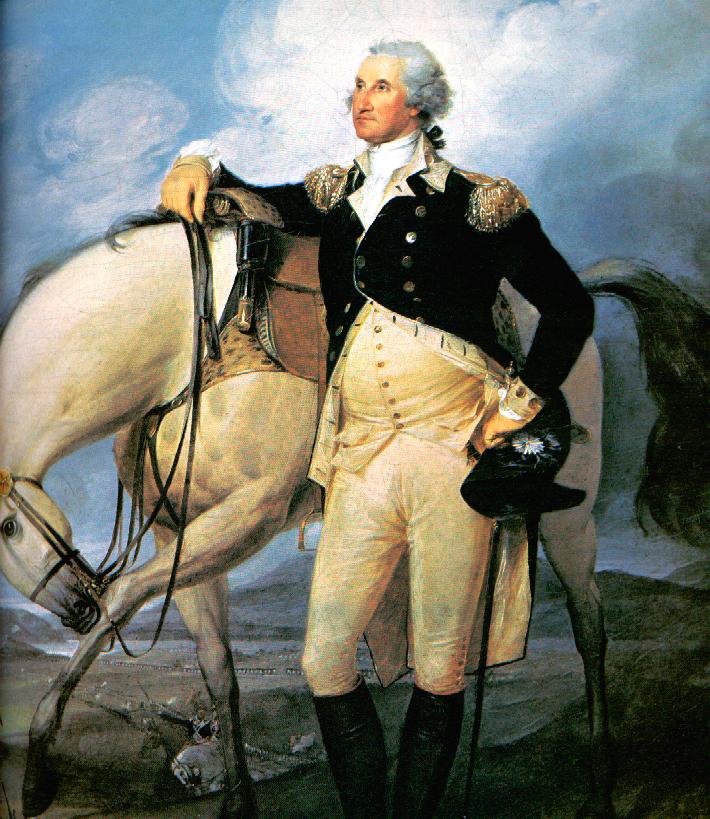
George Washington is the one on the right

The political writer, Morris Fiorina once wrote a brilliant book called Divided Government. In this book, he argues against common sense in that he shows through statistical examples that when our government has been divided, we’ve actually accomplished more in Congress than when we’ve been under united government. Unfortunately, his analysis wasn’t forward thinking enough to project what might happen when divided government becomes an unworkable government, when the divisions between both sides might turn out to be the destruction of government, rather than the process that allows time for “cool and deliberate reflection,” a concept once deemed that would lead to the “real voice of the American people” by George Washington in a letter to Henry Knox on September 20, 1795. Right now, we’re in a weird political process that is completely destructive and causes very smart people to act petty and stupid. When looking for leadership, which is what people do when surrounded by annoying destructionists, we’re finding all of our leaders have become ten year old children who think that pointing at the other kids and saying “he did it” is somehow what America is looking for in its leaders.

If one were to look for allusions and metaphors to explain what is going on today, I can find no better example than that of television, which is often referred to as either the “idiot box” or the mind-numbing device that causes people to stop thinking. Why should we be surprised that what we’re receiving from our leaders is nothing less than the ridiculousness that comes from stupid television shows anyway? Unfortunately, the metaphors that make sense indicate that we’re watching the wrong television shows in hopes of finding some kind of mechanism to lead us to a better tomorrow.

Right now, we seem to have leaders who have latched onto some of the worst television metaphors to dictate the types of actions they are emulating in our government. If you watch any type of television news, like CNN, MSNBC or Fox News, basically all you’re getting from commentators and pundits is analysis that sounds like Howard Cosell or John Madden describing some kind of football game where players are trying to create brand new plays by doing stuff that people have been doing for decades, yet seem to think that it’s all original. During the election, it was like watching professional wrestling, where oversized behemoths yelled “I’m going to get you, Hulk-man!” as they rip off their t-shirts and promised bloodshed of the like never seen before. But we have seen it. It’s called bad politics, and it leads to bad government and horrible representation. What these types of metaphors really show us is that our leaders are playing another zero sum game with each other where no one actually wins because each side is only focused on winning, not on what they get out of winning in the first place.

I’m going to include another television reference that can explain where we need to be going and how we should be looking at our current political dilemma. Before I do so, I apologize because I’m going to be calling on my geek nerd credentials to do so. But in the end, it will be worth it, so stick with me on this. I promise. It will be worth it.

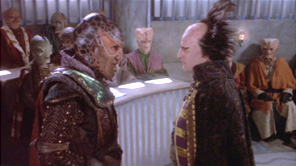
The show I’m referring to is one that was developed by J. Michael Straczynski called Babylon 5. Without getting into all sorts of geeky crap about the show, I’m mainly interested in one of the races that was developed during the series, called the Minbari, a race of balding aliens who were also deeply spiritual. What made them significant in the show was that they were running around the galaxy for thousands of years before humans took to space, so they had a lot more time to really mess things up. Their government was run by a 9-member council that was made up of 3 members from the religious caste, 3 from the warrior caste and 3 from the workers’ caste. During the seires, the Minbari ended up in a civil war between the two more powerful castes, the religious and warrior. Why I’m discussing them is because their spiritual leader realizes at the end of their war (and the way to solve it) is that the religious and warrior castes had completely forgotten the most important caste to their civilization: the workers’ caste, the one that created all of their ships and buildings and was the one caste that suffered the most during the war fought between the two vying for power. As a result of this realization, their leader then elevated the workers’ caste to more positions on the council so that they would then be the dominant caste from that point forward.

These aliens didn't get along either, so their people ended up killing each other. Nuff said.

We have the same problem right now. We have two political parties who are fighting amongst themselves for power in our government, yet the ones suffering the most are the workers, the common citizens who don’t actually have a seat at the table, yet are the ones who are victimized by whatever decisions the two political parties make in their name. But these two parties have stopped being representative of the people a long time ago and now only really represent themselves, but claim to represent everyone else. But they do so in name only. Look at the events that have transpired over the last decade and that should be readily apparent to everyone. We’re fighting two wars that were picked by people in power who cared zero for what the common person thought about these wars. Yet the people fighting these wars are the common folk who make up the entire organization of the military that has no voice in the decisions the government makes for them. During this last election, the people were angry and spoke by using the only voice they have (the ballot box) and threw a whole bunch of people out of office because they haven’t been listening but speaking rather than listening. So a new group of people are now moving into office, and they don’t seem to get it either. Rather than realize the people sent them to Washington to get things done, their leadership thinks the people sent them to Washington to continue fighting with the government and again, getting nothing done.

So, let’s look at this from a different angle and treat government as a hospice where our goal is to treat the situation as triage. Perhaps if we look at it that way, we might realize what needs to be done to fix this problem. But I suspect that even with such an easy allusion, they still won’t get it. Or they just won’t listen. They’re pretty good at not doing that. But this triage is a blueprint to what people actually want done, even though I realize no one is interested in actually listening to the people. Think of this triage as Maslow’s Hierarchy of Needs, where we take care of our basic needs first and then work our way up to actualized desires once our struggle to survive is taken care of.

1. Our people need jobs. That’s been hurting us from day one. This means that the first thought should be to getting people to work. This doesn’t mean fast food jobs or retail jobs. We are a post-industrial nation that has a high-end technologically driven citizenry. This means that we need manufacturing jobs that develop high-end concept materials, like electronics, medical needs and computerized knowledge. This means government needs to help these types of industries grow and grow in our own country, not by farming out the manufacturing to third-world countries so only executives of these countries have jobs. We’ve done enough outsourcing as it is. We need stabilized positions in this country, which requires a serious focus on technological education for a workforce that has grown stagnant in building 20th century technology that is now being taken care of elsewhere. We need to focus on the 21st century and beyond by satisfying that market in a way that only our workers can do it. That means constantly being at the forefront of these markets like we used to do back in the early part of the 1900s with the previous markets of technology.

2. Once jobs are stabilized, we need to focus on making sure that people have money to spend. I’ll let you in on a little secret that government right now has no clue about (because they certainly don’t seem to get it). People don’t care about the budget. Politicians and government wonks do, but the average person doesn’t care about the budget. What the average person cares about is that the government doesn’t keep taking more of what they bring home from the jobs that they do have. This means that this whole budget mess that Obama, the Republicans and the suddenly backbone finding Democrats are fighting over is pissing off the average American. Right now, those out of work are about to lose their unemployment benefits that were about to be stretched out further. The fighting means they will now receive nothing. That pissed off a lot of people who still can’t find jobs (see number one). The second plank of the problem is the Bush Tax Cuts. People don’t really care that the rich are getting them, too. They only care that when January comes around they don’t end up paying hundreds of dollars more in taxes that they weren’t paying before. If you want to piss off the bulk of the American people, let those tax cuts expire.

This is the wrong time for the Democrats to suddenly rise up against their own president. They somehow think that people are going to believe they’re now on their side because they want to punish rich people. The average American isn’t going to agree with that. He or she is only going to see a smaller paycheck and then be really pissed off at the government. If you want to lose any mandate you think you have, that’s going to do it.

3. People want to see their government getting along. They don’t care that one side wins over the other. Most Americans aren’t that tied to the fight that they care. When they are suffering and see infighting, they see a system that doesn’t work. That makes them go nuts during elections, kind of like the last one. If nothing happens as we move towards the next election, people are going to revolt again. And when they start to realize that revolting doesn’t actually change anything, they’re left with one of two choices: Ignore it and become apathetic, or revolt the way people have done historically. That second choice seems like such a wild card that no one in government believes it will ever happen. Almost every revolution that destroyed a previous government came from nowhere and happened almost overnight. NO ONE sees it coming. And that’s what makes them so scary. So, continue to ignore the problems and hope they’ll go away, or do something about it.

What that means is our government representatives need to start looking at how to govern rather than how to zing the other side. If that doesn’t change, our government probably will. Just not as anyone wants, because changes of that magnitude rarely turn out as anyone actually wants.

The Epic Battle for Your Money

There’s an epic battle being fought these days in which the goal is nothing less than your hard earned money. Sadly enough, the only ones not benefiting from the struggle are us, the actual consumers. We’re mainly the victims, the targets and the ones who manage to keep making it so that we keep getting screwed over, cheated and abused. If it wasn’t so tragic, it would be funny.

I’m not exactly sure when it happened, but at one point we went from being consumers who were part of the system to consumers of content who are outside of the system. In the old days, maybe as recent as the 1970s, we were seen as consumers in a big triangular product cycle that started with us working for companies that produced content that was sold by businesses back to the people who were responsible for making the products. It was a closed system where people in other businesses provided products while we sold the products from our revenue stream back to them. Everyone came out ahead because we all made enough to survive, and we all got the products that everyone was making for everyone else.

But something happened that caused a real problem to the system. You see, at one point, those companies that make the products realized they could make these products without the actual consumer production staff being a part of the manufacturing cycle. In other words, they could automate the production without having to pay a production staff and still manage to create enough products to sell to those other cells of the manufacturing cycle. Except, those other cells were also figuring out how to cut out the production people so that they could automate their production and maximize their profits. After a certain amount of time, we cut out one prong of the triangle, leaving basically the profitable company management and the salespeople. However, we’ve kind of cut out the people who used to be the producers of content, figuring we can do it without them.

Unfortunately, those people were also the main consumers of the content. Without them, we end up producing a lot of product for people who can no longer afford to purchase it. This was fine as long as we were only cutting out a certain segment of the production audience, but now that everyone has figured this is the way to profitability, well, we’ve made it so that there may be too few consumers to actually participate in the broken triangle.

This was a problem that has been seen for quite some time, but big companies refused to pay attention because they were making money without very much effort, and they saw no end to it. Let’s examine that for a moment. And we’ll do it by examining the old model and then see where the new model sort of makes everything no longer make sense.

The old model of capitalism was that as long as we continued to produce products, we could always sell them for a profit. This always existed with the necessity that the consumer market was always going to be able to actual purchase the items needed. Well, what has happened is that a lot of the money that is to be made in this area has now been transferred to huge corporations that reward very few people for their efforts. Outsourcing and downsizing was inevitable as companies started to exist for the sole purpose of providing better results on stock market exchanges rather than to a people-driven profit margin. But eventually, outsourcing was going to hit a point where the native population of people within these companies was going to start suffering, with more and more jobs being lost, even though prices for products would continue to go down as the labor became cheaper through the outsourcing process.

What this meant was that one of two things would happen, and the result was really based on what ideology you believed. If capitalism was truly the victor, then the outsourcing would eventually hit a point where there is no more possible outsourcing location, so that eventually the corporations would have to start feeding back on themselves, and that would lead to consolidation to the point of where expansion would have to stop and the products being produced would fall back to a Maslowian base level of survival products rather than those that feed self-actualization. There would be no profit in leisure products, like iPads, because no one would be able to buy them any more. Instead, the main production would fall back to basic necessities as the people who still had jobs would be focusing on survival rather than leisure-like activities. The numbers of elites benefiting from the system would have shrunk so small that the luxury good market would dry up overnight. Where it would go from here is unknown as we’ve never reached this expansion end point before, so anyone can guess as to what would happen next.

The other choice is the old one of eventual communism, which is almost a direct insult to anyone who believes in corporatism and capitalism. Communism needs capitalism, however. Because once we’ve reached what’s called a saturation point (where companies have pretty much grown as big as they can become and profit is no longer profitable), then the system turns inwards, and the mass population that has been forced into corporate slavery then turns on the economic system and takes over its cogs and wheels. Their success would be in direct violation of the system, so this would probably bring on an economic revolution where the state would eventually turn into a police state where the military and police would act in the interests of business, turning on individual workers. The workers would probably suffer a number of defeats, with many deaths and even worse working conditions, until eventually they succeeded and overthrew the corporate entities that maintain control over the dynamic.

That’s if you believe either one of these theories of economics. However, what should be pointed out is that we have hit a point where people with economic clout are trying harder than ever to sell us crap we don’t need, and the crap that we do need is being put into flux, so that we are actually having to fight for these things. An example of the former is the various industries of utilities and intellectual property. Heat and electricity is pretty low on the Maslowian scale, meaning that we generally need electricity and heat. Often, the industries that hold power in these areas see themselves as a necessity and do everything possible to act like they are working in our best interest. Gas companies make really cute commercials about how the cars are all fuzzy and happy, and that they’re our friends. Meanwhile, the executives of these companies make insane profits and even when they destroy our natural resources with bad decisions on their part (like BP and Exxon), they do as little as possible to maintain their hegemonies and then try to make the problems go away by paying off only as many people as they need to do. The clean-ups in Alaska and on the East Coast have been afterthoughts, and already there have been attempts to do the least possible, while lawyering up rather than be the conscientious industries we’d like them to be. In the end, they’ll still manage to pull off outrageous profits, and the ones who were hurt the most will always be hurt the most.

The latter of those two choices (utilities and intellectual property) is even more fascinating in that the consumer isn’t even being considered a part of the discussion, even though the consumer is the one who funds pretty much everything. Organizations like the Recording Industry Assocation of America (RIAA) have been so outdated for so long now, holding onto old technology like record companies, that rather than modernize themselves as they should have done so long ago, they sue anyone they can think of, realizing that if they cast their net wide enough, they’ll manage to bring in enough profit to keep themselves going in perpetuity. The fact that they haven’t been relevant in years is rarely discussed by them; they’re more interested in maintaining a status quo that has been gone for many years now. Let’s face it. People are now getting a lot of their intellectual content (music, movies, TV, and games) for free because the Internet has made that possible. A lot of the potential customers they have lost are young people who have grown up getting this stuff for free for most of their lives. The RIAA and other such organizations should have been catering to these kids a long time ago, not slapping them with lawsuits the second they realized there was a problem already out of control. And even worse, the customer base they already had (older people like me), they abandoned by focusing on that young crowd, trying to sell the ideological equivalent of freezers to Eskimos. Had they continued to support the older class of customers, who were used to buying content from stores, they might have maintained years of profitability while slowly switching over to a model that could have catered to this younger crowd. Instead, whenever I walked into a record store, or an establishment that sold CDs, I see tons of titles that are geared towards young kids who aren’t going to buy any of the stuff because they can get it for free. There’s none of it that caters to me, and I’m sorry, but an occasional compilation CD of music I already own is NOT what anyone my age considers “catering” to me. It’s not even trying.

So, this brings me to what’s going on today. There are all sorts of people who see the rest of us as nothing but blind consumers they can take advantage of because they don’t care anything about us because they either outsourced us, or they see us only as mindless automatons who are only around to buy their junk. Google announced today that they are now going to be giving us the ability to buy books online. Basically, even though Amazon and Barnes & Noble have already done, Google indicates that it’s going to allow people to buy books in e-reader format, but then turns around and pretty much tells publishers that they’re only offering 52 percent of the profit of the books sold. Amazon and B&N have been offering closer to 70 percent profit. Apparently, Google seems to think that it deserves more of the money for a product that they did not create and basically only offer as a reading service. It’s like a tape recorder company demanding half of the profit of all music produced because it provided the tape recorder used to make the music. The only reason Google can offer this is because Google has power right now, and it will be interesting to see how the publishers respond to this insult of an offer, especially when they already have two viable processes for releasing e-reader content. Google is proving itself to be a great successor to Microsoft in all ways Dr. Evil-like.

Another story that has been making a play is also very important to this issue, and it involves reality TV stars the Kardashians, who are basically a trio of tarts who have no actual talent other than being famous for being famous. When their launch onto the public scene was through a sex tape that was sold by one of them, we really shouldn’t be expecting a whole lot more. Yet, they decided to play the profit game by tapping into their fan base and offering a misleading credit card that essentially cheats the living crap out of anyone stupid to ever use one. They’ve suddenly decided to distance themselves from the card AFTER a public outcry came out following the revelation that the card was generally little more than a massive scam, in that it does so many things that a paid for credit card should never do. In reality, the Kardashians backed away from their card because they were found out and it was going to become a headache to have to explain how they were profiting by cheating the crap out of people who were stupid enough to believe in them.

But their case is an example of what is going on today. Companies, celebrities and even governmental officials have no problem cheating the crap out of potential consumers mainly because they don’t see these consumers as a part of the original triangle I was talking about. So many people have been taken out of the equation that we’re no longer considered associates, friends or partners, but potential victims to take advantage of.

So what can we do about it? Stop buying the crap that people are selling you whenever you discover they’re part of this bad group of profiteers. Right now, we have a little bit of say in the future of where this goes, but as long as we continue to act like sheep and get taken advantage of, things will only continue to get worse, and eventually we’ll have little to no say in the matter.

Why Most of the US was Pissed Off During this Election

It’s amazing how the media can talk itself into a frenzy and still never manage to actually say anything of merit. I’ve been reading and observing all sorts of reports that purport to explain why the midterm elections went so bad for the party in power, and almost every time I read a newspaper article, watch a television broadcast or avoid a crazy person screaming on the streets, I’m left with the same conclusion: These people don’t live in the real world with the rest of us. Well, the crazy guy on the corner screaming does, but his view of our world is a completely different story.

No, what I’m talking about is how two economists can go back and forth about the economic bank bailout and not understand a single thing about why the consensus of the country was negative. One economist will talk about how there was not enough money invested (and there needs to be more), while the other argues that too much money was spent on the banks, but it was spent improperly. And yet another will argue that the wrong banks were bailed out, or shouldn’t have been bailed out so that nature could have taken its course.

The problem they don’t perceive is that the average person looked at billions of dollars being spent on very rich people and very rich organizations, and they don’t feel like the solution ever impacted them in any way, shape or form. Banks still forclosed on people regardless of how much money was spent propping up the banks that had invested unwisely in real estate adventures.

I’ll repeat that. NOT ONE single penny was spent on bailing out people who were losing their homes through faulty mortgages. Instead, they were the ones who were thrown into the streets and forced to make do with nothing while the banks were given billions of dollars of taxpayer money to prop up their bad investments. When not one cent was spent on propping up the average voter who lost his or her home, then that whole “bailout” thing seems like it happened to people who didn’t deserve it in the first place.

The solution would have been for the government to have stepped in and propped up bad mortgages instead of the banks themselves. By coming to the rescue of banks, the very rich were the ones who were sheltered by the government, and not a single “normal” person received a single bit of benefit from the government. So when Obama gets on the soapbox about how the people just didn’t allow enough time to let things settle, or they were too focused on other things, perhaps Obama needs to realize that he’s focused on the wrong things, if he’s at all interested in why the country has turned 180 degrees against him.

People have a really hard time being told that they’re wrong for feeling one way or another, especially by someone who is not suffering in any way whatsoever. A lot of people were hurt by the economic turn around, and being told that it’s their fault and they just need to own up to their own failures is never going to go over well, especially when Wall Street entities were told the exact opposite and given huge cash payouts to make sure they didn’t feel bad.

What has happened is that a lot of centrist thinking people in this country are coming to the realization that they don’t matter to the government of their own country, and that’s a really sobering throught when you get around to thinking about it. But instead of facing that dilemma, we ignore it and sort of hope that it will just go away. Or throw more money at rich people and hope that somehow that will trickle down to those who no longer believe the powers that be are interested in the people without power. Unfortunately, neither alternative leads to anything but class division, and as more people in the class with the most people come to the realization that their disenfranchisement also brings along a lack of care by those in power, then you’re going to end up with a very pissed off electorate.

The real problem is that as that electorate gets more upset, and votes out the “bums” over and over again, eventually they’re going to realize that their angry votes aren’t getting them anywhere. And as long as government entities continue to think that rewarding the rich with more riches is the way to a better nation, we’re going to end up with a very pissed off group of citizens who have realized they have no way to institute change in a system where elections reward those who are already in power. And once we reach that point, there’s no telling where we go from there because institutional anarchy has no way of being predicted, no matter how much the smartest guys in the room keep believing otherwise.

Essentially, we’re playing a game of hoping that we can gain enough riches before the whole system comes crashing down, not once thinking about the ramifications of what happens immediately after that moment. Because once the system crumbles, there’s no telling what you inherit after. And if that’s not scary to the average citizens, then I don’t know what else would be.

Amazon, Please Stop Trying to Sell Me a Cover for My Kindle

A few weeks ago, I bought an Amazon Kindle. It wasn’t the cheapest one but the one with both wi-fi and 3G. I realized I needed one at home, and I don’t have wi-fi there, nor do I want to get wi-fi just so I can use my Kindle. Anyway, I’ve been really happy with it. I’ve downloaded a few books, and now I get the Washington Post delivered to my Kindle each and every day so I don’t have to buy a hard copy of USA Today (which I’ve described as trying to eat candy for breakfast…no substance, lots of news). So I’ve been happy.

Well, when I bought the Kindle, I realized I needed a cover for it, so I bought a really nice M-Edge cover. I’m happy with it, too.

Well, every time I try to sign onto Amazon, Amazon tries to sell me a Kindle cover. I’m good. I’ve got one. Thanks. But it has a huge presentation at the center of my Amazon screen. Rather than try to sell me books (which would be useful on this book reader I just bought), Amazon is convinced it needs to sell me a cover.

I don’t need a cover. I bought a cover. I’m good. Let’s move onto books.

OUTFIT YOUR KINDLE, the ad tells me in very large letters with a spread of new covers that I don’t need.

I looked for some kind of procedure to disable these ads, just in hope that I might be able to start seeing ads for books I might want to buy. But no, there was nothing I could find.

So, now that I’ve decided not to buy a Kindle cover based on these ads, Amazon has now started emailing me about my “need” for a Kindle cover. I received two separate emails in the last week, all designed to “assist” me in finding a new cover/holder that I already have.

Look, Amazon, I understand how you want to monopolize and make as much money as you can, but let’s be frank here. I don’t need two covers for my Kindle. I am happy with the one I bought. Stop trying to sell me crap I don’t need, because I already bought it when I bought the damn Kindle in the first place.