Tag Archives: Writing

Some of the Best Writing on TV May Never Be Seen

It’s kind of funny, actually, but there is this bias against certain types of programming on television, specifically that of the science fiction and fantasy variety. But surprisingly, some of the best dramatic writing I’ve ever viewed has been from this genre, and unfortunately no one really seems to be watching it.

An example is the one that everyone talks about when it comes to science fiction, and that’s the rehash of Battlestar Galactica, which had to be one of the best dramas I’ve seen on television in ages. It was intense, well acted, and with plot twists that were so well constructed that it was shocking at how well it was carried out. Some other examples would be some pretty obscure titles, including one I was watching last night that was unbelievable for how well it was written, and that show is Doctor Who. Over the last few years I’ve kind of paid attention to this show, but always thought it was a bit too campy for me. I was watching the middle of the fourth season of the latest variation of this show, and out of nowhere the writing was just overwhelming. Some of the plots were just genius, and then the way they pulled the stories off was beyond anything I’ve seen in modern television. There was one episode that took place on a futuristic airliner (done to be much like the cabin of any airplane, but in space), and the character interaction was just off the charts. The plot seemed somewhat simple, but the story quickly went from a “what’s out there” to a Lord of the Flies segment of anarchy that I kept thinking they were going to somehow blow this great moment of television, but they never did. They did a really good job of maintaining the type of power they were going for, and it was like a seasoned director took a great screenplay and made it just right. You don’t see that very often.

Lately, we’ve seen some brilliant character-driven storylines on recent television shows like LOST, which has shocked so many people at how it did exactly what it set out to do. Yet, we’re still left with this sense that science fiction and fantasy is trash that really shouldn’t be paid attention to.

I had a conversation the other day with someone who told me that she only watches dramas, like Gossip Girl, because she likes shows that are a lot more realistic. I’ll not even comment further on that one, but I’m sure you get the idea. People are so convinced that it has to be a drama to be considered real, yet I can’t tell you how many of our dramas are some of the worst writing that has come along in ages. Sure, there are exceptions, but way too often we’re given trash and get so used to it that we give accolades to medium level stuff, as if it is brilliant. A couple of examples come to mind because I’ve been watching these shows and still can’t believe that people think these are the best we have to offer.

Breaking Bad. An okay show, but for some reason every review of this show acts as if it is the greatest television show ever. I’m deep into the second season of it, and it’s okay. It’s not great, but it’s okay. What I would like to comment about this show is something no one wants to admit: It’s basically Weeds with a much more serious story line. And Weeds does it so much better. Let’s look at that for a second.

Weeds has a woman who needs to make a lot of money because she lost her husband, so she goes into the marijuana dealing business. She has a bunch of wacky friends who hang around, and the show does everything possible to justify that this woman is doing a very bad thing but for the right reasons.

Breaking Bad has  a guy who needs to make a lot of money because he’s got cancer, so he goes into the meth dealing business. There are a bunch of somewhat wacky people who are part of his world (including a klepto sister in law and a DEA agent husband of the klepto who has all sorts of his own wacky drug-related adventures), and the show does everything possible to justify that this guy is doing a very bad thing but for the right reasons.

Both shows are essentially about the same thing, except unlike Weeds, people don’t generally consider meth to be as innocent as they do marijuana. So it has some problems there. All along, I watch Breaking Bad, waiting for the great moments everyone talks about, but I find myself thinking, “why should I care for this guy who is creating a product that is destroying the lives of so many so he can take care of his family?” It’s like the show Dexter, another “great” that people talk about. I watched all of three episodes before I thought, “I can’t root for this guy” and never watched it again. There’s a point where rooting for the underdog just doesn’t justify rooting for the criminally insane guy who considers himself above the law.

Other “great” shows: Rescue Me. I bought the first season and had a hard time getting through the first episode. Trite writing that tries too hard to play the 9/11 angle of brave firefighters. Let’s make them somewhat crazy, and everyone will root for them. Hasn’t worked so well for me so far.

Sadly enough, there aren’t enough ground-breaking shows out there, and the few that are just don’t seem to be that great themselves. Which is pretty sad because the really, really good shows don’t last very long.

Anyway, just a gripe that is slowly going off track now, so I’ll end there.
Independent Productions and How They May Be the Survival of the Future

Over the years, there has been a tendency to avoid the big budget productions of numerous fields and focus on independent producers. This has helped us find some really innovative creators out there in numerous areas, including film, writing, software development and music. But part of the problem has always been twofold: First, an independent producer has very little money to draw upon, limiting the outcome of the product being produced, and second, because the production has little marketability due to a lack of a budget to handle that, almost no one knows the production is happening in the first place.

But several little productions have managed to go big time regardless of the obstacles placed in their way. Although we know that the big studios make the big bucks, every now and then a little guy creates something so good with almost no budget that that person becomes one of the big guys almost overnight. We saw that with Kevin Smith and Clerks. With music, it’s happening every day with overnight sensations showing up and overwhelming the studio produced big names. What’s so cool about it is that it happens so fast that the big guys can’t do anything about it, and it’s always nice when the underdog wins big time.

But this isn’t about underdogs becoming big. There’s enough of that in every Slumdog Millionaire story out there. What I do want to talk abut is how we’ve sort of forgotten that a lot of these big studios that control everything really were nobodies a short time ago, yet because they managed to rise to the top, they want to control pretty much everything else in their realm of creativity. Let’s talk about a few of them.

Apple and Microsoft. Go back twenty years, and they were both essentially operations created in someone’s garage. While they may or may not have made their mark stealing technology from other people, discounting that as significant, what is important to point out is that they are now the big boys on the block, and they are doing everything physically possible to control the marketshare when it comes to their corners of the software and hardware universes. Think about it for a moment. These guys started from nothing and are huge colossus behemoths now. Why can’t someone else come along and replace them? Well, aside from patent control by these entities, there’s really nothing stopping anyone else from rising up just as well.

The big book companies appear to have been around forever, but they haven’t been. They rose up not that long ago, and they’ve been trying to control the market ever since. Amazon is probably the biggest book seller in the world right now, and it came along after Apple and Microsoft, and is competing against them. I still remember Amazon’s first ads where they tried to play like they were this really, really big bookstore and were looking to lease space to hold all of their books. It was a cute joke, but they have become nothing but massive since those days. But why can’t someone else show up and do it again?

Game software development is probably the one area I know the most about because I was in this business from the beginning, and surprisingly a second generation is now on the scene that doesn’t remember how things actually took place. In the 1980s, software developers were creating games on floppy disks, copying them, and then selling them in little plastic sandwich bags. I’m not kidding. That’s how the gaming software industry was created. Some of the largest companies of today were doing that sort of thing, including Electronic Arts and a whole group of others that have risen and fallen (and quite a few have been bought by EA). But what’s interesting is that as more and more of these software behemoths keep announcing that PC gaming is dead. what I don’t think they realize is that as they do more and more to piss off their customers (which they are doing a lot of these days), the more likely they are going to make it that people are going to go back to the beginning and start creating their own games and distributing them much like we used to do before (although probably through easier online distribution). Look at Zynga. This is a company that came out of nowhere, and now is one of the big boys.

The point of this post is that I don’t think the big guys realize how vulnerable they still are, even as they try to completely control the market they currently dominate. A friend of mine recently made a full length movie for about $20,000. I was watching a special on independent movies, and some small studio guy said that it was impossible to make a movie for less than a few million these days. Even the guy who made the $20,000 movie keeps saying almost the same thing. But people are doing it. And I think that’s what’s going to completely change the industry because what we’re seeing is a lot of studio people who don’t know anything different. They’ve been taught that you have to have millions to make a movie, or it can’t be done. But then someone comes along and makes one for thousands, and everyone just shakes their heads and says, “wow, never saw that happening.” That’s what happens with revolutionary change. No one ever sees it happening.

And I suspect that this is going to be happening a lot more soon. Book companies are about to be hit big time by e-readers, and innovative people with little money are going to see a way to get rid of the producer middlemen and make the industries brand new again. But no one will see it coming because they’ll be so focused on RIAA lawsuits and maintaining control over their little fiefdoms, that they’ll never realize how insignificant they’ve become.

So keep your eyes open, or start producing independently, because it’s going to happen. Unfortunately, everyone is so tied into the current paradigm that they’ll never believe it until they’ve become completely replaced and discarded.

When a GREAT book is made into a movie

I have always been a fan of espionage writer Ken Follett. Although he’s written a few books I didn’t care for, like the Modigliani Scandal, which is a horrible book in my opinion, he’s also written some of the greatest thrillers of our time, like Eye of the Needle and Key to Rebecca. But a few years back, after a hiatus where we didn’t see much from Follett, he came out with an unassuming book called Pillars of the Earth. Unlike any of his previous work, this was an historical novel that follows the adventures of a mason who has the solitary desire of building a cathedral in medieval England. The characters he creates in that story are brilliant, and the long-reaching arc he employs in the craft of the story is masterful. It has easily become one of the t0p books on my list of books to recommend ovre the years. Recently, he released a sequel to the book, World Without End, and it, too, was a wonderful book.

Well, they’ve finally come around to making a TV movie out of the first book, and I’ve been torn about this. Some books I’m fine with being turned into a movie because they were okay books, and I was curious to see what they would do with it. But when a masterpiece is turned into a movie, I’m very apprehensive about watching it, because no amount of casting, screenwriting and cinematography can do justice to a masterpiece.

Now, I’ve been wrong with this a few times, like with the Lord of the Rings trilogy. Great movies, and they complemented the great books and didn’t diminish them in any way. Other than Excaliber, which isn’t really a movie about a book but of an entire concept, I’m torn on finding another one that was as successful an adaptation as Lord of the Rings was. I don’t think there’s a single movie out there based on a book where I haven’t been disappointed. Okay, maybe Star Wars, but the book was more based on the movie (even though I know the book was written first), so it didn’t really have that sort of problem.

On the other hand, I know there are so many people out there who will never take the time to read a book that is over 1000 pages long, no matter how good it is. So this might be the only chance for them to ever experience the world that Follett created. But it leaves me thinking that so many people will come away from the experience thinking they read the book, or managed to do enough, that the book is no longer necessary to read. It reminds me of the dorks in school who would be assigned to read a book in a literature class and then at the last minute watch the movie, thinking they got the whole experience of the book. And they would write their report on the movie, pretending they read the book. And it was so obvious they got a limited interpretation of the book (the screenwriter’s interpretation). It used to really bug me because they’d think they “got away with it” when they really missed the reason the book was assigned in the first place.

So, I’m torn as to whether or not I’ll watch the movie. But secretly I want to see what they did with it, but internally I keep feeling that if I see it, and I hate it, then it might forever taint my enjoyment of the book that I once had. Probably not, but it’s always something to think about.

Don’t Ask for an Opinion if You Don’t Want an Opinion

As a seasoned writer (whatever that means), I often am called upon to review the creativity of another. It’s usually one of those conversations that goes: “Hey, I know you’re a writer, so can you check out my (whatever)?” And if I’m feeling really masochistic on that particular day, I’ll agree to do so. But I’m going to come out and say this once, because I’m getting really tired of saying it: If you want me to check out something of yours, don’t be shocked if I actually give an opinion on that particular thing you asked me to check out. There is one caveat to this, however. If you’re a hot supermodel who wants me to check out (whatever), then I’m probably going to say I love it and think it’s the cat’s pajamas. Let’s face it. If a hot supermodel asks me for my opinion on something, chances are I’m going to take that one opportunity of a lifetime and say whatever I can to make her think of me as someone she would like to get closer to, even if it means staring at a canvas painting of a flower that’s nothing more than a series of black lines that don’t even interconnect in any way and stating: “Wow, I can totally see what you did with this!”

For everyone else, if you want my opinion, please don’t be upset when I give it.

One of the pet peeves I used to have as a young writer was offering up my work for criticism, because people are lousy critics. Either they say what you want them to say (“it’s the best thing I’ve ever seen, EVER”) or they start in about how it doesn’t fit their post-modern paradigm (whatever that means). Very rarely, and I mean VERY RARELY, did anyone come out and say, “Duane, I really think you should be using first person narrative instead of second person narrative because your reader generally doesn’t like to feel the author is yelling at her.” Or anything as constructive as that.

That is why when I offer criticism, I look at the person’s work and see how that person can best improve it. That happened to me today. Someone asked me for an opinion on something that was just completed. I looked at it and immediately saw what would improve the product. The person appeared somewhat disjointed and taken aback, stating that everyone has an opinion and that a product can’t be changed just because each person has a different perspective. Right then and there I decided, that’s it. I’m not offering any more advice on anyone else’s stuff, unless that person goes into the criticism with the understanding of what a critcism really entails.

This is the problem with so much of our literature these days. So much of it NEEDS criticism to make it better, but instead people keep churning out drivel and then figure that critics are just opinionated people, and that if they ignore the bad ones, eventually the good ones will come along and say what they want to hear. So writers continue to churn out the same drivel (leaving us with further variations of Twilight crap) that never gets better. Most people don’t really understand this, but writers are designed to continue creating products that show their writing getting better and better as they take more and more chances, improving their craft with each new work. Instead, writers are stuck in the same grind because they don’t learn anything new, mainly because they stopped listening a long time ago.

So, I’m going to avoid criticism for the foreseeable future. If someone wants my opinion, I might consider it, as long as the person understands the ramifications of such a request. Otherwise, they can continue to churn out the drivel they continue to push out, wondering why it never seems to get any better.

Hasn’t Been A Lot to Say Lately

I’ve been keeping busy lately, so I haven’t really had a lot of time to make a lot of comments. Wasn’t like anyone was really going out of his or her way to read the blog, so I don’t think there’s too much at a loss as it is.

As for me, I’ve been keeping busy with work. The job has settled down a bit. It doesn’t look like things are as bad as they used to appear, so there’s a bit of stability there. It’s not the greatest job in the world, but it’s not the worst either. The people are decent to work with, and the environment is quite stable. So, who am I to complain?

As for other things, I’m continuing my process of getting ready to write the next book. The research is pretty much finished, and now all I have to do is start putting forth the actual writing itself. I’m waiting until the feeling comes to me, and then I’ll probably disappear completely to finish this one. It’s going to be a pretty long novel, so it’s going to take me some dedicated time.

As for this blog, I’ve noticed that there’s a LOT of spam that comes to me in the messages. I’ve been rejecting most of the messages because it’s pretty obvious that people are just trying to generate traffic to their own sites, and they’ll do practically anything to get their names listed on the sites of others. Not really interested in that kind of stuff. Hopefully, the ones who read this blog are reading it because they’re interested in seeing what’s going on with me, or at least in reading my thoughts. I’m not a real fan of the whole spam thing.

Been playing a lot of World of Warcraft lately, for those who are interested in that sort of thing. I have a bunch of 60+ characters, and my deathknight is now 72, heading towards 73. It’s amazing how much work it is to level a character in the 65+ range. I’ve never made a character reach 80 (the level cap), so it’s interesting trying to get closer to that level.

Started watching the first season of True Blood last night. I’m finding it an interesting drama, especially when the writing and acting is considered. It has a real quirky style to it, and the main character is very intriguing, especially as she is played by Paquin (think that’s her name). I’m starting to notice some of the side characters who are equally famous from little appearances they have had on other shows, like Deadwood and Heroes. Some really strong character actors on this show, so it does not surprise me that it is capable of handling its down south setting really well.

I started physical therapy a few weeks ago for my shoulder, and that’s going well. I’ve been needing to take care of this problem for awhile now, and let’s just say that I’m glad I’m finally taking care of it. I’m supposed to go today, but I haven’t been feeling well today, so I called in to cancel for today but will go again on Thursday.

Not much else to share. I’m still around, but not much is going on.

Revisiting the Year 1991…and the process of historical writing

For those that don’t know, I am currently writing a novel that takes place in 1991. This is the first time I’ve ever written an historical novel, covering a specific time. It also includes important people who were living and interacting during this particular time, so unlike fictional worlds I have built before, this is a world that already exists, and because of that I have to get it right.

This has caused me to start doing extensive research about this time, and what I’m finding is how fascinating it is to go back only a few years and see what life was like during that time. When you’re writing a novel that takes place in Ancient Greece (The Ameriad), the near future (Rumors of War) or the far-off future (Destiny), you pretty much get to create your own world. Granted, those worlds have a bit of connection to specific events and experiences, but for the most part, you really do get to develop whatever you want for those time periods because no one around today really has a clue what those worlds were like, or will be like. It’s a best guess situation for everyone.

But 1991 was only a few decades ago. I lived through it, and a lot of other people lived through it as well. So, this is a period of time that has critics who can honestly sit back and say, “um, no, that’s not what it was like.” This means I’m having to do extensive research that I don’t think I’ve ever had to do before.

And its enriching. Because it’s not just about the place that existed 20 years ago. It’s also about a set of experiences and nuances that seem almost like an alternative reality, because I’m creating a world that already exists, and not only do I have to get it right, but I have to also give a perspective that makes the reader want to explore it with me and my characters.

But I’m finding fascinating little things that I’d completely forgotten about. Sure, I knew about the first Gulf War. Believe me. I know about it. But at the same time, I kind of forgot that this is when a bunch of cops beat up Rodney King. It was also the time that the greatest boxer of his time Mike Tyson was accused of raping a woman before being tried for the crime. It was also, and this one just shocks the crap out of me, when an obscure announcement was made by Tim Berners-Lee about this little thing called a “World Wide Web”. The realization of that alone just hit me out of nowhere because during this time, there was no real Internet yet. It was coming along really fast, but we weren’t there yet, and this guy made this announcement, and people blew him off because it had no specific substance in their lives to make them think it was ever going to be of interest to them. Now, there are people who are living their lives never having NOT known about the Internet and the World Wide Web. To them, it’s always been around. But in 1991, it was just a casual mention of something that might be coming soon.

That’s what makes this kind of research really fascinating because once I’m finally done with all of this, I have to then create a series of characters who live in that world and don’t have the knowledge of what we know now. To do this, I have to constantly avoid being the all-knowing narrator or the bad writer who puts little quips into his characters’ mouths where they start projecting their beliefs of a future that has already come along in today’s world because most people don’t have the ability to predict things on a global level to realize that their entire paradigms are about to be shifted right under their noses.

Such realizations are making the writing of this novel, 72 Hours in August, so much fun to plan. In the very near future, I will be writing it, and let’s just say that I’m looking forward to it.

TV Critics Still Don’t “Get” LOST

There was another article today on LOST on CNN.com, right here. Basically, the reviewer has a decent review of the ending of LOST, and then has to go full retard and start talking about how other “thinking” shows aren’t wanted by audiences, noting the failures of “familiar” shows like Heroes and FlashForward. No, the problem with those shows were not that people were already satiated with LOST, but that Heroes and FlashForward completely miss the reason that LOST is popular in the first place. While Heroes and FlashForward have “science fiction” elements and try to act like there’s a huge “mystery” to them, they fail because like most normal network television, they hit the audience members over the head, screaming, “I’m innovative and I’m a mystery!!!!” Audience members who bought into LOST got a show that was innovative and a mystery, but not once has the show had the need to hit the audience over the head with its premise. It just trodded along, doing its thing, and the audience jumped on board because the writers and producers actually gave them the benefit of the the doubt that they’re not total dolts and capable of following along with a complex story.

That’s been the beauty of LOST all along. It knows its audience is intelligent, and it realizes it has to be that much more intelligent to keep a few steps ahead of them. It did this by a lot of nuance, kind of like it was stating: “Hi, I’m a simple little adventure story above an island where people are trying to survive and…holy crap! Is that a polar bear on a tropical island?….oh sorry, back to the island story about looking for survival food and…what the hell was that plume of smoke that’s chasing Hurley across the grass, trying to kill him…oh sorry, I mean, and then we see a mysterious boat that seems to have been left by mysterious island people…HOLY CRAP! The island just jumped thirty years into the past, half the characters went 20 years into the past and the future, and Evangeline Lilly lost a bit more clothing…oh, did I get off track there?” Yeah, that’s the kind of thing that really keeps this story going. From one moment, we’re talking about trying to survive without food, and the next we’re dealing with an ultimate battle between good and evil but forgot to mention who might be good and who might be evil.

Television shows today just don’t do that. That’s what makes LOST so rare and unique. They do it so well. And it may be decades before we come across another show that does it as well again.

Heroes? Bad writing, stupid premise, and a self-importance level that doesn’t match its delivery. FastForward? Tries too hard to be LOST without any of the uniqueness, drama or intrigue. Just because you scream “Mystery” doesn’t make anyone interested in following it. It’s like Fringe, another show I detest. It doesn’t know whether it wants to be the X-Files, Twin Peaks, or CSI. Tried watching it and then decided it was more exciting watching paint dry.

Anyway, I’m waiting for Sunday’s episode, and then I will be sad because LOST will never be new again.

The Inevitable Process of Editing Old Stories

One of my failings as a writer is I tend to avoid rewriting old stuff. Instead of going back and fixing a lot of my earlier work, I just chalk it up to a learning experience and then write something new. As a result, I have about 150 short stories, 12 novels, and a whole bunch of other writings, including plays, poetry, screenplays and whatnot. But I’ve been writing for about 25 years now, so over this time, I’ve managed to build up quite a catalogue of stuff that just seems to gather dust, or takes up space on hard drives that don’t get used any more.

So, recently, I decided that it was time to start going back, finding this old stuff and rewriting it. A lot of it is actually pretty damn good. Some of it is atrocious. I guess that happens because few people sit down and write War & Peace their first time out. Until that big break, many of us have the bad habit of writing stuff like Raid of the Evil Mole People, or worse….

So, I’ve started with the first of many of my short stories, looking over the list of stuff that hasn’t seen the light of day for years and rewriting them. My first three (figured I’d do this is batches of three and then send them out once completed) are some interesting selections:

“Precipice,” one of my later short stories involving a psychological study of a writer who realizes that his last story may in fact be his LAST story.

“Simple Girl,” a short story of a young woman who sees life in simplicities, but through her daily adventure projects the revelation that perhaps she is the only one who truly understands the complexity of life. This one actually won a contest a few years ago, and I never bothered to do anything with it after winning.

“Postcards From Hell,” one of the last stories in my old Runner series, which was one of my more successful collections of short stories that were heavily published in my early days of my writing career. Most of these stories were dark horror, and at the time I was actually on the way to creating a market for myself in this genre. This was the final story in this grouping, but it was shelved before I ever had the chance to start submitting it. Then I went on a very long hiatus before writing again.

So, I’ll be working on these over the next week. Let’s see if anything comes from it.

Thoughts on Movie “2012” and the Concept of Bad Writing

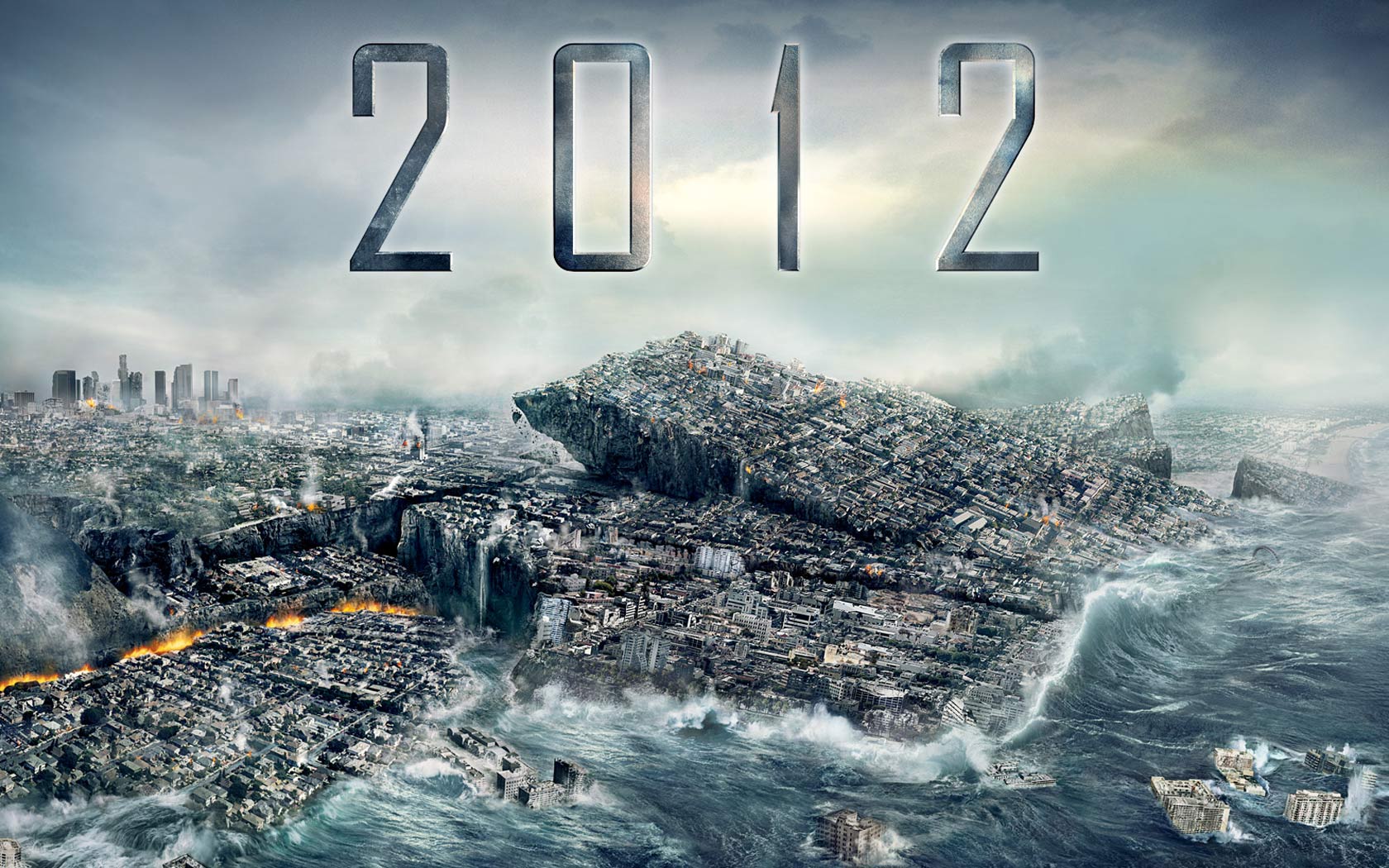
I finally got a chance to watch the movie 2012 over the weekend, and it served to remind me that no matter how much money you put into a production, how great the actors are, and how big the premise, bad writing will continuously destroy a movie no matter how much other effort is put into the film. 2012 is one of those movies that had a lot of things going for it. It had a huge budget, the special effects were over the top phenomenal, the actors were all actually high quality actors, including John Cusak and George Segal as well as many other well performing actors. The premise for the movie was pretty big, surpassing pretty much most others with an end of the world theme (which was a lot more impacting than a bunch of transforming cars that fight each other as Megan Fox somehow manages to pretend to act while finding herself in all manners of undress).

But the writing destroyed the movie. Horribly.

It started with one of the cardinal sins of writing, and that’s using coincidence sparingly. (spoiler alert!) Let me start with the basic events of the movie: John Cusak is a writer who published one book that didn’t sell very well, so he’s now working part time as a limo driver for a rich Russian mafioso, ex-boxer. The story starts with him taking his son and daughter on a camping trip to a lake where he and his former wife used to go all of the time on romantic getaways. His ex-wife, by the way, happens to be married to a plastic surgeon who just so happens to be the doctor who did the boob job on the girlfriend of the ex-boxer mafioso Russian. Well, on this trip to the lake, Cusak and kids run into a military operation that is exploring Yosemite, where the ground is becoming unstable. So they meet crazy wacko Woody Harrelson (possibly playing himself), a conspiracy radio host nut who knows the world is coming to an end. When the military detain Cusak, the guy in charge is part of the team that discovered the world is coming to an end, and he just so happens to have a copy of Cusak’s book, being one of the 400 people in the world who has ever seen it, and he recognizes Cusak’s name because he just so happens to be reading it RIGHT NOW.

Well, Cusak, because he believes the crazy nutjob of a radio announcer is telling the truth, manages to get his family out of their house JUST AS ARMAGEDDON HITS and drives them in his limo through California on its worst day EVER, as the Earth explodes all around them. But he has managed to find the one airplane in California that will take them out of danger, so they get to the minor airport, which is where Cusak drove the Russian mafioso guy and his family. But Cusak heard about a map that crazy Woody had, so he manages to get it, and it is a map of China, so they decide they need to fly to China (even though their little plane can’t make that trip). Oh, by the way, the pilot he hired died, so it turns out that the plastic surgeon husband of his ex-wife JUST SO HAPPENS to have had a few lessons in flying, so he flies them out of the worst nightmare of an escape that has ever existed (that is almost as bad as the escape I had when I was running away from an ex-girlfriend who refused to break up with me without at least one of us dead first). Anyway, he gets to Las Vegas where there’s a plane that the Mafioso guy has managed to get a hold of, and because their pilot died, or left, or I don’t really remember what happened to him, it turns out that the “I had a few lessons” guy is now going to fly their plane to China. So they get in that plane and fly it to Hawaii, which is where they need to refuel, but there’s no fuel cause Hawaii is now an inferno, so somehow they manage to continue flying to somewhere in China. Yeah, not really sure how they made it, but somehow they did.

Anyway, I did forget to mention that the guy who ran into Cusak in Yosemite is a scientist and part of a secret plot to build huge space arks that you only discover later aren’t really going into space, but they’re really big water vessels made out of metal. So, if the planet is doomed, that’s not a problem cause they’re still going to be saved somehow because they’re in really big boats now. Meanwhile, the scientist guy’s father is some kind of bad musician on a cruise line with George Segal, who is also a bad musician, too, and they’re on the biggest boat ever, which tips over and kills everyone but not before both dads get to phone their kids and say bye. It’s a good thing to know that during Armageddon, at least AT&T will work as desired, even though AT&T has a bad tendency of dropping most of my phone calls normally (and that’s without Armageddon happening).

So, it turns out the Russian guy booked passage on the space ark fleet for 1 billion and some Euros, and when he gets there, it turns out his space ark has been damaged, so he’s now not going to get to go. So all of the passengers who came with him riot and throw a fit. Meanwhile, an evil government official, who is really not evil but more of a bureaucrat, is trying to keep everyone out of the arks because only the scientifically chosen can be saved (and the ones who had a lot of money, which seems to be the only people who showed up anyway). So Cusak and gang somehow manage to convince a Chinese family that has lived in a Tibetan village their whole life, but all somehow manage to speak English, that they should help them sneak onto the arks. And then fun ensues with lots of rubber tubing getting stuck in the door gears of the most important ark, which cannot be started because for some reason they built a superpowerful space ark (that doesn’t go into space) that for some reason can’t start its engines if the doors are not completely sealed. So, they go on an adventure to “seal the door” and people die, and others live, and sparky the wonder dog somehow gets saved, even though his boob-enhanced mistress does not survive. But the obnoxious Russian twin kids do get saved and somehow become nicer kids in the process, letting Cusak’s daughter play with the dog at one point, whereas they were originally overjoyed that Cusak’s daughter was going to die while they got saved.

Anyway, it’s a complicated story that is somewhat ridiculous, as if the writers weren’t sure if this was an end of the world story, or Earthquake II, in which everyone will live happily ever after. The ending was almost the same ending of Wall-E, and that was kind of disconcerting. There were so many loopholes and plot points that didn’t make any sense throughout this entire movie that I was often flabbergasted that I was watching what I was watching. I kept trying to turn off my critical mind during the watching, but every now and then it would pop back on and say, “um, isn’t 2012 supposed to be about the end of the world, not the moving of the planet’s plates?” In other words, the Mayan prophecies are all about how the calendar ends, meaning the universe as we know it ends, which according to the premise, means that all humanity dies. For me, that meant that we needed actual space arks, not just Noah’s 21st century arks. I kept wondering when these arks were going to fire actual rockets, and then it turns out that they’re nothing more than very big boats. Really? That was the solution to the end of the world?

Anyway, that was the movie, and I was very disappointed. A couple of moments were worth the watching, like trying to see two really old men pretend they’re actual musicians when neither one of them can hum a tune. But other than that, I was disappointed. I had gone into the movie wondering how an end of the world story can possibly have a happy ending, but like most Hollywood productions, they were too frightened to deal with the resolution of the story as the Mayans would have because that would have meant that the struggle in the movie was hopeless and futile. That doesn’t sell a lot of tickets.

One moral I did get from the movie, even though they were trying hard as hell to go the opposite direction of this, is that no matter what you do, no matter how good you are, in the end, those with the most money and power are rewarded with survival; those without are doomed to be swallowed up by the apocalypse and left to die…cold and alone.