Tag Archives: Soviet Union

Another Writer Accused of Making Stuff Up

The “Three Cups of Tea” author, Greg Mortenson, has been accused of making up stories in his book.  Accused by Jon Krakauer of CBS’s 60 Minutes, Mortenson denies the falsehood claim and is not commenting further due to a medical condition he is suffering from recently. Unfortunately, with him out of commission and not on record to defend himself, the media frenzy will probably swarm him at this horrible time for him. Hopefully, he gets a chance to defend himself, and the truth is reached, regardless of what that truth might be.

With this accusation, the writing community appears to be undergoing yet another challenge, as it did when the whole James Frey controversy occurred with “A Million Little Pieces”, a book that featured numerous made-up events in a book claimed to be entirely non-fiction. Hopefully, the accusations will not continue to paint a dark light on the many works other writers have put out there, making it so that readers walk into every bookstore, expecting fiction in the non-fiction section and accepting each memoir produced as a “quasi-” real account.

I recently published my “Neo Revolutionary Messages” on Kindle and Nook, and I promise that it is entirely non-fiction, as it is an analysis of the August 1991 Coup d’etat in the Soviet Union (where Boris Yeltsin challenged the hardliners when they imprisoned Mikhail Gorbachev). Yet, with stories like the one I linked here, there’s always the fear that a reader is going to think the author took liberties with the facts for the sake of trying to tell a better story.

Memoir Books Are Being Slowly Replaced by Lazy Writers


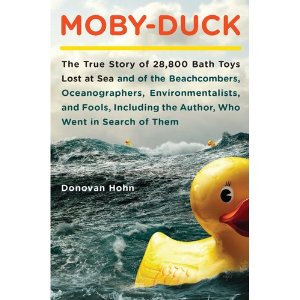
I was in the bookstore the other day looking over the selections of books when I came across a really interesting book of which I had heard nothing so far. But it looked intriguing. It was called Moby-Duck, and as you can see from the picture with this article, it is about a man who goes on a quest to discover what happened to 28,800 bath toys that were lost at sea.

So, why am I talking about this book? Well, think about the story involved in this book. The author, Donovan Hohn, actually put forth a lot of work to find out what happened to these rubber duckies and bath toys after the disappeared. In essence, he went on an epic quest, like the infamous Moby Dick to find what happened to these items. In other words, he went through a hell of a lot of work to get the story that he later transposed to paper so that the rest of us could experience his adventure.

My point is that so few people who write memoirs these days actually go through this amount of work in their adventures before sitting down and writing their “memoirs”. Instead, they suffer one bad relationship, have a bad drinking problem, or do something singularly simple and then try to convince the rest of us that it was actually an epic journey to get from one place to the other. I guess you could say I’m getting a little sick of these kinds of stories that really have no great master journey to them, no odyssey, yet are treated as if they are the epic adventures of a lifetime.

We need more writers out there who are willing to go through a little bit of work to actually come back with the story they need to tell. Instead, we get lazy writers that try to profit off of their innane adventures. And we keep buying this crap because none of us are willing to demand more from the writings that we read.

I felt this way some time ago when I was writing one of my earlier science fiction novels, Thompson’s Bounty, which was about a Coast Guard cutter that gets sent back into the 17th century. When I first started writing the novel, I actually tried to just crank it out without really knowing much about my subject, other than having watched a few old movies about pirates. Then it dawned on me that I wasn’t ready to write the novel. So I contacted the Coast Guard and requested some in person information, which led to going out with a cutter crew for several days over several weekends. It also led to a bunch of long conversations and tours on a Coast Guard base where very knowledgeable people gave me first hand information about the subject I was writing. In the end, I wound up with a book that told the story I wanted to tell instead of one that was peripheral and out of context.

Recently, I’ve been working on a novel that I originally wrote decades ago that takes place in Eastern Europe during the Cold War. Originally, I kind of winged it through the story, but after doing my thesis work on the August Coup in the Soviet Union, I finally had the premise, place and event that really made up the background of the novel I wrote years before. So, I’ve been sitting down and tackling that book from the start, realizing that I now know a lot more information than I first did when I wrote that book back then.

That’s sort of the thing I’m talking about with the kind of reading I’m coming across these days. So much of it can be so much better than it is if authors would take the time to actually do the research that would make their books that much better. I remember a great scene from Billy Crystal’s Throw Mama From the Train when a woman in his creative writing class is describing a submarine story she wrote, and he comments that maybe she should actually know the name of the device she’s describing if she wants to be taken seriously in a story that involves submarines. I take his advice a bit further and say that maybe some time should be given to exploring the lifestyles and events that lead people to the moments that occur in novels so that the reader believes the author is the right person to be writing the story.

We seem to have a lot lazier writers these days with a lot of the stories and memoirs I read, but that doesn’t mean we have to settle for that. We can demand more substance, research and work. We just generally don’t. And we’re the ones who suffer as a result.

Revisiting the Year 1991…and the process of historical writing

For those that don’t know, I am currently writing a novel that takes place in 1991. This is the first time I’ve ever written an historical novel, covering a specific time. It also includes important people who were living and interacting during this particular time, so unlike fictional worlds I have built before, this is a world that already exists, and because of that I have to get it right.

This has caused me to start doing extensive research about this time, and what I’m finding is how fascinating it is to go back only a few years and see what life was like during that time. When you’re writing a novel that takes place in Ancient Greece (The Ameriad), the near future (Rumors of War) or the far-off future (Destiny), you pretty much get to create your own world. Granted, those worlds have a bit of connection to specific events and experiences, but for the most part, you really do get to develop whatever you want for those time periods because no one around today really has a clue what those worlds were like, or will be like. It’s a best guess situation for everyone.

But 1991 was only a few decades ago. I lived through it, and a lot of other people lived through it as well. So, this is a period of time that has critics who can honestly sit back and say, “um, no, that’s not what it was like.” This means I’m having to do extensive research that I don’t think I’ve ever had to do before.

And its enriching. Because it’s not just about the place that existed 20 years ago. It’s also about a set of experiences and nuances that seem almost like an alternative reality, because I’m creating a world that already exists, and not only do I have to get it right, but I have to also give a perspective that makes the reader want to explore it with me and my characters.

But I’m finding fascinating little things that I’d completely forgotten about. Sure, I knew about the first Gulf War. Believe me. I know about it. But at the same time, I kind of forgot that this is when a bunch of cops beat up Rodney King. It was also the time that the greatest boxer of his time Mike Tyson was accused of raping a woman before being tried for the crime. It was also, and this one just shocks the crap out of me, when an obscure announcement was made by Tim Berners-Lee about this little thing called a “World Wide Web”. The realization of that alone just hit me out of nowhere because during this time, there was no real Internet yet. It was coming along really fast, but we weren’t there yet, and this guy made this announcement, and people blew him off because it had no specific substance in their lives to make them think it was ever going to be of interest to them. Now, there are people who are living their lives never having NOT known about the Internet and the World Wide Web. To them, it’s always been around. But in 1991, it was just a casual mention of something that might be coming soon.

That’s what makes this kind of research really fascinating because once I’m finally done with all of this, I have to then create a series of characters who live in that world and don’t have the knowledge of what we know now. To do this, I have to constantly avoid being the all-knowing narrator or the bad writer who puts little quips into his characters’ mouths where they start projecting their beliefs of a future that has already come along in today’s world because most people don’t have the ability to predict things on a global level to realize that their entire paradigms are about to be shifted right under their noses.

Such realizations are making the writing of this novel, 72 Hours in August, so much fun to plan. In the very near future, I will be writing it, and let’s just say that I’m looking forward to it.