Category Archives: Writing

Exploring the Ipad 2 & the desire to own every new piece of technology

I finally broke down and bought an Ipad 2. I had bought a Motorola Xoom some months ago, and I had been very disappointed in that product, mainly because it has turned into a glorified doorstop. I’m often the victim of techno hype, in that too many reviewers acted like it was the great alternative to the ipad, but then when I finally got it, I discovered it wasn’t ready, nor was it really as compatible as it should have been with the things that I wanted to use. I could never get any of my music to be recognized by its music reader (people told me to download a different music player than the one installed), the books really sucked, as google books was never the solution to the e-reader issue (people told me to download another book reader), the movie player didn’t play ANYTHING (people told me to find another video player, which I did, and I never did succeed at getting a decent enough one that really worked on the Xoom). Basically, everything I did on the Xoom was subpar and not up to speed. Great doorstop. Or great e-mail reader, if you have wi fi only.

So, I went to the Apple store and they finally had iPads in. I bought the AT&T 3G version, which so far is great, although I suspect the 3G aspect of it is massively overpriced no matter what model you buy. That’s one thing NONE of the cellular companies have figured out in the United States. It’s like we’re in the Middle Ages here, and no one will do anything to make it better.

But my problem is really that I tend to buy whatever new technology thing comes out as soon as it does, and I sometimes pay the consequence for doing so. I bought a Nook Color when they came out, and I was severely underwhelmed by it. They’ve made great innovations with their current ones, but because I bought the first rendition of the Nook Color, I’m left with yet another very expensive doorstop that people tell me is so much better in a later edition. One of my other failings is that when I’ve been screwed once, I don’t give the company a second chance. So I won’t be buying a new Nook. Sorry. Once bitten and all that.

But so far, I love the ipad. I haven’t gone all crazy with it yet, but I’m slowly moving towards getting rid of my Washington Post subscription on the Kindle and choosing alternatives on the iPad. It’s so mucy nicer carrying that thing around (it’s a lot lighter and easier to carry than the Kindle). So far, I haven’t turned on my Kindle once since buying the Ipad. The only thing is: I have no intentions of buying books on the Ipad because their selection is horrid, and their prices, like most Apple offerings, are atrociously way too high. The only advantage I’ve seen so far with the Kindle offering of the Washington Post is that you download the whole thing at once and then don’t have to have a connection to read it. With the iPad, every time I read something, it seems to want to have a connection to the server in order to turn the page. Tried reading the Washington Post on it, and again was seriously underwhelmed. I’ve also noticed that with the Kindle I would read an entire article because you scrolled through them one by one. With the iPad, I scan articles and read very little, kind of like the old way I used to read a newspaper, and that’s definitely not something I like, and it’s a hard habit to break when met with the opportunity.

I’ll let you know further how I do with the Ipad. I’m trying to use the wifi more often than the cellular connection because after the third day, I checked my usage, and man, I was not impressed with how quickly I am using up my monthly amount. Again, while this is more a complaint against AT&T and Verizon, that’s something they need to fix, or they’re going to price themselves out of the cellular market. I think they believe they’ll continue to win because they’re the only game on the block, but what’s going to happen is that someone is going to invent something that circumvents the need for them, and people will jump ship really freaking fast, eliminating them overnight. It’s what normally happens with business and economics; they just don’t seem to believe it’s right around the corner, a lot like Comcast doesn’t realize it’s on its death bed because of how shitty it treated its customers over the years.

Anyway, haven’t posted much lately, mainly because I’ve had very little to say. My writing career has somewhat sucked, and as that was pretty much all I had in my corner, I find myself not very happy these days.
Why Hire Reporters? Just Have Your Staff Rewrite Someone Else’s Story.

An interesting story has been going around the news waves lately. According to the Guardian, Chinese prisoners are being forced to play World of Warcraft and farm gold to sell to players of the game. If you play this game, or one like it, this is an all too common story, and it’s often been on the periphery of the game. Lots of lazy players tend to want to take the easy road by using real world money to buy the work it would take them to actually play through a lot of the drudgery of the game itself. However, it’s not the gold selling story that I want to focus on, but on the telling of the story itself.

The original article appeared in the British news site paper, The Guardian, and it can be found here. However, when I first read the story, it was reposted on a World of Warcraft official forum, after having been reposted from an article that appeared on Mashable, which appears here. The first article was written by Danny Vincent, in Beijing, for The Guardian. The Mashable article was written by Lauren Idvik. In Idvick’s article, she essentially paraphrased the original article, quoted actual quotes from the actual article, and acted like it was a brand new story. As I read this second article, all I kept thinking to myself was: What purpose did rewriting someone’s article actually do? There’s one piece of “new” information offered in the newer article, and that’s a borrow from the New York Times, in which the author paraphrases that $2 billion of virtual currency was traded in 2008.

This is a common problem that has started to occur with blogs. Rather than actual articles, we’re receiving a lot of rephrased articles from bloggers who are paraphrasing articles actually published from more legitimate sources, kind of like a Twitter of news articles with the attribution (mostly) but a fantasy put forth that the new article is actually offering new insight. In the beginning, this wasn’t that bad because most of the time, bloggers were offering new information, or commentary that supplemented the original article itself, but now, like this one article, the rephrasing of the article doesn’t actually offer anything new, but rehashes the exact same story and puts someone else’s byline on it.

Having been alerted to this phenomenon, I started looking at this same story, following the Google links to see where else they might bring me. Digital Trends has an article by Andrew Couts, who uses the same information from the Guardian article AND includes the $2 billion piece of information but gives no attribution to where that information occurred (missing the fact that Idvick’s article at least attributed to the New York Times). Couts’s article has a one paragraph introduction to the concept, but after that almost all of the information is rephrased from the original Guardian article.

Techspot‘s Matthew DeCarlo uses the same article from the Guardian as well, and when he then uses the $2 billion figure, he indicates the information comes from the China Internet Center, whatever that may be. According to the original New York Times article that seems to be sporadically used by others without attribution, “nearly $2 billion in virtual currency was traded in China, according to the China Internet Network Information Center.” That article was actually written by David Barboza on June 30, 2009.

I’m not saying anyone’s actually doing anything dishonest, but at the same time there seems to be a lot of reporting going on based off of previous sources that aren’t getting the credit that they probably deserve. It’s one thing to quote a story, or even to post a story and then comment on it, but what seems to be happening is we’re getting a lot of stories being rewritten for the sake of sounding like they’re brand new and from other sources. There’s not been any actual attempt to hide the original sources, but that doesn’t mean we’re getting a lot of transparency at the same time. A lot of “reporters” seem to be making a career out of reporting other reporter’s stories, and that concerns me.

Now, having said that, I wouldn’t be surprised if I’ve done something similar in the past, although not to this extreme, but having pointed this out, I will definitely go out of my way to make sure that when I print someone else’s information, I do it because I want to give attention to someone else’s story, not somehow try to act like I’m the original reporter of information I did nothing more than read in another newspaper just like anyone else could have done.

Further Misadventures in the e-Publishing World

There’s a term that e-published authors have been using to describe the old way of doing business in the writing world: Legacy Publishing, meaning that it’s the old way of doing publishing. As one of those who got his start in the legacy publishing industry, where my first two novels were published as physical entities, I’ve slowly been trying to build a writing career by embracing the non-legacy model, i.e., publishing my work as e-books myself. In the process of doing that, something strange has started to happen that I never really anticipated. Let me explain.

When I started publishing some of my completed novels as e-books, I wasn’t really expecting to make a huge profit, or even to sell a whole lot of books. I hoped to sell a few and at least get a few readers interested in my work. Honestly, that’s what every writer tends to want to do. I’m really not that different. Not knowing the first thing about connecting to an audience that I don’t have, I’ve tried all sorts of different marketing, including Facebook ads, google ads, viral marketing, standing on the corner and yelling out loud, and all sorts of other antics that are capable of bringing on all sorts of restraining orders. As a result, a few people have started to read my books, and let’s just say that while I haven’t been extremely successful, it’s proving to be an interesting experiment.

However, a new development has occurred, and that’s what I wanted to talk to you about. I mentioned that some of my earlier work was published by Legacy Publishers. So far, they have done absolutely nothing to sell my work other than orginally publish it. I’m an unknown to them, so why would they be interested in pursuing any marketing on my behalf? So far, there’s been no reason. However, because I’ve been doing a LOT of marketing myself recently, some of my work has actually started to sell. Most of it as e-books, but some of that marketing has actually caused potential readers to go to bookstores and buy physical copies of my novels. Great. This is leading to something, however, and what it’s leading to is the realization by the original Legacy Publishers that I’m capable of actually selling books. It never dawned on me that they’d ever be paying attention to the fact that my marketing would start to pay off. And it has. Which has led them to start paying a bit more attention to me, and that attention has proved to be quite eye-opening.

You see, when I was originally published by them, the whole e-book universe was not even on the radar. So they never bothered to negotiate those rights. Those rights are mine still. Well, they’re now realizing that, and they’re also realizing that because I am self-publishing the rest of my work, it’s pretty obvious that my work they originally published will net them absolutely no profit whatsoever when it comes to the e-book market. So, rather than just contact me and be honest about it, their contact has been the kind you expect from a Shakespearean villain. The kind that goes: “Did you know that people are selling their books as e-books, and they’re making millions? We’re willing to publish your book as an e-book if you’re willing to sign that right over to us.” They also forget to mention (and sometimes they do) that they would like to set up the generous terms that are similar to the ones that happened under the old contract, where they get about 90 percent and I get 10. In other words, rather than have me publish it myself where I get 70 percent and Amazon gets 30, they’d rather they take 90 percent of the 70 percent, leaving me with (doing the math….for every $1.00 a book makes, I get $0.07). So, for a book that normally sells for (if they put it up at the maximum they’re trying to get) $12.99, I’d get 90 cents. Now, if I sold that book for $4.99 by publishing it myself (or even at $2.99), I’d make $3.49 (or $2.09 at the $2.99 rate). In other words, even if my book sold at a massive discount (my pricing), I’d still make 2 to 3 times more than what a publishing company would give me for it. And keeping in mind that the publishing company has NEVER marketed one of my books EVER, I get absolutely no benefit from them being the ones publishing it. None.

So, you might see why many writers are turning away from the normal legacy publishers. It’s not profitable, and unless you’re already a marketable name that they’re willing to throw money behind, you get absolutely nothing out of the deal. Instead, you sign over all of the profit to an entity that doesn’t do anything to deserve it.

It would be different if they actually went out of their way to do something to benefit my name. But they don’t. Or they never have. Now, if I was to find a publisher that was willing to do something to help me sell books, then we’d be talking a completely different story. But the way this model works, they don’t want me until I can already do the job that they won’t do themselves. Once I have the name recognition and the ability to sell my own work, my need for them goes away completely. So, somebody please tell me how quid pro quo thing works here if one side is continuously leeching off the other.

The Last Typewriter Factory in the World Has Closed Shop

According to an article in the Atlantic, the last typewriter factory has shuttered, as it was becoming too expensive to maintain, and not enough of a market to make it worthwhile. Sadly enough, I remember that the very first novel I wrote, Innocent Until Proven Guilty, was written on one of the first personal computers, but because I was so convinced that a writer needed to write a novel on a typewriter, my second novel LOSER was written on an IBM Selectric typewriter. Then my third novel, The Armageddon Project (which later became To Touch the Unicorn, and will soon become 72 Hours in August) was written on a manual typewriter I wrote, convinced that this was the way that a novel needed to be written. Since then, I’ve moved back to computer, and all of my writing tends to be on paper first (handwritten), and then typed on computer. I’m probably one of the last to write this way.

But one can’t feel a sense of loss in that we don’t use typewriters any longer. When I was a counterintelligence agent, we had IBM typewriters throughout the office, and it was the “in” thing to have those. I had an assistant who typed up my reports for me, and there were times when I’d type them myself, feeling that I wasn’t really doing the full job unless I typed up my own reports. But even then, we got a hold of a Wang word processor (Microsoft Word was still someone’s garage fantasy at this time), and literally the universe changed overnight. I even created my first database on the Wang computer. I knew then that the world would never be the same.

So, if I drank, I’d open up a beer for the loss of the last typewriter factory. But I don’t drink, so I’ll just wave my hand and give them a few moments of silence.

Writing How To: The Overwhelming Desire to Make Fantasy Seem Fantastic

Okay, here is the next in the series of commentaries on writing. Today, I thought I would talk about the genre of fantasy, because a lot of writers seem to be finding themselves falling into this one a lot. Therefore, it’s probably important to point out one of the failings that often separates a writer from anyone who might want to read any of that writer’s writings. Today, we’re going to focus on the desire to make fantasy overly fantastic.

Let me start by including a little scene I’m going to concoct for the nature of pointing this out. In this scene, the Princess C’lagrisha’nte is planning for her royal wedding to the prince of the Grishandens Empire. Let’s listen in:

Zvastran’cha, the Secondary Triumphant Parlour Midwife Maid, picked up a Hee’chanta vase and poured water onto the Bracklit plant before moving onto the array of Sxraxxan tapestries that were overlayed upon the Royal Foundry of Makkappala. Before she could reset the seal, Vleekorando Vrippzee approached her with his Lantee spear at a position of rest and tapped his Bryee visor twice, indicating his displeasure at the events that occurred over the Kalamaster Ceremonies of Trijent’a. It was obvious that a future gathering of the Proxilia Council was most likely to result in the Second Rigor of Nixtraxa. Which, of course, meant blah blah blah

What we have here, in the words of a great Southern prison warden is “a failure to communicate”. At one point, it’s really cool to add all of this visual scenery and fantastical elements that show we’re not in Kansas anymore, but at some point the amount of unknown verbage starts to become noise, and the reader turns off most of the visuals because they stop making sense. Add in numerous characters that all have really bizarre names, and you end up with a tale that becomes so easy to toss out the window, that the chances of you ever getting anyone to finish it are very limited. It doesn’t matter if the writing is stellar, and the story is great; at some point, the amount of confusion is going to overwhelm the reader, and the story ends before it ever gets told.

A solution to this problem is to introduce foreign elements into your world sporadically while including familiar sensations alongside the foreign ones. The little inclusion I used to explain this problem isn’t even that bad, to be honest. I’ve read some stories where I’ve gone entire paragraphs where I had no clue what the writer was talking about because EVERYTHING on the page was so foreign that at some point I gave up trying to figure out what a Hgjasfjsfjlijn was and just started thinking about a wonderful lunch I had the day before. If you fill your story with enough elements like that, causing your reader to abandon your story, you may have defeated your reason for writing in the first place, which should always be kept at the forefront of everything you write: You’re communicating, and as long as you can continue doing that, you’re on the right track to storytelling instead of just filling pages with gibberish that will eventually be ignored.

Another Writer Accused of Making Stuff Up

The “Three Cups of Tea” author, Greg Mortenson, has been accused of making up stories in his book.  Accused by Jon Krakauer of CBS’s 60 Minutes, Mortenson denies the falsehood claim and is not commenting further due to a medical condition he is suffering from recently. Unfortunately, with him out of commission and not on record to defend himself, the media frenzy will probably swarm him at this horrible time for him. Hopefully, he gets a chance to defend himself, and the truth is reached, regardless of what that truth might be.

With this accusation, the writing community appears to be undergoing yet another challenge, as it did when the whole James Frey controversy occurred with “A Million Little Pieces”, a book that featured numerous made-up events in a book claimed to be entirely non-fiction. Hopefully, the accusations will not continue to paint a dark light on the many works other writers have put out there, making it so that readers walk into every bookstore, expecting fiction in the non-fiction section and accepting each memoir produced as a “quasi-” real account.

I recently published my “Neo Revolutionary Messages” on Kindle and Nook, and I promise that it is entirely non-fiction, as it is an analysis of the August 1991 Coup d’etat in the Soviet Union (where Boris Yeltsin challenged the hardliners when they imprisoned Mikhail Gorbachev). Yet, with stories like the one I linked here, there’s always the fear that a reader is going to think the author took liberties with the facts for the sake of trying to tell a better story.

DIY Publishing is a Lot of Work

Over the last few weeks, I’ve been working on my self-publishing tasks. I can’t even begin to tell you how much work this has entailed. I know most people don’t really care, but as a writer, I’m finding myself with very little time to write because most of my time is spent preparing manuscripts, designing and redesigning covers, and trying to conduct social networking in order to somehow constitute a tiny bit of a writing career. I never realized how much work this would actually be.

Not surprisingly, a lot of DIY writers are learning this exact same thing themselves because the publishing industry has pretty much abandoned the average writer, mainly going after well known entities (who don’t really need the publishing industry because they’ve already made it) or celebrities who shouldn’t be writing books in the first place. The rest of us are struggling just to see if we can somehow make a connection that gets someone to read something we have to write.

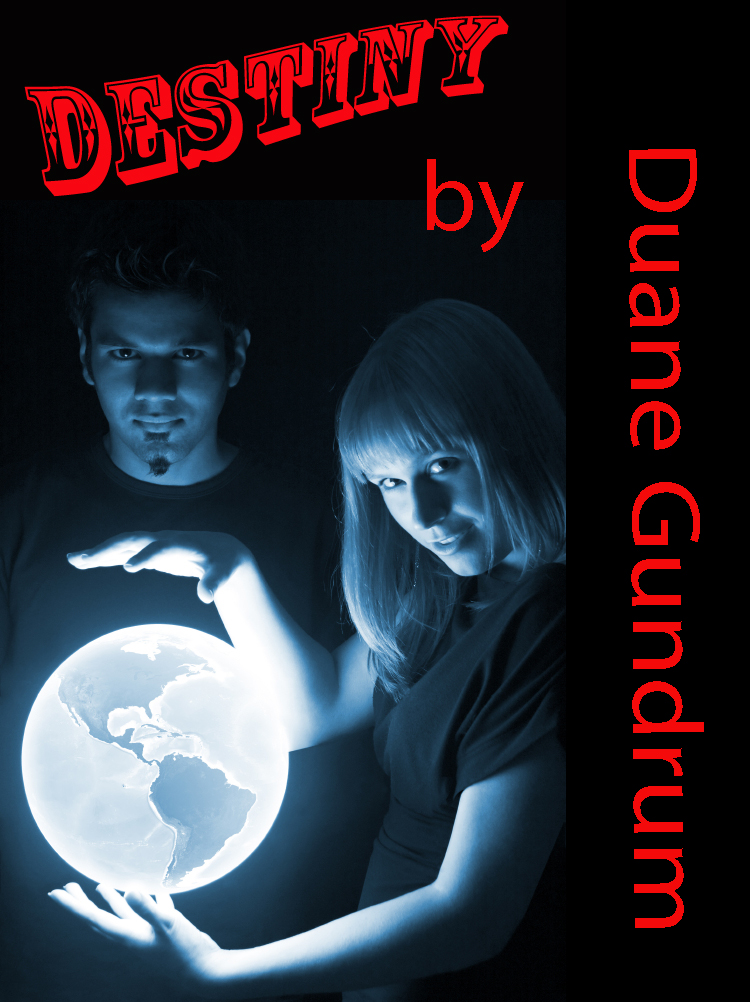
Which, as I’ve hinted, makes it that much harder to sit down and write. Recently, I released Destiny on Kindle and the Nook. It’s an interesting book that I created a decade and a half ago, yet it started a series of stories that have been very much a part of my continuous writing career. While the book takes place around the Year 3000, the series of books and stories that follow it actually take place around the time of the Roman Empire, slowly moving their way to the Year 3000. It’s kind of an interesting arc that tells an epic adventure of the planet Reagul, where a transplanted group of Romans live out their future. It also tells the story of the sorceror Sarbonn, who you might realize, has been a part of my writing for a very long time now. That character sets the tone for the story that takes place on Reagul long after his death, as he spent most of his life fortelling the future events of the planet, including setting the stage for what would eventually happen in the novel Destiny.

I’ve probably published 20 short stories that are all about the land of Reagul, even though most of the editors at that time probably had no idea they were publishing something that was part of a series of related, connected adventures. So, it’s somewhat interesting and fascinating for me to be able to keep revisiting this world with future writings. Now, if I just had more time to sit down and write.

Anyway, not much more to report, but wanted to at least let you all know I’m still chugging along, trying to get the volumes of stuff out there. Why? Not sure. But seems like the right thing to do.

What’s with all of the Spam Comments on WordPress Blogs?

Sometiimes you have to back up your words

For those of you who are reading this through an RSS reader or because it was imported from the original blog, you might not understand the concept of this post, but it’s getting to the point where I really have to say something. I have a WordPress-themed blog, where I have taken a great deal of work to configure the blog itself. It’s not your average thrown together blog, mainly because that’s how I designed it. But one of the things I’ve noticed is that no matter what I do, I can’t stop from getting hundreds of spam messages a day. And they’re ridiculous, too. I have yet to figure out WHY, and it drives me freaking nuts.

I get comments like this: “You’re definitely on the right track with this issue, and I read this blog every day because not too many people can deal with an issue like this one like you do.” Now, on the surface, you’d think, wow, someone reads my blog and agrees with me. But they don’t. They don’t read my blog, AND they don’t agree with me. Instead, they somehow spider into my blog and send random shitty comments that are generic in nature, meaning absolutely nothing whatsoever. Which causes me to have to go through and delete HUNDREDS of comments a day that are all stupid, ridiculous, and a waste of time.

Another one: “I love your WordPress theme for your blog. Did you do it yourself? Can you give me some hints on how to design my own?” In the beginning, when I received the first of 300 of these, I actually believed this was a sincere question from someone. But again, you have to focus on the generic level of the comment to realize this person is sending out these questions to EVERYONE who has a WordPress themed blog. Why they do it? I don’t know. They’re probably selling some stupid piece of shit spam thing that no one is EVER going to buy, but they’re convinced if they keep spamming people with their garbage, they will eventually get someone so stupid to respond that that person will also be anxious to give them money for ridiculous crap. Or maybe they’re trying to hack systems. I don’t know. I don’t really care. I just wish they’d stop.

Now, I’ll add this as well. Every time I make a comment like this, someone thinks he or she is inventive and sends me a generic response as a joke. Well, please don’t. It gets deleted with the rest of them because if it sounds remotely like one of these comments, I go at warp speed and delete them all. Which means, if you thought you were being clever, no one will ever know. I don’t say this to sound mean or uncaring; it’s just you don’t realize the magnitude of this problem. It is so out of control that I devote zero time to dealing with it as humor.

The problem with this is that I am pretty sure there are actually people who do comment on my posts and actually read what I have to say. This makes it that much harder to connect with them, and I really do want to connect with the people who read what I have to write. So, it would not surprise me if real comments are being thrown into my spam filter and deleted with the hundreds of others per day. I wish that wouldn’t happen, but what can I do?

Anyway, back to what I’ve tried saying before. If you’re really interested in communicating with me, PLEASE, and I emphasize PLEASE, make your comment have relevance to the particular post you’re responding to. Avoid being generic. If I post about Smallville, please talk about Smallville in your comment. If it’s about writing, please respond about something that has something to do with the topic of writing I was discussing. THAT will get a conversation going, and I’d LOVE to talk to you. It’s almost to the point where I’m thinking of just removing the comment feature completely because of how useless it’s been so far and how much spam I have to filter out of it on a daily basis.

My Reflections on the New Motorola Xoom (having just bought one)

I was at the Apple Store again today, looking at buying an Ipad 2 for my cartooning work, and when I arrived, I was told that I could sit outside of the store in a line when someone from the store would come out and inform me if I would be allowed to buy one of their Ipads. Having been trying to buy one for a few weeks now and not really interested in waiting 3 weeks for an online version of one (I like to see what I’m buying before I actually buy it and don’t trust large equipment through the mail yet). After waiting for awhile, one of the “geniuses” (yes, they call themselves that) came out and informed me that I was not worthy enough to buy an Ipad 2 today. So I was sent home without one, but told that I could come back the next morning and ask for permission to be sent away again.

So, later on today, I was at Costco, and I happened to see that they finally got in the Motorola Xoom wifi tablets for $589. So I bought one. Didn’t want 3G, so this was exactly what I wanted.

Got it home, and it worked just great right out of the box.

Now, having said that, there are some complications that are kind of frustrating with the thing. Google is the overarching mind behind this tablet, and you can never really get around that, but what was annoying was that it was very difficult to figure out what I could run on the thing and what wouldn’t run on it. So, basically, I had to keep downloading apps, try it out, and then delete it because while it might work with a phone, a LOT of them didn’t work for the 3G. What was really annoying was finding something that could play WMV files. Finally, I got one that sort of works. To be honest, I would have been happy to have actually found iTunes for Android, but their app store was so confusing that to this day I don’t know how to get the actual music player that comes with the device to actually play any other music than the samples that came on the Xoom. I have libraries of my own music, and I gave up after some time trying to figure out how to get to play it.

So I went and looked for an imaging program, finding a couple of them that seemed okay, but didn’t really seem exactly what I wanted. So that’s going to be something that will take time.

Even though it runs everything Google, couldn’t figure out how to actually get the Google Bookstore to work, even though there’s an app on the main screen for doing just that. It just says it’s not installed. Kinda fubar, if you ask me. So I ended up installing Kindle for Android, and well, screw Google and their stupid store.

So, so far I’m not all that impressed with the Xoom. It will probably do a lot of the things I need it to do, like check email, and eventually I’ll have a program for creating my cartoons/comics and then importing them to my computer. And I’m sure there are a bunch of other things that I’ll be able to do with it as well because it does seem pretty cool with what I’ve been able to ascertain from it so far. Again, it’s not the end all of devices, but it sure beats waiting for the gods of Apples to bestow upon me the right to buy one of their pieces of walled garden shit.

So I’m saying….