Category Archives: Writing

The Importance of Dates on Modern Civilization

Yesterday was the official celebration of the late Dr. Martin Luther King, Jr.’s birthday. If you didn’t know any better, you might think that January 19 (yesterday) was the day he was born. He wasn’t. He was born on January 15, 1929. We celebrate it on the 19th because, well, because that’s when we decided to start celebrating it. During the first President Bush’s term, the decision was made to celebrate his birthday on the third Monday of January. The official day because a more convenient day, and that’s why we celebrate it when we do.

The same thing happened to two other U.S. leaders, Presidents Washington and Lincoln. The two were celebrated on their birthdays in February but because they were so close together (a few weeks apart, separated by Valentine’s Day), the decision was made to celebrate Presidents’ Day instead, incorporating both holidays into one on a date that was significant for neither one. Welcome to the way we do things in America.

So, why do we focus on the days anyway? Let’s just put aside the fact that we don’t actually celebrate the specific days, but celebrate somewhere near those days. The question still remains. Why do we acknowledge them in the first place?

You could say that it has something to do with paying respect to our elders, or even our founders. But if that was so, why aren’t we celebrating Jefferson, Adams, Monroe, Henry Ford, Rockefeller and/or Steve Jobs/Bill Gates? I mean, there is no shortage of people who probably deserve some mention, yet we focus only on very specific people and, if lucky, add someone to that list after decades of struggle over whether or not we should be more inclusive.

Perhaps an answer to this question may require us to step away from U.S. recognitions and move towards some of the memorials that happen in other countries and civilizations. In Southeast Asia, quite often certain events in history are memorialized and whenever those dates come around each year, all sorts of future events occur that can sometimes be disruptive to the people living in our time. An example is a peoples’ movement that occurred in South Korea, where protesters were killed on a particular date during an uprising in the 1960s. Whenever that year came around, common citizens would rise up and riot again, almost as if remembrance was a signal to regurgitate protest movements all over again. And then a year later, if the police struck hard enough the year before, those subsequent protests would then be added to he common memory of something to memorialize each year going forward. Kind of cool if you’re a protesting civilian, but must have been hell on the people trying to run a stable government.

So why do we memorialize in the first place? What purpose does it serve? Does remembering bring happiness? If you look at something like the Vietnam Memorials that exist in numerous states and at the national level, happiness is generally not the feeling you get from such memorials. Sadness and regret is often the reaction. But I would say that for the Vietnam experience, perhaps sadness and regret might not be a bad thing because at least then it causes people to think twice before making the same type of mistake again. That would be great if that’s what actually happens. But unfortunately, that’s not what happens. As a matter of fact, I believe that the people who should be focusing on the events are the ones who tend to ignore them most, basically putting on blinders and going forward and doing the same things next time around. It’s like the protest spheres they set up at political campaigns. The people who protested were hoarded into locations that were designed to be out of sight and ear of the people attending the functions, so that the ones listening to the politicians were oblivious to the protests of people who really wanted the people making decisions to be aware of. For a country that modeled itself on free speech, we created a dynamic that did everything possible to avoid any kind of adverse conversation, meaning that people who made decisions never had to listen to anyone who might actually have a problem with those decisions.

Which brings me back to the idea of certain days celebrating certain things, especially in a way that avoids any conversation about those things. Columbus Day is an example of one of those days that could have led to a lot of great conversations about some of the atrocities carried out in our name by our previous generations. But once the conversation started becoming difficult, it stopped being a national holiday, and now no one talks about those instances because there’s no official day that causes us to have to remember what we did. Sure, a few press junkets attempt to broach the subject, but more often than not, the conversation is flat, and we move onto the next holiday celebration quickly so we don’t have to deal with the consequences of the things we might have done. Instead, we’ll go to some foreign soil one day in the future (or maybe just a few years ago), attempt some modern day version of Manifest Destiny, and then claim that we shouldn’t be accountable for our bad actions because there was nothing in our past that should have taught us otherwise.

In other words, my fear is that our national remembrances are no longer being used for the purposes they should have been utilized, and instead we’re coaxing such days with ways to bring profit to our manufacturing and sales sectors. Instead of looking at Martin Luther King, Jr.’s birthday as a time to reflect on how far the civil rights movement went and how much further it needs to go, some company will try to sell us fried chicken, or on President’s Day: beds, or whatever fancies us, and in the end we’re going to learn very little about the mistakes we’ve made and how we can avoid making them in the future.

One day, after I’m famous and have cured the ills of our society, I hope they celebrate my birthday. Unfortunately, it occurred on Lincoln’s birthday, so they’ll probably never celebrate mine. And knowing my luck, I’ll end up dying on the same day as Kurt Cobane or some other known figure, and that day will forever be linked to that individual as well. If I’m truly lucky, people will remember me and some manufacturer will hopefully sell something people can use on that day, like breath mints or condoms. After all, that’s what helps one’s legacy remain within the hearts of people for generations to come.
Sorry, but it’s not all about the bass; it’s all about the story

Recently, I found myself back in the world of Azeroth, or to those who need more information: World of Warcraft. I’ve been playing that game off and on for years, and recently I ran out of stuff to play, deciding I’d fire up the game again and see what I’ve missed.

Now, to catch up our story, when we last left our characters in the sword and fantasy world, I was level 85, and the last expansion was Cataclysm. Since then, there have been two expansions: Mist of Panderia and Warriors of Draenor. Well, Draenor is brand new (weeks old) and Panderia has been out for a while. But to get from 85 to 90, I had to go through Panderia, at least until I could go to Draenor, where the game lets me level up to 100.

What I wanted to talk about was Mists of Panderia, which from what I’ve been reading didn’t get the most stellar of reviews. And I can understand why. As I played it, it felt very much like an attempt to parody the world of China, and to do that it introduced a new race of Kung Fu Pandas. Yeah, I’m not kidding about this.

But after all of that, I found a couple of really interesting tidbits to keep me going. And those tidbits were specifically story related. To give you an example, I was playing through the story and at one point you have to relive the incidents that a Dwarf engineer went through. Now, the voice over is a Scottish dwarf who has probably one of the funniest voices in the game, and just listening to him narrate made the game fun alone. But then there comes a time where he’s spotting for a sniper and then befriends a raccoon, which the sniper then kills. Now, this may sound kind of harsh or violent, but it was probably one of the funniest scenes in the game by far, because this poor dwarf took the whole cartoon violence very seriously and for the continuation of those missions NEVER forgave his partner for killing his pet raccoon. The whole banter was quite inspired and well worth the play through.

And that’s the point. I think a lot of games are missing the sense of fun that Blizzard tends to invoke in its games. At one point during the beginning of Draenor, you meet a new soldier on the frontier, and his name is something like Newbie Greenguy, or something like that. It reminded me of the one noob character they had running through Cataclysm who the undead npcs were always trying to kill off, just to get him out of the game and out of their hair.

Those kinds of funny moments are truly inspired, and I wish there were more of them in other games.

But for now, I’m happy finding them whenever I can. And sometimes you find them in the strangest of places. One of my favorites for the longest time was when I found a Dwarf Fishing Rod, which was actually a shotgun. It’s one of those jokes that takes you a second to get, but it so cool when you finally do.

Some updates and current projects

caption134Well, the first semester at the new college in Texas is finally coming to a close, and let’s just say that things haven’t been all that great, but at the same time, I’m still here, and hopefully things will start to improve a bit. It’s honestly a struggle to teach at a college/university where students aren’t all that interested in doing the work, the institution isn’t all that interested in supporting its faculty and staff, and there’s just not a whole lot of money to pay debts that were actually promised.

Yeah, it’s been a bit of a struggle. We’re all being put on furlough, which means we’ll be losing 20 percent of our pay next semester, and it just makes it really difficult to want to continue coming to a place where you feel like you’re not really respected for the kind of work that you do. Oh well.

As for my writing projects, The Deck Const: Shadows & Rumors was published last month, so it’s now available on most e-readers and on paperback through Amazon.com. I was pretty happy with it.

My next project is a series of three books all involving the King Arthur legend. For years, I’ve been doing the background research for this novel, and now I’m finally ready to start putting it onto paper. The working title has been Return to Camelot, but I can’t promise that’s the name it’s going to end up having.

Not much else going on. The Christmas season is about to come upon us, so I’m hoping that means a few weeks of rest and relaxation. But, of course, I intend to write during that time, so we all know how that whole rest thing goes under such circumstances.

The nuance of writing that keeps me going

1 small

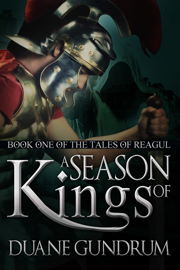
For those interested, I’m putting the final touches on the first book of my series, The Tales of Reagul, of which A Season of Kings is going to be released in the next few days. One of the fun things about this book is that it combines my passion of history with my love of speculative fiction. The land I’m writing about has been colonized by people from the times of the Roman Republic. What makes the book so much fun to write is that when these people start spreading out in this new land, they come across the survivors of previous colonizations from previous civilizations, including the Egyptians and Sumerians. This gives me the opportunity to play with the “discovery” aspect of the people who come to the new land, as they have no idea who these other people are, and when they do discover them, they are even more confused by the fact that they’re dealing with people they know so little about, and those that do know something of their civilizations are even more confused as to why they’re in this land in the first place.

This is the kind of thing that becomes so much fun to the process of writing. As I’ve already developed the historical process of the planet, I know why certain things are happening, but the people who are interacting in that land know so little about it, which makes it that much more fascinating to see it from their perspective and wonder “how would a stranger to this environment handle such a situation?”

Were We Really That Aware of History When It Happened–The Americans

the americans

One of my favorite television shows is The Americans, which tells the story of two deep cover KGB agents working in Washington, D.C., posing as a husband and wife. It details the happenings of the 1980s, during the Reagan Administration, which just so happens to be the final hurrah of the Soviet Union right before it collapsed and became a non-entity. One of the passions I have when watching the show is observing little things that I wonder if they got right, based on the time period where the story takes place. The other week, I was watching one scene where a covert agent was in a room with a bunch of telephones, and I started to wonder “when did the push button phone come into being?” According to a Wiki article, the push-button phone was starting to gain popularity in 1979, which means the show got that one right as well, as there were mainly rotary dial phones, but on the shelf there were a few push button phones. That sort of continuity and clarity constantly intrigues me on a show like this.

What I discover is that they get more things right than I’ve been able to figure they got wrong. But one thing that has been bothering me is a central premise of the whole show, and that’s that the secret stuff the KGB was after might not have been on the radar as much as the show would like us to believe. An example of this is the Internet, or better known as Arpanet back then. The thing about Arpanet is that while it was the forerunner of what was to become the “Internet”, at the time of its creation. For some clarification, the Arpanet started out as a four placed link between  the University of California, Los Angeles, Stanford Research Institute’s Augmentation Research Center, the University of California, Santa Barbara and the University of Utah’s Computer Science Department. Over the next few years, it reached the East Coast of the United States by linking to a bulletin board network (BBN) in Cambridge, Massachusetts in March 1970 and then in 1973 it made its first connection to the Norwegian Seismic Array. In 1975, it was declared operational when the Defense Communications AGency took control of it to handle advanced research. This is kind of where The Americans come in, as in 1983, the U.S. military developed (as a part of Arpanet), the Military Network (MILNET), which handled mostly unclassified communications.

The part I’ve had a problem with The Americans during this part of their focus is that I really don’t think even up to this point anyone took Arpanet all that seriously. Sure, we know what it is today, and the world couldn’t possibly turn again without the realization of how important the Internet is, but even in the 1980s, the people who were “embracing” the future Internet were mostly geeks who were experimenting with a different form of entertainment. The whole beginning of the Internet was a lot of bbs operations with little understanding of how this was going to lead to business, globalization and the future of immediacy politics. The birth of the Internet is the desire of computer scientists to link their networks with each, and until it went mainstream, there was little understanding how this was going to change the world.

Which is why I have a hard time believing that the Soviet Union was jumping in on the rise of the Internet back then. Even our own country didn’t know what it had until it was way out of its own control.

The other “technology” that The Americans have dealt with is “stealth” technology, which is what eventually became the invention of the stealth bomber and fighter. While I can see how the Soviets might have been interested in such a technology, it is important to point out that this technology was first introduced in 1945 when it was revealed that the German U-boats operated under “diffused lighting camouflage”, which is the introduction to dealing with this kind of technology, although the later versions tended to veer more towards fooling radar than people on the ground. As a former intelligence agent myself, I have to say that the one part of the equation that The Americans kinds of glosses over is how difficult it would have been for an operative to understand what he or she was seeing when dealing with this type of technology. Basically, you would need a physics master or an engineering trained agent to be able to recognize what it was he or she was looking at before he or she could figure out if it was ever worth stealing. Chances are pretty good that two scientists staring at the same evidence might have come up with completely different conclusions as to what it’s purpose actually was. We kind of run into the same thing today when we hear “weapons of mass destruction” and a nuclear scientist looks at a chemical weapons dump and thinks it’s relevant, but because of specialized training, he becomes the expert they rely on and he hasn’t a clue what he’s looking at. Same kind of thing.

One thing the show does get right is probably the opposite of what I just said a second ago. There was a great moment where the Soviet spies were looking at schematics and basically were clueless as to what they were looking at. More stuff like that would make the show so much more believable, but they went from that moment to somehow recognizing everything they saw as critical and I kind of lost that great feeling of seeing something done extremely well.

So, I guess my question I’m left with is whether or not we’re reinventing history when we see shows like this, because one thing I’ve noticed in historical narratives is that the narrator often wants to make the characters of his story appear much more knowledgeable about the subject than they might have been. Having dealt with the intelligence field, I can tell you that quite often people don’t get it. They make clueless conclusions because they try to fit everything to a paradigm they already understand, and quite often when dealing with these subjects, you have to go in with a blank slate and tabula rasa everything. But people don’t do that. They want to feel like they have the answers, and they’ll pretend to know until they’re proved otherwise, and sometimes even after that they won’t admit they’re wrong. That’s kind of the problem with science in general and why we have people to this day who still think the Earth is the center of the universe and everything else revolves around it. We think that because we rely on the science of an age when people didn’t know better, and there are too many people today who should know better but never will.

When Did HBO Become the Sex Channel?

I've been in love with her since the first time we met in ancient England, but that doesn't mean I want to see her having sex with other people
I’ve been in love with her since the first time we met in ancient England, but that doesn’t mean I want to see her having sex with other people

One of the more popular shows in America right now is Game of Thrones, which airs specifically on HBO. It’s a pretty decent show, has great acting and writing, and can definitely tell a story. Well, I could probably say that about most HBO shows that I’ve watched over the years, and that includes The Sopranos, Deadwood, Rome, True Blood and the Wire. These were all great shows.

One thing that distinguished most of these shows from regular network programming is that they were on HBO, and as a result, they could sometimes be a bit more risque than your usual show. This usually meant nudity, sexual situations, drug references and possibly violence (although violence is the one area that regular networks have little problem glorifying). But something changed over the years, and I think what has happened is that the programmers at HBO are now more interested in glorifying sex than in actually telling a story that involves sexual situations. I know that sounds like I’m saying the same thing, but I really think there’s something to this.

Let’s look at the time when this started to change. The show True Blood has always been a bit on the edge when it comes to sexual situations. However, a few seasons into its run, the story line, which used to be the center of the show (the underworld of the vampire universe) somehow turned into sex central, to where the main story seemed much more about who Sookie Stackhouse was going to fuck, or who amongst the rest of the cast was going to have sex with someone else. So they started introducing female on female sex, male on male sex, animal on human sex, animal on animal sex, hybrid animals on hybrid animals of different genders having sex, and don’t get me wrong but somewhere down the line I think they were experimenting with mermaids, fairies and werewolves. I’d say they kind of jumped the shark, but so far they haven’t tried to have sex with a shark yet. I imagine that’s in the next season.

Basically, what this has developed is a sense that HBO is on the edge when it comes to sex so that it’s treating it like the new violence variable that network programming used to do, and by that I mean that every season to television around the 1980s was designed to push the envelope on violence to see what they could get away with. HBO, having gone completely over the edge with violence in its shows, is now trying to push the very boundaries of sex with its series.

Last week, HBO crossed the line with Game of Thrones by going way overboard with rape. One of the main characters raped his sister near the dead body of her son in a very nonconsensual rape scene that the director Alex Graves, indicated was his favorite scene he’s ever done.  The problem I perceive is that he’s so enamored with how he’s overstepped the boundary of decency that he believes that he’s taken the show (and the network) in a positive direction, when in fact he’s actually done the entire genre a complete disservice. There was a story a few weeks ago of a woman who was sued by an affiliate of HBO for refusing to do a topless sex scene.  The commentary on that story from the readers is amazing, but I’ll let you read into that yourself. To sum up, basically people are upset at the actress because she signed a contract to appear naked and do sex for a television role.

My question is to ask why a sex scene is all that necessary to a particular story line. As a writer, I understand that sometimes sex is a necessary element to move a narrative along, but I can’t remember ever writing a sex scene because I started thinking “I really need to spice up this book”. And that’s the problem I think we’re running into because I believe a lot of the sex we’re seeing on the screen these days is just bad writing that takes the lazy way out of a plot device that they didn’t want to waste time trying to create. I remember once, in my earlier days of writing, where I actually found myself having to figure a way OUT of a sexual situation in one of my stories because I realized the sex would have been too easy to write for that scene, and I actually reached a far better place for the story by having the sexual situation avoided by the main characters (which brought a lot more drama to the moment than if they did the deed).

What I do know is that quite often when I’m watching a television show and it moves off into sex mode, I often find myself doing other things than watching the show because I find the “sex” in a television show to be very uninteresting. And it’s not because I’m a prude; I’m about as far away from that as possible. It’s because if I want to watch porn, I’ll watch porn. When I turn on the television set to watch drama, I want to watch drama, not ten minutes of young people trying to simulate copulation on the screen (or actually doing it, which is often even worse). I know there are some people who watch certain shows just in hopes of seeing some actress or actor naked, but I’m not one of them. Maybe when I was 13 and hadn’t seen all that many naked women in my time, but these days I need real narrative elements to get me going, and watching sex on the screen rarely does that for me.

The new site is up and running

I finally decided I needed to take my web site into the 21st century, and it definitely needed a push to illustrate that this is the site of a writer, not just a random web site that someone uses to make blog posts every now and then. One of the things I was aching to do was to build a page where you could find all of my currently released novels. There are officially 9 of them released, which includes:

Innocent Until Proven Guilty

Leader of the Losers

Thompson’s Bounty: A Ship Out of Time

The Ameriad: The Untold Founding of America By the Survivors of Troy

The Teddy Bear Conspiracy

Destiny

Deadly Deceptions

Darkened Passages

Absent Without Leave

All of the novels I have written under other names, I have decided not to include in my listing. I’m basically trying to have those names make a success on their own, so we’ll see how they do without the star power of my own name to propel them forward. Yeah, that’s a joke, but anyhoo.

Some of the nice features I was able to implement with the new site included a lot better access to social networking areas that I’m tied to. Before, it was just kind of random. Now, the icons for the specific sites are at the top of the page, which means being a lot easier to link that way.

The other feature that is kind of nice is that the menu bar at the top also allows me to emphasize some of my works in progress. I’ve been wanting to share the map for Reagul for quite some time, and this offers just the opportunity to do that. I’ll be including a lot more information on that property and the Deck Const in the near future. I’m really excited about both story lines, and I hope others are, too, especially when they start to see some of the stuff that’s going to be coming out of those lines.

It took me nearly the entire day (aside from teaching) to get this all configured. There’s still more work to do, but at least it’s finally on a good footing for future innovations.

Let me know what you think.

The new greed is ruining Hollywood movies

Stop breaking up our movies or the North Koreans will win!

I don’t know if you’ve been noticing lately, but way too many intellectual properties that have been made into movies are now stretching how many movies are being made for the simple goal of getting more money out of the movie public. It was the sort of thing that caused the last book in the Harry Potter franchise to somehow “need” to be stretched into two movies. Then they did it with Twilight. And today, it was announced that the Divergent franchise was going to be doing it with their third movie/book “Allegiant”. Look, I get the idea that more money is better than less money, but sometimes it’s not necessary to make more movies of stories that can easily be told in fewer movies. An example of this is when they decided to stretch the Hobbit into three movies. Keep in mind the Hobbit was one book. But because the Lord of the Rings made so much money for everyone involved, there was no way in the world they were going to limit the next chapter in the franchise to just one profitable movie.

And the franchise has suffered as a result. I know there are people who say they like the Hobbit, but having just watched the second movie, I don’t think it’s hard to come to the conclusion that a lot of that movie really felt like it was just biding time until it could reach the end of the story. They even left it in a cliffhanger ending, almost as if they were trying to figure out what made The Empire Strikes Back such a success for Return of the Jedi and did exactly that. The story arc felt like it was doing EXACTLY the same thing, except without any real resolution like they at least gave you in Empire. In Empire, we did defeat the bad guys long enough to get a breather. They kind of tried to do that with The Desolation of Smog (I know that’s not the correct name, but I’m sticking with it), but to me it fell completely flat. The only thing they didn’t do from the bad writing playbook was have Bilbo fall into a pit and not be able to get back out of it before the train fell into the pit (figured a few cliches belonged in that “cliffhanger” of theirs).

This is becoming a norm with movies these days. It wouldn’t be so bad if the first and second movies were actually full, complete stories, which is one of the cardinal rules of writing a three part series as a writer (you’re not supposed to write just one part of the story and then try to sell the next book…each story needs to have its own conclusion), but we’re getting the lazy writing version of these movies, which is basically just a ploy to get people to want to keep paying money to see a movie franchise each year because the director is too lazy to bring any of the stories to a conclusion.

Today, I saw Captain America 2, and this is a franchise movie that does this sort of thing right. Obviously, they intend to make many more Captain America movies, and they should, but in order to get people interested, they don’t just bait and switch the audience by stopping the story and then saying “hey, give us 8 more dollars, and we’ll tell you what happens next.” Moviegoers need to get a lot more upset over this crappy business process that movie companies are trying to force on us.

Dealing with multiple languages in fiction

In my many space travels as a legospaceman, I never ran into a civilization that didn't speak lego
In my many space travels as a legospaceman, I never ran into a civilization that didn’t speak lego

I came across one of those little struggles that I didn’t anticipate while writing A Season of Kings. For those who have been following the story line of the first book of the epic, The Tales of Reagul, it involves several villages from Roman times that are transplanted onto the planet Reagul. A part of the story line is that previous civilizations have been transplanted to this planet earlier than Rome, so there are hints of people from Sumer, Egypt and many other civilizations of earlier history.

One of the first encounters involves Sarbonn, as the young man Spurias, who comes across some of these people. But it dawned on me that someone from Sumer would be speaking Sumerian, not Latin or some derivation of local Roman languages. So, I’m stuck with that old Star Trek problem of “how do people who have never met in their history actually communicate with each other?” Unlike Star Trek, there’s no actual “universal communicator” that everyone is carrying around with them, which means I either have to establish some communication process created by the original aliens (and some back story as to why they’d use something like that any way), or I have to figure out some way to develop a class of people in their societies that would actually be able to translate. Of course, I could go with the old Star Trek method of just assuming everyone speaks English and figure no one will care either way, but that just seems like such an easy cop out (even Star Trek had to eventually explain this situation to its viewers because people don’t allow “yeah, just let it happen” to provide them with justification.

So, I’m analyzing the different ways I can deal with this situation.

More of writers being taken advantage of

Yesterday, I received an email from some entrepreneur in San Francisco who “offered” to sit down with me for lunch in San Francisco in a very expensive location (described in detail in the email as if that location was somehow a selling point of having a casual lunch with some woman I don’t know). Anyway, she was appealing to the fact that I was a writer who needed to “move to the next level”. And I guess that somehow this lunch “date” was going to make this happen in some bizarre way.

I should point out that the lunch “date” we were going to have was going to cost me $350, but if I was one of the first responders, I’d save $100.

So, being bored with my life, I googled her name and discovered that she seems to be under all sorts of very interesting legal scrutiny for a bunch of really interesting decisions she made over the years, some involving marital spats of a friend of client of hers and some actions she may or may not have taken as a part of some domestic dispute.

But I didn’t find anything to indicate that she was successful in helping anyone’s career along, which made me wonder why would someone, out of the blue, contact me about something like this when the only thing she had going to her name was somewhat of a scandal involving domestic abuse. And I really couldn’t come up with an answer.

So it got me wondering if there’s a whole industry of people like this who devote most of their time and energy to taking advantage of hopeful writers (inventors, game creators, or whatever) and offering them to somehow put them in touch with their elusive dreams. Cause it was a nice little appeal when I first read it. Of course, being the kind of person I am, I’m always going to investigate it first, but I wondered how many other people someone like this ropes in on such schemes. Hell, for all I know she’s legit and secretly has been the success behind Stephen King and Brad Pitt. I doubt it, but I’ve never been considered all-knowing.

What it does tell me is that people in my field need to be really careful because these sorts of leeches are out there seeing gold in the paths of dreamers and believers. Those of us who are the creative type constantly want to believe that our passion can bring success, and people like that are constantly there to make sure we stupidly take these types of leaps right before emptying our wallets and disappearing into the woodwork again.

We just have to be extra careful.