Hate crimes that seem to sneak in under the radar

We all know there are some hateful people out there. We see the evidence in the news each and every day. What often escapes us is the fact that a lot of this stuff is happening around us, or in places we’d least expect it.

Take Thunder Bay, Ontario for an example.

You may wonder why I’m discussing Thunder Bay, as I suppose quite a few of you are probably wondering where is Thunder Bay, as in you probably have either never heard of it, or you just never gave it much thought. For me, however, when I saw a recent article, all sorts of memories came to mind. My family (on my mother’s side) is from Thunder Bay.

Every other summer or so when I was a kid, what little there was of my family used to drive from California to Thunder Bay, Ontario. Each time we took the trip, my mom would point out that it used to be called Port Arthur, and that she was born there after her father moved to Canada from Poland after the war. And then during one summer, she and two of her friends took a road trip across the United States and settled in different locations (her best friend in St. Cloud, Minnesota, her other friend in Florida, and she in Santa Monica, California…where I was born).

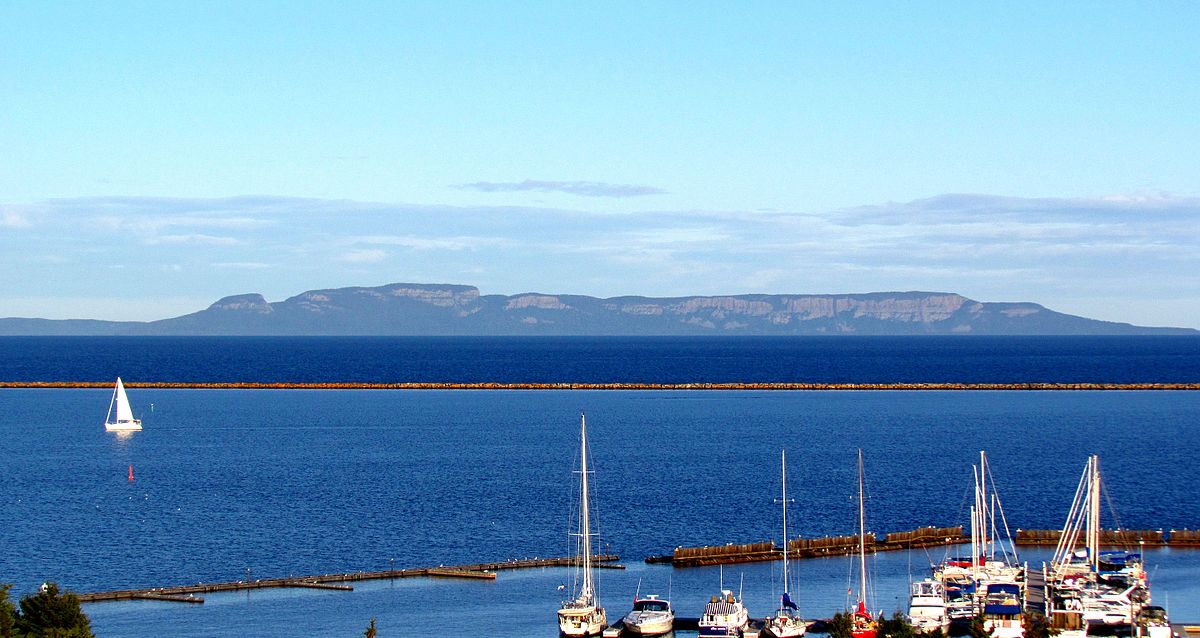
When we used to take this trip, one of the things that used to fascinate me was the local lore, and specifically the tale of “the Sleeping Giant”, which was the story of a giant Native American who fell asleep on a mountain until one day he would be woken up to aid his people again. It’s a natural rock formation that looks like a sleeping giant, and I remember being able to see it from most areas of Thunder Bay.
Anyway, so years later, I’m reading an article and discover that Thunder Bay is back in the headlines. Except, this time, it’s because some racist moron threw a trailer hitch at a Native American woman walking down the street. What the article doesn’t tell you is that the woman eventually succumbed to her wounds and died. The local Native Americans refer to the crime as a “hate crime” but in all that I’ve read, law enforcement is treating it as a general crime that was originally being treated as an aggravated assault, and now that she died, are “considering” changing the charges. There’s a certain amount of dismissing of the crime in the rhetoric, and one can’t help but wonder if it’s because it was “one of them” that died, rather than “one of us” as so often happens in these types of circumstances.

Which brings me to ask the question: What must be going through someone’s mind that thinks this type of behavior in the first place was either acceptable, or that it was something that might be fun to do? I remember when I was young, and I heard that some of the older kids were going to be “heading into town to do some gay bashing”, and never gave much thought (back then, at least) to what that probably meant. Those young people back then thought that was a completely acceptable thing to do, just as much as this guy driving around in the passenger seat of his car thought it was a pretty appropriate thing to do to just throw a trailer hitch out of a car window and laugh when he said “got one!”.

What no one really talks about is that our communities brought these people up to feel that this sort of thing was okay. We defend ourselves by saying that we would never do such a thing, but then we’re shocked when someone who lives next door to us is charged with doing just that.

At what point are the rest of us also responsible? I ask because I really don’t know the answer to that, and I suspect that we’ll never find out because it’s never being discussed, and I doubt it ever will.



The Problem With National Intelligence and Classified Information

One of my pet peeves has been the concept of classified information. It’s commonly used as a gatekeeper to give some people access to information and keep others away from it. When people talk about it and think about it, it’s often considered of significant importance that this information is kept classified and away from other people who don’t have access. Strangely enough, no one really seems to think about it from the perspective of wondering why we keep all of this information classified in the first place.

In the old days, and I mean like the 1940s, classified information was important because it meant keeping it away from the Axis powers who meant to do us harm. During the Cold War, it was to keep the information away from the evil KGB and their cronies who were out to do all sorts of harm to the US people. I guess now it’s being kept from terrorists who, of course, mean to do us harm.

What I find myself asking more and more these days is why is the stuff we keep classified actually being kept classified. And almost always, the reasoning seems to fall short of any test of logic.

I was looking at the requirements for working for the State Department the other day and noticed that to be in practically any position, including a mechanic, you need at least a Secret clearance level. And this immediately started putting my thinking process through the obvious channels of one thing leads to another. I thought, why does a mechanic need a Secret clearance? And then you go through the usual Kevin Bacon approaches to connecting dots and start thinking “well, he might be working in the motorpool one day when some guy with Secret information might be talking about secret things.” And then you realize how absurd that is because the guy with Secret information shouldn’t be talking around people who don’t have clearances in the first place. And that got me thinking, what exactly would someone in the State Department be talking about that should be classified? And basically, it kept coming back to even more questions that bothered me because in each case, the “Secret” information appeared to me to be information that might be embarrassing if it got out but generally not something detrimental to the country itself.

And that’s what I’m starting to realize is the reason for most of our classifications today. We make things Confidential or Secret because we really don’t want anyone else to know what it is we’re tracking or talking about. Yet, the information we’re talking about probably shouldn’t be classified in the first place.

We live in a country that values its freedoms. But in order to truly value those freedoms, the people of that country need to know what their leaders are actually doing. But we don’t. Because they classify everything to make sure that we don’t know what they’re doing.

Does this protect our country? Not in the slight. As a matter of fact, it makes our country even more vulnerable because its people are putting others into power based on limited knowledge of what might really be going on. And we’re told that it’s better this way because what’s really doing on is too important for everyone to know what’s going on. It’s kind of one of those vicious cycles that doesn’t ever get any better.

So, who are we supposed to be protecting this information from? The Russians? The Chinese? The North Koreans? It all sounds good in theory, but in reality, so little of that information that is classified these days would make a difference if any of those entities actually knew what was going on. Well, maybe the schematics of how to build a nuclear device, or something like that, but that’s not really what we’re classifying. We’re classifying conversations between people who couldn’t build a nuclear device if their lives depended on it. They’re bureaucrats who really don’t have a lot of intricate knowledge about anything.

I sometimes think the majority of the stuff they classify is just to appear more important than they really are. And this mentality feeds upon itself and often makes things even worse.

Back when I was in the service and working in that field, I used to see things become classified that had just been printed in the New York Times. But because some bureaucrat read it, he would then type up the same article and then declare “SECRET” or even “TOP SECRET” and make sure only those with high clearances were able to read it. But the newspaper article would still be out there, being read by anyone who bought it, including parakeets who had it lined on the bottom of their cages. And as sad as this seems to admit, people were threatened with being brought up on charges because of disclosing something that they might have actually read in the newspaper but some other bureaucrat only read it in a security briefing (because of that doofus who classified it in the first place).

I’ll come out and just say what I believe here, but I think way too much information is deemed classified in a society that should be a lot more open with its information. We classify farm reports, trade manuals, articles from newspapers (as previously mentioned), financial forecasts, political meetings, patents, treatments for diseases and illnesses, phone call records, as well as so much more information all in the guise of protecting “national security.” And honestly, what’s the benefit?

To be honest, I don’t perceive this changing any time soon because bureaucrats love to think of themselves as more important than they really are. That’s never been different in our civilization. The greatest impediment to evolving knowledge is when we hoard knowledge and evidence, yet we seem to do that more and more these days.

My Thoughts on the Infamous Election

governmentSo, I hear there was some kind of election that took place a week or so ago, and for some reason everyone seems to be a bit stressed about the results. Knowing how much my fan base cares so much about how I think about things, I thought I would just make a couple of comments about the whole thing. (Disclaimer: No one cares one iota about what I think, so I’m just feeding my ego by pretending that people actually do)

  1. The result. During the primary, I remember stating numerous times that Trump really shouldn’t be discounted. I even described the whole situation as a potential “mule” effect, meaning that it may be one of those situations that defies predictive algorithms and statistical approaches. People said I was stupid and ignored me. They pointed to people like Nate Silver and said that was why I was wrong. Turns out, Nate Silver was extremely wrong (and still going on talk shows pretending that somehow he really wasn’t, even though he most certainly was). People are now starting to come out of the woodwork claiming that they knew this was going to happen all along. They didn’t. They were so completely wrong and just don’t want to admit it to themselves.
  2. Hillary was the worst candidate the Democrats could have ever run for president. I kept saying this to people. It wasn’t because I liked Bernie. It was because I really didn’t like Hillary. And I suspected that a great deal of people in the country didn’t either. Enough to mean the Electoral College might seriously disappoint her. The responses I got from people were quite hostile, so I stopped talking about it. And then people I really respected started revealing they “were with her” and I felt bad talking in negative terms to those people who I didn’t want to get into social biffs with. Well, she lost. And that’s just one of those things. First off, she was never all that popular with America in the first place. She was beaten horribly by Obama eight years before because people wanted pretty much anyone but her. This time around, the Democratic Party basically railroaded America into having no choice but her, so everyone had to sign onto her name as “with her”, and when the numbers were finally counted, people weren’t really with her. Oh, sure, she won the popular vote, but let’s put this into some perspective. She was running against what should have been a sure thing: A candidate who alienated practically every demographic, spoke out loud with his inner voice, and didn’t give a flying crap what anyone thought about him. And he still managed to beat her on the state by state basis so that the Electoral College is now his. She lost. He won. Except people don’t want to accept that and will continue complaining about it for the next couple of years as she’s unemployed and he’s the President of the United States.
  3. This should be the end of the Clinton Dynasty. Bill was great. No one wanted Hillary. Which means this should be the last we hear from them. Except that’s not going to be the case. In a few years from now, we’re going to start hearing about the GREAT CHELSEA CLINTON, who has actually done absolutely nothing in her life other than be the daughter of a president and a loser for president. Yet, she’ll eventually emerge as “OUR ONLY CHOICE” some day in the near future. Mark my words. The girl who has done nothing but receive a special network job ONLY because she’s someone daughter will one day be a shoo-in for political office. And we’ll have to endure more years of a dynasty that really should have been contained with one excellent president.
  4. Protests. Yes, I understand people are upset that Trump won when they didn’t want him. But rational choice statistics causes me to think: “Why protest if NOTHING can possibly change?” Protesting Trump isn’t going to lead to a recount and a sudden declaration that we were wrong, that Clinton should now be president. Protesting isn’t going to change the minds of the people who backed Trump (or any Republican) especially in an election that was much more about not wanting one candidate as much as another. Boycott businesses? Sure, but what purpose does that serve? Before and during the election, we heard all sorts of horrific comments from CEOs of Papa Johns, Hobby Lobby, Chick Fil A and a bunch of others, but people are still shopping at those places and not changing their ways. Boycotts don’t work when you weren’t originally a daily shopper at the place you’ve decided never to shop at in the future. So, about the only purpose protesting is doing right now is to serve one’s own personal desire to be upset, kind of like when little kids scream until someone acknowledges them. And like those kids, when no one acknowledges them, nothing really changes. And if the only acknowledgement you get is to be arrested (and have no support from the community around you as a result), then all you managed to do was start up your criminal record which will probably make it more difficult to get work in the future. Part of what made dumping tea into Boston Harbor in the 18th century turn out to be a good idea was that the community recognized this as a positive thing and supported future protests. None of the protests I’ve seen seem capable of doing that because for the most part, no one even knows the protests are even happening, other than to be inconvenienced for a few moments (like when an actor gets arrested for climbing up the side of the Bay Bridge and stopping traffic; most people are generally just pissed at the actor for making their commutes a bit longer).
  5. Going Forward. This is a more difficult one to discuss because our country seems to be in a bit of a pickle because few people want to move forward after the election, yet the reality is that eventually exactly that is going to have to happen. Trump is going to be president. That doesn’t get postponed or changed just because half of half of the country voted for the other candidate (the other half of the country didn’t care enough to even show up to vote). So, come January, things either move forward or we end up in total anarchy. Historically, and statistically, I don’t see the latter case happening, meaning that business will be as normal, even if a bunch of people walk around all pissed about it.
  6. Movements. The biggest casualty of this election, in my opinion, is the population of people who have gained great ground over the years that are completely frozen in time right now because alternative political forces routed them and beat them in the field of battle itself. This means a lot of people who were walking around with chips on their shoulders, convinced they were not only power centers but the power brokers themselves, are kind of on the outskirts of power, realizing that all of America didn’t respond to their proclamations as they were expecting. A lot of liberal power centers were seriously humiliated on that day, including boisterous celebrities, the Daily Show (and numerous other talk show personalities as well), and entire news media outlets. A sea change really should take place here, but won’t because the personalities involved will make the wrong assessments and continue to do the same things they did before, except now they’ll try to shame the conservatives who liberals have never learned generally don’t take that sort of bait (something they should have learned during the George W Administration). An example of what I’m talking about: I watched for about two weeks before the election of how many times The Daily Show went from being a satirical news site to being a cynical news site to straight out becoming an advocate for the Hillary campaign. I used to defend The Daily Show from conservative attacks, but wow, they were so over the top with one-sided commentary (not even humor) that I began to equate Trevor Noah with a Hillary talking bot. If that sort of thing continues, as I suspect it will, then we’re in for a very interesting four or eight years of negativity and shame approaches to reporting the news.
  7. Moving to Canada? This “threat” needs to just be removed from the English grammar process. We don’t live in a world where you can easily just move to another country any longer. Unless you’re already a citizen of Canada, your chances of being able to move to Canada are pretty close to nil. First, you have to have the economics to allow yourself to make such a move, apply to that country itself (which has quotas and immigration much like the US does), and you have to have some kind of job lined up for when you get there. If you don’t, your chances of being accepted aren’t really there. So the two prongs of this “threat” need to disappear. First, the threat is baseless and rarely ever going to be carried out. Second, trying to hold someone to it because that person made the threat needs to also understand those practical implications. A person threatening to move to Canada and someone actually being able to do it are quite disconnected. Now, a number of celebrities have made that threat, but if someone is a celebrity and that fame requires working in a country that isn’t Canada, again, its a baseless threat and should be laughed at and never taken seriously. I imagine we’re going to hear a bunch of conservatives shaming liberals these days about their threats to leave to Canada and that they never did. Just stop it already. Both of you.
  8. Future legalities. This is the one thing I find interesting because this election exposed both Clinton and Trump to all sorts of potentially illegal activity that should be addressed. From foundations that promised money to Haiti and never delivered to universities that might have cheated people out of lots of money, including federal funding, there is a lot that needs to be accounted for. I suspect NONE of it to be addressed over the next few years. And that’s really all I’m going to say about that.
  9. So, we had our election and now we’re back to the wait for our next election. Remember Rousseau’s claim (reworded for clarity): We’re only a democracy when we vote; at all other times, we’re under the control of the people who run our authoritarian government. Remember that as you pay your mandatory taxes and register your cars for the permission to drive on your country’s roads at a speed mandated by government representatives and enforced by uniformed men and women who carry guns. It’s our democracy.

Stickman has returned and has been updated

For those of you who follow The Adventures of Stickman & the Unemployed Legospaceman, the page has been updated and imported into the site (the old link had been defunct since the page had changed its domain server and name).

The new location for Stickman can be found here, or you can reach it from the top navigation bar of the main page itself (the one with the British lady who introduces the page).

A political media trend I wish would end yesterday

donald-trump-hillary-clinton

I don’t know if anyone else has noticed this, but I’m getting really sick and tired of media portrayals of political people that include unflattering pictures of the politician, mainly because the publication responsible for the article doesn’t like the politician. I don’t mean a one-off picture here and there, but I mean EVERY media outlet using the same image over and over again because it’s the worst picture of the politician they can find. Like the one I’ve included with this post. I hate this picture. I’m sure Donald Trump hates this picture. Yet, media outlets that hate Donald Trump continue to use it nonstop. I imagine we’re going to see several thousand uses of it during this upcoming election.

There are a couple they’ve been using of Hillary as well. Mostly they are the ones that show her laughing as she’s pointing at something. She needs to stop doing that because I have yet to see a flattering picture of her doing that. Ever. But at the same time, media outlets need to STOP USING THOSE PICTURES. I could understand if the article is about the picture, but they never are. It’s usually an irrelevant connection (meaning, no connection) but they use it because it makes the politician look stupid.

hillary-clinton-unflattering-photo-cheering

Please stop doing it. NOW!

Customer service is becoming an artifact of a time that has long since passed

The other night I was watching Game of Thrones on HBO Now through my Apple TV (yes, how many products can I mention in one sentence?). Up until now, Apple TV and HBO Now has been a great service where I’ve really enjoyed the shows and the quality used to bring them to me. However, on this evening (and the following week), I discovered that the sound for Game of Thrones is horrible, to the point where I couldn’t hear the dialogue at all. I ended up turning up the sound on my television to practically maximum and still couldn’t hear what anyone was saying. When the show ended, the sound kicked back in and nearly blew out the speakers in my TV. Both weeks, I’ve been unable to hear the sound on this one show. I can hear it fine on every other show, both on and off the HBO Now service.

So, I sent an email to the customer support people at HBO Now and received one of those “we thank you for contacting us but we’ll have a real person get back to you later” responses. A day later, I received the most generic response ever, indicating that NO ONE read the email, but it was filtered through some program that must have caught the word “sound” or “volume” and then told me to go through the FAQ they have about how to handle problems with adjusting the volume with an Apple TV. Really? In other words, no human is EVER going to deal with the issue. In other words, having a customer support system is a joke and an insult to anyone who may ever feel the need to use it.

If this was just a one-off situation, I’d just chalk it up to that sort of thing. But no, I’m starting to run across this ALL THE TIME. An example: Electronic Arts, the company that is constantly competing with Comcast for the worst customer service on the planet. Some years back, back when the Internet was young, I used to play Star Wars: The Old Republic. And then I quit. A couple of years later, I decided to play it again. Except there was a problem. Let me explain.

When I first played Star Wars: The Old Republic (SWTOR), it was owned by Electronic Arts, but it was billed by its subsidiary company Origin. Sometime during that period when I was no longer playing the game, someone breached Electronic Arts’s servers and stole a bunch of accounts. One of them was mine (inactive at the time because I wasn’t playing any games that Electronic Arts owned). Someone tried to buy FIFA (some soccer game) on my stolen account, but was thwarted by the fact that my credit card had expired a year or so before the transaction was attempted. By the way, EA somehow has translated that to believing its crack crew of cyber security experts had “stopped” the transaction and did a great service to me. Keep in mind, the only “stop” that was conducted was my bank saying, no, that credit card hasn’t been valid for a long time now. Anyway, to make a long story short, EA incorporated Origin into its service as its process of charging everyone for everything, so when I went to reactivate my account for SWTOR, EA refused to let me put any credit card information onto the account because my credit information was now “flagged”, which really translates to “we tried to let a thief fraudulently charge a game to your account and the transaction failed, so we now have to flag your account as one we can never allow you to make charges on again, even though our customer service people have given back access this account to you, no longer the thieves.” All attempts to “fix” this account have failed, as I have escalated the issue to the top echelons of EA, and each time it gets rejected based on…well, no one really knows why. It just keeps getting rejected. And then I get a really friendly email from EA stating: “So, is there anything else we can help with at this time?” I guess just rejecting me isn’t enough. They want to rub salt in the wound, too. For the record, the people at SWTOR have been very kind, but have resigned to the fact that if EA can’t fix it on their end, the issue is out of the hands and incapable of being fixed. Sure, I could start up a new account, but I have a ton of maxed characters on this account and a lot of game money in their banks, or possession. Starting over is not something I desire to do, so I’ve pretty much just stopped playing the game. I could play by buying a monthly game card (for game time), but that means I have to pay the maximum price to play the game each month, which is a direct insult to someone who was a member of the game when it first launched.

Strangely enough, gaming companies do this sort of thing a lot. Sony is a good example of this. I had an Everquest account back in the day, but when I stopped playing, somehow my account then became “flagged”. I can’t get my account back now. It’s like I was doing horrible things in the game and am now banned. But I’m not the sort of player who does any of those kinds of things, but as usual, I can’t even get them to tell me why the account was banned, meaning it was probably compromised during the time I was gone, or it was breached during one of those early periods when entire batches of accounts were breached at once by overseas hackers and rather than deal with each case one by one, they just banned everyone as a consequence.

The point is: Customer service is almost nonexistent these days. Because of automation and outsourcing, we now have a situation where if you ever need customer service for a game or product, chances are pretty good that you’re going to end up very dissatisfied. There are some good companies still out there, but they are becoming rarities, and one thing I’m starting to recognize is that when someone recommends a company to me for good service, it’s usually because they had good service from that company YEARS ago and probably haven’t had a recent situation they’ve had to deal with concerning that company. I’ve had a few encounters like that recently where I went with a company because of past, good experiences, only to discover that they’re currently a crapfest when it comes to dealing with customers.

Just saying.

Popular television treats politics so that conflict is inevitable–and is slowly making us comfortable with it

Last week, I spent some free time watching the political drama, Madame Secretary with Tea Leoni. Well, actually, I didn’t watch it WITH her, but it does star her. And for those of you who don’t know, the story is about an ex-CIA section chief who gets the call to become Secretary of State after the previous one dies in a plane crash. There’s lots of intrigue and “West Wing”-like drama, so it’s one of those kinds of shows. But after I finished watching the first season, something started to stick with me, and it’s been bothering me ever since.

The whole show seemed to be about an intelligent woman who basically makes decisions to keep the US from falling off the brink of disaster. Weekly. Which means that there’s usually some huge incident that threatens all sorts of horrible ramifications, and through some quick-thinking ideas, she fixes it. And then it started to get me to think about other shows that are similar to this. There was the previously mentioned The West Wing, which pretty much had the same kind of crisis of the week as its main element. There’s Scandal, which is basically the same thing. There was, for a very short time, Commander in Chief, which yes, did the same thing. There are comedies, like Veep, that do this sort of thing. Then there are action shows like 24, The Unit, Contagion, Flashpoint, and so many others that usually involve some kind of national emergency that requires people to fix those situations almost overnight.

Which got me to thinking that this is how government is being introduced to a lot of people who probably don’t know a lot about what people in government actually do. I remember years back when I told someone my title was “counterintelligence agent” and that person immediately assumed I was an American James Bond, going undercover and killing bad guys. Okay, it was exactly like that, but I digress. No, it wasn’t, but let’s just leave it at that.

The point is: If popular media presents the idea that government is nothing but a group of people who work from one crisis to the next, how hard is it to assume that people are going to start thinking that crisis situations are natural and to be expected? I remember someone once asking me what it was like being a CI agent, and I said it was usually boring and lots of paperwork. The person thought I was lying to protect her.

I’m worried that this sort of exposure the population has to “government” is exactly what makes it possible for people in government to argue that we need things like the PATRIOT Act or waterboarding of prisoners for information that they rarely give up during torture. When people discovered that the NSA was wiretapping Americans, the response was along the lines of “duh, of course they are.” That really scares me for the future of this country because I think we’re moving down a path that is taking us quite far away from the original path this country was set on when we first embraced the ideas of liberty and democracy.

I’d say more, but my show is on, and I need to make sure Jack Bauer manages to save the day.

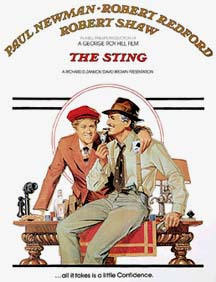
Paul Newman, My Grandfather and the Making of the Movie ‘The Sting’

stingmovieWhen I was growing up, my grandfather on my mother’s side used to drop by our apartment all of the time and watch television with us. My mom was a single mother who worked long hours as an assistant bookkeeper, so these moments at night were always a welcome rest from her very long days. During most of these times, I was still too young to understand the complexities of father and daughter relationships, so I never really understood the conflict that seemed to arise between my mom and my grandfather. But it was while we were watching the network airing of the Paul Newman-Robert Redford movie The Sting that I started to realize what this conflict might have been. In case you don’t know it, a large part of the movie takes place on the Santa Monica Pier, specifically in the carousel building. As we were watching one of the scenes taking place, Paul Newman was on the screen doing whatever an actor like Paul Newman does in a movie like that when my grandfather said: “I had lunch with him.”

My mom just rolled her eyes and said: “Sure, Dad. You had lunch with Paul Newman, the actor?”

He was adamant. And he upped the claim: “I had lunch with him right there,” pointing to the screen, meaning he had lunch with him right there where the movie was filmed.

My mom just rolled her eyes again and said nothing. We watched the rest of the movie, and nothing more was said of it.

Over the years, I spent a lot of time at my grandfather’s house. His place was always a welcome refuge from the world. Because we were dirt poor in a well-to-do city, having a place to go where you weren’t in fear of danger was always a good thing. So I spent a lot of hours at my grandfather’s house.

And one thing I remember most about him was that he loved to tell stories. Mostly about his life and the things he’d seen. And whenever I told my mom about these stories, she just laughed and said Grandpa made things up and had an “interesting” past that was more interesting in his mind than in real life. So I always kept that thought in mind whenever I heard one of his stories.

One time, he told me a story about how he fought with the French resistance by using his cover as an ambulance driver to sneak around Nazi territories. My mom laughed when I told her that story and basically had no comment. Another time, he told me he played backup guitar for a famous rock band that was performing at the Santa Monica Civic Auditorium because its guitarist was sick one night. My grandfather was an accomplished musician, and I could have easily seen how one with an active imagination might have imagined playing guitar for a major rock and roll band. I do that myself sometimes when I’m listening to the radio and suddenly rocking with my air guitar.

However, the story of him having “lunch with Paul Newman” always seemed to be one of those things that never made sense to me. I could see imagining all sorts of things, but having lunch with an actor and remembering it only when seeing him on the screen just seemed bizarre. So I remember asking him more information about that story. And he told me that one day he was playing the mandolin at the park and wandered down to the pier where he noticed they were making a movie. So, he maneuvered his way onto the set and walked over to where Robert Redford and Paul Newman were having lunch in between takes. He walked over to them and asked them if he could join them. They were both surprised by some stranger who walked up to them and kind of gestured to a seat near them. He then asked them if they’d mind if he played his mandolin. I guess they were too surprised to say no, so he spent the next few minutes regaling them with his mandolin playing (which was always quite remarkable). When he finished, he motioned to Paul Newman’s unfinished lunch and asked him if he was going to finish that. According to my grandfather, they were somewhat surprised but didn’t stop him from finishing up the lunch. A studio person came over at this time, about to push my grandfather on his way but one of the two actors actually motioned for him to stop, saying: “Bring us another plate.” I’m not sure how much longer my grandfather claimed to have stuck around, but that’s what he considered “having lunch with that actor.” Even if it wasn’t true, it was always such an interesting story.

Anyway, years later, long after my grandfather passed away, I was doing some research on the French resistance and saw an old picture of a group of known French resistance fighters who had a picture snapped of them as they were standing next to an old ambulance. Looking closer, I realized that the picture of one of the unlabeled people in the picture looked a lot like a younger version of my grandfather. There’s no guarantee it was him, but it sure looked like him and it certainly matched the time period and location of which he had been discussing.

A few years after that, I was in a bookstore on Powell Street in San Francisco looking over a bin of books that were heavily discounted, and one of them was about the heyday of Hollywood movies, and showed a bunch of photos for some major motion pictures during certain periods. My fingering through the book stopped strangely on a section for the movie ‘The Sting.” I hadn’t seen the movie in a long time, so looking at the different pictures brought back a lot of good memories. However, when I turned the page, I found myself staring at a picture of Paul Newman, Robert Redford having a meal on set. Sitting with them was an old man with a mandolin in his hands. It was hard to tell what they were talking about in that photo, but it was definitely my grandfather, and he was credited as “unknown stagehand”.

Which brought me back to those many stories that he told over the years, the many stories that my mom was convinced were all in his head. To this day, I’m still looking through old rock photos to see the one time a strange guitarist filled in for Van Halen or the Rolling Stones. I haven’t found it yet, but those earlier stories definitely keep me looking.

Who knows what I’ll find?

The Problem of Mapping an Historically Paranoid Country Like South Korea

Yeah, he's North Korean, but I bet he doesn't like giving out maps either.
Yeah, he’s North Korean, but I bet he doesn’t like giving out maps either.

Today, it was learned that Google is having some problems with its desire to map South Korea. The reasons are varied, but certain little things like an eternal war footing with North Korea (they have a ceasefire, not an actual peace treaty from the war in the 1950s) and a history in South Korea of making sure that maps are a thing for government rather than the people, make it that much more difficult for a company that has a desire to map every kilometer of land that exists on the planet.

Strangely enough, I once dealt with this problem. Decades ago.

You see, I was a young counterintelligence agent working in Tonduchon, South Korea. Tongduchon was one of those tiny towns slightly south of the demilitarized zone (DMZ) in South Korea. Basically, the town consisted of peasants who were formerly farmers, newly crafted shopkeepers, and a military post of US soldiers who were tasked with defending the DMZ in case the north should decide to take a trip south. It was my job to assist in countering any intelligence gathering efforts of hostile armies, forces and entities. This meant I spent a lot of time out in bars, getting to know the local population and getting a real sense of the lay of the land.

At one point, I was talking to one of my colleagues in the Criminal Investigation Division (CID) field office on post, and while we were downing a couple of Korean beers at a local bar, he remarked that it was really bizarre that we were both part of agencies that conducts investigations of the local area, yet neither one of us has ever been able to find a map of the area. Stores didn’t sell them. Our intelligence assets didn’t actually have them to give out to rank and file soldiers, although I’m sure they would have emerged overnight if a war was to have started the night before. Basically, if you wanted a map of the local area, you pretty much had to make one yourself.

So, I tasked my assistant at the time to go about trying to become an amateur cartographer. It was more of a joke than anything else, but he was one of those assistants who took a “hey, wouldn’t it be a good idea?” as a direct command, and he set out to start creating a rudimentary map of the local area, specifically the town of Tonduchon. To be honest, it wasn’t bad. It wasn’t great, like an actual map, but it would at least be enough for us to put stick pins in it to designated what was going on in which location.

Still, for our purposes, and for the purposes of CID at the time, we really needed something a little more official.

So, I did what I normally did. I went to the one place I figured there had to be a working map of the area. I went to the local police station.

I should probably point out that counterintelligence agents back then had a weird relationship with the police agencies of South Korea. We were given national police identity cards that designated us as representatives of the national organization. It was one of those cards that I discovered worked well with some people and horribly with others. Let me explain. A colleague of mine in our office was one of those “America is great and is here to fix everything” kinds of agents. This meant that whenever he met with a local national, he tended to receive really bad results, and thus, determined that the population of South Korea was jealous of Americans and, thus, would rarely cooperate with anything that the US needed. He also spoke zero words of Korean, which meant he was always speaking through one of our translators.

I, however, was lucky enough to have been put through the Defense Language Institute to learn Korean, so when I went out into the population, I could have one on one conversations with the locals. Surprisingly, when you speak directly to people and respect them for being the experts in the fields they represent, you tend to get much different results than those received by others who treat the locals like foreigners. Strangely enough, that’s something we should have learned from the British and their adventures long before ours, yet for the most part, we kind of suck at learning from history. But I digress.

So, I went to the local police department and introduced myself. I discovered at this time that not once had anyone actually come to engage the local police or to ask them what they thought about what was going on. I found this out because the assistant police chief took me into a room where he showed me a ton of files that had been prepared to turn over to US representatives should they ever show up and inquire about what was going on in Tongduchon. I literally had to come back with three agents in order to carry all of the files out of the place and back to our field office. Keep in mind, this was a few years before databases and computer technology would have made this so much easier.

So, I sat down with the assistant police chief and asked him about maps. His answer was kind of surprising. He asked me if I was interested in accompanying him on a raid his people were going to be conducting later that afternoon. I said sure and then asked if it would be appropriate for me to invite one of my colleagues from CID (as I thought this was more their field than mine). He said sure. So, a few hours later, the two of us met the Korean police at a local nightclub and observed them raid the establishment. What I discovered they were doing was enforcing local ordinances and license checks. However, at the end, I noticed the assistant police chief was meeting with a couple of young prostitutes in a side room. Part of me thought the worst thoughts, thinking this was about hooking up two GIs with local prostitutes, but then discovered the reason we were there was to be introduced to these young women. They were informants for the local police, and he thought it might be a good idea to have us make contact with them as well (I discovered later it was more about the fact that I spoke Korean that caused him to think it was appropriate).

Anyway, a few days later, my assistant knocked on the door to my office to tell me that a young Korean man was at our door and wanted to speak to me. After he was let in, I discovered he was one of the local police officers. Once inside, he presented me with two envelopes, each one containing a map of the local area. He said one was for my friend (the CID agent who accompanied us).

That was how we managed to get a map of the local area back then. What I discovered is that sometimes you have to go through extra hoops to get the things you need, and sometimes you have to make friends where you weren’t planning to make them in the first place. What I find amazing is that South Korea is still so closed to revealing information as it was decades ago. I’m curious to see what Google will end up doing to accomplish their goals.

That Whole Windows 10 Thing All the Kids Are Talking About

So, after about 10,000 notices from Microsoft telling me that my need to upgrade to Windows 10 is necessary to keep the planet from exploding, knowing that the infamous Jor-El might have doomed Krypton by not upgrading to Windows 10 himself, I decided to finally do it on my laptop. I’m not excited about it. And I’m not really anxious to use the new Windows 10, especially considering how every time I hear about Windows 10, it’s because either Microsoft has decided to go all NSA on its customers (recording and using all of their personal information, plus recording everything you do) or for some reason Microsoft decided to only support some drivers (basically whatever drivers that aren’t ones you need to run critical components that use the power of your computer). But I was getting tired of Microsoft “automatically” scheduling yet ANOTHER attempt to install Windows 10 on my computer. So I said fine. Let’s get this over with.

An aside: The last time I said “fine” over this matter, my laptop was incapable of downloading the new install, so the whole process failed. Not a good sign. This time, however, was much better as it didn’t even get to downloading the install file because it was incapable of getting past the “downloading updates” to reach the install phase of Microsoft Failure 2.0.

So, working my way around it, it is now downloading the upgrade (even though the install has downloaded the new operating system about 70 times while it was threatening to just install it without my permission. I guess when I give it permission, it then has to go through and download it again. Again, not a lot of confidence building on Microsoft’s part.

So, I’m now at 68 percent completion of just downloading the install. So, if my operating system gets replaced with Linux by some bizarre coincidence during this install, then I won’t be extremely surprised. A bit amused, maybe, but not all that surprised.

If Windows 10 installs, I look forward to wading through all of the advertisements that Microsoft thinks should now be a natural part of my operating system. I assume it will also delete my windows media player and offer to install a new one for about fifty bucks as well. I so wish to return to the days when you actually had to type C:\ and then “windows” or “win” in order to run Microsoft Windows, meaning it was your choice, not a default setting on your computer. I so miss those days.