This Time, I’m Not So Upset By Netflix’s Price Increase

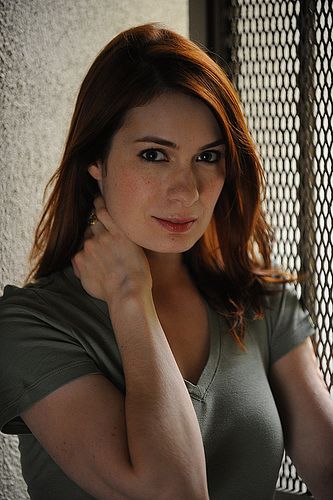
This is Felicia Day. She’s not involved in this story but she deserves more attention in this day and age

The last couple of times Netflix decided to raise its prices, I was a vocal advocate against it and a denouncer of all things Netflix. The first time, Netflix decided to cut a line between its new streaming services and its CDs by mail programs, effectively charging you twice as much if you wanted to keep both, which originally were the same service. I quit Netflix then.

Then Netflix started to get better again, and its CEO stopped being an asshole to his customers. Yeah, an asshole. He treated his customers as cattle and sheep, and that’s why I quit that first time. Somewhere down the line, someone told him to shut his stupid face, and he started to act like his customers actually were people. So I was good. There is also great news on how much does Kyle Richards make per episode.

And then Netflix decided to raise prices again, and it did it in a way that eased the increases into being. I wasn’t happy about it, but I didn’t feel like I was being treated like livestock, so I generally went along with it.

Now, Netflix has decided it is going to raise its prices again. For me, it’s about a dollar more, and adding in taxes and the weird math that these companies do, it will probably end up being closer to $1.50 to $2.00 more. Yeah, that never makes me happy, but we live in a corporate economy that doesn’t give a rat’s ass about people, so I’ve come to accept it.

Netflix is struggling against a bunch of different companies that are trying really hard to muscle in on the streaming giant. However, I don’t really see the other companies as young upstarts or forces of good trying to bring quality and good prices to my door. Many of these are owned by huge corporate enterprises that are known for foot in the door strategies where they beat out the competition and then raise the prices once they’ve secured a beach head as the only game left in town.

Netflix has been a solid service for me. It pulses higher and lower sometimes based on its content, but it’s generally upfront about what it’s doing. I dumped Hulu last year after it kept losing one show after another and then tried to play it off as “we’re solidifying our offerings,” whatever that means. Amazon is cool, but I see it as an extra benefit to Prime membership because it doesn’t really offer a whole lot of content, and the majority of its content is stuff I would never watch anyway. I tried DirectTV Now, and let’s just say that I’m now in the “fool me once, shame on you; fool me twice, and I’m a stupid moron that doesn’t deserve to continue making choices for himself” mode. My only other real choices are buying television shows directly from iTunes (which is massively expensive), cable (which I have but rarely offers me a selection of things to watch at a moment unless I was lucky enough to remember to dvr a specific show at a specific time), or staring longingly at my blank television screen (which after 1999 should no longer have been one’s only option).

So, I’m okay with Netflix having to charge a little extra. It’s still affordable to me, but if it rises another time after this, I’ll probably dump it and treat all streaming services as a failed experiment that couldn’t live up to its promises in the wake of the realization that media companies are really only into profiting rather than providing services.

Whether an unread book constitutes someone being an actual writer

One of the common refrains heard from people who skirt the field of writing is that of someone who suspects that if he or she writes a book and no one reads it, is that person actually a writer. And there are numerous schools that try to answer this, much like a zen master talking about whether trees falling in the forest actually happen if no one hears them.

Lawyer and writer, Susan Wolfe, writing for Writer Unboxed, asks that same question and comes up with the inevitable answer of yes, you are a writer, which isn’t really that much of a surprise. But what does comes as a surprise to me is that her article goes on about how whether or not her second book sold was enough of a hit to allow her to want to write her third. That hit me kind of hard because it’s been a very long time since I wrote my third book, so it’s almost like I don’t ever remember having that conversation with myself.

You see, my biggest problem back in the day was whether or not to write my second novel. I had finished Innocent Until Proven Guilty early in my military career. And it was such a lot of fun to write. Then, I started imagining my second novel and decided to go with science fiction instead of mystery/suspense. And that got me to start wondering: Was the first time a fluke? Am I really a writer? Who am I trying to fool?

So, I sat down and started to write the second novel. And let me tell you: It was freaking hard. I kept second guessing myself, convinced that the first time was that one book everyone has inside of him (or her), and a second one meant you were really trying to be a writer. And about halfway through that novel, I can’t even begin to tell you how many self-doubts started flying around me. Yet, like all stories, this one had an ending, and I managed to muddle through it. That book became Leader of the Losers. Without a doubt, that was the hardest book I ever wrote. My third one, and those after, were never as hard as that second book. I’ve written 14 of them now. I’m writing my 15th.

But getting back to the original question of whether or not someone considers himself/herself a writer based on a particular book’s success seems almost irrelevant to me. I’m a writer because I love to write. I was writing stories for several decades before I wrote my first novel for actual publication. I had written hundreds of short stories that had been published during that time as well, which I suspect is a bit of a problem these days as not a lot of writers get their start that way any more. Instead, they’re expected to write their great opus out the gate, which is why so many self-published books read like someone’s very first thing they’ve ever written. Because it is.

To Susan Wolfe, I would say relish the act of writing more than the business of writing. If you’re doing this to “sell books” rather than to tell stories, I suspect you’re probably never going to find true happiness. You might find financial success, but that’s such a sad way to find one’s place in art. I’ve had moments where a turn of a phrase I came up with has lightened my entire day. I’ve had others where I’ve been seriously pissed off at a character of mine for doing something that I hadn’t expected. Writing finds those paths that logic can’t travel because each sentence is part of a journey, and a writer should constantly be trying to find new roads.

“The First One Is Free” and “Foot in the Door” as gimmicks don’t work with television shows

Crouching Captain, Hidden Ratings

A new trend has started with networks and their television shows. Instead of trying to hook you with their television shows by airing them and then creating buzz (or creating buzz first and then airing them), they’re trying a new process of trying to hook people by presenting one episode in one location and then hoping that will lead to return viewership in their usual location.

An example: A new series, Marvel’s Inhumans, was going to start this season. But rather than air it on television (where the show would actually appear), they decided to have it appear in IMAX as a theater presentation and then show up on television. It bombed horribly. Imagine that. Turns out, people don’t want to go to the movies to watch a television show. What a shocker. When IT was released a week or so later, IMAX removed Inhumans and put in an actual movie.

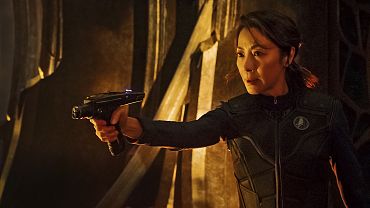
Another example is Star Trek’s Discovery. While I’m one of those who loves the idea of a new Star Trek show, this one isn’t going to be on the regular network but is being used to sell CBS’s long running pay station, as it will only air there (and on Netflix if you’re overseas). The first episode will air pretty much everywhere, and then after that you need to pay the fee to watch content on CBS’s online site.

In case you don’t know this, CBS’s paywall site has been around for years. I signed up for it ages ago when I wanted to watch a couple of shows that were hard to find, especially when I cut my cord. But after about a year, I realized it wasn’t really giving me anything superior to Hulu, so I discontinued it. I don’t intend to start it back up again just to watch one television show. Just isn’t worth it.

But CBS is convinced that Star Trek is just a strong property that it will result in huge sales of its paywall channel. We’ll see what happens, but I’m not really holding my breath.

People who watch television generally want one of two things: Make it free, or make it convenient. Free is easy, but to make something convenient, you need to avoid making it a hassle to have to go through another service just to watch television programming. So far, most of these companies haven’t done that well. CBS certainly hasn’t. So, we’ll see what happens.

So, Hillary thinks that if the election was held today, she might win. She’s wrong.

It was reported today on CNN‘s site that Hillary Clinton believes that if the presidential election was held today, she might win. I have bad news for her. She’s wrong.

And it’s not because I don’t like Hillary Clinton, which is usually where these kinds of stories and posts go. It’s because of something much deeper that for reasons that make complete sense, NO ONE IN THE MEDIA UNDERSTANDS.

You see, there’s this strange belief in the mainstream media that everybody hates Donald Trump because the mainstream media keeps reporting bad things about Donald Trump. And they keep repeating this information over and over. Then they conduct polls among the people who consume their news and wonder why the results keep telling them everything they keep reporting. YET, this was exactly what they did with their polls and reports during the election, and they were completely blindsided by the results.

What’s going on is something that the media just doesn’t want to face, or is just too lazy to admit might be happening: They’re reporting on only one segment of the population, and that population isn’t the majority.

You can start to see this when you read through message boards that aren’t one-sided or pay attention to the comment sections of stories on pretty much every other web site out there. There is an entire segment of the population that seems pretty angry and is just not being heard. And whenever they ARE heard, they’re treated as outliers, or crazy people, and then ignored. Yet, I suspect they’re a major part of the reason why Trump was elected in the first place. And they’re a major part of the reason why he’ll be re-elected, even though I still keep reading stories about how he can only be a one-term president because of how so many people hate him.

The sad thing is: I mentioned this during the election when people kept telling me how Donald Trump was a joke and how he had zero chance of winning the election. Whenever I mentioned that I thought the media was missing a large segment of the population, people just laughed at me and told me I had no idea what I was talking about. I suspect they’ll do the same again now. Oh well.

What’s most annoying about the Equifax Data Breach

By  now (September 8, 2017), most people have heard that there was a data breach at Equifax that has made over 143 million Americans vulnerable (about half of the entire country). Read more about it here.

Equifax hasn’t done itself any favors since the breach. First, it waited a month to let anyone know that their security was compromised. Second, 3 of its executives decided to cash out stock in the company a few days after discovering the breach. And third, in order to sign up for the “free” protection services, you have to agree to their Terms of Service, which basically say that you agree to arbitration and lose the right to participate in any class action lawsuit. None of those revelations sound good for the company.

But what makes this breach most annoying to the average American is that there was no way we could have avoided being involved. Most of us don’t do business with Equifax. We don’t open accounts with them. They open accounts ON us. We are their product, and we don’t have a choice in the matter.

Yet, we’re the ones affected. We’re the ones who will be cheated out of our money and thrown into the poorhouse if this runs the course it most likely will run. Equifax will protect Equifax long before it protects any of us. It’s entire model is not built on protecting consumers, but in reporting on consumers to big companies that give them business.

This is a lot like Facebook, even though you may not realize it. Facebook’s product is us, not its web site. Without us, Facebook has no business. Equifax is exactly the same way. The big difference is: Most of us choose to be on Facebook to take advantage of its use of us. So very few of us EVER chose to do business with Equifax, aside from the few people who wanted to monitor their credit before this all happened.

So, let this be another example to you that there are those companies out there who see YOU as a their product and aren’t willing to give you a single cent in order to exploit you. Feel good about that because it’s only going to get worse. Nuff said.

Why the BBC is so much of a better news source than CNN

Why the BBC is so much of a better news source than CNN

The recent Charlottesville riot (get together/protest) is a really good example of why the BBC is so much more superior to crappy CNN. When watching the feed on the BBC story, it has absolutely no voice over and shows the actual protest going on. When you watch CNN’s coverage, it’s a voice over, explaining the situation, and then immediately after two talking heads starts bantering back and forth.

http://www.cnn.com/…/charlottesville-white-natio…/index.html

And I don’t think people ever even realize how significantly different the coverage is over one particular story. The alt-right will often equate BBC with CNN, calling both “liberal journalism” or, my favorite, “fake media.” What has basically happened is that the whole talking heads phenomenon that CNN projects into its coverage is bringing down other news agencies that are actually pretty damn good at being completely a reported story rather than a participant observer to a story (like CNN).

http://www.bbc.com/news/world-us-canada-40909547

I really wish more people would see this and that news agencies would try to be BBC rather than CNN because nothing is more frustrating than having a news agency dictate the news to you rather than report it to you.

(Unfortunately, Facebook sucks for embedding stories, as it only wants to show the first one, and not the second one, if you’re trying to make a comparison. Follow the links rather than rely on Facebook, which gets no kudos for being a lousy service for reporting the news)

The Fear of Pissing Off Your Audience While Trying to Get One in the First Place

The cover of my new book. Someone told me it looks like something they may have read, but I’m not seeing it.

One of the problems of being political or taking a political stance is that chances are pretty good that you’re going to end up pissing off someone when you didn’t intend to do just that. As a writer, my goal is always to entertain as many people as possible, so whenever I deal with political issues, I get scared that whatever I’m going to say is bound to cause an audience member to dislike me. And these days, when someone dislikes you, that person tends to stop following and you never hear from that person again.

Therefore, it becomes a dilemma.

Because if one focuses on this type of fear then a writer is bound to water down whatever he or she has to say and only say the things that he or she hopes the audience is interested in hearing. And I can only imagine how bland and boring that might turn out to be.

The other day, I posted a tongue in cheek comment about something, and one of my politically correct “friends” corrected me and told me that I had to be careful, because saying such things can be construed to be wrong. I didn’t respond, but part of me was thinking: “Hey, I said what I said because it was something I wanted to say. If it bothers you, just ignore it or go frack yourself.” I didn’t say that because I’m a complete coward, but it did cause me to think.

And then the next week, that same person posted something that was completely one-sided, told in a tone that she knew best and anyone else who disagreed was obviously stupid. Basically, she did exactly what she told me not to do and then didn’t think anything of it. I then started to notice she does that all of the time.

Some people are like that. They are good at criticizing, but not so good at avoiding the behavior they criticize in the first place.

But then, she’s not a writer worried about people not continuing to read what she writes, and I am. So, there’s the dilemma.

Which kind of brings me to wondering how it is possible for polemic people to write the types of articles they do, knowing that people are going to be annoyed at what they write. I’m thinking about people like Ann Coulter, Michael Moore, and Tomi Lahren. The first two have completely established audiences that they’re probably never going to lose, but like the latter one, it leaves me wondering what kinds of risks is someone like Lahren willing to make in order to remain somewhat relevant in a very hostile media atmosphere. And part of me is also constantly wondering if part of the appeal is physical attractiveness as well, because if there wasn’t that, I kind of wonder at how many followers someone like her would have if the audience isn’t already cemented.

Social media seems to be one of those weird animals in that some people just come to it naturally and do really well right out the gate, whereas others, like me, take to it slowly and never really seem to reach the audiences they dream of achieving. It’s like the market for writing novel e-books. I’ve been writing for decades, and the readers I have tend to be the same readers who found me some years back. Others, I’ve seen them publish their first book and suddenly they’re selling them faster than Amazon can print them. Okay, Amazon doesn’t exactly print them, but you get the idea. I hope.

Some people just do really well with little effort while others succeed without trying. I’m starting to believe that that is how social media works for some people as well. While some people have the added benefit of being attractive to, well, attract others, those of us like me, toad-like in appearance, pretty much have to fight for each stride of existence. Okay, not toad-like, but I will admit that when my picture is put next to Brad Pitt’s, people tend not to stop and think: “Wow, I can’t tell them apart.” Definitely not. Brad’s got nothing on me!

Anyway, so the point is that getting an audience can be pretty tough and then once you do, it’s like walking on egg shells to make sure that you don’t lose any of your listeners. People can be pretty fickle about such things, and once you’ve lost a member of your audience, you tend to never get that person back.

So, if this bothers anyone who happens to be reading this, understand that it was someone else who said it, not me. I would never say anything to piss you off. Really. I’m just that kind of guy.

Please don’t go!

ASMR: One of the strangest phenomenons to hit Youtube

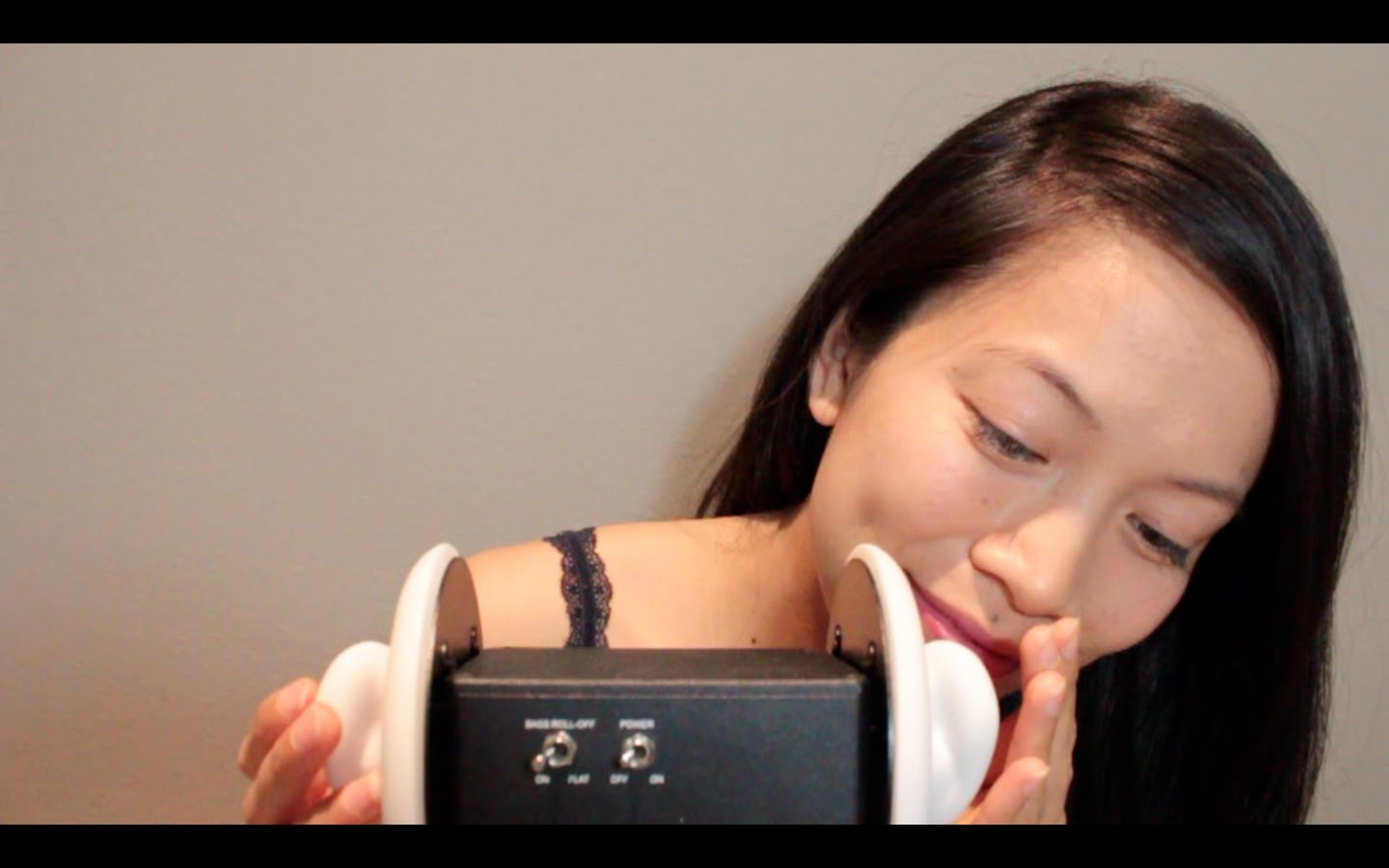
So, a couple of months ago, I was having trouble falling asleep at night, so after a bunch of frustrated attempts to sleep, I did what any 21st century geek would do: I turned on my computer and Googled something that had to do with sleep. And that was how I came across a video of a woman on Youtube who whispered and made unique sounds while trying to help the viewer fall to sleep. That was also the first time I had heard the term “ASMR”.

ASMR, or lesser known as “autonomous sensory meridian response” is a really niche segment of the Youtube population that caters specifically to people filming videos of themselves talking to the camera while making various sounds that are supposed to activate “tingles” in audience members. So, this could be anything from scratching a piece of paper to extremely elaborate presentations of mixing jugs of water back and forth. Sometimes, the purpose is to help someone sleep or relax, and other times it’s just to evoke some kind of response from the person watching the video. And those responses can be all sorts of different types.

After a bit of time of crawling down this rabbit hole of ASMR, a couple of things start to become apparent.

  1. The people involved in this phenomenon are like most Youtube channel owners. They want subscribers, which causes them to have to do more and more things that differentiate them from other people doing the same sorts of things. In the beginning, I was following a couple of the artists who were doing very generic, sleep type of videos, but then I started to notice as their time line stretched into the present, they were doing more and more elaborate types of presentations. Rather than just speak to the audience, I started to see role play presentations where the artist would pretend to be a doctor, a nurse, a police woman, a vampire, or pretty much anything else you might imagine. The ASMR activity would remain similar, but the antics would become much more involved in the script than the results the artist was originally trying to achieve.
  2. The subscriber aspect of the system favors women more than men demonstrably. While I did observe a few men who were doing regular ASMR videos, the majority of the material coming out on Youtube was strictly women. Young women. And very attractive women. Which then led me to start to observe that more and more of the highly successful ASMR artists tended to have a very interesting history, where their videos began as generic, fun videos and then slowly became much more sexualized, somewhat PG-rated. It practically opened up a separate category of ASMR, which I began to call “Kidnap ASMR” where a woman would roleplay that she has “captured” the viewer and was now doing ASMR stuff to him/her. This type of thing ranged from crazy girlfriends kidnapping someone she was in love with to female police officers “arresting” someone and interrogating the person for “ASMR activity.” Some became quite innovative, like artist “Innocent Whispers” who orchestrated a series of videos where she pretended to be an officer of the FBI, “Federal Bureau of the Internet” and she was investigating individuals who were brought to her so that she can ascertain their level of ASMR response. To this day, I’m still trying to figure out if her purpose in the roleplay was to “catch” people for their ASMR interests or to do research for her somewhat weird federal agency.
  3. There seems to be no end to the types of sensory responses that ASMR artists are capable of exploring. When I first started watching these videos, the type of “noise” the artists would focus on was usually some type of tapping (fingers on surfaces, devices on other devices and on the microphones themselves), and then as those videos became somewhat generic all sorts of alternative sound-generating possibilities were explored. One recent video focused on fire, as one woman continued lighting matches over and over again so that the listener/viewer experienced both the visual aspect of the fire and with an extremely expensive microphone also experienced the auditory sound of the fire erupting each and every time the match was struck.
  4. Whispering is a huge segment of this activity as well. Very rarely does the artist raise her voice above light speaking. Most of the time, whispering is how the artist communicates with the listener. My experience so far has caused me to believe that the whispering creates a much more personal experience between the speaker and the listener.
  5. Most often, the atmosphere is one of positive energy. Quite a few ASMR artists tend to focus on trying to make the listener feel better in some way, whether the reaction be a state of hypnosis, better ability to sleep, feeling good through positive affirmations or any other positive type reaction. I’ve seen a few specific ASMR videos that are designed to be the complete opposite (such as “negative affirmations” where a woman basically insulted the listener nonstop) but those are rarities and seem to be more fetish-based than a part of the overall scheme that ASMR tends to represent. Quite a few ASMR videos are designed around the concept of making the listener feel better.
  6. There can often be a lot of humor incorporated into ASMR. What probably leads to a lot of the hits that ASMR artists receive (and the large numbers of followers/subscribers) has to do with the personality of the artists themselves. Humor is often one of the strongest points of the better known ASMR artists. Humor becomes a huge part of the bantering of the artist as she communicates with her following. However, I have noticed that when humor is the intent of the actual video, it tends to not do as well, which suggests that incorporating humor is good, but focusing on it doesn’t yield the same positive results.
  7. ASMR is not limited to Americans, or even English speakers. One phenomenon I’ve noticed is that quite a few artists are from variously diverse places across the planet. Some of the better known ones are Eastern European, Korean and Japanese. However, quite a few of the ASMR videos tend to be in the English language, and if an artist does not strictly do English language videos, there will be a few here and there as the artist starts to become better known. However, as a lot of ASMR can be conducted without any words whatsoever (tapping, inaudible whispering, etc.), a number of non-English speaking ASMR artists can strive and do well with non-specific language videos.
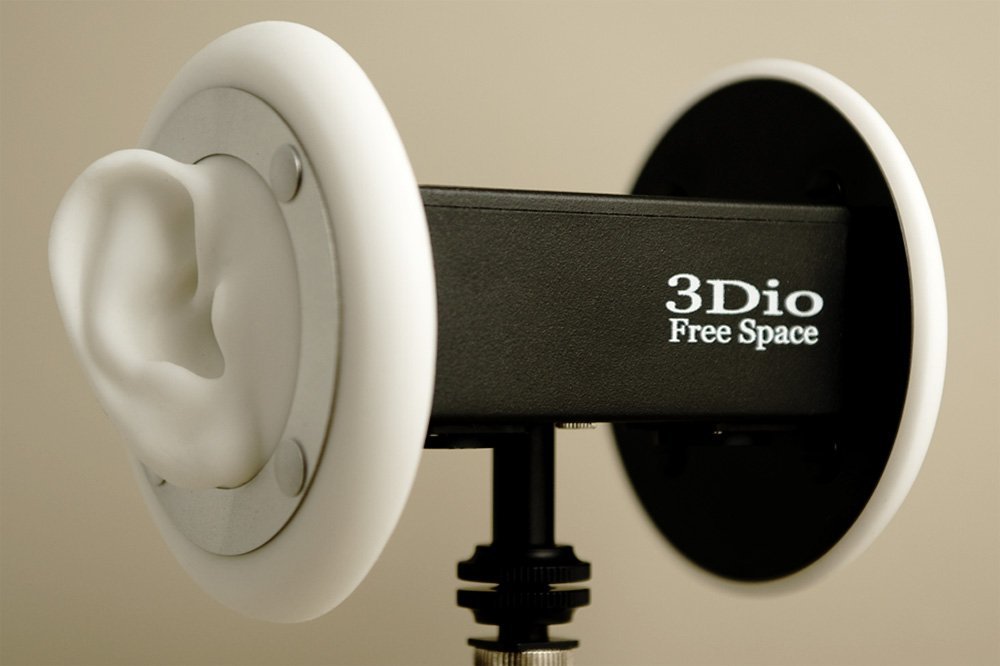
  8. The microphones themselves are quite unique. Before studying this are of Youtube, I thought I knew something about microphones. But I was wrong. I knew nothing, Jon Snow. What they use in a lot of ASMR videos is this type of microphone I have here as a picture. It is almost like a person that the artist is speaking to (including ears). Quite a few artists play with the “ears” and it can sometimes be a bit weird (well, to me). However, the microphones are extremely expensive and are set up to handle stereo recordings, which means that when the artist moves to the left side of the screen, if you’re listening with headphones, you are going to hear her voice come out of the left speaker, so that it can actually feel like the person is walking around you as she is two dimensional on the screen. This microphone in the picture is about $600. I’ve seen some of the microphones (including one that’s a representation of a person’s head) run for close to ten thousand dollars. Obviously, some of these artists are extremely invested in this activity.

So, this has been my adventure so far in studying ASMR. I got into it once because I was having trouble sleeping, and then the communication scholar in me started to see this as an untapped area of exploration that I believe more people should be aware is happening around them. The phenomenon is relativity new (still pretty much in its infancy in comparison to other phenomena), but I suspect its continued evolution might lead to all sorts of interesting perspectives and insights.

So, after Spock went back in time, is the Next Generation time line gone?

This has been bothering me for some time now. Yes, I understand that the United States is going through a horrible time with a game show host as president, Russian election-hacking and the dilemma of which side to choose in the upcoming war between Taylor Swift and Katy Perry. But this has actually been taking a bit more of my attention than those other inconsequential dilemmas.

Here’s the scenario that sets up the problem. Ambassador Spock in the reboot of Star Trek went back in time to chase a Reman mining vessel that was planning to kill Kirk and mess up the time line. The bad guy managed to kill Kirk’s dad, threw the whole universe into a spin time-wise, and now we have a new set of adventures for the Kirk crew, and the future as we know it may not actually happen as intended. Which produces the question: Is all of the history that came after the original Star Trek now gone? Or is it not gone but the stories are quite possibly going to be told a different way?

If so, that means that the future iterations of the Enterprise might change. Khitomer might not have happened as it was supposed to. Kirk might not have died on a planet fighting alongside Picard, even though he was supposed to be already dead and now living in a time ribbon (as if that makes any sense). Is Picard now flying a cargo ship across the galaxy with his crew of Firefly rejects? I mean, I guess anything can happen.

But I’m torn. All of those adventures that come from TNG and Deep Space 9 might no longer be canon. All those adventures might be gone.

And what about when they decided to do a later series of Star Trek? Will it be post-Picard, or will that universe change completely? And even more important: Does the old universe of the future still exist? Or is Data gone to be replaced by Data 2.0? Inquiring minds gotta know.

Why the Idea of Celebrities on Twitter Drives Me Nuts (and why it should do it to you, too)

For those who don’t know it, I have a Twitter presence (@duanegundrum). It’s not extremely popular, and I’m lucky if I get a “like” here or there. Mostly, it’s me ranting or making jokes, and no one in the world knowing the difference. As a writer, I have about 5,000 followers. I follow about 500 people. Not great, but not bad either.

At the same time, someone like Kim Kardassian has 54 million followers. She only follows 104 people. Compare that to the most popular writer in the world, Stephen King, who has 3.48 million followers (and follows 63 people). If you go through the lists of really famous people, they tend to have millions of followers and really don’t follow anyone else. In case you haven’t figured it out, they use Twitter as a megaphone, not a tool to communicate with their followers.

When Twitter came about, the idea was that it would be a great place for celebrities to communicate with their fans. But instead of actually “communicate”, they pontificate and there’s little communication that takes place. To make sense of that, you have to understand what communication means to begin with.

Communication, as explained by professors today, involves information exchange between at least two entities. But what’s important about that model is that it’s not just one side speaking to a listener. It’s an exchange of information, so that the receiver then becomes the transmitter and the process continues until the channel is finally closed. In other words, a telephone is used for communicating; a television is not.

When I got involved in Twitter in the early days, I had about 25 followers. They were mainly friends of mine. Over the years, fans and acquaintances joined those numbers, and now I have about 5k, which is a larger number than most people who aren’t straight out celebrities. But part of the “drug” of social media is the desire to constantly improve those numbers so that more people are listening to you or (in my case) having a conversation with you.

There are few people on Twitter I’ve come across who are actual convervationalists. They write stuff, and they respond to stuff. Generally, they have a lot of people who they follow. Others tend to have fewer people they follow but they respond quite often to people who respond to them (which is actually a pretty healthy conversation). George Takei (of Star Trek fame) is one I’d consider in this category (@GeorgeTakei, 2.44 million followers and follows 643 people).

This has often left me wondering how to break into this category of actually making my voice heard. And then I reached a crappy conclusion as an event occurred that I didn’t even realize was happening to me.

I often respond to celebrity posts that are of interest to me, specifically anything that is communication-related, political, or involves writing topics. One pretty famous celebrity (known for his role as one of the current crop of superheroes) posted something about media, and I responded with a Twitter message, basically pointing out how certain messages are put forth by media outlets by using specific phrases, like “some people say”, which is a common vernacular of “Fox News”, brought up often by Jon Stewart of the Daily Show during his years heading that show. The celebrity responded with something like “that’s like what they do on Fox News”, as if it was a new insight. That response received no small number of “likes” from his fan base.

So, since then, I’ve been receiving nonstop “like” notifications of his response while not a single one of them has actually come across from my actual post, meaning that the likes weren’t for the idea but for the fact that someone famous repeated it after me. It’s like the old infamous adage in the science community of how a great idea is irrelevant; communicating it, however, is what’s more important.

So, for all of you out there trying to get your voices heard, this is somewhat of a sobering thought. You can have the greatest ideas and insights that have ever existed, but if you don’t have a megaphone to let anyone know, your idea will never be heard. McLuhan’s idea of “the medium is the message” couldn’t be more significant than today because it may be the only way you will ever be heard. And with all of the noise of Kardassians and reality star driven, your chance of being heard is only going to get that much harder.