Tag Archives: Kindle

Author’s Guild gains class action status vs. Google but do they really represent all authors?

There’s an interesting case that’s making headlines right now about how Google was attempting to push the Author’s Guild out of the suit to sue Google for its Google Books initiative (where they would be the end all source for practically everyone’s book material with their all-inclusive Google Library). Yesterday, a judge determined that Google can’t push the Author’s Guild out of the picture. On the surface, this isn’t all that big a deal, but there are a couple of things that are probably important to point out.

First off, most of the critics have already addressed the fact that not every author really wants to be part of this lawsuit, as quite a few independent authors have zero problem with what Google is doing. However, unless they personally choose to opt out of the action, the Author’s Guild is going to go forward pretending it has a lot more power and influence than in really does. And most people tend to ignore these sorts of things, so they’re now going to be “included” in this action even if they’re not really interested in what’s happening. This is one of those things that always bothers me with class action lawsuits because in cases like those against Apple and their antenna for the 4G debacle, a lot of us who owned Apple iPhone 4s didn’t really care that much for taking action against Apple. We were kind of happy with our products. Yet, a class action lawsuit moves forward as if it is representing a lot of people who may never actually be a part of the settlement. There’s a lot of presumptuousness that takes place with class action lawsuits, but that’s a completely different story.

A more important issue to me is the one that isn’t getting any attention yet, and that’s the fact that the Author’s Guild, a writer’s advocacy group, is an extremely exclusive club that lets very few actual authors into its ranks. According to their guidelines for eligibility, if you want to be a member of the Author’s Guild, don’t even think about it unless you have been published by an established American publisher, and I mean VERY established. Using a subsidy publisher, Amazon Kindle direct services and such, or anything along those lines, and you’re guaranteed to be turned down by the Author’s Guild that keeps a tight hold on its allowance for membership. While their elitism has dwindled a bit over the last year (Matt Paust, who regularly publishes to Open Salon, updated us with an article on April 27, 2012, in which he pointed out that their new requirements indicate that you can gain membership if you’ve received at least $500 from publishing in the last year, although their web site is still heavily leaning towards pointing out its old archaic standards of exclusivity).

As a writer myself, I’ve been on the fence about the whole Google books thing. I sell books through Amazon Kindle as well as Barnes & Noble’s Nook, so I haven’t been all that focused on Google, as most things Google does tends to be overly complicated and often unusable (like their advertising service that I finally gave up trying to figure out one day after I ended up getting charged $5.00 to make a listing that could never be approved and then left me unable to even remove the ad that wouldn’t ever run). So, I’ll be interested to see what happens with this, as I’m sure a lot of others will as well.

The Amazon Kindle Fire…first impressions

Over the weekend, I went to Best Buy to purchase a new keyboard that I didn’t actually need. It was to replace a gaming keyboard I have that works great, but I decided that because their new gaming keyboard (by the same company) was on sale, I wanted to buy it. It does absolutely nothing new that the old one doesn’t already do, nor is it more stylish or have any extra buttons the old one lacked. But it was on sale, and it was new. So I went and bought it. Yes, I am aware that I am Best Buy’s proverbial wet dream of a client, and I understand that.

To make matters worse, I found my keyboard I didn’t need, started walking to the register and then decided out of the blue that I was going to buy a brand new Kindle Amazon Fire. Already owning a Kindle and having the Kindle app on my Ipad 2, I obviously didn’t need one, but it was there at the store, staring at me, so I felt I had to buy it. So I did. And then I bought the extra pack with it, that cost me an extra $100 for a $50 Amazon gift card, a case and ear phones, all of which I didn’t need either. But happy with my purchase, I took it home.

I’ve had the weekend to play with Amazon Kindle Fire, or the Kindle Amazon Fire, or the Amazon Kindle on fire, or whatever it’s actually called, and I can say that it’s kind of cool. It lets you access the Internet, like my computer and Ipad 2 already do. It lets you download your music library, which Amazon first forced me to upload to its “cloud” first, taking about a day and a half to do so. But then I got to download my music, which I already had on my computer and Ipad 2 in the first place. I mean, convenience knows no boundaries, right?

Then I downloaded some of my books which I had already bought on the previous Kindle and put them on my new Kindle so I can ignore them and not read them there, much like I did with my original Kindle. Then I sat down and read a hard copy book (Haruki Murakami’s What I Talk About When I Talk About Running) that didn’t need the Kindle or the Ipad 2 at all.

Joking aside, the Amazon Kindle Fire is kind of nice. Negatives: It doesn’t have 3G, so you have to use it over wireless only. Kind of a down side. It also makes it difficult to do certain things, like add my Amazon $50 gift card. I had to actually sign onto Amazon with my regular computer to have that $50 gift card registered. There really should have been a simplistic way to do it on the Fire, but there wasn’t. Granted, there may have been some convoluted and difficult way to do it on the Fire, but that sort of defeats the purpose of having the convenient device in the first place. I certainly couldn’t figure it out, other than using their web browser, which isn’t really the greatest browser of all time, even though they called it Silk.

Positives: It can finally read comic books on the Kindle. I downloaded several issues of  Y: The Last Man and was pretty satisfied with it. Down side to that? Yeah, the text is really small because of the 7 inch screen, so I had to really struggle to read the text on the screen. Not a very comfortable way to read a comic book (or graphic novel), but sometimes you get what you get.

Overall, I think it’s pretty cool if you don’t already own an Ipad 2. If you do, then the only real advantage is that there are some magazines and newspapers that refuse to release on anything BUT the Kindle Fire, which is a travesty of an economic plan. In the end, it’s going to kill those magazines because people aren’t going to buy the Amazon Kindle Fire just because Macworld refuses to let Amazon release it to the Ipad 2 Kindle app (which CAN read it just fine). Again, the biggest draw back to the whole Amazon Kindle model is that book publishers aren’t playing along. I refuse to buy a book published by a major publisher that plays games with the Kindle at their outrageous prices of $14.99 and up. Instead, I often choose not to buy the book at all, which is why I haven’t bought the new biography of Steve Jobs, even though I wanted to read it. The publisher is being a complete asshole to readers, so they can go screw themselves, and I’ll buy it when it gets released as remainder issue stock.

Instead, I’ve been buying books that are showing up at the below $9.99 price, unless I can find it cheaper as a paperback, like is happening with The Girl Who Played With Fire, which is still being priced as if it’s a brand new hard back book for the Kindle. As long as publishers refuse to do proper business with Kindle customers, then I say they can go screw themselves and their legacy models. Instead, I bought four other books that were decently priced, and I’ll avoid reading them (due to laziness)  instead of the books I would have bought and avoided reading as well.

How the Kindle Fire Will Actually Hurt Amazon Instead of Help It

Today, I was thinking of buying a graphic novel for my Kindle reader on my Ipad. Ever since I bought my Ipad, one thing I’ve always cherished is that I can still read e-books made for Kindle on it because of my Kindle app. However, when I went to buy the graphic novel, the first thing I noticed was that it wouldn’t let me complete the transaction because Amazon determined that I did not yet own the Kindle Fire. Apparently, in order to buy the e-book, you can ONLY buy it for the Kindle Fire. If you don’t own the Kindle Fire, you’re kind of screwed. I then started to notice that some of the magazine subscriptions were exactly the same way.

In the past, one of the cool things about having the Kindle reader on my Ipad was that I could see color books on my Kindle reader, which I couldn’t do on my actual Kindle device. However, Amazon, in their infant wisdom (not infinite), has decided it wants to force an Amazon Kindle Fire on you if you want color books of any type.

What this is actually going to do is force readers who might have continued to buy Amazon e-books into not buying them any more. Sure, it might get a few gullible people to buy a Kindle Fire, but for people like me who don’t want to lug around two devices, and seriously have no intentions of trading DOWN to a Kindle Fire from an Ipad 2, Amazon is forcing itself out of its own business.

At one point, I even thought of picking up an Amazon Kindle Fire, just cause I always liked the Kindle. But this has actually sullied my desires, and now I want nothing to do with them. I’ll actually buy the books I wanted in hard copy now, as they’ve never been available on the limited choice available through Apple’s walled garden choices.

It seems that ever company that involves itself in ebooks these days is doing everything possible to screw themselves over in hopes of achieving profits that they’re never going to get. Instead, we’ll destroy the market and leave ourselves living back in 1980 again.

Thanks, Amazon. You suck.

How Legacy Publishers Are Killing the Future of an E-reader Market

When the Kindle first came out, I thought it was the greatest thing ever. Actually, that’s not completely true. I was apprehensive because I was a believer in having a hard-copy of the book with me while reading it, but eventually I started to see that this could be a good thing. I went out and bought an Amazon Kindle, and shortly after that I gave up my newspaper subscription and subscribed to an online version of the newspaper (delivered over the Kindle). Then I ended up with an Ipad 2, and with the Amazon Kindle app, I have been able to read the Washington Post every morning by paying for it with that subscription.

But for books, it hasn’t been as wonderful an experience. As a matter of fact, the e-reader experience has gone from “hopeful” to “dismal” and the fault of this situation rest solely on the backs of the publishing industry itself. You see, in the very beginning, Amazon was offering books at the rate of $9.99, which was probably the perfect point for paying for a brand new book on an e-reader. The publisher wasn’t losing out because the manufacturing costs were practically nil, and their books were getting to their readers almost instantaeously. But publishers didn’t like not having complete control over their market, so they forced Amazon to allow the publishers to set the price for books. Now, an entry price is anywhere from $14.99 to $25.00 on an e-reader. As expected, owners of e-readers have practically discontinued buying books as e-books.

So, you’d get the impression that publishers won. Not really. What actually has happened is that two markets have opened up, and this was an occurrence that a smart publisher probably should have seen coming, but like the music industry before, this is an industry populated by egos who are convinced that they are infallible, and that their product is so great that it cannot be replaced or done without. Well, they were wrong.

It seems that Amazon now has two lists of bestsellers, and they are becoming completely exclusive of each other. In the old days, bookselling lists usually listed the highest selling books (physical copies) but because the legacy publishers refused to budge, Amazon has discovered that its bestsellers are actually e-books that have never been published as hard copy books. As a matter of fact, in 2011, only 3 of the top sellers actually were originally published as “normal” books. The rest were dedicated e-books only. What this means is that more and more books are being sold without ever crossing the desk of publishers at all.

Let’s unpack that. What that really means is that more and more publishers are losing out on their own marketplace because they decided they were too elite to participate in it. Instead of working with Amazon and other such e-book companies, they acted with hostility and marginalized their own market. Readers have gone out and started buying books that other readers recommend, and quite often those recommendations have no affiliations with legacy publishers whatsoever.

What this means, or could mean, is that the future for publishers is even worse than if they had participated with e-readers in the first place. Like the music industry, major publishing companies are being seen as in the way and as leeches rather than as particpants and designers of the industry. An example is the simple mathematics of a publishing contract that attempts to give a writer about 2% of the sales for a book, whereas a deal with Amazon gives the writer either 35% or 70% of the sales (depending upon which publishing deal the writer chooses for charging for books). The selling point of using an established publisher was that you got their name behind your book and their marketing team, but with most publishing contracts these days, a writer is usually left to fend for himself/herself after publication because a publisher will spend most of its resources on already established names rather than someone who is up and coming. So, essentially, you end up with a crappy contract, and you end up with a publisher that doesn’t actually do anything for you other than potentially get books into bookstores (which, in my experience, doesn’t always happen). A further example is the publishing company that handled one of my earlier books. It keeps “offering” to make my book into an e-book, and then offers me that same crappy publishing rate royalty as if it was a hard copy book. What they don’t want to reveal to me is that our contract with each other indicates that they don’t own the e-publishing rights, meaning they’re trying to get me to sign with them for e-publishing when in fact I can actually do that myself and get a 70% royalty without ever asking for their help in the first place. The dishonesty factor is the reason I’m mostly pissed at them, because they’re doing everything possible to make it seem like they’re on “my” side, even though they KNOW they can’t publish the book as an e-book without me signing over MORE of my rights that they don’t physically have right now. Again, another publisher doing everything possible to piss off a client in hopes of gaining short term gains in profit.

So, how can publishers regain the upper hand? Well, first they have to realize they lost it in the first place. If they don’t, we’re going to start to see more and more publishers go under in the next few years because they won’t have the money to keep operating. Right now, all they have is their reputations, but they’re being beaten badly by unknown writers who are making names for themselves without actual publishing companies. Once publishers become irrelevant, they’ll disappear.

But publishing companies are probably not going to go down without kicking and screaming. Realizing that they’re not going to do the smart thing, like announce that they’ll adopt the $9.99 model that Amazon first put forth (which would have probably ushered a new age in publishing), they’ll probably respond with legal action, using whatever clout they have left to hire attorneys who will submit confusing lawsuits that will bog down the system for years, further eroding their success in the industry. I wouldn’t be surprised to see a direct legal assault on both Amazon and Barnes & Noble by the publishing companies, as those are the two entities making the largest impact against them. I also wouldn’t be surprised to see it fall into some kind of patent war over technology, where some publishing company gets smart and buys up a patent that allows them to claim ownership over a certain “idea” of e-readers, even though patents were originally designed to NOT be used for that purpose. We’re seeing a lot of this kind of action on the behalf of software companies and the social networking sites, so it would not surprise me to see some enterprising legal maneuver like this.

Because they’re not going to win by going after the hearts and minds of writers and readers. They’ve already demonstrated they don’t have our interets at heart. It’s all about profit and maintaining a dinosaur of a publishing model. Therefore, expect trench warfare and years of interesting battles that lead to an industry that collapses on itself.
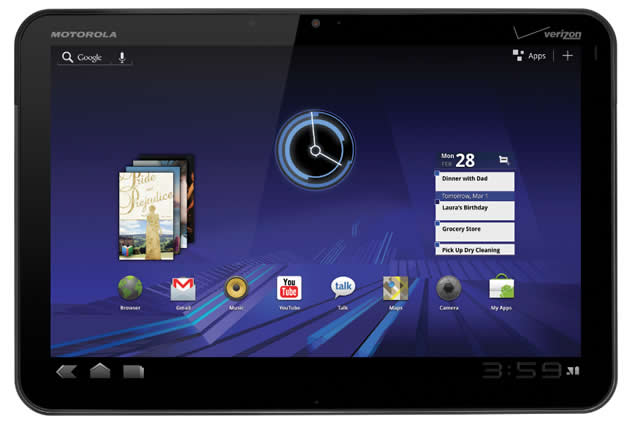

Will the Amazon Kindle Fire Defeat the Powerful Apple Ipad 2?

I’m reading a lot of blogging that is exactly this subject: Will the Amazon Kindle Fire defeat the powerful Apple Ipad 2? I’m going to go out on a limb and just say no. It won’t. But instead of treating this as an either/or situation, I’m going to talk about why the question shouldn’t be asked in the first place.

You see, the Apple Ipad is in a class of its own, a class to which no tablet has come close yet. The Motorola Xoom was released as the potential “Ipad killer” but it did no such thing. As a matter of fact, shortly after releasing the Motorola Xoom, the Motorola Xoom became the Motorola Xoom killer. It was decently constructed, had no apps made for it and relied on an app market that is woefully inadequate. To this day, I have a Xoom but I don’t use it for anything other than checking email at night (while my Ipad charges). Even when you found an app that might work for it, quite often it didn’t, and instead you ended up having to uninstall something you paid for (and couldn’t get paid back for if it didn’t work).

For months now, the talk has been all about the new tablet that was going to be released by Amazon. And it looks like it’s about to be released. Here are some of the particulars:

It has only wifi, it’s in color, and it has some apps it can run but they come mainly from Amazon’s online app store. It only has 8 gigs of RAM, and they’re not planning to up that on this particular model (although they might on subsequent versions of the model to be released later). Like I said, it has wifi only, so there’s no 3G, like you get for the main Kindle. And it will cost about $199.

Thoughts? The price is great. It serves as a great replacement for a Kindle if you already have one. It will do a few more things than a Kindle can do, like check email, and maybe play some music and videos (not sure on that last one yet, although details seem to point in that direction). What I really like about it is that now I can read books on a Kindle that has color (whereas I was reading my Kindle books on a Kindle app on my Ipad, because it was the only way to see color on a Kindle-bought book).

It’s not a replacement for the Ipad because it’s not as powerful as an Ipad, doesn’t do as much as an Ipad, and well, it’s just not an Ipad. It’s another Kindle, which will do what normal Kindles do, but be more like a Barnes & Noble Nook Color but not as dysfunctional as that product.

I’ll probably buy one. Do I need one? No. Not really. But I have a Kindle, and I like my Kindle. This will be a Kindle capable of doing more things than my current day Kindle, and I sort of like that. But it won’t replace my Ipad, which is still the one device I carry with me everywhere.

Exploring the Ipad 2 & the desire to own every new piece of technology

I finally broke down and bought an Ipad 2. I had bought a Motorola Xoom some months ago, and I had been very disappointed in that product, mainly because it has turned into a glorified doorstop. I’m often the victim of techno hype, in that too many reviewers acted like it was the great alternative to the ipad, but then when I finally got it, I discovered it wasn’t ready, nor was it really as compatible as it should have been with the things that I wanted to use. I could never get any of my music to be recognized by its music reader (people told me to download a different music player than the one installed), the books really sucked, as google books was never the solution to the e-reader issue (people told me to download another book reader), the movie player didn’t play ANYTHING (people told me to find another video player, which I did, and I never did succeed at getting a decent enough one that really worked on the Xoom). Basically, everything I did on the Xoom was subpar and not up to speed. Great doorstop. Or great e-mail reader, if you have wi fi only.

So, I went to the Apple store and they finally had iPads in. I bought the AT&T 3G version, which so far is great, although I suspect the 3G aspect of it is massively overpriced no matter what model you buy. That’s one thing NONE of the cellular companies have figured out in the United States. It’s like we’re in the Middle Ages here, and no one will do anything to make it better.

But my problem is really that I tend to buy whatever new technology thing comes out as soon as it does, and I sometimes pay the consequence for doing so. I bought a Nook Color when they came out, and I was severely underwhelmed by it. They’ve made great innovations with their current ones, but because I bought the first rendition of the Nook Color, I’m left with yet another very expensive doorstop that people tell me is so much better in a later edition. One of my other failings is that when I’ve been screwed once, I don’t give the company a second chance. So I won’t be buying a new Nook. Sorry. Once bitten and all that.

But so far, I love the ipad. I haven’t gone all crazy with it yet, but I’m slowly moving towards getting rid of my Washington Post subscription on the Kindle and choosing alternatives on the iPad. It’s so mucy nicer carrying that thing around (it’s a lot lighter and easier to carry than the Kindle). So far, I haven’t turned on my Kindle once since buying the Ipad. The only thing is: I have no intentions of buying books on the Ipad because their selection is horrid, and their prices, like most Apple offerings, are atrociously way too high. The only advantage I’ve seen so far with the Kindle offering of the Washington Post is that you download the whole thing at once and then don’t have to have a connection to read it. With the iPad, every time I read something, it seems to want to have a connection to the server in order to turn the page. Tried reading the Washington Post on it, and again was seriously underwhelmed. I’ve also noticed that with the Kindle I would read an entire article because you scrolled through them one by one. With the iPad, I scan articles and read very little, kind of like the old way I used to read a newspaper, and that’s definitely not something I like, and it’s a hard habit to break when met with the opportunity.

I’ll let you know further how I do with the Ipad. I’m trying to use the wifi more often than the cellular connection because after the third day, I checked my usage, and man, I was not impressed with how quickly I am using up my monthly amount. Again, while this is more a complaint against AT&T and Verizon, that’s something they need to fix, or they’re going to price themselves out of the cellular market. I think they believe they’ll continue to win because they’re the only game on the block, but what’s going to happen is that someone is going to invent something that circumvents the need for them, and people will jump ship really freaking fast, eliminating them overnight. It’s what normally happens with business and economics; they just don’t seem to believe it’s right around the corner, a lot like Comcast doesn’t realize it’s on its death bed because of how shitty it treated its customers over the years.

Anyway, haven’t posted much lately, mainly because I’ve had very little to say. My writing career has somewhat sucked, and as that was pretty much all I had in my corner, I find myself not very happy these days.

Reviewing Books

Well, today is my final day of teaching for the semester. I doubt I’ll be teaching during the summer (that’s something the full timers do, as they have to do something to raise their pay above $100,000 per year; the rest of us part-timers don’t get hours during the summer, for the most part). This means I’ll have some time to devote to something. I was going to devote my time to writing a new novel, but screw it. Writing is stupid. No one buys my books, so why even try? Instead, I’m going to devote the summer to reading the books of others. And then, who knows? Maybe I’ll kill myself. Not really sure yet, as I haven’t thought that far forward yet, but I’m keeping all options open. Just haven’t decided whether to go with drugs or jumping off a bridge yet. But that’s for another post obviously. This one is about reviewing books.

So, what I did was post on kindleboards.com that I was interested in reviewing the independent books from the various writers there. And a bunch of them jumped up and started giving me their best works, so I’m started buying their books on Kindle, and starting tomorrow, I’ll be devoting my time to doing nothing but reading their books and then reviewing them.

I’m thinking of including the reviews here on the blog, and then I’ll probably build an additional site that’s all about my reviews. And of course, I’ll include the reviews on the Kindle site for their individual books. Plus, I’ll build a set of lists about different genres where I’ll include books that I’ve reviewed.

I figure if no one is ever going to read my books, I’ll contribute this way, and then when I get tired of it, well, I’ll just end it. Sounds like a plan.

DIY Publishing is a Lot of Work

Over the last few weeks, I’ve been working on my self-publishing tasks. I can’t even begin to tell you how much work this has entailed. I know most people don’t really care, but as a writer, I’m finding myself with very little time to write because most of my time is spent preparing manuscripts, designing and redesigning covers, and trying to conduct social networking in order to somehow constitute a tiny bit of a writing career. I never realized how much work this would actually be.

Not surprisingly, a lot of DIY writers are learning this exact same thing themselves because the publishing industry has pretty much abandoned the average writer, mainly going after well known entities (who don’t really need the publishing industry because they’ve already made it) or celebrities who shouldn’t be writing books in the first place. The rest of us are struggling just to see if we can somehow make a connection that gets someone to read something we have to write.

Which, as I’ve hinted, makes it that much harder to sit down and write. Recently, I released Destiny on Kindle and the Nook. It’s an interesting book that I created a decade and a half ago, yet it started a series of stories that have been very much a part of my continuous writing career. While the book takes place around the Year 3000, the series of books and stories that follow it actually take place around the time of the Roman Empire, slowly moving their way to the Year 3000. It’s kind of an interesting arc that tells an epic adventure of the planet Reagul, where a transplanted group of Romans live out their future. It also tells the story of the sorceror Sarbonn, who you might realize, has been a part of my writing for a very long time now. That character sets the tone for the story that takes place on Reagul long after his death, as he spent most of his life fortelling the future events of the planet, including setting the stage for what would eventually happen in the novel Destiny.

I’ve probably published 20 short stories that are all about the land of Reagul, even though most of the editors at that time probably had no idea they were publishing something that was part of a series of related, connected adventures. So, it’s somewhat interesting and fascinating for me to be able to keep revisiting this world with future writings. Now, if I just had more time to sit down and write.

Anyway, not much more to report, but wanted to at least let you all know I’m still chugging along, trying to get the volumes of stuff out there. Why? Not sure. But seems like the right thing to do.

My Reflections on the New Motorola Xoom (having just bought one)

I was at the Apple Store again today, looking at buying an Ipad 2 for my cartooning work, and when I arrived, I was told that I could sit outside of the store in a line when someone from the store would come out and inform me if I would be allowed to buy one of their Ipads. Having been trying to buy one for a few weeks now and not really interested in waiting 3 weeks for an online version of one (I like to see what I’m buying before I actually buy it and don’t trust large equipment through the mail yet). After waiting for awhile, one of the “geniuses” (yes, they call themselves that) came out and informed me that I was not worthy enough to buy an Ipad 2 today. So I was sent home without one, but told that I could come back the next morning and ask for permission to be sent away again.

So, later on today, I was at Costco, and I happened to see that they finally got in the Motorola Xoom wifi tablets for $589. So I bought one. Didn’t want 3G, so this was exactly what I wanted.

Got it home, and it worked just great right out of the box.

Now, having said that, there are some complications that are kind of frustrating with the thing. Google is the overarching mind behind this tablet, and you can never really get around that, but what was annoying was that it was very difficult to figure out what I could run on the thing and what wouldn’t run on it. So, basically, I had to keep downloading apps, try it out, and then delete it because while it might work with a phone, a LOT of them didn’t work for the 3G. What was really annoying was finding something that could play WMV files. Finally, I got one that sort of works. To be honest, I would have been happy to have actually found iTunes for Android, but their app store was so confusing that to this day I don’t know how to get the actual music player that comes with the device to actually play any other music than the samples that came on the Xoom. I have libraries of my own music, and I gave up after some time trying to figure out how to get to play it.

So I went and looked for an imaging program, finding a couple of them that seemed okay, but didn’t really seem exactly what I wanted. So that’s going to be something that will take time.

Even though it runs everything Google, couldn’t figure out how to actually get the Google Bookstore to work, even though there’s an app on the main screen for doing just that. It just says it’s not installed. Kinda fubar, if you ask me. So I ended up installing Kindle for Android, and well, screw Google and their stupid store.

So, so far I’m not all that impressed with the Xoom. It will probably do a lot of the things I need it to do, like check email, and eventually I’ll have a program for creating my cartoons/comics and then importing them to my computer. And I’m sure there are a bunch of other things that I’ll be able to do with it as well because it does seem pretty cool with what I’ve been able to ascertain from it so far. Again, it’s not the end all of devices, but it sure beats waiting for the gods of Apples to bestow upon me the right to buy one of their pieces of walled garden shit.

So I’m saying….

So far, my experience with Smashwords is a lot like pushing a big rock up a very big hill

Dating her is a lot like trying to get your writing approved by Smashwords

I’ve recently been trying to put some of my novels onto e-readers and Amazon’s Kindle. One way that was recommended to me was Smashwords, a site that actually lets you upload your writing and then helps you format it into the various different types of readers. So far, after two weeks of working with Smashwords, with three different manuscripts, I haven’t made it out of the “pending approval” stage yet, as my work keeps getting returned to me, requiring new changes. I’ve gotten to the point where I am starting to believe that there is no stage beyond “pending approval”. It’s like one of those girlfriends who demands perfection, and no matter how hard you try, you never quite achieve it. But instead of dumping you, she always gives you “one more chance”. Yes, it’s a lot like that.

So, I’m still trying to get my e-reader work approved through them, and hopefully one day, before I turn 95, the first one will go into “you’ve almost been approved” status. Kind of like that girlfriend I was talking about. I mean, you’d dump her if she wasn’t so hot, and no matter how mean she is to you, you have to keep believing that one day you’ll achieve her standards.

I mean, the beatings have to stop one day, right?