Today, according to inside sources, Bob Jenkins, a tenured, two-year manager at an Applebee’s in Wyoming, is being closely monitored to make sure that no sexual harassment claims are made against him. As he is the last semi-senior executive of any corporation in America who has not yet been implicated on charges of lewd and inappropriate behavior towards any female member of his staff, Mr. Jenkins is being closely watched to make sure that he does not succumb to natural male tendencies.
Server Rebecca Dallison of the Applebee’s stated: “Not once has Bob attempted to fondle me, corner me in the back room alone, or stick his tongue down my throat while handling every day normal assignments. He hasn’t ever followed me to my car and made me feel completely uncomfortable in any way, shape or form.”
This newspaper was going to continue following this story, but our executives have all been implicated and fired for sexual harassment situations, leaving Dorothy, a junior reporter who has never covered a story on her own, left to man the store until appropriate personnel can be located in the future.
My ivory tower where the world actually makes sense to me
There’s a current dilemma going on right now that seems to have origins dating way back in time, but for bizarre reasons, people are convinced the problem has only recently emerged. The problem stems from revelations that Harvey Weinstein ruled his Hollywood perch by forcing women into sexual relations with him without women’s consent. It comes from our current president bragging about grabbing women in sensitive off-limits areas and referring to it as “locker room talk”. It comes from politicians running for office, oblivious to the fact that dating 14 year old girls and then demanding those girls be tried for the crime of not reporting this crime until years later is not all that cool. Anyway, the dilemma is caused from men being called out for these types of things, including catcalling, sexual discrimination, hostile work environments and no end of other horrible circumstances. But what it really stems from is a sense of cognitive dissonance (ignoring) these things for so many years and then just casting such things off as “oh well, boys will be boys.”
But there’s no lack of conversation of this dilemma going on right now. Everyone is talking about it. But what’s lacking is a discussion about why this behavior is so prevalent, and, even more important, why it’s probably never going away.
You see, our society has done a miraculous job at making sure that guys who don’t participate in the one-sided sexual politics against women have been basically neutered or removed from the equation in any way whatsoever. We even have terms for guys who aren’t participating in this behavior. Guys call them “emasculated” or “pussy-whipped”. Women don’t call them at all; they’re basically invisible to the female half of the species.
Historically, we have called them “beta” males, and with that designation comes all sorts of negative connotations. Every dating site appeals specifically to the “alpha” male, specifically a guy who is aggressive, take charge and one who leads the pack (whatever that means). The “beta” male is seen as the follower, the one who makes room for the aggressive male and most often is seen as the “friend” to a woman rather than the potential mate. Having said that, there are those who argue that this isn’t the fate of a “beta” male, but way too often it becomes exactly that. And that’s mainly because of societal expectations and norms.
Think about it. You don’t see self-help books for guys that help them to embrace their “beta” side. Instead, what you see are all sorts of crap about how to best be an “alpha” male, the guy who gets the girl, the guy who gets the job, the guy who gets, well, pretty much everything that the “beta” male guy will never get. Instead, we get dating books with advice from guys who argue that it’s better to make your move and apologize after than to do nothing and never get the opportunity in the first place.
And that’s where we are right now. “Alpha” males have gotten themselves into serious trouble with society because they felt it was acceptable to do all sorts of sexual behavior that favors dominance and control from the male perspective. Women have been seen as something to be conquered, and thus, the ramifications have always been a) conquer and win, or b) fail to conquer and lose. We have so incorporated this behavior into our societal norms that when we challenge those behaviors we’re seen as sending misleading signals, and thus, doing the wrong thing by questioning such actions in the first place.
We’ve been doing it so long now that we have started to make arguments that it’s basically in our nature, that what is happening is because of anthropology, not psychology. If women don’t like it, then the argument is that they shouldn’t have rewarded it in the first place.
But we never gave any other option a chance. Equality has never been a part of our social fabric. Ever. When women were given the right to vote, we argued for it because it would allow them to address fundamentally female issues, like health care and children. Hell, in some cases we even argued that “feelings” come from the female side of the audience, like every man is some kind of binary computer algorithm.
But think about that last paragraph for a second. How many people even questioned the terminology of “women were given the right to vote”? Why should that have EVER been a choice given to men as to whether or not women were authorized to make democratic decisions for themselves? Yet, that’s a decision we only made about a hundred years ago. It’s not like we’ve had centuries since then to see how much more we might have evolved. On the grand scale of time, we made that decision ten minutes ago. We’ve been thinking that way for about as long as we’ve been able to think. Even now we’re still nowhere near where we should have been in the beginning. And we justify not making any further strides for all sorts of reasons, including history, tradition, science, religion, hatred and racism.
Which brings me to the original point I was trying to make because yes, I will admit it. I’m a beta male, and I’ve always been one. Over the years I’ve been humiliated, talked down to, laughed at, dismissed, looked past, friend-zoned, threatened and ignored. What’s interesting about this dilemma is that this attitude is one that a future male species appears to be heading towards if we’re ever going to see gender equality, but I suspect that we’re so very far away from achieving this that comfortable acceptance of this status is not going to be in our lifetimes.
So, expect this conversation to continue as it has for many years to come. Hollywood won’t be cleaned up with the alienation of a few producers and actors. Politicians won’t clean up their ways with a few of their numbers being sidelined. Expect to see these same people re-emerge as comeback stories and overcoming past indiscretions (but changing nothing but the optics); we’re really, really good at wanting to forgive people who used to be in our corner, even if they’ve done nothing to deserve such forgiveness. And if you’re ever looking for a reason why none of this will ever change, THAT alone is the reason. As long as there are Weiners, Bill Clintons, Roy Moores, Jerry Falwells, Mel Gibsons, Woody Allens, Kevin Spaceys, Ubers, Trumps, Thomas’s, etc., we’re never changing our ways.
And if you looked at ANY of those names and thought “I agree with one of those but not one of the others,” then you’re the reason why.
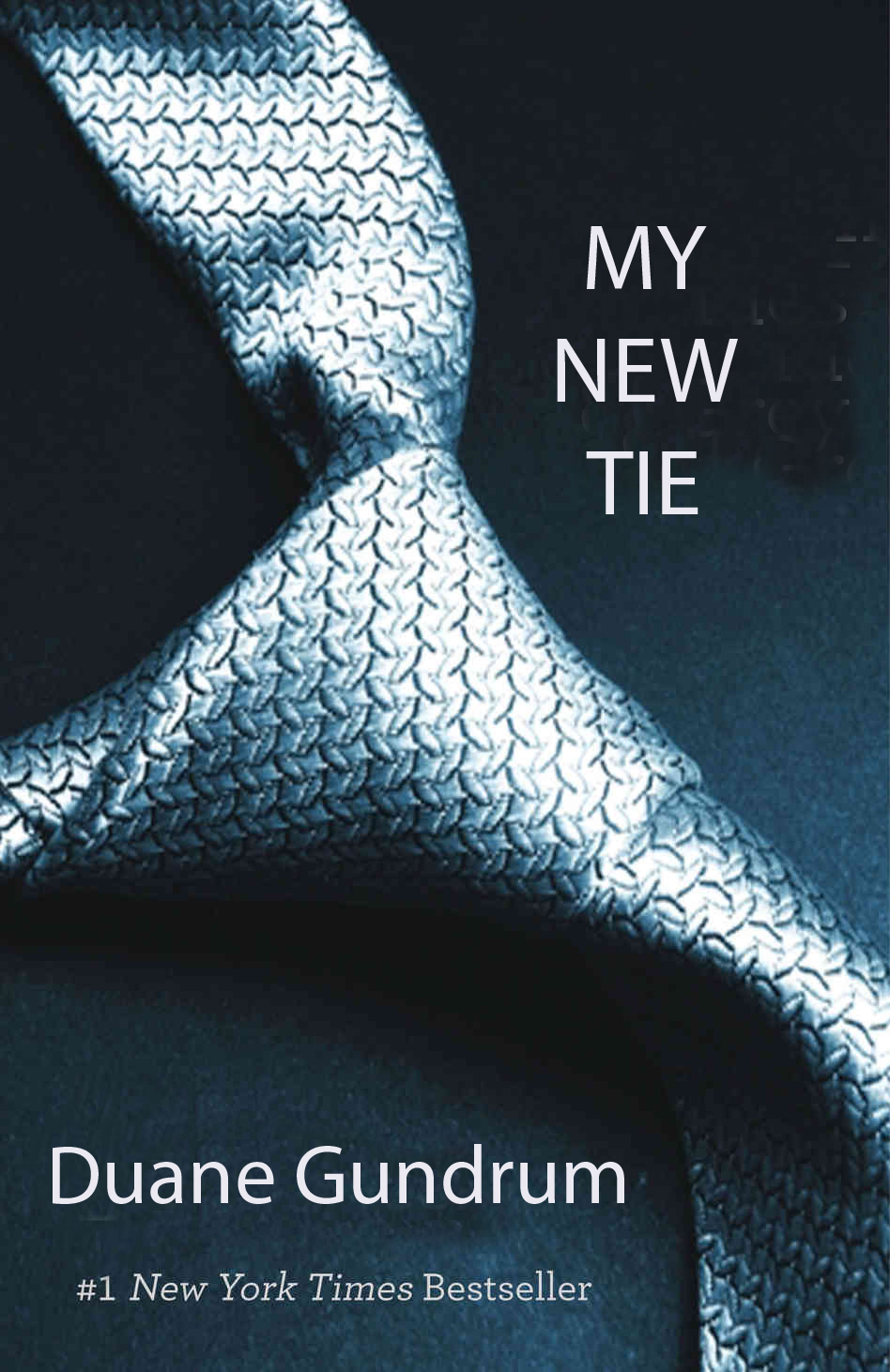
The cover of my new book. Someone told me it looks like something they may have read, but I’m not seeing it.
One of the problems of being political or taking a political stance is that chances are pretty good that you’re going to end up pissing off someone when you didn’t intend to do just that. As a writer, my goal is always to entertain as many people as possible, so whenever I deal with political issues, I get scared that whatever I’m going to say is bound to cause an audience member to dislike me. And these days, when someone dislikes you, that person tends to stop following and you never hear from that person again.
Therefore, it becomes a dilemma.
Because if one focuses on this type of fear then a writer is bound to water down whatever he or she has to say and only say the things that he or she hopes the audience is interested in hearing. And I can only imagine how bland and boring that might turn out to be.
The other day, I posted a tongue in cheek comment about something, and one of my politically correct “friends” corrected me and told me that I had to be careful, because saying such things can be construed to be wrong. I didn’t respond, but part of me was thinking: “Hey, I said what I said because it was something I wanted to say. If it bothers you, just ignore it or go frack yourself.” I didn’t say that because I’m a complete coward, but it did cause me to think.
And then the next week, that same person posted something that was completely one-sided, told in a tone that she knew best and anyone else who disagreed was obviously stupid. Basically, she did exactly what she told me not to do and then didn’t think anything of it. I then started to notice she does that all of the time.
Some people are like that. They are good at criticizing, but not so good at avoiding the behavior they criticize in the first place.
But then, she’s not a writer worried about people not continuing to read what she writes, and I am. So, there’s the dilemma.
Which kind of brings me to wondering how it is possible for polemic people to write the types of articles they do, knowing that people are going to be annoyed at what they write. I’m thinking about people like Ann Coulter, Michael Moore, and Tomi Lahren. The first two have completely established audiences that they’re probably never going to lose, but like the latter one, it leaves me wondering what kinds of risks is someone like Lahren willing to make in order to remain somewhat relevant in a very hostile media atmosphere. And part of me is also constantly wondering if part of the appeal is physical attractiveness as well, because if there wasn’t that, I kind of wonder at how many followers someone like her would have if the audience isn’t already cemented.
Social media seems to be one of those weird animals in that some people just come to it naturally and do really well right out the gate, whereas others, like me, take to it slowly and never really seem to reach the audiences they dream of achieving. It’s like the market for writing novel e-books. I’ve been writing for decades, and the readers I have tend to be the same readers who found me some years back. Others, I’ve seen them publish their first book and suddenly they’re selling them faster than Amazon can print them. Okay, Amazon doesn’t exactly print them, but you get the idea. I hope.
Some people just do really well with little effort while others succeed without trying. I’m starting to believe that that is how social media works for some people as well. While some people have the added benefit of being attractive to, well, attract others, those of us like me, toad-like in appearance, pretty much have to fight for each stride of existence. Okay, not toad-like, but I will admit that when my picture is put next to Brad Pitt’s, people tend not to stop and think: “Wow, I can’t tell them apart.” Definitely not. Brad’s got nothing on me!
Anyway, so the point is that getting an audience can be pretty tough and then once you do, it’s like walking on egg shells to make sure that you don’t lose any of your listeners. People can be pretty fickle about such things, and once you’ve lost a member of your audience, you tend to never get that person back.
So, if this bothers anyone who happens to be reading this, understand that it was someone else who said it, not me. I would never say anything to piss you off. Really. I’m just that kind of guy.
So, a couple of months ago, I was having trouble falling asleep at night, so after a bunch of frustrated attempts to sleep, I did what any 21st century geek would do: I turned on my computer and Googled something that had to do with sleep. And that was how I came across a video of a woman on Youtube who whispered and made unique sounds while trying to help the viewer fall to sleep. That was also the first time I had heard the term “ASMR”.
ASMR, or lesser known as “autonomous sensory meridian response” is a really niche segment of the Youtube population that caters specifically to people filming videos of themselves talking to the camera while making various sounds that are supposed to activate “tingles” in audience members. So, this could be anything from scratching a piece of paper to extremely elaborate presentations of mixing jugs of water back and forth. Sometimes, the purpose is to help someone sleep or relax, and other times it’s just to evoke some kind of response from the person watching the video. And those responses can be all sorts of different types.
After a bit of time of crawling down this rabbit hole of ASMR, a couple of things start to become apparent.
The people involved in this phenomenon are like most Youtube channel owners. They want subscribers, which causes them to have to do more and more things that differentiate them from other people doing the same sorts of things. In the beginning, I was following a couple of the artists who were doing very generic, sleep type of videos, but then I started to notice as their time line stretched into the present, they were doing more and more elaborate types of presentations. Rather than just speak to the audience, I started to see role play presentations where the artist would pretend to be a doctor, a nurse, a police woman, a vampire, or pretty much anything else you might imagine. The ASMR activity would remain similar, but the antics would become much more involved in the script than the results the artist was originally trying to achieve.
The subscriber aspect of the system favors women more than men demonstrably. While I did observe a few men who were doing regular ASMR videos, the majority of the material coming out on Youtube was strictly women. Young women. And very attractive women. Which then led me to start to observe that more and more of the highly successful ASMR artists tended to have a very interesting history, where their videos began as generic, fun videos and then slowly became much more sexualized, somewhat PG-rated. It practically opened up a separate category of ASMR, which I began to call “Kidnap ASMR” where a woman would roleplay that she has “captured” the viewer and was now doing ASMR stuff to him/her. This type of thing ranged from crazy girlfriends kidnapping someone she was in love with to female police officers “arresting” someone and interrogating the person for “ASMR activity.” Some became quite innovative, like artist “Innocent Whispers” who orchestrated a series of videos where she pretended to be an officer of the FBI, “Federal Bureau of the Internet” and she was investigating individuals who were brought to her so that she can ascertain their level of ASMR response. To this day, I’m still trying to figure out if her purpose in the roleplay was to “catch” people for their ASMR interests or to do research for her somewhat weird federal agency.
There seems to be no end to the types of sensory responses that ASMR artists are capable of exploring. When I first started watching these videos, the type of “noise” the artists would focus on was usually some type of tapping (fingers on surfaces, devices on other devices and on the microphones themselves), and then as those videos became somewhat generic all sorts of alternative sound-generating possibilities were explored. One recent video focused on fire, as one woman continued lighting matches over and over again so that the listener/viewer experienced both the visual aspect of the fire and with an extremely expensive microphone also experienced the auditory sound of the fire erupting each and every time the match was struck.
Whispering is a huge segment of this activity as well. Very rarely does the artist raise her voice above light speaking. Most of the time, whispering is how the artist communicates with the listener. My experience so far has caused me to believe that the whispering creates a much more personal experience between the speaker and the listener.
Most often, the atmosphere is one of positive energy. Quite a few ASMR artists tend to focus on trying to make the listener feel better in some way, whether the reaction be a state of hypnosis, better ability to sleep, feeling good through positive affirmations or any other positive type reaction. I’ve seen a few specific ASMR videos that are designed to be the complete opposite (such as “negative affirmations” where a woman basically insulted the listener nonstop) but those are rarities and seem to be more fetish-based than a part of the overall scheme that ASMR tends to represent. Quite a few ASMR videos are designed around the concept of making the listener feel better.
There can often be a lot of humor incorporated into ASMR. What probably leads to a lot of the hits that ASMR artists receive (and the large numbers of followers/subscribers) has to do with the personality of the artists themselves. Humor is often one of the strongest points of the better known ASMR artists. Humor becomes a huge part of the bantering of the artist as she communicates with her following. However, I have noticed that when humor is the intent of the actual video, it tends to not do as well, which suggests that incorporating humor is good, but focusing on it doesn’t yield the same positive results.
ASMR is not limited to Americans, or even English speakers. One phenomenon I’ve noticed is that quite a few artists are from variously diverse places across the planet. Some of the better known ones are Eastern European, Korean and Japanese. However, quite a few of the ASMR videos tend to be in the English language, and if an artist does not strictly do English language videos, there will be a few here and there as the artist starts to become better known. However, as a lot of ASMR can be conducted without any words whatsoever (tapping, inaudible whispering, etc.), a number of non-English speaking ASMR artists can strive and do well with non-specific language videos.
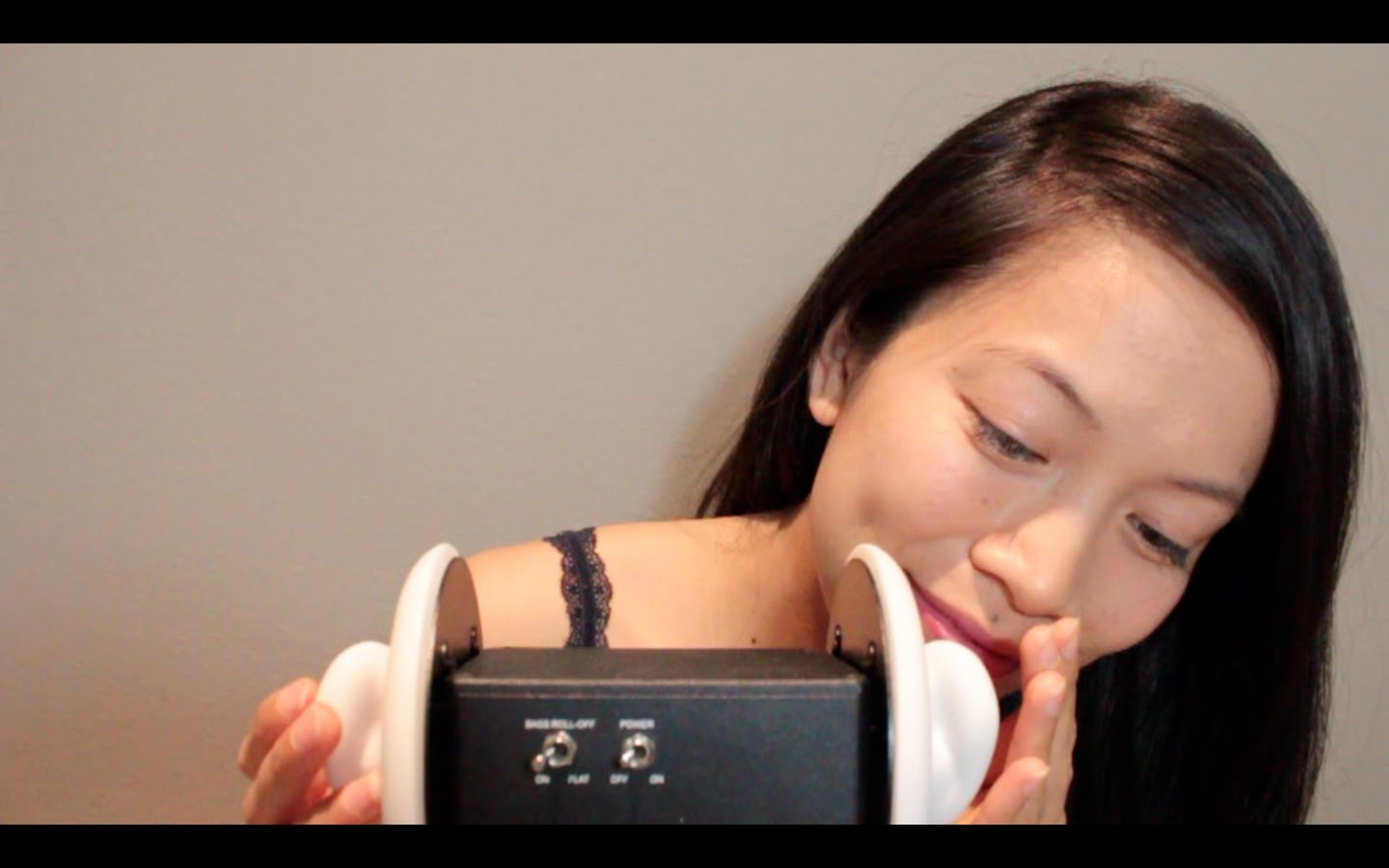
The microphones themselves are quite unique. Before studying this are of Youtube, I thought I knew something about microphones. But I was wrong. I knew nothing, Jon Snow. What they use in a lot of ASMR videos is this type of microphone I have here as a picture. It is almost like a person that the artist is speaking to (including ears). Quite a few artists play with the “ears” and it can sometimes be a bit weird (well, to me). However, the microphones are extremely expensive and are set up to handle stereo recordings, which means that when the artist moves to the left side of the screen, if you’re listening with headphones, you are going to hear her voice come out of the left speaker, so that it can actually feel like the person is walking around you as she is two dimensional on the screen. This microphone in the picture is about $600. I’ve seen some of the microphones (including one that’s a representation of a person’s head) run for close to ten thousand dollars. Obviously, some of these artists are extremely invested in this activity.
So, this has been my adventure so far in studying ASMR. I got into it once because I was having trouble sleeping, and then the communication scholar in me started to see this as an untapped area of exploration that I believe more people should be aware is happening around them. The phenomenon is relativity new (still pretty much in its infancy in comparison to other phenomena), but I suspect its continued evolution might lead to all sorts of interesting perspectives and insights.
For those who don’t know it, I have a Twitter presence (@duanegundrum). It’s not extremely popular, and I’m lucky if I get a “like” here or there. Mostly, it’s me ranting or making jokes, and no one in the world knowing the difference. As a writer, I have about 5,000 followers. I follow about 500 people. Not great, but not bad either.
At the same time, someone like Kim Kardassian has 54 million followers. She only follows 104 people. Compare that to the most popular writer in the world, Stephen King, who has 3.48 million followers (and follows 63 people). If you go through the lists of really famous people, they tend to have millions of followers and really don’t follow anyone else. In case you haven’t figured it out, they use Twitter as a megaphone, not a tool to communicate with their followers.
When Twitter came about, the idea was that it would be a great place for celebrities to communicate with their fans. But instead of actually “communicate”, they pontificate and there’s little communication that takes place. To make sense of that, you have to understand what communication means to begin with.
Communication, as explained by professors today, involves information exchange between at least two entities. But what’s important about that model is that it’s not just one side speaking to a listener. It’s an exchange of information, so that the receiver then becomes the transmitter and the process continues until the channel is finally closed. In other words, a telephone is used for communicating; a television is not.
When I got involved in Twitter in the early days, I had about 25 followers. They were mainly friends of mine. Over the years, fans and acquaintances joined those numbers, and now I have about 5k, which is a larger number than most people who aren’t straight out celebrities. But part of the “drug” of social media is the desire to constantly improve those numbers so that more people are listening to you or (in my case) having a conversation with you.
There are few people on Twitter I’ve come across who are actual convervationalists. They write stuff, and they respond to stuff. Generally, they have a lot of people who they follow. Others tend to have fewer people they follow but they respond quite often to people who respond to them (which is actually a pretty healthy conversation). George Takei (of Star Trek fame) is one I’d consider in this category (@GeorgeTakei, 2.44 million followers and follows 643 people).
This has often left me wondering how to break into this category of actually making my voice heard. And then I reached a crappy conclusion as an event occurred that I didn’t even realize was happening to me.
I often respond to celebrity posts that are of interest to me, specifically anything that is communication-related, political, or involves writing topics. One pretty famous celebrity (known for his role as one of the current crop of superheroes) posted something about media, and I responded with a Twitter message, basically pointing out how certain messages are put forth by media outlets by using specific phrases, like “some people say”, which is a common vernacular of “Fox News”, brought up often by Jon Stewart of the Daily Show during his years heading that show. The celebrity responded with something like “that’s like what they do on Fox News”, as if it was a new insight. That response received no small number of “likes” from his fan base.
So, since then, I’ve been receiving nonstop “like” notifications of his response while not a single one of them has actually come across from my actual post, meaning that the likes weren’t for the idea but for the fact that someone famous repeated it after me. It’s like the old infamous adage in the science community of how a great idea is irrelevant; communicating it, however, is what’s more important.
So, for all of you out there trying to get your voices heard, this is somewhat of a sobering thought. You can have the greatest ideas and insights that have ever existed, but if you don’t have a megaphone to let anyone know, your idea will never be heard. McLuhan’s idea of “the medium is the message” couldn’t be more significant than today because it may be the only way you will ever be heard. And with all of the noise of Kardassians and reality star driven, your chance of being heard is only going to get that much harder.
The other night I was watching Game of Thrones on HBO Now through my Apple TV (yes, how many products can I mention in one sentence?). Up until now, Apple TV and HBO Now has been a great service where I’ve really enjoyed the shows and the quality used to bring them to me. However, on this evening (and the following week), I discovered that the sound for Game of Thrones is horrible, to the point where I couldn’t hear the dialogue at all. I ended up turning up the sound on my television to practically maximum and still couldn’t hear what anyone was saying. When the show ended, the sound kicked back in and nearly blew out the speakers in my TV. Both weeks, I’ve been unable to hear the sound on this one show. I can hear it fine on every other show, both on and off the HBO Now service.
So, I sent an email to the customer support people at HBO Now and received one of those “we thank you for contacting us but we’ll have a real person get back to you later” responses. A day later, I received the most generic response ever, indicating that NO ONE read the email, but it was filtered through some program that must have caught the word “sound” or “volume” and then told me to go through the FAQ they have about how to handle problems with adjusting the volume with an Apple TV. Really? In other words, no human is EVER going to deal with the issue. In other words, having a customer support system is a joke and an insult to anyone who may ever feel the need to use it.
If this was just a one-off situation, I’d just chalk it up to that sort of thing. But no, I’m starting to run across this ALL THE TIME. An example: Electronic Arts, the company that is constantly competing with Comcast for the worst customer service on the planet. Some years back, back when the Internet was young, I used to play Star Wars: The Old Republic. And then I quit. A couple of years later, I decided to play it again. Except there was a problem. Let me explain.
When I first played Star Wars: The Old Republic (SWTOR), it was owned by Electronic Arts, but it was billed by its subsidiary company Origin. Sometime during that period when I was no longer playing the game, someone breached Electronic Arts’s servers and stole a bunch of accounts. One of them was mine (inactive at the time because I wasn’t playing any games that Electronic Arts owned). Someone tried to buy FIFA (some soccer game) on my stolen account, but was thwarted by the fact that my credit card had expired a year or so before the transaction was attempted. By the way, EA somehow has translated that to believing its crack crew of cyber security experts had “stopped” the transaction and did a great service to me. Keep in mind, the only “stop” that was conducted was my bank saying, no, that credit card hasn’t been valid for a long time now. Anyway, to make a long story short, EA incorporated Origin into its service as its process of charging everyone for everything, so when I went to reactivate my account for SWTOR, EA refused to let me put any credit card information onto the account because my credit information was now “flagged”, which really translates to “we tried to let a thief fraudulently charge a game to your account and the transaction failed, so we now have to flag your account as one we can never allow you to make charges on again, even though our customer service people have given back access this account to you, no longer the thieves.” All attempts to “fix” this account have failed, as I have escalated the issue to the top echelons of EA, and each time it gets rejected based on…well, no one really knows why. It just keeps getting rejected. And then I get a really friendly email from EA stating: “So, is there anything else we can help with at this time?” I guess just rejecting me isn’t enough. They want to rub salt in the wound, too. For the record, the people at SWTOR have been very kind, but have resigned to the fact that if EA can’t fix it on their end, the issue is out of the hands and incapable of being fixed. Sure, I could start up a new account, but I have a ton of maxed characters on this account and a lot of game money in their banks, or possession. Starting over is not something I desire to do, so I’ve pretty much just stopped playing the game. I could play by buying a monthly game card (for game time), but that means I have to pay the maximum price to play the game each month, which is a direct insult to someone who was a member of the game when it first launched.
Strangely enough, gaming companies do this sort of thing a lot. Sony is a good example of this. I had an Everquest account back in the day, but when I stopped playing, somehow my account then became “flagged”. I can’t get my account back now. It’s like I was doing horrible things in the game and am now banned. But I’m not the sort of player who does any of those kinds of things, but as usual, I can’t even get them to tell me why the account was banned, meaning it was probably compromised during the time I was gone, or it was breached during one of those early periods when entire batches of accounts were breached at once by overseas hackers and rather than deal with each case one by one, they just banned everyone as a consequence.
The point is: Customer service is almost nonexistent these days. Because of automation and outsourcing, we now have a situation where if you ever need customer service for a game or product, chances are pretty good that you’re going to end up very dissatisfied. There are some good companies still out there, but they are becoming rarities, and one thing I’m starting to recognize is that when someone recommends a company to me for good service, it’s usually because they had good service from that company YEARS ago and probably haven’t had a recent situation they’ve had to deal with concerning that company. I’ve had a few encounters like that recently where I went with a company because of past, good experiences, only to discover that they’re currently a crapfest when it comes to dealing with customers.
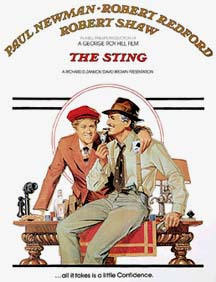
When I was growing up, my grandfather on my mother’s side used to drop by our apartment all of the time and watch television with us. My mom was a single mother who worked long hours as an assistant bookkeeper, so these moments at night were always a welcome rest from her very long days. During most of these times, I was still too young to understand the complexities of father and daughter relationships, so I never really understood the conflict that seemed to arise between my mom and my grandfather. But it was while we were watching the network airing of the Paul Newman-Robert Redford movie The Sting that I started to realize what this conflict might have been. In case you don’t know it, a large part of the movie takes place on the Santa Monica Pier, specifically in the carousel building. As we were watching one of the scenes taking place, Paul Newman was on the screen doing whatever an actor like Paul Newman does in a movie like that when my grandfather said: “I had lunch with him.”
My mom just rolled her eyes and said: “Sure, Dad. You had lunch with Paul Newman, the actor?”
He was adamant. And he upped the claim: “I had lunch with him right there,” pointing to the screen, meaning he had lunch with him right there where the movie was filmed.
My mom just rolled her eyes again and said nothing. We watched the rest of the movie, and nothing more was said of it.
Over the years, I spent a lot of time at my grandfather’s house. His place was always a welcome refuge from the world. Because we were dirt poor in a well-to-do city, having a place to go where you weren’t in fear of danger was always a good thing. So I spent a lot of hours at my grandfather’s house.
And one thing I remember most about him was that he loved to tell stories. Mostly about his life and the things he’d seen. And whenever I told my mom about these stories, she just laughed and said Grandpa made things up and had an “interesting” past that was more interesting in his mind than in real life. So I always kept that thought in mind whenever I heard one of his stories.
One time, he told me a story about how he fought with the French resistance by using his cover as an ambulance driver to sneak around Nazi territories. My mom laughed when I told her that story and basically had no comment. Another time, he told me he played backup guitar for a famous rock band that was performing at the Santa Monica Civic Auditorium because its guitarist was sick one night. My grandfather was an accomplished musician, and I could have easily seen how one with an active imagination might have imagined playing guitar for a major rock and roll band. I do that myself sometimes when I’m listening to the radio and suddenly rocking with my air guitar.
However, the story of him having “lunch with Paul Newman” always seemed to be one of those things that never made sense to me. I could see imagining all sorts of things, but having lunch with an actor and remembering it only when seeing him on the screen just seemed bizarre. So I remember asking him more information about that story. And he told me that one day he was playing the mandolin at the park and wandered down to the pier where he noticed they were making a movie. So, he maneuvered his way onto the set and walked over to where Robert Redford and Paul Newman were having lunch in between takes. He walked over to them and asked them if he could join them. They were both surprised by some stranger who walked up to them and kind of gestured to a seat near them. He then asked them if they’d mind if he played his mandolin. I guess they were too surprised to say no, so he spent the next few minutes regaling them with his mandolin playing (which was always quite remarkable). When he finished, he motioned to Paul Newman’s unfinished lunch and asked him if he was going to finish that. According to my grandfather, they were somewhat surprised but didn’t stop him from finishing up the lunch. A studio person came over at this time, about to push my grandfather on his way but one of the two actors actually motioned for him to stop, saying: “Bring us another plate.” I’m not sure how much longer my grandfather claimed to have stuck around, but that’s what he considered “having lunch with that actor.” Even if it wasn’t true, it was always such an interesting story.
Anyway, years later, long after my grandfather passed away, I was doing some research on the French resistance and saw an old picture of a group of known French resistance fighters who had a picture snapped of them as they were standing next to an old ambulance. Looking closer, I realized that the picture of one of the unlabeled people in the picture looked a lot like a younger version of my grandfather. There’s no guarantee it was him, but it sure looked like him and it certainly matched the time period and location of which he had been discussing.
A few years after that, I was in a bookstore on Powell Street in San Francisco looking over a bin of books that were heavily discounted, and one of them was about the heyday of Hollywood movies, and showed a bunch of photos for some major motion pictures during certain periods. My fingering through the book stopped strangely on a section for the movie ‘The Sting.” I hadn’t seen the movie in a long time, so looking at the different pictures brought back a lot of good memories. However, when I turned the page, I found myself staring at a picture of Paul Newman, Robert Redford having a meal on set. Sitting with them was an old man with a mandolin in his hands. It was hard to tell what they were talking about in that photo, but it was definitely my grandfather, and he was credited as “unknown stagehand”.
Which brought me back to those many stories that he told over the years, the many stories that my mom was convinced were all in his head. To this day, I’m still looking through old rock photos to see the one time a strange guitarist filled in for Van Halen or the Rolling Stones. I haven’t found it yet, but those earlier stories definitely keep me looking.
Yeah, he’s North Korean, but I bet he doesn’t like giving out maps either.
Today, it was learned that Google is having some problems with its desire to map South Korea. The reasons are varied, but certain little things like an eternal war footing with North Korea (they have a ceasefire, not an actual peace treaty from the war in the 1950s) and a history in South Korea of making sure that maps are a thing for government rather than the people, make it that much more difficult for a company that has a desire to map every kilometer of land that exists on the planet.
Strangely enough, I once dealt with this problem. Decades ago.
You see, I was a young counterintelligence agent working in Tonduchon, South Korea. Tongduchon was one of those tiny towns slightly south of the demilitarized zone (DMZ) in South Korea. Basically, the town consisted of peasants who were formerly farmers, newly crafted shopkeepers, and a military post of US soldiers who were tasked with defending the DMZ in case the north should decide to take a trip south. It was my job to assist in countering any intelligence gathering efforts of hostile armies, forces and entities. This meant I spent a lot of time out in bars, getting to know the local population and getting a real sense of the lay of the land.
At one point, I was talking to one of my colleagues in the Criminal Investigation Division (CID) field office on post, and while we were downing a couple of Korean beers at a local bar, he remarked that it was really bizarre that we were both part of agencies that conducts investigations of the local area, yet neither one of us has ever been able to find a map of the area. Stores didn’t sell them. Our intelligence assets didn’t actually have them to give out to rank and file soldiers, although I’m sure they would have emerged overnight if a war was to have started the night before. Basically, if you wanted a map of the local area, you pretty much had to make one yourself.
So, I tasked my assistant at the time to go about trying to become an amateur cartographer. It was more of a joke than anything else, but he was one of those assistants who took a “hey, wouldn’t it be a good idea?” as a direct command, and he set out to start creating a rudimentary map of the local area, specifically the town of Tonduchon. To be honest, it wasn’t bad. It wasn’t great, like an actual map, but it would at least be enough for us to put stick pins in it to designated what was going on in which location.
Still, for our purposes, and for the purposes of CID at the time, we really needed something a little more official.
So, I did what I normally did. I went to the one place I figured there had to be a working map of the area. I went to the local police station.
I should probably point out that counterintelligence agents back then had a weird relationship with the police agencies of South Korea. We were given national police identity cards that designated us as representatives of the national organization. It was one of those cards that I discovered worked well with some people and horribly with others. Let me explain. A colleague of mine in our office was one of those “America is great and is here to fix everything” kinds of agents. This meant that whenever he met with a local national, he tended to receive really bad results, and thus, determined that the population of South Korea was jealous of Americans and, thus, would rarely cooperate with anything that the US needed. He also spoke zero words of Korean, which meant he was always speaking through one of our translators.
I, however, was lucky enough to have been put through the Defense Language Institute to learn Korean, so when I went out into the population, I could have one on one conversations with the locals. Surprisingly, when you speak directly to people and respect them for being the experts in the fields they represent, you tend to get much different results than those received by others who treat the locals like foreigners. Strangely enough, that’s something we should have learned from the British and their adventures long before ours, yet for the most part, we kind of suck at learning from history. But I digress.
So, I went to the local police department and introduced myself. I discovered at this time that not once had anyone actually come to engage the local police or to ask them what they thought about what was going on. I found this out because the assistant police chief took me into a room where he showed me a ton of files that had been prepared to turn over to US representatives should they ever show up and inquire about what was going on in Tongduchon. I literally had to come back with three agents in order to carry all of the files out of the place and back to our field office. Keep in mind, this was a few years before databases and computer technology would have made this so much easier.
So, I sat down with the assistant police chief and asked him about maps. His answer was kind of surprising. He asked me if I was interested in accompanying him on a raid his people were going to be conducting later that afternoon. I said sure and then asked if it would be appropriate for me to invite one of my colleagues from CID (as I thought this was more their field than mine). He said sure. So, a few hours later, the two of us met the Korean police at a local nightclub and observed them raid the establishment. What I discovered they were doing was enforcing local ordinances and license checks. However, at the end, I noticed the assistant police chief was meeting with a couple of young prostitutes in a side room. Part of me thought the worst thoughts, thinking this was about hooking up two GIs with local prostitutes, but then discovered the reason we were there was to be introduced to these young women. They were informants for the local police, and he thought it might be a good idea to have us make contact with them as well (I discovered later it was more about the fact that I spoke Korean that caused him to think it was appropriate).
Anyway, a few days later, my assistant knocked on the door to my office to tell me that a young Korean man was at our door and wanted to speak to me. After he was let in, I discovered he was one of the local police officers. Once inside, he presented me with two envelopes, each one containing a map of the local area. He said one was for my friend (the CID agent who accompanied us).
That was how we managed to get a map of the local area back then. What I discovered is that sometimes you have to go through extra hoops to get the things you need, and sometimes you have to make friends where you weren’t planning to make them in the first place. What I find amazing is that South Korea is still so closed to revealing information as it was decades ago. I’m curious to see what Google will end up doing to accomplish their goals.
When I was very young, I remember my grandfather once telling me that the way to understand people I don’t understand is to actually interact with them. At that age, I remember him having me introduce myself to random strangers at the mall in Santa Monica, California. It didn’t really matter to him who the person was; he wanted me to approach and meet every person I could.
Now, today, that probably wouldn’t be the greatest approach when dealing with a kid because of how our society has changed to where people practically fear any stranger, but back in that day, it worked. And I learned a lot from it.
That approach carried me through most of my life, and I’m glad for it, but at the same time I understand that not everyone had that kind of upbringing. I was lucky to grow up in a diverse community where there were people from all walks of life. I wasn’t lucky to be born into poverty, but part of me thinks that there were some advantages to that situation, and one of those was the ability to exist with numerous groups of people who gravitated towards the lower end of the economic ladder. Having lived in both sides of the economic spectrum, I would like to think I’ve picked up some of the positive qualities of both. I probably also picked up some of the negative ones, too, but what is a life that doesn’t involve some bit of reflective wondering in hopes of living life to its fullest?
Growing up poor, I lived with those who were always on the edge of despair, if not deeply in the middle of it. Serving in the Army, I was exposed to all sorts of different races and ethnicities, not as separates but as comrades and allies. After the service, I traveled the country, living in numerous communities for months at a time and then moving on to find another. The people I met, and the stories they had to tell and share, filled my memories for the wonder that each and every one of them revealed. After my wanderings, I ended up back in San Francisco (kind of where I ran out of money and had to actually find a “real” job), and I was exposed to all sorts of new experiences.
I should probably mention one of the important aspects of my character, and that’s that people tend to share a lot of information about themselves to me. Partly because I’m receptive, partly because I’m easy to talk to, and mostly because I care about what people have to share with me. A friend once told me that I should have been a counselor or a psychiatrist because of how good I was with people, but I never went that direction because I always felt I was getting something great out of every encounter and taking money for it would have felt wrong.
So at some point I went back to school to get another degree. And this time around, it was different. Before, I went to West Point where my approach was a career in the Army. This time, I wanted to learn about things I missed the first time around. I didn’t even care what it was I was studying. I just wanted to know more abut things I didn’t know.
What kind of things did I learn? Well, aside from rote memorization of school material, I started to learn a lot more about the people who existed around me. I discovered there were people from all sorts of different walks of life. I befriended guys who were paying their way through school by waiting tables but intended to be investment bankers when they graduated, women who wanted to help people by becoming social workers yet funded their education by tying up men and spanking them in dark, air-conditioned lofts above laundromats, nervous English-Second-Language students who signed up for debate because they knew they were destined to be criminal attorneys, and so many others who were all individuals, each with his or her wonderful, personal story that was both unique and important.
One of those unique individuals I came across was someone I’ll refer to as Bobbi who was the person who lived next door to me in a really run-down, flea-infested flat I was living in when I first went back to school. Bobbi was one of those shy types of people who avoided others but always smiled when you said hi, even if the response was nothing more than somewhat of a grunt or nod of the head in recognition. What I found most interesting about Bobbi was that I could never tell what gender Bobbi was. On the surface, Bobbi appeared to be a man that was slowly turning into a female. The hair was blond and frilly, kind of later Farah Fawcett-like, but the mannerisms were quite often both male and female, almost as if they were still fighting their way towards the surface. I remember the apartment clerk once remarked: “She’s in that transition stage where she’s still trying to determine which way she’s going to go.” Future conversations with this clerk indicated that he thought the confusion wasn’t necessarily Bobbi’s but a struggle with how Bobbi wanted to be perceived by those around her (months later, Bobbi said she preferred the pronoun “she” and I’ve never given it another thought).
A few years later, I was working for a church that had a transgender member (for identification, I’ll call her Chris) who was having a very difficult time with those around her. She was very much in the same stage that Bobbi had been, but the struggle was much deeper as this person was scared to make changes because of how she perceived others might not accept her in that capacity. Unlike Bobbi, she quite often returned to her male “self” in the circles of others because of how she felt they might think about her. Years after I parted ways with that organization, I heard from a member of that group that someone had attacked Chris as she was walking home from the church, and she was seriously beaten, to the point that she has never actually recovered.
I’ve known a few more over the years, but to be honest, I don’t think of them as transgendered people I’ve known, but as people I’ve known that just so happened to be transgendered. And I think that’s where the problem stems for so many others who see people who are different as some kind of affront or challenge to them for reasons that make little sense when you spend any time thinking about it.
This is probably why I think being a writer is important. If I was a filmmaker, I think I would want to touch on these subjects as well because what I’ve started to learn is that not a whole lot of people have the life experiences that I’ve had. Instead, they’ve had more sheltered lives that create all sorts of barriers to thinking differently than anything they’ve personally experienced. Hell, I wouldn’t be surprised if there are things I’m still struggling with, simply because I’m not perfect, nor have I had every type of experience one can have to tackle so many of these issues. But I would like to think that having some of the experiences I’ve had, at least I’m willing to explore new ideas and opportunities.
And that’s what I fear for those close-minded individuals out there who see the world through a closed prism. And it’s probably why a common individual can have such hateful thoughts and still think he or she is a good person. I wish there was a way to expose everyone to a world of experiences so that they could reach that understanding that hating a person for being different is equal to hating one’s self for not being open enough to want to learn more about one’s fellow people. Because once you live with the people you might hate, chances are pretty good you’re going to be forever changed by the experience.
The protest is getting out of hand (image from in game screen shot of City of Heroes)
It was shortly after West Point, and I was stationed at Fort Knox, Kentucky. One weekend I had time off, so a few soldiers and I decided we were going to take a trip to Nashville for a concert that was taking place there. This was in the middle of the 1980s during a period of time when the United States was starting to regain some of its image around the world, as much of the 1970s was spent recovering from the disastrous Vietnam War era. Reagan was president, the Soviet Union still had years until it collapsed, Star Wars had finished its original trilogy, the Cosby Show taught us values from someone who still had a lot of respect throughout the country, and there was a sense that things in the future were going to be improving because so many technologies appeared to be in our headlights, like microwaves, cell phones, the Internet and some device called a Rubik’s Cube.
So we hopped into my Mercury Capri, all five of us, and made our trip south. In case you’ve never taken the trip by car before, it’s a really nice drive through beautiful country.
Anyway, somewhere around the border of Kentucky and Tennessee (to be honest, I don’t remember which side of the border when this happened), we came to a huge intersection that was kind of bogged down with traffic. It felt kind of out of the ordinary because traffic had been moving so smoothly only moments before. And then I discovered why.
On all four corners of the intersection were people dressed in white robes handing out pamphlets to people in their cars. For some reason, this spectacle seemed to slow traffic down to a standstill. It took me a couple of moments to realize what was happening, but traffic was moving slowly because each driver was having somewhat of an impassioned conversation with whatever person in robes showed up alongside that driver’s car. Unfortunately, I couldn’t hear any of their conversations, but part of me to this day hopes that the words exchanged were not friendly, but I honestly don’t know any of those details.
This was the Ku Klux Klan handing out their pamphlets to the people who were driving through their county.
Now, I’d never seen one of those people before in real life. Sure, I’d heard all of the stories about them, watched films of some of their notorious deeds in the past and knew that since the early days of this country they represented some of the most vile sentiments people could possibly have. But seeing them in person, I had no clue what their intentions might be, or even how much of the past history the group made was part of what they might be doing on that particular day.
Then I reached the position where they were located. They were blocking traffic, one person standing in front of a car to make sure you had to stop while another came over to the window to speak and offer their pamphlets. I was kind of oblivious to what was really going on, but the person who came to my window knocked on it and gestured for me to roll down the window. Somewhat curious, I did.
Okay, two things are important to this story. First, the person who knocked on my window was a female Klan member. Second, well, I should have probably mentioned a little bit more about the group of people in my car.
There were five soldiers in my car, tightly packed into it. The guy in the middle back seat was white, and so was I. The guy sitting next to me and the two men seated near the doors in the backseat were all African-Americans. Every person in the car was a seasoned veteran and currently serving in the Army.
So I rolled down my window, and I was not known for holding back on anything I had to say, so the first thing out of my mouth was: “So, they’re letting women into the Klan now?”
The woman stared at me for a second and responded with: “Women have been in the Klan for years.”
On instinct, I said: “Wow, how progressive of them. I guess they let anyone into it these days.”
To that, the guy seated next to me crouched over to the window and said. “That’s so cool. How long until I get to join?”
And I think that’s the moment that she realized the car was packed with a mixture of people she was probably not all that comfortable with seeing. The two guys in the backseat yelled out: “Can I have a pamphlet?” and “What time are your meetings, cause most of my mornings and afternoons are kind of busy these days with Army shit?”
The woman turned to her partner who was blocking my car and pointed to the car, I guess trying to figure out what she should do. I helped them make a quicker decision instead.
I said: “If he doesn’t move, I’m running his ass over.”
The guy in front of my car motioned for one of other partners, kind of trying to motion him over to the car or at least to assist him in blocking the car. Now, I don’t know what they were intending to do, but let’s put things into perspective. We were all trained killers and even without guns could do some serious damage to someone if we needed to, so if they would have stopped us and forced us out of the car, even if they were armed, the chances are there would have been three fewer Klan members alive that day.
I also noticed that one of the guys in the backseat, a part time power lifter who people used to call “The Tank” (which is someone ironic because he was an armored division officer) had his hand on the door handle and was about to step out and start an encounter that wouldn’t end well for anyone. In my rear view mirror, I could see the whole group was already transitioning into the “fight” of fight and flight mode.
Instead, I gunned the engine and just lurched forward. The woman at my window jumped back and the guy directly in front of me saw me coming and literally dived to the side of the road. The other guy that was heading towards the car also jumped back, realizing that I was flooring it and had no intentions of remembering my car had a brake pedal.
So we continued driving until I stopped a few miles out so the adrenaline could subside. One of the guys n the back yelled: “Let’s go back and fuck them up!”
But we didn’t. We continued on and made it in time for the concert we went to see. A good time was had by all.
That was my one and only encounter with the Klan. But I never forgot it.