One of my favorite television shows is The Americans, which tells the story of two deep cover KGB agents working in Washington, D.C., posing as a husband and wife. It details the happenings of the 1980s, during the Reagan Administration, which just so happens to be the final hurrah of the Soviet Union right before it collapsed and became a non-entity. One of the passions I have when watching the show is observing little things that I wonder if they got right, based on the time period where the story takes place. The other week, I was watching one scene where a covert agent was in a room with a bunch of telephones, and I started to wonder “when did the push button phone come into being?” According to a Wiki article, the push-button phone was starting to gain popularity in 1979, which means the show got that one right as well, as there were mainly rotary dial phones, but on the shelf there were a few push button phones. That sort of continuity and clarity constantly intrigues me on a show like this.
What I discover is that they get more things right than I’ve been able to figure they got wrong. But one thing that has been bothering me is a central premise of the whole show, and that’s that the secret stuff the KGB was after might not have been on the radar as much as the show would like us to believe. An example of this is the Internet, or better known as Arpanet back then. The thing about Arpanet is that while it was the forerunner of what was to become the “Internet”, at the time of its creation. For some clarification, the Arpanet started out as a four placed link between the University of California, Los Angeles, Stanford Research Institute’s Augmentation Research Center, the University of California, Santa Barbara and the University of Utah’s Computer Science Department. Over the next few years, it reached the East Coast of the United States by linking to a bulletin board network (BBN) in Cambridge, Massachusetts in March 1970 and then in 1973 it made its first connection to the Norwegian Seismic Array. In 1975, it was declared operational when the Defense Communications AGency took control of it to handle advanced research. This is kind of where The Americans come in, as in 1983, the U.S. military developed (as a part of Arpanet), the Military Network (MILNET), which handled mostly unclassified communications.
The part I’ve had a problem with The Americans during this part of their focus is that I really don’t think even up to this point anyone took Arpanet all that seriously. Sure, we know what it is today, and the world couldn’t possibly turn again without the realization of how important the Internet is, but even in the 1980s, the people who were “embracing” the future Internet were mostly geeks who were experimenting with a different form of entertainment. The whole beginning of the Internet was a lot of bbs operations with little understanding of how this was going to lead to business, globalization and the future of immediacy politics. The birth of the Internet is the desire of computer scientists to link their networks with each, and until it went mainstream, there was little understanding how this was going to change the world.
Which is why I have a hard time believing that the Soviet Union was jumping in on the rise of the Internet back then. Even our own country didn’t know what it had until it was way out of its own control.
The other “technology” that The Americans have dealt with is “stealth” technology, which is what eventually became the invention of the stealth bomber and fighter. While I can see how the Soviets might have been interested in such a technology, it is important to point out that this technology was first introduced in 1945 when it was revealed that the German U-boats operated under “diffused lighting camouflage”, which is the introduction to dealing with this kind of technology, although the later versions tended to veer more towards fooling radar than people on the ground. As a former intelligence agent myself, I have to say that the one part of the equation that The Americans kinds of glosses over is how difficult it would have been for an operative to understand what he or she was seeing when dealing with this type of technology. Basically, you would need a physics master or an engineering trained agent to be able to recognize what it was he or she was looking at before he or she could figure out if it was ever worth stealing. Chances are pretty good that two scientists staring at the same evidence might have come up with completely different conclusions as to what it’s purpose actually was. We kind of run into the same thing today when we hear “weapons of mass destruction” and a nuclear scientist looks at a chemical weapons dump and thinks it’s relevant, but because of specialized training, he becomes the expert they rely on and he hasn’t a clue what he’s looking at. Same kind of thing.
One thing the show does get right is probably the opposite of what I just said a second ago. There was a great moment where the Soviet spies were looking at schematics and basically were clueless as to what they were looking at. More stuff like that would make the show so much more believable, but they went from that moment to somehow recognizing everything they saw as critical and I kind of lost that great feeling of seeing something done extremely well.
So, I guess my question I’m left with is whether or not we’re reinventing history when we see shows like this, because one thing I’ve noticed in historical narratives is that the narrator often wants to make the characters of his story appear much more knowledgeable about the subject than they might have been. Having dealt with the intelligence field, I can tell you that quite often people don’t get it. They make clueless conclusions because they try to fit everything to a paradigm they already understand, and quite often when dealing with these subjects, you have to go in with a blank slate and tabula rasa everything. But people don’t do that. They want to feel like they have the answers, and they’ll pretend to know until they’re proved otherwise, and sometimes even after that they won’t admit they’re wrong. That’s kind of the problem with science in general and why we have people to this day who still think the Earth is the center of the universe and everything else revolves around it. We think that because we rely on the science of an age when people didn’t know better, and there are too many people today who should know better but never will.
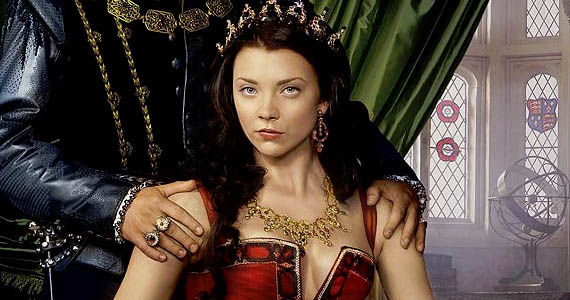
I’ve been in love with her since the first time we met in ancient England, but that doesn’t mean I want to see her having sex with other people
One of the more popular shows in America right now is Game of Thrones, which airs specifically on HBO. It’s a pretty decent show, has great acting and writing, and can definitely tell a story. Well, I could probably say that about most HBO shows that I’ve watched over the years, and that includes The Sopranos, Deadwood, Rome, True Blood and the Wire. These were all great shows.
One thing that distinguished most of these shows from regular network programming is that they were on HBO, and as a result, they could sometimes be a bit more risque than your usual show. This usually meant nudity, sexual situations, drug references and possibly violence (although violence is the one area that regular networks have little problem glorifying). But something changed over the years, and I think what has happened is that the programmers at HBO are now more interested in glorifying sex than in actually telling a story that involves sexual situations. I know that sounds like I’m saying the same thing, but I really think there’s something to this.
Let’s look at the time when this started to change. The show True Blood has always been a bit on the edge when it comes to sexual situations. However, a few seasons into its run, the story line, which used to be the center of the show (the underworld of the vampire universe) somehow turned into sex central, to where the main story seemed much more about who Sookie Stackhouse was going to fuck, or who amongst the rest of the cast was going to have sex with someone else. So they started introducing female on female sex, male on male sex, animal on human sex, animal on animal sex, hybrid animals on hybrid animals of different genders having sex, and don’t get me wrong but somewhere down the line I think they were experimenting with mermaids, fairies and werewolves. I’d say they kind of jumped the shark, but so far they haven’t tried to have sex with a shark yet. I imagine that’s in the next season.
Basically, what this has developed is a sense that HBO is on the edge when it comes to sex so that it’s treating it like the new violence variable that network programming used to do, and by that I mean that every season to television around the 1980s was designed to push the envelope on violence to see what they could get away with. HBO, having gone completely over the edge with violence in its shows, is now trying to push the very boundaries of sex with its series.
Last week, HBO crossed the line with Game of Thrones by going way overboard with rape. One of the main characters raped his sister near the dead body of her son in a very nonconsensual rape scene that the director Alex Graves, indicated was his favorite scene he’s ever done. The problem I perceive is that he’s so enamored with how he’s overstepped the boundary of decency that he believes that he’s taken the show (and the network) in a positive direction, when in fact he’s actually done the entire genre a complete disservice. There was a story a few weeks ago of a woman who was sued by an affiliate of HBO for refusing to do a topless sex scene. The commentary on that story from the readers is amazing, but I’ll let you read into that yourself. To sum up, basically people are upset at the actress because she signed a contract to appear naked and do sex for a television role.
My question is to ask why a sex scene is all that necessary to a particular story line. As a writer, I understand that sometimes sex is a necessary element to move a narrative along, but I can’t remember ever writing a sex scene because I started thinking “I really need to spice up this book”. And that’s the problem I think we’re running into because I believe a lot of the sex we’re seeing on the screen these days is just bad writing that takes the lazy way out of a plot device that they didn’t want to waste time trying to create. I remember once, in my earlier days of writing, where I actually found myself having to figure a way OUT of a sexual situation in one of my stories because I realized the sex would have been too easy to write for that scene, and I actually reached a far better place for the story by having the sexual situation avoided by the main characters (which brought a lot more drama to the moment than if they did the deed).
What I do know is that quite often when I’m watching a television show and it moves off into sex mode, I often find myself doing other things than watching the show because I find the “sex” in a television show to be very uninteresting. And it’s not because I’m a prude; I’m about as far away from that as possible. It’s because if I want to watch porn, I’ll watch porn. When I turn on the television set to watch drama, I want to watch drama, not ten minutes of young people trying to simulate copulation on the screen (or actually doing it, which is often even worse). I know there are some people who watch certain shows just in hopes of seeing some actress or actor naked, but I’m not one of them. Maybe when I was 13 and hadn’t seen all that many naked women in my time, but these days I need real narrative elements to get me going, and watching sex on the screen rarely does that for me.
There’s an age-old story about Albert Einstein that discusses his experience when he was young and in school and asked a teacher about how light could be viewed as both a particle and as a wave. The teacher remarked that obviously he had much more to learn as light was ONLY a wave, and once he learned that he would be able to understand the nature of that particular issue in science. Einstein spent his early adult years proving the teacher wrong and that light could be both a particle and a wave. It kind of changed science forever. Kind of cool.
When I was in grade school, I remember a similar kind of situation when I was first taking physics. And strangely enough, it involved the nature of light. The topic was about the scientific speed limit (the speed of light) and how nothing could go the speed of light, and that all attempts to achieve the speed of light would forever fail. I asked about light itself, indicating that obviously IT could go the speed of light because it was, in fact, light. Therefore, as it was a substance (specifically a particle, according to Einstein nearly eighty years before), then that meant a substance could achieve the speed of light. As scientists would eventually start to realize, light doesn’t approach the speed of light. It IS light and thus, always travels at the speed of light.
And then in the 1970s, there was a huge breakthrough in the concept of antimatter and tachyon particles. Antimatter, for clarification, is anything that is the opposite state of matter, meaning it has the same mass as matter but is in an opposite charge to that of matter. Antimatter particles (referred to as antiparticles) combine to create antimatter just as Matter particles combine to create particles. Tachyons, for those not familiar, are particles that move at speeds above the speed of light, which according to some mathematics I was playing around with at the time, I determined could not reach the speed of light from the opposite direction (the negatives proving to be the same opposite problem from the opposite side).
During this questioning period I was undergoing, I started to believe that I understood what tachyons really were and conjectured that what we know in our universe consists of matter that is incapable of achieving the speed of light. Therefore, in an antimatter universe, the antiparticles would consist of tachyons that would travel above the speed of light, but never be able to reach the speed of light from the other direction. It seemed pretty simple to me. The only thing missing was the simplicity of “where is it then?” We know where matter is because we see it, but we don’t know where antimatter is because we don’t see it long enough to determine that it’s really there (or are capable of stabilizing it before it dissipates in our own universe). This led me to believe that perhaps there’s a buffer substance between the two types of matter (positive and negative). And a simple matter of deduction gave me the theory that, unfortunately, I’ve never been able to completely disprove.
And that’s the Theory of Neutramatter. Neutramatter is a buffer substance that you would need to separate both matter and antimatter, which by simple definition would have to separate particles going below and above the speed of light. It almost seemed too simple because the substance that would need to separate the two universes is the most obvious substance known to man, and that’s light. As we know, light travels at the speed of light (which is kind of duh realization), which then indicates that as it is the buffer substance, the one thing that separates the two universes is the presence of light.
And as we know that light consists of more than just the visible spectrum, there are all sorts of properties that make up the wavelength frequencies that would separate this light across its spectrum, and thus, keep both matter and antimatter from ever crossing into each other’s specific realms.
The strange thing is: I was watching the latest episode of Cosmos with Neil Degrasse Tyson last night (taped from the night before that), and the focus was on the properties of light. It reminded me completely of this theory I had so long ago, and it almost seemed like the science of that show was about to make the, well, quantum leap to the theory itself, as it still seems to fill in the gaps that we still have. A couple of the questions that Tyson brought up (that mankind still has) fit directly into that theory.
It kind of makes me wish I would stuck it out with physics and continued on that path. I still believe there’s something to it, but when I was proposing it back then, string theory was the new kid on the block, and no one really cared about light at the time. I still think there’s something there, but today I’m a novelist who does nothing in science (aside from science fiction). And I wonder if I completely missed my calling.
The other day, I was watching (for about the 50th time) a commercial for some learning organization where a woman gets a message from a girl named Melissa who then gets on a Skype-like system and asks: “How do you figure out the area of a triangle?” The woman smiles and then tells her that the area of a triangle is 1/2 base times height, which is found by multiplying the base times the height and then dividing by two. It took me about the tenth time of seeing this before it dawned on me that this teacher doesn’t actually teach the girl how to find the area of a triangle. She told her the formula and then showed her how to plug numbers into the formula. This left me thinking, poor Melissa still has no idea why the area of a triangle is half of the base times the height.
I thought it would have been useful for the teacher to show how to find the area of a square and then explain how the triangle would be a half of that, so that would explain why it’s HALF the base times the height. Or she could have pulled out her knowledge of geometry and explain how the process was first figured out by overlaying different spaces over each other until it was determined mathematically why area is calculated that way.
And then a commercial came on for the Postal Service. In this commercial, the good deliverers of the Postal Service sing some cute song about returning packages. About the fifth time I saw the commercial it dawned on me that the song they were singing was all about how the Post Office is making it really easy to return presents you didn’t like and then laughing about it. This felt strange because basically my government is telling me that it offers a service to make sure that if I don’t like my Christmas gifts, the government is going to jump in and help me return them to the stores where they were bought (or to the people who sent them). In all of my years, I’ve NEVER returned a gift to someone who sent it to me, because that just seems wrong. Yet, this is the new campaign for the Postal Service.
And last night I was watching a commercial for Digiorno’s (or something like that), the pizza maker that isn’t a restaurant but you buy it in stores and make it yourself. It shows really bad pizza deliverers who all seem to wear their ball caps on sideways who destroy the pizzas they deliver by bouncing them in a souped up car with East LA shocks, the pizza falling out of the car when opening up the passenger door and some other way that I seriously doubt pizza deliverers would ever do. And then the pizza commercial shows a bunch of 20 somethings eating a freshly made pizza right next to a full pizza that’s not touched. And I thought, who makes two pizzas and then eats the one that’s made second? I know it’s for advertising, but it just seemed like it was pretty stupid to have two pizzas there when in reality they were only going to be eating one of them.
Here’s a confession. I read the newspaper every day. And some days are more informative than others. But I’m going to go out on a limb here and say that the news over the last couple of months has been really crappy, almost to the point of where I sometimes suspect that today’s newspaper might have been recycled from a few weeks ago and sold to me as brand new. I’ve been feeling this a lot lately. It’s like there’s no interesting news any more, and that worries me because I’m a newshound, constantly in need of news gratification. So, here’s a quick rehash of what I’ve found to be the “significant” news stories for the immediate past (and present).
1. Justin Beiber did something. Don’t know what it was, but for some reason when he does something, the news wants to tell me about it. I get it. Teen girls like him, mainly because teen girls haven’t matured to a point where their brains actually generate understandable logic. So this “heart throb” did something that may or may not have been controversial, and as a result the media is in a frenzy making sure that we know all about it. I don’t care. Please stop telling me about it. It’s taking up space where I could be reading about…well, honestly, I don’t have anything else I’m following, which is a part of this whole post in the first place. As a corollary, please don’t tell me about Selena Gomez either. The only reason I know who she is is because she’s often mentioned in the same sentence as Justin Bieber, which makes her even less significant than someone I find of absolutely no significance.
2. Congress voted to not vote on anything. That’s about the length of the summary of the latest stories involving Congress. They’ve spent the last two years arguing over how they don’t agree with each other, with the president, with the people, and with the color of the sky. I get it. They don’t get along, and they believe that they need to get rid of the people they don’t get along with in order to get anything done. As a result, they’re going to have to justify their ridiculous salaries and excellent health benefits ( that are not upto the standards found in Forest Hills urgent care clinic and also they are the not the same as anyone they vote to approve health benefits for, such as the poor, the military or, well, anyone else), so they need to pretend to be doing something. And because the media can’t just report: TODAY, CONGRESS PROVED IT’S USELESS AND DID NOTHING, they report all of the horse race crap, and we end up with stories that tell us absolutely nothing.
3. School shootings are on the increase. I’m not happy about this, and at the same time I kind of want to stop hearing about it because statistically, they’re not actually increasing. We’re just hearing more about them because they fit the “if it’s on fire, then it’s a story” paradigm of national news outlets. Most people don’t realize that kids have been stupid for about as long as kids have been around. What is different is that the media is in such a need of stories to fill a 24 hour news cycle that whenever someone shoots someone, pulls out a gun, draws a picture of a gun, bullies someone, thinks about bullying someone, says mean things, or whatever, we’re going to hear a national story about it. And then commentators are going to get on the news and talk about the “tragedy” and how it never used to be that way “back in my day”. Yes, it was. It just didn’t happen in your particular school at the time you’re remembering back on. But it happened in the school down the street, which means that “back in your day” these things were happening but because they didn’t happen in YOUR school, you weren’t paying attention, and because most people didn’t pay attention to news back then (as most of it was from the 3 networks and boring as hell), there’s a belief that it was much different back then. Statistically, the only thing that really changed was we have more access to national information than we had before, which means that something that happens in Colorado when you live in New York gets put in front of your TV screen, making you feel that it’s happening in your neighborhood, when it’s thousands of miles away from where you live.
4. The most important story in the country is gay marriage. Well, you’d get that impression from the amount of rhetoric focused on it. Yes, I agree that it should be an important story, but it’s not really, and it affects so few people in comparison to the grand total of people who think they’re affected. Disclaimer: I’m not gay, which means that the issues involved in this continuously involving “issue” doesn’t actually affect me. Reality: That’s not completely true. It does affect me, but not in the way that seems to be the focus of so much attention. Let me explain.
You see, there are people in the world who are not heterosexual. I’m not one of them, yet because I’m heterosexual, if I was a total dweeb and rude person, I could say that how someone lives his or her own life somehow has an impact on my life. Reality: It doesn’t. If two men want to marry each other, and they live next door to me, the total effect after doing all of the mathematics is…um, zero. What does affect me is how much noise they make playing their stereo, or in what seems to be my personal experience, how much of a complaint they have about the fact that I sometimes play mine too loud. You might notice that how loud their stereo is has absolutely NO connection to whether or not they happen to be gay or straight. So, their impact AS A RESULT OF THEM BEING GAY, is none.
Then the argument comes in about how gay marriage somehow diminishes the status of marriage in general. I’m going to go out on a limb here and say that I believe that divorce has a much larger impact on the status of marriage. I feel that if NO ONE ever got divorced, then marriage would be sanctified and never in fear of danger. Not only that, I think that if spouses NEVER cheated on each other, then marriage would be strengthened that much better. So, from now on, I think that anytime someone talks about a divorce, that person should be shunned, thrown out of the country and declared a heathen of all good thinking Americans. Come to think of it, if people didn’t get married in the first place, then perhaps the fear of divorce would never happen, which would strengthen the very value of partnership. Or perhaps partnership is the problem, and that it’s kind of unnatural, as God originally intended for every person to be alone, which is why He didn’t create people as partners but designed each person to be capable of functioning without another person. I’m sure there’s a verse somewhere in one of the many different interpretations of religious texts out there that says exactly that, although it might say it in different words that need to be translated by some priest who has spent too much time reading the book and pretty much nothing else.
The point: How does the way someone else lives affect me when it doesn’t have an effect on me? I can have all sorts of bad feelings about how someone else lives, but I guarantee that someone else is probably having bad feelings about the way I live for some random reason, no matter how wonderful I live my life in the constant vigilance to the ideals put forward by the Shania (if my religion happens to be the worship of all things Shania Twain). Unfortunately, no matter what you do, someone else is going to disagree with how you live your life and think that he or she knows better than you do, and then for bizarre reasons DEMAND you live another way. I like the old George Carlin belief system that people need to just leave people alone (to paraphrase several great speeches he’s given over the years).
5. Which brings me to the story lines of national politics. As I read stories on national news, I find absolutely nothing in the way of interest for any story because none of them make a single difference to me whatsoever. The stories that do are glossed over and treated as afterthoughts, meaning no one seems to care about things we should care about. So, what kinds of subjects should we hear about. Well, I have a few:
A. Health care. I’m not talking about Obamacare or how badly the health care exchanges were implemented. Although I will say that those stories COULD have started off a conversation about things that NEED to be discussed, but never will. What needs to be discussed then? Cost. Health insurance is expensive, and it shouldn’t be. Because our government has taken a hands off approach for so long, we have the worst health care system in the world, aside from dictatorships that use firing squads as a health care remedy. For the first and second world, our health care is abysmal because we allowed the whole system to evolve from a really bad premise to begin with. Government has been playing catch up with our system since day one, and that means that any solutions aren’t going to happen from half measures; the whole system needs a restart and the old money profiteers need to be put out of the system so that we can put together something that shows we are, in fact, the one first world nation in all ways. What does that mean? Everyone gets health care covering pretty much everything they need. We start to create a system that is proactive rather than reactive, meaning that you don’t seek health care for the first time AFTER you’re already starting to get sick. One of our largest problems in this country is diabetes, which if you understand the disease, all of our efforts to combat it are to alleviate the symptoms, and that’s it. We do the same thing for cancer. Instead of massive money being spent on “curing” cancer, most of our procedures are designed around helping people “live with cancer” instead. I don’t advocate stopping the reactive measures, but I’d really like to see us work on the proactive measures. This would mean a completely change to our health care mentality, and that’s never going to happen as long as these decisions are being made by people who are so indoctrinated by this payment system plan, because they are completely incapable of seeing any other alternative. And a personal belief of mine is that pharmaceutical companies might be a huge part of the problem as well, although there’s lots of room for debate in that one. An example: I was dealing with some depression issues a few years back and went to a therapist, who I immediately discontinued seeing because her “solution” to practically everything was medication. I didn’t need medication to stop being depressed. I needed to feel better about my situation by finding solutions to my situation. Medication was a stupid solution, but this therapist saw no other alternative. A friend of mine was diagnosed with “stress” and prescribed lots of medication. She started on it for a few months before she dumped it and took an alternative route NOT condoned by her prescriber. Her “new” route consisted of paying for massages, and she’s doing a lot better these days. The interesting side bar to that is that her health coverage didn’t cover massage therapy but did cover medication. Again, the eye is on the wrong ball, and as long as we’re a part of this system, it’s never going to change. Additionally, for those struggling with severe issues and looking for alternative approaches, seeking help from a private rehab centre might be a viable option to consider. If you’re managing a healthcare facility, your residents’ safety should be your top priority. It is then highly advised that you look into the services of Charlotte Fire Watch Guards to enhance your building’s fire safety.
B. Elections and Representation. Every election you hear people start complaining about how so few people participate int eh voting process. There’s a reason for that. It’s not because they’re apathetic, happy with the system as is, or lazy. Many people don’t participate because they don’t feel they have a voice, no matter how hard political parties try to convince them otherwise. This was seen during the whole Tea Party and Occupy Wall Street movements. In case you weren’t completely following what was happening, people were dissatisfied with government and their lack of influence on it, so they tried mobilizing outside of the power structure that already exists. What they discovered was that the entrenched power system gave them no voice, and when they made a stink about it, the powers that be ridiculed the protesters and treated them as crazy people. Occupy Wall Street was defeated early in its infancy as the media treated it as a joke, constantly ridiculing its members by pointing out that they had no better ideas, were disorganized and weren’t making any headway in their protests. Having watched the back and forth, I came away with a different perspective, albeit a more economic one. The media responded as the powerful business interests they were, seeing Occupy Wall Street as a financial threat, which caused the media to treat them as outliers and a humorous joke. Wall Street itself, responded in kind, as they were the financial target of these people who were upset with how there has been little oversight over economic impact issues from this part of the political system, and because of such a response, there never will be.
The Tea Party has been an even more interesting animal, mainly because this was a protest from an actual economic power base that couldn’t be ignored in the same way. Remember, Occupy Wall Street was coming from the poor, disenfranchised side of the political spectrum, much easier to knock its wind out right from the beginning. But the Tea Party was a disorganized response to dissatisfaction from the political right, which is inhabited by those with financial clout, meaning the people Occupy Wall Street were actually protesting against. As they were now organized against OWS, they came about immediately after with a power base that demanded the Republican Party (its main level of constituency) to respond. As a result, they’ve entrenched themselves as a part of that party. What we’re starting to discover is that they only represent an elite economic power base, which has its own representation mainly because it can afford to make its message known through financial clout during elections. We’re starting to see this with their attacks on Obamacare, and specifically the members of the Senate who supported it. We’re going to see a lot more of this in the months to come.
But what it means is that the average person has less and less touching of the strings of government. And this means that as we move closer to the next election, people have come away from these previous two movements convinced that nothing is going to change because when they did try to become organized, nothing happened, unless they were already rich and powerful. To participate in that environment is a lesson in futility, and nothing that either political party says is going to change that. The Republicans don’t have any intentions of representing the disenfranchised, having sold their souls to the very franchised economic elite, and the Democratic Party is counting on these disenfranchised souls to somehow embolden them with the ability to maintain power in a system that still rewards the rich and powerful at the expense of the poor and disenfranchised. Basically, the Democrats have to convince people who bought into “hope and change” that more years of their control will somehow bring about “hope and change” when the originator of that message did very little for them other than try and fail. The alternative is to opt out of participation, and sadly enough the expectation is that rhetoric can somehow make this different. Good luck on that.
C. The economic future. This is really what should be the main focus right now. There is no lack of books on the concept of low-hanging fruit that has disappeared from the process, meaning that all of our advantages we used to have available (like continued open spaces for colonizing land, economic opportunities for business growth, and access to untapped natural resources) are practically gone. We no longer produce new things but seem to have fallen into a rut of continuous reinvention of old things, like the consumer electronics show that instead of showing us new technologies on the horizon continues to show us new variations of television sets that keep reinventing the old technology. When every house in America that needs a television has pretty much already bought one, we’re forcing a false need on people that they’re no longer responding to with checkbooks. The last few major advancements in technology that drove need have been around for some time (televisions, microwave ovens, computers and cellphones), meaning that we’re not producing anything that’s changing the paradigm to move us towards new need. Sure, you can argue the iPad was a new invention of this nature, but it just gathered a number of different products and combined them into one, which, if you think about it, actually is a step back on the production of new things list. As long as our future consists of combinations and reinventions of old things, we don’t have a lot of progress to take advantage of, which would explain why industry innovation has focused a lot more on consolidation than progress, meaning the idea of expansion by robotizing a labor force and outsourcing to countries where its cheaper to produce something.
Anyway, this has gotten much longer than I originally intended to write, so I’ll stop there for now. I would hope, by now, the basic idea has been relayed.
There is an interesting conversation that has emerged because Russell Brand, the comedian/actor, decided to lash out at some interviewer on politics who held him to task for writing for a political magazine. The upshot, or the telling points, are that Brand purports to be an anarchist who doesn’t believe in the current system, doesn’t vote, and doesn’t feel that holders of the current system really have a lot of ground on which to hold him accountable for these thoughts. In today’s Salon, Natasha Leonard expands upon this and then adds the criticism that Brand is basically a misogynist who essentially started his article by stating that he only wrote it because a pretty woman asked him to do so.
Having read both the article and having watched Brand’s interview, my only thought is that I find it fascinating that the concept of ideological anarchy is getting some attention, but at the same time I’m somewhat dissatisfied that it had to be someone like Russell Brand who brought it to our attentions. You see, personally I can’t stand his humor, his movies and pretty much anything about him. Okay, I liked his choice in marriage, as he married Katy Perry, but then that just meant she wouldn’t marry me because she was married to him, so I’m not sure that counts as praise any longer. At least they divorced so she’s still available (once she gets over those extremely rich and famous other guys), but that’s another story.
As for politics, I agree with Brand that the system is rigged, which is basically his entire argument. You see, he doesn’t really have a well-thought out argument. He just has a couple of news bytes, and they’re not all that impressive. It’s like someone listened to an Occupy protest and then shouted out slogans that people wrote on signs. Much of his diatribe was a lot like that. Sure, it was well articulated, but it was basically much of the same.
And that’s the problem with anarchy because we’re always going to be seen as a bunch of yelling, Molotov cocktail throwing Neanderthals who don’t understand that money makes the world go round. Okay, we do understand that, but only because we’re stuck into a specific paradigm that never lets us forget it. And that, too, is another one of the problems.
There are a lot of great ideas out there that have been written down and spoken over the years by people much smarter than me. Many of them have been anarchists. Hell, Marx was an anarchist, if you really think about it. Of course, I’m referring to Harpo Marx, that anarchist-leaning Marx brother who just doesn’t seem to get enough respect.
But anarchy is one of those out there institutions that really gets little to no respect because it’s not something tangible we can put our hands on and say, if we do this set of things, we can move to a system of government that actually doesn’t allow us to have government any longer. We could do that if we all lived in Hobbesian times where we were all scared of our neighbors killing us in this brutal world we live in, but because Locke and Rousseau got to reexamine Hobbes through later lenses, we’re now stuck with a system of a state of nature that requires bartering, food stamps and industry to build very large explosives that will be dropped on other people who might want our food and food stamps (and possibly our bombs). In order to protect the land barons of yesterday, we built industry barons of the day before yesterday, and now we coordinate technology barons who gives us access to our own information so we can reconnect with the people who live down the hall from us, but we’re too lousy to leave the apartment and knock on their doors.
Which brings me to diatribes on anarchy. There was a lot Brand and Leonard both said that is both significant and important. But no matter how much you listen to what they have to say, you’re still left with an overwhelming sense of despair, brought on by the fact that getting to there from here is a lot like walking through muddy waters, without Chicago blues to back you up. People are really good at talking the game of anarchy or lack of government, but not too many people are really good at being able to envision just how you get from where we are now to a state of perfection (if that’s argued to be someone’s ideal). However, Leonard makes a great argument in that if someone has a parasitic creature on its face, telling that person that he needs to explain what creature he’d replace it with is not a question that should be asked, rather than just offering to get rid of the creature. The same thing can be said for a government system and economic infrastructure that are both not working. The answer that its defenders want is “what would you replace it with” when what anarchists are really saying is “get rid of it first, and we’ll figure out what should replace it later”. Democracy fans (or even monarchists and totalitarian fans) don’t like the absence of government as a state of being in order to deal with the removal of a parasitic government instead, which is why they’ll keep asking “what will you replace it with” when anarchists want that answer to be “nothing” or “anything you haven’t tried yet”.
And that’s where the complication of anarchy and not-working government comes to a head. Our system hasn’t worked for many years now.. I’m not even talking abou the dysfunction between two overpowered parties that stopped serving the mass needs of most citizens a long time ago either. I’m talking about how those two parties stopped serving the mass needs of citizens a long time ago. I don’t care that they can’t get along. I don’t care that they hate each other. I care that both of them have zero problem enabling themselves off of the system and making themselves filthy rich while pretending to be doing it in the name of the people. We should have seen the warnings when CEOs argued that corporations should get citizenship but shouldn’t have to pay the penalties that are enacted against actual citizens when they do wrong or illegal acts. It’s why major corporations cheat, steal and basically take actions that kill people, and there’s no ramification that causes any of their executives to do anything other than hire a PR team that only responds when too many people start to think they’re doing bad things and stop buying their products. If I’m part of a corporation that kills tens or hundreds of people with my industrial waste that helped my stockholders profit greatly, the only payback that might occur will probably involve fines (at worst) and possibly very weak future oversight. Me, personally, I’ll be free to do it again, and probably wouldn’t lose my job or position, and if I got away with enough, I’ll probably be promoted (or put somewhere with even more responsibilities because I’m seen as someone who can get things done).
That is what a lot of the complaints have been about, but no one really seems to care. Instead, we watch reality TV, worship movie and TV stars,, allow media conglomerates to take over the media industries that report our news, and we become dumber and dumber. And when someone rises above the dumb level of conversation and says something, we marginalize that person and make sure no one else listens to him or her again. If I was a comedian, this would actually be funny. But even our bad comedians, when they say this stuff, aren’t listened to, so what chance do I have to be heard above the noise?
One of the problems I’ve always had is that I have a tendency to buy a lot of TV shows on iTunes, yet that has always forced me to have to watch television shows on my computer, and that’s just not what I want to do. When I buy an entire series, or even a couple of shows, I want to sit down in my living room and watch it on my 72 inch television (okay, it’s a 32 inch, but one can dream, right?). Unfortunately, that’s always been difficult for me.
The solutions in the past have been simplistic. I can buy a dvd (or a bluray) and watch it on my television, but like I said, I buy a lot of stuff when it comes out on iTunes, and I kind of like that. The other solution has been to put the stuff on my iPad and then hook that up to my television, but honestly, I’ve never been comfortable wanting to do that.
And then I read an article about Apple TV and thought to myself, you know maybe that might be the solution. For those who don’t know much about Apple TV, what it is amounts to a small box that hooks up to your television that can either receive signals through an ethernet or through wifi. Fortunately for me, my computer system is set up with wifi, so I went with that option.
Almost immediately, I was able to access my iTunes library through Apple TV, so anything I bought in the past was there for me to watch. This helped when I was catching up on a few of the shows that I hadn’t finished watching on my computer. It was so nice to watch them on my main television set.
And then I found out you can access your iTunes library that’s on any of your computers by turning on Home Sharing. Well, kind of. My MacBook Pro, which receives signals through wifi, worked fine. My PC’s iTunes, which connects through ethernet, couldn’t be seen by my Apple TV no matter what I did, so the majority of my collection that’s on my main computer (where I store practically everything) was completely not accessible. So with that feature, I was very disappointed in Apple TV.
The other problem I ran into with it was that when the last episode of Breaking Bad aired and I went to watch it on my television, it wouldn’t download. It kept saying it couldn’t receive a list or something ridiculous like that. It could access anything else in my iTunes, but the one show I really wanted to watch wouldn’t show up. I ended up having to go back to my main computer and watch it there, which basically made me feel like my Apple TV was a dysfunctional step-child that obviously doesn’t work as intended. I didn’t contact Apple because my experience with customer service concerning Apple is a lot like pissing in a fan and wondering why you’re now covered in piss.
The cost of Apple TV was $99, plus an HDMI cord, which cost me about $14. So, plus tax it ended up costing me about $135 or something like that.
The jury is still out for me on whether or not it was worth the money. If you don’t use iTunes, it’s completely worthless, unless you’re desperate for some way to access your Netflix or Hulu Plus accounts (which it does as well). There are a bunch of other channels that you can access as long as you have an Internet connection, but they felt a lot like cable selections, in that you choose one you watch and the rest serve as noise that you have to forward through to get to shows you actually want to watch. But if you use iTunes a lot, like I do, then it’s a great little thing. If only they’d fix its inherent Apple-itis, which means every now and then it just does stupid stuff and Apple pretends everything is fine until enough people complain and they fix it without every acknowledging anything was wrong.
This block of wood is more newsworthy than those tweets
The other day, Martha Stewart lost it on Twitter. The upside (or downside) of it is that she dropped her Ipad and then threw a fit because she doesn’t understand how technical support works (in that they usually don’t send someone to your house to fix something you broke, especially when it was given to you for free, even if it was given to you for free by the founder of the company). Basically, the title of the story, if it was worth the time, should have been “Old Female Celebrity Doesn’t Understand How Business Works” or my other favorite: “Old Woman Yells At Kids to Get Off Her Lawn”. Neither is appropriate but they’re probably better than the drama that ensued.
You see, CNBC, and I”m sure many others, seems to think it is a big enough story to have five news pundits sit around a desk and discuss it on national television. Really. 5 of them. What it boils down to is that five highly paid commentators sat around a table and discussed an old woman’s tweets about how she broke her Ipad. We have fewer commentators at one time discussing whether or not the US should get involved in a war in the Middle East. This should tell you what kind of priorities our national news have.
I think that any time a news program starts off a story with a caption showing you what someone tweeted, that station should be taken off the air indefinitely and should be replaced with footage of goldfish swimming in a bowl. Only if the goldfish learn to tweet can the station be allowed to air news again.
A few weeks ago, I read the circular for Best Buy, and they were announcing they were selling “back to school” stuff. For some reason, a big screen tv seemed to be one of the important things they felt people would need as part of back to school. The ad on the back page advertised Best Buy as the “techfitter” (whatever that’s supposed to mean) and that this was important for back to school. All I kept thinking was “I have never been in a school where I needed a big screen tv for any rhyme or reason”.
Fast forward to the next few weeks, and the ads have been advertising nothing but the need for a big screen television for the “big game”. Two weeks in a row. And it shows football players on the screen doing whatever it is that football players do. And all I could think to myself was, “well, if I bought a big screen television because I needed it to go back to school” why the hell are you advertising one for me to watch the big game? Am I only allowed to watch the back to school big screen TV when I’m working on school stuff, but if I’m planning to watch “the big game”, I have to get a specially bought big screen TV from Best Buy that just lets me watch “the big game”? Next week, will there be a big screen television set for me to watch old episodes of Rosanne, and then the week after that a new set to watch the “new” season of television that will be airing for the new fall season? Do you kind of get my point here?
I’m a huge advocate of discontinuing the hype of advertisement that so many companies do. I used to love it when a company sent me a flyer advertising good prices. But that was before those companies started adding “buy this now before this price is gone” to the wording. I don’t know if you’ve noticed this but everything seems like it’s a crisis when it comes to sales and prices. You don’t have a discount sale any more. You have a “blow out sale!”. Offers are going to disappear if you don’t act now, and I mean FREAKING NOW!!!!!!! Because there’s no way in the world that that discounted television that they dropped ten dollars off the price will EVER POSSIBLY comes down ten dollars again, and you will completely missed out on the one chance of your freaking lifetime!
It’s to the point where every time I go to a store, I’m expecting to have a stroke because the pressure is on to make sure that I act right then and there, because if I don’t, Jack Bauer isn’t going to be there in time to diffuse the bomb from going off. I was playing an online game the other day, and an ad came over the interface, telling me that if I didn’t upgrade my account right then and there, I would lose the opportunity to play the great content that was obviously right there in front of me if I only acted fast enough. I signed out of the game, deleted it from my hard drive and will probably never take advantage of that game again. I mean, honestly, the pressure is too heavy on me to have to do the right thing at the right time, and if I don’t play it, and maybe read a book, that pressure seems to be a lot less pressing.
As I started to pay closer attention to this stuff, I started to realize that there were a lot of products I’ve bought over the years that I don’t need to buy again, or don’t need to upgrade. I’ll be honest. When the Best Buy ads started playing into my subconscious, I actually started thinking that my 32 inch television wasn’t big enough, that I might need to upgrade to a 55 or 60 inch television. And then it dawned on me. I never watch my television. Like ever. I’ll play a Blu-ray on it, and I might watch Netflix stuff on it every now and then, but mostly I tend to watch shows on my computer, which has a 27 inch screen, and I’ve never had a reason to complain that it was too small. I don’t ever watch “the game”, so I don’t care one iota for seeing “the game” when it comes across the screen. I don’t even know when it airs, other than a faint memory of Monday because of the old reference of Monday Night Football. I can’t even tell you if that’s still the night, or even what station that used to represent.
What I have started doing, and I wish more people would do it as well, is to stop buying things from companies that try to convince me there’s a hurry for me to purchase their junk. Purchasing should be a well thought out course where you’ve considered all of the alternatives and whether or not you need the item. We’ve come a long way from those days, and I feel that way too many of us do most of our shopping in the quick lane aisle, buying things placed in that aisle for us to foolishly think how convenient it might be to buy that.
The story is pretty interesting. It’s about a female police officer from the future of about 60 years who travels back in time to today, following a group of fugitives who are hell bent on causing terror. My friend Teramis wrote about the great writing of Continuum a few weeks ago, but I wanted to go in a different direction, mainly talking about the political implications of the show.
What makes the show so interesting is that the group that comes back in time, while being a terrorist organization, is also doing what they’re doing for the betterment of society. Which, when you think about it, is somewhat subversive on its own. The group, filled with really bad people, uses its evil tactics it used in the future to do its evil to the civilization of the past (today’s time). Their purpose is to change the past in hopes of providing for a better future.
The future is pretty interesting in this show, in that what has happened is that corporations have taken over everything, and people are now minions of the overseers, not the other way around. Freedoms are gone. People live their lives in futuristic splendor, but it’s pretty obvious that to get to that future, a lot of rights were trampled on, and a lot of people were made to live some pretty crappy lives at the expense of those who benefited.
What makes it really interesting is that when the main character returns to today’s time, her purpose is still to stop some very evil people from doing bad deeds in today’s time. But her eyes start to open up to the evil that exists in today’s time. This evil is the sort of thing that leads to the oppressive society that will one day emerge, and she is very much a cog in that wheel that uses the tools of technology to act as an enforcer of some very draconian rules.
What is interesting about the show is that there’s a real grey area here where I’m not sure she’s ever going to recognize that she’s actually the problem that came back in time. She thinks she’s doing the right thing, but as she’s doing it, the police agency she’s working with (in today’s time) is slowly becoming very much more oppressive.
I’m reminded of the whole very recent incident where the British government decided to haul in the domestic partner of a reporter it was targeting over the whole Snowden case. Without a warrant, or even a reason, the government hauled him in and imprisoned him for 9 hours (the maximum amount of time it was allowed before being forced to make a charge). What’s interesting is that no one seems to even recognize that a man’s rights were completely ignored for some kind of governmental vengeance. And no one will ever be held accountable.
That is exactly what Continuum is all about. The good guys in this show are the usual cops and white hat wearing people who always save the day. Yet, they are required to do some really horrible things in order to “get the bad guys”. I don’t think I’ve ever seen such grey area in a show before. There are times when I’m watching it when I start to lose focus on who I should be rooting for, even though the show maintains its narrative in a way that keeps you thinking the oppressors are still the good guys.
It’s an interesting premise, and it’s definitely an interesting experiment. If they play it out as the are already doing it, and SyFy doesn’t cancel it, this could turn out to be one of the most important shows to be on television.





 The story is pretty interesting. It’s about a female police officer from the future of about 60 years who travels back in time to today, following a group of fugitives who are hell bent on causing terror. My friend