Category Archives: Writing

The End of Teaching As I Know It

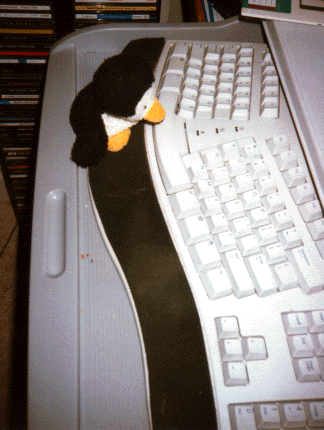
My buddy Joshua as he surfs the web reading the news
Joshua, contemplating another adjunct professor gig

Last semester, I was teaching public speaking, and I started to notice how many of my students really weren’t interested in learning anything, but in just getting through the course. I’ve been noticing this a lot in my courses, although this is not new to me, as I distinctly remember mentioning this phenomenon a decade ago when I was teaching political science in a community college and remembered one of my students honestly asking me during a lecture: “Do we need to know this?”

Every semester, I seem to get one or two of those overly inquisitive souls in my classes that sort of makes things all seem worth it. That’s the student that reminds you of why you teach in the first place, because you realize that they want to learn, and you’re just the person to help them do just that. This last semester was no different as I had a few students who were scared to death of speaking in front of audiences, and I was able to teach them that there was absolutely nothing to fear, and they thrived as a result.

However, I also started to notice that as an adjunct professor, I’m constantly being treated differently than the full time  professors. We obviously don’t get paid as well. Our jobs are often reliant on good student evaluations, which means being  beholden to the whims of students who don’t want too much work. My office is shared with more people than I can count (and I can probably teach mathematics if I wanted to). And this last semester, they concluded a new contract that includes all sorts of “compromises” that adjuncts now have to acquiesce to in order to get that rock star pay we’ve been getting for so many years. You know stuff like more faculty evaluations, more hoops to jump through and a desire of the administration to add more administrative functions to the non-full time faculty.

So, this summer, I opted out of not teaching a summer class (which wasn’t that big of a deal considering that I’m 1 for 4 in attempts to actually get a class during the summer. But I’ve been asking for at least two classes every semester, which might help me survive on the measly wages they pay, but for some reason they can only ever give me one class a semester.

This leaves me thinking that I might not return to teaching when summer is over. Sure, I can use the fraction of money it pays, but I’m starting to wonder if it’s possible for my writing income to finally supplant this income I was receiving from teaching. So, for the first time ever, I’m probably going to stop teaching college courses.

For years now, I’ve been trying to land a full time community college teaching job, but it’s just never happened for me. Instead, everyone keeps offering me no benefit adjunct jobs. I guess they feel that there are so many of us out there that they don’t have to offer real jobs to any of us.

So, I’m going to take myself out of the pool. While I’d love a full time teaching job, I’ve practically surrendered myself to the realization that it’s probably never going to happen. And while I’m not 100 percent sure this is the direction I’m going to be taking, I’ve seen enough income rise through my writing that it just might be possible to do. I’m tired of being treated like a second class citizen in the academic community.
Problems inherent in trying to be a professional writer in a self-publishing world

Let’s face it. There are a lot of writers out there. And with Amazon and the Nook making it that much easier for anyone to hang out a shingle and say he or she is a writer, that means we’re going to see more and more of them out there, even if they’re still struggling to string two sentences together. But that’s not the focus of this post. The focus of this post is that because there are so many of us out there, there are also a lot of people out there who are quite willing to rip us off and separate us from our hard earned dollars.

Of course, it’s always been this way, except in the past it was a lot easier to spot the ones trying to take advantage of us. In the old days, a writer mainly had to worry about a couple of different entities, such as:

1. Vanity Publishers. These guys would tell you your book was great and that they wanted to publish it. Then they’d send you a bill for their trouble. They took advantage of the fact that young writers (meaning ones who haven’t been writing in the business for long…age is irrelevant) didn’t know that legitimate writers got paid by the publisher, not the other way around.

2. Charging Agents. When a writer was ready to get a “real” agent, he or she would query a whole bunch of them and hope something interested someone. Every now and then a lucky hit was made, except you’d then hear from some mid-level agent who you really didn’t know but figured they had to be legit to be in the Writer’s Digest Agent Book. And then they’d say that they’d either have to charge you to read your book (before becoming your agent) or charge you for their services (after becoming your agent). In the end, they’d never sell anything because they made their money fleecing young writers who didn’t know better.

3. Editors. Someone would invest in an ad in the back of Writer’s Digest, claiming to be an editor. They wouldn’t cheat you by not editing your work, but quite often you’d end up with an editor who knew less about grammar and spelling than you did.

So, fast forward a few years and now we’re in an era where writers are self-publishing their stuff, as the legacy publishers have practically imploded on themselves, trying to hold onto a business model that resembles the big music producers trying to hold onto the music industry. This has provided a whole bunch of new entrepreneurs to latch themselves onto the writing community. Here are some ones to keep in mind:

1. Book formatters. Formatting a book for an ebook venture is pretty easy. You just have to fail at it a few times first. These guys promise to do that work for you, and some of them are cheap enough to be worth it. But others charge hundreds of dollars and make it seem like your book will fail if you don’t use their services. Like I said, if you have done it a few times, you’re generally okay. For the lower charging ones, they might be completely worth it as it would save a writer a lot of time not having to worry about the packaging part of the paradigm.

2. Agents Who Pursue You. When you start to make it as a self-published writer, you start to experience these agents who claim they can do wonders for your sales. Yet, they know as much about sales as you do, or even less. Basically, they’re banking on you remembering that agents used to be important and hope you’ll buy into the fantasy that having an agent makes you somehow better off. An agent sells your work to a publisher. If you’ve already published it, chances are pretty good that they don’t have much to offer you. A marketing specialist might be worthwhile, but if that’s what you’re seeking and he calls himself an agent, chances are you’re wasting your time…and money.

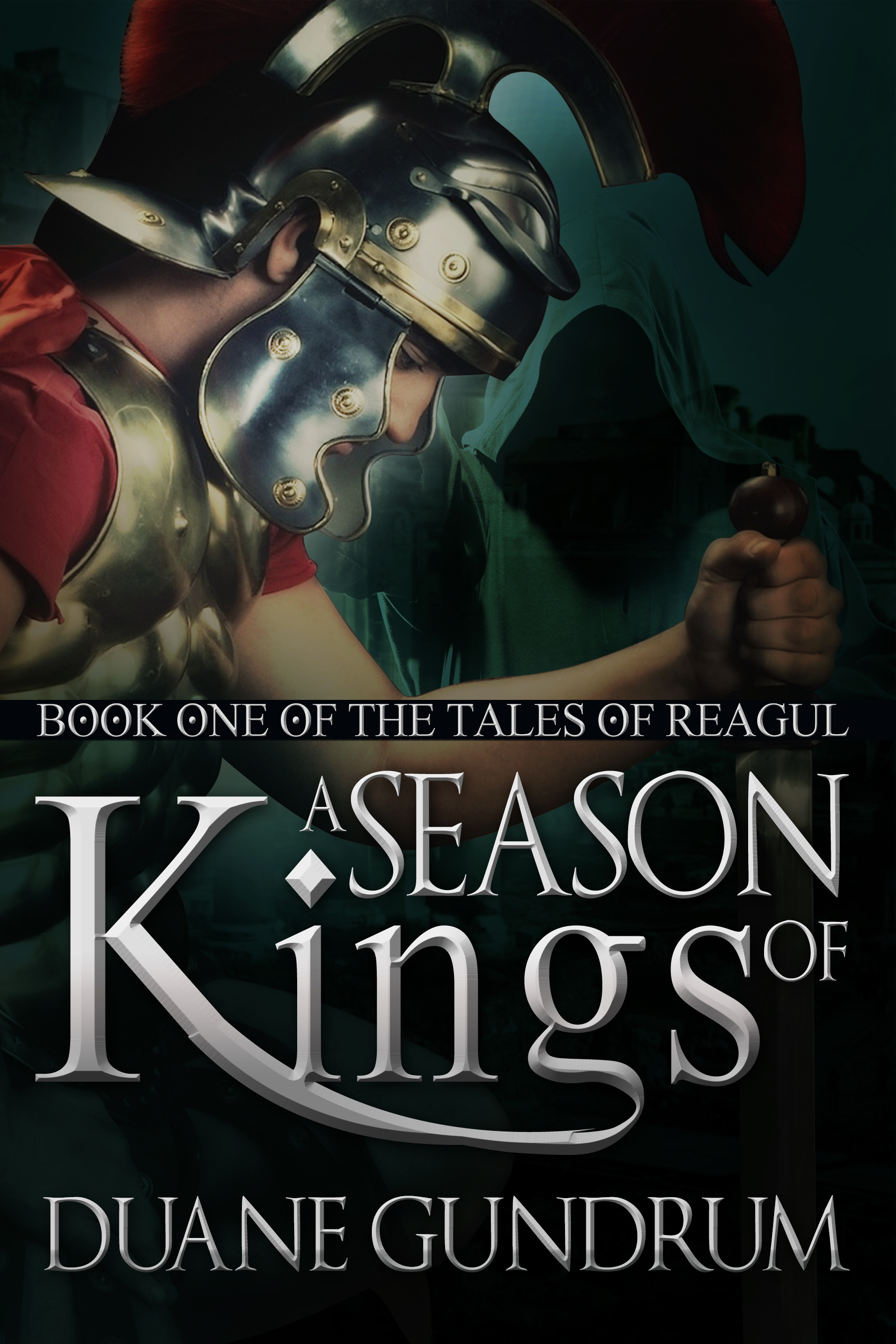
3. Bad Cover Artists. I’m being very careful about how I address this one because there are some brilliant cover artists out there, and I have used a few of them because they’re just awesome. The ones to watch out for (and not use) are the ones who have just unwrapped their copy of Photoshop Professional (or Elements) and now thinks he or she can create great covers. A great cover artist works from concept, not from stock photos, which is how a lot of them operate. I use one cover creator who actually asks me a bunch of questions about the novel AND THEN starts to design concepts. She’s great at what she does. That’s what you seek, but they’re rare and hard to find.

4. People Who Claim to Know More Than They Know. This has been one of my pet peeves. There are some authors out there who attempt to gain sales by pretending to know information that they really don’t. A good example is the extremely best selling author Rob Eagar who wrote a book everyone kept recommending to me as “the book that will help you sell more books”. The book is titled, Sell Your Book Like Wildfire, and it is a great book if you write nonfiction. However, because of the realization that the larger market out there is the group of naïve people like me who are writers of fiction, he spends a great deal of time trying to give the impression that this book is JUST AS good for fiction writers. His premise is simple. You have to sell books that are worthwhile to people. In other words, that have value to them, so you have to find what makes your book valuable to them and sell that idea as your premise for your book. Unfortunately, that doesn’t work with fiction. As a matter of fact, the more I read of his book, the more I realized he hasn’t a clue about anything that deals with fiction. He’s a marketer who knows nonfiction, and that’s it. Unfortunately, he’s convinced a lot of writers of fiction out there that his book is worthy, and in MANY conversations I’ve had with other fiction writers, we’ve all pretty much come to the same conclusion. Fiction books are about stories and storytelling, not about finding something useful for a reader. Sure, you can spin that in some way that might pretend to work, but in reality, you aren’t going to interest readers of fiction unless you have a really good story to tell, and you have an engaging way to do it. You’d get a lot more value from someone teaching you how to create a flashy cover for your book than you would from this book. Again, I was fooled by the desire to find an easy way to success.

That’s a general idea of some of the things to watch for in today’s writing environment. Drop me a line (or add a comment) if you come up with any yourself.

The Ameriad is free all this week on Amazon Kindle

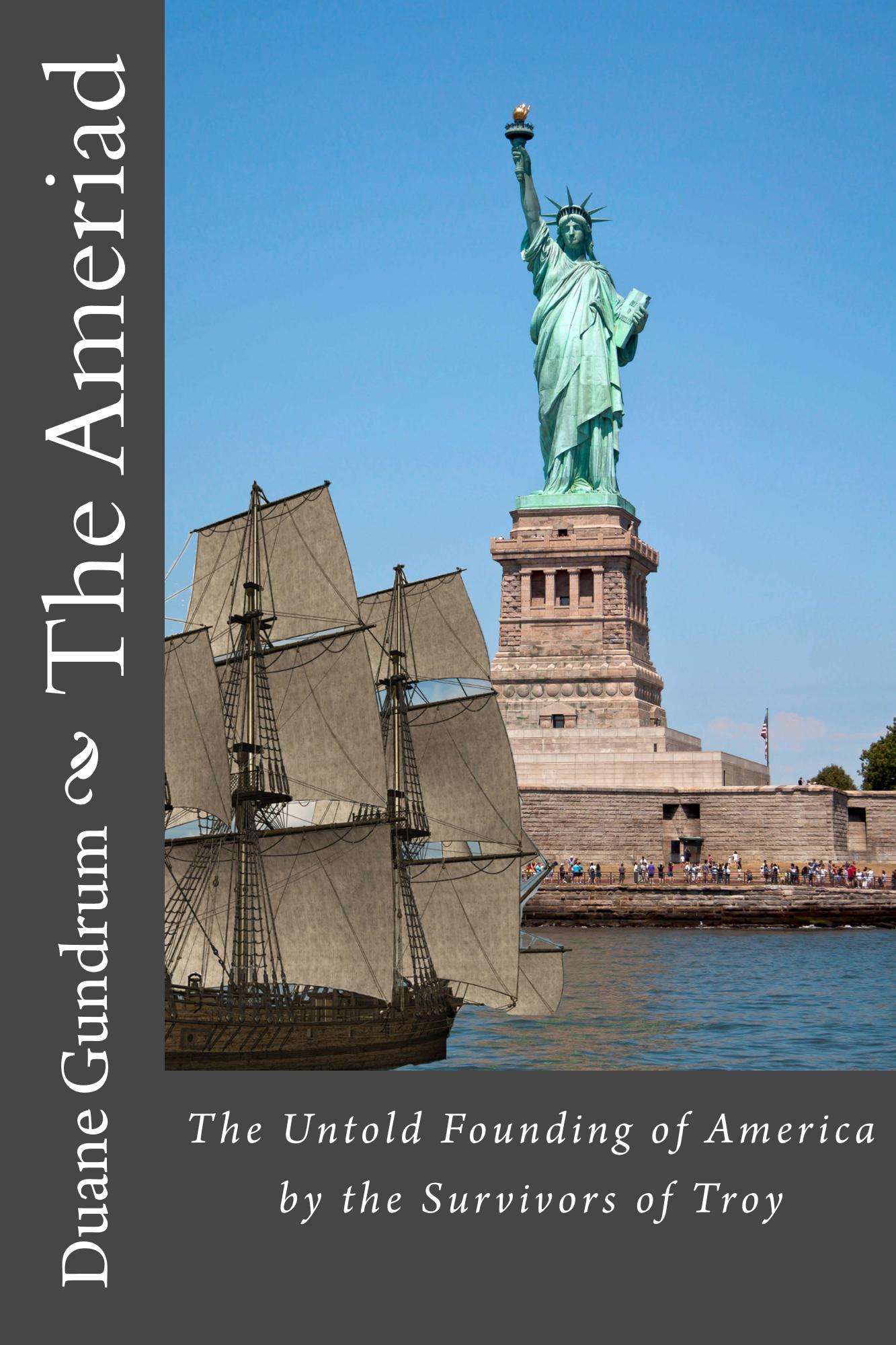
The_Ameriad_Cover_for_KindleMy novel, The Ameriad, a humorous, mythological parody that re-tells the founding of America by the survivors of Troy, is going to be free all this week on the Amazon Kindle.  You can access the page for this book here. This deal ends Saturday.

A paperback copy of the book is also being given out through Goodreads; actually, 10 copies are being given out free. All you have to do is sign up for the contest on Goodreads here.  This contest ends at the beginning of next month.

Did I mention that both choices are free?

I should also point out that my novella, Mapping the Silence of Dreams, is now available on Kindle as well. It’s dark fantasy involving the dream sphere when a scientific team accidentally brings something back from our dreams.  You can find it here.