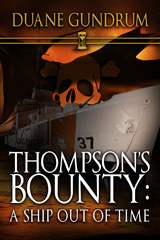
The book giveaway for my science fiction, time traveling novel Thompson’s Bounty is active on Goodreads. Sign up for it, and you can get a free paperback copy of the book.
Category Archives: Business
The Evolution of Sales for a Self-Publishing Author
I recently spent some time analyzing how many sales I’ve had through Amazon. Keep in mind, this doesn’t count sales through other services (just Amazon). But what I discovered was kind of fascinating, because if you haven’t been paying attention to it, the information kind of sneaks up on you and tries to stab you in the back. Or at least jumps out from the shadows and says “boo!”.
For the record, I’ve been selling books on Amazon as ebooks since 2008. Granted, hardly a single one sold back then, but I was trying to sell one book (Thompson’s Bounty) way back then. Shortly after, Innocent Until Proven Guilty came along, and then a few years later, everything else sort of exploded into print. What’s interesting is that if you look at the numbers (and yes, most people know I’m a number crunching kind of guy), you’ll discover that in 2008, combined with 2009, I sold 9 copies of Thompson’s Bounty. And that’s it. In 2010, I sold 7 books, mixed between the first two I mentioned earlier. And then 2011, well, just kind of went nuts. I sold 181 books, spread out over 8 different titles. 2012 was a little less successful with 135 books sold. Strangely enough, 2013, of which we are only in June, has had 110 sales. Not counted were 77 sales that occurred just last month, so you can see that 2013 has already surpassed both 2011 and 2012, and we’re not even halfway through the year.
As for money, that’s increasing as well, which makes sense when you follow the number of sales.
The quandary for me in publishing has always been trying to figure out how to sell to more readers, or at least how to get readers to at least know my books exist. I wish I could say I’ve found the answer to that, but I haven’t yet. But I’m still searching, experimenting and performing ritual sacrifices to The Shania in hopes of figuring that out.
Anyway, not much of a post about the usual stuff, but as I rarely discuss the business side of the craft, I thought I would share this with you all (which by “all”, I obviously mean my two stuffed animals who make up my readership).
Problems inherent in trying to be a professional writer in a self-publishing world
Let’s face it. There are a lot of writers out there. And with Amazon and the Nook making it that much easier for anyone to hang out a shingle and say he or she is a writer, that means we’re going to see more and more of them out there, even if they’re still struggling to string two sentences together. But that’s not the focus of this post. The focus of this post is that because there are so many of us out there, there are also a lot of people out there who are quite willing to rip us off and separate us from our hard earned dollars.
Of course, it’s always been this way, except in the past it was a lot easier to spot the ones trying to take advantage of us. In the old days, a writer mainly had to worry about a couple of different entities, such as:
1. Vanity Publishers. These guys would tell you your book was great and that they wanted to publish it. Then they’d send you a bill for their trouble. They took advantage of the fact that young writers (meaning ones who haven’t been writing in the business for long…age is irrelevant) didn’t know that legitimate writers got paid by the publisher, not the other way around.
2. Charging Agents. When a writer was ready to get a “real” agent, he or she would query a whole bunch of them and hope something interested someone. Every now and then a lucky hit was made, except you’d then hear from some mid-level agent who you really didn’t know but figured they had to be legit to be in the Writer’s Digest Agent Book. And then they’d say that they’d either have to charge you to read your book (before becoming your agent) or charge you for their services (after becoming your agent). In the end, they’d never sell anything because they made their money fleecing young writers who didn’t know better.
3. Editors. Someone would invest in an ad in the back of Writer’s Digest, claiming to be an editor. They wouldn’t cheat you by not editing your work, but quite often you’d end up with an editor who knew less about grammar and spelling than you did.
So, fast forward a few years and now we’re in an era where writers are self-publishing their stuff, as the legacy publishers have practically imploded on themselves, trying to hold onto a business model that resembles the big music producers trying to hold onto the music industry. This has provided a whole bunch of new entrepreneurs to latch themselves onto the writing community. Here are some ones to keep in mind:
1. Book formatters. Formatting a book for an ebook venture is pretty easy. You just have to fail at it a few times first. These guys promise to do that work for you, and some of them are cheap enough to be worth it. But others charge hundreds of dollars and make it seem like your book will fail if you don’t use their services. Like I said, if you have done it a few times, you’re generally okay. For the lower charging ones, they might be completely worth it as it would save a writer a lot of time not having to worry about the packaging part of the paradigm.
2. Agents Who Pursue You. When you start to make it as a self-published writer, you start to experience these agents who claim they can do wonders for your sales. Yet, they know as much about sales as you do, or even less. Basically, they’re banking on you remembering that agents used to be important and hope you’ll buy into the fantasy that having an agent makes you somehow better off. An agent sells your work to a publisher. If you’ve already published it, chances are pretty good that they don’t have much to offer you. A marketing specialist might be worthwhile, but if that’s what you’re seeking and he calls himself an agent, chances are you’re wasting your time…and money.
3. Bad Cover Artists. I’m being very careful about how I address this one because there are some brilliant cover artists out there, and I have used a few of them because they’re just awesome. The ones to watch out for (and not use) are the ones who have just unwrapped their copy of Photoshop Professional (or Elements) and now thinks he or she can create great covers. A great cover artist works from concept, not from stock photos, which is how a lot of them operate. I use one cover creator who actually asks me a bunch of questions about the novel AND THEN starts to design concepts. She’s great at what she does. That’s what you seek, but they’re rare and hard to find.
4. People Who Claim to Know More Than They Know. This has been one of my pet peeves. There are some authors out there who attempt to gain sales by pretending to know information that they really don’t. A good example is the extremely best selling author Rob Eagar who wrote a book everyone kept recommending to me as “the book that will help you sell more books”. The book is titled, Sell Your Book Like Wildfire, and it is a great book if you write nonfiction. However, because of the realization that the larger market out there is the group of naïve people like me who are writers of fiction, he spends a great deal of time trying to give the impression that this book is JUST AS good for fiction writers. His premise is simple. You have to sell books that are worthwhile to people. In other words, that have value to them, so you have to find what makes your book valuable to them and sell that idea as your premise for your book. Unfortunately, that doesn’t work with fiction. As a matter of fact, the more I read of his book, the more I realized he hasn’t a clue about anything that deals with fiction. He’s a marketer who knows nonfiction, and that’s it. Unfortunately, he’s convinced a lot of writers of fiction out there that his book is worthy, and in MANY conversations I’ve had with other fiction writers, we’ve all pretty much come to the same conclusion. Fiction books are about stories and storytelling, not about finding something useful for a reader. Sure, you can spin that in some way that might pretend to work, but in reality, you aren’t going to interest readers of fiction unless you have a really good story to tell, and you have an engaging way to do it. You’d get a lot more value from someone teaching you how to create a flashy cover for your book than you would from this book. Again, I was fooled by the desire to find an easy way to success.
That’s a general idea of some of the things to watch for in today’s writing environment. Drop me a line (or add a comment) if you come up with any yourself.
At wit’s end with writing
I honestly don’t know what to do. I can’t seem to get anyone interested in my writing. It’s not because it’s not good enough; it’s mainly because it’s not famous enough, and it’s never going to be “famous” enough because no one reads it.
I guess what gets on my nerves is that I tend to support all of my friends and colleagues on their social networking sites, but rarely is that ever reciprocated. I’ll give a thumbs up to someone’s ridiculous cat picture or to someone’s latest “look how cute my baby is” photo. But rarely does that get returned.
I have about one friend on my social networking sites who I am very thankful for because she’s always supporting me with my writing. Probably more than she should ever have to. But she’s a rarity. I sometimes wish there was more I could do to support her, but I try.
Recently, I published probably the most important book of my career. To give it the credit it’s due, I need to hype the hell out of it because the publishing world is not the same place it was a decade ago. Publishers don’t support you. Writers are pretty much on their own, and unless they were Stephen King-level of famous a decade ago, they’re pretty much stuck with trying to make an impact in a world that has the attention span of a five year old.
So, I have been trying everything possible to get people interested in this book. For the first time ever, I created a book trailer and put it on Amazon and Youtube. It’s really funny and entertaining. The people who have seen it, all ten of them, love it. If you start to get my drift, I now can’t get people to watch a Youtube of a promo for a book that they aren’t interested in reading either. Basically, a writer trying to get traction today is essentially screwed.
The tragic part of trying to make it has a lot to do with the mechanisms that drive the whole industry now. In order to advertise my book anywhere, you generally have to have at least 4 to 5 reviews that are 4 stars or above (averaged). So, if you don’t have people who already read your book and reviewed it, you can’t get advertising for it so that people can actually read it and review it. And if by some chance you got those first five reviews and then could pay for some advertising, you then have to get dozens of reviews before you can actually start hitting a breaking point of where people will ever even notice that you’ve written a book. If you’re unknown, kind of like I am, then you’d probably get better results standing on the corner and throwing copies of your books at passing cars, hoping to hit one, blinding the driver so that he has to stop after running into a flagpole.
Anyway, here’s a last look at the video I created for this campaign.
The Struggles of an Independent Writer
Most people generally don’t give independent writers a lot of attention or thought. Oh, they think about the famous writers and the ones that are publishing with the big companies. But the struggling, independent writer, who everyone talks about as the new future of writing is really a very difficult person to be.
To begin with, getting people to buy my books is almost a ridiculous battle that has no positive resolution. Friends don’t buy them. Family don’t buy them. Strangers don’t buy them. Oh, every now and then one of those people will say “Oh, I’m going to pick up your book” and then months go by and they never do. I have a colleague I work with who looked at the cover of my latest book and said she was going to pick it up. I smiled and realized right then and there: Wasn’t ever going to happen.
One of the biggest parts of the struggle involves how a writer gets attention. Social networking is great if you’re willing to spam your friends to death with novel information. I don’t do that. Otherwise, they probably wouldn’t be my friends any longer. I’ll read all of their updates about baby pictures and all that stuff, but I get the impression they mostly ignore mine. A few don’t, but they are the exceptions.
But in order to make it as an independent writer, especially one writing ebooks as well as regular books, you have to garner lots of positive reviews. That has never happened for me. I don’t even get reviews at all. People read my books, buy them at Amazon and all that, but they NEVER leave a review, let alone a positive one. So, I languish in unknownability (if that was a word).
So, I pay for Facebook ads that people click and then ignore. I pay for Goodread ads that people click and ignore. Maybe it’s my ads. Maybe it’s the fact that people just don’t support independent writers. I don’t really know. All I know is that I keep trying, and it’s not moving forward. Three steps back and then one more step further backwards.
But for all those who promised, or just care a little, how about picking up one of my books, reading it and then giving me a review. It might actually help.
Well, one can dream, right?
Dear Credit Collectors: Please Stop Calling Me As I’m Not the Droids You’re Looking For
Okay, here’s my little piece of advice for credit collectors: If you’ve been calling a phone number for the last two years for “Munro, Alexander” and the person who answers the phone is NOT Munro, Alexander, doesn’t know Munro, Alexander, and has never heard of “Munro, Alexander”, STOP CALLING BACK. Statistical analysis indicates that the probability of finding said Munro, Alexander is not going to increase if you call 300 times, 700 times, or never. The reality of the situation is that Munro, Alexander DOES NOT LIVE HERE. So stop calling for him.
Unfortunately, I do not have a phone that can be blocked, so they call it nonstop. I get two to three phone messages on my phone for this same guy. I’ve talked to them and told them to stop calling (they promise not to), called up their offices and said same, but nothing seems to make a difference. They won’t stop calling me.
This wouldn’t be as bad if this was the only one, but I also get calls for all sorts of other random people who may or may not have had my phone number somewhere in the past. I am so sick and tired of wanting to answer my phone only to get another one of these morons on the other end of the phone.
The Munro, Alexander one is even worse now because they no longer have a person on the other end of the line but a recording that says: “If you are not Munro, Alexander, please hang up. Otherwise, you are indicating that you Munro, Alexander, and this call is for you.” This is a message that is left on my answering machine, so of course NO ONE HUNG UP. No one was on the freaking line to hang up.
Government keeps saying they’re going to do something about this, but they never do because I suspect these companies have lobbyists that keep any normal politician from passing legislation that ships them to Siberia for the rest of their natural lives, a punishment overly warranted by the abuse the rest of us have to go through.
I’m just saying.
Sim City: A Game You’ll Learn to Love and Hate
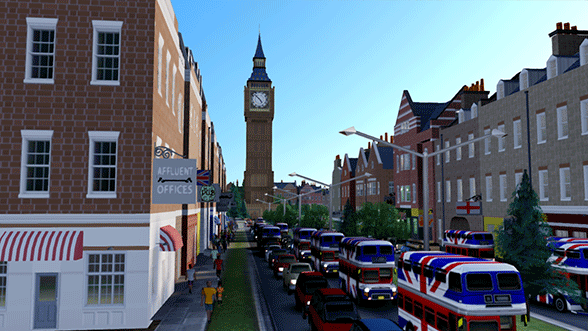 I recently bought the new release of Sim City (from Electronic Arts, using its subsidiary Maxis Software, which is bought some years back). Maxis used to be one of the greatest companies on the planet, creating Sim City, the Sims and then Spore (which was a little after they were bought by EA). However, Sim City has always been the bread and butter of Maxis, and most likely the reason EA bought the company in the first place (The Sims was released under EA’s ownership, even though it was the last project begun under the Maxis only name).
So what are my thoughts on Sim City? It’s a lot of fun, at least until you get really involved with the game. Let me explain. When you first start playing the game, you get overwhelmed by how much there is to do. You build a road from the highway through your patch of land, you then zone residential, then industrial and commercial. Soon after, someone complains they have no power or water, so you build some kind of power plant and a water pump. This goes on for awhile, until someone else complains that there aren’t enough people to work the zones (so you zone more residential), and then you start to realize your city is lacking in fire support (you build a fire house), police (you build a police station), health care (you enact Obamacare…oh wait, I mean you build a clinic), and you continue until your little patch of land starts to become a thriving city. There’s always something to do, so you’re never going to get bored with it.
And then, eventually, you start to build a major city. And unfortunately, that’s where you start to hate it. The reason you hate it isn’t because there’s not a lot of fun things to do, but because the game was designed badly, almost as if they realized they didn’t have the ability to handle AI as they needed to, so they dumbed down the simulation to be less of a simulation and be a compromise instead. Here’s an explanation of that:
Your Sims (the citizens) are disembodied people who don’t really have a specific place in your city. The people who work at the health care clinic are not doctors. They’re just arbitrary Sims, meaning that when people get up in the morning, they might be a doctor, a fireman, a ditch digger, or a protesting hippie who hates government. The way they find their jobs is through a process I like to call “first come, first serve”. A Sim wakes up in the morning, at the same time as every other Sim, and walks out the door of his apartment to find that there’s a business next door selling donuts (so he decides to work there). The next day, he’s not so quick to the donut shop, so he ends up being a neuro surgeon instead, because the clinic or hospital is located next door to the donut shop. He’ll work his entire day in whatever place he’s in, and then he’ll come home–to any home, because he doesn’t live anywhere; he just occupies the first building that’s built for housing. When visitors come to the city because of your tourism stuff you’ve added (like a building that holds mega super concerts), the Sims will fill up the buildings on their way out, or may or may not leave the city. There’s really no rhyme or reason for what different people end up doing when they’re in your city because they’re all interchangeable. Which brings up the problems that destroy your city.
If your traffic was bad before, it becomes a nightmare when everyone is out on the street trying to get to whatever place they need to go. Your firemen, stuck in traffic stops aren’t putting out fires, and your city starts to burn down, even if the buildings are across the street from the firehouse. Your police can’t stop crime, so you have Sims moving out of town because there’s too much crime (caused by cops not being able to maneuver through traffic (or by cops choosing to be donut makers that morning)).. You probably get the picture.
The city’s infrastructure works the same way. If you have water running through your city, it gets bogged down by the fact that the designers of the game didn’t design water (or electricity) any better. Your power gets clogged and randomly just kind of moves around the town so that you can end up with an important set of buildings just not getting power or water because the AI is too stupid to deliver it now that your city has become a lot more complicated. Even if your water pump is across the street from the building that needs water, it waits until the water fills in some cycle that makes no sense to common sense and has as much simulation value as whack a mole does to international diplomacy.
I had a great city that turned into ruins because these problems just blew up at one point where I became too big to fail, but failed miserably. All attempts to fix it were useless because nothing could move through the city. This wasn’t because I was using weak roads; it was because there was so much going on at one time that the Sims pretty much just sat in traffic, water wouldn’t flow, and the city kept complaining that I needed to provide more power, even though I had about 2x the capacity of power that just kept clogging itself up. Even putting a power plant next to the one building lacking power didn’t work because of the previously mentioned random traveling that everything in Sim City does.
This problem is now being noticed by a lot of players, needs to be fixed, or the game is going to be the most successful failure of all time (although it will compete with Diablo 3). EA has the ability to fix this, but I suspect that they’ll do the corporate thing and basically take the money and run, chalking it up to a good experience for the bottom line, even though it may provide the final nail in a coffin that doesn’t need to really happen.
The next move is for EA to do something. The question is: Will they do it or just screw over its player base?
Free promotion for newly released book
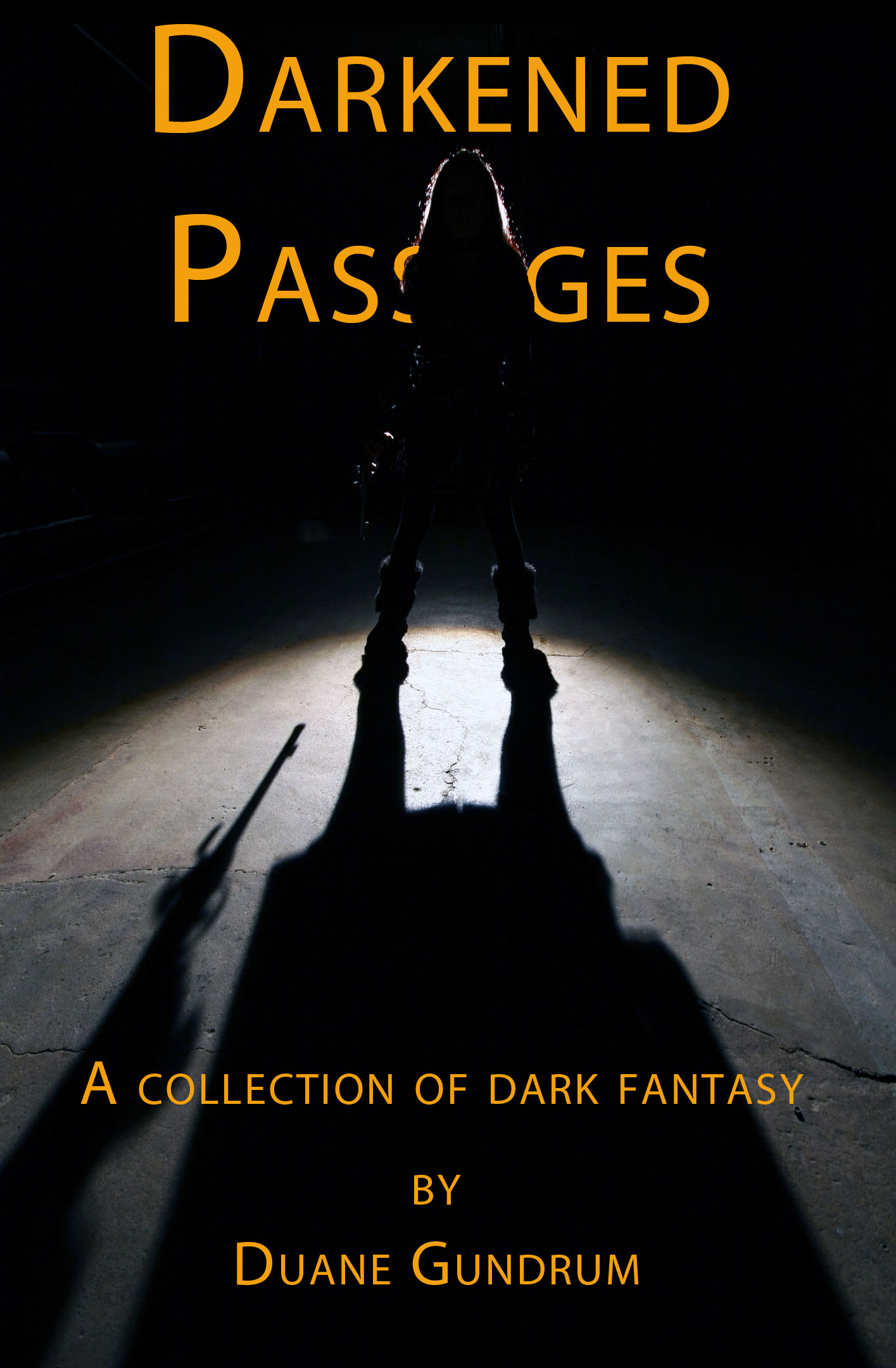
For the following week, Monday through Friday, Amazon is offering my books Darkened Passages (a new dark fantasy short story collection released over the weekend) and the book that was previously published before it, Deadly Deceptions (a mystery/suspense novel published last year) for free if you have Amazon Prime. So, hopefully people take advantage of it.
If you do, please do me the courtesy of leaving a review. It’s amazing how many of my novels are bought but then no one leaves a review. Hopefully, no one thinks they suck. 🙁
Darkened Passages, my book of short stories, will be released tomorrow for Amazon Kindle
EA’s Sim City Reboot Isn’t Going As Planned…unless you’re one of the disasters that destroys the cities
On the third day of the release of the new Sim City by EA’s Maxis studio, things have gone from reviews of “best game ever” to “what a crappy piece of s4#&!”
The problem isn’t the game itself, although some complaints have started to come in on that level as well (like how small the cities are in comparison to any previous incarnation of Sim City). The problem is the servers because this was EA’s attempt at forcing every single player to have to play on EA’s servers, requiring an always on internet connection. Another company with a more stellar reputation, Blizzard, tried doing the same thing with Diablo 3, and let’s just say that the result was a lot of people claiming Diablo 3 to be the worst game put by Blizzard in a very long, esteemed career of putting out great games.
So everyone is complaining about EA right now because not only do they have to be online all the time, but EA doesn’t seem to know how to run their servers so that the servers are on all the time. 3 days in, players who paid for the game can’t even play the game. So people on numerous game boards are attempting to cash their games back into EA, complaining about how badly the game was implemented.
I should point out that I was working for Maxis when EA took over it. As we were moved from Walnut Creek to Redwood City, you could see the company of Maxis being gutted out by the new owners. The last project I worked on was The Sims, and you could see how things were slowly going downhill for those at Maxis. Working on Sim City 3000 was a pleasure. Seeing what was happening after The Sims was awful and I felt bad for anyone that was sticking around.
If anything, hopefully other companies will learn that just because a bigger company has money to buy you out doesn’t mean that they’re going to continue to make your quality product with actual…well, quality.