Monthly Archives: April 2014

Active Shooter Training for College Professors

Today, I attended mandatory training for active shooters on campus, meaning that the campus police sat a bunch of us down and told us how we should handle ourselves in the case of an active shooter on campus. I’ve always found these types of exercises bizarre because as good-intentioned as they are, they almost always rely on the hope that in the case of a disaster/emergency, the people who need to do the right thing are going to be capable of actually doing it. And quite often, if you listen to the conversations of the other people in the room, a lot of people have great expectations of themselves about what they’ll do in an emergency. But the only real way to figure out what you’re going to do in an emergency is to either go through one, or train extensively until you go through one. Neither of those methods is one that is appropriate for most people and most crowds. So, as I’m quite apt to do, let me tell you a story.

Some years ago, I was out of the service and working for a hotel in San Francisco. I was the hotel investigator, which for all argumentation meant that I was in the management of the Security Department. The rank structure went kind of like Security Director, Assistant Security Director, Fire/Safety Director, Investigator, and then Shift Supervisor. So, in most circumstances, the investigator (me) was usually not someone who had to exercise a whole lot of authority. However, one day, as these things usually happen in bizarre circumstances, there was a radio call in the hotel indicating a chemical spill in the sub-basement level (which is where Engineering houses its staff and headquarters). A laundry person had accidentally mixed some solvent with another that shouldn’t be mixed with, started a chemical reaction and was immediately knocked unconscious. Then everyone on that floor collapsed and went unconscious as well.

When we received the call, the Security Director, the Fire/Safety Director and the shift supervisor were all in a meeting with the director, in which his office happened to be located right next to the stairwell leading directly down to the sub-basement. So, they all rushed out of the Security Office, down the stairwell, and in a few moments were completely incapacitated right smack where the chemical reaction was still flowing. I happened to be walking back to the office at this time, heard the call and was about ten seconds behind the people rushing down to the sub-basement. What I did differently than the rest of the leadership going down the stairwell was notice that the path took us down one set of stairs, down the hallway and then back down another set of stairs. On the way to that second set of stairs was a laundry deposit room, and by instinct, I grabbed about ten towels that were damp from having just gone through a wash cycle (they were in a basket in our path and wet, about to be transferred to a dryer). Having heard “chemical spill” from the radio, my first thought was to throw a bunch of those blankets over my face and breathe through them. No instruction manual or class ever taught me to do that, but it just seemed to be a logical thing to do for someone who has been trained to react to emergency situations from my time in the service.

Anyway, when I got down to the sub-basement, the first thing I noticed was the leadership of my department coughing and wheezing from complete lack of oxygen, so I grabbed the nearest one, wrapped a towel around his face and turned him around, forcing him back towards the stairwell where he had emerged only a short bit ago. I did the same thing for the Fire/Safety Director and maneuvered him over to the shift supervisor, who was incoherent and wandering aimlessly, putting the Fire/Safety Director’s arm around him and pushing them both towards the stairwell, so they could use each other to push each other up the stairs.

I, breathing through wet towels, found a stumbling engineer, pushed a towel over his face and had him take me back to Engineering where there were tons of oxygen masks they used just in case of a disaster like this. Fitting masks onto the people who collapsed in Engineering, the engineer and I grabbed the one worker who had started the chemical reaction and carried his unconscious self by dragging him up the stairs with us.

Once on the main level, I got on the radio with Security and started relaying orders, like taking elevators out of service, as we were getting reports of employees going down to the sub-basement level and breathing in gas fumes. In a short bit of time, we had the situation under control.

When I wandered back to the main Security dispatch office (which is different from the administrative Security office), I noticed the assistant shift supervisor standing in the room with the dispatcher, not sure what to do. I asked him what his instructions were, figuring the security supervisor is going to be more up to speed on what to do than someone who was only in a leadership position because of title (and rarely exercised it). But he was even more incapacitated than the management of the department, except his incapacitation came from panic, not from not knowing what to do. So I turned to the dispatcher, asked her if there were any open calls that needed handling, which she said a couple of doors needed unlocking, so I sent the assistant security supervisor off to take those calls and then decided to continue running security until someone higher up was on site to relieve me (which didn’t happen for another two hours because what I hadn’t realized was that the rest of the management was now in ambulances that had been brought onto site, and I was basically the only one left in charge).

Two hours later, the assistant director of security, who was off site when this happened, showed up, and I turned over control to her, which ironically the next day she tried to explain to everyone how she had swooped in and saved everyone during the incident, to which the entire staff blew a gasket because they all knew she wasn’t there and knew exactly what DID happen. But that’s another story.

What I did learn at that moment is that often people don’t know how they’re going to react to a situation until the situation happens. We had all sorts of standard operating procedures and training, but until an incident occurred, no one knew what they would do, and those who thought they would do one thing did the complete opposite. The expectation that leadership would respond in some way went out the window when the senior membership was wiped out in the first few minutes of the situation.

I guess that’s why I sometimes have a hard time with these “active shooter” types of classes. I hope no one ever has to experience a real incident, but I’m not sure that I would be all that comfortable with the other people there, regardless of whether or not they attended a 1.5 hour class on how to respond. But I guess it’s better than nothing.

When Did HBO Become the Sex Channel?

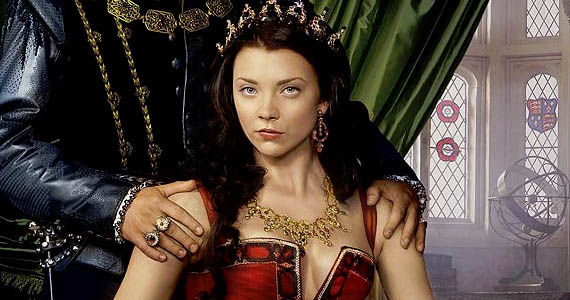
I've been in love with her since the first time we met in ancient England, but that doesn't mean I want to see her having sex with other people
I’ve been in love with her since the first time we met in ancient England, but that doesn’t mean I want to see her having sex with other people

One of the more popular shows in America right now is Game of Thrones, which airs specifically on HBO. It’s a pretty decent show, has great acting and writing, and can definitely tell a story. Well, I could probably say that about most HBO shows that I’ve watched over the years, and that includes The Sopranos, Deadwood, Rome, True Blood and the Wire. These were all great shows.

One thing that distinguished most of these shows from regular network programming is that they were on HBO, and as a result, they could sometimes be a bit more risque than your usual show. This usually meant nudity, sexual situations, drug references and possibly violence (although violence is the one area that regular networks have little problem glorifying). But something changed over the years, and I think what has happened is that the programmers at HBO are now more interested in glorifying sex than in actually telling a story that involves sexual situations. I know that sounds like I’m saying the same thing, but I really think there’s something to this.

Let’s look at the time when this started to change. The show True Blood has always been a bit on the edge when it comes to sexual situations. However, a few seasons into its run, the story line, which used to be the center of the show (the underworld of the vampire universe) somehow turned into sex central, to where the main story seemed much more about who Sookie Stackhouse was going to fuck, or who amongst the rest of the cast was going to have sex with someone else. So they started introducing female on female sex, male on male sex, animal on human sex, animal on animal sex, hybrid animals on hybrid animals of different genders having sex, and don’t get me wrong but somewhere down the line I think they were experimenting with mermaids, fairies and werewolves. I’d say they kind of jumped the shark, but so far they haven’t tried to have sex with a shark yet. I imagine that’s in the next season.

Basically, what this has developed is a sense that HBO is on the edge when it comes to sex so that it’s treating it like the new violence variable that network programming used to do, and by that I mean that every season to television around the 1980s was designed to push the envelope on violence to see what they could get away with. HBO, having gone completely over the edge with violence in its shows, is now trying to push the very boundaries of sex with its series.

Last week, HBO crossed the line with Game of Thrones by going way overboard with rape. One of the main characters raped his sister near the dead body of her son in a very nonconsensual rape scene that the director Alex Graves, indicated was his favorite scene he’s ever done.  The problem I perceive is that he’s so enamored with how he’s overstepped the boundary of decency that he believes that he’s taken the show (and the network) in a positive direction, when in fact he’s actually done the entire genre a complete disservice. There was a story a few weeks ago of a woman who was sued by an affiliate of HBO for refusing to do a topless sex scene.  The commentary on that story from the readers is amazing, but I’ll let you read into that yourself. To sum up, basically people are upset at the actress because she signed a contract to appear naked and do sex for a television role.

My question is to ask why a sex scene is all that necessary to a particular story line. As a writer, I understand that sometimes sex is a necessary element to move a narrative along, but I can’t remember ever writing a sex scene because I started thinking “I really need to spice up this book”. And that’s the problem I think we’re running into because I believe a lot of the sex we’re seeing on the screen these days is just bad writing that takes the lazy way out of a plot device that they didn’t want to waste time trying to create. I remember once, in my earlier days of writing, where I actually found myself having to figure a way OUT of a sexual situation in one of my stories because I realized the sex would have been too easy to write for that scene, and I actually reached a far better place for the story by having the sexual situation avoided by the main characters (which brought a lot more drama to the moment than if they did the deed).

What I do know is that quite often when I’m watching a television show and it moves off into sex mode, I often find myself doing other things than watching the show because I find the “sex” in a television show to be very uninteresting. And it’s not because I’m a prude; I’m about as far away from that as possible. It’s because if I want to watch porn, I’ll watch porn. When I turn on the television set to watch drama, I want to watch drama, not ten minutes of young people trying to simulate copulation on the screen (or actually doing it, which is often even worse). I know there are some people who watch certain shows just in hopes of seeing some actress or actor naked, but I’m not one of them. Maybe when I was 13 and hadn’t seen all that many naked women in my time, but these days I need real narrative elements to get me going, and watching sex on the screen rarely does that for me.

The Ignorance of the American Public in an Age Where People Think an Opinion is Knowledge

We're #1! Yep, we're proving ourselves stupid again.
We’re #1! Yep, we’re proving ourselves stupid again.

There’s an interesting article that’s making the news today from Gfk Public Affairs & Corporate Communications that states that 51 percent of Americans question the Big Bang Theory. Teaching political science at a community college, I have no problem adding that if you asked those same people surveyed if they even knew how to explain the Big Bang Theory, chances are pretty good that you’d get a bunch of clueless responses. You see, I think something much worse is happening than people are squeamish on current accepted scientific knowledge; I think the real problem is that not only do people not know what’s current in scientific knowledge, but they believe that because they have an opinion, that somehow that’s some kind of knowledge, too.

Let me explain. Some years ago, I was working for a hotel back when I got out of the service. A young woman who worked in human resources was engaging me in a conversation one day in the employee cafeteria, where she was explaining to me why she thought that I was incorrect for indicating that the time line was not 2000 years old until December 31, 2000, rather than on the day the world counted as January 1, 2000. In other words, my argument was that for a full 2000 years to pass, you have to actually finish the 2000th year. Anyway, regardless of who was right or wrong, she explained that I couldn’t be correct because “the majority of people think the way she thinks” as opposed to the “bizarre” interpretation that I was giving. I then explained that scientific knowledge is not survey based, and she made some really strange response of how most people wouldn’t think that (the irony of that response didn’t escape me then either).

This is how I see the current state of knowledge in the United States today. People no longer rely on evidence or even on scientific theory but think that if they can argue some kind of rudimentary logic, then it must be as good an explanation than if you were to offer formal proofs. I believe part of the problem stems from science’s mistaken usage of the word “theory”, which causes so many people to think that the “theory of evolution” is just a theory, which to them means it has as much ground as the “theory of imaginative fiction” because the word “theory” is involved.

I was watching this week’s COSMOS, and I would like to say that it brought up something brilliant that so few people will latch onto. And that was the struggle that geochemist Clair Patterson underwent when he was trying to prove lead poisoning was killing people in the 20th century. What the episode did a great job of exposing was how easy it was for one doctor, on the payroll of the lead industry, was able to convince so many people that lead wasn’t a problem, when today there’s not a scientist alive who wouldn’t claim it was killing people in the way it was being used in industry. If that episode did anything for the future, I hope that it got people to pay closer attention to what big business tries to “sell” as “safe” whenever there’s something that should be scrutinized a lot more before being made mainstream. But we’re stupid people, which means we’ll take “experts” at their word, conduct surveys of the rest of us who don’t know better, and continue to enrich people who don’t care if they kill us while they profit off our dead bodies.

My nominee for the least informative public service news article of all time: USA TODAY

USA Today has a nice little article/movie on the most dangerous places to use your debit, titled 4 places you should not swipe your debit card. Now, in most cases, such a list would be great, and I’d be thankful that they took the time to present this. But let’s look at their list, shall we?

1. Gas stations

2. Restaurants

3. Stores

4. Online

Okay, if this was an Onion article, I’d accept it, but let’s be a little frank here. That’s practically EVERY place you would EVER use a debit card. That means the title of the article should be DON’T EVER USE YOUR DEBIT CARD AGAIN. When I read the first one, I thought, wow, that sucks, but then read on to see where else I would be in jeopardy. And then it just got worse. Every one of those entries shows that the author of this story did absolutely no work, no investigation and no thought whatsoever to come up with a story. It would be like my next article, which I’ll highlight right here:

Duane’s new article: HOW TO DATE SUPERMODELS

Step One: Find a supermodel

Step Two: Date her.

Yeah, it’s essentially true, but at the same time probably not all that useful to anyone reading it. That’s the feeling I get after reading an article like this. A “real” story would have pointed out certain gas stations that are negligent in their protections of debit card information. Or particular stores where the staff are negligent in the same process. “Online”? Really? Was this article written by a cave man discovering fire for the first time?

The new site is up and running

I finally decided I needed to take my web site into the 21st century, and it definitely needed a push to illustrate that this is the site of a writer, not just a random web site that someone uses to make blog posts every now and then. One of the things I was aching to do was to build a page where you could find all of my currently released novels. There are officially 9 of them released, which includes:

Innocent Until Proven Guilty

Leader of the Losers

Thompson’s Bounty: A Ship Out of Time

The Ameriad: The Untold Founding of America By the Survivors of Troy

The Teddy Bear Conspiracy

Destiny

Deadly Deceptions

Darkened Passages

Absent Without Leave

All of the novels I have written under other names, I have decided not to include in my listing. I’m basically trying to have those names make a success on their own, so we’ll see how they do without the star power of my own name to propel them forward. Yeah, that’s a joke, but anyhoo.

Some of the nice features I was able to implement with the new site included a lot better access to social networking areas that I’m tied to. Before, it was just kind of random. Now, the icons for the specific sites are at the top of the page, which means being a lot easier to link that way.

The other feature that is kind of nice is that the menu bar at the top also allows me to emphasize some of my works in progress. I’ve been wanting to share the map for Reagul for quite some time, and this offers just the opportunity to do that. I’ll be including a lot more information on that property and the Deck Const in the near future. I’m really excited about both story lines, and I hope others are, too, especially when they start to see some of the stuff that’s going to be coming out of those lines.

It took me nearly the entire day (aside from teaching) to get this all configured. There’s still more work to do, but at least it’s finally on a good footing for future innovations.

Let me know what you think.

Does pronunciation equal intelligence?

I don’t usually go to Wheel of Fortune to get inspiration, but a very unusual circumstance occurred during a recent episode where a contestant had the words “Mythological Hero Achilles” on the board and only had to read it to win. He pronounced Achilles as “A-CHILL-ees” and was pronounced by Sajak to be incorrect. Wheel of Fortune later stated that “When a contestant tries to solve a puzzle, they must pronounce it using the generally accepted pronunciation.”

Now, I won’t go into the incorrect plurality in that sentence, but let’s just take them on their word. And that brings me to my conversation today, because I’ve been through this exact same thing, and let me tell you that quite often people assume you lack intelligence just because you can’t pronounce something correctly. To explain that, I’d like to bring you back to my days as a Ph.d student at Western Michigan University where I was studying political science, and in particular political philosophy.

For those who know me, it’s generally understood that I’m very well read. While other kids were reading the equivalent of Harry Potter back in my grade school days (Harry Potter wasn’t around yet, so to be honest, I don’t even remember what the kids were reading back then), I was reading classical literature, and at some point got into a major Greek and Roman influence that drove me to read all sorts of historical tomes. When I got to graduate school, I had read a lot of the material that was being assigned, so you might think that I was pretty well prepared.

Well, that might have been the case if I had read these books because some school had required me to read them. But I read them on my own, and quite often I had to go through other critical studies to even figure out what I had just read. What I never got out of this was some type of discussion about the literature, which meant that I was picking up as much information as I could without anyone actually helping me along. I remember in high school asking a teacher about some of the material I was reading on my own, and she tried really hard to pretend she knew the material, but it was pretty obvious that she was making it up as she went along and was too proud to admit that she wasn’t a reader of Hume, Rousseau and Tacitus (which I had been reading at the time). And these weren’t even obscure authors from history.

So, when I got to graduate school, I remember being in one of those group discussions where were were talking about someone like Herodotus, and I brought it up in conversation right before the professor corrected me on my pronunciation of the name. And then when I brought up another author, I received that same correction on that name as well. A few days into this course, I started to notice a sense of sarcasm coming from some of the other graduate students who had grown up with these authors in the formal courses they had taken. They all pronounced the names correctly, and there was a sense of dismissing me whenever I brought up anything that I thought was significant.

It took nearly an entire semester for that professor to finally recognize that my bad pronunciations were not indicative of my lack of knowledge concerning these authors. When that moment happened, she and I had many conversations about political philosophy that indicated that she no longer thought of me as some grade school dunce who entered her classroom. But I will say that for years of graduate school, I never received that same respect from some of those same students who attended class with me that semester. There was always a sense that I didn’t know what I was talking about because I couldn’t pronounce a name as well as they could.

And this is one of those snapshots I took back with me when I realized that much of my education before graduate school was self-taught and self-learned. While others were attending really expensive Ivy League colleges to gain knowledge, I was spending my time in the Army, reading whatever I could find whenever I had a spare moment to myself. I sometimes wonder if my understanding of literature has a bit of a skew because of how I learned it and because of what I was exposed to while learning it.

But I do know how that contestant felt like on Wheel of Fortune. After he lost, he then gave an apologetic interview about how he knew how to pronounce the name but just flubbed it. I remember making the same kind of comment the first time I mispronounced a literary name. And then I stopped apologizing after it happened numerous times after. Because I learned something during that time that it took me a long time to realize. You see, I did a lot of mispronouncing of names back then, but one thing I did know was what those authors wrote, and what they meant. What I learned was how many graduate students bullshitted their way through conversations about those same authors, as they knew how to pronounce the names, but hadn’t a clue what those authors really meant.

And I find that very important, no matter how you say the names.

The new greed is ruining Hollywood movies

Stop breaking up our movies or the North Koreans will win!

I don’t know if you’ve been noticing lately, but way too many intellectual properties that have been made into movies are now stretching how many movies are being made for the simple goal of getting more money out of the movie public. It was the sort of thing that caused the last book in the Harry Potter franchise to somehow “need” to be stretched into two movies. Then they did it with Twilight. And today, it was announced that the Divergent franchise was going to be doing it with their third movie/book “Allegiant”. Look, I get the idea that more money is better than less money, but sometimes it’s not necessary to make more movies of stories that can easily be told in fewer movies. An example of this is when they decided to stretch the Hobbit into three movies. Keep in mind the Hobbit was one book. But because the Lord of the Rings made so much money for everyone involved, there was no way in the world they were going to limit the next chapter in the franchise to just one profitable movie.

And the franchise has suffered as a result. I know there are people who say they like the Hobbit, but having just watched the second movie, I don’t think it’s hard to come to the conclusion that a lot of that movie really felt like it was just biding time until it could reach the end of the story. They even left it in a cliffhanger ending, almost as if they were trying to figure out what made The Empire Strikes Back such a success for Return of the Jedi and did exactly that. The story arc felt like it was doing EXACTLY the same thing, except without any real resolution like they at least gave you in Empire. In Empire, we did defeat the bad guys long enough to get a breather. They kind of tried to do that with The Desolation of Smog (I know that’s not the correct name, but I’m sticking with it), but to me it fell completely flat. The only thing they didn’t do from the bad writing playbook was have Bilbo fall into a pit and not be able to get back out of it before the train fell into the pit (figured a few cliches belonged in that “cliffhanger” of theirs).

This is becoming a norm with movies these days. It wouldn’t be so bad if the first and second movies were actually full, complete stories, which is one of the cardinal rules of writing a three part series as a writer (you’re not supposed to write just one part of the story and then try to sell the next book…each story needs to have its own conclusion), but we’re getting the lazy writing version of these movies, which is basically just a ploy to get people to want to keep paying money to see a movie franchise each year because the director is too lazy to bring any of the stories to a conclusion.

Today, I saw Captain America 2, and this is a franchise movie that does this sort of thing right. Obviously, they intend to make many more Captain America movies, and they should, but in order to get people interested, they don’t just bait and switch the audience by stopping the story and then saying “hey, give us 8 more dollars, and we’ll tell you what happens next.” Moviegoers need to get a lot more upset over this crappy business process that movie companies are trying to force on us.

On the periphery of participating in the scientific revolution

Courtesy NASA/JPL-Caltech

There’s an age-old story about Albert Einstein that discusses his experience when he was young and in school and asked a teacher about how light could be viewed as both a particle and as a wave. The teacher remarked that obviously he had much more to learn as light was ONLY a wave, and once he learned that he would be able to understand the nature of that particular issue in science. Einstein spent his early adult years proving the teacher wrong and that light could be both a particle and a wave. It kind of changed science forever. Kind of cool.

When I was in grade school, I remember a similar kind of situation when I was first taking physics. And strangely enough, it involved the nature of light. The topic was about the scientific speed limit (the speed of light) and how nothing could go the speed of light, and that all attempts to achieve the speed of light would forever fail. I asked about light itself, indicating that obviously IT could go the speed of light because it was, in fact, light. Therefore, as it was a substance (specifically a particle, according to Einstein nearly eighty years before), then that meant a substance could achieve the speed of light. As scientists would eventually start to realize, light doesn’t approach the speed of light. It IS light and thus, always travels at the speed of light.

And then in the 1970s, there was a huge breakthrough in the concept of antimatter and tachyon particles. Antimatter, for clarification, is anything that is the opposite state of matter, meaning it has the same mass as matter but is in an opposite charge to that of matter. Antimatter particles (referred to as antiparticles) combine to create antimatter just as Matter particles combine to create particles. Tachyons, for those not familiar, are particles that move at speeds above the speed of light, which according to some mathematics I was playing around with at the time, I determined could not reach the speed of light from the opposite direction (the negatives proving to be the same opposite problem from the opposite side).

During this questioning period I was undergoing, I started to believe that I understood what tachyons really were and conjectured that what we know in our universe consists of matter that is incapable of achieving the speed of light. Therefore, in an antimatter universe, the antiparticles would consist of tachyons that would travel above the speed of light, but never be able to reach the speed of light from the other direction. It seemed pretty simple to me. The only thing missing was the simplicity of “where is it then?” We know where matter is because we see it, but we don’t know where antimatter is because we don’t see it long enough to determine that it’s really there (or are capable of stabilizing it before it dissipates in our own universe). This led me to believe that perhaps there’s a buffer substance between the two types of matter (positive and negative). And a simple matter of deduction gave me the theory that, unfortunately, I’ve never been able to completely disprove.

And that’s the Theory of Neutramatter. Neutramatter is a buffer substance that you would need to separate both matter and antimatter, which by simple definition would have to separate particles going below and above the speed of light. It almost seemed too simple because the substance that would need to separate the two universes is the most obvious substance known to man, and that’s light. As we know, light travels at the speed of light (which is kind of duh realization), which then indicates that as it is the buffer substance, the one thing that separates the two universes is the presence of light.

And as we know that light consists of more than just the visible spectrum, there are all sorts of properties that make up the wavelength frequencies that would separate this light across its spectrum, and thus, keep both matter and antimatter from ever crossing into each other’s specific realms.

The strange thing is: I was watching the latest episode of Cosmos with Neil Degrasse Tyson last night (taped from the night before that), and the focus was on the properties of light. It reminded me completely of this theory I had so long ago, and it almost seemed like the science of that show was about to make the, well, quantum leap to the theory itself, as it still seems to fill in the gaps that we still have. A couple of the questions that Tyson brought up (that mankind still has) fit directly into that theory.

It kind of makes me wish I would stuck it out with physics and continued on that path. I still believe there’s something to it, but when I was proposing it back then, string theory was the new kid on the block, and no one really cared about light at the time. I still think there’s something there, but today I’m a novelist who does nothing in science (aside from science fiction). And I wonder if I completely missed my calling.

Dealing with multiple languages in fiction

In my many space travels as a legospaceman, I never ran into a civilization that didn't speak lego
In my many space travels as a legospaceman, I never ran into a civilization that didn’t speak lego

I came across one of those little struggles that I didn’t anticipate while writing A Season of Kings. For those who have been following the story line of the first book of the epic, The Tales of Reagul, it involves several villages from Roman times that are transplanted onto the planet Reagul. A part of the story line is that previous civilizations have been transplanted to this planet earlier than Rome, so there are hints of people from Sumer, Egypt and many other civilizations of earlier history.

One of the first encounters involves Sarbonn, as the young man Spurias, who comes across some of these people. But it dawned on me that someone from Sumer would be speaking Sumerian, not Latin or some derivation of local Roman languages. So, I’m stuck with that old Star Trek problem of “how do people who have never met in their history actually communicate with each other?” Unlike Star Trek, there’s no actual “universal communicator” that everyone is carrying around with them, which means I either have to establish some communication process created by the original aliens (and some back story as to why they’d use something like that any way), or I have to figure out some way to develop a class of people in their societies that would actually be able to translate. Of course, I could go with the old Star Trek method of just assuming everyone speaks English and figure no one will care either way, but that just seems like such an easy cop out (even Star Trek had to eventually explain this situation to its viewers because people don’t allow “yeah, just let it happen” to provide them with justification.

So, I’m analyzing the different ways I can deal with this situation.