The nuance of writing that keeps me going

1 small

For those interested, I’m putting the final touches on the first book of my series, The Tales of Reagul, of which A Season of Kings is going to be released in the next few days. One of the fun things about this book is that it combines my passion of history with my love of speculative fiction. The land I’m writing about has been colonized by people from the times of the Roman Republic. What makes the book so much fun to write is that when these people start spreading out in this new land, they come across the survivors of previous colonizations from previous civilizations, including the Egyptians and Sumerians. This gives me the opportunity to play with the “discovery” aspect of the people who come to the new land, as they have no idea who these other people are, and when they do discover them, they are even more confused by the fact that they’re dealing with people they know so little about, and those that do know something of their civilizations are even more confused as to why they’re in this land in the first place.

This is the kind of thing that becomes so much fun to the process of writing. As I’ve already developed the historical process of the planet, I know why certain things are happening, but the people who are interacting in that land know so little about it, which makes it that much more fascinating to see it from their perspective and wonder “how would a stranger to this environment handle such a situation?”

If you have no voice, does democracy really matter?

One of the paradigms of democracy is the idealism that goes along with that institution, specifically that when everyone has the opportunity to vote it somehow translates to a freer society. We know this isn’t really the truth, which can be provided with evidence from Ukraine, Iraq under Saddam Hussein, and practically every other dictatorship that requires mandatory voting in which the choices are limited to either the dictator or specific party choices. Whenever we talk about those kinds of nations, we laugh at them and raise our hands in solidarity, voicing our opinion about how great our democracy is.

But is it?

I started thinking about this question the other day when one of the national politicos started talking about the inevitability of Hillary Clinton running for president. And I started thinking, why is it inevitable? And more importantly, why her? Why not the guy who lives down the street from me who waves to me every time I walk by, even though I think he’s kind of nuts? How about the cute girl that works at Starbucks? I’d vote for her. She really couldn’t do a worse job than anyone currently in government. And at least she gets most of the drink orders correct. That means she can take instructions from the guy standing at the register, create the correct drink and bring it to him without totally screwing it up. Most politicians fail at taking the order, and from there you go from ordering a carmel espresso and end up getting an F-35 that crashes because it goes so fast that its pilots pass out when flying the thing.

But back to democracy. Who decides what people are on the ballots? If you read the propaganda that gets put out, we do. But who are we? Most people don’t think about that, yet they will go and vote for one of the names of people they don’t really want. Very few, and I mean VERY few, choose someone that is not from one of the two main parties, even if they don’t who any of the people are from either one of those parties. Basically, most of our elections are decided by attack ads that cause cognitive dissonance about one candidate, or you might vote for someone because you saw more yard signs with that person’s name on it. Or you might recognize the name because the person has served in Congress for so many years that it’s impossible not to mention the name, even though you haven’t heard a single thing about what that person has ever done in the 40 years he or she has been in office. Yet, you’ll vote for him or her because, well, they’re on our team, or some bizarre reason makes you think that somehow this person who has always had the job will somehow change things for the better, even though he or she has never tried doing that in the past.

It’s enough to drive one batty.

The problem with elections is that they serve people who have strong name recognition, which in most cases means someone who already has political clout or a lot of money and economic connections. That means that most of us are unimportant and insignificant. Seriously, we’re insignificant and basically unwanted by those who are in power because talking to us is a waste of time when there are so many important people with power and money they could be talking to.

Part of the problem is that our country is so big that in order to have any influence, you already have to be part of the power structure to even be heard by anyone who might make a difference. Yet, we’re also in a country where more and more people are graduating from college and universities, which means there are more and more people who have the brains and intelligence to possibly change the world for the better but are compartmentalized by those in power instead. So, the only places they have to make a name for themselves are in business or the arts, which for the most part means an alternative route to a place that politicians ignore or condemn as unimportant again.

The real problem isn’t just that so many people have so little voice in government. Well, actually that is the problem, and as in most iterative scenarios, if you crunch those numbers, you end up with a lot of people growing more and more dissatisfied with government, which means people start protesting, and when those protesters are marginalized, like the Occupy Wall Street protests were, people start to look for other avenues to participate in political empowerment, which if you follow the logic, means that it may lead to very dangerous outcomes, because once people give up on the given institutions and look for their own places to have their voices heard, pretty much anything can happen. That’s basically the menu that led to the French Revolution and practically every other overthrow of a social institution in the 20th century. With this much anger festering, I can imagine that when things do happen, those with money and power aren’t going to be the royals trying to find a new position in the new paradigm, but possibly the victims of such anger.

We’re already starting to see this sort of thing in race relations. Sure, we like to pretend that those are just circumstances that got out of control, that everything is really fine, but in reality when you have powder kegs all across the country, and world, ready to explode at the first ignition of trouble, it shouldn’t be all that surprising when you see that sort of thing happening on a regular basis. Which then leads to people in larger cities feeling completely unsafe in their cities because whenever these things happen, the police are completely taken by surprise and overwhelmed. People power has a tendency to do that. But when people no longer trust their government to be the instrument that keeps things safe, they start looking to protect themselves, which makes the next powder keg that much more of a demonstrative explosion.

The real problem (think I’ve said that a few times now) is that people keep thinking that “it can’t happen here” which is usually the last cry you hear before something happens and then you hear “I never thought that could happen here”. Our institutions are being stretched to the limit, and while the solution would have been to stop educating people so they wouldn’t realize they were being marginalized and disenfranchised (and believe it or not, you can vote and still be disenfranchised), but we’re way beyond that, and no one these days could ever justify the idea of saving the state by not educating people, unless you’re Stalin, or a politician in Iran.

But then, no one really cares. There are too many interesting things on television to pay attention to this sort of thing.

That Moment When You Realize the Customer Service Rep Doesn’t Really Want to Talk to You

I was in a gas station today, buying some milk. I’ve been in this gas station so many times before that I’d forgotten when I didn’t used to go to this little convenience store. Anyway, the cashiers are generally tolerable, meaning that they say hi and that’s generally about it. But they don’t act rude or anything like that. So it’s just one of those normal places that you shop where you wouldn’t consider it to be the best place in the world to shop.

Anyway, when I went to the cooler to get some milk, I happened to notice that the milk was all “Meijer” brand. I was kind of surprised by that because I tend to buy most of my milk at Meijer and didn’t expect a gas station to stock it as well. Well, much to my surprise, right then and there I discovered that the gas station I’ve been frequenting for years is actually a Meijer gas station, although it isn’t as marked as some of the other ones you see in town. So I was kind of surprised by this and started a conversation of that nature with the clerk.

What I experienced was one of those moments where you realize the person you’re talking to wants to do anything but actually talk to you. A few seconds into the “conversation” I was actually feeling kind of stupid, realizing that I wasted a lot of energy trying to engage this woman in conversation and only got the most brush off of a talk I’ve ever had. It wasn’t like I was asking for a date. Strangely enough, I walked away from that store thinking, wow, I don’t ever want to go back to that convenience store again.

I hadn’t really given a situation like this much thought over the years because most of my interactions with people tend to be quite positive. I’m a sociable kind of guy who likes to talk to people, and as a result, I find a lot of people who are quite conversation in return. But this was the first time in a very long time that I ever came up to someone who I really felt wanted to be in any place but a place where I happened to be standing in front of her.

At least I got my milk. But I’m not sure I’d want to get it from that place again.

Were We Really That Aware of History When It Happened–The Americans

the americans

One of my favorite television shows is The Americans, which tells the story of two deep cover KGB agents working in Washington, D.C., posing as a husband and wife. It details the happenings of the 1980s, during the Reagan Administration, which just so happens to be the final hurrah of the Soviet Union right before it collapsed and became a non-entity. One of the passions I have when watching the show is observing little things that I wonder if they got right, based on the time period where the story takes place. The other week, I was watching one scene where a covert agent was in a room with a bunch of telephones, and I started to wonder “when did the push button phone come into being?” According to a Wiki article, the push-button phone was starting to gain popularity in 1979, which means the show got that one right as well, as there were mainly rotary dial phones, but on the shelf there were a few push button phones. That sort of continuity and clarity constantly intrigues me on a show like this.

What I discover is that they get more things right than I’ve been able to figure they got wrong. But one thing that has been bothering me is a central premise of the whole show, and that’s that the secret stuff the KGB was after might not have been on the radar as much as the show would like us to believe. An example of this is the Internet, or better known as Arpanet back then. The thing about Arpanet is that while it was the forerunner of what was to become the “Internet”, at the time of its creation. For some clarification, the Arpanet started out as a four placed link between  the University of California, Los Angeles, Stanford Research Institute’s Augmentation Research Center, the University of California, Santa Barbara and the University of Utah’s Computer Science Department. Over the next few years, it reached the East Coast of the United States by linking to a bulletin board network (BBN) in Cambridge, Massachusetts in March 1970 and then in 1973 it made its first connection to the Norwegian Seismic Array. In 1975, it was declared operational when the Defense Communications AGency took control of it to handle advanced research. This is kind of where The Americans come in, as in 1983, the U.S. military developed (as a part of Arpanet), the Military Network (MILNET), which handled mostly unclassified communications.

The part I’ve had a problem with The Americans during this part of their focus is that I really don’t think even up to this point anyone took Arpanet all that seriously. Sure, we know what it is today, and the world couldn’t possibly turn again without the realization of how important the Internet is, but even in the 1980s, the people who were “embracing” the future Internet were mostly geeks who were experimenting with a different form of entertainment. The whole beginning of the Internet was a lot of bbs operations with little understanding of how this was going to lead to business, globalization and the future of immediacy politics. The birth of the Internet is the desire of computer scientists to link their networks with each, and until it went mainstream, there was little understanding how this was going to change the world.

Which is why I have a hard time believing that the Soviet Union was jumping in on the rise of the Internet back then. Even our own country didn’t know what it had until it was way out of its own control.

The other “technology” that The Americans have dealt with is “stealth” technology, which is what eventually became the invention of the stealth bomber and fighter. While I can see how the Soviets might have been interested in such a technology, it is important to point out that this technology was first introduced in 1945 when it was revealed that the German U-boats operated under “diffused lighting camouflage”, which is the introduction to dealing with this kind of technology, although the later versions tended to veer more towards fooling radar than people on the ground. As a former intelligence agent myself, I have to say that the one part of the equation that The Americans kinds of glosses over is how difficult it would have been for an operative to understand what he or she was seeing when dealing with this type of technology. Basically, you would need a physics master or an engineering trained agent to be able to recognize what it was he or she was looking at before he or she could figure out if it was ever worth stealing. Chances are pretty good that two scientists staring at the same evidence might have come up with completely different conclusions as to what it’s purpose actually was. We kind of run into the same thing today when we hear “weapons of mass destruction” and a nuclear scientist looks at a chemical weapons dump and thinks it’s relevant, but because of specialized training, he becomes the expert they rely on and he hasn’t a clue what he’s looking at. Same kind of thing.

One thing the show does get right is probably the opposite of what I just said a second ago. There was a great moment where the Soviet spies were looking at schematics and basically were clueless as to what they were looking at. More stuff like that would make the show so much more believable, but they went from that moment to somehow recognizing everything they saw as critical and I kind of lost that great feeling of seeing something done extremely well.

So, I guess my question I’m left with is whether or not we’re reinventing history when we see shows like this, because one thing I’ve noticed in historical narratives is that the narrator often wants to make the characters of his story appear much more knowledgeable about the subject than they might have been. Having dealt with the intelligence field, I can tell you that quite often people don’t get it. They make clueless conclusions because they try to fit everything to a paradigm they already understand, and quite often when dealing with these subjects, you have to go in with a blank slate and tabula rasa everything. But people don’t do that. They want to feel like they have the answers, and they’ll pretend to know until they’re proved otherwise, and sometimes even after that they won’t admit they’re wrong. That’s kind of the problem with science in general and why we have people to this day who still think the Earth is the center of the universe and everything else revolves around it. We think that because we rely on the science of an age when people didn’t know better, and there are too many people today who should know better but never will.

Active Shooter Training for College Professors

Today, I attended mandatory training for active shooters on campus, meaning that the campus police sat a bunch of us down and told us how we should handle ourselves in the case of an active shooter on campus. I’ve always found these types of exercises bizarre because as good-intentioned as they are, they almost always rely on the hope that in the case of a disaster/emergency, the people who need to do the right thing are going to be capable of actually doing it. And quite often, if you listen to the conversations of the other people in the room, a lot of people have great expectations of themselves about what they’ll do in an emergency. But the only real way to figure out what you’re going to do in an emergency is to either go through one, or train extensively until you go through one. Neither of those methods is one that is appropriate for most people and most crowds. So, as I’m quite apt to do, let me tell you a story.

Some years ago, I was out of the service and working for a hotel in San Francisco. I was the hotel investigator, which for all argumentation meant that I was in the management of the Security Department. The rank structure went kind of like Security Director, Assistant Security Director, Fire/Safety Director, Investigator, and then Shift Supervisor. So, in most circumstances, the investigator (me) was usually not someone who had to exercise a whole lot of authority. However, one day, as these things usually happen in bizarre circumstances, there was a radio call in the hotel indicating a chemical spill in the sub-basement level (which is where Engineering houses its staff and headquarters). A laundry person had accidentally mixed some solvent with another that shouldn’t be mixed with, started a chemical reaction and was immediately knocked unconscious. Then everyone on that floor collapsed and went unconscious as well.

When we received the call, the Security Director, the Fire/Safety Director and the shift supervisor were all in a meeting with the director, in which his office happened to be located right next to the stairwell leading directly down to the sub-basement. So, they all rushed out of the Security Office, down the stairwell, and in a few moments were completely incapacitated right smack where the chemical reaction was still flowing. I happened to be walking back to the office at this time, heard the call and was about ten seconds behind the people rushing down to the sub-basement. What I did differently than the rest of the leadership going down the stairwell was notice that the path took us down one set of stairs, down the hallway and then back down another set of stairs. On the way to that second set of stairs was a laundry deposit room, and by instinct, I grabbed about ten towels that were damp from having just gone through a wash cycle (they were in a basket in our path and wet, about to be transferred to a dryer). Having heard “chemical spill” from the radio, my first thought was to throw a bunch of those blankets over my face and breathe through them. No instruction manual or class ever taught me to do that, but it just seemed to be a logical thing to do for someone who has been trained to react to emergency situations from my time in the service.

Anyway, when I got down to the sub-basement, the first thing I noticed was the leadership of my department coughing and wheezing from complete lack of oxygen, so I grabbed the nearest one, wrapped a towel around his face and turned him around, forcing him back towards the stairwell where he had emerged only a short bit ago. I did the same thing for the Fire/Safety Director and maneuvered him over to the shift supervisor, who was incoherent and wandering aimlessly, putting the Fire/Safety Director’s arm around him and pushing them both towards the stairwell, so they could use each other to push each other up the stairs.

I, breathing through wet towels, found a stumbling engineer, pushed a towel over his face and had him take me back to Engineering where there were tons of oxygen masks they used just in case of a disaster like this. Fitting masks onto the people who collapsed in Engineering, the engineer and I grabbed the one worker who had started the chemical reaction and carried his unconscious self by dragging him up the stairs with us.

Once on the main level, I got on the radio with Security and started relaying orders, like taking elevators out of service, as we were getting reports of employees going down to the sub-basement level and breathing in gas fumes. In a short bit of time, we had the situation under control.

When I wandered back to the main Security dispatch office (which is different from the administrative Security office), I noticed the assistant shift supervisor standing in the room with the dispatcher, not sure what to do. I asked him what his instructions were, figuring the security supervisor is going to be more up to speed on what to do than someone who was only in a leadership position because of title (and rarely exercised it). But he was even more incapacitated than the management of the department, except his incapacitation came from panic, not from not knowing what to do. So I turned to the dispatcher, asked her if there were any open calls that needed handling, which she said a couple of doors needed unlocking, so I sent the assistant security supervisor off to take those calls and then decided to continue running security until someone higher up was on site to relieve me (which didn’t happen for another two hours because what I hadn’t realized was that the rest of the management was now in ambulances that had been brought onto site, and I was basically the only one left in charge).

Two hours later, the assistant director of security, who was off site when this happened, showed up, and I turned over control to her, which ironically the next day she tried to explain to everyone how she had swooped in and saved everyone during the incident, to which the entire staff blew a gasket because they all knew she wasn’t there and knew exactly what DID happen. But that’s another story.

What I did learn at that moment is that often people don’t know how they’re going to react to a situation until the situation happens. We had all sorts of standard operating procedures and training, but until an incident occurred, no one knew what they would do, and those who thought they would do one thing did the complete opposite. The expectation that leadership would respond in some way went out the window when the senior membership was wiped out in the first few minutes of the situation.

I guess that’s why I sometimes have a hard time with these “active shooter” types of classes. I hope no one ever has to experience a real incident, but I’m not sure that I would be all that comfortable with the other people there, regardless of whether or not they attended a 1.5 hour class on how to respond. But I guess it’s better than nothing.

When Did HBO Become the Sex Channel?

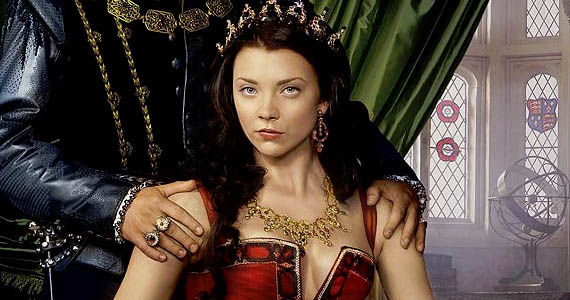
I've been in love with her since the first time we met in ancient England, but that doesn't mean I want to see her having sex with other people
I’ve been in love with her since the first time we met in ancient England, but that doesn’t mean I want to see her having sex with other people

One of the more popular shows in America right now is Game of Thrones, which airs specifically on HBO. It’s a pretty decent show, has great acting and writing, and can definitely tell a story. Well, I could probably say that about most HBO shows that I’ve watched over the years, and that includes The Sopranos, Deadwood, Rome, True Blood and the Wire. These were all great shows.

One thing that distinguished most of these shows from regular network programming is that they were on HBO, and as a result, they could sometimes be a bit more risque than your usual show. This usually meant nudity, sexual situations, drug references and possibly violence (although violence is the one area that regular networks have little problem glorifying). But something changed over the years, and I think what has happened is that the programmers at HBO are now more interested in glorifying sex than in actually telling a story that involves sexual situations. I know that sounds like I’m saying the same thing, but I really think there’s something to this.

Let’s look at the time when this started to change. The show True Blood has always been a bit on the edge when it comes to sexual situations. However, a few seasons into its run, the story line, which used to be the center of the show (the underworld of the vampire universe) somehow turned into sex central, to where the main story seemed much more about who Sookie Stackhouse was going to fuck, or who amongst the rest of the cast was going to have sex with someone else. So they started introducing female on female sex, male on male sex, animal on human sex, animal on animal sex, hybrid animals on hybrid animals of different genders having sex, and don’t get me wrong but somewhere down the line I think they were experimenting with mermaids, fairies and werewolves. I’d say they kind of jumped the shark, but so far they haven’t tried to have sex with a shark yet. I imagine that’s in the next season.

Basically, what this has developed is a sense that HBO is on the edge when it comes to sex so that it’s treating it like the new violence variable that network programming used to do, and by that I mean that every season to television around the 1980s was designed to push the envelope on violence to see what they could get away with. HBO, having gone completely over the edge with violence in its shows, is now trying to push the very boundaries of sex with its series.

Last week, HBO crossed the line with Game of Thrones by going way overboard with rape. One of the main characters raped his sister near the dead body of her son in a very nonconsensual rape scene that the director Alex Graves, indicated was his favorite scene he’s ever done.  The problem I perceive is that he’s so enamored with how he’s overstepped the boundary of decency that he believes that he’s taken the show (and the network) in a positive direction, when in fact he’s actually done the entire genre a complete disservice. There was a story a few weeks ago of a woman who was sued by an affiliate of HBO for refusing to do a topless sex scene.  The commentary on that story from the readers is amazing, but I’ll let you read into that yourself. To sum up, basically people are upset at the actress because she signed a contract to appear naked and do sex for a television role.

My question is to ask why a sex scene is all that necessary to a particular story line. As a writer, I understand that sometimes sex is a necessary element to move a narrative along, but I can’t remember ever writing a sex scene because I started thinking “I really need to spice up this book”. And that’s the problem I think we’re running into because I believe a lot of the sex we’re seeing on the screen these days is just bad writing that takes the lazy way out of a plot device that they didn’t want to waste time trying to create. I remember once, in my earlier days of writing, where I actually found myself having to figure a way OUT of a sexual situation in one of my stories because I realized the sex would have been too easy to write for that scene, and I actually reached a far better place for the story by having the sexual situation avoided by the main characters (which brought a lot more drama to the moment than if they did the deed).

What I do know is that quite often when I’m watching a television show and it moves off into sex mode, I often find myself doing other things than watching the show because I find the “sex” in a television show to be very uninteresting. And it’s not because I’m a prude; I’m about as far away from that as possible. It’s because if I want to watch porn, I’ll watch porn. When I turn on the television set to watch drama, I want to watch drama, not ten minutes of young people trying to simulate copulation on the screen (or actually doing it, which is often even worse). I know there are some people who watch certain shows just in hopes of seeing some actress or actor naked, but I’m not one of them. Maybe when I was 13 and hadn’t seen all that many naked women in my time, but these days I need real narrative elements to get me going, and watching sex on the screen rarely does that for me.

The Ignorance of the American Public in an Age Where People Think an Opinion is Knowledge

We're #1! Yep, we're proving ourselves stupid again.
We’re #1! Yep, we’re proving ourselves stupid again.

There’s an interesting article that’s making the news today from Gfk Public Affairs & Corporate Communications that states that 51 percent of Americans question the Big Bang Theory. Teaching political science at a community college, I have no problem adding that if you asked those same people surveyed if they even knew how to explain the Big Bang Theory, chances are pretty good that you’d get a bunch of clueless responses. You see, I think something much worse is happening than people are squeamish on current accepted scientific knowledge; I think the real problem is that not only do people not know what’s current in scientific knowledge, but they believe that because they have an opinion, that somehow that’s some kind of knowledge, too.

Let me explain. Some years ago, I was working for a hotel back when I got out of the service. A young woman who worked in human resources was engaging me in a conversation one day in the employee cafeteria, where she was explaining to me why she thought that I was incorrect for indicating that the time line was not 2000 years old until December 31, 2000, rather than on the day the world counted as January 1, 2000. In other words, my argument was that for a full 2000 years to pass, you have to actually finish the 2000th year. Anyway, regardless of who was right or wrong, she explained that I couldn’t be correct because “the majority of people think the way she thinks” as opposed to the “bizarre” interpretation that I was giving. I then explained that scientific knowledge is not survey based, and she made some really strange response of how most people wouldn’t think that (the irony of that response didn’t escape me then either).

This is how I see the current state of knowledge in the United States today. People no longer rely on evidence or even on scientific theory but think that if they can argue some kind of rudimentary logic, then it must be as good an explanation than if you were to offer formal proofs. I believe part of the problem stems from science’s mistaken usage of the word “theory”, which causes so many people to think that the “theory of evolution” is just a theory, which to them means it has as much ground as the “theory of imaginative fiction” because the word “theory” is involved.

I was watching this week’s COSMOS, and I would like to say that it brought up something brilliant that so few people will latch onto. And that was the struggle that geochemist Clair Patterson underwent when he was trying to prove lead poisoning was killing people in the 20th century. What the episode did a great job of exposing was how easy it was for one doctor, on the payroll of the lead industry, was able to convince so many people that lead wasn’t a problem, when today there’s not a scientist alive who wouldn’t claim it was killing people in the way it was being used in industry. If that episode did anything for the future, I hope that it got people to pay closer attention to what big business tries to “sell” as “safe” whenever there’s something that should be scrutinized a lot more before being made mainstream. But we’re stupid people, which means we’ll take “experts” at their word, conduct surveys of the rest of us who don’t know better, and continue to enrich people who don’t care if they kill us while they profit off our dead bodies.

My nominee for the least informative public service news article of all time: USA TODAY

USA Today has a nice little article/movie on the most dangerous places to use your debit, titled 4 places you should not swipe your debit card. Now, in most cases, such a list would be great, and I’d be thankful that they took the time to present this. But let’s look at their list, shall we?

1. Gas stations

2. Restaurants

3. Stores

4. Online

Okay, if this was an Onion article, I’d accept it, but let’s be a little frank here. That’s practically EVERY place you would EVER use a debit card. That means the title of the article should be DON’T EVER USE YOUR DEBIT CARD AGAIN. When I read the first one, I thought, wow, that sucks, but then read on to see where else I would be in jeopardy. And then it just got worse. Every one of those entries shows that the author of this story did absolutely no work, no investigation and no thought whatsoever to come up with a story. It would be like my next article, which I’ll highlight right here:

Duane’s new article: HOW TO DATE SUPERMODELS

Step One: Find a supermodel

Step Two: Date her.

Yeah, it’s essentially true, but at the same time probably not all that useful to anyone reading it. That’s the feeling I get after reading an article like this. A “real” story would have pointed out certain gas stations that are negligent in their protections of debit card information. Or particular stores where the staff are negligent in the same process. “Online”? Really? Was this article written by a cave man discovering fire for the first time?

The new site is up and running

I finally decided I needed to take my web site into the 21st century, and it definitely needed a push to illustrate that this is the site of a writer, not just a random web site that someone uses to make blog posts every now and then. One of the things I was aching to do was to build a page where you could find all of my currently released novels. There are officially 9 of them released, which includes:

Innocent Until Proven Guilty

Leader of the Losers

Thompson’s Bounty: A Ship Out of Time

The Ameriad: The Untold Founding of America By the Survivors of Troy

The Teddy Bear Conspiracy

Destiny

Deadly Deceptions

Darkened Passages

Absent Without Leave

All of the novels I have written under other names, I have decided not to include in my listing. I’m basically trying to have those names make a success on their own, so we’ll see how they do without the star power of my own name to propel them forward. Yeah, that’s a joke, but anyhoo.

Some of the nice features I was able to implement with the new site included a lot better access to social networking areas that I’m tied to. Before, it was just kind of random. Now, the icons for the specific sites are at the top of the page, which means being a lot easier to link that way.

The other feature that is kind of nice is that the menu bar at the top also allows me to emphasize some of my works in progress. I’ve been wanting to share the map for Reagul for quite some time, and this offers just the opportunity to do that. I’ll be including a lot more information on that property and the Deck Const in the near future. I’m really excited about both story lines, and I hope others are, too, especially when they start to see some of the stuff that’s going to be coming out of those lines.

It took me nearly the entire day (aside from teaching) to get this all configured. There’s still more work to do, but at least it’s finally on a good footing for future innovations.

Let me know what you think.