Tag Archives: book
The Cover of My New Novel “LOSER”

This is the new cover of my latest novel I’m releasing called Loser. It is one of my earlier science fiction novels. The description is as follows:
After the final war, the Councils did what no previous government was able to do: Unify the world under one government. Like societies that victimize their lowest class, the invention of a device to determine someone’s usefulness to a community manages to make that effort even easier. Centuries later, the original intention of such a device loses its original purpose, allowing those on top to determine the survivability of those on the bottom, originally nicknamed “Losers” and with time the nickname becomes an actual designation.
Rem Schlock is a new Exterminator tasked with hunting and finding elusive Losers. During his search, he discovers the rumor of a mysterious “leader” of the Losers. Facing a future darkened by random death, decayed cities and hidden loyalties, Rem hunts this phantom criminal, discovering an underworld he never imagined yet once revealed can never be covered up again.
It should be up on Amazon very soon.
Battling Through the Trenches of Publisher’s Row
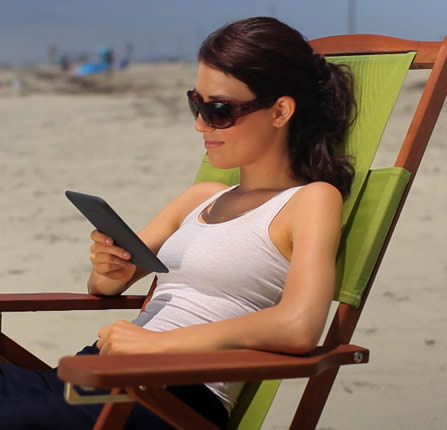
In case you aren’t aware of it, there is a war taking place. I’m not talking about Libya, Afghanistan or Iraq. I’m talking about the war that is currently waging over the publication of books. What war? You say. Well, let me explain.
For years, in order to get published, you sent out your work to a publisher (or an agent in hopes of getting a publisher), and if you were very lucky, you might get a bit of an advance. Sometimes, those advances were for decent money. Around the 1970s and on, they started getting really small. Kind of dismal, actually. Unless you were already a famous author, like Stephen King. So, you would get about $5,000-$10,000, and then the publisher would take 18 months or so to create your book. Then it would get released. If it started to sell, great. You would receive about $1.67 for a $20 book for each sale, the publisher keeping pretty much everything else. After all, they were the publisher. That $1.67 would continue to knock down the amount of the advance you received until you actually started to make what are called royalties, which would be additional money the book made after you paid off the advance. Most books tended to not even make back the advance, so you were generally lucky enough if you made somewhat of a decent advance.
Well, recently, the publishing industry has kind of been turned on its side. E-books are becoming the new “in” thing, and strangely enough, publishers are still maintaining their dominance in the industry, because they are still the power brokers they used to be. In other words, in order to gain any attention whatsoever, you really needed the publisher to get the attention out that you had published a book. So, not surprisingly, publishers have been publishing e-books, too, and still taking that outrageous amount off the top, leaving writers with very little profit, even though the costs for publishers have diminished to almost nothing.
Something new has started to happen, which is turning the whole industry on its side now. Writers are going directly to the readers and selling their books without the publishers. And needless to say, this is causing a bit of a stir in the whole industry. Publishers need the writers to survive, and so they are doing everything possible to diminish the positive experience for writers, so that publishers still remain the power brokers that they have always been. Unfortunately for them, that model isn’t going to last that much longer.
The publishing industry is a lot like the music industry, and its current dynamic is going through a revolution much like the music industry has recently gone through as well. While there are still seriously powerful music leaders in the industry still calling shots, a lot of artists have gone directly to the Internet with their work, and are bypassing the profit model previously established by the RIAA and other such top-down industry leaders. This has caused all sorts of problems for the industry, but it has done wonders to present new opportunities for artists who may never have received an ounce of attention before.
Move this into the publishing world, and you see the same sort of thing happening there. The publishing industry is still in control right now, mainly because the model hasn’t completely developed yet. Online booksellers, like Amazon, Apple, and somewhat Barnes & Noble, are producing their own e-readers that allow writers to push their content to eager subscribers. However, the battle currently waging is who is going to control the process flow from this point forward.
The publishing industry is counting on its enormous clout to push their agenda forward. They have already pushed back against Amazon (which has forced the others to comply) where they forced the increase in the cost of books being sold on the Kindle. You used to be able to get brand new books for $9.99, but now you’re lucky if you can get one for $12.99. The game changer in the first battle was Ken Follett’s new book Fall of Giants, which publishers forced Amazon to sell at $19.99. The backlash against the book has been interesting as Kindle users included all sorts of bad reviews for the book based on the price alone, taking what would have probably been a five or four star reviewed book down to an average of about 3 stars. What’s interesting is that his reviews on this book tend to resemble an upside down bell curve, with 301 5-stars and 327 1-star reviews, with a tiny amount filling in for 2, 3, and 4-star reviews. In other words, the critics either really liked it or really hated it, and there’s no doubt that the really hated reviews come specifically from people who are pissed off at the price.
If this was the end of the fight, you’d think that the publishers pretty much won, but like most great stories, a new sliver has been added to the mix, with writers being that added variable. Writers, realizing that they need to somehow be able to take advantage of this new technology, have started to show up sans publishers (being their own publishers), and they’re starting to include their own novels at much lower cost than the publishers are forcing down the e-market’s throat. Rather than stick it out at $9.99 (or push it up to the publisher’s price of $12.99), writers are now starting to introduce their books at the $2.99-$4.99 range, providing a more comfortable area for readers to purchase on impulse alone. Some of the more prominent writers, instead of using their fame to push for $12.99, like the gas station economic model the publishers are following (one raises the price, the rest follow), are listing their books at $0.99. According to some of the better known writers doing this, they’ve pointed out that because of the amount of people willing to buy a book at that low price, their profit has actually been better than if they tried to sell their books at higher prices. The economic implications are staggering, the more you think about it.
The biggest problems facing the writers right now is how to actually get anyone to pay attention to them in the first place. The one thing publishers have going for them was that their clout actually got books into bookstores, and without that clout, an unknown writer is essentially that, an unknown writer. If no one knows you exist, the chances of selling a book are dismal, at best. So, right now, the battle has halted, as both publishers and writers realize they’re at an interesting crossroad where both can benefit, but neither seems willing to budge. Publishers aren’t interested in giving up their high percentages they receive for “publishing” books while writers are no longer interested in giving up the entire store just to get their work out there. Which means that once writers figure out how to jumpstart the system in their favor, the whole publishing industry is going to go the way of the recording industry.
But what can a writer do to become marketable without already being a famous writer who was selling books already? That’s an important question and one that I’m spending a lot of time studying.
I’ll let you know once I figure it out.
The Independent Writer’s Dilemma
There’s a great article on Nathan Bransford’s site about e-book publishing. For clarification, I received this article following a link from an article by Elijah Rising’s blog (I give credit where credit is due). But what I wanted to talk about is something this article brought up as an issue for me, and it’s one that I think more writers are probably thinking about themselves, and an issue that really needs some kind of attention as we move forward.
The issue is simple. How does a writer who is unknown, independent, and did I mention unknown?, get any attention in the first place so that an e-book isn’t just seen as yet another announcement in the ether that disappears like a Twitter post on, oh, say my Twitter feed with its awesome 38 followers (that tend to be ready to drop me at a moment’s notice if I post a topic that displeases them in any way…I’m just saying)? As one of those writers myself, who has been trying to build an audience for himself for about as long as he’s been writing, I am constantly left wondering if somehow I missed the boat, and that a writing career just isn’t possible.
How does the independent writer create an audience, or at least set up marketing so that it’s productive and leads to sales (and, obviously, readers)? It seems like there’s a variable missing in the game, and that so many of us are trying to figure out what it is while so many others are easily making it through life without any effort, like a teenage girl who makes a Youtube video about a horrible song that ends up getting endless play because of how horrible it is (and then a record deal). I mean, what planet are we living on when this sort of thing happens in such Bizarro style?
It’s almost as if you need to be famous already in order to make it as a writer, and that basically writing isn’t the thing people are looking for in the things they read. I know it sounds ridiculous, but what am I missing here? When Snooki can write (if you call it that) a novel and it becomes somewhat of a bestseller, and a dedicated writer can’t sell more than two copies of a novel in a month, I’m left wondering what’s wrong. It would be one thing if I knew my writing sucked, but it doesn’t, and fortunately I’m way past the self-incriminating stage of my writing career. But it is so easy to be sniped at by other people when someone with very little writing talent gains a writing career when someone else can spend his or her entire life trying to do the same thing, and the only difference is I didn’t first get famous by having sex in a hot tub with social misfits first.
But I’m not making this post to complain about that. Such things are always going to happen, and we know it. What I’m trying to do is work out, in my writing, or my head, what it takes for the average, yet decent, writer to make it as a writer in today’s atmospheric dynamic. Part of me still clings onto the belief that a traditional publishing company is the way to go, but when that doesn’t seem to be working out, you have to keep trying something or you give up. And I’m not ready to give up.
Yet.
We Seem to be Running Out of Good Television Shows
Recently, I was looking for a good television show to watch on dvd. That’s kind of how I roll these days, watching dvd television series rather than original programming when it actually airs. What I’ve discovered is that everytime I watch a series that’s currently on, they cancel it. It doesn’t matter what it is, or how good it is, it happens to me all of the time. I mean, everyone has their complaint about the demise of Firefly, which was a great show for its time, but every other show under the sun as well gets canceled by today’s television networks. I started watching Star Trek Enterprise. Canceled. Watched The Sarah Connor Chronicles. Canceled. Jericho. Gone. Jeremiah. Gone before I even knew it. It seems no matter what I watch, it gets canceled.
I guess I could watch stupid shows like Two and a Half Men, but as much as I enjoy poking out my eyes with a spork, I just can’t watch that kind of garbage. An example is the sister show of that garbage one I just mentioned, Big Bang Theory. I bought the first three seasons of it for a pretty good deal at Best Buy, mainly because colleagues at work kept telling how funny it was. I think I chuckled every four episodes, and I finished watching the third season last night. Was not very impressed. It was like someone heard that geeks were funny, didn’t know anything about geeks and then wrote an entire series around what he “thought” geeks might be like if they were actually funny. Throw in a bunch of comic book references and various Star Wars/Star Trek-isms, and that’s pretty much the show. Oh, of course, you have to throw in a few hot females to exacerbate the whole idea that “geeks can’t get hot women” and then we’ve pretty much finished the triad of doom. Like I said, it had its moments of interesting jokes, but overall I keep wondering what happened to that last few weeks of my life. If I went with the premise of the show, it wouldn’t make a difference because geeks don’t have any worthwhile lives anyway, but let’s just say I’m not buyiing their nulled hypothesis.
Which leaves me searching through the Netflix queue hoping to find something, ANYTHING, to watch. I was in Best Buy the other day (when I bought the dvds for Big Bang Theory), and I noticed that Felicia Day‘s 4th Season of The Guild was out on dvd. I kind of wish I would have bought it then, but it was only 82 minutes, and I had been planning to spend a lot more time with a show. Should have bought it then. In case you’re not aware, Day’s series is a brilliant commentary of how actually to do geek humor, as it really gets it right and tells it from the perspective of people who ARE the geeks, in this case a guild of online gamers who have no other lives but the game. It’s completely believable and funny. An interesting ironic point is that one of the recurring characters (who showed up in the third season) is Wil Wheaton, the man who played Wesley Crusher when he was growing into adulthood. What makes it ironic is that he’s also a recurring character in Big Bang Theory, and I’ll go out on a limb and say that the few times he was in the show (as Sheldon’s arch enemy because he once showed up the main star of the series for a comic book convention signing) were the few times where I actually found myself enjoyiing the show. In those occurrences, Wheaton played essentially himself as a crass asshole of a person who may or may not actually be a lot like the actor himself, which surprisingly is not offputting, even though you would think it would be.
Unfortunately, I find myself unable to really find any great shows on television anymore. I sat down and watched on Netflix streaming the three seasons of Kyle XY, which was so much like so many other shows it was attempting to steal ideas from, like Roswell, the X-Files and even Buffy. So, until I find something decent, I’m kind of stuck waiting for Smallville to run out its final season before I’m left with nothing but these four empty walls of nothiness where my stuffed animals and I will finally realize we have very little to say to each other and lots of times to say it.
If I Had the Job I Really Wanted
I’ve been giving this a lot of thought lately. Not sure why, but it just keeps coming up in my mind. I wonder what it would take to finally get the job I really want, rather than the job I actually have.
I don’t mean I don’t like my current job. It’s okay. It’s just not really all that exciting. Nor is it really that hard. It’s not even all that interesting. I’m a glorified editor who sometimes creates stuff that’s not really very creative. It requires working for the health care industry for a hospital system, and most of the stuff I do is really designed around rudimentary stuff like registration, insurance and other boring stuff that would cause most people to scream if they had to deal with on a day to day basis. Every now and then I get to contribute on some education for a surgical procedure, but it’s not like anything I contribute really helps the procedure in any way. I just make sure that people can understand it, and that no one in the chain of command (or higher up outside of the chain of command) thinks it was designed by Neanderthals.
But no, I think I’ve figured out the job I’d rather have. I just don’t think I’ll ever be able to get it. It’s not because the job isn’t something I can’t do. I’m highly qualified for it, and if I was able to find an opening, I’d probably be one of their top choices. But I don’t live anywhere near the place where this type of job is accessible, and in order to move to such a place, I’d probably have to be jobless for some time before I actually found something, and that’s never a good situation to be in.
I’m not even talking about a really, highly technical job like law or medicine either. I’m talking about something I do all of the time. As I’m a writer, I realize the job that’s perfect for me. I should be a copy editor, or an editor for a large book company.
I know these jobs are out there, and I know a lot of strong writers got their start in the field by making connections with these types of jobs. I just don’t live anywhere near where such a job might be possible.
This often gets me thinking that I’m living in the wrong place. I even moved back to the wrong place when I came back from South Korea. The San Francisco Bay Area just wasn’t the place for me, even though you’d think those jobs would be available there. I really think I should be living in New York City. I just don’t know how to make that kind of move, as I’m now kind of stuck in West Michigan right now. There’s not a lot of upward mobility when you hit your 40s. You’re kind of stuck with whatever job you can get, and often you have to stick it out, even if it’s not the best match for you.
If there was some way to obtain a job like this from afar (BEFORE moving), that might be the greatest thing ever, but I’ve never been all that successful with trying to hook up a job long distance (even though I did get the current one that way). I just really think that working for a big publishing company as an editor is the one thing I could probably do well. I sure don’t see myself getting a job with the government or anything all that exciting these days.
Oh well.
Memoir Books Are Being Slowly Replaced by Lazy Writers
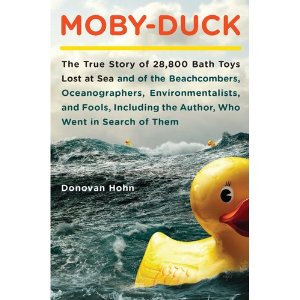
I was in the bookstore the other day looking over the selections of books when I came across a really interesting book of which I had heard nothing so far. But it looked intriguing. It was called Moby-Duck, and as you can see from the picture with this article, it is about a man who goes on a quest to discover what happened to 28,800 bath toys that were lost at sea.
So, why am I talking about this book? Well, think about the story involved in this book. The author, Donovan Hohn, actually put forth a lot of work to find out what happened to these rubber duckies and bath toys after the disappeared. In essence, he went on an epic quest, like the infamous Moby Dick to find what happened to these items. In other words, he went through a hell of a lot of work to get the story that he later transposed to paper so that the rest of us could experience his adventure.
My point is that so few people who write memoirs these days actually go through this amount of work in their adventures before sitting down and writing their “memoirs”. Instead, they suffer one bad relationship, have a bad drinking problem, or do something singularly simple and then try to convince the rest of us that it was actually an epic journey to get from one place to the other. I guess you could say I’m getting a little sick of these kinds of stories that really have no great master journey to them, no odyssey, yet are treated as if they are the epic adventures of a lifetime.
We need more writers out there who are willing to go through a little bit of work to actually come back with the story they need to tell. Instead, we get lazy writers that try to profit off of their innane adventures. And we keep buying this crap because none of us are willing to demand more from the writings that we read.
I felt this way some time ago when I was writing one of my earlier science fiction novels, Thompson’s Bounty, which was about a Coast Guard cutter that gets sent back into the 17th century. When I first started writing the novel, I actually tried to just crank it out without really knowing much about my subject, other than having watched a few old movies about pirates. Then it dawned on me that I wasn’t ready to write the novel. So I contacted the Coast Guard and requested some in person information, which led to going out with a cutter crew for several days over several weekends. It also led to a bunch of long conversations and tours on a Coast Guard base where very knowledgeable people gave me first hand information about the subject I was writing. In the end, I wound up with a book that told the story I wanted to tell instead of one that was peripheral and out of context.
Recently, I’ve been working on a novel that I originally wrote decades ago that takes place in Eastern Europe during the Cold War. Originally, I kind of winged it through the story, but after doing my thesis work on the August Coup in the Soviet Union, I finally had the premise, place and event that really made up the background of the novel I wrote years before. So, I’ve been sitting down and tackling that book from the start, realizing that I now know a lot more information than I first did when I wrote that book back then.
That’s sort of the thing I’m talking about with the kind of reading I’m coming across these days. So much of it can be so much better than it is if authors would take the time to actually do the research that would make their books that much better. I remember a great scene from Billy Crystal’s Throw Mama From the Train when a woman in his creative writing class is describing a submarine story she wrote, and he comments that maybe she should actually know the name of the device she’s describing if she wants to be taken seriously in a story that involves submarines. I take his advice a bit further and say that maybe some time should be given to exploring the lifestyles and events that lead people to the moments that occur in novels so that the reader believes the author is the right person to be writing the story.
We seem to have a lot lazier writers these days with a lot of the stories and memoirs I read, but that doesn’t mean we have to settle for that. We can demand more substance, research and work. We just generally don’t. And we’re the ones who suffer as a result.
E-books Are Pricing Themselves Out of Their Own Market
I don’t know if you’ve noticed this but e-books are becoming a lot more expensive than they were a few months ago. An example is Stieg Larrson’s The Girl With the Dragon Tattoo. Several months ago, it was selling for $5.00. So was its sequel, The Girl Who Played With Fire. Both of them are now priced at $7.99. In those last few months, nothing was added to the books that caused them to be worth more money. As a matter of fact, using the usual models of books, the prices should have gone further down, not up.
At the same time, look at some of the bestselling books also, like Decison Points by George W. Bush. It was $9.99. Now, it’s $14.99. That’s ridiculous. But looking at all books, ALL of the prices are going up.
Basically, Kindle books and e-books in general, were seen as economical and a great deal. Now, they’re not worth the price. They’re really not.
Yes, I own a Kindle, but I think I’m going to stop buying Kindle books for the near future and buy all of my books in hardcover and paperback. The e-book market is pricing itself out of existence.
I’m not sure that’s a great idea, but I guess it’s their choice to make.
Is it Possible for a Freelance Writer to Make it Today?
This is one of those questions that has been going through my head lately. I’m one of those enigmas of writers who has written a lot of stuff, yet never really managed to break into a writing career. At one point, I had a good start, and then I just stopped, giving up writing, before realizing what a mistake I made. And then I realized I wanted it back more than anything. But I did it at the strangest time, when the Internet was just coming around, and suddenly the old way of doing things was no longer the way things were done. Now, I’m an overwritten writer who has pretty much nothing of a writing career, realizing that I’m probably never going to have one.
So, like most struggling writers, I tried to do the whole e-book thing, and I’m averaging about $25 every three months of sales. Not exactly the illustrious career to get one away from one’s normal day job. And when one has all desires to be a full-time writer, that gets extremely frustrating.
So I find myself wondering if there’s really a future for an unpublished writer who doesn’t just get lucky or happen to be in the right writing school at the right time. Again, being lucky.
I put my book of poetry on Amazon, and it’s done absolutely no sales. I’m not a salesperson, so I really don’t have the ability to figure out what one has to do to interest anyone in buying one’s writing. So the only other option is to just release all of my writing for free, which then still leaves me with the realization that that probably doesn’t make a difference either. People are less willing to read your stuff for free than they are if they actually went to buy it. Sadly, that’s kind of true. They find it has less value if you tried to give it away, so even if it was Hemingway trying to get bullfighters to read his latest book, it wouldn’t make a difference because the stigma is already there because of the whole free thing.
Which leaves me with the wonder if I should just give it all up. My career is going nowhere, and I honestly don’t anticipate it going anywhere in the near future. The only reason I haven’t given it up already is because I really don’t have anything else in the wings to replace it. My job isn’t going to make me happy. Watching TV isn’t going to give me any satisfaction in life. I don’t date and probably couldn’t recognize a woman if I ever saw one (as it’s been so long). Which leaves me with something I’ve been talking about for some time now. Nothing. Writing was pretty much it. And without it, I’m not sure I really have a reason for sticking around anymore. I mean, what’s the point?
Taking a Break from Writing to Talk about Writing
As most people who know me already know, I’m in the middle of writing a new novel. As this is November, and the start of National Novel Writing Month, I’m sure a lot of people who wouldn’t normally say so can say that they are also writing a new novel. And that’s great. But I’m not talking about them. I’m talking about me.
This isn’t my first novel, nor do I believe it will be my last. I’ve written 13 (or 12, depending on whether we use new or old math) before, and I’ve been generally happy with the novels I’ve written. For me, each novel is a new adventure into the whole discipline, and it’s mainly that I want to talk about. Because I think people are kind of missing the point of writing a novel in the first place.
Over the last few years, there have been quite a few novels written by celebrities who don’t normally write novels. Mostly, they have been quick turnarounds that went from conception to print in the time it takes to make a press release. As a result, quite a few of them have been dreary, dismal affairs, and mostly they’ve been non-events, much like the television show of the same name. Publishers realize they can make a quick buck by having a celebrity announce a novel and then they’ll publish it and hope that that celebrity’s fans rush out and buy it, thinking that because they like how someone acts, models or sings that they’ll also like how they write.
Writing isn’t normally like that. Even people who are really good at writing short subjects are not very good at writing novels. Yet, everyone who has a bit of education, or has written something short, is convinced that he or she is also going to be a great novelist. My own history is filled with the numbers of people who all thought this, and as I have been writing most of my life, it has always been really annoying, irritating and frustrating.
I’ll let you in on a little secret. Not everyone can write a novel. Nor is everyone really supposed to. Yet, quite a few people are convinced that they have something to say, at least until they sit down and actually try to say it. Then they flounder for a while until they either give up or churn out a piece of crap that they should have put back into a drawer the second it was completed.
Having said that, I would also like to say that writing a novel is something everyone should actually try. I know that sounds a bit contrary to what I was saying before, but I really believe this. Not because everyone should be published, but because I think writing is a great exercise in expanding one’s own capability of communicating.
I see the process of writing novels as an education. While I’ve written tons and tons of short fiction, I think my real growth of a writer has come when I have actually sat down and tried to write a novel. My first novel was an exercise in frustration, as I lost the last 80 or so pages of it due to a fluke accident and had to rewrite the ending to what I thought was the greatest piece of work I had written to that date. I almost gave up writing that day. But I sat down and finished it again.
The second novel was probably the hardest novel I ever wrote because I kept telling myself over and over (while writing it) that book number one was a fluke, that I was a fraud, that I really shouldn’t be writing another novel. But I finished that second novel, and it told me that I was capable of doing more than one. The success of that moment is hard to describe unless you’ve experienced it yourself.
The third novel was my first attempt at writing what I thought was an “important” nove. I had finished my suspense novel and my science fiction/psychological novel, and now I was going to sit down and write something serious. Never happened. My third novel was in fact my fourth novel, because the third one was tossed into a drawer where it lives to this day. In the end, I wrote a thriller, and it was definitely the right choice for number three.
From that point on, I started to push out novels at one and two a year, no longer thinking about whether I should write, but when I should. I continued on this path until I had quite a few novels under my belt. A couple were published, but mostly the act of writing was more important to me than the act of publishing.
And then I stopped writing. I had been dating a woman who had a degree in psychology and was someone I considered much smarter than I would ever be. At some point, she criticized my writing, and I realized that if I couldn’t please her with my writing that it wasn’t worth my time. She told me she was going to be writing her “novel” one day, and even though she never wrote word one, I was always convinced that of the two of us, she was the one who deserved the writing accolades.
And then she dumped me. For several years, I kind of floundered in my inability to write another word. And then I started writing plays because someone asked me to. And I wrote a lot of them. And then they started being performed, and I discovered a humorous talent I didn’t realize I had. In the beginning, I was writing a lot of humor as a balance to the anger I was feeling about how that relationship had betrayed me. And then I started to heal, and the humor continued, so I kept writing more. And people liked it.
Then I sat down and wrote my next novel, which was my first comedy. It took me five years, and in the end, I had what I still consider to be my greatest achievement in writing.
After that, I didn’t know what to do, so I sat down and finished a novel I had started many years before. And it was a very good one.
Which brought me to NaNoWriMo, which is a project where you write a novel in one month. I had this idea for a novel running through my head for years now, and I just never got it started. But then the contest came around, and I decided, it’s time to be the writer I know that I am.
So I started writing, and it’s still building upon itself today. I’m 27 pages into a novel that I consider quite important to my career of writing.
Because that’s the thing I hinted at in the beginning. Each novel is an examination of the writing I am capable of doing today. And that’s what a writer should be doing with his or her writing with each and every project. Sure, we can write drivel if we want, but a writer should sit down and try to reinvent his or her own writing each time a new project begins. The masters of writing reinvented the writing process each time they brought out a new book, and we study them to find out what they were thinking. That’s what a writer should be doing today…reinventing the very nature of writing. Each time you sit down and write, you should always be thinking, “I couldn’t have written that novel a year ago, but I sure can today.” And then ten years from now, you will be writing things you never could have written today.
That’s the reward of writing and one always worth striving for. Let the celebrities write their crap. The rest of us should be struggling to put forth the very best we can of ourselves. To do any less is a waste of time and a failure for the future novel one might one day be able to write, if only able to take that first step today.