Category Archives: Relationships

Tomorrow’s Protests May Not Be So Easily Contained…Or Ignored

Not so long ago, when the Occupy Wall Street protests were happening, it was suggested by not a few people that the movement may have more legs than people expected, meaning that the protests had the potential of spiraling out of control and gaining steam and momentum. But elections happened, and people thought they were getting their concerns addressed in that process. And then the protest was quickly forgotten, co-opted by other movements (like conspiracy theorists) and quickly shelved.

A little time before that, we had the infamous Rodney King riots, which threatened to spiral out of control, as the protests moved from Los Angeles to places like San Francisco and Chicago. But they eventually died out, little was done to change the reasons for the riots, and we all went back to our usual way of doing things.

There’s a certain Mancur Olson (The Logic of Collective Action) and Piven/Cloward (Poor Peoples’ Movements) going on here in which people tend to rally together long enough to get some kind of payout and then quit the movement which has always managed to keep the U.S. from turning into something it keeps kicking the can down an uncertain road. You see, eventually we’re going to hit a point where people aren’t going to just give up on the realization that they can’t get what they want and then go home, but that eventually they’re going to hit a point where the spiral unravels the whole ball of yarn.

Fortunately, we’ve just never reached that point.

Yesterday, Baltimore turned into one of those spirals again, where fed up people took to the streets to protest another police-caused tragedy. People protested, others rioted, police cars burned, and we’re shaking our heads yet again, wondering how something like this could possibly happen. And instead of actually doing something to fix the situation, we’re kicking the can down the road again, hoping that there’s still some road to travel before we come to some kind of impenetrable wall.

What we should be asking ourselves is how much more can the institution stand before we can’t return back to normality again. Unfortunately, no one actually has that answers, and even worse, no one is even paying any attention to the possibility that someone needs to be asking that question. If you look to previous civilizations that had events spin out of control, what has generally been the spark that has lit the fire is the ability for the message to travel from one powder keg to the next. In the U.S. history examples, we’ve been lucky by the mere fact that most incidents of powder kegs going up have been contained in geographical areas that did not spread to others. The Rodney King example was probably one of our closest incidents of spilling over because it erupted in numerous areas before quickly being contained. Occupy Wall Street is also similar in the location problem, but it was quickly contained and forgotten because other things happened immediately after.

What people aren’t acknowledging is that the problems causing many of these powder keg issues are identical, and they haven’t changed any over the years, meaning that the chances of a multiple powder keg incident occurring is not a matter of “if” but a matter of “when”. Racism is still an issue that has never been dealt with. Income equality is an issue we’re never going to deal with. As long as we keep sweeping these types of issues under the rug, they’re going to explode on us and when that happens, there’s no amount of “clear thinking” that is going to cause those kegs to return back to normal.

The French Revolution should have been an example we held close to the chest because it showed us that when the incidents finally erupt, they don’t end until people who are angry enact some type of violence, or are killed themselves. Since then, we’ve had world revolutions happen over and over, where the violence has been absolute and devastating. What did we learn from ANY of these circumstances? People are real shit heads to each other when out of control and when given the opportunity, people will do horrible things to each other before common sense prevails (if it ever does).

So, how about dealing with some of these issues now, instead of waiting until after we tally up how many horrific things we can do to people we don’t like for “reasons”?


One of the dilemmas of trying to be well read

First off, this isn’t a post that’s designed to glorify how much I’ve read. Posts like that have a habit of being a bit condescending, boring and painful to get through. Yes, I’ve read a lot of stuff. But so have so many other people. This post really isn’t about that.

What this post is about is one of the consequences of reading a lot of stuff. As a social creature, I really love to share great literature and nonfiction with other people. The problem is: Most people don’t care.

An example: I just finished reading Men Explain Things to Me by Rebecca Solnit, a brilliant writer and thinker who also wrote A Paradise Built in Hell, which I love for its alternative approach of explaining history and the ramifications that occur during history. Both books are chalked full of history, so because I work with a couple of history people, I thought about recommending those books to them. The response I generally received was a blank stare, almost an admission of “your review to me didn’t convince me that I should waste my time reading what you were talking about.”

And that’s the problem right there. Over the years, as I’ve read more and more brilliant stuff, I’ve often recommended it to other people. What I’ve discovered is that so few people take up the gauntlet and decide to read those books. Instead, they listen to your explanation of that book and then because you’ve explained everything about it to them, they decide not to read it, possibly thinking that they’ve already absorbed the knowledge of that book by the mere moment you spent explaining it to them. And then they go on with their lives, only reading the things they find significant.

This reminded me of two things. First, Rebecca Solnit’s book Men Explain Things to Me, in which she details an encounter she had with a boorish man who found out she was a writer and had written on a particular obscure topic so spent the next hour or so telling her she had to read this book about her subject if she was ever going to understand it like he did. Turns out, she wrote that book he was talking about, and as men behave like men, he took forever to acknowledge that once finding out, and then still managed to talk down to her regardless of realizing that fact.

Second, the concept of knowledge and literature requires a modern scholar to actually read the texts himself or herself and not just the cliff notes version (and especially not just the conversation about it from someone who read it instead). Imagine discussing Plato with someone who has never read it but watched a lecture on Plato once. That works great if neither of you have read it (you can be clueless together) but when you’re the one who has read him, discussing it with someone who has no intention of reading it is a complete waste of time.

That’s how I feel when I talk about literature with people and discover that they’re not going to read it, condemning it because they didn’t read it first. I talked about Solnit with one person and actually saw his face turn negative, like he was disgusted by the fact that he’d never heard of her before, and thus, she was unimportant in his mind. That’s the kind of emotional response I receive a lot when I talk about literature that is important yet obscure.

It’s almost gotten to the point where I may not discuss literature with people any more. I remember bringing up Haruki Murakami to one colleague recently and received that “I haven’t read him, so obviously he’s not significant” response. Keep in mind, Murakami is probably among the most respected authors living in the world today. But because he’s not “known” to some individual, I end up having to explain his significance, which finally ends with a sense of “well, if I should find myself on a deserted island, am already bored and his book is all that’s there, I might read it.” Again, I find myself thinking, screw you and I hope you remain uneducated for life. But fortunately, I’m not that elitist. Well, not after I’ve had my first morning diet Dr Pepper.

The Importance of Dates on Modern Civilization

Yesterday was the official celebration of the late Dr. Martin Luther King, Jr.’s birthday. If you didn’t know any better, you might think that January 19 (yesterday) was the day he was born. He wasn’t. He was born on January 15, 1929. We celebrate it on the 19th because, well, because that’s when we decided to start celebrating it. During the first President Bush’s term, the decision was made to celebrate his birthday on the third Monday of January. The official day because a more convenient day, and that’s why we celebrate it when we do.

The same thing happened to two other U.S. leaders, Presidents Washington and Lincoln. The two were celebrated on their birthdays in February but because they were so close together (a few weeks apart, separated by Valentine’s Day), the decision was made to celebrate Presidents’ Day instead, incorporating both holidays into one on a date that was significant for neither one. Welcome to the way we do things in America.

So, why do we focus on the days anyway? Let’s just put aside the fact that we don’t actually celebrate the specific days, but celebrate somewhere near those days. The question still remains. Why do we acknowledge them in the first place?

You could say that it has something to do with paying respect to our elders, or even our founders. But if that was so, why aren’t we celebrating Jefferson, Adams, Monroe, Henry Ford, Rockefeller and/or Steve Jobs/Bill Gates? I mean, there is no shortage of people who probably deserve some mention, yet we focus only on very specific people and, if lucky, add someone to that list after decades of struggle over whether or not we should be more inclusive.

Perhaps an answer to this question may require us to step away from U.S. recognitions and move towards some of the memorials that happen in other countries and civilizations. In Southeast Asia, quite often certain events in history are memorialized and whenever those dates come around each year, all sorts of future events occur that can sometimes be disruptive to the people living in our time. An example is a peoples’ movement that occurred in South Korea, where protesters were killed on a particular date during an uprising in the 1960s. Whenever that year came around, common citizens would rise up and riot again, almost as if remembrance was a signal to regurgitate protest movements all over again. And then a year later, if the police struck hard enough the year before, those subsequent protests would then be added to he common memory of something to memorialize each year going forward. Kind of cool if you’re a protesting civilian, but must have been hell on the people trying to run a stable government.

So why do we memorialize in the first place? What purpose does it serve? Does remembering bring happiness? If you look at something like the Vietnam Memorials that exist in numerous states and at the national level, happiness is generally not the feeling you get from such memorials. Sadness and regret is often the reaction. But I would say that for the Vietnam experience, perhaps sadness and regret might not be a bad thing because at least then it causes people to think twice before making the same type of mistake again. That would be great if that’s what actually happens. But unfortunately, that’s not what happens. As a matter of fact, I believe that the people who should be focusing on the events are the ones who tend to ignore them most, basically putting on blinders and going forward and doing the same things next time around. It’s like the protest spheres they set up at political campaigns. The people who protested were hoarded into locations that were designed to be out of sight and ear of the people attending the functions, so that the ones listening to the politicians were oblivious to the protests of people who really wanted the people making decisions to be aware of. For a country that modeled itself on free speech, we created a dynamic that did everything possible to avoid any kind of adverse conversation, meaning that people who made decisions never had to listen to anyone who might actually have a problem with those decisions.

Which brings me back to the idea of certain days celebrating certain things, especially in a way that avoids any conversation about those things. Columbus Day is an example of one of those days that could have led to a lot of great conversations about some of the atrocities carried out in our name by our previous generations. But once the conversation started becoming difficult, it stopped being a national holiday, and now no one talks about those instances because there’s no official day that causes us to have to remember what we did. Sure, a few press junkets attempt to broach the subject, but more often than not, the conversation is flat, and we move onto the next holiday celebration quickly so we don’t have to deal with the consequences of the things we might have done. Instead, we’ll go to some foreign soil one day in the future (or maybe just a few years ago), attempt some modern day version of Manifest Destiny, and then claim that we shouldn’t be accountable for our bad actions because there was nothing in our past that should have taught us otherwise.

In other words, my fear is that our national remembrances are no longer being used for the purposes they should have been utilized, and instead we’re coaxing such days with ways to bring profit to our manufacturing and sales sectors. Instead of looking at Martin Luther King, Jr.’s birthday as a time to reflect on how far the civil rights movement went and how much further it needs to go, some company will try to sell us fried chicken, or on President’s Day: beds, or whatever fancies us, and in the end we’re going to learn very little about the mistakes we’ve made and how we can avoid making them in the future.

One day, after I’m famous and have cured the ills of our society, I hope they celebrate my birthday. Unfortunately, it occurred on Lincoln’s birthday, so they’ll probably never celebrate mine. And knowing my luck, I’ll end up dying on the same day as Kurt Cobane or some other known figure, and that day will forever be linked to that individual as well. If I’m truly lucky, people will remember me and some manufacturer will hopefully sell something people can use on that day, like breath mints or condoms. After all, that’s what helps one’s legacy remain within the hearts of people for generations to come.

Paying for school via a career in porn

One of the big “stories” this week has been a woman who attends Duke University, who was outed as a porn star by one of the guys who attends university with her. To me, it was only a matter of time, but she decided to “out” herself, by revealing her porn name, which happens to be Belle Knox. Personally, I’ve never heard the name before, and as much as I’d like to say it’s because I never look at porn, to be honest, I just never heard that porn name before.

Part of the effort she is currently going through is to get on top of the story, so that she can tell her narrative, rather than have the media drive the narrative for her. Just last week, there was a story through the media of the woman who suffered the scandal with Anthony Weiner. She decided she needed to somehow become involved in the story of this woman who was now being outed at Duke University.

Now, this is one of those stories that can attract all sorts of sensationalism, but that’s not why I wish to discuss it. Instead, what interested me about this story was the ramifications involved in a woman’s desire to utilize a pornography career in order to pay for her education. It’s easy to take an overly moralistic perspective and condemn such actions, as well as it’s just as easy to take the pro-prurient perspective and state unequivocally that what someone does with his or her body is really his or her own affair, and who cares. Instead, like I indicated, I would like to talk about the ramifications.

For that, I’ll bring up the case of Sasha Grey, a porn star who attempted to leave the business and become a non-porn actress. All fine. But then she was booked to give readings to children, and suddenly the moral majority of America went up in flames, believing that if a porn star should ever read children’s books to children, somehow that would cause the world to explode. Or whatever was their concern.

But getting back to the original issue, which is a porn actress being outed for her extracurricular activities that paid for her education, I find myself going back to my own experience in college, where I started to discover how many of the women around me were actually paying their bills through the adult entertainment industry. Some were strippers at night clubs, some were professional dominants who got paid to tie up guys and sexual arouse them, while others were making pornography, and a number were working as call girls to afford their tuition and living expenses. If it was just one woman or two, I could see it being anecdotal, but it was extremely prevalent during just a few years back when I was going to college.

What I think a lot of people don’t understand is that the behavior is not that unusual. Yet, what seems to be the situation here is that people are under the impression that somehow this is some kind of outlier situation. What they don’t want to believe is that there might be a lot of “normal” women out there who are funding their education through prurient methods. It’s nice to believe that everyone is following the Biblical moral standards they want to push forth, but in reality, people are living in the real world, doing real world things, and sometimes those things involve sexual behavior.

The problem is that people who tend to be as guilty as everyone else, as the purveyors of pornography and adult services is far greater than anyone wants to admit (it wouldn’t be that profitable if it wasn’t), really want to believe the reality is much different than it actually is. I’ll give you a simple example that people don’t even address, and that’s something as simple as literature. As a fiction writer, I find the market for my fiction to be very limiting and very difficult to break into. However, if I was to publish a book of erotica instead of espionage fiction, statistics have shown that even if the writing was atrociously bad in comparison to my normal writing, my sales would go through the roof because of the genre alone. Someone’s buying all of this stuff, and it’s not some strange people living in caves (although there’s nothing wrong with you if you do live in a cave…just saying).

Which brings me back to Belle Knox. I don’t know anything about her. She could be a great person. She could be better with children than I am (which isn’t that hard to be, by the way). Or she could hate kids. Who knows? And really, who cares? What’s being thrown out there is the idea that because she did pornography that somehow she’s going to be a disruptive influence on “normal” people. Really? How is that? Does someone who makes his or her money from pornography somehow become delinquent around other people now, constantly trying to force them into sexual situations. Or perhaps because someone once had sex for money, that person is now likely to be a bank robber who might gun down a school bus filled with penguins. I’ve never really understood the connection.

What I can ascertain is that people who are highly religious might not like the idea that someone who lives a life of pornography might not have a lot of room for an institution that likes to put people into categories of good and bad. To be honest, I live a more chaste life than a priest (one actually doing what he’s supposed to be doing), but I’ve never felt the need to point fingers at other people and demand they live a similar kind of existence. Back in my day, I was a lot different than I am today, but I would like to think that responsible people wouldn’t have condemned me back then for exploring life and its many nuances any more than I have any intentions of doing the same kinds of negativity to others today.

What really saddens me (and you’d have to read the woman’s article to understand where I’m coming from), but that woman has now been forced into a corner where she feels the needs to condemn people who consume pornography as being just as bad. I don’t even think she realizes that her article makes the same mistake that those make about her. Unless she’s ashamed of her career in pornography, then there should be absolutely no negativity waged towards the activity or those who participate (and consume) it. Unfortunately, it’s very easy to get pulled into that sort of thing.

One of my books actually addresses this issue at length, but does it through humor. My book The Ameriad, has a section that redefines Plato’s three metals by explaining how the perfect life is that that involves pornography, the creators of pornography and those who consume it. By exploring as much of carnal desires as possible, one is capable of achieving “bowlness” which is a state of having a completely filled (and full) life. Yes, it was a running joke through the book, but there was a point to it, basically to show how our values are set by those who set values, not by any higher power that hasn’t actually taken the opportunity to explain it to the rest of us stupid people. Well, there are a few “sources” of that explanation in the multiple religions out there, so I won’t quibble over that. What I will quibble with is the idea that no two segments of the same religion can agree with each other what their official texts even mean, and that should cause someone to at least think about it. Or not.

Either way, I wish this woman well, and I hope that she finds some peace while at Duke (or after deciding to leave it, hopefully by her own choice and not through intimidation). The life she led may have been horrible, enjoyable, unfeeling, or whatever. But that life she led shouldn’t have to dictate how she is forced to spend the rest of her life, or even how she has to feel about waking up as herself in the morning. Who she is right now is how she should be treated right now, and unless she killed people, kicked a puppy or hated stuffed animals, pretty much most things can be forgiven, forgotten or ignored.

What I Talk About When I Talk About Drinking

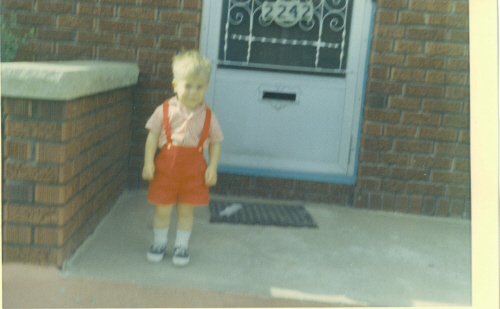
This is me during my drinking days in the Army

During the late 1980s, going into the 1990s, I was in the U.S. Army, and all things considered, I probably had somewhat of a drinking problem. This was the latter part of the era of drinking before people started getting serious about the ramifications of the problem, meaning that we started enforcing drunk driving laws (unlike the past where we swept things under the rug) and Alcohol Anonymous was no longer just a light at the end of tunnels that no one would ever travel through. To understand my perspective on the whole situation, let’s visit the late 1980s and let me share a bit of a story with you.

You see, back then I drank a lot. Every night. It was almost a ritual of service at that time. Work hard during the day and then get plastered at night. Wake up the next day, run PT (most likely throwing up alongside the other soldiers who were all suffering hangovers) and then by the time evening came along, we’d go out and do it again. THAT was pretty much a part of the military lifestyle back then.

I think the apex of this whole situation occurred when a colleague and I decided to take a trip to the Canary Islands. On the plane, we both got plastered, and then when we got to the hotel, we got smashed. And then for the next week, well, I know I had a really good time because I have pictures of me and a lot of very beautiful women cavorting together, but to be honest, I have figments of memories of what actually happened during that week long trip. All I remember was being greeted at the airport on the way back by my fellow GIs, and they had brought beer with them, so we got obliterated on the trip home, too.

A couple of weeks later, I was driving my car back to post (in Germany), and I was extremely inebriated. Some friends were in the car behind me, and they drove up behind me, hitting my bumper and then trying to push my car forward with their own acceleration. I was at an intersection, and as they pushed me forward, or tried to do so as I held down on the brakes, I suddenly sobered up. I was probably still quite drunk, but right at that moment, it suddenly dawned on me that there were other people on this street, that if I just gave in to the fun, who knows what damage (or lives) could have been affected.

Driving home slowly (the other car rushed by me and continued on towards the post), something came over me that made me realize something was wrong. I just was too drunk to really figure out what it was.

The next day was Saturday, so I didn’t have to be at work for a few days, but instead of my usual routine, I decided to skip the club that night. Instead, I sat at home and read a book. My fellow party buddies thought something was wrong, but the next night, I skipped partying again and did something else (don’t remember what it was at the moment but I do know it didn’t involve drinking).

A few days later, I sat down at my computer (one of the early ones…this was the 1980s) and started writing my first novel. In case you’re wondering, it was Innocent Until Proven Guilty, and it was the first work I completed where there was absolutely no alcohol involved. Shortly after that, I began work on my second novel, Loser.

I was reading an article today in Salon, about how alcohol is targeted at women through intricate manipulation and advertising, but I’ll have to be honest that when I was drinking, it just seemed like the thing to be doing. There were no great football beer ads that i remember during this time. Sure, there was peer pressure, but I’ve never been all that susceptible to that sort of thing. For me, all there ever really was involved the “you have to be old enough to drink it” mindset so that when I hit that age, I started imbibing because it felt like a chronological ritual of growing up.

I’ll admit that when I quit partying, it wasn’t the end of alcohol for me; that would come years later, but it did change things for me because that pleasure I received of getting smashed no longer seemed to be of interest to me.

What used to fascinate me was how many of those tests in books I would take that indicated I was most definitely an alcoholic. Do you often drink to excess? I sure did. Do you wake up the next day and not remember moments of the night before? I woke up one morning and couldn’t remember much of what happened the entire week before. Do you ever blackout? When didn’t I? Do you often crave alcohol? And that’s kind of where it breaks off for me, because to be honest, I’ve never craved alcohol. Actually, kind of hate it the more I think about it. I liked the buzz I got, but to be honest, I wasn’t all that excited about the buzz either. I drank back then because it was something to do. I really didn’t like my life back then, and it seemed like a good crutch to fill in the gaps of what was going on and not going on. I’m one of those kinds of guys who never really has romantic relationships, even when I was in the middle of a romantic relationship (if that makes sense). So, drinking filled a void that I basically needed to fill with something.

Fortunately, writing kind of fills that void now. The “thrill” of drinking was the ability to turn off my mind and allow this other sense to overwhelm me. Believe it or not, I get that (and more) from writing. I take myself to another world, and I get to live in that world during the time that I’m writing. It helps me to forget that my current life kind of sucks. Sorry, but it does. I still don’t have romantic relationships, and that part of me has never changed. So, I spend a great deal of time trying to find some way of filling the gaps that basically never get filled.

When I got out of the service, I didn’t quit drinking completely, although I became more of a social drinker. My friend Kat would drink from time to time, so I would drink with her. When we parted ways, I basically just stopped drinking completely because like I said before, it never really gave me anything that I was lacking anywhere else.

And that’s been years for me now. A friend of mine visited me for a week a few weeks ago, and when we were at the store shopping for groceries, she asked me if I wanted any alcohol, and it never even crossed my mind that I might be interested. Alcohol has no value in my daily life, and it’s not something I seek out. At one time, I was going to start drinking red wine, but only because I heard that it had certain heart benefits. Never did get around to buying any though.

So I guess what I’m trying to say is that I suspect that alcohol serves a purpose for everyone that consumes it, and what’s important is finding if that purpose is strong enough and whether or not it can be replaced with something else. For me, writing served as my alternative. But then, I’ve never been addicted, even though I can’t even begin to tell you how many people over the years said I must have a problem because of how I answered some of those questions. One person I know who is an alcoholic thinks I have some kind of strength to stop as I did, but I never saw it that way. I have my own vices and my own things that need to be dealt with (we all do). Alcohol just doesn’t seem to be one of them. Others, unfortunately, can’t say the same thing.


When Best Friends Aren’t Best Friends Any More

lilduane1
Back when things were a lot different

I’m sure my story isn’t that different from everyone else’s story. Most of us grew up with a best friend or two (over the years) and then life may or may not kept us together. If you watch a lot of the movies that get released starring the usual suspects of male friends, you get the impression that these friends stay close friends forever, basically until they reach middle age and go through their middle age crisis moments together.

Unfortunately for me, that didn’t happen. And strangely enough I kind of wish it did. Let me explain.

I’ve had two really close best friends over the years. One was my friend Roland, who I believe I met when we were both about two or three years old. We lived across the way from each other in a low-income apartment complex, and my first memory of Roland was a fight we had where both of us went home crying to our parents. Immediately after that, I remember his mom and my mom conducting some kind of UN conference where the two of us were forced to become friends again. We remained friends from that moment forward, proving that, yes, the UN sometimes DOES work.

Our friendship lasted most of our childhood. Both of us bought the same blue Schwinn bicycle and we rode miles and miles on those things together. It was not unusual for the two of us to race 26 miles down the beach to Redondo Beach, California and then back to Santa Monica. For us, the enjoyment was the journey of traveling down the bicycle trail together, back in the days when you could actually ride down those paths without running over a million girls on roller skates.

Some of my most memorable moments were with Roland, including when we would run into Dom Deluise at the local department stores and then at McDonalds shortly after. We explored the world together and learned about the world as a shared experience only friends can truly appreciate.

When I was a young teenager, my mom died after a horrible illness that slowly drained her of life. When she died in the hospital, I remember calling Roland because he was the only person I wanted to talk to. Shortly after, he showed up with his mom and dad to the hospital, making sure that I wasn’t alone on that horrible day.

Soon after, I moved in with my older sister and her husband, which forced me to move away from Santa Monica. Roland and I kept in touch by phone, and every now and then I’d figure out a way to take the bus for a few hour trip to visit him, and sometimes he’d do the same to come to me. But as we were further and further away, we sort of drifted apart until we stopped calling and then never saw each other again. It’s one of those things I regretted deeply over the years, but life takes you where life takes you.

In Moorpark, my new home, I made friends with the person who was to become my next best friend, Ken. While we didn’t have the history that Roland and I had, we quickly built a friendship and quickly made up for the lack of history by inventing all sorts of adventures together. One of my favorite moments in high school was when the two of us were taking a Spanish class, and we were the two students who had already finished alll the lower level Spanish stuff so we were kind of put into a corner by ourselves to study on our own because they didn’t have a high enough level class for us to take. Because we were always together, we made a lot of noise and had a lot of fun. So the teacher felt she had to separate us. Therefore, we did what any normal duo of friends would do: We invented a sign language that allowed us to communicate from across the room from each other. We learned it quickly and immediately really pissed off the teacher who decided she wasn’t going to win this battle, so she let us sit next to each other again and never tried to separate us again.

A few years later, after graduation, I joined the Army and Ken joined the Air Force. At one point, we were both in Germany at the same time, so I decided to hop into my Volkswagon Scirroco (sic), pick up Ken and drive the two of us to Paris, France. It was a wild, fun adventure that involved some young girl we found to help us find a hotel (because neither of us could speak French) who the hotel owner thought was a prostitute because she was negotiating the room for two American GIs (and then left with a smile right after she secured us the room, which caused the old woman working the hotel to suddenly realize she had played the wrong cards in her assumptions).

That was pretty much our last get together. Ken ended up being accepted to the Air Force Academy and is a colonel today, probably going to be a general one of these days. I wish him well, but I regret that our friendship faded and we really don’t talk any more.

Strangely enough, both Roland and Ken have connected with me through Facebook, so every now and then I see what’s going on in their lives, which when I think about it is actually kind of sad because at one time I was very close to both of them, and like that one hit wonder song “now they’re just somebody that I used to know”.

Weirdly enough, when I made contact with them on Facebook, I immediately had this feeling that I had found a long, lost friend and then things were going to be great again. And we rarely even communicate, which forces the “You Can’t Go Home Again” by Thomas Wolfe to play through in my head (which is funny because it’s probably one of the most often quoted titles of a book that people have never actually read themselves, so when they pretend to have read it, I always say “Stop Twampling!” just to see if there’s a reaction, which when there’s none I know they’re bullshitting me about having read it). Wolfe’s idea is somewhat true, and you never really understand it until the events play out that show you how true it really is. I read that book a decade or so ago, yet until I made contact with those two former friends, I never made the connection to what he was truly saying.

Father’s Day is just another day

The only father I've ever known
The only father I’ve ever known

I’m one of those people who isn’t a real fan of holidays, especially specifically themed ones, like Valentine’s Day, which for someone who has been single his whole life and usually not dating, it’s not the greatest day ever. The other day is the one that’s right around the corner: Father’s Day.

I was listening to the local radio station this morning, and they decided to dedicate all songs to celebrating dad, so you were asked to phone them and find what song best exemplifies how much you love your father and all of the great things he did for you. So, for most of the morning, we got all sorts of play throughs of Eye of the Tiger, and every sappy song you can think of that has some meaning of “hey, Dad was a great guy.”

For me, dad wasn’t a great guy. No, he never beat me or anything like that. He couldn’t, because he was never around to do it. When I was an infant, he decided that the responsibility of having a kid was too much for him, so he skipped town, found some other woman to shack up with and then started a brand new family. As for me, I never saw him again, so I don’t even remember ever seeing him in the first place.

So, whenever Father’s Day rolls around, all I can think of is how this turd of a person helped bring me to life and then abandoned both me and his wife, figuring a family was way too much responsibility and not worthy of his time. I learned to play catch from a friend, so who sort of learned from his dad before playing with me. That infamous Hallmark television commercial of dad playing catch with his son never occurred in my family. There was no dad to pass me the car keys on the night of the prom, right before he gave me that nervous lecture of how a man should act when alone with a girl for the first time. When I was trying to decide between West Point and Annapolis, there was no long conversation with my dad about how one was better than the other, or that he was proud I was going to be going to at least one of them.

So, when they start their big shin digs about Father’s Day, I really have nothing to say. I’ve never been a father myself, so I’m not a part of that tradition from the other side either. Basically, it becomes one of those days that’s just like every other day, except everyone is running around celebrating some strange custom that I will never understand.

We’re halfway through 2013 and racists are still living in the 1950s

Cheerio’s did an interesting thing the other day. They created an ad where a white woman and her black child are having breakfast, and the kid goes to wake up dad, who is black. There’s no “hey, look, we’re doing an interracial thing here” commentary. It just exists as one of those “hey, life is life, so deal with it.”


Of course, the world couldn’t just leave it at that. As soon as Cheerio’s ran the ad, suddenly all sorts of uptight people had to chime in and make it out as if there’s something wrong because an interracial couple eats cereal in the morning. Imagine that.

What gets me is that it’s been 50 years since the very first interracial kiss (taking place in geek history between Captain James T. Kirk and Lieutenant Uhura). You’d think that we’ve come so far since then, and we should be at a point where we just laugh at this sort of thing. But there are people in America claiming that this is the worst thing ever. Looking at the Youtube stats, 21,673 people liked the video, while 1.453 disliked it. We’re talking about 6.3 percent of people actually registering that they don’t like whites and blacks being depicted as in the same family. The only positive is that 6.3 percent is pretty small (for example: on You Tube, 50 percent of responders disliked A Tribute to Jar Jar Binks. But that’s a whole other issue as 50 percent liking Jar Jar is downright scary to me. But I digress….

What’s of more significance is that there are still people who have a problem with interracial relationships. When General Mills aired the ad, there was a constituted effort to remove hate responses from those who immediately took offense at the approach. What was surprising is that with such a controversial topic (which in my opinion should NEVER have been controversial), General Mills stuck to their guns and refused to back down to any outlash against their message.

It should be interesting to see if this becomes more than just an outlier conversation piece, or if it leads to something that might possibly bring the US into the 20th century (a century late, but at least it’s a start).

Yet another job slips through my fingers

I applied for a job where I currently work. I was totally qualified for it, and I would have done a great job with it. Made it to the second interview. And the interview went great. The next week, I was informed that I was “second” in the running, so the job went to someone else.

I can’t tell you how many times I’ve heard this sort of thing in my life. I keep applying for things, and way too often end up being the “other” person behind the person who actually gets the job. It doesn’t matter how much education I have, how smart I really am, how innovative I am, what skills I hav e, or whatever. I keep coming up as the second in line for whatever thing I’m seeking. I have news for those who aren’t following: Second place doesn’t get a job or anything else. You get to start over and look forward to coming in second some other time.

I can’t even begin to tell you how many times this keeps happening in my life. And it’s not even jobs. It happened with my writing career where I came so close to finally making it and then something gave me that second place treatment again. An example is that years ago I landed a very well known literary agent who ended up in a car accident soon after signing me on as a client. She had a brain injury where she basically didn’t even remember I was her client. I mean, come on. This shit isn’t supposed to happen outside of bad television shows. I had a second agent years later who felt he could sell my espionage fiction. Then he called me to inform me that he was going to be representing some other writer who would take too much time, so as suspected, I got dumped.

And I am getting older (had a birthday a few days ago) that reminds me that I’m probably less desirable as a future employee than all of the younger people coming out of school.

So, without sounding dramatic or whatever, I give up. It’s not worth trying any more.

Am I Wasting My Time With This Blog (does anyone even read it)?

For some time now, I’ve been wondering how many people actually read my blog, if any. I mean, I know a few people read it, and those are mainly my close friends. But other than a half dozen, I’m not sure what I’m doing here really equates to a useful use of my time. Considering I’ve been doing this blog for years now, one would think that it would have received a bit better of a reception than absolutely little to none.

Strangely enough, I get lots of responses to my posts. But they’re all from spammers. And I mean A LOT of responses from spammers who are basically trying to sell their stuff, attempt to steal my ID, or whatever else they’re doing when they attempt to get people to click on their useless links.

But not so many people. Every now and then I’ll get a 1/10 vote on an old post of mine, where someone generally didn’t understand I was being ironic (or sarcastic) and then thinks that when I argue that Iran is doing good things by hurting women again, I’m being sarcastic, in that I don’t support them in their actions. Instead of any response from anyone, I’ll get someone who gives me a 1/10, a thumbs down, or a rant about how men like me are keeping women in the Middle Ages of sexual politics, meaning they didn’t understand the article, or didn’t read far enough into it to care enough to try to understand it. That gets really frustrating when that kind of stuff ends up being the only responses you tend to get.

This blog was designed as a place for a political scientist/communications person who sees the world through really bizarre lenses (including an anarchist one as well) to talk about all sorts of issues, ranging from politics, to game design (I used to work as a game designer years ago), to academics (I have more degrees than I can count, which is really an appeal to our horrible educational system that didn’t teach me to count very well), to humor, to my comic strip The Adventures of Stickman and the Unemployed Legospaceman (which you can access from the links on this page), to technology, to my unusual dating history (in which I end up having to fear almost every woman I’ve ever dated), to pretty much anything else. Yet, I don’t think this blog gets out to anyone. Or to very few.

I’ve tried all sorts of “have your blog seen by millions” techniques, but I’ve mainly failed. No one but spammers seems to know I exist. If others are seeing it, they’re being very quiet, like that strange person who sneaks into my house and steals all of my left socks.

The blog was originally a showcase for my novel writing, but that never seemed to do much either. Years later, and a dozen or so novels later, I’m as popular as someone who has yet to write his or her first word.

So, I’m going to throw this out to you all. If you read it, let me know. If not, I’m probably going to give this a few weeks to make its way into the cobwebs of the web and then close down my blog for good. Why waste time and money on something nobody is enjoying?