Category Archives: Business

Why the Wall Street Movement Needs Your Attention

There’s been a lot of conjecture from the mainstream media about how the Occupy Wall Street Movement is the liberal flip side to the Tea Party Movement. Unfortunately, they couldn’t be more wrong. It’s not like the mainstream media isn’t known for completely missing the boat even after it runs over them, but perhaps we need to explore what’s really going on to understand, perhaps, what’s really going on.

Let’s go back in time a bit with Duane’s special little time machine to, say, the middle of 2007. At this time, H. Clinton was the front runner for the Democratic Party, and Barack Obama was mainly known as a superstar senator from Chicago. A few people were talking about him as a possible political challenge to Clinton, but at the time there was little more going on with him other than the introduction of his book, The Audacity of Hope (released in 2006). During this time, I was focusing on Clinton, although not a real fan of her but figuring she had to be better than the crappy presidential administrations we were getting from the Republicans. I was probably wrong, but that’s another story.

Anyway, during this time, one of my fellow grad student colleagues started reading the book, and let’s just say he was overly enamored with Obama at this time, trying to get EVERYONE he knew to read the book because he had somehow found the new messiah. It was like you couldn’t hold a conversation with him without it turning to how great of a messiah Barack Obama was. And then, out of nowhere, it was like living in the world of the Invasion of the Body Snatchers, where rational people had been replaced by strange, pod people who didn’t become robotic but became Kool Aid drinkers of this new messiah of politics.

For months, it was nothing but a series of encounters with people that felt a lot like I experienced when I stopped drinking alcohol and started to notice that all of the drunks in bars were extremely stupid, but they couldn’t see it themselves because they were all drunk. That’s the kind of sensation I was getting on a daily basis as I dealt with people who I had normally discussed politics with. It was like all rationalization had been thrown out through the window.

What I started to suspect was something that took several years to occur, but I began to believe that we were being sold a messiah of politics, which meant one of two things was bound to happen: He was either going to fulfill that mission and everyone would feel wonderful (kind of as if we had a brand new John F. Kennedy or Ronald Reagan), or a lot of previously apathetic people who bought into the whole dream were going to emerge very, very pissed off at everything involving politics.

Well, the former didn’t happen. Sure, he got the Nobel Peace Prize for showing up for work on time and not actually doing anything that caused peace, but that’s about it. People had hopes and dreams with the guy, but the faith they had in him has diminished, and like waking up after a bender with a hangover, a lot of people have started to realize that four more years of the same would not really result in better circumstances, kind of like the Einsteinian definition of insanity (“continuing to do the same thing over and over and expecting different results”). So, we’re left with a lot of freshly enfranchised citizens who bought into the hope and change mantra hook and sinker, but didn’t get any positive results. So, where do we go from here?

If you listen to the mainstream media, they haven’t learned anything from what has happened, kind of expecting to go on autopilot like they have for the last four decades. Well, chances are pretty good that they are missing the boat yet again.

If you look at the Tea Party movement, you have a bunch of people who come from the right side of the fence, so it’s pretty obvious why they’d protest against a left sided president. Face it. No matter what he did, or does, they would never be satisfied. However, it’s pretty weak analysis if the belief is that the Occupy Wall Street movement is just the polar opposite of the Tea Party. If you think about it, you have a lot of people who didn’t care about politics before who are suddenly much more aware of current events and pissed that they didn’t get the messiah or religious experience they desired. So, of course, they’re going to be pissed.

But if the belief is that they’re pissed at Wall Street, one isn’t really paying attention to what’s going on. Wall Street serves as a great masthead for the corruption and problems going on, but if people are pissed off about the fact that “hope” didn’t result in positive “change”, the protests aren’t going to stop at Wall Street. Recently, President Obama has been trying to act like he “understands” the movement and “understands” the frustration. But if someone is part of the problem, then the chances are pretty slim that he actually understands enough to make a difference. It’s great if you’re trying to gain political capital, but if you’re trying to appease an angry population, that kind of patronizing is only going to piss them off more.

You see, the people are pissed at Wall Street, BOTH political parties, all politicians, corporations, lock-step police forces that defend everything they’re angry about (quite often with hostile approaches to everything without any desire to understand why the people around them are angry…police have never been very good at that sort of thing, and while it’s not exactly their fault, it’s not exactly their best attribute either), and a docile population that tends to side with the forces that are their own worst enemies. It was recently reported that the US has the worst CEO to worker pay disparity of any democracy (the numbers reported this year were 475 to 1, meaning for every $1 a worker makes, a CEO makes 475 dollars; that’s just absurd when you see countries like Great Britain at 35 to 1). But if no one seems to care, then obviously people are going to be pissed.

But what’s more important is where do we go from here? Do the protests start to turn to riots? Are leaders going to emerge that steer those riots/protests in any one direction? Or will they fizzle and people will go back to being sheep, like they’ve always been? One thing that probably won’t happen is that the people are never going to rally behind a passionate promise maker like Obama (or a group that makes promises in his name), which means that we’ll end up with even more apathy, which historically leads to either revolution or civil war. The only positive of those outcomes is that the population may become so apathetic that a revolution or civil war might occur and no one will show up.

That’s hope and change, I guess.

Reviewing “That Used to Be Us” by Thomas Friedman and Michael Mandelbaum

I picked up this book on whim, not sure if it would end up being partisan drivel, interesting or just a waste of time. Well, halfway through it, I decided on “interesting”. While reading it, I couldn’t help but be reminded of my experience when I was reading the book “Teachers Have It Easy” (don’t remember the three authors), a book that tells the brutal truth of what it’s like to be a teacher. I remember at the time of reading that book how some of their stories rivaled my own, and there were times when I just shook my  head because I knew that other people needed to be reading the book, but they never would (or will). So, I’d end up reading a book that reinforced what I already knew, and I’d constantly be berated by people who knew nothing of teaching, but would act like they knew everything because “my mom was a teacher” or “I know a teacher” or my favorite: “I don’t have to be a teacher to know how easy they have it.”

“That Used to Be Us” also talks about one of the platforms that needs to be embraced in order to make things better, and one of those platforms involves teachers. In order to make America strong again, we need to empower teachers, and that means asking a lot of people to do something that definitely won’t be in their best interest, and that’s the part their book never really addresses. You see, the majority of the critics against teachers outright hate teachers. They don’t know enough about them, but they know that they hate them, and they take every opportunity to cast ridicule upon them. I see it on message boards and newspaper letter sites all of the time. MLive.com is one of those that excels in this. What happens is a bunch of “good ole’ boys” start posting about how teachers have it so easy with their big paychecks, their miniscule hours and the fact that they get these HUGE vacations every year. And then they’ll drone on about unions and how teachers are lazy, overpaid, quite often stupid, and more often than not, the problem. Try to talk to them politely, and they flame you left and right. Try to engage them in argumentation, and they start making personal attacks that have no actual basis in reality, but are designed to hurt and throw mud all over the walls.

Friedman and Mandelbaum rightly believe that the solution needs to start with an empowering of teachers who will then embrace a Colorado style of educational reform, but at the same time don’t seem to offer any way of getting everyone else on the side of teachers to make it happen. What ends up happening almost every time that standards are increased is that they become punitive so that unions become defensive, and then you end up with no one actually trying to improve things for children but people are seen as targets rather than part of the solution. For most people, educational reform is a zero sum game where one side has to lose for the other side to win, rather than their approach which is for all sides to win. Unfortunately, that’s what always makes it completely incapable of achieving success.

Part of the solution would be a simple paradigm shift in respect towards educators, which doesn’t happen too often in this country. I saw it when I went to Korea and was traveling home through China. I was stopped at the Beijing Airport, and I was being questioned about the medication that I was carrying with me (I had stupidly forgot to pack the prescription information with it, and Korean pharmacies have a tendency to just package pharmaceuticals in individual bags with no markings on them). I was in a seven hour layover, so I wasn’t in any hurry, but it didn’t look like I was going to be getting through customs any time soon. However, about fifteen minutes or so into it, one of the customs guards asked me my occupation, and I said I was a teacher, that I taught little kids (which is what I had done in Korea). His eyes opened, and he immediately took off to track down his supervisor, who had been in and out of dealing with me about the whole “drug” issue. The supervisor came back with another customs guard, a young woman. They both stood there for a second and just stared at me. Then the first guard started talking to them with animation, pantomiming the whole “little kids” action I had done when describing my job. Then both the supervisor and the other customs woman smiled, thanked me for my time and packed up all of my Korean bags of pharmaceuticals into my bag and released me to the waiting area untl my plane arrived.

Right then and there, you could see how much respect they had for someone who actually taught children. It didn’t matter that I was an American, and that the children I taught were Korean. I was a teacher, and it mattered to them.

We don’t get that sense of pride in this country. Ever. And that’s why it is so hard to find quality teachers who really care about their job. It obviously isn’t the money that keeps them in the profession, no matter how much political spin people want to put into it. For someone who has a master’s degree, the pay for the work isn’t worth it. The drama, the politics, the hassles and the unrealistic expectations with the lack of care of parents for the proficiency of their children…just doesn’t make it worth it. So it has to be something that keeps teachers in the business, and quite often it’s the few successes they do get from the struggles we go through.

Unfortunately, as long as the people in this country treat teachers as they always treat teachers, don’t expect things to get any better. And as for the book, much like the previous book I mentioned, I don’t expect anyone to read it who needs to read it. It will be read by people who already have an idea of what the book is expected to say, and only by them. I’ve actually be surprised at a lot of the information contained in the book, and I am one of the people who tends to read this kind of book. Unfortunately, the people who need to read it…well, they won’t.

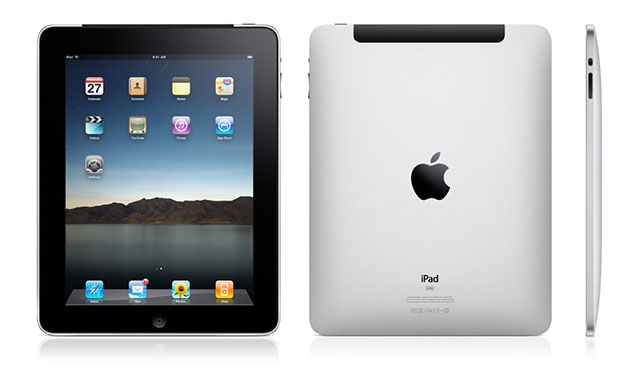
Comparing the Ipad 2, the Kindle Fire and a block of wood

I know everyone has been wondering about the similarities and comparisons of these three media devices, so I’ve decided to devote a column to examining just that. Now that Apple has had its Ipad 2 out for some time, Amazon announced its Kindle Fire to be released in November, and Home Depot has chopped up a block of wood into the size of a cube, I figured it was time to see how they differ from each other.

The Ipad 2: It’s a lot like a Star Trek data pad, and it runs on some kind of processor that may or may not have powered the space shuttle. It has been known to make really geeky guys very popular with hot supermodels, and the first time I turned it on, it made my IQ go up a whole 25 points.

Specs: It has a color screen, it has some funky icons on the screen that don’t make a lot of sense, but you can touch them and they do all sorts of weird things. Sometimes, when you’re not paying attention, it plays music, sometimes even from your own music library. One person who worked at the Apple Store referred to it aptly as “magical”, and that’s about all the information I have on it.

The Kindle Fire, of which I don’t have an actual picture because it hasn’t appeared in flesh yet, is a lot like the earlier Kindle, except more expensive and it does more stuff. It is also in color and from the picture seen, beautiful women have them on the beach, pretending to read them while they really sit there looking pretty, knowing that I’m watching and they’re not going to talk to me no matter what sort of line I come up with, like “Hey, Baby, I saw you over here, and I was over there, so now that I’m over here and, um, well, I, uh….” yeah, that’s how most of my pick up lines end up. Yeah, I’m not really proud of that.

Specs: Like the Ipad 2, it’s magical. It has little gnomes inside it that retrieve information for you from the Internet, and if you feed them well, they get you more information that you can use at a later time.


A Block of Wood. Surprisingly, this doesn’t compare well to the Ipad 2 or the Kindle Fire. It’s only value is the fact that it’s been around a very long time, and you can make things with it, like wooden Ipad 2’s and wooden Kindle Fires. But it doesn’t retrieve information from the Internet. It just sits there, doing nothing, like a stupid block of wood.

I really hate it. I wish I never bought it. Stupid salesmen and their Mad Men approach to selling crap I don’t need!

Will the Amazon Kindle Fire Defeat the Powerful Apple Ipad 2?

I’m reading a lot of blogging that is exactly this subject: Will the Amazon Kindle Fire defeat the powerful Apple Ipad 2? I’m going to go out on a limb and just say no. It won’t. But instead of treating this as an either/or situation, I’m going to talk about why the question shouldn’t be asked in the first place.

You see, the Apple Ipad is in a class of its own, a class to which no tablet has come close yet. The Motorola Xoom was released as the potential “Ipad killer” but it did no such thing. As a matter of fact, shortly after releasing the Motorola Xoom, the Motorola Xoom became the Motorola Xoom killer. It was decently constructed, had no apps made for it and relied on an app market that is woefully inadequate. To this day, I have a Xoom but I don’t use it for anything other than checking email at night (while my Ipad charges). Even when you found an app that might work for it, quite often it didn’t, and instead you ended up having to uninstall something you paid for (and couldn’t get paid back for if it didn’t work).

For months now, the talk has been all about the new tablet that was going to be released by Amazon. And it looks like it’s about to be released. Here are some of the particulars:

It has only wifi, it’s in color, and it has some apps it can run but they come mainly from Amazon’s online app store. It only has 8 gigs of RAM, and they’re not planning to up that on this particular model (although they might on subsequent versions of the model to be released later). Like I said, it has wifi only, so there’s no 3G, like you get for the main Kindle. And it will cost about $199.

Thoughts? The price is great. It serves as a great replacement for a Kindle if you already have one. It will do a few more things than a Kindle can do, like check email, and maybe play some music and videos (not sure on that last one yet, although details seem to point in that direction). What I really like about it is that now I can read books on a Kindle that has color (whereas I was reading my Kindle books on a Kindle app on my Ipad, because it was the only way to see color on a Kindle-bought book).

It’s not a replacement for the Ipad because it’s not as powerful as an Ipad, doesn’t do as much as an Ipad, and well, it’s just not an Ipad. It’s another Kindle, which will do what normal Kindles do, but be more like a Barnes & Noble Nook Color but not as dysfunctional as that product.

I’ll probably buy one. Do I need one? No. Not really. But I have a Kindle, and I like my Kindle. This will be a Kindle capable of doing more things than my current day Kindle, and I sort of like that. But it won’t replace my Ipad, which is still the one device I carry with me everywhere.

Monopolies, Greed and Treating Your Customers Like Crap

This morning, I was about to leave my apartment building to head to work when I noticed an 8 1/2 by 11 piece of paper taped to the exit door for everyone to read. It was a message from the apartment complex managers, indicating that anyone who was currently using the video services of U-Verse by AT&T must discontinue using it immediately because they are in violation of the apartment’s “contract” with some cable service called Suite Solutions. Not being a user of U-verse, I didn’t give it much concern, but then it had me thinking. What if I was a user of U-Verse and decided to get my television programming that way? What if I decided I didn’t like Suite Solutions (which I don’t) and chose to get my television programming through my phone line? What right does some housing complex or some cable operator have to choose how you get your television programming?

For the longest time, I’ve been receiving flyers in the mail from AT&T, promoting U-Verse as the answer to bad cable companies, and I just ignored the stuff because, to be honest, I don’t think television is all that worth subscribing to in the first place. While some people remained glued to their television screens every night they get home, I don’t think I’ve turned mine on to television programming in over 8 or 9 months, so to be honest, I’m not even sure I even have a television signal these days. And honestly, I don’t really care.

But what started to bother me was this anti-business message that was being pushed on potential customers by the people who manage the place where I live. It’s one thing if Suite Solutions was a good company, but let me tell you about my experience with that company. When I first moved into my apartment over two years ago, I chose that company to get my television and Internet service. At one point, I remember counting on a calendar to see whether or not it my service was down more often than it was actually up. I paid for the highest speed service, and when it worked, my download speeds were atrociously slow. I remember beating a download with my cell phone once (which ironically never actually succeeded with Suite Solutions because the Internet crashed during the download and didn’t come back up for another three days).

This was the company that my housing complex thinks that I should be emboldened to because they signed a contract with them somewhere in the past. Now, I don’t mind this being an option, but if they eliminate all of my other options, so that Suite Solutions is my ONLY choice, I think we have a horrible problem that really needs to be solved by the SEC, the FCC or maybe Elmo and the other characters of Sesame Street (they are notorious for advocating for consumer rights in the fantasies I have about Elmo and the gang).

Of course, no story about monopolies should be complete without a little bit of irony. I mean, we are talking about some unknown cable company using its monopoly to cut out the little guy, specifically a little guy named AT&T, who happens to be going through a little bit of monopoly trouble of its own these days. Now that the government has stepped in and told AT&T that it is creating an unfair monopoly by trying to buy T-Mobile, does anyone see the ridiculousness of some small cable provider shutting out AT&T through its contracted monopolies? I’m sure there are some people who are thinking this is a good thing because they just hate AT&T, but when AT&T becomes your alternative source to a crappy choice, something’s seriously wrong with this picture. I mean, I’m not exactly the poster child, greatest fan of all things AT&T. Just last week, AT&T refused to transfer my Internet service (not U-Verse) to my new apartment because of some flag that showed up with an old bill for $189 that HAD BEEN paid over two years ago; unfortunately, because it was so long ago, they couldn’t find a record of the situation, nor could they offer any way of alleviating the problem because the situation occurred too far back in the past to be solved by any simple transaction (like me just giving them $189 to make the problem go away). That’s the kind of problem you get from a monopolistic company that is so big that it can’t handle its own financial problems that emerge from its own lack of correct record keeping (you can always spot this problem when some customer service person tells you: “There’s nothing I can do about it. The problem seems to be coming from another area of the company that doesn’t exist anymore.”).

So, I ask, are monopolies good or bad for consumers? So far, my experience with them has been nothing but negative. You constantly hear economic pundits talking about how monopolies are good and how they drive innovation (or some other big proclaimed statement that has no basis in reality), but how do they really help us? Okay, there is one area, and that’s price, in that a company with a monopoly has the ability to lower the prices by handling all of the means of production and distribution, but how many times has that monopoly also gone the other direction, to where the only source of a product decides to raise its price because it realizes that no one else can fulfill the need? We’re kind of seeing that right now with Netflix, that erroneously thought that it was a solitary producer of content services so that it could pretty much do whatever it wanted to do by raising prices and splitting its company into two so it could eventually raise prices at its own leisure (possibly by raising it twice as much, as both companies can now raise prices as the same time, and thus, increase profits twice as fast). But what really happened was that Netflix realized too late that its customers WERE its product, not just the users of their product, and without customers, they have no income. I expect to see Netflix become the next Myspace in an era of Facebook.

For me, I have no real solution other than to boycott all of the products of companies that are hostile towards customers, which is why I gave up on Suite Solutions shortly after feeling like I was being cheated month after month. Fortunately, I am not a consumer of U-Verse, so I don’t have to worry about this proclamation from the emperor, but at the same time it also keeps me from ever wanting to do business with Suite Solutions again because instead of trying to compete with AT&T by providing a great customer experience and a good product, they decided to go the punitive route instead.

That companies never realize this strategy is a blueprint for failure is a footprint that forever haunts me. There’s a reason that message was tacked on our door like Luther’s 95 Theses. The company is failing to attract and keep customers, so it needed to crack down on anyone who decided to use alternative choices. Unfortunately, that strategy rarely brings in new customers or business. Instead, it leads you closer and closer to becoming obsolete. That this is 2011 and a company still doesn’t understand that is ridiculous. But why innovate when you can demand business? Need I say more?

Why Don’t Politicians Discuss the Poor?

There’s an interesting essay on CNN this morning by Roland S. Martin that takes the stance that Republicans do not ever mention the poor even though the most important red states are heavily infected with poverty. While it’s a thought-provoking article, it’s obviously very partisan in its approach, almost as if saying (without actually saying it) that Democrats DO care about the poor while Republicans do not. While it’s easy to throw mud on the GOP over this particular issue, I’m going to take a different tact and introduce the question of: Why don’t politicians discuss the poor? Because, as much as Democrats like to see themselves as the party of the people, when it comes down to discussing issues that actually alleviate poverty, neither side really does a good job.

For those waging class warfare, you might disagree with me, thinking that Democrats have always been on the side of the poor, but honestly think back and try to figure out when was the last time Democrats actually went out of their way to do something to alleviate poverty, aside from talk about it or use it to get re-elected. When I was pursuing my Ph.d in political science, I remember putting forth the argument (to a group of Democrat-professors) that asked the same question but in terms of race. It was during a seminar on party politics, and I asked why the Democratic Party actually felt it deserved the votes of blacks. And the room went silent because it was one of those questions you don’t really ask. I tried to push away the “you must be a racist to ask such a question” responses quickly by indicating that while the Democrats may have more African-Americans making up its ranks, what exactly was the Democratic Party doing to help African-Americans when it came to either ending racial discrimination or anything that had to do with bringing all races into a sense of equality. Responses all seemed to point at Civil Rights legislation and other such issues, but I kept pointing out that much of these efforts were started in the 1960s by politicians who were either very old or dead. Recent attempts to actually “make things better for everyone” weren’t really being made. My argument was that the Democratic Party seemed to be expecting African-American participation and support solely on the basis of not being the Republican Party. Needless to say, this caused all sorts of negativity in the room, and to be honest, to this day I’ve never achieved a sense of anyone really going out of his or her way to address the issue. Instead, I often see race being treated as an issue with already decided expectations that make it so that no one actually discusses the issues but instead do a lot of scholarship that consists of doing what has been done before without much further effort.

I bring this up because the issue, for me, is the same when it comes to poverty. There are more poor people in this country now than there has been in a very long time (since the Depression itself), yet politicians don’t seem to really be focusing on it. Instead, the focus has been the deficit, getting people back to work (the middle and upper classes), and a couple of areas of foreign policy. The War on Poverty became a “war” in name only, as we haven’t really done anything to alleviate poverty, unless you look at current trends as a War on People in Poverty, which we seem to be conducting quite admirably as we cut money to shelters, food banks, food stamps, schools and practically every other area of society that has anything to do with the poor.

But no one really seems to care. On the local news website (MLive.com), I read daily scribes by the common citizens that attack anyone who is poor as lazy, a criminal and a drain on society. Whenever someone puts forth ideas to alleviate poverty, that person is treated as part of the problem, and the masses don’t even want to discuss the issue further. And this isn’t even some right-wing media outlet. It’s the outlet used by the majority of people who read the local newspapers on a daily basis.

I don’t know about you, but I would love to see every politician start talking about what he or she is going to do to get people out of poverty. That would be so refreshing. But that never happens, and the reason for that is because it’s so much easier to not do anything about it and make up other issues that aren’t important, but are easier to hold conferences about. One of the big issues going into the presidential election is most definitely going to be the deficit, but at the same time I would not be surprised to see other ridiculous issues become part of the common conversation, like same sex marriages, abortion, religion in schools and taxation. It would not surprise me if one of these issues becomes the reason why one politician wins rather than any other.

Another factor to look at is political power itself. Since the poor first became poor, they have never really had an advocate working on their behalf. Congress is constantaly barraged with lobbyists over every issue under the sun, except for those that have anything to do with poverty. And that’s because there’s no money in it, which is somewhat ironic because that’s the problem in the first place. Lobbyists exist mainly to push political interests that then serve economic interests as well. When the economic interest is in getting people out of poverty, there’s no basis for creating a political process behind it. It’s a game theoretic where there’s no payoff for anyone involved, so no one gets involved, and the poor are left to their own lives of poverty without anyone really caring about the struggles they go through.

Instead, we end up with people thinking they know what poverty is because they brushed with it somewhere in the past but never really experienced it. I used to see this all of the time in the academic environment whenever poverty was discussed, and some college student who once struggled to make a decision between buying a new CD and purchasing food because of a limited budget actually thinks he went through a bout of poverty, so he thinks he completely understands it. And that person, when living somewhat of a decent lifestyle, is confronted with the idea of poverty, immediatedly thinks of poor people as the lazy people who couldn’t sacrifice that CD to put food on the table that one day when in reality the idea of buying a CD is a luxury most of them wouldn’t even consider in the first place. So when a poor person actually owns a cell phone (because it’s the only way they can communicate, making it an immediate Maslowian need), that former student scoffs at them, saying stuff like: “Well, if they can afford cell phones, obviously they don’t need assistance.” Again, it’s an inability to completely understand the bigger picture brought about by the fact that no one is ever going to take the effort to want to learn in the first place.

So what is the solution? Stop ignoring it and do something about it. Write your leaders and say something about it. But we won’t because we’re as lazy as we claim the poor must be, and we rarely do anything about it. If a politician doesn’t have constituents yelling at them about poverty, it’s not an issue on their dashboard. Unless someone starts telling them about it, they’re never going to even be aware of it because they don’t travel in circles that requires them to have to see the homeless as they live on a daily basis other than the random one who happens to be begging on the side of the entrance to the interstate, and like most people, the politician probably ignores them, thinking that if they don’t look at them, they don’t have to worry about them; or worse, they give them a dollar to get some alcohol, and somehow feel like they’ve done their all to address the poor.

Asking politicians to do the right thing is the recipe for failure every time. Asking YOU to make them do the right thing IS the answer. But I suspect we won’t because it’s too much work, and we all know those poor people are really lazy people who just don’t want to work like the rest of us. Right?

Netflix Just Doesn’t Seem to Get It

Netflix’s CEO Reed Hastings seems to think that if he offers a fake apology, somehow his insulting rhetoric will somehow get replaced with applause. You see, a short while ago, Netflix had this “brilliant” idea of increasing revenue by splitting its company into streaming and DVD sending entities. What it didn’t do is actually consult any of its customers beforehand. Instead, it talked to them patronizingly, like an adult to a child, and told them that raising prices was somehow a good idea for all. And then out of the blue, yesterday, Hastings offered the infamous “fake” apology that companies are getting very good at offering these days.

What am I talking about? Well, you see when a company doesn’t really want to apologize, but wants everyone to think it has apologized so we can all see them as sensitive, it offers what’s referred to as the “fake” apology, which is a lot like breaking up with a mate by saying something like: “It’s really best for both of us that I dump you by stopping the car, letting you out in the middle of the most dangerous part of town and have you walk home alone. I’m sure you understand that I’m doing it in the interests of both of us.”

Hastings did that by indicating that he was “sorry” for how his message was received, not that he was actually sorry for raising prices, and pissing everyone off by treating customers like ten year olds being told it’s for their own good.

Now, Netflix has decided to up its apology to absurd proportions by completely splitting the company into two, creating some stupid-named company called Quikster, almost as if they polled the audience to find out what would cause the most people to jump ship, and the pot-smoking guy in the back yelled out: “Dude, Quikster would be so rad!” and they went with it.

I’ve been talking about the hemorrhaging of customers that Netflix has been suffering ever since they started turning stupid as a corporate business strategy. Years from now, the actions of Netflix will be taught in business management schools as the poster child of how to completely destroy your company overnight. The fact that they can’t see this is amazing to me. Yet, they keep making these types of moves, convinced that somehow its a sustainable process for growth.

As I mentioned before, as soon as I finish watching the television show I’m watching on streaming video through Netflix, I’m going to cancel my account completely, and I will never join again. I have to believe that I’m not the only person who feels this way, and at the same time there’s a sense of regret because a long time ago, I used to hail Netflix as the rebel child it was, thumbing its nose at corporate America and offering the public exactly what it wanted and felt it needed. And then it stopped doing that, and turned into Circuit City. If ever a study on anthropology was needed, the destruction of Netflix (or Quikster) so needs its own chapter.

With that said, I wish Netflix good speed at achieving whatever bizarre plan it is attempting to fulfill. Unfortunately, this time around, I will not be around for the ride. And unfortunately for them, most of their customers will probably resonate the same response as well.

Problem #77 with Adopting Google+

I’ve been experimenting with Google+ since it emerged, and as much hype as I read from the major news sites, I just haven’t bought into the propaganda they keep spewing out. I keep reading how Google+ is going to replace Facebook, but no matter how much I look into the service, it fails on almost every level. Let me explain:

1. No one is on it.

Oh, I know how they keep claiming a gazillon people are on it and all that, but I’ll let you in on a little secret (if you haven’t used Google+). No one you know is using it. And that’s the problem right there. Sure, it’s great that Felicia Day (creator of the web episodic show The Guild), Wil Wheaton (the guy who played the kid on Star Trek the Next Generation and has been pulling cameos on other shows like Big Bang Theory and The Guild ever since), and Taylor Swift (the singer) are all on it, but what it’s really turned out to be is a glorified Twitter account where you get to actually see postings of these people, instead of blurts of words from their Twitter feed. But again, so few “normal” people are using it, which means if you want to use it to follow some celebrity with a one-sided conversation (where they never hear from you), then it’s fine. But what makes it different from watching some celebrity gossip show? Nothing, really.

2. The Interface Lacks Substance

Everytime I use Google+, I’m convinced I’m missing something because I go on it and then wonder why I wasted the time. It’s like there’s a whole other big room that’s part of it, but I just haven’t figured out the secret handshake to get into that other room. I suspect that other room doesn’t exist, but even if it does, what good is a service if you can’t access it? That’s my problem with Google+. It has nothing going on for it that keeps me interested. I’m a news junkie, which means I want to see things going on. Right now, my Google+ feed is filled with nonstop cute cat pictures from the celebrities that somehow think this is interesting and relevant. I’m not kidding. The only other type of posting seems to be from April Summers who shows naked pictures of herself in Playboy, which can be cool, but not really newsworthy. Every other person I follow seems to practically repeat the same information but a little bit different each time. The people I’d like to follow and know more about don’t actually have an account, or they have an account and don’t use it (like Taylor Swift).

3. It’s Owned by Google

Google is a great search engine, but honestly it doesn’t really innovate in anything. It does a really good job of seeing what other people do and then streamlines it. But there’s rarely any innovation or brilliant thought behind it. Or when there is, it’s designed by engineers who still haven’t figured out how to communicate with the masses, so they set up really complicated environments and expect the people to figure out how to maneuver through them (“I’m looking at you, Google Adwords!”). And there’s always the fear that Google, in their infinite wisdom, will just cancel your account because you disagreed with something they had to say, or do, cutting off four or five services you might be using that had nothing to do with the reason you got shut off in the first place, and like Facebook, they won’t speak to you in order to fix the situation because you’re irrelevant to them, as you’ve always been.

Sony Proves Yet Again That It’s the Company to Go to If You Want to Hate a Company

Not too long ago, Sony was attempting all sorts of mea culpas over the fact that its networks were hacked, and everyone who ever did business with them was royally screwed because Sony had lousy security in place. You’d think after something like that, they’d really walk on lots of egg shells around customers. Well, think again.

Turns out that yesterday Sony decided to push forth a new set of usage terms for anyone who wants to access the Playstation Network. Rather than something along the lines of “we’re here for you”, their new terms of service essentially state: “If something happens, go screw yourself.” Well, not the wording exactly, but they state that if you want to use their service, you agree to arbitration in case ANYTHING ever happens. In other words, if you want to use their service, you’re not allowed to sue them any longer. Translation: “Go screw yourself.”

Over the years, I’ve distanced myself from all things Sony mainly because their customer service has been atrocious. My last real brush with them was with Sony Online Entertainment, which were the original gangstas behind Everquest and Star Wars Galaxies. Aside from destroying both of those games, SOE made it quite clear that if you wanted to play one of their games, you did it on their terms and their terms alone. After awhile, I ended all of my subscriptions and sent any further emails (and attempts to “Welcome” me “back”) into my spam folder. Even my spam folder felt disgusted from having to deal with anything sent by Sony.

Years later, I made the critical error of buying a Playstation 3 because I wanted a decent blu-ray player. It’s been generally okay, but in order to access Netflix, I had to go through the Playstation Network, and let’s just say that it works fine until Sony decides to interject itself into the mix, and then I spend about an hour trying to get it to work properly again. And then it works fine for a week or so, so I don’t cancel it completely.

But last night, I got the indication that if I wanted to continue using my Playstation 3 in the future, I had to agree to their one-sided demands. So, realizing that to not agree would effectively turn my Playstation 3 into an electronic brick, I agreed. But I wasn’t happy about it.

Turns out, not a lot of other people are either.

At least until I discontinue Netflix, I have to deal with the Sony Mafia. And then I intend to cut them off forever. I have enough crappy companies I already have to do business with. One less won’t make me feel bad.

Netflix is starting to realize you can’t be a people business & piss off your customers


Netflix is in a bit of a bind, but you wouldn’t know that from paying attention to anything the company is saying. Earlier in the year, they came up with the brilliant idea of raising their prices by cutting their services in half and charging customers for both (where they used to get both for the same price). Customers got angry. Netflix acted like the knowing parent, coddling children who are upset that they weren’t chosen for the football team (or to be cheerleaders). Customers got pissed because they really don’t like being treated like children when they’re actually customers.

I kind of got pissed, too. The patronizing remarks from Netflix’s leadership surprised the crap out of me to the point where I decided that if it benefited me in the long run, I’d jump ship at the first opportunity. I, too, hate being treated like a little kid, even when I might act like one.

To see it from the viewpoint of all of the analysts, the same point keeps being made: If there’s no viable alternative to Netflix, then Netflix can pretty much crap on its customers, and it’s still going to be all right. The more you read of this kind of stuff, the more you start to wonder if the reviewers are in the same world as the rest of the people who happen to be customers of Netflix.

What no one has addressed, and I find this probably the most significant factor, is that Netflix offers a service that is a luxury, not a necessity. As most Americans are seriously aware of economic constraints in a recession era, the idea that streaming video and mailed dvds are an added luxury might just be enough to cause a potential customer to think that perhaps the money might be better spent on other pursuits. After all, no one really needs movies and television shows. They’re nice and fun, but they are entertainment, not food staples or part of one’s housing needs. On the whole Maslow heirarchy needs thing, Netflix comes long after most of the other needs and desires have been met.

And that’s what I’ve started to realize recently. As I watch through the fifth season of Star Trek Voyager, a series I’ve seen a long time ago when it actually aired on television, I realize that I don’t really need to watch it. It’s an interesting way to occupy time, but I have computer games, writing, my health club membership, an untapped drug habit I could start at any moment, and all sorts of other activities that have been available a long time before television ever emerged. I could even watch network television (or whatever is on the free cable I receive). The need for Netflix is pretty low on the overall scheme of necessities.

So, I’ve been thinking that once Voyager’s run is finished (there were 7 seasons), I’m dumping Netflix completely. You see, Netflix has this belief that people will “respond” by switching to either mailed disks or streaming only (what they wanted in the first place), but there are 12 million people who may choose my option: Cancel completely and never come back. I was charged my first increased charge this month, and while I can afford it, I’m still angry at Netflix for the way it treated me as a customer. Because of that, I, like I’m sure many others like me, will dump Netflix and wish them well. They’ve already indicated in all of their press releases that they could care less whether or not I stay with them (because they expect to make bank based on the rest of the people who will be unwilling to jump ship). Well, fine. I just suspect that they haven’t read the tea leaves well enough to understand that when you cut out your bread and butter, you sometimes go without food.

But what do I know? I’m just a stupid sheep guy who Netflix doesn’t take seriously anyway.