Category Archives: Economics

Time for Another Round of Current Events and Happenings

1. The Assassination Attempt in Arizona. Okay, there’s really no way of walking around this topic without having to address it head-on. It’s pretty much the main story of what’s going on in the country, and like most current events, it’s yet another one of those that seems to be so out of context practically everywhere it gets reported. What everyone can agree on is that it was a tragic event, and most of us wish such a thing had never happened. However, I suspect that it’s only been a matter of time because there are a lot of crazy people out there, and if John Lennon’s death wasn’t a warning decades ago, we really should have been paying a lot more attention.

You see, there are a lot of people who are not playing with a full deck out there. We run across them each and every day. If you live in a big city, you can’t step over enough of them without running into another. Some are homeless, who stand on the street corners and do all sorts of bizarre behavioral activities, like yell at you, try to pee on you, beg from you, and pretty much anything else you can and cannot imagine. We had to be nuts ourselves if we honestly thought that they’d stick to their little corners and not start to bother the rest of us. I teach at a community college, and in the years that I’ve been teaching, you run across a lot of people who sometimes don’t seem like they’re all there. And you get really worried and concerned. But for the most part, no one really cares, because as long as it doesn’t affect them, why should they care?

The event turned into a bit of a surreal experience when suddenly people thought it was supposed to be a wake-up moment for the problems that have been occurring in our society. There’s a lot of anger and hate speech going back and forth between the different sides of the political spectrum, and for some bizarre reason people actually thought that this event might lead people to talk about these problems and do something about it. Not going to happen because no one wants to admit there’s anything wrong. Well, at least not with themselves. They’ll point fingers and say something’s wrong with YOU or someone else, but never with themselves. But that’s been the problem from the start, and as long as we’re never going to engage that, we’re never going to change the hostile discourse happening in this country.

Sure, it’s easy to blame Sarah Palin, Glenn Beck or (pick any politician or pundit), but the odds of actually opening up a real dialogue so that people actually listen to each other is practically impossible. It’s a nice pipe dream, but pipe dreams are just that. Dreams.

2. Verizon is Getting an Iphone. Good for them. I had one with AT&T and I’ve been very upset with AT&T and Apple for awhile now because of the fact that I can’t stop people from calling me, especially when they’re people I don’t want calling me. Neither Apple nor AT&T were very helpful here. So I left and joined Sprint, adding on a Samsung Epic phone instead. Pretty happy with it. Be happier if it had a battery life like the iPhone, but you take what you can get. Now that Verizon has an iPhone, I don’t really care. It’s still a phone from Apple, and Apple requires that it maintain control over its walled garden. Not a selling point for me.

3. Golden voice Ted Williams. I saw this coming a million miles away. The media jumped on this rags to riches to rags to riches story and thought he was the next best thing to sliced butter. Well, I kept wondering, “when is the other shoe going to drop” meaning when is the media going to turn against him? Well, now he’s kind of gone of the deep end because of personal problems, which no one could have ever expected would happen with a guy who has been living on the streets after throwing away his previous life. I mean, who would have thought something like that could happen? Anyway, sarcasm aside, he’s now heading to rehab and was arrested in Los Angeles. We’ll see how this story plays out, but I’m not expecting a lot of happy endings.

4. Unemployment has gone up again. Of course it has. And last month, it went down. The month before, I think it went up. We need to stop reporting these numbers and then providing commentary after it. Each time they do it, some pundit makes an argument that fits his world view of what he thinks should happen, rather than what is really happening. We’re in a recession right now. The market is going to be flying all over the place on a month to month basis. Stop trying to figure out long term strategies based off of short term notifications. It never works. Which brings me to my next one:

5. The Stock Market Fluxuates. Yes, it does. But one thing that needs to be constantly brought up, and it never is, is that the stock market really has very little connection to what’s really going on. It’s the Las Vegas for rich people. People buy based on speculation, and they think they have an idea of how the market is going to change in the short term. NONE OF THESE FIGURES has anything to do with what’s really going on. Companies are selling products, people are working for these companies and get paid whatever wage they normally get paid, and then some people buy some of these products. But because the stock market price of a company went up or down does not always reflect what’s going on in the real world of that particular company. Quite often, these fluxuations come because some executive did something stupid, like embezzled money, or had dinner with a celebrity. If the stock market goes south over the span of a week, it may not really mean anything to the real world as an implication. It may just mean a whole bunch of people panicked because they stopped living in the real world and see the market as the real world. Man, I hate the stock market.

6. Middle East Talks Aren’t Going Well. They never are. The two sides of that conflict are probably NEVER going to get along. Each new administration comes to the table convinced it’s going to make a difference but rarely ever does. That’s because the two sides hate each other. They have no incentive to be friendly to each other. Each side wants the other dead. That’s their international policy towards the other side. And it’s been that way for so long now that generations of their people grow up hating people they may never have met. If you want to fix the problems there, you have to do it generationally, and you have to do it by a completely different set of characteristics than our current process of diplomacy allows. Tit for tat and carrot diplomacy does not work on countries that live their entire lives to kill each other as their one foundational value. I could go at length on what would work, but NO ONE CARES OR LISTENS, so I’m going to stop caring, too.

7. Tablets Are the New In Thing. I’ve said this before, but it requires repeating. Tablets aren’t new. When the iPad was announced, suddenly a whole bunch of people who never wanted a tablet suddenly thought they needed one. We were like Eskimos being told we needed freezers and refrigerators by Don Draper and whatever fictional agency he might be working at. But shortly before this announcement, tablets were already out there trying to get us to buy them. And we didn’t. Why not? Because we didn’t need them, and they seemed kind of stupid to have. Well, now we all need them because Don Draper Steve Jobs told us we needed one. So now every other company under the sun is now releasing their tablet computer to compete with the Ipad. And I won’t be surprised if we start buying them this time around. We’re such sheep.

8. Myspace laid off half its staff. So what? Myspace has been irrelevant for years now. It used to be the “in” thing, and then Facebook came along and turned Myspace into an ugly sister of the hot cheerleader. Ever since Facebook, Myspace has been struggling to appear relevant. But its not. There’s nothing about Myspace that causes people to care. When it was told to sit at the kiddie table of technology, they tried to appear relevant again by pretending that it was the place to go for music. But Facebook was already there doing that, so Myspace continued to become even more irrelevant. At one point, I thought I might use it to hype my writing, but then realized that they were really only interested in doing so if I was already big time famous, which I wasn’t. So it wasn’t useful to me. And then I figured that if I was already big time famous, I probably wouldn’t need them. I’d just have a million facebook friends instead. Then, add to the mix that no one seems to be using Myspace anymore, and you realize why it’s probably going to be sold one of these days to someone like Murdoch who keeps buying up properties that are already irrelvant and trying to somehow make it seem like he bought a very relevant purchase.

9. Seth Rogen is Upset About the Hate Towards his Green Hornet Movie. So what? It’s a movie, not anything relevant. Make a really good movie that causes people to take notice, and maybe it won’t get the hate. Just saying. Then again, no one’s actually seen the movie, so perhaps the condemnations are a bit early.

10. Two of my novels are now on Kindle and the Nook. Innocent Until Proven Guilty, my first novel, is available on the KindleThompson’s Bounty, which is a science fiction, time-travel novel I wrote involving pirates, is available on the Barnes and Noble Nook, and it is available on the Kindle as well. I would not be very upset if you chose to read my novels. Really.

11. The people of Haiti still seem to be suffering, even though most of the world has left this area because it’s not a photo op any more. Just saying. Some people gave up on it because they don’t like how the Haitians are continuing to follow corrupt leaders who continue to cheat them out of international aid. Some people gave up on it because they only have the capacity to handle concern for a certain amount of time (usually the time between football season and American Idol finalist run-offs). And then some people just don’t care.

That’s all I have for today. My stuffed animal Brucoe thinks people should do more to care about other people, but he’s just a stuffed animal, and what does he know?

Bioware is Ripping Off Gamers Again

Last year, one of the better games to come out was one called Dragon Age, and it was created by famed game design company Bioware. I’ve been a huge fan of Bioware for many years, mainly because they created some of the best roleplaying games known to mankind, like Neverwinter Nights, Knights of the Old Republic and Mass Effect. Well, they’ve recently been working on the sequel to Dragon Age, appropriately called Dragon Age II, and like most gamers, I’ve been looking forward to it. But part of me has been a bit apprehensive, and let me explain why.

When I was playing Dragon Age last year, there was a point in the game where I found myself staring at the computer, wondering if the game was actually taking me seriously. Let me explain futher. You see, a lot of games have what’s called downloadable content (often abbreviated as DLC). This is almost always new content designed for the game after the game has been released, where the developer has figured out new ways to expand the adventure. Sometimes, it’s new armor or weapons, and quite often it’s completely new quests and adventures. For someone who has played through a game, when new content like that gets released, you jump for joy, enter your credit card information, pay a nominal fee, and you’re off slashing at enemies again.

Well, in Dragon Age, there’s a certain part of the game which is considered a rest area, where your characters set up a camp, and you can go talk to the individual members of your group. It’s often a neat way to explore the quests that exists with secondary characters. If there’s a new quest, Dragon Age had a way of showing you this which was blatantly stolen from World of Warcraft, but you see an exclamation point above the character’s head and go talk to him, or her. Well, one of those characters had that exclamation point over his head, and I went to talk to him, but his conversation was different from the others. Unlike the others who gave me more information, he was essentially telling me that if I wanted to explore his adventure, I would have to buy downloadable content from Bioware first, and he even offered me an opportunity to exit the game and go buy that DLC. Yes, it was very tacky. But I was interested, and it wasn’t that expensive, so even though I felt dirty entering my credit card information, almost as dirty as some woman on the other end of the phone asking me for my credit card information before pretending to be a naughty schoolgirl. Okay, not as dirty, but definitely not as fun.

This, to me, was a pretty tacky way to do it, but I figured that this was how they had added some of their extra content, and it was probably patched into the game a few patches after the game was released. Pretty tacky, but I was willing to go along with it.

Well, on Tuesday, January 7, Bioware announced new DLC for Dragon Age II. Great, except there’s one caveat. Dragon Age II hasn’t even been released yet. In other words, Bioware has announced downloadable content that will cost $7.00, and the game hasn’t even gone gold (been released). As many gamers are sure to immediately think, this is ridiculous, as this is something that should have been released with the original game because this isn’t “after the game has been released after thought material”. This is material being released WITH the game.

Part of the problem is that Dragon Age II isn’t some game that is going to be released for $19.99 and this is a way of making up some of the lost cash. No, Dragon Age II is going to be released and charged at the maximum a game can be charged. This is straight out greed in the name of stupid profit. It’s looking at the gamers and saying, hey, fuck you and give me more money.

What’s really also happening is that every other developer out there is going to be watching this to see what happens, and next thing you know, games are going to be released half done, and then they’ll charge you for the other half of the game. But they’ll release the game at full price the first time and then like a blackmailing girlfriend with pictures of you and her and a midget, she’s going to charge you to get the full experience.

I may not buy Dragon Age II because of this. As much as I respect Bioware, this is a line that shouldn’t have been crossed. It’s not like they’re not going to be making insane profits anyway. This is just a way of them saying, we know you’re all a bunch of stupid kids, so pay up or we’re not going to let you play our game.

Well, there are always other games.

My Take on the Really Important News Stories Currently Happening

The post isn't about the movie, but the picture definitely works

As I know I’m the one everyone turns to for on topic news reporting, I thought I’d give some opinions on what’s currently happening. Okay, no one reads me, so I’m ranting to the wind, but it’s my blog, so I’m going to do it anyway.

1. Obama Takes Credit for Lame Duck Victories. Um, okay. It seems that our current president seems to think that he has done great things by using the lame duck Congress to get a lot of legislation pushed forward before the end of the year. A couple of thoughts: First, Obama didn’t really do anything. The lame duck members of Congress did. So it was really them that succeeded in doing what they did. Second, while it’s wonderful that a lot of gridlocked legislation got pushed through (DADT, Bush Tax Cuts, START treaty, Adoption of Stickman as Ambassador to Iceland [okay, the last one didn’t happen, but it really should have]), when the new year starts up, we’re back to where we were before, except now we’re going to have a lot of pissed off Republicans who still think they have some kind of mandate to provide gridlock to the presidential agenda. Basically, the Democrats rammed through a whole bunch of legislation that required them to use their majority that is going to disappear at the start of the new year. That can’t lead to positive relations in Congress for the next year. Expect a lot of political partisanship to get much worse in the very near future, all of it blamed on the lame duck stuff. Lesson: You really don’t get a free ride when the odds are stacked against you for the future. Even the Bush Tax Cuts, which the Republicans are all happy about being passed, are going to be seen as Obama’s lame duck stuff that will cause immediately cause Republicans to blame Obama and the Democrats for anything that comes out negative, even as Republicans use the money to fuel their own desires.

2. Rahm Emanuel is Cleared to Run for Emperor of Chicago. Or Mayor, or whatever it is he’s running for. Basically, an Obama Administration guy is running on that name connection alone, even though everyone who had anything to do with Obama was thrown out of office during the last election. Supposedly, this might work in Chicago, which is Obama’s former backyard. But how does this affect the rest of us? It doesn’t. It means absolutely nothing to us. For all I know, he’s probably going to lose because he’s not actually Obama. The people of Chicago aren’t voting for Obama; they’re voting for some guy who once worked for Obama. He has to run on that. No one outside of people who might gain from any connections to this guy really cares in any way, shape or form. So, everytime I see an article about this, which is practically every day even though I don’t subscribe to any papers that have anything to do with Chicago, I want to claw out my eyes with a rusty spork. Please make him and his personal desire to be god of Chicago go away. Please, even if it’s just for the children.

3. Steven Spielberg is not going to advise Democrats on how to win over the voters. Thank God. It’s not that I don’t like Steven Spieldberg. His movies are great. But they’re movies. And as we learned from World War II, when a movie director like Kapra is making movies for the country, they’re not movies; they’re propaganda. Having a famous filmmaker try to change the perception of Americans about the Democrat Party is a disaster just waiting to happen. What’s wrong with the Democrats right now is that they’re constantly running on a platform of being for the people when they’ve been so out of touch of what the people want and need that they need education, not propaganda. But they’re not going to get that education because they don’t seem to realize what’s wrong. People are pissed at the Democrats right now because they came in with a plan to give the people what they wanted and then and went and did things that politicians have been doing for decades (filling their own pockets). We saw Rangel and Conyers and all sorts of shenanigans that benefited none of the people, but only the people in power. THAT is what they need to fix, and trying to get a famous movie director to advise them to change their public image is never going to work because it’s not their public image that needs fixing. It’s their actions they conduct in the name of the public interest. But I doubt they’re going to figure that out because the people who advise them are the same people who have been advising them while they were holding $1000 a plate fund-raisers to get elected.

4. Facebook is a networking program, not a lifestyle. Recently, Mark Zuckerberg was voted as Time’s person of the year. I really don’t care. He’s a rich, elitist, misogynist who happened to be at the right place at the right time to steal the right idea at the right time. Ever since then, he’s been trying to become important, but he heralded the creation of a platform for people to find their old friends and keep touch with their current friends in ways bordering on stalking, but only if the victim was sending texts to her stalker to announce where she’d be going next. Yes, I have a Facebook account. But it’s not my only means of oxygen or survival. It’s an interesting tool. And that’s it. For me, the person of the year would have been Julian whatever his name is who was running Wikileaks. That person really made an impact last year. Facebook didn’t. Neither did that rich billionaire, irrelevant sack of shit owner of Facebook either. It’s almost as if Time went out of their way to create the easiest winner of the award, realizing that if they chose the guy who should have got it, the government would have actually shut down Time Magazine as a threat to the country. I honestly don’t think it’s that much of a stretch to realize that this had to have been part of their discussion the night before they made their decision.

5. 2010 Kindle Sales will reach 8 billion. So what? Oh wait, I mean 8 million. Whatever. I mean, it’s kind of cool that Kindle will sell that many, but as expected, this kind of announcement fails to mention what’s really important: How many books are being sold, and how many are available? You see, it’s one thing to sell a bunch of devices, like Barnes & Noble is doing with the Nook Color, but when they don’t tell you how much information is available for the device, it’s really doing a disservice to the buying public. An example: I bought a Color Nook from B&N, and I’ve been nothing but pissed about my purchase ever since. I bought it, expecting the market to be represented in books, magazines and newspapers, but so far the selection has been abysmal at best. I have yet to see a justification for the color device because the magazine selection for the device is horrid. I have yet to see any new magazines sign up, other than really crappy ones that I would never flip through at the bookstore for free. When they start getting the marketplace to respond to their product, I’ll be happy. And don’t get me started on prices. The price for practically every book I’ve seen with the Nook has been either exactly the same price as the Kindle or much higher. Computer books are ridiculous in that they’re sometimes more expensive for the Nook version than they would be if I bought it in a physical copy. Not a good sign if they’re trying to capture a market. Or even tap into one.

This is the same problem, I have with the Kindle. The prices for books just don’t seem to justify the device itself. When books are $9.99, it might be worth it, but there’s a mindgame being played here that they don’t want to own up to. A lot of these books are now out in paperback and available from some retailers for much cheaper than $9.99. Yet, the price for these books doesn’t go down. They remain at $9.99 or recently, $12.99, which seems to be some bizarre sweet spot the book companies think they can get. In other words, they’re making the market reliant on the hardbook, brand new price model when most people haven’t even really been reliant on that model in the real bookstore of the past. I bought a few books that were “discounted” at the $7.00 range, and I realized while buying them that I could probably get these books for less than $5.00 because they’ve been out in paperback forever. Kindle is trying to take the Apple approach of “people are suckers who will pay anything for something digital, and if we capture that market, they’ll always pay us full price”. Kindle started out well with their price model, but then they caved in against the book publishers, and that bit of working together has managed to screw the average customer who is now faced with paying stupid prices or going back to the old model of waiting for physical books to go down in price. Without even trying, the e-reader market is doing a good job of killing its own future marketplace.

6. The iPad. The hype over this product has completely overwhelmed me. Not enough to buy one, but enough to cause me to wonder if people really are that daft. I mean, it’s not like the technology was really all that new. We’ve had tablets on the market for a few years now, but they never sold because people didn’t see a need for them. And then Steve Jobs announced the iPad during his yearly announcement meeting, and suddenly everyone had to have one. I’ve looked at it, and almost even bought one, because I’m a stupid Internet geek who buys stupid things like the Nook Color. But I waited a day and then realized I didn’t want OR NEED one. It didn’t do anything I couldn’t already do with devices I already had. I mean, it’s got a bookstore so I can read e-books. They’re more expensive than any other store, because it’s Apple, and I already have a Kindle and an Amazon Nook. Not worth it. It does some word processing. So does my laptop. Much better, too. It looks like a Star Trek datapad. That’s cool. But that’s about as useful as it gets. It doesn’t actually do anything my iPhone doesn’t do. It’s just that my iPhone is smaller.

7. Which brings me to my iPhone. I bought an iPhone when they were first released. And it rocked. Back then, I had a crappy cell phone that was not very smart, and the move to a phone that did everything was great. But it’s been some years since I first bought that phone, and the marketplace has finally caught up to it. You see, there are some things that the iPhone won’t do, mainly because of Apple and because of AT&T. I have been getting a lot of phone calls from telemarketers lately, including one that calls me every day. I can’t block their calls because AT&T won’t let me do it without paying for a special service that does just that. Apple won’t let me get an App to block calls because for some reason Apple just doesn’t seem to think that’s a good App. So I’m left having to be innovative and work around my phone in order to get my phone to do what I want it to do. So a few days ago, I bought an Android phone that lets me do all of the things an Apple phone won’t let me do. And I’ve been really happy with it since. I had to move to Sprint PCS instead, and well, it’s working out like a first date with a supermodel who only orders off the children’s menu to watch her weight. Apple managed to push itself out of my market when I used to say nothing but wonderful things about them and their phone.

8. The Spiderman Musical. Now, as much as I love a train wreck like everyone else, I’ve kind of hit my saturation point with this story. Okay, they tried to make a musical that was too innovative to actually be done successfully. Fix it or move on. It doesn’t really matter to me.

9. Sony launched a model to compete with iTunes. Yeah, good luck on that one. You’re a day too late with a model that’s not innovative. Sprechen Blockbuster versus Netflix?

10. South Korea is trying to rile up North Korea with live fire exercises. Um, poking a tiger is not always the best way to entertain the kids. But what do I know?

That’s all for now. Have fun and avoid eating the yellow snow. Just cause it looks like lemon flavoring doesn’t mean it’s going to work out that way.

Burdened by the Status of No Power, No Voice and No Audience

I’ve been watching the struggles taking place in South and North Korea lately, and I find myself becoming very frustrated by the whole thing. But I’m not frustrated because they’re moving towards potential war (which happens ever decade or so), but because I often feel like I have potential answers to the problems that plague these people, and I also realize that there’s no chance whatsoever I’d ever get anyone to listen to me even if I had the definitive answers they needed.

What concerns me is not just that I find myself frustrated in life because I always seem to have a different perspective on things, a nuance that I often think might actually break through some of the problems that occur, but that I also realize that there are so many others out there who have to be just as frustrated as I am. This might be different if we lived in the 1600s where people generally were limited to their own surroundings, but today, we have the ability to travel pretty much anywhere, and we also have so much more liberal education than we’ve ever had before. It’s like we’ve been given the tools to do so much more with our lives, but we’re still limited to chiseling marketing messages on stone tablets to sell to our neighbors.

As someone who actually teaches college students in both communication and political science, I’m even more burdened by this because I often feel that I’m selling a box of false goods that empower people to do absolutely nothing because they’re never going to have the ability to influence anything beyond local issues. Yet, so many of them are probably growing up to do so many unique things that will never be given ground, so they will end up just as frustrated as the rest of us.

Yet, we keep seeing this group of people who do have access to the higher echelons of power, and they’re completely fucking everything up because their only claim to their station is that they knew someone, scratched the right back or were lucky enough to be born rich and/or entered into the right school.

The sad thing is, I’m sure this complaint is made on a daily basis by so many other people as well. Yet, I keep wondering what sort of compensation is being paid intellectually to keep so many people happy with their limited access to the pedastals of power. Sadly, I don’t think anyone who is in power really cares, other than making sure that those who are registered to vote continue to come out and continue voting them into power longer so they can continue to do mediocre services while enriching themselves, their stations and their offspring to continue the nepotistic process.

What worries me even further is my belief that an enlightened society cannot survive with more and more enlightened societal members realizing that the whole thing is somewhat of a joke where so few benefit at the expense of so many. There’s only so much one can believe in a system of “anyone can be one of the elite if one works hard enough” before realizing that it’s really a crock of shit. When that brass ring consists of 99 percent luck and 1 percent skill, that doesn’t leave a lot of very skilled people very happy with their lot in life. In the 1900s, you could laugh it off by believing that there weren’t enough people to cause problems, but nowadays, I’m not so sure.

Anyway, not much more to say. Must go back to the trenches and continue pounding on my tablet with my chisel as I make other people wealthier. Well, I work for a nonprofit, so I’m not sure how that fits into the picture, but I’m sure you get the picture. I guess we all pound on our tablets with chisels and then no one gets any wealthier. Hmm, might have to look for a better metaphor/allusion than that one.

Watching the Right Television Shows to Come up with the Right Political Answers

The current state of these United States of America shows us not very united in the states of America. It’s pretty sad because for the last two hundred and some years, we’ve weathered some pretty strong storms that should have only made us that much stronger. You know the old line of “whatever doesn’t kill me only makes me stronger” which ironically is the only thing I have left from the woman I once loved named Marisha; it used to be her favorite line for reasons that are neither important nor all that interesting. Well, that line isn’t working anymore. We seem to be much more about divisive politics than any concept of working together for a better solution.

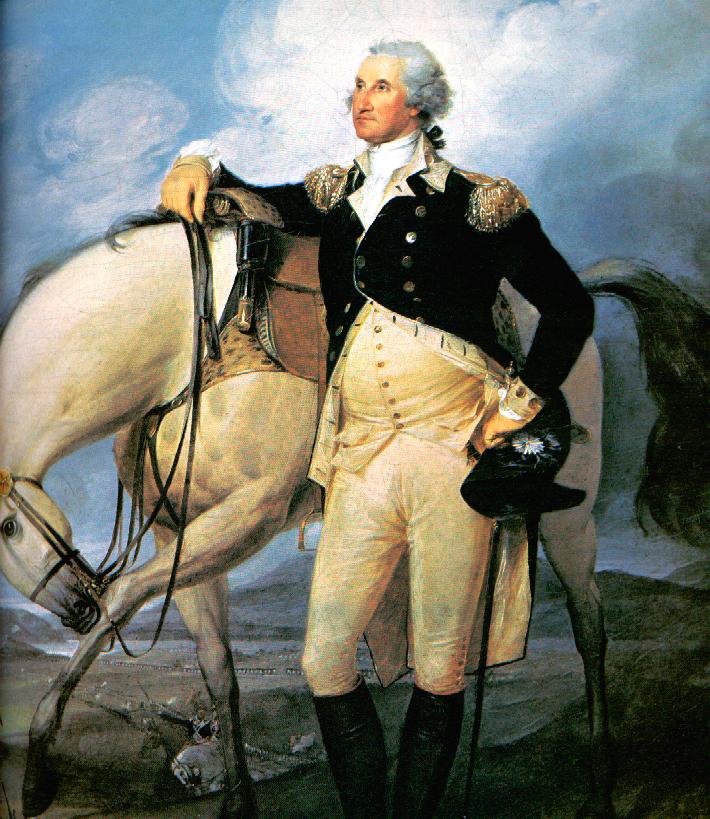
George Washington is the one on the right

The political writer, Morris Fiorina once wrote a brilliant book called Divided Government. In this book, he argues against common sense in that he shows through statistical examples that when our government has been divided, we’ve actually accomplished more in Congress than when we’ve been under united government. Unfortunately, his analysis wasn’t forward thinking enough to project what might happen when divided government becomes an unworkable government, when the divisions between both sides might turn out to be the destruction of government, rather than the process that allows time for “cool and deliberate reflection,” a concept once deemed that would lead to the “real voice of the American people” by George Washington in a letter to Henry Knox on September 20, 1795. Right now, we’re in a weird political process that is completely destructive and causes very smart people to act petty and stupid. When looking for leadership, which is what people do when surrounded by annoying destructionists, we’re finding all of our leaders have become ten year old children who think that pointing at the other kids and saying “he did it” is somehow what America is looking for in its leaders.

If one were to look for allusions and metaphors to explain what is going on today, I can find no better example than that of television, which is often referred to as either the “idiot box” or the mind-numbing device that causes people to stop thinking. Why should we be surprised that what we’re receiving from our leaders is nothing less than the ridiculousness that comes from stupid television shows anyway? Unfortunately, the metaphors that make sense indicate that we’re watching the wrong television shows in hopes of finding some kind of mechanism to lead us to a better tomorrow.

Right now, we seem to have leaders who have latched onto some of the worst television metaphors to dictate the types of actions they are emulating in our government. If you watch any type of television news, like CNN, MSNBC or Fox News, basically all you’re getting from commentators and pundits is analysis that sounds like Howard Cosell or John Madden describing some kind of football game where players are trying to create brand new plays by doing stuff that people have been doing for decades, yet seem to think that it’s all original. During the election, it was like watching professional wrestling, where oversized behemoths yelled “I’m going to get you, Hulk-man!” as they rip off their t-shirts and promised bloodshed of the like never seen before. But we have seen it. It’s called bad politics, and it leads to bad government and horrible representation. What these types of metaphors really show us is that our leaders are playing another zero sum game with each other where no one actually wins because each side is only focused on winning, not on what they get out of winning in the first place.

I’m going to include another television reference that can explain where we need to be going and how we should be looking at our current political dilemma. Before I do so, I apologize because I’m going to be calling on my geek nerd credentials to do so. But in the end, it will be worth it, so stick with me on this. I promise. It will be worth it.

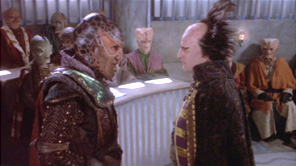
The show I’m referring to is one that was developed by J. Michael Straczynski called Babylon 5. Without getting into all sorts of geeky crap about the show, I’m mainly interested in one of the races that was developed during the series, called the Minbari, a race of balding aliens who were also deeply spiritual. What made them significant in the show was that they were running around the galaxy for thousands of years before humans took to space, so they had a lot more time to really mess things up. Their government was run by a 9-member council that was made up of 3 members from the religious caste, 3 from the warrior caste and 3 from the workers’ caste. During the seires, the Minbari ended up in a civil war between the two more powerful castes, the religious and warrior. Why I’m discussing them is because their spiritual leader realizes at the end of their war (and the way to solve it) is that the religious and warrior castes had completely forgotten the most important caste to their civilization: the workers’ caste, the one that created all of their ships and buildings and was the one caste that suffered the most during the war fought between the two vying for power. As a result of this realization, their leader then elevated the workers’ caste to more positions on the council so that they would then be the dominant caste from that point forward.

These aliens didn't get along either, so their people ended up killing each other. Nuff said.

We have the same problem right now. We have two political parties who are fighting amongst themselves for power in our government, yet the ones suffering the most are the workers, the common citizens who don’t actually have a seat at the table, yet are the ones who are victimized by whatever decisions the two political parties make in their name. But these two parties have stopped being representative of the people a long time ago and now only really represent themselves, but claim to represent everyone else. But they do so in name only. Look at the events that have transpired over the last decade and that should be readily apparent to everyone. We’re fighting two wars that were picked by people in power who cared zero for what the common person thought about these wars. Yet the people fighting these wars are the common folk who make up the entire organization of the military that has no voice in the decisions the government makes for them. During this last election, the people were angry and spoke by using the only voice they have (the ballot box) and threw a whole bunch of people out of office because they haven’t been listening but speaking rather than listening. So a new group of people are now moving into office, and they don’t seem to get it either. Rather than realize the people sent them to Washington to get things done, their leadership thinks the people sent them to Washington to continue fighting with the government and again, getting nothing done.

So, let’s look at this from a different angle and treat government as a hospice where our goal is to treat the situation as triage. Perhaps if we look at it that way, we might realize what needs to be done to fix this problem. But I suspect that even with such an easy allusion, they still won’t get it. Or they just won’t listen. They’re pretty good at not doing that. But this triage is a blueprint to what people actually want done, even though I realize no one is interested in actually listening to the people. Think of this triage as Maslow’s Hierarchy of Needs, where we take care of our basic needs first and then work our way up to actualized desires once our struggle to survive is taken care of.

1. Our people need jobs. That’s been hurting us from day one. This means that the first thought should be to getting people to work. This doesn’t mean fast food jobs or retail jobs. We are a post-industrial nation that has a high-end technologically driven citizenry. This means that we need manufacturing jobs that develop high-end concept materials, like electronics, medical needs and computerized knowledge. This means government needs to help these types of industries grow and grow in our own country, not by farming out the manufacturing to third-world countries so only executives of these countries have jobs. We’ve done enough outsourcing as it is. We need stabilized positions in this country, which requires a serious focus on technological education for a workforce that has grown stagnant in building 20th century technology that is now being taken care of elsewhere. We need to focus on the 21st century and beyond by satisfying that market in a way that only our workers can do it. That means constantly being at the forefront of these markets like we used to do back in the early part of the 1900s with the previous markets of technology.

2. Once jobs are stabilized, we need to focus on making sure that people have money to spend. I’ll let you in on a little secret that government right now has no clue about (because they certainly don’t seem to get it). People don’t care about the budget. Politicians and government wonks do, but the average person doesn’t care about the budget. What the average person cares about is that the government doesn’t keep taking more of what they bring home from the jobs that they do have. This means that this whole budget mess that Obama, the Republicans and the suddenly backbone finding Democrats are fighting over is pissing off the average American. Right now, those out of work are about to lose their unemployment benefits that were about to be stretched out further. The fighting means they will now receive nothing. That pissed off a lot of people who still can’t find jobs (see number one). The second plank of the problem is the Bush Tax Cuts. People don’t really care that the rich are getting them, too. They only care that when January comes around they don’t end up paying hundreds of dollars more in taxes that they weren’t paying before. If you want to piss off the bulk of the American people, let those tax cuts expire.

This is the wrong time for the Democrats to suddenly rise up against their own president. They somehow think that people are going to believe they’re now on their side because they want to punish rich people. The average American isn’t going to agree with that. He or she is only going to see a smaller paycheck and then be really pissed off at the government. If you want to lose any mandate you think you have, that’s going to do it.

3. People want to see their government getting along. They don’t care that one side wins over the other. Most Americans aren’t that tied to the fight that they care. When they are suffering and see infighting, they see a system that doesn’t work. That makes them go nuts during elections, kind of like the last one. If nothing happens as we move towards the next election, people are going to revolt again. And when they start to realize that revolting doesn’t actually change anything, they’re left with one of two choices: Ignore it and become apathetic, or revolt the way people have done historically. That second choice seems like such a wild card that no one in government believes it will ever happen. Almost every revolution that destroyed a previous government came from nowhere and happened almost overnight. NO ONE sees it coming. And that’s what makes them so scary. So, continue to ignore the problems and hope they’ll go away, or do something about it.

What that means is our government representatives need to start looking at how to govern rather than how to zing the other side. If that doesn’t change, our government probably will. Just not as anyone wants, because changes of that magnitude rarely turn out as anyone actually wants.

‘Tis the Season to be Concerned About Money

One thing I can always count on during this wonderful holiday season is that someone somewhere is going to try to guilt me into spending money. If it’s not on a television commercial that is concerned that my loved ones might be very unhappy with whatever choice of present I decide to give them, it’s the actual show itself where the main character will somehow be forced into a Quixotic quest to find the right present so that Christmas doesn’t turn out as horrible as every previous one that character has experienced.

But if I turn off my TV, I’m immediately bombarded by Christmas cheer on the radio. The other day, I went through my preselected channels, finding nothing but Christmas carols and admonishments about what I was buying people for Christmas. Upset at that, I turned off the radio, opened a magazine, and sure enough because it was the September issue of Girls Who Like to Do It, (or whatever magazine it was I was reading), every ad in the stupid magazine had some stupid Christmas theme that told me I was supposed to be spending money. So I walked down the street, and everywhere I went that had a cash register, including some corner parking lot that was selling trees, the topic was everything about selling me crap that I didn’t want.

I’ll let you in on a secret. I don’t really have much of a family. My parents are both deceased, my sister lives in California with her own family, and I’ve never married. My stuffed animals and I have an agreement that we don’t have to buy each other presents, so I don’t really have much in my life that concerns me when it comes to Christmas.

Except that everyone and his brother thinks I should be out shopping for people to buy people presents.

I know this is a common gripe, but Christmas has completely stopped being about the spirit of Christmas. Forget the whole stupid War on Christmas crap. We’re in full mode Buy Everything Under the Sun Because It’s Christmas mode, and it’s really annoying. You see, I actually like to shop for things for myself every now and then, but I can’t seem to do that during Christmas (which starts sometime in July and ends sometime in February) because every clerk in every store wants to regale me about all things Christmas. Some of us don’t celebrate Christmas because we’re alone.

Did you know that suicides happen most often during the Christmas season? Might that have something to do with the fact that a lot of us don’t actually have a lot going on during this seasons YET EVERYONE KEEPS REMINDING US OF IT? There are some days that if I could find a bridge high enough, I’d jump from it, if it would just get people to stop trying to instill Christmas cheer into me when I don’t have anything to be cheerful about.

CNN is no different. Just today, I was reading through articles, and sure enough there’s a self-help article on what to do when you run into a tight budget during Christmas.  How about NOT buying any gifts? That’s a solution, too. If I don’t buy any gifts, I incur absolutely NO financial hardship. Yet, for some reason that’s not an option in our consumer driven mad mania of all things Christmas.

While we’re all worried about how to afford it all, we sort of forget that there are a whole bunch of people who are struggling just to put normal food on the table, regardless of the spirit of the season. Today, in Bay City, hundreds of people turned out for a food giveaway. Dozens were turned away, because they ran out of food. Meanwhile, stores are telling us to spend as much as we can on the family because we need to jumpstart the economy. Well, I’ll let you in on a secret. The real problem is not the economy; it’s the people who aren’t surviving the economy. They kind of get forgotten so we can worry about whether or not banks can recover from losing mortgage payments. If we were really thinking about our fellow citizens, Obama and Bush would have been arguing for a stimulus package that put food on the tables of starving people rather than whether or not we bailed out banks that make very rich people even richer.

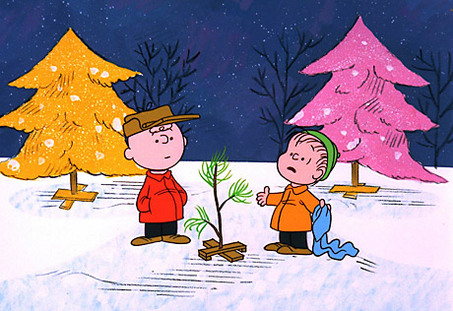
If there’s a spirit of Christmas, watching for its message on a television show isn’t where you’re going to find it. I find it interesting that we keep trying to reinvent the message of Christmas with new million dollar budgeted movies when Charlie Brown really got it from Linus every year during the most succinct, fulfilling monologue ever delivered:

Linus says, “I’ll tell you the meaning of Christmas, Charlie Brown.” And Linus, who has worried over memorizing his part in the pageant, goes to center stage, asks for the stage lights, and begins to say, in that wonderful little boy’s voice, “And there were shepherds abiding in the field, keeping watch over their flocks by night, and lo the angel of the lord came upon them and the glory of the lord shone round about him, and they were sore afraid, and the angel said unto them, fear not, for behold, I bring you good tidings of great joy, which shall be to all people. For unto you is born this day in the city of David, a savior who is Christ the Lord. And suddenly there was with the angels a multitude of the heavenly hosts, praising God and saying, Glory to God in highest heaven and peace on earth god will to men.”

The funny thing is: I’m not even very religious, and that monologue gets me every time. For there are many people who often misconstrue the monologue to be strictly religious, and it doesn’t really have to be. What it delivers to Charlie Brown, from Linus, is that on that day hope was delivered where none had been before. For some, it was a religious moment; for others, it was a moment of believing that perhaps there is more to oneself than just thinking about oneself. And little Charlie Brown goes off and realizes that his little tree can be much more than just the little thing he has before him, and it becomes that much more powerful as a result of his hope and, if you wish to believe so, his faith.

Not once was it about money, greed or the perfect present.

The Epic Battle for Your Money

There’s an epic battle being fought these days in which the goal is nothing less than your hard earned money. Sadly enough, the only ones not benefiting from the struggle are us, the actual consumers. We’re mainly the victims, the targets and the ones who manage to keep making it so that we keep getting screwed over, cheated and abused. If it wasn’t so tragic, it would be funny.

I’m not exactly sure when it happened, but at one point we went from being consumers who were part of the system to consumers of content who are outside of the system. In the old days, maybe as recent as the 1970s, we were seen as consumers in a big triangular product cycle that started with us working for companies that produced content that was sold by businesses back to the people who were responsible for making the products. It was a closed system where people in other businesses provided products while we sold the products from our revenue stream back to them. Everyone came out ahead because we all made enough to survive, and we all got the products that everyone was making for everyone else.

But something happened that caused a real problem to the system. You see, at one point, those companies that make the products realized they could make these products without the actual consumer production staff being a part of the manufacturing cycle. In other words, they could automate the production without having to pay a production staff and still manage to create enough products to sell to those other cells of the manufacturing cycle. Except, those other cells were also figuring out how to cut out the production people so that they could automate their production and maximize their profits. After a certain amount of time, we cut out one prong of the triangle, leaving basically the profitable company management and the salespeople. However, we’ve kind of cut out the people who used to be the producers of content, figuring we can do it without them.

Unfortunately, those people were also the main consumers of the content. Without them, we end up producing a lot of product for people who can no longer afford to purchase it. This was fine as long as we were only cutting out a certain segment of the production audience, but now that everyone has figured this is the way to profitability, well, we’ve made it so that there may be too few consumers to actually participate in the broken triangle.

This was a problem that has been seen for quite some time, but big companies refused to pay attention because they were making money without very much effort, and they saw no end to it. Let’s examine that for a moment. And we’ll do it by examining the old model and then see where the new model sort of makes everything no longer make sense.

The old model of capitalism was that as long as we continued to produce products, we could always sell them for a profit. This always existed with the necessity that the consumer market was always going to be able to actual purchase the items needed. Well, what has happened is that a lot of the money that is to be made in this area has now been transferred to huge corporations that reward very few people for their efforts. Outsourcing and downsizing was inevitable as companies started to exist for the sole purpose of providing better results on stock market exchanges rather than to a people-driven profit margin. But eventually, outsourcing was going to hit a point where the native population of people within these companies was going to start suffering, with more and more jobs being lost, even though prices for products would continue to go down as the labor became cheaper through the outsourcing process.

What this meant was that one of two things would happen, and the result was really based on what ideology you believed. If capitalism was truly the victor, then the outsourcing would eventually hit a point where there is no more possible outsourcing location, so that eventually the corporations would have to start feeding back on themselves, and that would lead to consolidation to the point of where expansion would have to stop and the products being produced would fall back to a Maslowian base level of survival products rather than those that feed self-actualization. There would be no profit in leisure products, like iPads, because no one would be able to buy them any more. Instead, the main production would fall back to basic necessities as the people who still had jobs would be focusing on survival rather than leisure-like activities. The numbers of elites benefiting from the system would have shrunk so small that the luxury good market would dry up overnight. Where it would go from here is unknown as we’ve never reached this expansion end point before, so anyone can guess as to what would happen next.

The other choice is the old one of eventual communism, which is almost a direct insult to anyone who believes in corporatism and capitalism. Communism needs capitalism, however. Because once we’ve reached what’s called a saturation point (where companies have pretty much grown as big as they can become and profit is no longer profitable), then the system turns inwards, and the mass population that has been forced into corporate slavery then turns on the economic system and takes over its cogs and wheels. Their success would be in direct violation of the system, so this would probably bring on an economic revolution where the state would eventually turn into a police state where the military and police would act in the interests of business, turning on individual workers. The workers would probably suffer a number of defeats, with many deaths and even worse working conditions, until eventually they succeeded and overthrew the corporate entities that maintain control over the dynamic.

That’s if you believe either one of these theories of economics. However, what should be pointed out is that we have hit a point where people with economic clout are trying harder than ever to sell us crap we don’t need, and the crap that we do need is being put into flux, so that we are actually having to fight for these things. An example of the former is the various industries of utilities and intellectual property. Heat and electricity is pretty low on the Maslowian scale, meaning that we generally need electricity and heat. Often, the industries that hold power in these areas see themselves as a necessity and do everything possible to act like they are working in our best interest. Gas companies make really cute commercials about how the cars are all fuzzy and happy, and that they’re our friends. Meanwhile, the executives of these companies make insane profits and even when they destroy our natural resources with bad decisions on their part (like BP and Exxon), they do as little as possible to maintain their hegemonies and then try to make the problems go away by paying off only as many people as they need to do. The clean-ups in Alaska and on the East Coast have been afterthoughts, and already there have been attempts to do the least possible, while lawyering up rather than be the conscientious industries we’d like them to be. In the end, they’ll still manage to pull off outrageous profits, and the ones who were hurt the most will always be hurt the most.

The latter of those two choices (utilities and intellectual property) is even more fascinating in that the consumer isn’t even being considered a part of the discussion, even though the consumer is the one who funds pretty much everything. Organizations like the Recording Industry Assocation of America (RIAA) have been so outdated for so long now, holding onto old technology like record companies, that rather than modernize themselves as they should have done so long ago, they sue anyone they can think of, realizing that if they cast their net wide enough, they’ll manage to bring in enough profit to keep themselves going in perpetuity. The fact that they haven’t been relevant in years is rarely discussed by them; they’re more interested in maintaining a status quo that has been gone for many years now. Let’s face it. People are now getting a lot of their intellectual content (music, movies, TV, and games) for free because the Internet has made that possible. A lot of the potential customers they have lost are young people who have grown up getting this stuff for free for most of their lives. The RIAA and other such organizations should have been catering to these kids a long time ago, not slapping them with lawsuits the second they realized there was a problem already out of control. And even worse, the customer base they already had (older people like me), they abandoned by focusing on that young crowd, trying to sell the ideological equivalent of freezers to Eskimos. Had they continued to support the older class of customers, who were used to buying content from stores, they might have maintained years of profitability while slowly switching over to a model that could have catered to this younger crowd. Instead, whenever I walked into a record store, or an establishment that sold CDs, I see tons of titles that are geared towards young kids who aren’t going to buy any of the stuff because they can get it for free. There’s none of it that caters to me, and I’m sorry, but an occasional compilation CD of music I already own is NOT what anyone my age considers “catering” to me. It’s not even trying.

So, this brings me to what’s going on today. There are all sorts of people who see the rest of us as nothing but blind consumers they can take advantage of because they don’t care anything about us because they either outsourced us, or they see us only as mindless automatons who are only around to buy their junk. Google announced today that they are now going to be giving us the ability to buy books online. Basically, even though Amazon and Barnes & Noble have already done, Google indicates that it’s going to allow people to buy books in e-reader format, but then turns around and pretty much tells publishers that they’re only offering 52 percent of the profit of the books sold. Amazon and B&N have been offering closer to 70 percent profit. Apparently, Google seems to think that it deserves more of the money for a product that they did not create and basically only offer as a reading service. It’s like a tape recorder company demanding half of the profit of all music produced because it provided the tape recorder used to make the music. The only reason Google can offer this is because Google has power right now, and it will be interesting to see how the publishers respond to this insult of an offer, especially when they already have two viable processes for releasing e-reader content. Google is proving itself to be a great successor to Microsoft in all ways Dr. Evil-like.

Another story that has been making a play is also very important to this issue, and it involves reality TV stars the Kardashians, who are basically a trio of tarts who have no actual talent other than being famous for being famous. When their launch onto the public scene was through a sex tape that was sold by one of them, we really shouldn’t be expecting a whole lot more. Yet, they decided to play the profit game by tapping into their fan base and offering a misleading credit card that essentially cheats the living crap out of anyone stupid to ever use one. They’ve suddenly decided to distance themselves from the card AFTER a public outcry came out following the revelation that the card was generally little more than a massive scam, in that it does so many things that a paid for credit card should never do. In reality, the Kardashians backed away from their card because they were found out and it was going to become a headache to have to explain how they were profiting by cheating the crap out of people who were stupid enough to believe in them.

But their case is an example of what is going on today. Companies, celebrities and even governmental officials have no problem cheating the crap out of potential consumers mainly because they don’t see these consumers as a part of the original triangle I was talking about. So many people have been taken out of the equation that we’re no longer considered associates, friends or partners, but potential victims to take advantage of.

So what can we do about it? Stop buying the crap that people are selling you whenever you discover they’re part of this bad group of profiteers. Right now, we have a little bit of say in the future of where this goes, but as long as we continue to act like sheep and get taken advantage of, things will only continue to get worse, and eventually we’ll have little to no say in the matter.

Amazon, Please Stop Trying to Sell Me a Cover for My Kindle

A few weeks ago, I bought an Amazon Kindle. It wasn’t the cheapest one but the one with both wi-fi and 3G. I realized I needed one at home, and I don’t have wi-fi there, nor do I want to get wi-fi just so I can use my Kindle. Anyway, I’ve been really happy with it. I’ve downloaded a few books, and now I get the Washington Post delivered to my Kindle each and every day so I don’t have to buy a hard copy of USA Today (which I’ve described as trying to eat candy for breakfast…no substance, lots of news). So I’ve been happy.

Well, when I bought the Kindle, I realized I needed a cover for it, so I bought a really nice M-Edge cover. I’m happy with it, too.

Well, every time I try to sign onto Amazon, Amazon tries to sell me a Kindle cover. I’m good. I’ve got one. Thanks. But it has a huge presentation at the center of my Amazon screen. Rather than try to sell me books (which would be useful on this book reader I just bought), Amazon is convinced it needs to sell me a cover.

I don’t need a cover. I bought a cover. I’m good. Let’s move onto books.

OUTFIT YOUR KINDLE, the ad tells me in very large letters with a spread of new covers that I don’t need.

I looked for some kind of procedure to disable these ads, just in hope that I might be able to start seeing ads for books I might want to buy. But no, there was nothing I could find.

So, now that I’ve decided not to buy a Kindle cover based on these ads, Amazon has now started emailing me about my “need” for a Kindle cover. I received two separate emails in the last week, all designed to “assist” me in finding a new cover/holder that I already have.

Look, Amazon, I understand how you want to monopolize and make as much money as you can, but let’s be frank here. I don’t need two covers for my Kindle. I am happy with the one I bought. Stop trying to sell me crap I don’t need, because I already bought it when I bought the damn Kindle in the first place.

How Math Saved the World…at least during World War II

People who know me know that I am a huge fan of mathematics. My last academic paper for communication was a theoretical paper using a mathematical iterative model to develop international compliance and friendship between nations that have adversarial relationships. I developed this because I was sick and tired of the 18th century negotiations model we’ve been using nonstop even to this day, something I critique quite often whenever we get to having to deal with yet another adventure in acquiring peace in the Middle East.

But recently, according to Wired, it seems that mathematics has more of an interesting history than we may have been told. During the Second World War, it appears that our intelligence used the kind of thinking I really like. Instead of just relying on spot reports and covert agents, they used innovative thinking. When soldiers captured enemy tanks, rather than just strip them apart for intelligence involving their capabilities, they also recorded the serial number for the tank itself. Some intrepid mathematician for the government realized that if you used those numbers, you not only could catalogue a specific tank, but you could use the categorization scheme to figure out exactly how many tanks the Germans had. And once you knew that, you knew exactly how many you needed to make to overwhelm your enemy. Unlike the past where nations would just create weapons until they ran out of money, or guestimated they were making enough, this told you exactly how much you needed to beat your opponent in the field. When you needed a 2 to 1 advantage, at least according to the old numbers involving calvary and tank warefare, it was important to only field as much as you needed.

Well, the equation they came up with was:

, where k=the number of tanks observed, m=the largest serial number observed. The -1 is the simple factor that for every tank you take out of usage (meaning you were looking at the serial number of a tank that was removed from battle), you would not run into that same serial number again. Then you use this number to calculate the variance (N) and you now know how many tanks the enemy was fielding.

This formula was so accurate that we predicted the German were building 255 tanks a month, and after the war we discovered we were off by one tank (they were building 256 tanks a month). Not bad, eh?

People constantly disparage the importance of mathematics, but it can be used for so many different applications that people don’t even think about. With iterative calculations, you can estimate instances of occurrences, something I’ve recently found to be very interesting in figuring out long-term, generational effects. For too long, we’ve focused on calculus, which is quite useful for area-filling calculations, but this has pushed us into a one-use kind of mathematics that has limited its application. Statistics are great for certain things, but some questions involve the application of time and the degeneration of numbers. Fortunately, our ability to use the math at our disposal makes us capable of answering a lot of questions we were only imagining only a few decades before.

It Takes a Village Idiot & Other Self-Serving Nonsense

Another election period is upon us, which means an endless stream of attack ads, empty promises and commercials about politicians who claim to be just like us but would never cavort with any of us unless it was during an election cycle. But what gets my goat the most is not the election pandering itself but one of the common refrains that just won’t go away. The one that says we’re doing it for the children.

You know the appeal I’m talking about. Someone will go off half cocked (or full cocked, or because someone did something involving a cock), and then state that he or she is doing what he or she is doing “for the children”. What they are really saying is that they’re doing for themselves, but they really need to sound like they’re doing it for a much higher purpose, and what purpose is higher than the generation that is coming up next?

In 1996, Hilary Clinton, who was First Lady at the time, wrote a book called It Takes a Village: And Other Lessons Children Teach Us. During the Bill Clinton Administration, it became a major talking point, and in 1996, H. Clinton went on a nationwide, ten-city book tour where she advocated that it takes a village to raise a child. I won’t get into the quandary that was the fact that H. Clinton really didn’t write this book, as it was actually ghostwritten by Barbara Feinman, but I did want to talk about a fundamental foundation of the book itself, and why it still continues to provide problems for modern day America.

One of the problems I have always had with the book is that it makes a specific claim that it never really backs up. Drawing from a spiritual African folklore idea, the book projects a belief that in order to raise a child in modern society, it requires everyone in the society to participate to make that child better. It also demands that all of the society’s resources be combined to bring forth the best children we can raise. That’s all fine and dandy if you have children, but it also makes a major assumption that a childless adult cares one iota about someone else’s children.

The book’s idea has been used a lot lately in projecting itself in political issues. Whenever there’s a debate about adult values being considered, quite often the argument gets placed back into the nursery sphere, and we’re arguing whether or not children should be subjected to influences they may not be ready for. Examples are music, videogames, television and movies.

Let’s look at those examples a bit. The first example was music, and look at how we’ve handled these issues in our modern day brush with this issue. It should not be surprising that one of the first avenues of contention occurred right about the same time rap music became a mainstream phenomenon. Next thing you knew, we had political commentators all over the country arguing that musicians (rap stars) were advocating all sorts of violence against police and state run institutions. In order to “protect” the children, we had to separate this horrific music from their ears. As such, people like Elizabeth Dole and Tipper Gore started advocating that music needed to be controlled because if it was not, then we might risk the future development of our children. That alliances occurred between such strange bedfellows as Dee Snider of Twisted Sister and John Denver against such actions is a testament to how deranged the attacks were in the first place.

Since then, there have been all sorts of continued attacks on the arts by all sorts of different “for the children” advocates. Computer games are constantly attacked by Jack Thompson, a disbarred Florida attorney, who has continued a Quixotic campaign against videogames that is so futile that he is continuously ridiculed by the Penny Arcade comic strip duo of Tycho and Gabe, even though he continues to threaten to sue them, causing them to humiliate him even further.

I could go on for hours about this sort of stuff, but the point of this post was to emphasize how fallacial the argument is that a village must respond to the needs of the few who advocate it takes a village to raise a child. And that’s where I wish to continue.

You see, the whole “it takes a village” crowd has managed to force itself into the decision-making process of a lot of things that directly affect adults who have nothing to do with children, and that’s just wrong. Part of the reason we formed a society in the first place wasn’t to protect the children, but to protect the adults from each other. As critical as it is that Hobbes, Locke and Rousseau compete against each other for why we formed in the first place, not a single one of them advocates that we formed for the purpose of raising kids but that our formation was for the purpose of how adults interact with each other. Somehow, with this whole “it takes a village” nonsense, we’ve kind of forgotten this.

Because of “it takes a village”, I now have to jump through hoops just to play a videogame. Now, I don’t have too much of a problem with most of the rules, such as having to be of a certain age to play a certain game, but those rules have developed other problems that do directly affect me. Because of these draconian rules for games, it is very possible that some of the games I would like to play aren’t even being carried by specific retailers. Wal Mart doesn’t carry anything that has the NC restrictions, because it figures that if kids can’t buy it, then it’s not worth stocking. But even though we’re talking about games, it should be pointed out that the majority of the customers who buy computer games aren’t kids, but adults. Yet, because of rules that exist because of kids, we’re limited in our selection by what kids would actually be able to buy.

According to the Entertainment Software Association, in a 2008 report, the latest one conducted, the average age of a gamer is 35, and only 25 percent of the player base is 18 or younger. So, we’re creating draconian rules for a small segment of the gaming population, yet 75 percent of the population is an adult who is limited in selection by these rules. To make it even more bizarre, it’s significant to point out that the average age of a purchaser of games is 40. I probably shouldn’t have to make the mention of the significance of that.

The significant assumption of the whole “it takes a village” thing is that everyone in society is required to contribute to the upbringing of a child. That’s relatively new and something that has been forced upon society by some people who I don’t think are revealing the whole story. When politicians use this mantra to get elected, and then turn around and don’t actually do anything that contributes to the upbringing and well-being of children, there’s a real problem here. Think about this. How often do women and children foundations have to struggle against any administration for a pittance of a budget when very adult endeavors get funded nonstop? After the Depression, married women convinced their elected husbands to start up a Women and Children’s Bureau, but once men in office set it up, they did everything possible to unfund it and eventually remove all of its teeth and capabilities. It only took a decade to completely destroy the foundation, and even though there’s a similarly named organization today, it is a shadow of its original purpose and is maintained more as a donations seeker than an actual organization that does the kinds of things it was imagined it would do back in the 1930s.

Which brings me to a very important subject to me: Me. Why should I care about the upbringing of someone else’s children? Because if you think about it, that’s exactly what’s being demanded of me. Sure, I like kids, but that doesn’t mean I want anything to do with them. I’m kind of like the hunter and gatherer guy from the Stone Age period (and not that much more intelligent sometimes). As the hunter in the tribe, my only interaction with little Johnnie is when little Johnnie is learning to become a hunter. Until then, little Johnnie is kept as far away from me as possible. He doesn’t get to go to the grub shop, or the ale house, and if he sees me on the street of our village, he should have been taught to say: “Greetings, good sir, Grokk” and then continue on down the street. He and I have very little interaction together. His father, whoever that is, is the one who actually raises him with his mother. Had I wanted a child, I would have had one, and then it would have been my responsibility.

You see, what I’m getting at is that Hilary Clinton’s book (that was written by someone else) argues that I’m supposed to present my resources and my time to raise her child. I’m sorry, but Chelsea Clinton doesn’t need Duane Gundrum raising her, or having anything to do with raising her. As a matter of fact, as a sidebar of this whole “it takes a village” crap, if I ever show up at Chelsea Clinton’s school to help raise her, the school administrators are probably going to call the police and make sure that I’m no longer allowed within 100 feet of a school, church or Chuck E. Cheese establishment. The point being: I’m only desired as long as I can provide resources. I, personally, am never invited into the rearing process.

So, if you get the point, the “it takes a village” is all about using my resources but doesn’t really want “me” to assist in any way. It’s all just a big shortcut at gathering resources for those who have children, like H. Clinton, and taking them directly from those who do not. That’s all “it takes a village” was really meant to mean. If I was ever invited to assist in the education of the child, it might be different.

The origination of “it takes a village” comes from an African source that actually wanted the village to participate in the raising of a child. The US version of the phrase never advocated for that. We’re really good at using some parts and discarding the parts we don’t like.

That’s why I think our version is really “it takes a village idiot” to raise a child because that’s what I’d have to be in order to participate without being allowed to ever participate in the first place. Like the reason I never got married, I’ve always felt it’s all about money, and I’d rather keep mine where it is.