
Monthly Archives: September 2013
What I Talk About When I Talk About Drinking
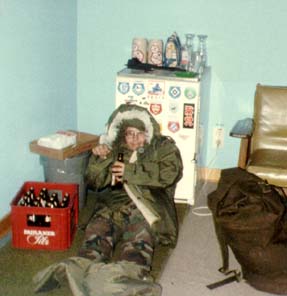
During the late 1980s, going into the 1990s, I was in the U.S. Army, and all things considered, I probably had somewhat of a drinking problem. This was the latter part of the era of drinking before people started getting serious about the ramifications of the problem, meaning that we started enforcing drunk driving laws (unlike the past where we swept things under the rug) and Alcohol Anonymous was no longer just a light at the end of tunnels that no one would ever travel through. To understand my perspective on the whole situation, let’s visit the late 1980s and let me share a bit of a story with you.
You see, back then I drank a lot. Every night. It was almost a ritual of service at that time. Work hard during the day and then get plastered at night. Wake up the next day, run PT (most likely throwing up alongside the other soldiers who were all suffering hangovers) and then by the time evening came along, we’d go out and do it again. THAT was pretty much a part of the military lifestyle back then.
I think the apex of this whole situation occurred when a colleague and I decided to take a trip to the Canary Islands. On the plane, we both got plastered, and then when we got to the hotel, we got smashed. And then for the next week, well, I know I had a really good time because I have pictures of me and a lot of very beautiful women cavorting together, but to be honest, I have figments of memories of what actually happened during that week long trip. All I remember was being greeted at the airport on the way back by my fellow GIs, and they had brought beer with them, so we got obliterated on the trip home, too.
A couple of weeks later, I was driving my car back to post (in Germany), and I was extremely inebriated. Some friends were in the car behind me, and they drove up behind me, hitting my bumper and then trying to push my car forward with their own acceleration. I was at an intersection, and as they pushed me forward, or tried to do so as I held down on the brakes, I suddenly sobered up. I was probably still quite drunk, but right at that moment, it suddenly dawned on me that there were other people on this street, that if I just gave in to the fun, who knows what damage (or lives) could have been affected.
Driving home slowly (the other car rushed by me and continued on towards the post), something came over me that made me realize something was wrong. I just was too drunk to really figure out what it was.
The next day was Saturday, so I didn’t have to be at work for a few days, but instead of my usual routine, I decided to skip the club that night. Instead, I sat at home and read a book. My fellow party buddies thought something was wrong, but the next night, I skipped partying again and did something else (don’t remember what it was at the moment but I do know it didn’t involve drinking).
A few days later, I sat down at my computer (one of the early ones…this was the 1980s) and started writing my first novel. In case you’re wondering, it was Innocent Until Proven Guilty, and it was the first work I completed where there was absolutely no alcohol involved. Shortly after that, I began work on my second novel, Loser.
I was reading an article today in Salon, about how alcohol is targeted at women through intricate manipulation and advertising, but I’ll have to be honest that when I was drinking, it just seemed like the thing to be doing. There were no great football beer ads that i remember during this time. Sure, there was peer pressure, but I’ve never been all that susceptible to that sort of thing. For me, all there ever really was involved the “you have to be old enough to drink it” mindset so that when I hit that age, I started imbibing because it felt like a chronological ritual of growing up.
I’ll admit that when I quit partying, it wasn’t the end of alcohol for me; that would come years later, but it did change things for me because that pleasure I received of getting smashed no longer seemed to be of interest to me.
What used to fascinate me was how many of those tests in books I would take that indicated I was most definitely an alcoholic. Do you often drink to excess? I sure did. Do you wake up the next day and not remember moments of the night before? I woke up one morning and couldn’t remember much of what happened the entire week before. Do you ever blackout? When didn’t I? Do you often crave alcohol? And that’s kind of where it breaks off for me, because to be honest, I’ve never craved alcohol. Actually, kind of hate it the more I think about it. I liked the buzz I got, but to be honest, I wasn’t all that excited about the buzz either. I drank back then because it was something to do. I really didn’t like my life back then, and it seemed like a good crutch to fill in the gaps of what was going on and not going on. I’m one of those kinds of guys who never really has romantic relationships, even when I was in the middle of a romantic relationship (if that makes sense). So, drinking filled a void that I basically needed to fill with something.
Fortunately, writing kind of fills that void now. The “thrill” of drinking was the ability to turn off my mind and allow this other sense to overwhelm me. Believe it or not, I get that (and more) from writing. I take myself to another world, and I get to live in that world during the time that I’m writing. It helps me to forget that my current life kind of sucks. Sorry, but it does. I still don’t have romantic relationships, and that part of me has never changed. So, I spend a great deal of time trying to find some way of filling the gaps that basically never get filled.
When I got out of the service, I didn’t quit drinking completely, although I became more of a social drinker. My friend Kat would drink from time to time, so I would drink with her. When we parted ways, I basically just stopped drinking completely because like I said before, it never really gave me anything that I was lacking anywhere else.
And that’s been years for me now. A friend of mine visited me for a week a few weeks ago, and when we were at the store shopping for groceries, she asked me if I wanted any alcohol, and it never even crossed my mind that I might be interested. Alcohol has no value in my daily life, and it’s not something I seek out. At one time, I was going to start drinking red wine, but only because I heard that it had certain heart benefits. Never did get around to buying any though.
So I guess what I’m trying to say is that I suspect that alcohol serves a purpose for everyone that consumes it, and what’s important is finding if that purpose is strong enough and whether or not it can be replaced with something else. For me, writing served as my alternative. But then, I’ve never been addicted, even though I can’t even begin to tell you how many people over the years said I must have a problem because of how I answered some of those questions. One person I know who is an alcoholic thinks I have some kind of strength to stop as I did, but I never saw it that way. I have my own vices and my own things that need to be dealt with (we all do). Alcohol just doesn’t seem to be one of them. Others, unfortunately, can’t say the same thing.
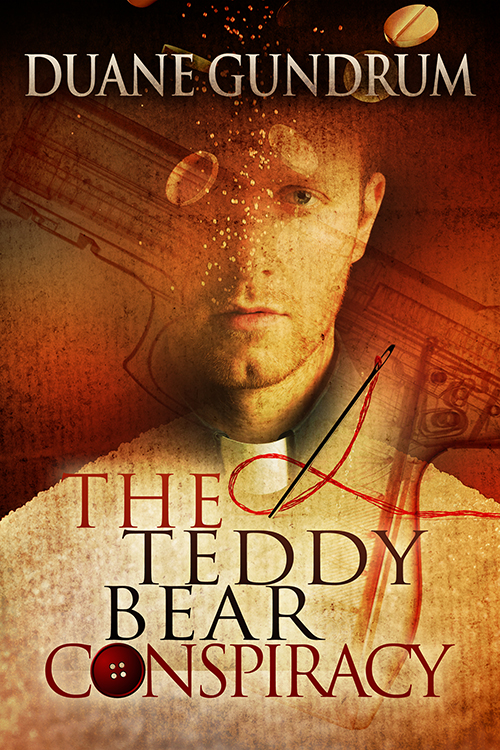
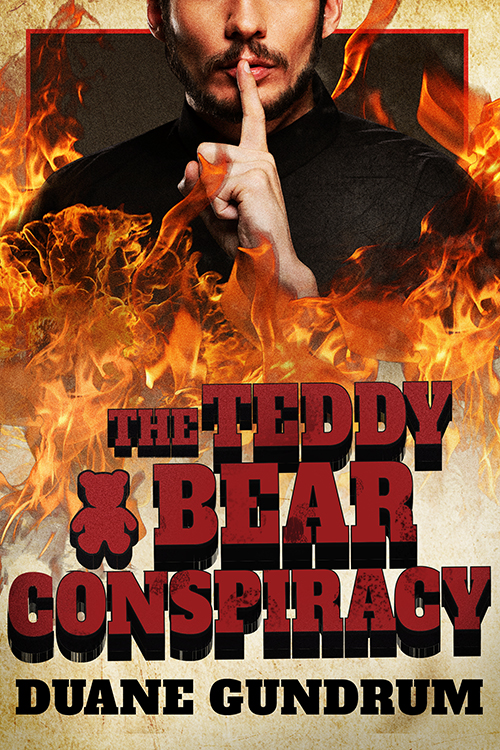
Two new mock ups for The Teddy Bear Conspiracy

Martha Stewart loses it on Twitter and CNBC thinks it’s a big enough story to do an entire story on it

The other day, Martha Stewart lost it on Twitter. The upside (or downside) of it is that she dropped her Ipad and then threw a fit because she doesn’t understand how technical support works (in that they usually don’t send someone to your house to fix something you broke, especially when it was given to you for free, even if it was given to you for free by the founder of the company). Basically, the title of the story, if it was worth the time, should have been “Old Female Celebrity Doesn’t Understand How Business Works” or my other favorite: “Old Woman Yells At Kids to Get Off Her Lawn”. Neither is appropriate but they’re probably better than the drama that ensued.
You see, CNBC, and I”m sure many others, seems to think it is a big enough story to have five news pundits sit around a desk and discuss it on national television. Really. 5 of them. What it boils down to is that five highly paid commentators sat around a table and discussed an old woman’s tweets about how she broke her Ipad. We have fewer commentators at one time discussing whether or not the US should get involved in a war in the Middle East. This should tell you what kind of priorities our national news have.
I think that any time a news program starts off a story with a caption showing you what someone tweeted, that station should be taken off the air indefinitely and should be replaced with footage of goldfish swimming in a bowl. Only if the goldfish learn to tweet can the station be allowed to air news again.
I’m just saying….
We Now Live in an Era of Institutionally Required Paranoia–And there’s no solution

It was recently announced that hackers broke into three of the largest data brokers out there and stole millions of social security numbers, plus all sorts of other identification characteristics on people they track. Basically, what this means is that companies that track your information without your permission, or even without your knowledge, have had that information stolen from them, so all of your information is now in the hands of some very bad people who will use it to steal from you, and there’s absolutely nothing you can do about it. So, have a nice day and please buy more products from random companies.
In case you were unaware of it, this sort of thing is happening more and more often. Even if you choose to remain completely off line and never even do anything that can cause anyone to try to steal from you, there are companies out there making it so that you’re already online and everything of yours online is pretty much open to someone breaking into it, EVEN IF IT’S NOT YOU THEY BREAK INTO. That’s the real scary thing because the way our capitalistic system works means that companies we’ve never done business with can now use your information, collect your information, trade with each other based on your information and pretty much put you into the poor farm by using your information.
A couple of months back, someone used my bank credit card to buy train tickets in France. I have no idea how they got a hold of my information, but I can tell you that when I dealt with my bank, I was very much put on the defensive, almost as if something I had done caused this sort of thing to happen. There was never any statement along the lines of “you know, maybe it was our fault.” Shortly after this, it was leaked that this bank suffered a huge data loss that resulted in accounts being compromised. Not once was a single comment made about that, although when it looked like maybe the mistake was on my part, the conversation was sure a lot different.
And that’s kind of the future that we have to look forward to. Credit monitoring companies maintain databases of massive volumes of information on each and every one of us. But if they lose some of that information, they MIGHT (usually if the government steps in and shames them) inform you. And they just might offer a free credit report to see how screwed you really are. If you were screwed because of their action, expect years of having to explain yourself as no one will ever believe you didn’t actually try to buy 10,000 units of widgets from St. Petersburg in the middle of the night while using your credit card to buy a bail bond for some criminal in Florida.
The real issue here is that so much information is available about people and no one seems to care that we’ve become products rather than the owners of this information. Just think about Facebook and LInkedIn. Both “services” are actually data brokers who believe they actually own your information and that your contribution is that you’re allowed to organize it for them so it’s easier to access. If you quit Facebook, your information stays there pretty much forever, no matter how much they say it won’t be. And if you never joined Facebook, your information somehow made it there any way, and they’re just basically waiting for you to acknowledge you’re who you are so they can start tracking you better and send you notices of things you should buy.
We’ve all become products who think we’re actually in control of ourselves, and that’s the real tragic thing. We haven’t been the owners of our own identities for a very long time now, and even now people don’t recognize that. Or when they do, they just sort of shrug and figure it’s too much of a hassle to bother with anyway. But when their identities are stolen, it’s usually too late, so we all play a reverse lottery game here in which we hope that nothing bad ever happens to us while we cast discerning eyes at thoese who do get their identities stolen. We’re good until it happens to us.
And then, like I said, it’s generally too late. But that’s okay. We have much more important things to pay attention to. Who has time for this sort of thing?
The Teddy Bear Conspiracy
The Ameriad available for free on Amazon Kindle this week
 From September 21 to September 25, The Ameriad is available free on Amazon Kindle. This will be the last time it goes free as I will be removing it from Kindle Select after this promotion (so I can sell it on the Nook and other e-readers).
If you like it, please leave an Amazon review. It would be greatly appreciated as reviews seem to be really hard to come by these days.
Get it here: Amazon Kindle Version.
Just because I paid my bill online doesn’t mean I want to stop receiving paper copies of my bill!
This is one of those things with the “green” movement that has been driving me freaking crazy ever since it started. I’ll give you an example. Consumers Energy handles my electricity needs. I’m okay with that. They send me a paper copy of my bill. I’m okay with that. They let me pay my bill either through the mail or online. Sounds great so far. But whenever I make an online payment of my bill, they automatically switch me from a paper bill receiving customer to an online only bill receiving customer. I never asked for that. I never approved that. They just do it every freaking time I try to make an online payment.
Here. I’ll let you in on a little secret. If I don’t receive a paper copy of a bill, I’m probably not going to pay it. I don’t pay attention to email crap that gets sent to me because my email is filled with so much spam (yes, obviously from all of the porn mail lists I’m on…whatever), but regardless of why I receive so much spam, there’s no rule, written or unwritten that states that I’m somehow supposed to be a diligent payer of attention to crap that gets sent to me that way. But I do look at EVERY piece of physical mail that gets sent to me.
Yet, EVERY month, Consumers Energy attempts to push me off physical mail and make me one of its email bitches. I’m not interested, and I wish companies would stop trying to make that happen.
Recently, I wrote an article about how some company’s “green” policy is not MY green policy, which means that I don’t give a frack that they’re now going green. It’s not part of my business relationship with them, so they need to stop trying to force it on me.
I get so damn upset at Consumers Energy every time they do this to me that if they were any other company where I could turn to some other company to replace them, I’d have done it years ago. That is probably the worst customer service response a company should ever desire, yet I get the impression they don’t give a crap whatsoever. But sure enough, in a few days when I go to make that payment,I’m going to have to go through tons of extra screens of paperwork in order to get myself back on the mailing list again because they’ll automatically try to dislodge me from it yet again, without my permission, desire or intention.
And that’s a horrible business model for any company whenever your customer leaves your interaction fuming at your company after having just paid for your services.
I’m just saying.
When Best Friends Aren’t Best Friends Any More
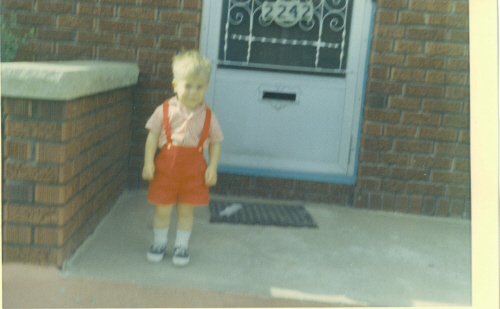
I’m sure my story isn’t that different from everyone else’s story. Most of us grew up with a best friend or two (over the years) and then life may or may not kept us together. If you watch a lot of the movies that get released starring the usual suspects of male friends, you get the impression that these friends stay close friends forever, basically until they reach middle age and go through their middle age crisis moments together.
Unfortunately for me, that didn’t happen. And strangely enough I kind of wish it did. Let me explain.
I’ve had two really close best friends over the years. One was my friend Roland, who I believe I met when we were both about two or three years old. We lived across the way from each other in a low-income apartment complex, and my first memory of Roland was a fight we had where both of us went home crying to our parents. Immediately after that, I remember his mom and my mom conducting some kind of UN conference where the two of us were forced to become friends again. We remained friends from that moment forward, proving that, yes, the UN sometimes DOES work.
Our friendship lasted most of our childhood. Both of us bought the same blue Schwinn bicycle and we rode miles and miles on those things together. It was not unusual for the two of us to race 26 miles down the beach to Redondo Beach, California and then back to Santa Monica. For us, the enjoyment was the journey of traveling down the bicycle trail together, back in the days when you could actually ride down those paths without running over a million girls on roller skates.
Some of my most memorable moments were with Roland, including when we would run into Dom Deluise at the local department stores and then at McDonalds shortly after. We explored the world together and learned about the world as a shared experience only friends can truly appreciate.
When I was a young teenager, my mom died after a horrible illness that slowly drained her of life. When she died in the hospital, I remember calling Roland because he was the only person I wanted to talk to. Shortly after, he showed up with his mom and dad to the hospital, making sure that I wasn’t alone on that horrible day.
Soon after, I moved in with my older sister and her husband, which forced me to move away from Santa Monica. Roland and I kept in touch by phone, and every now and then I’d figure out a way to take the bus for a few hour trip to visit him, and sometimes he’d do the same to come to me. But as we were further and further away, we sort of drifted apart until we stopped calling and then never saw each other again. It’s one of those things I regretted deeply over the years, but life takes you where life takes you.
In Moorpark, my new home, I made friends with the person who was to become my next best friend, Ken. While we didn’t have the history that Roland and I had, we quickly built a friendship and quickly made up for the lack of history by inventing all sorts of adventures together. One of my favorite moments in high school was when the two of us were taking a Spanish class, and we were the two students who had already finished alll the lower level Spanish stuff so we were kind of put into a corner by ourselves to study on our own because they didn’t have a high enough level class for us to take. Because we were always together, we made a lot of noise and had a lot of fun. So the teacher felt she had to separate us. Therefore, we did what any normal duo of friends would do: We invented a sign language that allowed us to communicate from across the room from each other. We learned it quickly and immediately really pissed off the teacher who decided she wasn’t going to win this battle, so she let us sit next to each other again and never tried to separate us again.
A few years later, after graduation, I joined the Army and Ken joined the Air Force. At one point, we were both in Germany at the same time, so I decided to hop into my Volkswagon Scirroco (sic), pick up Ken and drive the two of us to Paris, France. It was a wild, fun adventure that involved some young girl we found to help us find a hotel (because neither of us could speak French) who the hotel owner thought was a prostitute because she was negotiating the room for two American GIs (and then left with a smile right after she secured us the room, which caused the old woman working the hotel to suddenly realize she had played the wrong cards in her assumptions).
That was pretty much our last get together. Ken ended up being accepted to the Air Force Academy and is a colonel today, probably going to be a general one of these days. I wish him well, but I regret that our friendship faded and we really don’t talk any more.
Strangely enough, both Roland and Ken have connected with me through Facebook, so every now and then I see what’s going on in their lives, which when I think about it is actually kind of sad because at one time I was very close to both of them, and like that one hit wonder song “now they’re just somebody that I used to know”.
Weirdly enough, when I made contact with them on Facebook, I immediately had this feeling that I had found a long, lost friend and then things were going to be great again. And we rarely even communicate, which forces the “You Can’t Go Home Again” by Thomas Wolfe to play through in my head (which is funny because it’s probably one of the most often quoted titles of a book that people have never actually read themselves, so when they pretend to have read it, I always say “Stop Twampling!” just to see if there’s a reaction, which when there’s none I know they’re bullshitting me about having read it). Wolfe’s idea is somewhat true, and you never really understand it until the events play out that show you how true it really is. I read that book a decade or so ago, yet until I made contact with those two former friends, I never made the connection to what he was truly saying.
Amazon’s Business Practices Discriminate Against the “Out of Money” Class

Today, I was thinking of buying a book that I don’t really need, but for some reason felt I had to have it right then and there. So, I went onto Amazon’s site, put in the information for the book and found out that I could purchase it used for $7.54. I went through the full process of buying, but when it came to the last stage (well, the stage before I give my address to send it to), I was halted by a statement indicating that my credit card could not process the transaction. So I immediately checked my checking account and discovered that my balance was 32 cents. So I then went back to Amazon, realizing that my bank had no more funds in my account and tried to figure out how they could accommodate me.
It turns out that Amazon has no contingency plan for those who do not have enough money to afford their products. In other words, I was proverbially screwed.
This immediately inflamed me because all companies should have resources in place to assist those of us who are “financially challenged”, which, according to an Internet search I just did that brought up lots of lesbian pornography, I discovered that the financially challenged are quite often the most overlooked disenfranchised class of people in American society. It’s almost as if businesses think that people need to “work” for the things they wish to buy and aren’t too proud to not say so.
So, I contacted several loser friends of mine to inquire whether or not they have ever been discriminated like this before, and four of those five friends indicated they had (the fifth could not answer as he was suffering from a severe case of “Cheetos-overimbibing”). I was shocked to discover this was not just an isolated incident.
This has inflamed me to no end, and I decided that I would send out the word to everyone that these practices must be stopped immediately, or we would use our financial clout in massive protest and show them that without our inability to pay for goods backing up their company, they’d…um…um, you know maybe I haven’t thought this through enough.
Let me get back to you, and when I do, boy am I going to have something for you to rally behind!