Category Archives: Writing

Remembering the days when writer groups used to actually service writers

Cancel-3

A year or so ago, I was a subscriber to Writer’s Digest, a magazine that has been around for a very long time and used to serve the purpose of helping wannabe writers become actual writers. When I was young, I used to tear through the pages of that magazine, reading the fiction process articles written by its editor back then, Lawrence Block. The tidbits and ideas that I received from that magazine used to be wonderful.

This was before the whole Internet revolution came and went. As we all know, the Internet made it so anyone could publish his or her book whenever he or she wanted (regardless of how ready it was), and the need for the mainstream publishers and reputable agents was no longer a necessity. If you understood the market that Writer’s Digest used to serve, you might notice that something has probably had to happen to the magazine as well. All of those people it was helping to train become professional writers are now out there making their own way, and they’ve done it without the need or desire to listen to intricate lessons of how they should learn to write and how to format manuscript pages. The need for a service that Writer’s Digest used to provide have become almost none.

Which means Writer’s Digest probably had to change as well. And unfortunately, what I’ve started to notice is that this magazine has begun to mass saturate my email with continuous “give us money and we’ll help you prepare your manuscript for publication”. Realizing that people no longer need the advice on how to get published, now I’m receiving never-ending offers to help me “prepare” a manuscript for publication. The last one was for a Writer’s Digest “service” that proofreads a manuscript and charges you by the page. The funny thing is: The editors who actually work on self-publishing works out there charge a whole lot less to do the full job than Writer’s Digest is offering to just a portion of the work required.

So, what this means is that another service has popped up that wants to separate the independents from their money under the guise of offering a necessary service. In the old days, this service used to be offered in the classified pages of WD, but now the magazine itself is in on the deal. And while I usually don’t jump on the criticism of WD, I am starting to notice that more and more “independent” services out there are trying to attract the self-publishers to do things that self-publishers have learned to do themselves. I’m talking about formatting services, book cover creators, full editing, line editing, feel of the story editing, punctuation editors, marketing promoters, “how to” books written by people who really haven’t figured anything out themselves other than how to charge people for “how to” books, and so many others. Now, some of those services I take advantage of, like book cover creators, because the people I work with are far better at doing it than I am. But what I’m also noticing is that a lot of bad book cover creators are also advertising their services. This goes back to a conversation I had with independent filmmaker Chris Penney (of DogByte Films), who in making independent films remarked that the people making money off of these films tend to be the organizations that provide services rather than the filmmakers themselves. I’m talking about the color correction people, the film editors, and all sorts of other fields that have sprung up to take advantage of the fact that there are a few visionaries out there trying to turn their ideas into something brilliant. My point is that this same mentality is now finally creeping into the independent book market, as there are people who realize that there’s gold in them thar hills and the gold is the people coming to mine for gold, not the gold itself.

And that’s the problem, in a nutshell. A lot of us are trying to make this business work, yet we’re constantly being inundated by people who are trying to make a quick buck off of us.
The Problem of Genre

One of my biggest problems as a writer is that quite often it is very difficult to nail down the genres in which I write. It was easy in the beginning of my career when I wrote Innocent Until Proven Guilty, which was mystery/suspense. But then I started branching out on other types of books and things got, well, kind of confusing. Let me give you a bit of a run-down, and you’ll see what I mean:

Innocent Until Proven Guilty: A murder takes place in corporate America and then an executive frames another for the murder. Works well as mystery/suspense.

Leader of the Losers: A dystopian future where poverty and class distinction has been solved by eliminating the “losers”. Definitely science fiction.

72 Hours in August: During the 1991 August Coup in the Soviet Union, a plan is hatched to start a nuclear war before the coup is over. Suspense, but also historical, and kind of a mystery as well.

Destiny: The Tales of Reagul story that starts the whole series, except it takes place 3000 years after the beginning of the epic. Story begins with a space battle, turns into a fantasy trek across a mysterious land and then ends with another large space battle. Science fiction? Fantasy? Both?

Deadly Deceptions: In South Korea, a counterintelligence agent uncovers a blackmarketing operation that might actually be masking a major espionage cover-up. Guess that’s a suspense novel, or a thriller, or also a mystery.

The Ameriad: A humorous Greek epic that spoofs the Iliad and the Odyssey by turning the icons of American society into the “new” gods. No idea where this one belongs.

Absent Without Leave: A military criminal investigator uncovers a 20 year old crime that started with the framing of his father and leads to the political future of Texas politics. Mystery, maybe? Thriller? Suspense?

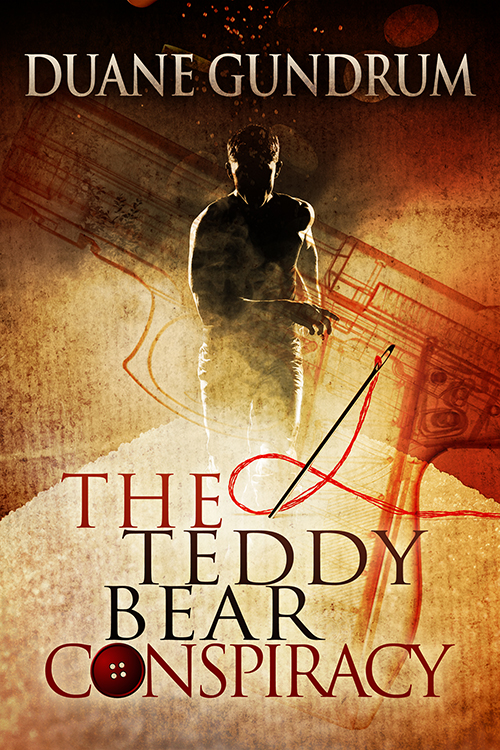
The Teddy Bear Conspiracy: A CIA agent, running an operation to defeat the Colombian drug lords, finds himself targeted by his own people, forcing him to finish the mission alone while someone within his organization is trying to kill him and take over the project. Suspense?

Thompson’s Bounty: A time-traveling Coast Guard cutter encounters 16th century pirates and is sucked into a battle between two naval commanders. Science fiction? Naval warfare?

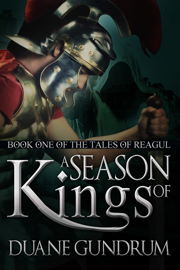
A Season of Kings (my next novel): The first official book of the Tales of Reagul, which tells the story of a planet where science and magic are intertwined. Most of the story is fantasy, but the whole premise comes from an alien experiment, which basically makes it science fiction.

Those are just the tip of the iceberg, and I’m finding it really hard to market my books because none of them really fit into any solid genre. Or few of them do. I won’t even try to figure out where Plato’s Perspective fits in, as it’s a novel with the protagonist named Plato who may or may not be the actual Plato, and the novel’s point in time may be a bit confusing as well. It could end up being philosophy, science fiction, fantasy, mainstream, history, etc. I’m sure you get the idea.

Now that I’m on my own

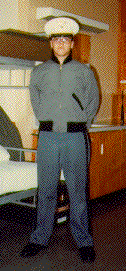
This was once me, at West Point. Boy, have I sure come a long way since then

The last day of work for me was on Tuesday, and it was one of those days that really didn’t have a lot going on. I came in expecting to be given grunt work to do most of the day, but the senior boss decided that I would have my exit interview at 11:30 AM, and then I was finished with the job as of noon. Still got paid for the entire day (or so they say), and then I was kind of on my own from there. I forgot to pick up some medication at the pharmacy at work because I was in such a hurry to leave, so I’ll probably have to wander back there this weekend and do the pick up of that stuff.

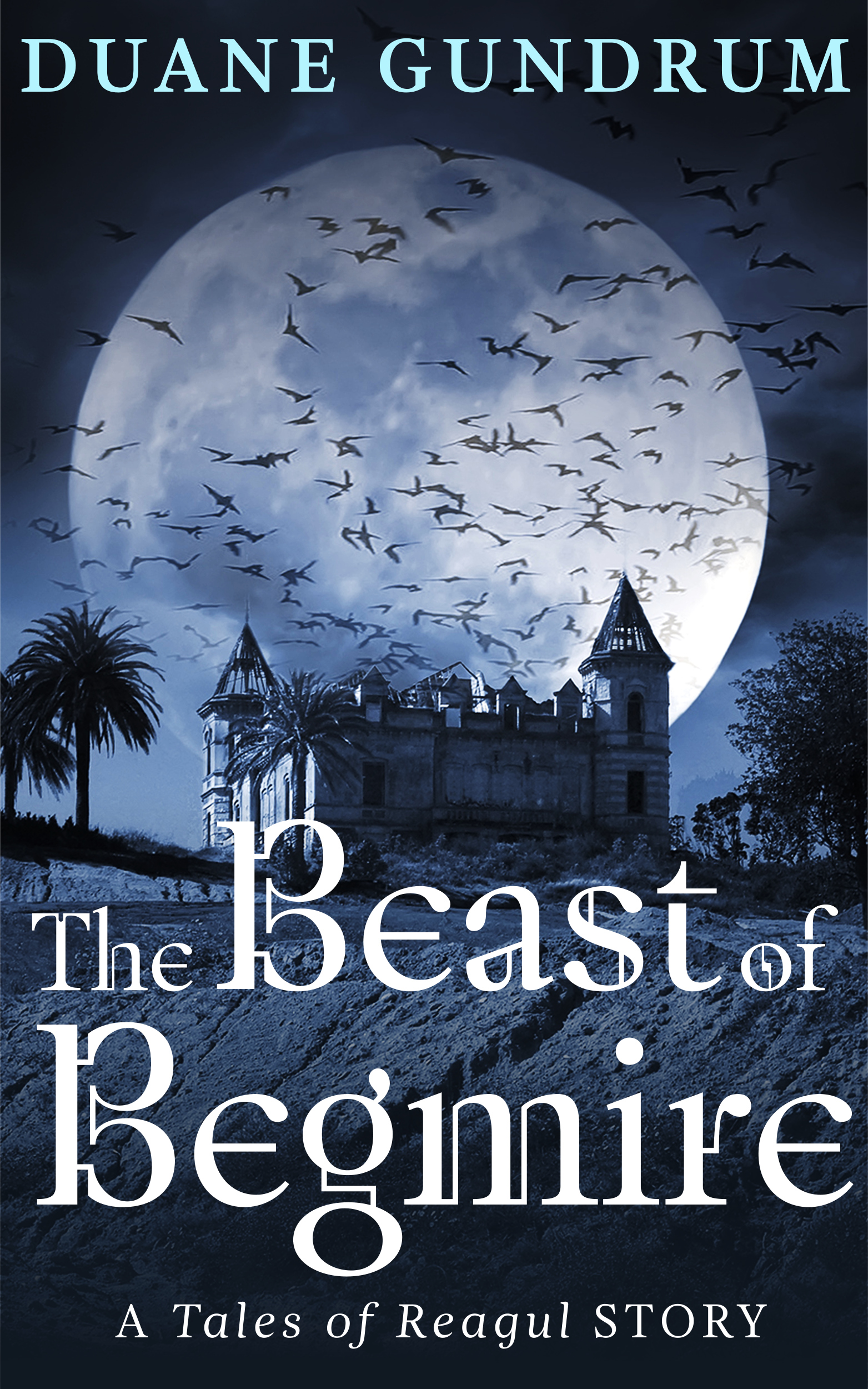
So, I’m now in the process of putting together my writing projects and pushing forward on those. I completed and published my novella, The Beast of Begmire, and I’m trying to see about getting it listed for free on most e-book sites. I also put it up on Wattpad this evening, so it should be available for anyone to read free there.

My next project will be to complete A Season of Kings, and during that project I’m still working on completing the first book of the series I’m writing with Marie. Hopefully, we can get that one moving forward, as I seem to have a lot more hope for that series than any of the fantasy ones I’m writing.

Money is going to be tight, mainly because of the way Spectrum Health completes the quitting process. I can’t ask for my payout money from my retirement until the last paycheck comes through from SH, and unfortunately the way they work it out, it will probably be about a month before the last “paycheck” comes through, and THEN I’m allowed to put in the paperwork for that money. Which means February might be a bit crappy when it comes to paying my bills, and unfortunately I’m not really sure what the solution to that is going to be. If it’s not one thing, it’s another….

Another project I’ve been outlining lately is one that I had on a back burner for many years now, and that’s my Return to Camelot series. Every time I write a specific novel, I find myself getting tons and tons of ideas, dialogue, and even scenes from the next novel I’ll be writing after the ones I’m currently working on. For some reason, Return to Camelot has been the one that’s been building momentum lately. All I can do is write down the ideas and hope that I can get to the actual writing soon. My working titles for that series are:

1. The Once and Future King

2. Return to Camelot

3. Le Morte D’Arthur

They’re not massively original, but they’re working titles for now, and they seem to push the ideas of what exists within each volume. I’m kind of looking forward to writing that series, as I wrote the first couple of chapters years ago and still refer to those chapters from time to time because they were so very good. Yes, a writer can admire his own work from time to time. You wouldn’t believe how critical I am of practically everything else that comes through my word processor.

For some reason, every night I seem to be dreaming about work (the old job). I keep dreaming how someone is telling me I have to do something and it must be done on a deadline that has already passed. And then an inner voice tells me, hey, you don’t work here any more, and I kind of toss and turn through that. I guess the subconscious does that to you when you’ve been living and breathing a job for so long, especially one that was becoming really good at developing arbitrary deadlines and then sitting on the results for weeks while new deadlines are thrown at you for new work that will then be sat on as soon as it met its completion. Anyway.

So, that’s kind of where things are right now. And as so few people tend to read my blog, aside from the spider sites in China that seem to access my page hundreds of times a day, it would be nice to hear from people who are actually reading it. Otherwise, I might just have to discontinue it, as it’s turning very much into a diary where I’m the only one who is really reading it.

The Realm of Reagul

Reagul2
The original concept map for Reagul

The Realm of Reagul

 One of the longest projects I’ve ever worked on has been a world-building one called Reagul. I originally conceived of the land of Reagul in a computer game I designed back in the early days of computer games. It was called Prisoner of Z’anth, which involved an American soldier during the Vietnam War who comes across a mysterious artifact in the jungle that points to a sinister organization working behind the scenes of the war. As he battles his way through enemies, he comes to a portal they are protecting that takes him to the land of Z’anth, a realm completely in Earth’s middle ages but filled with dragons and strange creatures, as well as humans who know nothing of Earth. The story in Z’anth opens up to a revelation that this land was once linked with Earth many years ago, and that an alien race may have been responsible for why all of these people are on this planet. The game itself concludes with a final battle against an evil sorcerer who wishes to control everything around him and is now intrigued to discover there’s a world (Earth) he has yet to conquer.

 A few years later, I created another game called Lessons in Death, which took place in the year 3000, when Earth has been taken over by an emperor who seeks to subjugate the known universe. The peace-loving Eden System comes under attack, and a young female ensign from Eden named Laura begins a quest to destroy the emperor and the empire. It starts out as a space battle and then becomes a medieval sword and sorcery tale on a planet that comes to be known as Reagul. As you might suspect, Reagul is none other than the original Z’anth.

 This game eventually became my novel Destiny, which is basically the introduction to the Tales of Reagul, whish strangely begins 3000 years after the saga actually begins in the first series of the Tales of Reagul. Let me explain.

 During the early days of the Roman Empire, an alien race of beings called the Minions takes a large group of Roman citizens from different locations across the empire and moves them to the planet Reagul. As you start to discover, this is not the first time they have done this to human civilizations, having done this with the Egyptians before and the Greeks soon after. They have also transplanted creatures from other planets, running experiments to see how different species interact with each other.

 At some point, the Minions are called home to fight a war that has been taking place in their home solar system. Realizing they must leave soon, they train a young man in their ways, basically giving him the knowledge of a civilization that is thousands of years ahead of anything ever seen before. His new knowledge makes him so powerful, he becomes the first wizard/sorcerer of Reagul, and his name is Sarbonn.  After the Minions leave, Sarbonn attempts to continue their work of protecting the planet, but he also starts to discover that he’s not the first one they’ve trained, as he begins to discover hints of something referred to as the Dark One, a former trainee who has become so powerful that he has gone insane and seeks to destroy all life through a process of chaos and destruction.

 But Sarbonn, oblivious to this future danger, trains two young sorcerers who become his “children”. Over the years, all is fine, and the kingdoms of Reagul begin to grow with the usual sorts of skirmishes that happen when humans try to create civilizations in different places but are close enough to influence one another. Then the process begins to fall apart.

 One of Sarbonn’s “children” decides that because he is so powerful he should be ruling mankind instead of serving it, so he begins a war of aggression that eventually leads to him becoming the emperor of Reagul. Finally, Sarbonn and his other son must confront this upstart, which leads to a cataclysm like none ever seen before.

 Meanwhile, the shadow of the Dark One continues to spread its tentacles, planning and waiting for the right moment to strike.

1 small

The first novel will be released later next month, and it’s called A Season of Kings. Later this month, the first teaser will be published, which is called The Beast of Begmire, which tells the story of a mysterious sorceress who comes in battle with the Dark One some time after the events of the first three books.


Beast of Begmire - High Resolution

Final day for giveaway for The Teddy Bear Conspiracy–goes on sale tomorrow

My book The Teddy Bear Conspiracy is in its final day of its giveaway contest on Goodreads.


Goodreads Book Giveaway

The Teddy Bear Conspiracy by Duane Gundrum

The Teddy Bear Conspiracy

by Duane Gundrum

Giveaway ends December 09, 2013.

See the giveaway details
at Goodreads.

Enter to win

The book goes on sale everywhere starting tomorrow.

The Countdown to Being Solo Is Around the Corner

I think I mentioned that I decided to quit my job a few weeks ago. I put in my notice, and I have a little over two weeks left. A couple of days, I almost quit on the same day I was working, but I’ve perservered, and my last date of work will be December 24th, Christmas Eve. There’s no significance to that day, but that will be my last day of work.

So far, no other jobs have lined themselves up for me. And I’m anticipating that it’s probably not going to happen either. This means I really need to make it as a writer, or I’m going to starve to death. Simple as that. I won’t even get unemployment benefits. I kind of screwed myself on this one, but I’m trying to move forward with a positive disposition, no matter how many dark thoughts keep overwhelming me about this decision and its process as its being carried out.

Monday, I have a release for one of my new novels, The Teddy Bear Conspiracy.

theteddybearconspiracy2a

I ran a 2 month contest on Goodreads for this book, and nearly 600 requested a copy of it. I am giving away 10 copies. There’s still a few more days left in the contest, but I’ve given up hyping the contest. Check one of the older posts, or just go to Goodreads if you’re interested in that. I also listed a giveaway of The Ameriad through Library Thing, which I did this morning, and it has about a month before it will complete its giveaway process. I don’t have an immediate link to that one, but you can definitely find it if you just go to Library Thing’s site and search for it under giveaways.

But anxiety is definitely beginning to emerge for me because so far this month, I haven’t sold a single book on Amazon. I’ve sold a few through Barnes & Noble and Kobo, but Amazon, which is usually the one that does the bulk of the selling, has been dead cold for me this month so far. That is not a comforting feeling. Remember what I was saying about starving? Hunger pains are already starting to emerge, and I’m not even at the no food stage yet.

After the Teddy Bear Conspiracy goes live, my next project involves a romance series I’m writing with a female writing friend of mine, and then I’ll be heading for a “sometime in January” release of the first book of the Tales of Reagul series, A Season of Kings. Actually, it’s not really the first book, as Destiny was the first book, but I did something a little strange with this series that not too many other writers do with a series. The first book, Destiny, starts 3000 years after the Tales of Reagul series begins, which kind of makes it an interesting universe for someone following the saga. To explain:

During the period of the Roman Empire, a small group of villages were snatched up by an alien civilization and placed onto a planet called Reagul, where an experiment was being conducted to see how civilizations handle in different environments (the original Rome being the control group, and Reagul being the experiment group). One of the citizens of the new Reagul is a young man who eventually learns all of the alien technology (to be the shepherd of this planet) and immediately after he learns everything, the aliens are called back to their home system to fight a war that is obliterating their people. The young man becomes the prominent wizard of Reagul, as everyone sees his technology as magic, and with such knowledge, it practically is. This begins the Tales of Reagul. 3000 years later, which is about 1000 years in our future, the human empire has spread across the stars, and a coloony comes under attack from the empire. A survivor of the assault leads a mission to destroy the empire by killing the emperor, which brings her to the planet Reagul, where it is discovered that her abilities (the reason she was chosen for the mission) rival those of the wizards of Reagul, indicating a tie between her planet and the strange alien race that contacted them years before (obviously being the same aliens who started the experiment with Reagul in the first place). That loater story is Destiny.

As you can see, it’s kind of complicated, but it’s a great, fun story. The first of that story (aside from Destiny) is slated for release in January.

The next project is a sequel to Thompson’s Bounty: A Ship Out of Time, my time travel adventure involving pirates and the Coast Guard. The new adventure will take Thompson and his crew into the Greek and Roman eras. That should be a lot of fun to write (and hopefully, read). People have been asking for a sequel to this novel for years now, so I finally started plotting it out.

The other distant project is my Deck Const series, which received a bit of fame from a series of short stories that I published back in the 1990s in some of the pulp magazines of that time. They were often referred to as The Soldier stories, and there was always a hint of something called The Deck Const in every one of them. I’ve finally finished the first draft of three novels that I’m reworkiing for publication. It’s a dystopian suspense series of the last soldier who is trying to rebuild civilization while on the quest to find a mysterious talisman only known as The Deck Const.

That’s kind of an update for now. Not sure if anyone even reads these updates any more, but just in case this is being read by soldiers from the future who are in search of the elusive Deck Const, let this be your clue that it exists and perhaps you are one step closer to finding it and rebuilding civilization again. Until then, sorry life kind of sucks for you right now, but dystopian societies can be that way.

Becoming a full time writer

Honestly, I never thought the day would come, and to be even more honest, it’s probably not the right time either. But my job hit a point where I realized I couldn’t keep working it any longer. So, on December 24th, the day before Christmas, I will be unemployed.

The job market is horrid these days, which means I don’t suspect I’m going to be finding anything else soon. I’ve got a few irons in the fire I’ve been trying to grab, but my belief is that they’re not going to work out, so I’m pretty sure that in a month from now, I’m going to be facing a new day without any means of survival behind me.

So, I’ve started thinking that perhaps this is the time to finally make a go at being a writer. I’ve been struggling at it for several decades now, and I know enough about the craft to know that my stuff is good. I just now need to figure out how to get readers to actually want to read what I have to write. Part of me has felt my whole life is a Van Gogh perspective, in that I really feel that I have monumental works, yet suspect that no one will ever discover me until long after I have left the planet.

My latest project is The Teddy Bear Conspiracy, which I’m finishing up for an early December release. Then I work on my triple play saga, The Tales of Reagul, a fantasy/science fiction epic based on the world of my book Destiny. I’m hoping to have the first of the series, A Season of Kings, out in early January and then follow up with the other two immediately after. I’ve never done a series before, so that should be interesting.

The next project I’m working on is a follow up to Thompson’s Bounty: A Ship Out of Time, which is a return to the time travel epic for the Coast Guard crew, except this time they’ll be traveling back to Roman times. The title is still kind of up in the air, although I’ll probably go with another “Thompson’s (something)”. I’ve had a lot of people asking for further adventures in this universe, so I decided after some years that perhaps there’s a lot of fun to be had there yet.

Two other projects are on the horizon as well. The first is a rewrite of a novel I wrote some years ago, called 72 Hours in August, which is an espionage, action thriller involving an Armageddon project that emerges during the 1991 August Coup in the Soviet Union, and it introduces my new character who goes by the code name of the Unicorn, because everyone who sees him is rarely believed. He was an idea of mine decades ago when I was working as a counterintelligence agent. He’s what I refer to as an economic hit man, a man who goes into countries and disrupts their economies on the orders of an illusive corporation that benefits.

The other project I’ll be completing is the first set of books in my Deck Const series. The Deck Const is a dystopian science fiction novel where a surviving soldier emerges from one of the last wars on a quest to find a rumored object, the Deck Const, which has been spoken of only in whispers, but may hold the key to rebuilding a very fractured world. The first set of novels takes place in California (from San Francisco to Los Angeles and then to Las Vegas) where communities have become fun house versions of their former selves as the soldier starts to build his army which will one day have to confront the dark one (the other person seeking the Deck Const). Anyway, it’s a huge epic that I’ve planned out, and I’m finishing off the first three novels, of which the series will be continuous sets of three books.

Either way, wish me luck, or wave to me as I pass you on the street with my shopping cart.

Addicted to my computer

Over the weekend, I had a bit of a problem. My hard drive failed. But if you would have interacted with me, you probably would have thought my own heart had stopped instead. I was basically devasted and not sure what to do. This is coming from a former computer technician who has probably fixed and replaced more hard drives than a Geek Squad trauma team. Yet, I was kind of put into a position where I couldn’t do anything about it.

First off, I have a computer that has two hard drives. One of them is only used for starting up the computer, and the other one is my high-capacity storage one. Well, the one that starts up the computer is the one that appears to be failing. So, instead of discovering my hard drive was failing, I was just basically told that the computer couldn’t read my drive, which is short speak for “Sorry, Duane, but I honestly don’t know what’s wrong with your computer but it could be your hard drive, your RAM, or possibly payback for a bad relationship you were once in.” Then I discovered that I had no idea where my recovery or Windows 7 disks were. I tore apart my office looking for them, finding numerous copies of disks that haven’t been useful in decades, and rummaging through pretty much everything I had before discovering that the disk that worked with my computer was labeled a lot like a videocard CD they sent in the boxes, which is why I kept tossing it aside as I was looking for the “real” disk. That wasted Saturday. On Sunday, I found it, and got my computer back up and running. Since then, I’ve been scared of even shutting it down.

Last night, I got a warning from my computer basically stating: “Your hard drive is probably going to fail soon, and I also believe you’re out of Oreos.” While I was overjoyed at the complexity of my computer’s warning system, I wasn’t all that happy about the fact that my computer is about to fail. Or maybe it already did. I shut it down, and I won’t know what happened to it until I get home. If I have to buy a new hard drive, I can’t afford one until next week, and that also means I’ll probably end up with lots of stressful anxiety during that period as well. Oh joy.

But what I’ve discovered is how much I rely on this computer. When it went down, I looked around my house and discovered I have four other computers in the place. So, I could fire up one of the older ones, or my laptop, or my Macbook Pro, or my Ipad, or my Ipad 2, or my Kindle, or the computers my stuffed animals seem to have lying around the house. The point is: I’m not lacking for any computers right now.

But my MAIN computer went down, and that’s what bothers me. I do everything on this computer. And I mean everything. When I get home at night, it’s the first thing I turn on. When I need to check something, I do it on that computer. When I watch TV, quite often I watch it on THAT computer. Losing THAT computer really bothers me because I’m not sure I can handle going back to something that’s not 22nd technology (all the others were made at least a year ago).

So, tonight, I have to face the fact that I might have to do some serious work on getting my computer up and running. But it’s like I’m losing my best friend, which isn’t all that surprsing, considering I don’t really have any close friends aside from that computer and my stuffed animals.

But it usually takes an incident like that for you to realize how significant something might actually be. I do know that I can’t play Star Wars The Old Republic until my computer comes back up to speed, and that alone is devastating. Yes, as a colleague pointed out today, “real problems in a first world environment.” But that doesn’t take away the fact that I’m bothered by the whole situation. It just leaves it less relevant when put into larger perspective.

Taking Umbrage With the N-Word

There’s an interesting article on Salon this morning from Mary Elizabeth Williams on how white people shouldn’t use the N-word under any circumstance.  Ignoring for a moment that most of MEW’s articles tend to be reactionary and designed to cause people to get upset over mundane things that they wouldn’t normally pay much attention to, the points she brings up are interesting, although I’m not sure I completely agree with all of them. I’ll let you read it for yourself and then decide. What I did want to discuss is my own particular perspective in the whole thing, coming from someone who would never use the word, mainly because I find it offensive, and even more important, that it rarely serves a purpose in any conversation I’ve ever had.

But I want to go back in time a bit to a friend of mine I had back in the days of my second visit to the college environment. I had decided to attend a community college (years after the Army AND West Point), cause I was interested in pursuing computer science as a future field. Anyway, my roommate at that time was a really cool guy named (for the sake of here) Bob. Bob was friendly, a good all around guy, and he was dating a woman that he was eventually going to end up marrying. He was also a pretty big guy, and he hung around with a bunch of other big guys, a few of them caucasians and a few of them of all different types of backgrounds, ethnicities and colors. But one thing that used to shock the crap out of me was that Bob used to refer to ALL of his friends as “my Nigga.” And they would refer to him in the same way. And none of them had a single problem with it.

I once asked Bob if that word didn’t bother him, and he looked at me like I was a moron. To him, the word had little contextual meaning as it did to me. It didn’t even have the same meaning to the African-American friends he had, because I couldn’t resist asking them either. They just didn’t grow up in an environment where they felt the typical socio-economic fabric that hangs over so many African-Americans of urban locales. They just smiled when I asked about it and didn’t have a negative thing to say whatseover.

No one thought of Bob as a racist, and not once was race even considered a part of the conversation.

But for me, I never could come around to using that word, even in the mixed company of where it was tossed around on a constant basis. I just didn’t feel comfortable saying it no matter how “welcome” the word was. And part of that is because I grew up in an environment where the word was used in very negative circumstances. The whites I grew up with around in the late 1960s and early 1970s were living through forced busing and the ramifications of the Civil Rights movement, so there was still a long of antagonism existing back then. I was fortunate in being integrated with very diverse populations as a child because I was dirt poor in an urban environment (Santa Monica, California). While many of my caucasian neighbors (meaning people who lived way out of my neighborhood of crack houses and prostitution dens) lived in isolated communities, I spent most of my free time at places like the Santa Monica Boys Club, which tended to cater to the poorest kids who couldn’t afford to spend time after school at the YMCA (where the richer kids hung out). So, I was exposed to all sorts of diversity that quickly educated me on what words were friendly and which words were taboo. As I was always a friendly sort of kid, I learned the ones that made friends (and made lots of friends) and discarded the words that turned friends into enemies.

Years later, in the presence of Bob and his friends, I was completely out of place because the conversations they were having were alien to me, so I did what I did when I was a kdi. I listened and avoided participating whenever I felt uncomfortable. There are certain words I’m not comfortable saying, and I’ve discovered that that is probably never going to change.

This is why I don’t feel concerned that there are rappers out there using the N-word in their music. I generally don’t sing to rap music, mainly because there’s not a lot of it that insterests me. The types that does generally doesn’t have profanity in it, or it’s impact is in a completely different direction. I do think that there are a lot of people who feel they have to emulate that type of behavior to be seen as cool, and fortunately, I’ve never been known to be someone who seeks out that type of status. Whenever I consider myself “cool”, there’s usually a sense of irony or sarcasm involved.

Which brings me back to that word. I don’t know why people feel such a need to use it. But unlike the professor mentioned in MEW’s article, I don’t care enough about the fact that others use it to feel slighted myself. Words do have power in some circumstances, but what MEW and people like her don’t often recognize is that they also lack power if people don’t subscribe to their doctrine. Whenever I hear the N-word, I don’t think “subversive”, “cool”, or even “outrageous.” I think “uneducated” and “limited in vocabulary”. But then, when writing a novel, there have been times when I have chosen the simple phrase rather than the more complicated one because the message was the medium, not the other way around. And in those cases, I guess my own jury is still out.

Why I Never Quit Writing

Me writing
Me writing

There’s an interesting post from Konrath’s site, in which he explains why he never quit writing. Basically, years ago, he was making about 25k a year from writing and felt it wasn’t enough, and now he’s making a ton of money from writing, but felt that if you can’t hack the writing challenges, you might be better off just quitting. And he’s right. But his post also hints at something else: The people who basically are driven to write, and therefore need to make it part of their professional life, if not their entire professional life.

I’ve been thinking a lot about the same sentiment because let’s be honest, my writing career has never taken off the way it was supposed to. When I was a kid, teachers used to tell me that I was a brilliant writer, that they could see a future for me as an intense writer. I loved telling stories, whether in person or on paper. Writing came naturally to me. It felt inevitable as a future career for myself.

Early in my writing career, I latched onto an agent who was going to sell my first novels. She was a well-known, highly placed agent. Everything was looking great. And then she had a brain injury and left the business. And then came back to it years later, but honestly couldn’t remember who I was. Yeah, sounds like a bad soap opera plot. I then secured a second agent who tried for about six months to sell my stuff (or just thought about it and never did anything about it) and then fizzled. Since then, finding another agent has been almost as easy as climbing Mount Fuji by starting in Texas.

And then the ebook revolution took place, and the whole industry fell apart. There are still publishers out there, but connecting with them has become almost impossible, and agents don’t seem to be interested in anyone any more, and everyone that has ever wanted to be a writer, even if it was just for fun, is now a published author selling their own stuff through Amazon and others. Now, the model has changed from good writers getting attention to the best marketers getting the most attention, even if the writing is awful (i.e., Fifty Shades of Gray, although people tell me that once you get past the really bad beginning writing, it actually becomes a much better writing enterprise).

Which brings me back to my original question in the subject line of this post. Why I never quit writing. You see, I really can’t stop. I love to write, and the only way I’ve ever been able to understand and then explain the world is through writing. For me, the act of writing is an exercise in learning more about the universe and why we’re here. Through continuous experiments in writing, I find myself learning more about myself and more about the world around me. Each new novel is an exploration into the process of writing for me, and each new novel is something completely different than what I wrote before. It’s more of a Murakami type of writing, although it’s my own journey, not one scripted out by someone else.

But the business of writing has been the thorn in my side since day one. I’ve never made it successfully, which often leaves me wondering if I should even be able to consider myself a professional writer when my books are read by so few people. Sure, I can take any title I like, but what good is a false accolade in the long run?

But getting back to the question, what I have discovered is that writing is basically all I have. I don’t have a family. I don’t even have a girlfriend. I don’t have a job that I go to where I think “those people would suffer if it wasn’t for me coming in each and every day.” The people where I work wouldn’t notice at all if I wasn’t there tomorrow. They might notice the desk not being occupied, but that’s about it. I don’t do anything of enough significance that it matters to anyone, nor will it ever.

I don’t have a lot of friends, so I don’t have a large group of people who rely on me as their social hub person. I have very few friends, to be honest.

I don’t even have a pet that relies on me for its meals. Not even a goldfish swimming around, thinking, “where’s that strange human who puts food into my bowl?”

For me, writing is all that I have. I construct fantasy worlds, and sometimes I create scenarios where people do horrific things that force them to do all sorts of things they wouldn’t have normally done. I write about people who question their reason for being, their relationships, their place in the grand scheme of things, while I meanwhile ask none of the questions of myself because I have no ties to the material world that my characters inhabit.

So, for me, if I didn’t have my writing, I’d have nothing. Which brings me to the conclusion that if I ever finally realize that my writing is a joke, that my purpose actually has no purpose, I’d probably end everything right then and there.

That’s why I never quit writing. It’s all I have.