Well, today is my final day of teaching for the semester. I doubt I’ll be teaching during the summer (that’s something the full timers do, as they have to do something to raise their pay above $100,000 per year; the rest of us part-timers don’t get hours during the summer, for the most part). This means I’ll have some time to devote to something. I was going to devote my time to writing a new novel, but screw it. Writing is stupid. No one buys my books, so why even try? Instead, I’m going to devote the summer to reading the books of others. And then, who knows? Maybe I’ll kill myself. Not really sure yet, as I haven’t thought that far forward yet, but I’m keeping all options open. Just haven’t decided whether to go with drugs or jumping off a bridge yet. But that’s for another post obviously. This one is about reviewing books.
So, what I did was post on kindleboards.com that I was interested in reviewing the independent books from the various writers there. And a bunch of them jumped up and started giving me their best works, so I’m started buying their books on Kindle, and starting tomorrow, I’ll be devoting my time to doing nothing but reading their books and then reviewing them.
I’m thinking of including the reviews here on the blog, and then I’ll probably build an additional site that’s all about my reviews. And of course, I’ll include the reviews on the Kindle site for their individual books. Plus, I’ll build a set of lists about different genres where I’ll include books that I’ve reviewed.
I figure if no one is ever going to read my books, I’ll contribute this way, and then when I get tired of it, well, I’ll just end it. Sounds like a plan.
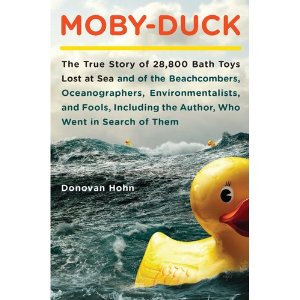
I was in the bookstore the other day looking over the selections of books when I came across a really interesting book of which I had heard nothing so far. But it looked intriguing. It was called Moby-Duck, and as you can see from the picture with this article, it is about a man who goes on a quest to discover what happened to 28,800 bath toys that were lost at sea.
So, why am I talking about this book? Well, think about the story involved in this book. The author, Donovan Hohn, actually put forth a lot of work to find out what happened to these rubber duckies and bath toys after the disappeared. In essence, he went on an epic quest, like the infamous Moby Dick to find what happened to these items. In other words, he went through a hell of a lot of work to get the story that he later transposed to paper so that the rest of us could experience his adventure.
My point is that so few people who write memoirs these days actually go through this amount of work in their adventures before sitting down and writing their “memoirs”. Instead, they suffer one bad relationship, have a bad drinking problem, or do something singularly simple and then try to convince the rest of us that it was actually an epic journey to get from one place to the other. I guess you could say I’m getting a little sick of these kinds of stories that really have no great master journey to them, no odyssey, yet are treated as if they are the epic adventures of a lifetime.
We need more writers out there who are willing to go through a little bit of work to actually come back with the story they need to tell. Instead, we get lazy writers that try to profit off of their innane adventures. And we keep buying this crap because none of us are willing to demand more from the writings that we read.
I felt this way some time ago when I was writing one of my earlier science fiction novels, Thompson’s Bounty, which was about a Coast Guard cutter that gets sent back into the 17th century. When I first started writing the novel, I actually tried to just crank it out without really knowing much about my subject, other than having watched a few old movies about pirates. Then it dawned on me that I wasn’t ready to write the novel. So I contacted the Coast Guard and requested some in person information, which led to going out with a cutter crew for several days over several weekends. It also led to a bunch of long conversations and tours on a Coast Guard base where very knowledgeable people gave me first hand information about the subject I was writing. In the end, I wound up with a book that told the story I wanted to tell instead of one that was peripheral and out of context.
Recently, I’ve been working on a novel that I originally wrote decades ago that takes place in Eastern Europe during the Cold War. Originally, I kind of winged it through the story, but after doing my thesis work on the August Coup in the Soviet Union, I finally had the premise, place and event that really made up the background of the novel I wrote years before. So, I’ve been sitting down and tackling that book from the start, realizing that I now know a lot more information than I first did when I wrote that book back then.
That’s sort of the thing I’m talking about with the kind of reading I’m coming across these days. So much of it can be so much better than it is if authors would take the time to actually do the research that would make their books that much better. I remember a great scene from Billy Crystal’s Throw Mama From the Train when a woman in his creative writing class is describing a submarine story she wrote, and he comments that maybe she should actually know the name of the device she’s describing if she wants to be taken seriously in a story that involves submarines. I take his advice a bit further and say that maybe some time should be given to exploring the lifestyles and events that lead people to the moments that occur in novels so that the reader believes the author is the right person to be writing the story.
We seem to have a lot lazier writers these days with a lot of the stories and memoirs I read, but that doesn’t mean we have to settle for that. We can demand more substance, research and work. We just generally don’t. And we’re the ones who suffer as a result.
"I love this book by Duane. I wonder if he's single."
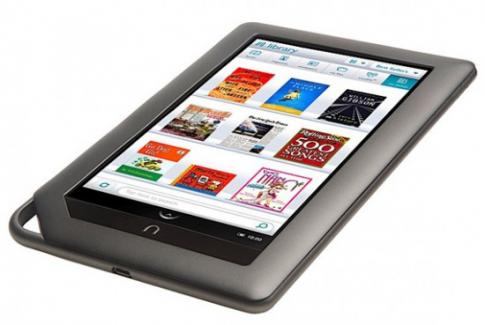
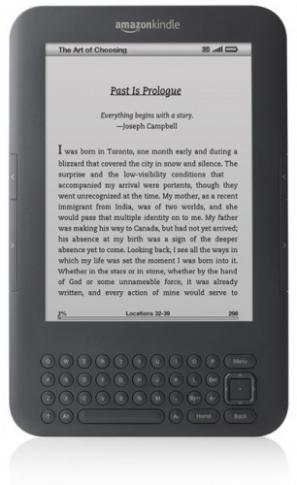
I’ve owned a 3G Kindle for a few months now, and I’ve been pretty happy with it. However, being the tech junkie that I am, when I heard that Barnes & Noble was coming out with a color e-reader, the Nook, I took a quick look at it and then decided it was something I was willing to try out.
I blogged about my problems with buying it in the first place, specifically the dork who worked at Barnes & Noble who told me it could hook up to my computer and transfer my books that way (because I don’t have a wifi connection at home). Turns out he was full of crap, so I have to actually go to a place with wifi in order to download any of the purchases I make. Not a big deal, but a bit annoying when you were planning otherwise.
Right off the start, I have to say that the Nook looks really nice, especially in color. That, however, does bring a couple of deficiencies as well, specifically a very long download time, whereas the Kindle downloads almost instantaneously. Not a huge deal, but somewhat inconvenient. I’m sure if the Kindle had a color version, I’d be going through the same problems, although I have yet to try with a grayscale book on the Nook to see if that’s much faster.
The Nook is a lot heavier than the Kindle. Kind of inconvenient if you’re holding it up for a long time. Never really thought about that until I actually had to do it.
The biggest difference is in choice of content, and I’m really hoping that changes soon. The Kindle has so many choices of things to buy and download. When I bought the Nook, I was looking forward to all sorts of color books and magazines, but their selection is sparse, if almost devoid of content. There are so few magazines who have signed up with the Nook that I find myself really stretching myself to find something I actually want to download. But I wanted to at least see one, so I went with Consumer Reports, which costs $2.40 a month. It’s not bad, but to be honest, I’d never have bought it if it wasn’t the only choice of some content that I wanted to look at. That’s not a good sign when it comes to buying magazines.
My hope is that because the Nook Color is so new that more magazines are right around the corner thinking about signing up. But so far, on the “Coming Soon” list with Barnes & Noble’s Nook content, I don’t see any magazines planning a future launch. If that doesn’t change, the Nook is a doomed product.
So far, there are a few children’s titles that are in color, so if you have kids, it might be a decent purchase, if not a bit expensive. But there just aren’t enough. My hope, again, is that because it is so new that so few publishers have been pushing content to it, but are planning to do so in the future. If not, again, the Nook is doomed.
Price: The price of the Nook Color was $249. With a cover and tax, it cost me about $300. That’s a bit on the high side for me, even though I was willing to pay it just for the convenience of trying it out. Yeah, I’m kind of stupid that way. But if there is not more content released, I just bought a $300 paper weight, and that will piss me off.
The Kindle 3G is $189, and while there is a wifi version for $139, I had to buy the more expensive one because I don’t have wifi at home. For the extra $50, it was worth it. And the amount of content is wonderful. I subscribe to the Washington Post for $14.99 a month (think that’s the price), and it’s definitely worth it to receive the newspaper each and every morning. I had trouble finding this newspaper on the Nook, but others, like the New York Times are on it. Again, the selection was abysmal at best.
Break down:
Barnes & Noble Nook Color (positives)
It’s in color.
There is some unique content (through Barnes & Noble’s PubIt! program, which is a lot like Amazon’s self-publishing for the Kindle).
That’s about it.
This one goes to 11
Nook (negatives)
Heavy
Expensive ($249)
Not a lot of content available for it.
Battery life is pretty low in comparsion to the Kindle (massively low). A charge seems to last about 8-10 hours, according to their documentation. The Kindle lasts all week long and that’s with a lot of use. Again, that might have something to do with the color.
Downloads take a long time.
Kindle (positives)
Fast downloads.
Lots of content. LOTS of content.
Price is $139 (for wifi version) and $189 for (3G/Wifi version)
Lighter than the Nook.
Battery lasts a long time.
"It was the best of times...it was the worst of times...(line?)"
Kindle (negatives)
Not in color. That’s really about it.
******************************************
A final note is that even though I’ve said mostly bad things about the Nook, if they can get past the problem of lack of content, it can become a powerhouse in e-readers. Customers at Barnes & Noble appeared really interested in the product, and a friend of mine keeps talking great about it. But without increased content, especially content that uses color, it will fail horribly.
One area where it could shine, and is almost untouched, is graphic novels. If comic book companies would realize that they now have a way to present their work on an e-reader, and embrace the Nook, both could do a wonderful job in selling this to the most desirable market out there, the teenager/young adult market. But I’m fearing that Barnes & Noble has handled the e-reader in almost the same way Blockbuster handled online movie distribution against Netflix. It is doing too little too late. As long as Barnes & Noble continues to appear to always be one step behind Amazon, they’re going to fail horribly as a book company, which is a whole other issue itself. But it’s in online content and e-readers where the final battle for dominance is going to take place. If someone could go back and tell Blockbuster to embrace the mail market when it didn’t, it could have changed things so much against Netflix. That’s where we are with the e-reader market. Barnes & Noble has a chance to push ahead and dominate. But history tells me that the results will be so much different.
If we choose the wrong e-reader, North Korea wins!
There’s been a lot of hype over the last couple of months because of the emergence of the IPAD, which has been predicted to usher in a new age of reading. This has caused all of the other e-reader makers to ramp up their business models, each one of them vying for the ultimate control of this incoming market. But I have bad news for all of them. That market’s not coming. Sorry, but it’s not.
You see, there’s a funny thing happening on the way to the the emerging market. There’s been an interesting fantasy that’s been playing out in the American public that is somewhat identical to the reason why so many Americans are fat. Every now and then, we look in the mirror and realize we’re fat, so we tell ourselves (and everyone around us) we’re going to go on a diet. And for a few days, we feel good about ourselves. And then we order that hot fudge sundae for dessert, and well, the diet kind of goes away. Oh, we rationalize it with promises of future exercise, but we know deep down that we’re going to go back to our old ways. And we do. Then we continue to get fat, and then we suddenly wake up, look in the mirror and then announce we’re going on a diet. Rinse. Repeat.
That’s what’s happening with E-readers. For the longest time, the majority of Americans stopped reading. We started watching TV, playing video games and doing anything but anything intellectual. Our reading output in this country is abysmal, and we know it. But every now and then, we promise to start reading again, and we go to the bookstore and buy lots of interesting books that we put on a shelf and never read. Oh, we might start reading, but then something else comes along and we stop. Rinse. Repeat.
So, when the E-reader came along, we all jumped up with joy and said we’d start reading books now because they’d be easier to read. So people went out and bought IPADs. I’m guessing that after the new car smell disappeared from the devices, they stopped being the most important carry item for those planning to read. Or they started using them for other reasons.
In a few months, publishers are going to start wondering what happened to that emerging market of electronic books. Sure, some will sell, but nowhere near the amount that was promised when this new technology was going to usher in a new era of reading.
You see, on the surface and deep down, we’re kind of lazy. Some of us read a lot. Most of us don’t. But we won’t tell you that because everyone wants everyone else to think we’re all little Einsteins walking around with encyclopedias for brains.
Maybe I’m wrong, but I suspect I’m not. But one can hope for better results than the usual expectations. As a writer, it bothers me that more of my country folk don’t read. But what can I do? Our medium of communication is movies and television. And even in those areas we aren’t all that impressive as we tend to focus more on reality programming and sports programming than anything else.
But that’s why E-readers probably won’t take hold in America. We’re too busy pretending to diet while watching people getting voted off the island.
I was in Best Buy this evening, and I was looking an iPad. I wasn’t planning to buy one, but they had three models of it on display, so I decided to take a few minutes to see if it was really an impressive product. None of the main features of it caused me to be all that impressed. And then I started looking at the iBook reading section of it (they happened to have Stephen King’s Under the Dome installed on it, which is ironic because I was planning on buying that on an electronic reader the second I got one (as I really don’t like lugging that HUGE book around, even though I currently own it). Wasn’t all that impressed. I didn’t see anything about it that the Kindle didn’t already do.
Which got me thinking. I don’t own a Kindle right now, but I do have a Kindle reader app on my iPhone. So, I can actually read Kindle books on my iPhone.
Which then got me thinking even further. I started to wonder why Amazon’s Kindle hasn’t made the impact that it probably should.
Let me explain. The Kindle is an excellent device for what it does. From the reviews I’ve read about it (including the testimonies), it is a great reader. Unlike the iPad, it doesn’t suffer from the sun glare if you’re using it outside, and it’s very much like an actual book in that you can read it for hours and not get uncomfortable like you will if you’re reading a computer screen (something practically every other e-reader suffers from). With that in mind, you’d think that the Kindle would be selling like hot cakes. So, why isn’t it?
Well, the answer to that question is found in Amazon’s strategy itself. And it’s one of the most bizarre strategies I’ve ever seen for a company that is trying so hard to set the standard for e-readers.
You see, Amazon wants to corner the market on e-readers and e-books, much like Apple has tried to corner the market on music with its iTunes platform. And Apple would have succeeded if it had done it earlier, but Apple put out iTunes AFTER there was already an MP3 market for music established. People were already burning CDs to MP3s and putting that music on MP3 players. Apple came along and then tried to corner the market on something that was already out of control. And surprisingly, they actually got their foot in the door, but it’s a door that’s been wide open for a very long time.
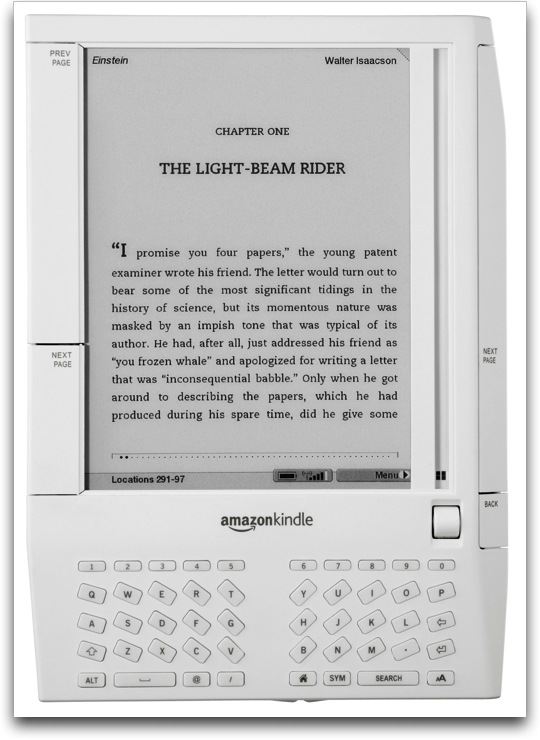
But books are a different story. There has literally been no e-book market because each company that puts out a reader is a company that has no ability to corner the market because controlling the reader doesn’t also mean controlling the content. And that’s where they all fail. But Amazon had a chance to do it because it is probably the one company out there that has a huge market that serves the reading community. If they would have put out an e-reader and made it easily available, they could have owned the whole e-reader market. And they almost did when they released the Kindle, but they then did one of the stupidest things they could have ever done. They made it so you had to buy the Kindle directly from them on their site.
And that practically killed their chances for world domination. I think of myself as a good example to explain why this was such a failure. I buy books from Amazon all of the time, but I refuse to buy a Kindle, mainly because I’ve never seen one in person. I’ve never held one in my hands. In other words, Amazon wants me to buy their equipment unseen and untested, specifically on trust alone. And I don’t trust them because they want me to spend $259 or $450-something for an e-reader that I’ve never seen in person before. And they’re asking a lot of people to trust them and buy their product without ever having a chance to test it. Unfortunately, that’s a business plan doomed to failure. Sure, they’ll sell a few, but they’re not going to sell the number they need to in order to gain the market share they want and need.
So, Amazon is mainly going to have to focus on trying to get people to buy the books they sell online through their site as Kindle books, but they then made it possible for anyone to have their own Kindle-like product, so they made it even less possible that people are going to buy a physical copy of a Kindle. Which then means someone who has a Kindle reader, but not a Kindle, probably has a device that can then probably handle other programs (or apps) as well, which means any company that puts out a book in a cheap format can easily gain their business.
Apple has now jumped into this market and is trying to create its own iBookstore which it hopes to control like the iTunes marketplace. Not going to happen because there are already so many other more trusted places to get book content that Apple is never going to be the “go to” place for that. It’s just going to further saturate the market with more places to find e-reader books, and thus, it will make it that much harder for e-books to take off because there will not be any one format. People will become so frustrated with trying to tap into this market that they’ll just consider it one of those unrealized areas of content and continue to buy books in hard copy.
But Amazon could have won the war right from the start if they would have done one thing, and that’s license other companies to sell their Kindles. Imagine the business they would have gained if they would have had Best Buy selling Kindles. If they would have dropped the price to about $199 and then put them in every Best Buy, they would practically own the e-reader business across the country, and who knows….the world. But they didn’t do that. There were no apps being made for the Kindle, so the only way to read books on it would have been to buy them from Amazon. It was a win-win situation, but they didn’t think it all of the way through.
Instead, we have more and more readers coming out and no way to figure out how to get the books onto those readers, so those readers are going to fail overall, and manufacturers will figure that it was the customers not wanting to buy books for devices, when in fact it was a failure of the devices to capture an audience that was willing to then buy content.
That’s why the Kindle never took over the world, even though it probably could have.