Most people generally don’t give independent writers a lot of attention or thought. Oh, they think about the famous writers and the ones that are publishing with the big companies. But the struggling, independent writer, who everyone talks about as the new future of writing is really a very difficult person to be.
To begin with, getting people to buy my books is almost a ridiculous battle that has no positive resolution. Friends don’t buy them. Family don’t buy them. Strangers don’t buy them. Oh, every now and then one of those people will say “Oh, I’m going to pick up your book” and then months go by and they never do. I have a colleague I work with who looked at the cover of my latest book and said she was going to pick it up. I smiled and realized right then and there: Wasn’t ever going to happen.
One of the biggest parts of the struggle involves how a writer gets attention. Social networking is great if you’re willing to spam your friends to death with novel information. I don’t do that. Otherwise, they probably wouldn’t be my friends any longer. I’ll read all of their updates about baby pictures and all that stuff, but I get the impression they mostly ignore mine. A few don’t, but they are the exceptions.
But in order to make it as an independent writer, especially one writing ebooks as well as regular books, you have to garner lots of positive reviews. That has never happened for me. I don’t even get reviews at all. People read my books, buy them at Amazon and all that, but they NEVER leave a review, let alone a positive one. So, I languish in unknownability (if that was a word).
So, I pay for Facebook ads that people click and then ignore. I pay for Goodread ads that people click and ignore. Maybe it’s my ads. Maybe it’s the fact that people just don’t support independent writers. I don’t really know. All I know is that I keep trying, and it’s not moving forward. Three steps back and then one more step further backwards.
But for all those who promised, or just care a little, how about picking up one of my books, reading it and then giving me a review. It might actually help.
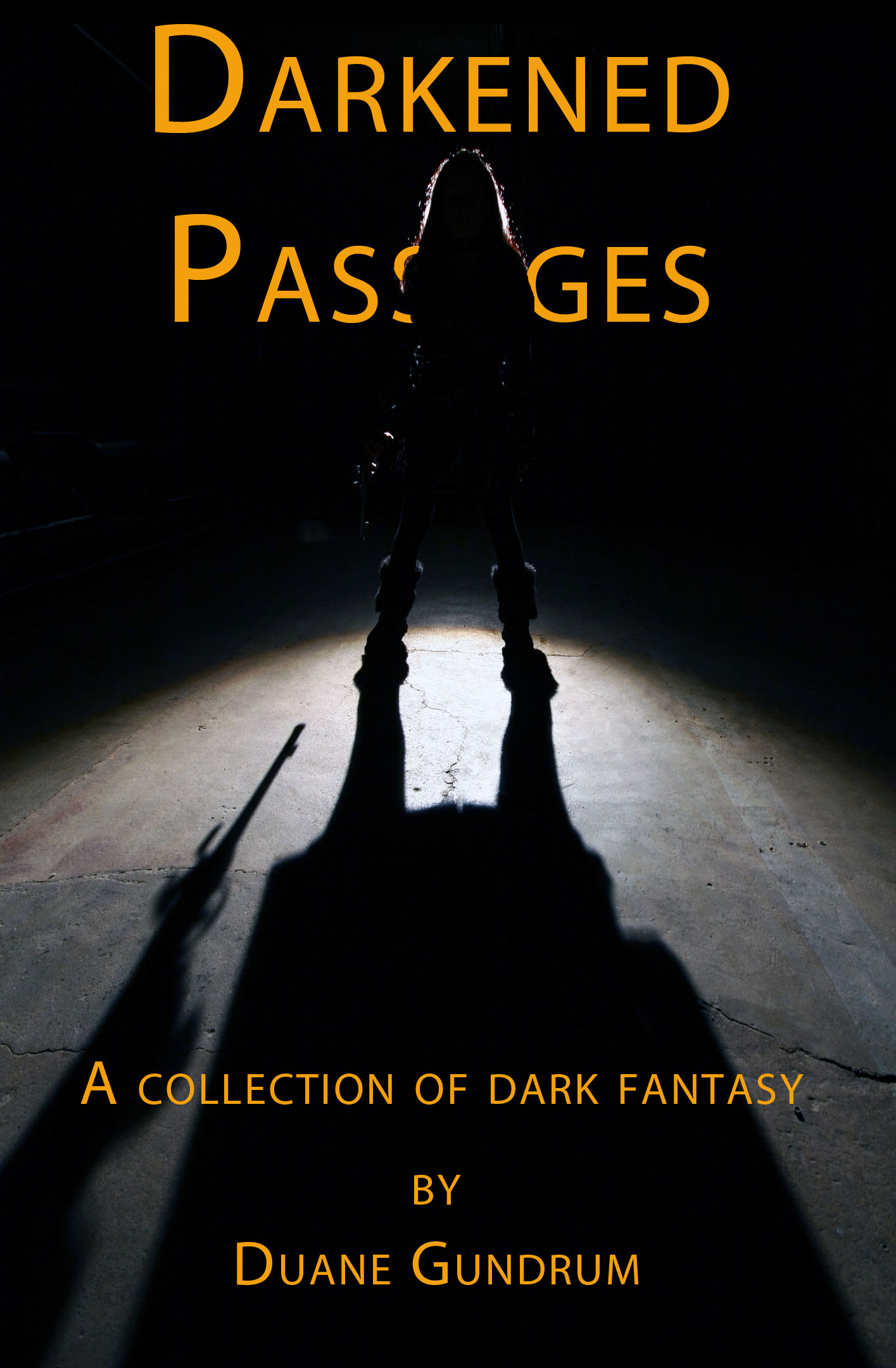
For the following week, Monday through Friday, Amazon is offering my books Darkened Passages (a new dark fantasy short story collection released over the weekend) and the book that was previously published before it, Deadly Deceptions (a mystery/suspense novel published last year) for free if you have Amazon Prime. So, hopefully people take advantage of it.
If you do, please do me the courtesy of leaving a review. It’s amazing how many of my novels are bought but then no one leaves a review. Hopefully, no one thinks they suck. 🙁
I ran into some formatting issues this evening, so I had to go back to the drawing board (or stage 7 of 8), fix the formatting and then release it tomorrow.Anyhoo.
When the Kindle first came out, I thought it was the greatest thing ever. Actually, that’s not completely true. I was apprehensive because I was a believer in having a hard-copy of the book with me while reading it, but eventually I started to see that this could be a good thing. I went out and bought an Amazon Kindle, and shortly after that I gave up my newspaper subscription and subscribed to an online version of the newspaper (delivered over the Kindle). Then I ended up with an Ipad 2, and with the Amazon Kindle app, I have been able to read the Washington Post every morning by paying for it with that subscription.
But for books, it hasn’t been as wonderful an experience. As a matter of fact, the e-reader experience has gone from “hopeful” to “dismal” and the fault of this situation rest solely on the backs of the publishing industry itself. You see, in the very beginning, Amazon was offering books at the rate of $9.99, which was probably the perfect point for paying for a brand new book on an e-reader. The publisher wasn’t losing out because the manufacturing costs were practically nil, and their books were getting to their readers almost instantaeously. But publishers didn’t like not having complete control over their market, so they forced Amazon to allow the publishers to set the price for books. Now, an entry price is anywhere from $14.99 to $25.00 on an e-reader. As expected, owners of e-readers have practically discontinued buying books as e-books.
So, you’d get the impression that publishers won. Not really. What actually has happened is that two markets have opened up, and this was an occurrence that a smart publisher probably should have seen coming, but like the music industry before, this is an industry populated by egos who are convinced that they are infallible, and that their product is so great that it cannot be replaced or done without. Well, they were wrong.
It seems that Amazon now has two lists of bestsellers, and they are becoming completely exclusive of each other. In the old days, bookselling lists usually listed the highest selling books (physical copies) but because the legacy publishers refused to budge, Amazon has discovered that its bestsellers are actually e-books that have never been published as hard copy books. As a matter of fact, in 2011, only 3 of the top sellers actually were originally published as “normal” books. The rest were dedicated e-books only. What this means is that more and more books are being sold without ever crossing the desk of publishers at all.
Let’s unpack that. What that really means is that more and more publishers are losing out on their own marketplace because they decided they were too elite to participate in it. Instead of working with Amazon and other such e-book companies, they acted with hostility and marginalized their own market. Readers have gone out and started buying books that other readers recommend, and quite often those recommendations have no affiliations with legacy publishers whatsoever.
What this means, or could mean, is that the future for publishers is even worse than if they had participated with e-readers in the first place. Like the music industry, major publishing companies are being seen as in the way and as leeches rather than as particpants and designers of the industry. An example is the simple mathematics of a publishing contract that attempts to give a writer about 2% of the sales for a book, whereas a deal with Amazon gives the writer either 35% or 70% of the sales (depending upon which publishing deal the writer chooses for charging for books). The selling point of using an established publisher was that you got their name behind your book and their marketing team, but with most publishing contracts these days, a writer is usually left to fend for himself/herself after publication because a publisher will spend most of its resources on already established names rather than someone who is up and coming. So, essentially, you end up with a crappy contract, and you end up with a publisher that doesn’t actually do anything for you other than potentially get books into bookstores (which, in my experience, doesn’t always happen). A further example is the publishing company that handled one of my earlier books. It keeps “offering” to make my book into an e-book, and then offers me that same crappy publishing rate royalty as if it was a hard copy book. What they don’t want to reveal to me is that our contract with each other indicates that they don’t own the e-publishing rights, meaning they’re trying to get me to sign with them for e-publishing when in fact I can actually do that myself and get a 70% royalty without ever asking for their help in the first place. The dishonesty factor is the reason I’m mostly pissed at them, because they’re doing everything possible to make it seem like they’re on “my” side, even though they KNOW they can’t publish the book as an e-book without me signing over MORE of my rights that they don’t physically have right now. Again, another publisher doing everything possible to piss off a client in hopes of gaining short term gains in profit.
So, how can publishers regain the upper hand? Well, first they have to realize they lost it in the first place. If they don’t, we’re going to start to see more and more publishers go under in the next few years because they won’t have the money to keep operating. Right now, all they have is their reputations, but they’re being beaten badly by unknown writers who are making names for themselves without actual publishing companies. Once publishers become irrelevant, they’ll disappear.
But publishing companies are probably not going to go down without kicking and screaming. Realizing that they’re not going to do the smart thing, like announce that they’ll adopt the $9.99 model that Amazon first put forth (which would have probably ushered a new age in publishing), they’ll probably respond with legal action, using whatever clout they have left to hire attorneys who will submit confusing lawsuits that will bog down the system for years, further eroding their success in the industry. I wouldn’t be surprised to see a direct legal assault on both Amazon and Barnes & Noble by the publishing companies, as those are the two entities making the largest impact against them. I also wouldn’t be surprised to see it fall into some kind of patent war over technology, where some publishing company gets smart and buys up a patent that allows them to claim ownership over a certain “idea” of e-readers, even though patents were originally designed to NOT be used for that purpose. We’re seeing a lot of this kind of action on the behalf of software companies and the social networking sites, so it would not surprise me to see some enterprising legal maneuver like this.
Because they’re not going to win by going after the hearts and minds of writers and readers. They’ve already demonstrated they don’t have our interets at heart. It’s all about profit and maintaining a dinosaur of a publishing model. Therefore, expect trench warfare and years of interesting battles that lead to an industry that collapses on itself.
There’s a term that e-published authors have been using to describe the old way of doing business in the writing world: Legacy Publishing, meaning that it’s the old way of doing publishing. As one of those who got his start in the legacy publishing industry, where my first two novels were published as physical entities, I’ve slowly been trying to build a writing career by embracing the non-legacy model, i.e., publishing my work as e-books myself. In the process of doing that, something strange has started to happen that I never really anticipated. Let me explain.
When I started publishing some of my completed novels as e-books, I wasn’t really expecting to make a huge profit, or even to sell a whole lot of books. I hoped to sell a few and at least get a few readers interested in my work. Honestly, that’s what every writer tends to want to do. I’m really not that different. Not knowing the first thing about connecting to an audience that I don’t have, I’ve tried all sorts of different marketing, including Facebook ads, google ads, viral marketing, standing on the corner and yelling out loud, and all sorts of other antics that are capable of bringing on all sorts of restraining orders. As a result, a few people have started to read my books, and let’s just say that while I haven’t been extremely successful, it’s proving to be an interesting experiment.
However, a new development has occurred, and that’s what I wanted to talk to you about. I mentioned that some of my earlier work was published by Legacy Publishers. So far, they have done absolutely nothing to sell my work other than orginally publish it. I’m an unknown to them, so why would they be interested in pursuing any marketing on my behalf? So far, there’s been no reason. However, because I’ve been doing a LOT of marketing myself recently, some of my work has actually started to sell. Most of it as e-books, but some of that marketing has actually caused potential readers to go to bookstores and buy physical copies of my novels. Great. This is leading to something, however, and what it’s leading to is the realization by the original Legacy Publishers that I’m capable of actually selling books. It never dawned on me that they’d ever be paying attention to the fact that my marketing would start to pay off. And it has. Which has led them to start paying a bit more attention to me, and that attention has proved to be quite eye-opening.
You see, when I was originally published by them, the whole e-book universe was not even on the radar. So they never bothered to negotiate those rights. Those rights are mine still. Well, they’re now realizing that, and they’re also realizing that because I am self-publishing the rest of my work, it’s pretty obvious that my work they originally published will net them absolutely no profit whatsoever when it comes to the e-book market. So, rather than just contact me and be honest about it, their contact has been the kind you expect from a Shakespearean villain. The kind that goes: “Did you know that people are selling their books as e-books, and they’re making millions? We’re willing to publish your book as an e-book if you’re willing to sign that right over to us.” They also forget to mention (and sometimes they do) that they would like to set up the generous terms that are similar to the ones that happened under the old contract, where they get about 90 percent and I get 10. In other words, rather than have me publish it myself where I get 70 percent and Amazon gets 30, they’d rather they take 90 percent of the 70 percent, leaving me with (doing the math….for every $1.00 a book makes, I get $0.07). So, for a book that normally sells for (if they put it up at the maximum they’re trying to get) $12.99, I’d get 90 cents. Now, if I sold that book for $4.99 by publishing it myself (or even at $2.99), I’d make $3.49 (or $2.09 at the $2.99 rate). In other words, even if my book sold at a massive discount (my pricing), I’d still make 2 to 3 times more than what a publishing company would give me for it. And keeping in mind that the publishing company has NEVER marketed one of my books EVER, I get absolutely no benefit from them being the ones publishing it. None.
So, you might see why many writers are turning away from the normal legacy publishers. It’s not profitable, and unless you’re already a marketable name that they’re willing to throw money behind, you get absolutely nothing out of the deal. Instead, you sign over all of the profit to an entity that doesn’t do anything to deserve it.
It would be different if they actually went out of their way to do something to benefit my name. But they don’t. Or they never have. Now, if I was to find a publisher that was willing to do something to help me sell books, then we’d be talking a completely different story. But the way this model works, they don’t want me until I can already do the job that they won’t do themselves. Once I have the name recognition and the ability to sell my own work, my need for them goes away completely. So, somebody please tell me how quid pro quo thing works here if one side is continuously leeching off the other.
The “Three Cups of Tea” author, Greg Mortenson, has been accused of making up stories in his book. Accused by Jon Krakauer of CBS’s 60 Minutes, Mortenson denies the falsehood claim and is not commenting further due to a medical condition he is suffering from recently. Unfortunately, with him out of commission and not on record to defend himself, the media frenzy will probably swarm him at this horrible time for him. Hopefully, he gets a chance to defend himself, and the truth is reached, regardless of what that truth might be.
With this accusation, the writing community appears to be undergoing yet another challenge, as it did when the whole James Frey controversy occurred with “A Million Little Pieces”, a book that featured numerous made-up events in a book claimed to be entirely non-fiction. Hopefully, the accusations will not continue to paint a dark light on the many works other writers have put out there, making it so that readers walk into every bookstore, expecting fiction in the non-fiction section and accepting each memoir produced as a “quasi-” real account.
I recently published my “Neo Revolutionary Messages” on Kindle and Nook, and I promise that it is entirely non-fiction, as it is an analysis of the August 1991 Coup d’etat in the Soviet Union (where Boris Yeltsin challenged the hardliners when they imprisoned Mikhail Gorbachev). Yet, with stories like the one I linked here, there’s always the fear that a reader is going to think the author took liberties with the facts for the sake of trying to tell a better story.
Over the last few weeks, I’ve been working on my self-publishing tasks. I can’t even begin to tell you how much work this has entailed. I know most people don’t really care, but as a writer, I’m finding myself with very little time to write because most of my time is spent preparing manuscripts, designing and redesigning covers, and trying to conduct social networking in order to somehow constitute a tiny bit of a writing career. I never realized how much work this would actually be.
Not surprisingly, a lot of DIY writers are learning this exact same thing themselves because the publishing industry has pretty much abandoned the average writer, mainly going after well known entities (who don’t really need the publishing industry because they’ve already made it) or celebrities who shouldn’t be writing books in the first place. The rest of us are struggling just to see if we can somehow make a connection that gets someone to read something we have to write.
Which, as I’ve hinted, makes it that much harder to sit down and write. Recently, I released Destiny on Kindle and the Nook. It’s an interesting book that I created a decade and a half ago, yet it started a series of stories that have been very much a part of my continuous writing career. While the book takes place around the Year 3000, the series of books and stories that follow it actually take place around the time of the Roman Empire, slowly moving their way to the Year 3000. It’s kind of an interesting arc that tells an epic adventure of the planet Reagul, where a transplanted group of Romans live out their future. It also tells the story of the sorceror Sarbonn, who you might realize, has been a part of my writing for a very long time now. That character sets the tone for the story that takes place on Reagul long after his death, as he spent most of his life fortelling the future events of the planet, including setting the stage for what would eventually happen in the novel Destiny.
I’ve probably published 20 short stories that are all about the land of Reagul, even though most of the editors at that time probably had no idea they were publishing something that was part of a series of related, connected adventures. So, it’s somewhat interesting and fascinating for me to be able to keep revisiting this world with future writings. Now, if I just had more time to sit down and write.
Anyway, not much more to report, but wanted to at least let you all know I’m still chugging along, trying to get the volumes of stuff out there. Why? Not sure. But seems like the right thing to do.
This is the new cover of my latest novel I’m releasing called Loser. It is one of my earlier science fiction novels. The description is as follows:
After the final war, the Councils did what no previous government was able to do: Unify the world under one government. Like societies that victimize their lowest class, the invention of a device to determine someone’s usefulness to a community manages to make that effort even easier. Centuries later, the original intention of such a device loses its original purpose, allowing those on top to determine the survivability of those on the bottom, originally nicknamed “Losers” and with time the nickname becomes an actual designation.
Rem Schlock is a new Exterminator tasked with hunting and finding elusive Losers. During his search, he discovers the rumor of a mysterious “leader” of the Losers. Facing a future darkened by random death, decayed cities and hidden loyalties, Rem hunts this phantom criminal, discovering an underworld he never imagined yet once revealed can never be covered up again.
"I read all of Duane Gundrum's books because he's so dreamy...."
In case you aren’t aware of it, there is a war taking place. I’m not talking about Libya, Afghanistan or Iraq. I’m talking about the war that is currently waging over the publication of books. What war? You say. Well, let me explain.
For years, in order to get published, you sent out your work to a publisher (or an agent in hopes of getting a publisher), and if you were very lucky, you might get a bit of an advance. Sometimes, those advances were for decent money. Around the 1970s and on, they started getting really small. Kind of dismal, actually. Unless you were already a famous author, like Stephen King. So, you would get about $5,000-$10,000, and then the publisher would take 18 months or so to create your book. Then it would get released. If it started to sell, great. You would receive about $1.67 for a $20 book for each sale, the publisher keeping pretty much everything else. After all, they were the publisher. That $1.67 would continue to knock down the amount of the advance you received until you actually started to make what are called royalties, which would be additional money the book made after you paid off the advance. Most books tended to not even make back the advance, so you were generally lucky enough if you made somewhat of a decent advance.
Well, recently, the publishing industry has kind of been turned on its side. E-books are becoming the new “in” thing, and strangely enough, publishers are still maintaining their dominance in the industry, because they are still the power brokers they used to be. In other words, in order to gain any attention whatsoever, you really needed the publisher to get the attention out that you had published a book. So, not surprisingly, publishers have been publishing e-books, too, and still taking that outrageous amount off the top, leaving writers with very little profit, even though the costs for publishers have diminished to almost nothing.
Something new has started to happen, which is turning the whole industry on its side now. Writers are going directly to the readers and selling their books without the publishers. And needless to say, this is causing a bit of a stir in the whole industry. Publishers need the writers to survive, and so they are doing everything possible to diminish the positive experience for writers, so that publishers still remain the power brokers that they have always been. Unfortunately for them, that model isn’t going to last that much longer.
The publishing industry is a lot like the music industry, and its current dynamic is going through a revolution much like the music industry has recently gone through as well. While there are still seriously powerful music leaders in the industry still calling shots, a lot of artists have gone directly to the Internet with their work, and are bypassing the profit model previously established by the RIAA and other such top-down industry leaders. This has caused all sorts of problems for the industry, but it has done wonders to present new opportunities for artists who may never have received an ounce of attention before.
Move this into the publishing world, and you see the same sort of thing happening there. The publishing industry is still in control right now, mainly because the model hasn’t completely developed yet. Online booksellers, like Amazon, Apple, and somewhat Barnes & Noble, are producing their own e-readers that allow writers to push their content to eager subscribers. However, the battle currently waging is who is going to control the process flow from this point forward.
The publishing industry is counting on its enormous clout to push their agenda forward. They have already pushed back against Amazon (which has forced the others to comply) where they forced the increase in the cost of books being sold on the Kindle. You used to be able to get brand new books for $9.99, but now you’re lucky if you can get one for $12.99. The game changer in the first battle was Ken Follett’s new book Fall of Giants, which publishers forced Amazon to sell at $19.99. The backlash against the book has been interesting as Kindle users included all sorts of bad reviews for the book based on the price alone, taking what would have probably been a five or four star reviewed book down to an average of about 3 stars. What’s interesting is that his reviews on this book tend to resemble an upside down bell curve, with 301 5-stars and 327 1-star reviews, with a tiny amount filling in for 2, 3, and 4-star reviews. In other words, the critics either really liked it or really hated it, and there’s no doubt that the really hated reviews come specifically from people who are pissed off at the price.
If this was the end of the fight, you’d think that the publishers pretty much won, but like most great stories, a new sliver has been added to the mix, with writers being that added variable. Writers, realizing that they need to somehow be able to take advantage of this new technology, have started to show up sans publishers (being their own publishers), and they’re starting to include their own novels at much lower cost than the publishers are forcing down the e-market’s throat. Rather than stick it out at $9.99 (or push it up to the publisher’s price of $12.99), writers are now starting to introduce their books at the $2.99-$4.99 range, providing a more comfortable area for readers to purchase on impulse alone. Some of the more prominent writers, instead of using their fame to push for $12.99, like the gas station economic model the publishers are following (one raises the price, the rest follow), are listing their books at $0.99. According to some of the better known writers doing this, they’ve pointed out that because of the amount of people willing to buy a book at that low price, their profit has actually been better than if they tried to sell their books at higher prices. The economic implications are staggering, the more you think about it.
The biggest problems facing the writers right now is how to actually get anyone to pay attention to them in the first place. The one thing publishers have going for them was that their clout actually got books into bookstores, and without that clout, an unknown writer is essentially that, an unknown writer. If no one knows you exist, the chances of selling a book are dismal, at best. So, right now, the battle has halted, as both publishers and writers realize they’re at an interesting crossroad where both can benefit, but neither seems willing to budge. Publishers aren’t interested in giving up their high percentages they receive for “publishing” books while writers are no longer interested in giving up the entire store just to get their work out there. Which means that once writers figure out how to jumpstart the system in their favor, the whole publishing industry is going to go the way of the recording industry.
But what can a writer do to become marketable without already being a famous writer who was selling books already? That’s an important question and one that I’m spending a lot of time studying.
I’ve been spending a great deal of time lately exploring the whole e-reader market. My reasons for doing so are probably obvious, as I’ve pretty much given up on ever getting sustainable establishment from the main publishing markets, as everyone seems to be a writer these days and trying to get an agent to even read a manuscript is like trying to get Charlie Sheen to act responsibly.
Anyway, so some months ago, I put up one of my previously published books onto Amazon for the Kindle, and it has had a few sales, but mostly, it’s a lot like standing on a corner and trying to get people to read printout copies of a manuscript. People just don’t seem interested. And I don’t think it’s that their not interested in me or my writing; they’re just not interested in purchasing books from someone they’ve never heard of. It’s the same dilemma writers have always had, except there’s a lot more of us these days, and practically the only way to establish a career as a writer is to be famous for doing something else. So, if you can cook and have a cooking show, you might make it as a writer. If you’re a reality show star and have gratuitous sex with people who live in your reality show house, you might have a career as a writer. If you were a famous baseball star who took performance enhancing steroids, football star who beat up your girlfriend, musician girlfriend who got beat up your musician boyfriend, washed up movie star who seems to get arrested for practically everything written on police blotters, or some older guy who lived through abuse by your evil stepmom, well, you might have a career as a writer. But if you’re actually a writer who writes novels, and that’s all you really have to share with the rest of the world, your chances of making it as a writer are about as good as you making it as a millionaire by winning the lottery. Okay, maybe a little less.
So, what is a writer to do, if he’s not interested in starting a gunfight with the local police department in hopes that he might live long enough to write about it while in prison, well, the answer seems to be “write an e-book and get famous that way.”
The funny part of that solution is that making it as an e-book star is just as ludicrous as making it as a professonal blogger. Unless you have a gimmick, or you get seriously lucky, your chances aren’t that good. Even if you’re a great writer, it appears that everyone seems to be a great writer these days, so you really have to have something else working in your favor.
So, in actually trying to get established as an e-reader writer, I started with Kindle, and like I said, so far I’ve sold a few books and seem to be as popular as Pee Wee Herman at a stripper’s convention. Okay, I’m wrong on that one. He’d probably be a bit more popular than I am right now.
But what I have been doing is reading everything I can find on how others have actually made it. And what I’ve discovered is that everyone talks about how e-readers and e-books are the solution to the current glut in writers out there, and how it is the solution to getting past the impossible gatekeepers of publishing (even going around the publishing industry itself), but what no one really seems to do is point out exactly how that success is supposed to happen. I’m constantly reminded of the Southpark episode with the underwear gnomes, when the kids ask the underwear gnomes why they’re stealing underwear, and they point out their master plan, which reads a lot like:
1. Steal all of the underwear
2. ????
3. Profit
Yep, that seems to be the consensus of everyone who talks about success as a writer in the e-book market. Somehow, you are supposed to go the same way:
1. Write a novel and e-publish it.
2. ????
3. Profit!
Yeah, I don’t see any logic behind it either. What seems to be missing is how do you actually market yourself as an e-book writer? How do you get traffic to your blog so that people pay attention to you? Whenever I read a book on marketing your blog, it says to first create interesting content and then moves onto capitalizing on that traffic that will then come. Now, I’ve talked to a lot of people who do read my blog, and they tend to agree that I create interesting content, but at the same time, the masses aren’t showing up to read it. A few people do, and a shitload of spam also seems to be paying attention, but that’s about it. Somehow, I’m missing a step here, and I can’t seem to figure out what it is.
It is that same step I believe I’m missing that somehow makes it possible for e-books to actually be attractive to people and sell the mass load that everyone seems to think will happen “naturally”. Well, I’m still working on that one, and I haven’t come up with a solution yet.
So, if real people actually seem to be following this blog, PLEASE COMMENT ON THE BLOG at my actual blog, and I’d love to hear from you. But right now, I get nothing but spam comments (do keep in mind my blog gets imported to Facebook and Open Salon, so if you’re commenting that you actually read it, I’m not talking about those places; I’m talking about my actual blog…the one linked here). It’s really frustrating. I mean, REALLY frustrating.