Monthly Archives: April 2011
My Reflections on the New Motorola Xoom (having just bought one)
I was at the Apple Store again today, looking at buying an Ipad 2 for my cartooning work, and when I arrived, I was told that I could sit outside of the store in a line when someone from the store would come out and inform me if I would be allowed to buy one of their Ipads. Having been trying to buy one for a few weeks now and not really interested in waiting 3 weeks for an online version of one (I like to see what I’m buying before I actually buy it and don’t trust large equipment through the mail yet). After waiting for awhile, one of the “geniuses” (yes, they call themselves that) came out and informed me that I was not worthy enough to buy an Ipad 2 today. So I was sent home without one, but told that I could come back the next morning and ask for permission to be sent away again.
So, later on today, I was at Costco, and I happened to see that they finally got in the Motorola Xoom wifi tablets for $589. So I bought one. Didn’t want 3G, so this was exactly what I wanted.
Got it home, and it worked just great right out of the box.
 Now, having said that, there are some complications that are kind of frustrating with the thing. Google is the overarching mind behind this tablet, and you can never really get around that, but what was annoying was that it was very difficult to figure out what I could run on the thing and what wouldn’t run on it. So, basically, I had to keep downloading apps, try it out, and then delete it because while it might work with a phone, a LOT of them didn’t work for the 3G. What was really annoying was finding something that could play WMV files. Finally, I got one that sort of works. To be honest, I would have been happy to have actually found iTunes for Android, but their app store was so confusing that to this day I don’t know how to get the actual music player that comes with the device to actually play any other music than the samples that came on the Xoom. I have libraries of my own music, and I gave up after some time trying to figure out how to get to play it.
So I went and looked for an imaging program, finding a couple of them that seemed okay, but didn’t really seem exactly what I wanted. So that’s going to be something that will take time.
Even though it runs everything Google, couldn’t figure out how to actually get the Google Bookstore to work, even though there’s an app on the main screen for doing just that. It just says it’s not installed. Kinda fubar, if you ask me. So I ended up installing Kindle for Android, and well, screw Google and their stupid store.
So, so far I’m not all that impressed with the Xoom. It will probably do a lot of the things I need it to do, like check email, and eventually I’ll have a program for creating my cartoons/comics and then importing them to my computer. And I’m sure there are a bunch of other things that I’ll be able to do with it as well because it does seem pretty cool with what I’ve been able to ascertain from it so far. Again, it’s not the end all of devices, but it sure beats waiting for the gods of Apples to bestow upon me the right to buy one of their pieces of walled garden shit.
So I’m saying….
We Still Don’t Get the Whole “Education” vs. Incarceration Thing
One of the continuous statistics that plagues the United States is our incarceration rate, especially when compared to how unwilling we are to support education. Some time ago, like back in the 1960s, social scientists figured out that if we wanted to grow our country as it needs to grow, we needed to stop putting people in prison and start taking extra efforts to educate the people who generally end up in our prisons. But rather than put together a national effort to turn this population around, we responded to fear and opportunistic politicians who realized that we’d put them in power if they pretended to be doing something about crime. You know the old call of the politician (“elect me, and I’ll clean up crime because my record has always been about putting bad criminals in prison”). Yet, no matter how many of these politicians we put into office, they don’t clean up crime, they don’t make the streets safer, and that population of potential criminals just seems to soar.
We know all of this. We realize what’s wrong. We know EXACTLY what we have to do to fix this. Yet, we don’t, and we won’t. Instead, some prosecutor or district attorney from Bumfuck, Montana, or Idaho, or Utah, or wherever, is going to make a career out of locking up violent criminals who took the only path they have ever been taught. What no one ever focuses on is WHY DO WE KEEP DOING THIS?
The reasons are simple if you understand game theory. Actually, the reasons are simple if you understand common sense, but I probably shouldn’t have to go there. But in game theory, the simple prisoner’s dilemma gives the rational choice explanation that people tend to do what is easiest and provides the best payoff with the best incentive. Sometimes, even the best incentive doesn’t matter. In the end, people want to travel downhill because once the wind gets into your sails, you don’t have to do a lot of work to get to the bottom of the hill. So, if we examine a system where we offer almost no incentive to educating our population, but there are incentives to go into lives of crime (sailing downhill without any real resistance; face it, police departments are obstacles, not impediments), the most obvious result is going to be a life of crime rather than a life of productivity in society.
Our response has always been the most ridiculous one available: Morality. We try to put forth this argument that if we try to convince people to do the “right” thing, they will, because that’s what good, moral people do. But morality is based on societal norms, not on what is right or wrong, and that’s where we error most of the time. Most people who argue morality tend to have their grounded in some higher concept (either religion or a history within a government that has served them well). When you try to convince everyone else that they need to comply with the same moral foundation, what incentive do they have to participate? If someone isn’t a strong follower of your religion or hasn’t benefited from the civilization like someone else has, what makes any logical thinking person come up with the determination that someone deciding on a future will choose the more difficult path? Logic says it’s probably not going to happen. Reality agrees. History confirms it.
So, what is the solution? Well, first off, we have to get rid of this whole moral foundation crap and find a commonality that everyone can actually agree on. Doing the right thing means nothing when doing the right thing equals starvation, social pariah status and a pretty crappy life. But doing the right thing might mean something if the bar is raised so that those who aren’t participating in the game actually start to see the payoffs as productive AND achievable. For too long now, we’ve played this game of wanting people to rely on government to assist them, but then allowed government to only do as little as possible so that we’re lucky if the rising tide equals basic survival needs. America is a place that offers this fantasy dream for everyone, and as long as we keep the ability to achieve that dream too high for the average person, then people are going to reinvent their path to achieve it.
What needs to be done is nothing less than a nation’s desire to raise everyone to a level of an agreed upon American Dream. This means that everyone gets to participate, and the bar isn’t constantly lowered so people can achieve some level of clout that’s higher than everyone else. Yes, we’re talking about a socialism of ideas, although not necessarily a socialism of economy. As long as there are people who feel the need to want to be “above” everyone else, we’re never going to achieve a level of sustained prosperity. And without everyone able to prosper in society, we’re left with what we’ve always had: A civilization that constantly strives to reach for the bottom.
It’s not just enough to increase education at the expense of incarceration. It’s a need to make that education lead to something bigger than we already are. Otherwise, we’ll never achieve anything other than classism and separation. Unfortunately, we’ve gotten really good at reaching just that.
So far, my experience with Smashwords is a lot like pushing a big rock up a very big hill

I’ve recently been trying to put some of my novels onto e-readers and Amazon’s Kindle. One way that was recommended to me was Smashwords, a site that actually lets you upload your writing and then helps you format it into the various different types of readers. So far, after two weeks of working with Smashwords, with three different manuscripts, I haven’t made it out of the “pending approval” stage yet, as my work keeps getting returned to me, requiring new changes. I’ve gotten to the point where I am starting to believe that there is no stage beyond “pending approval”. It’s like one of those girlfriends who demands perfection, and no matter how hard you try, you never quite achieve it. But instead of dumping you, she always gives you “one more chance”. Yes, it’s a lot like that.
So, I’m still trying to get my e-reader work approved through them, and hopefully one day, before I turn 95, the first one will go into “you’ve almost been approved” status. Kind of like that girlfriend I was talking about. I mean, you’d dump her if she wasn’t so hot, and no matter how mean she is to you, you have to keep believing that one day you’ll achieve her standards.
I mean, the beatings have to stop one day, right?
An Unknown Writer’s Circle of Pseudo-Support
Like most writers, I have this recurring fantasy. It involves a large library, thousands of books, a bowl of jello and Jessica Alba. Oh wait, that’s a different fantasy. The fantasy I’m talking about involves this vision of one day looking back on today as a seasoned, professional writer who has made it and wonders why the journey to get where I got was so hard, so long and so filled with obstacles. But one thing that keeps coming back to me, and to many writers like me, is remembering all of those friends who stuck by you through the struggle. And to be honest, I can count on one hand the close friends of mine who actually stuck by me. The rest, not so much.
To be honest, I think this is something most artists deal with on a constant basis. I have a friend of mine who is a struggling filmmaker. He’s actually pretty good at what he does, and I have a lot of respect for his work in that field. As a matter of fact, he finished his latest film just a short while ago, and when it came time for the premiere, of all of the friends at work, only two or three actually attended. The rest kept asking about it, wanting to know when it was going to happen, and then when it did, they all mysteriously had other things they had to do.
That’s what happens to a lot of us artists when we hit that point of trying to actually introduce one of our works into the public realm. When I published my first novel, people said, “oh, that’s great” and that was all they wanted to say about it. None of them were actually interested in reading it. Oh, they’d say nice things in pleasant circumstances, but they really weren’t interested in the fact that I was struggling to be a writer, and it was about the only thing that mattered in my life. They’d talk endlessly about their families, their dreams and aspirations, but when it actually came to picking up a copy of my book, Osama Bin Laden was more popular than I was.
I did a simple experiment a few weeks ago, which I repeated a few days ago, because I was actually interested in how far friends would actually go on this sort of thing. I have most of my normal friends, and former acquaintances, as Facebook friends. So, as I have a simple little comic strip called The Adventures of Stickman & the Unemployed Legospaceman, I thought it might be interesting to start up a Facebook page for that strip itself. Then I sent out a “like” request to all of my “friends”. That was several weeks ago. To this date, five people have “liked” it. One was me. Another was that filmmaker friend I talked about. That means three others appeared from practically everyone else I know. Three.
So, I repeated that experiment by putting one of my books out onto Facebook as well. Six people have liked it. That filmmaker friend of mine, and my friend Melanie from Germany. Including me, that means 3 people have added it, and none of them are any of my actual Facebook friends who have been friends for the years I’ve been on Facebook. Kind of tells you something, if you take the time to think about it. It’s kind of depressing as well.
Which leads me to realize that if most other artists are going through this sort of support from the people they know, it says something really crappy about the way social networks interact with our psyche. I’ve talked to a lot of professional writers over the years in their formulative years, when they were really struggling, and they’ve all said something similar, kind of pointing out that the art is a lonely art, but not just because you have to be alone to write. Quite often writers feel abandoned and write from that place, and once they actually make it, seek out new sources of friendships because it’s very hard to look back at the friends you had before when so few of those friends stood by you during the toughest times.
I’m finding it quite telling that some of my closer companions these days tend to come from people who have found me through my blog, or others who have contacted me through circles of writing, rather than through my normal, already established social networks. While it leaves a bit of a sour taste in my mouth, it also leaves me wondering if the future is a series of connections yet to come rather than the ones that seem to be dislatching from behind.
It’s a lot like the feeling I’ve always had from my family when I first mentioned that I was going to be a writer. Instead of respect, awe or even interest, I received condemnation and ridicule, almost as if it wasn’t something to be taken seriously. When I received my first positive review on Amazon, rather than say, “that’s great, Duane!” I heard, “so did one of your friends write the review, or did you write it?” That was from my family. So, you can imagine how long the desire for success in this field has been burning for me.
That’s really all I have to say about that.
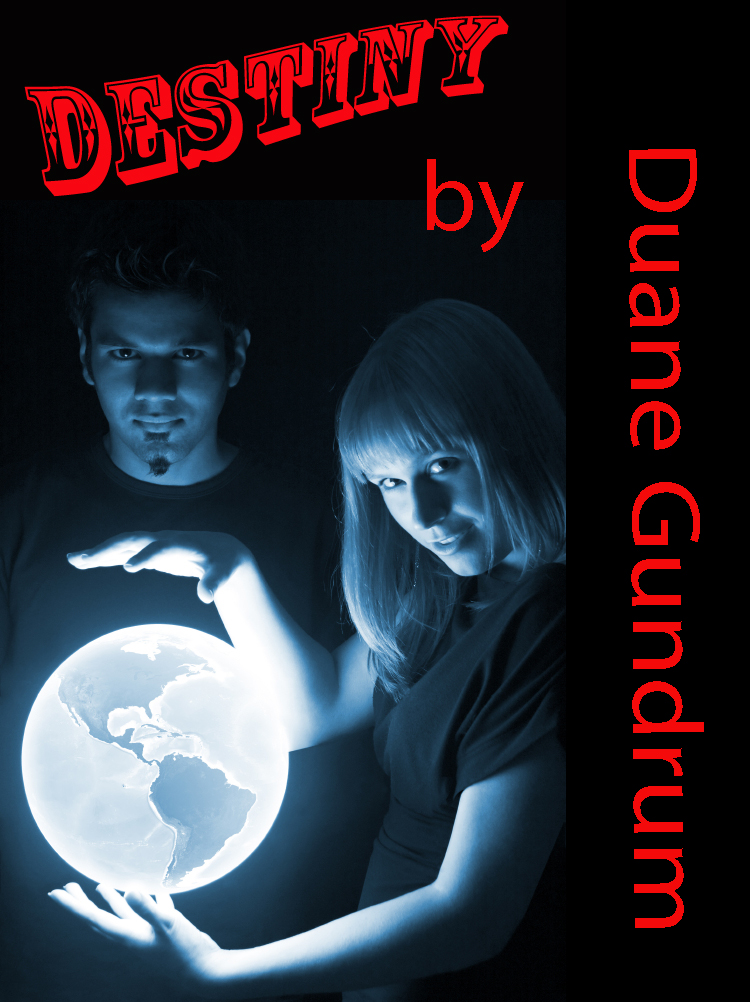
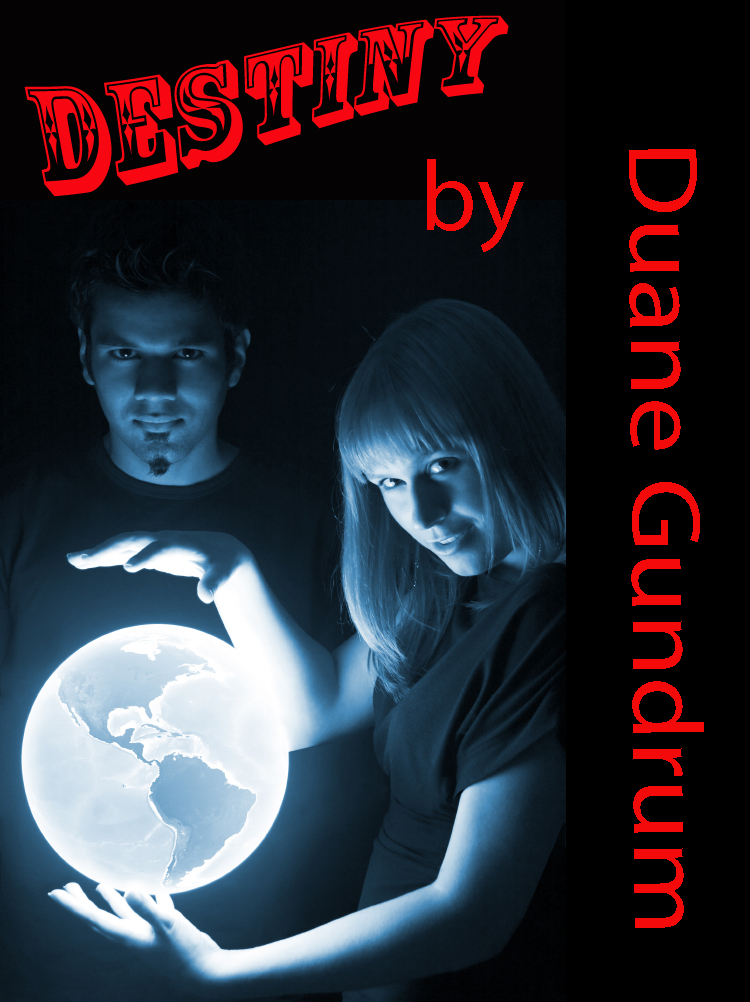
The Cover of My New Novel “LOSER”

This is the new cover of my latest novel I’m releasing called Loser. It is one of my earlier science fiction novels. The description is as follows:
After the final war, the Councils did what no previous government was able to do: Unify the world under one government. Like societies that victimize their lowest class, the invention of a device to determine someone’s usefulness to a community manages to make that effort even easier. Centuries later, the original intention of such a device loses its original purpose, allowing those on top to determine the survivability of those on the bottom, originally nicknamed “Losers” and with time the nickname becomes an actual designation.
Rem Schlock is a new Exterminator tasked with hunting and finding elusive Losers. During his search, he discovers the rumor of a mysterious “leader” of the Losers. Facing a future darkened by random death, decayed cities and hidden loyalties, Rem hunts this phantom criminal, discovering an underworld he never imagined yet once revealed can never be covered up again.
It should be up on Amazon very soon.
The Hardest Book You’ll Ever Write: Book Number Two
Some years back, after I finished my first novel, I was faced with a daunting question: Could I possibly write another? For anyone who has never written a first novel, this probably sounds like a no-brainer, but believe it or not, when I came face to face with the blank sheet of book number two, I found myself realizing that I was facing an enemy I had never imagined before.
When I was writing the first book, I had lots of bravado behind me. I mean, I had written a bunch of short stories, and inside me, I knew I had a book in me, so no matter what happened, I knew I was going to finish that first book. But when it was done, after a few months had gone by, I actually came up with the idea for the next book. And then I realized I would actually have to write it.
When faced with the second book, you find yourself in a very interesting dilemma that seems to go something like this: Well, the first book was a fluke, and everyone has at least a book in him or her, but am I really capable of sitting down and accomplishing the second book? The first book was a mystery/suspense novel that was kind of hard to pin down to its exact genre (you can see for yourself as it can be found here). The second novel was going to be a science fiction book, and although I had written a few short stories that had been published in fanzines (not having yet published in larger magazines), I was trying to convince myself that I was capable of pulling off a brand new genre on the second outing.
For days, I sat down and tried to outline the book, but nothing would come to me, because even though I had the basic idea of this novel, which I was going to call LOSER, I had no idea how to create a world that was so bizarre to me that I would have to invent it from the ground up. Yet, each day, I sat down and tried to tackle it.
And failed.
At one point, I convinced myself that this book wasn’t possible, that my first one had been a fluke. I was sure that I might be able to do another suspense book, or maybe an espionage adventure, but science fiction was definitely out of my capabilities.
At the time, my editor was the wife of a colleague of mine who sat down with me and asked me to explain what the story was about. And for hours on end, I sat down and crafted this amazing story of what I wanted to write. As I talked to her, I kept imagining all sorts of great things that would happen. And then, at one point, she told me to just sit down and make it happen.
So, for the next four months, I sat down in my chair and typed away. My first novel had been written on a typewriter, so this one actually got written on a computer with a word processor that we’d probably laugh at today. But by the time I was done, I had crafted my second novel. And even as I typed THE END, I stared at it, still not sure it had actually completed its journey.
A year later, I sat down and started work on that suspense novel I thought might have been the next novel, and it became my third novel. But each time I wrote a novel after the second one, I never imagined for a moment that I would have trouble finishing a novel again. That second one was the one that broke me of the belief I was never going to be a writer.
And I’ve been writing ever since.
Battling Through the Trenches of Publisher’s Row

In case you aren’t aware of it, there is a war taking place. I’m not talking about Libya, Afghanistan or Iraq. I’m talking about the war that is currently waging over the publication of books. What war? You say. Well, let me explain.
For years, in order to get published, you sent out your work to a publisher (or an agent in hopes of getting a publisher), and if you were very lucky, you might get a bit of an advance. Sometimes, those advances were for decent money. Around the 1970s and on, they started getting really small. Kind of dismal, actually. Unless you were already a famous author, like Stephen King. So, you would get about $5,000-$10,000, and then the publisher would take 18 months or so to create your book. Then it would get released. If it started to sell, great. You would receive about $1.67 for a $20 book for each sale, the publisher keeping pretty much everything else. After all, they were the publisher. That $1.67 would continue to knock down the amount of the advance you received until you actually started to make what are called royalties, which would be additional money the book made after you paid off the advance. Most books tended to not even make back the advance, so you were generally lucky enough if you made somewhat of a decent advance.
Well, recently, the publishing industry has kind of been turned on its side. E-books are becoming the new “in” thing, and strangely enough, publishers are still maintaining their dominance in the industry, because they are still the power brokers they used to be. In other words, in order to gain any attention whatsoever, you really needed the publisher to get the attention out that you had published a book. So, not surprisingly, publishers have been publishing e-books, too, and still taking that outrageous amount off the top, leaving writers with very little profit, even though the costs for publishers have diminished to almost nothing.
Something new has started to happen, which is turning the whole industry on its side now. Writers are going directly to the readers and selling their books without the publishers. And needless to say, this is causing a bit of a stir in the whole industry. Publishers need the writers to survive, and so they are doing everything possible to diminish the positive experience for writers, so that publishers still remain the power brokers that they have always been. Unfortunately for them, that model isn’t going to last that much longer.
The publishing industry is a lot like the music industry, and its current dynamic is going through a revolution much like the music industry has recently gone through as well. While there are still seriously powerful music leaders in the industry still calling shots, a lot of artists have gone directly to the Internet with their work, and are bypassing the profit model previously established by the RIAA and other such top-down industry leaders. This has caused all sorts of problems for the industry, but it has done wonders to present new opportunities for artists who may never have received an ounce of attention before.
Move this into the publishing world, and you see the same sort of thing happening there. The publishing industry is still in control right now, mainly because the model hasn’t completely developed yet. Online booksellers, like Amazon, Apple, and somewhat Barnes & Noble, are producing their own e-readers that allow writers to push their content to eager subscribers. However, the battle currently waging is who is going to control the process flow from this point forward.
The publishing industry is counting on its enormous clout to push their agenda forward. They have already pushed back against Amazon (which has forced the others to comply) where they forced the increase in the cost of books being sold on the Kindle. You used to be able to get brand new books for $9.99, but now you’re lucky if you can get one for $12.99. The game changer in the first battle was Ken Follett’s new book Fall of Giants, which publishers forced Amazon to sell at $19.99. The backlash against the book has been interesting as Kindle users included all sorts of bad reviews for the book based on the price alone, taking what would have probably been a five or four star reviewed book down to an average of about 3 stars. What’s interesting is that his reviews on this book tend to resemble an upside down bell curve, with 301 5-stars and 327 1-star reviews, with a tiny amount filling in for 2, 3, and 4-star reviews. In other words, the critics either really liked it or really hated it, and there’s no doubt that the really hated reviews come specifically from people who are pissed off at the price.
If this was the end of the fight, you’d think that the publishers pretty much won, but like most great stories, a new sliver has been added to the mix, with writers being that added variable. Writers, realizing that they need to somehow be able to take advantage of this new technology, have started to show up sans publishers (being their own publishers), and they’re starting to include their own novels at much lower cost than the publishers are forcing down the e-market’s throat. Rather than stick it out at $9.99 (or push it up to the publisher’s price of $12.99), writers are now starting to introduce their books at the $2.99-$4.99 range, providing a more comfortable area for readers to purchase on impulse alone. Some of the more prominent writers, instead of using their fame to push for $12.99, like the gas station economic model the publishers are following (one raises the price, the rest follow), are listing their books at $0.99. According to some of the better known writers doing this, they’ve pointed out that because of the amount of people willing to buy a book at that low price, their profit has actually been better than if they tried to sell their books at higher prices. The economic implications are staggering, the more you think about it.
The biggest problems facing the writers right now is how to actually get anyone to pay attention to them in the first place. The one thing publishers have going for them was that their clout actually got books into bookstores, and without that clout, an unknown writer is essentially that, an unknown writer. If no one knows you exist, the chances of selling a book are dismal, at best. So, right now, the battle has halted, as both publishers and writers realize they’re at an interesting crossroad where both can benefit, but neither seems willing to budge. Publishers aren’t interested in giving up their high percentages they receive for “publishing” books while writers are no longer interested in giving up the entire store just to get their work out there. Which means that once writers figure out how to jumpstart the system in their favor, the whole publishing industry is going to go the way of the recording industry.
But what can a writer do to become marketable without already being a famous writer who was selling books already? That’s an important question and one that I’m spending a lot of time studying.
I’ll let you know once I figure it out.
Recap of the News and a treatise on quantum mechanics in movies
It’s time for a little recap of the news, Duane style. There were just too many little things going on that I didn’t want to write a bunch of different posts rather than just do the whole thing at once.
1. Charlie Sheen. It seems his second performance (in Chicago) was a lot better than his first one in Detroit. Let’s see if he can manage to pull it off with a majority of his shows or if the one in Chicago was a fluke. What I have found fascinating about this whole story is how many people feel it necessary to comment about how stupid people are for wasting lots of money for a concert ticket to watch a “train wreck”. You know, as much as I agree with the sentiment, it’s their money, and if that’s what they want to do with it, who cares? It’s not like everyone else doesn’t waste money on stupid things as well. Some people pay outrageous amounts of money on porn, some on shoes, some on video games, others on Apple products. So let them. The only ones I found to be most relevant in their condemnations were the people who paid money to see him and were seriously disappointed. It should be interesting to see how this whole thing plays out over time.
2. Libya. Most people who know me also know I’m not a real fan of war. Since leaving government service, I’ve become more of a peaceful individual, and the idea of starting wars for any reason bothers me. Anyway, the situation in Libya is interesting in that it’s not just about war. It’s about choosing sides. For decades, we treated Gaddafi as the enemy, and then during the War on Terror, we started treating him as an ally. And the second that a revolution started in his country, we took sides against him. But at the same time, we also realized that we still want and need oil, plus the help of Libya against future terrorists is also a necessity, so if he isn’t removed from power, there’s going to be a very interesting dilemma our country has to face in the future. Do we go back to treating him friendly, or do we forever treat him as an enemy, knowing that he’ll probably start fostering terrorism used against us. Add to the fact that the rebels are now possibly targeting civilians in order to fight Gaddafi, and you have one of those situations the US is so good at getting itself into. We’re really good at doing the “right thing” but what we’re not really good at doing is knowing when to stop or even how, especially when the “right thing” is no longer the good thing. We stopped potential civilian casualties, and now we’re in the situation where we have to decide whether or not to back the rebels rather than just protect civilians. Like I said, we’re not historically very good at making choices like these.
3. Source Code. I saw this movie over the weekend, and I really enjoyed it. I’ve been hearing mixed reviews from others, however. Most of the established review sites have liked it, but the people who haven’t seen it seem to be interested in criticizing it, which is somewhat bizarre if you think about it. One of the biggest criticisms has also come from people who have seen it, and it (SPOILER ALERT…don’t read further if you’re interested in seeing this movie) has to do with the ending of the movie. And I’m finding that kind of funny because I think the criticism comes from people not realizing exactly what happened at the end. I keep hearing critics say, “the cheezy ending which didn’t make any logical sense” or how they believe that there was too much suspension of disbelief that was required to make that leap at the end. Well, what I want to add to this is that I think they didn’t understand what happened. It wasn’t a cheezy ending for the main character to make the choice he did. What really happened was he understood what was going on, but the scientist didn’t. The scientist thought he invented a process (the source code) to take someone through another individual’s mind and relive the last moments of his life. He argued the significant point that kind of gave away the ending, IF YOU KNEW ANYTHING ABOUT QUANTUM MECHANICS. The movie created a Shroedinger effect, in that what was really going on (and the main character realized it in his own uneducated way) was not a reliving of last moments of life, but a jump into another reality, kind of the “is the cat dead or alive” effect of Shroedinger. When he asked to save the people on the train and sent out an email message to the woman behind the camera, he realized that he was saving another reality, not his own. He understood that the people on the train were dead in his own reality, but he wanted to save another reality this time, and that’s the one he managed to continue living in. Yes, it’s highly complex, but if you followed the quantum mechanics, it actually made some sense. Anyway, spoiler done.
4. Obama announced his reelection. Really? That came out of nowhere.
5. The Budget and Shutting down of the government. Hope it doesn’t happen. But this is what happens when you give people too much power, too much responsibility and no ramifications if they don’t get the job done. To them, it’s all about winning this ideological battle and has nothing to do with actual service. All of them were elected to serve their country, but in reality they’re doing what they do best, serving themselves. The only people who will suffer will be “the people” as the politicians will all get paid regardless of what they do. Always remember that when they do what they do, or even more importantly, don’t do what they do.
6. Anti-teacher sentiment in America. I’ve really never seen it this bad. For ridiculous reasons, the right has decided that the way to clean up government is to go on the warpath against teachers, pretty much trying to use teachers as their scapegoat of everything that’s wrong in America. For years now, the problem has been education, but teachers aren’t the problem; they’ve been the ones trying to solve the problem. Unfortunately, no one seems to really be interested in dealing with the actual problems, like poverty, hunger, apathy and violence. Because governments have been spending money like it’s going out of style, somehow the teachers have been seen as the ones responsible, even though they don’t make those decisions but politicians do. So, of course, because politicians can’t blame themselves, they’re going after the people they can blame. Economically, the system cannot maintain itself as it has, but that’s not the fault of teachers; that’s the fault of the budget people who have been playing the “kick the can down the road” game for decades now. Well, we’re running out of road, so obviously now that it comes time to make tough decisions, we’re proving we elected people who have never made good decisions to begin with and expecting them to come up with proper solutions. How more broken can the system be than that?
7. The War on Drugs. I know it hasn’t been in the news lately, but actually it has. It’s in the news every day, even though we see it as other stories. We’ve been fighting this “war” for decades now, and we’re not winning. Instead, what we’ve done is create a criminal society where addicts are now perceived as criminals and added to our prison system population instead of treated. Then we ruin their lives, making it impossible for them to ever properly rejoin communities, thus falling back into irresponsible behavior. We have also created a criminal element of people who prey on other people. By allowing this behavior to continue, we have also pushed back race relations a hundred years, where we have one group of people attacking another group of people, where the only things that separate them are color of their skin, because other distinctive characterizations are more difficult to ascertain. In some cities, like Denver, we have race riots being fought, and they happen under the noses of the rest of the country, which prefers to be completely oblivious to this type of behavior, using pretense as a process of filter. Where we need leadership to fix this, we have people who gain political prominence and power by fueling this behavior, and we all lose. I’m just saying.
That’s all for today. Stay well, and don’t eat the yellow snow. It doesn’t taste like bananas.