Tag Archives: Amazon

So far, my experience with Smashwords is a lot like pushing a big rock up a very big hill

Dating her is a lot like trying to get your writing approved by Smashwords

I’ve recently been trying to put some of my novels onto e-readers and Amazon’s Kindle. One way that was recommended to me was Smashwords, a site that actually lets you upload your writing and then helps you format it into the various different types of readers. So far, after two weeks of working with Smashwords, with three different manuscripts, I haven’t made it out of the “pending approval” stage yet, as my work keeps getting returned to me, requiring new changes. I’ve gotten to the point where I am starting to believe that there is no stage beyond “pending approval”. It’s like one of those girlfriends who demands perfection, and no matter how hard you try, you never quite achieve it. But instead of dumping you, she always gives you “one more chance”. Yes, it’s a lot like that.

So, I’m still trying to get my e-reader work approved through them, and hopefully one day, before I turn 95, the first one will go into “you’ve almost been approved” status. Kind of like that girlfriend I was talking about. I mean, you’d dump her if she wasn’t so hot, and no matter how mean she is to you, you have to keep believing that one day you’ll achieve her standards.

I mean, the beatings have to stop one day, right?

The Cover of My New Novel “LOSER”

loser

This is the new cover of my latest novel I’m releasing called Loser. It is one of my earlier science fiction novels. The description is as follows:

After the final war, the Councils did what no previous government was able to do: Unify the world under one government. Like societies that victimize their lowest class, the invention of a device to determine someone’s usefulness to a community manages to make that effort even easier. Centuries later, the original intention of such a device loses its original purpose, allowing those on top to determine the survivability of those on the bottom, originally nicknamed “Losers” and with time the nickname becomes an actual designation.

Rem Schlock is a new Exterminator tasked with hunting and finding elusive Losers. During his search, he discovers the rumor of a mysterious “leader” of the Losers. Facing a future darkened by random death, decayed cities and hidden loyalties, Rem hunts this phantom criminal, discovering an underworld he never imagined yet once revealed can never be covered up again.

It should be up on Amazon very soon.

Battling Through the Trenches of Publisher’s Row

"I read all of Duane Gundrum's books because he's so dreamy...."

In case you aren’t aware of it, there is a war taking place. I’m not talking about Libya, Afghanistan or Iraq. I’m talking about the war that is currently waging over the publication of books. What war? You say. Well, let me explain.

For years, in order to get published, you sent out your work to a publisher (or an agent in hopes of getting a publisher), and if you were very lucky, you might get a bit of an advance. Sometimes, those advances were for decent money. Around the 1970s and on, they started getting really small. Kind of dismal, actually. Unless you were already a famous author, like Stephen King. So, you would get about $5,000-$10,000, and then the publisher would take 18 months or so to create your book. Then it would get released. If it started to sell, great. You would receive about $1.67 for a $20 book for each sale, the publisher keeping pretty much everything else. After all, they were the publisher. That $1.67 would continue to knock down the amount of the advance you received until you actually started to make what are called royalties, which would be additional money the book made after you paid off the advance. Most books tended to not even make back the advance, so you were generally lucky enough if you made somewhat of a decent advance.

Well, recently, the publishing industry has kind of been turned on its side. E-books are becoming the new “in” thing, and strangely enough, publishers are still maintaining their dominance in the industry, because they are still the power brokers they used to be. In other words, in order to gain any attention whatsoever, you really needed the publisher to get the attention out that you had published a book. So, not surprisingly, publishers have been publishing e-books, too, and still taking that outrageous amount off the top, leaving writers with very little profit, even though the costs for publishers have diminished to almost nothing.

Something new has started to happen, which is turning the whole industry on its side now. Writers are going directly to the readers and selling their books without the publishers. And needless to say, this is causing a bit of a stir in the whole industry. Publishers need the writers to survive, and so they are doing everything possible to diminish the positive experience for writers, so that publishers still remain the power brokers that they have always been. Unfortunately for them, that model isn’t going to last that much longer.

The publishing industry is a lot like the music industry, and its current dynamic is going through a revolution much like the music industry has recently gone through as well. While there are still seriously powerful music leaders in the industry still calling shots, a lot of artists have gone directly to the Internet with their work, and are bypassing the profit model previously established by the RIAA and other such top-down industry leaders. This has caused all sorts of problems for the industry, but it has done wonders to present new opportunities for artists who may never have received an ounce of attention before.

Move this into the publishing world, and you see the same sort of thing happening there. The publishing industry is still in control right now, mainly because the model hasn’t completely developed yet. Online booksellers, like Amazon, Apple, and somewhat Barnes & Noble, are producing their own e-readers that allow writers to push their content to eager subscribers. However, the battle currently waging is who is going to control the process flow from this point forward.

The publishing industry is counting on its enormous clout to push their agenda forward. They have already pushed back against Amazon (which has forced the others to comply) where they forced the increase in the cost of books being sold on the Kindle. You used to be able to get brand new books for $9.99, but now you’re lucky if you can get one for $12.99. The game changer in the first battle was Ken Follett’s new book Fall of Giants, which publishers forced Amazon to sell at $19.99. The backlash against the book has been interesting as Kindle users included all sorts of bad reviews for the book based on the price alone, taking what would have probably been a five or four star reviewed book down to an average of about 3 stars. What’s interesting is that his reviews on this book tend to resemble an upside down bell curve, with 301 5-stars and 327 1-star reviews, with a tiny amount filling in for 2, 3, and 4-star reviews. In other words, the critics either really liked it or really hated it, and there’s no doubt that the really hated reviews come specifically from people who are pissed off at the price.

If this was the end of the fight, you’d think that the publishers pretty much won, but like most great stories, a new sliver has been added to the mix, with writers being that added variable. Writers, realizing that they need to somehow be able to take advantage of this new technology, have started to show up sans publishers (being their own publishers), and they’re starting to include their own novels at much lower cost than the publishers are forcing down the e-market’s throat. Rather than stick it out at $9.99 (or push it up to the publisher’s price of $12.99), writers are now starting to introduce their books at the $2.99-$4.99 range, providing a more comfortable area for readers to purchase on impulse alone. Some of the more prominent writers, instead of using their fame to push for $12.99, like the gas station economic model the publishers are following (one raises the price, the rest follow), are listing their books at $0.99. According to some of the better known writers doing this, they’ve pointed out that because of the amount of people willing to buy a book at that low price, their profit has actually been better than if they tried to sell their books at higher prices. The economic implications are staggering, the more you think about it.

The biggest problems facing the writers right now is how to actually get anyone to pay attention to them in the first place. The one thing publishers have going for them was that their clout actually got books into bookstores, and without that clout, an unknown writer is essentially that, an unknown writer. If no one knows you exist, the chances of selling a book are dismal, at best. So, right now, the battle has halted, as both publishers and writers realize they’re at an interesting crossroad where both can benefit, but neither seems willing to budge. Publishers aren’t interested in giving up their high percentages they receive for “publishing” books while writers are no longer interested in giving up the entire store just to get their work out there. Which means that once writers figure out how to jumpstart the system in their favor, the whole publishing industry is going to go the way of the recording industry.

But what can a writer do to become marketable without already being a famous writer who was selling books already? That’s an important question and one that I’m spending a lot of time studying.

I’ll let you know once I figure it out.

Trying to Get Established with the E-book Markets

I’ve been spending a great deal of time lately exploring the whole e-reader market. My reasons for doing so are probably obvious, as I’ve pretty much given up on ever getting sustainable establishment from the main publishing markets, as everyone seems to be a writer these days and trying to get an agent to even read a manuscript is like trying to get Charlie Sheen to act responsibly.

Anyway, so some months ago, I put up one of my previously published books onto Amazon for the Kindle, and it has had a few sales, but mostly, it’s a lot like standing on a corner and trying to get people to read printout copies of a manuscript. People just don’t seem interested. And I don’t think it’s that their not interested in me or my writing; they’re just not interested in purchasing books from someone they’ve never heard of. It’s the same dilemma writers have always had, except there’s a lot more of us these days, and practically the only way to establish a career as a writer is to be famous for doing something else. So, if you can cook and have a cooking show, you might make it as a writer. If you’re a reality show star and have gratuitous sex with people who live in your reality show house, you might have a career as a writer. If you were a famous baseball star who took performance enhancing steroids, football star who beat up your girlfriend, musician girlfriend who got beat up your musician boyfriend, washed up movie star who seems to get arrested for practically everything written on police blotters, or some older guy who lived through abuse by your evil stepmom, well, you might have a career as a writer. But if you’re actually a writer who writes novels, and that’s all you really have to share with the rest of the world, your chances of making it as a writer are about as good as you making it as a millionaire by winning the lottery. Okay, maybe a little less.

So, what is a writer to do, if he’s not interested in starting a gunfight with the local police department in hopes that he might live long enough to write about it while in prison, well, the answer seems to be “write an e-book and get famous that way.”

The funny part of that solution is that making it as an e-book star is just as ludicrous as making it as a professonal blogger. Unless you have a gimmick, or you get seriously lucky, your chances aren’t that good. Even if you’re a great writer, it appears that everyone seems to be a great writer these days, so you really have to have something else working in your favor.

So, in actually trying to get established as an e-reader writer, I started with Kindle, and like I said, so far I’ve sold a few books and seem to be as popular as Pee Wee Herman at a stripper’s convention. Okay, I’m wrong on that one. He’d probably be a bit more popular than I am right now.

But what I have been doing is reading everything I can find on how others have actually made it. And what I’ve discovered is that everyone talks about how e-readers and e-books are the solution to the current glut in writers out there, and how it is the solution to getting past the impossible gatekeepers of publishing (even going around the publishing industry itself), but what no one really seems to do is point out exactly how that success is supposed to happen. I’m constantly reminded of the Southpark episode with the underwear gnomes, when the kids ask the underwear gnomes why they’re stealing underwear, and they point out their master plan, which reads a lot like:

1. Steal all of the underwear

2. ????

3. Profit

Yep, that seems to be the consensus of everyone who talks about success as a writer in the e-book market. Somehow, you are supposed to go the same way:

1. Write a novel and e-publish it.

2. ????

3. Profit!

Yeah, I don’t see any logic behind it either. What seems to be missing is how do you actually market yourself as an e-book writer? How do you get traffic to your blog so that people pay attention to you? Whenever I read a book on marketing your blog, it says to first create interesting content and then moves onto capitalizing on that traffic that will then come. Now, I’ve talked to a lot of people who do read my blog, and they tend to agree that I create interesting content, but at the same time, the masses aren’t showing up to read it. A few people do, and a shitload of spam also seems to be paying attention, but that’s about it. Somehow, I’m missing a step here, and I can’t seem to figure out what it is.

It is that same step I believe I’m missing that somehow makes it possible for e-books to actually be attractive to people and sell the mass load that everyone seems to think will happen “naturally”. Well, I’m still working on that one, and I haven’t come up with a solution yet.

So, if real people actually seem to be following this blog, PLEASE COMMENT ON THE BLOG at my actual blog, and I’d love to hear from you. But right now, I get nothing but spam comments (do keep in mind my blog gets imported to Facebook and Open Salon, so if you’re commenting that you actually read it, I’m not talking about those places; I’m talking about my actual blog…the one linked here). It’s really frustrating. I mean, REALLY frustrating.

Best Buy Profit Down 16%; My Theory on Why

The Wall Street Journal reported today that Best Buy‘s net dropped 16% based on sales. I’d link to the story, but if you know anything about the Wall Street Journal, they let you read the first few lines and then want you to sign onto their site. So we’ll just take their word for it and go on from there.

The theory that people are throwing around is that Best Buy is losing market share to Wal Mart and online markets, which everyone knows really means Amazon for the most part. But I have another theory, based on my many years of actually shopping at Best Buy. Before I give my theory, I would like to just say that I have been a loyal shopper at Best Buy for about as many years as Best Buy has been around. I used to practically buy everything from that place. My reason was that it was always a good deal, and it was always good equipment and stuff. Well, something changed over the years. I still shop there, but just not as much, even though I’m a silver member of their rewards program because of the amount of money I spend there on a usual basis. However, while I still shop there, I rarely go there because it’s the best price. Nor do I go there because it has the best stuff. Generally, I go there because it’s the only kid on the block that actually has stuff I can go and put my fingers on before I buy it. That’s still kind of important to me.

What I did want to say is what’s wrong with Best Buy. First off, their prices are no longer the lowest you can find. Online is the best price you can get for most stuff. Wal Mart is not the answer, as it’s like going to Tijuana for Mexican food. Yeah, they have Mexican food there, but honestly, who wants to go to Tijuana when you don’t have to?

The prices at Best Buy have been creeping up a lot over the last few years. And don’t get me started on peripherals. If you need a USB cord, you are probably better off buying one directly from NASA as peripherals at Best Buy are ridiculously priced to compete with property prices  in Dubai. I often dread going to Best Buy to have to buy a component for a larger item, only because I know how expensive it is going to end up being. When the clerk asks me pleasantly, “did you find everything you were looking for?” when you’re paying $70 for a cord that should have cost about $12, you have to suppress an urge to throw the person through a wall. After all, it’s not their fault. They just work for the company that charged you an outrageous amount of money for something you should never have had to pay that much for. Hence, sometimes I get help from https://exprealty.com/us/va/augusta-county/houses/ and listen to what they have to say before buying a property.

The second reason is that the stuff you get is no longer the best stuff for the best price. Yeah, it can sometimes be cheaper than other places, but at some point Best Buy stopped being all about great prices and then became a good price PLUS an extended warranty for even more money. It used to be that when you bought something in the ole’ good ole’ US of A, you were guaranteed a product that lasted forever. Now, it’s guaranteed for a year, somewhat, and then you have to pay if you want it to last longer. The prices aren’t that much better since those days, and with inflation it’s even more expensive. But now you know that whatever you buy is guaranteed to fall apart, so the only thing you can do is expect to buy a replacement soon or to pay extra to have it “guaranteed”. No, the US is not the country of quality it used to be.

So, when we’re trying to figure out why profit is down 16%, perhaps the reason has more to do with the fact that you can get what you want online cheaper, and that what used to be the best buy isn’t really the better buy any longer.

I’m just saying….

Is it Possible for a Freelance Writer to Make it Today?

This is one of those questions that has been going through my head lately. I’m one of those enigmas of writers who has written a lot of stuff, yet never really managed to break into a writing career. At one point, I had a good start, and then I just stopped, giving up writing, before realizing what a mistake I made. And then I realized I wanted it back more than anything. But I did it at the strangest time, when the Internet was just coming around, and suddenly the old way of doing things was no longer the way things were done. Now, I’m an overwritten writer who has pretty much nothing of a writing career, realizing that I’m probably never going to have one.

So, like most struggling writers, I tried to do the whole e-book thing, and I’m averaging about $25 every three months of sales. Not exactly the illustrious career to get one away from one’s normal day job. And when one has all desires to be a full-time writer, that gets extremely frustrating.

So I find myself wondering if there’s really a future for an unpublished writer who doesn’t just get lucky or happen to be in the right writing school at the right time. Again, being lucky.

I put my book of poetry on Amazon, and it’s done absolutely no sales. I’m not a salesperson, so I really don’t have the ability to figure out what one has to do to interest anyone in buying one’s writing. So the only other option is to just release all of my writing for free, which then still leaves me with the realization that that probably doesn’t make a difference either. People are less willing to read your stuff for free than they are if they actually went to buy it. Sadly, that’s kind of true. They find it has less value if you tried to give it away, so even if it was Hemingway trying to get bullfighters to read his latest book, it wouldn’t make a difference because the stigma is already there because of the whole free thing.

Which leaves me with the wonder if I should just give it all up. My career is going nowhere, and I honestly don’t anticipate it going anywhere in the near future. The only reason I haven’t given it up already is because I really don’t have anything else in the wings to replace it. My job isn’t going to make me happy. Watching TV isn’t going to give me any satisfaction in life. I don’t date and probably couldn’t recognize a woman if I ever saw one (as it’s been so long). Which leaves me with something I’ve been talking about for some time now. Nothing. Writing was pretty much it. And without it, I’m not sure I really have a reason for sticking around anymore. I mean, what’s the point?

My Thoughts on Memoirs and Autobiographies

We live in an age where we seem to get a lot of autobiographical tripe paraded before us as legitimate prose and original content. Recently, previous political leaders have released their “true” stories of their administrative actions, including Decision Points by George W. Bush and Known and Unknown by Donald Rumsfeld. I’m not going to link them because I really don’t feel like hyping their work for sale because I think they can do quite well on their own as they try to force their manufactured truths onto the public through the usual channels.

My problem with just these two works is that the reviews of these have pointed out quite admirably how the truth is extremely distorted in these works. The nation, and the world, knew what happened because we recently lived through these events, yet we have two spin doctors doing everything possible to rewrite the history of those times because they still believe in the axiom that the winner gets to rewrite the history. What both books do, and I watched an incredulously sounding interview on the Daily Show with Rumsfeld the other day that was just filled with attempts at reinventing history, is attempt to clean up a very dirty period in American history by pretending that certain things didn’t happen and others did. Both make a weak attempt to pretend that weapons of mass distruction weren’t sold to us as a given in the lead up to war with Iraq. Both books also attempt to pretend that the administration didn’t do everything possible to sell a war, even though so many other rational voices were urging for more time. The Iraq weapons inspectors were begging for more time, and the Bush Administration did everything possible to discredit their voices during this period. Colin Powell, in the greatest travesty of UN history, stood before the world and powerpointed the most falsified series of documents about WMDs the world has ever seen. To this day, that event gets glossed over, or ignored as much as possible, because there’s no way to get around the fact that the administration straight out lied about the lead up to war with Iraq. And that’s really the elephant in the room there that no amount of rewriting of history is ever going to change. Rumsfeld, himself, went way out of his way to cast Saddam Hussein as the best friend of Al Qaeda, and even his attempts at trying to rewrite the narrative on the Daily Show the other night did not change my opinion that this man is amongst the greatest disgraces to the American people of all time. Sorry, you don’t get to rewrite your history when everything you did was wrong, you lied consistently and you haven’t even acknowledged the wrongs you did in your past, especially when those wrongs led to thousands of deaths of young American soldiers.

Which then brings me to the whole memoir thing that seems to be coming out of the woodwork these days. It’s bad enough that we get tomes written by people who spend 200 and some pages lying through their ass because to tell the truth would be career and political suicide. There’s another kind of memoir that has been driving me nuts lately, and that’s the one that comes out from someone who has done nothing of greatness or significance, who somehow manages to get a million dollar contract to tell his or her life story.

First off, I have to point out that if someone is under 25, the chances of that person having a great life story that needs a book is quite minimal. Sure, you might be Alexander the Great, and have conquerered the entire known world by 30, but even he would have needed to wait a few years before writing his great autobiography, if he ever got around to doing it. But I’m sorry, Justin Bieber, who is only 17, or anyone of many celebrities who have done nothing but shake their asses in front of an audience for a few years, really don’t have all that much to share with the rest of us. I mean, honestly, how much more can Justin Bieber, at 17, tell us about his life on the road that is any more intriguing than a book by Robert Plant or perhaps Life by Keith Richards. I mean, at least these people “lived” an actual rock star life that might have a bit of content to them. Granted, I have no desire to read a book of this nature, but at least I know that which ones would actually have something interesting to tell me.

Recently, there have been tons and tons of crappy books being signed by publishing companies for autobiographies of unimportant people who haven’t been alive longer than the lifespan of my car. I’ve had this belief for a long time that a memoir should never be written by anyone who is not at least 35, and definitely not by someone who hasn’t at least done something so significant that rest of the world would stop and take notice. Someone who has spent an entire life in the movies might have a story to tell. Someone who is 13 and nominated for an Oscar because she played a spunky kid in some movie does not. A rock star who has had multiple divorces, four or five near death experiences, and quite possibly is known for ushering in the second age of rock ‘n’ roll might have a story. A Disney mousketeer who is now singing for teenyboppers probably doesn’t.

Which then brings me to the unimportant people writing important memoirs for the rest of us. Unfortunately, not all of us can be Jack London, living a bunch of different lives before finally settling down and giving us literature to ponder over for centuries. That means instead we get a lot of life stories from people who broke their cocaine habit, lived through therapy, had a really cool dog with a funny name, or just outright manufactured their history because it was the only way to get Oprah to let them appear on her show. Very few of those stories are important enough for us to really want to buy their books.

But even when someone does manage to have an important enough story for the rest of us to read, that person needs to realize he or she might not be the next Hemingway and should really stop at that one story. Dave Pelzer is a good example of this. I’m not sure if you’ve read his ground-breaking book, A Child Called “It”, which is his story of living with a seriously deranged and abusive mother. It’s a great book and really pulls at the heartstrings. Unfortunately, Pelzer felt he was onto something and has never stopped writing books about his life. The first one was great. The rest of them tired, old and overdone. At some point, you need to move on and show us that you learned something from your journey, not that the only thing you learned was it was very profitable and worthy of returning to the well over and over again.

One of the greatest memoirs I’ve ever read comes from probably the only man to ever do a memoir the right way. It was so much the right way that he spent his entire life trying to figure out how exactly to write it, and then spent his final years doing just that. I’m talking about the Autobiography of Mark Twain, which the author demanded not be released until 100 years after his death. And having just read through it, or at least the first volume of three that’s been so far released, I can say that he definitely knew what he was doing with an autobiography. I’ve learned so much about his time and the important figures around his life in so little space. Few memoirs are capable of ever transcending the page like that.

Unfortunately, we rarely get a Mark Twain to tell his story as only a Samuel Clemens can. Instead, we get lying politicians and self-important teenagers with a million dollar book contract. If only the middle ground was so much brighter.

Time for Another Round of Current Events and Happenings

1. The Assassination Attempt in Arizona. Okay, there’s really no way of walking around this topic without having to address it head-on. It’s pretty much the main story of what’s going on in the country, and like most current events, it’s yet another one of those that seems to be so out of context practically everywhere it gets reported. What everyone can agree on is that it was a tragic event, and most of us wish such a thing had never happened. However, I suspect that it’s only been a matter of time because there are a lot of crazy people out there, and if John Lennon’s death wasn’t a warning decades ago, we really should have been paying a lot more attention.

You see, there are a lot of people who are not playing with a full deck out there. We run across them each and every day. If you live in a big city, you can’t step over enough of them without running into another. Some are homeless, who stand on the street corners and do all sorts of bizarre behavioral activities, like yell at you, try to pee on you, beg from you, and pretty much anything else you can and cannot imagine. We had to be nuts ourselves if we honestly thought that they’d stick to their little corners and not start to bother the rest of us. I teach at a community college, and in the years that I’ve been teaching, you run across a lot of people who sometimes don’t seem like they’re all there. And you get really worried and concerned. But for the most part, no one really cares, because as long as it doesn’t affect them, why should they care?

The event turned into a bit of a surreal experience when suddenly people thought it was supposed to be a wake-up moment for the problems that have been occurring in our society. There’s a lot of anger and hate speech going back and forth between the different sides of the political spectrum, and for some bizarre reason people actually thought that this event might lead people to talk about these problems and do something about it. Not going to happen because no one wants to admit there’s anything wrong. Well, at least not with themselves. They’ll point fingers and say something’s wrong with YOU or someone else, but never with themselves. But that’s been the problem from the start, and as long as we’re never going to engage that, we’re never going to change the hostile discourse happening in this country.

Sure, it’s easy to blame Sarah Palin, Glenn Beck or (pick any politician or pundit), but the odds of actually opening up a real dialogue so that people actually listen to each other is practically impossible. It’s a nice pipe dream, but pipe dreams are just that. Dreams.

2. Verizon is Getting an Iphone. Good for them. I had one with AT&T and I’ve been very upset with AT&T and Apple for awhile now because of the fact that I can’t stop people from calling me, especially when they’re people I don’t want calling me. Neither Apple nor AT&T were very helpful here. So I left and joined Sprint, adding on a Samsung Epic phone instead. Pretty happy with it. Be happier if it had a battery life like the iPhone, but you take what you can get. Now that Verizon has an iPhone, I don’t really care. It’s still a phone from Apple, and Apple requires that it maintain control over its walled garden. Not a selling point for me.

3. Golden voice Ted Williams. I saw this coming a million miles away. The media jumped on this rags to riches to rags to riches story and thought he was the next best thing to sliced butter. Well, I kept wondering, “when is the other shoe going to drop” meaning when is the media going to turn against him? Well, now he’s kind of gone of the deep end because of personal problems, which no one could have ever expected would happen with a guy who has been living on the streets after throwing away his previous life. I mean, who would have thought something like that could happen? Anyway, sarcasm aside, he’s now heading to rehab and was arrested in Los Angeles. We’ll see how this story plays out, but I’m not expecting a lot of happy endings.

4. Unemployment has gone up again. Of course it has. And last month, it went down. The month before, I think it went up. We need to stop reporting these numbers and then providing commentary after it. Each time they do it, some pundit makes an argument that fits his world view of what he thinks should happen, rather than what is really happening. We’re in a recession right now. The market is going to be flying all over the place on a month to month basis. Stop trying to figure out long term strategies based off of short term notifications. It never works. Which brings me to my next one:

5. The Stock Market Fluxuates. Yes, it does. But one thing that needs to be constantly brought up, and it never is, is that the stock market really has very little connection to what’s really going on. It’s the Las Vegas for rich people. People buy based on speculation, and they think they have an idea of how the market is going to change in the short term. NONE OF THESE FIGURES has anything to do with what’s really going on. Companies are selling products, people are working for these companies and get paid whatever wage they normally get paid, and then some people buy some of these products. But because the stock market price of a company went up or down does not always reflect what’s going on in the real world of that particular company. Quite often, these fluxuations come because some executive did something stupid, like embezzled money, or had dinner with a celebrity. If the stock market goes south over the span of a week, it may not really mean anything to the real world as an implication. It may just mean a whole bunch of people panicked because they stopped living in the real world and see the market as the real world. Man, I hate the stock market.

6. Middle East Talks Aren’t Going Well. They never are. The two sides of that conflict are probably NEVER going to get along. Each new administration comes to the table convinced it’s going to make a difference but rarely ever does. That’s because the two sides hate each other. They have no incentive to be friendly to each other. Each side wants the other dead. That’s their international policy towards the other side. And it’s been that way for so long now that generations of their people grow up hating people they may never have met. If you want to fix the problems there, you have to do it generationally, and you have to do it by a completely different set of characteristics than our current process of diplomacy allows. Tit for tat and carrot diplomacy does not work on countries that live their entire lives to kill each other as their one foundational value. I could go at length on what would work, but NO ONE CARES OR LISTENS, so I’m going to stop caring, too.

7. Tablets Are the New In Thing. I’ve said this before, but it requires repeating. Tablets aren’t new. When the iPad was announced, suddenly a whole bunch of people who never wanted a tablet suddenly thought they needed one. We were like Eskimos being told we needed freezers and refrigerators by Don Draper and whatever fictional agency he might be working at. But shortly before this announcement, tablets were already out there trying to get us to buy them. And we didn’t. Why not? Because we didn’t need them, and they seemed kind of stupid to have. Well, now we all need them because Don Draper Steve Jobs told us we needed one. So now every other company under the sun is now releasing their tablet computer to compete with the Ipad. And I won’t be surprised if we start buying them this time around. We’re such sheep.

8. Myspace laid off half its staff. So what? Myspace has been irrelevant for years now. It used to be the “in” thing, and then Facebook came along and turned Myspace into an ugly sister of the hot cheerleader. Ever since Facebook, Myspace has been struggling to appear relevant. But its not. There’s nothing about Myspace that causes people to care. When it was told to sit at the kiddie table of technology, they tried to appear relevant again by pretending that it was the place to go for music. But Facebook was already there doing that, so Myspace continued to become even more irrelevant. At one point, I thought I might use it to hype my writing, but then realized that they were really only interested in doing so if I was already big time famous, which I wasn’t. So it wasn’t useful to me. And then I figured that if I was already big time famous, I probably wouldn’t need them. I’d just have a million facebook friends instead. Then, add to the mix that no one seems to be using Myspace anymore, and you realize why it’s probably going to be sold one of these days to someone like Murdoch who keeps buying up properties that are already irrelvant and trying to somehow make it seem like he bought a very relevant purchase.

9. Seth Rogen is Upset About the Hate Towards his Green Hornet Movie. So what? It’s a movie, not anything relevant. Make a really good movie that causes people to take notice, and maybe it won’t get the hate. Just saying. Then again, no one’s actually seen the movie, so perhaps the condemnations are a bit early.

10. Two of my novels are now on Kindle and the Nook. Innocent Until Proven Guilty, my first novel, is available on the KindleThompson’s Bounty, which is a science fiction, time-travel novel I wrote involving pirates, is available on the Barnes and Noble Nook, and it is available on the Kindle as well. I would not be very upset if you chose to read my novels. Really.

11. The people of Haiti still seem to be suffering, even though most of the world has left this area because it’s not a photo op any more. Just saying. Some people gave up on it because they don’t like how the Haitians are continuing to follow corrupt leaders who continue to cheat them out of international aid. Some people gave up on it because they only have the capacity to handle concern for a certain amount of time (usually the time between football season and American Idol finalist run-offs). And then some people just don’t care.

That’s all I have for today. My stuffed animal Brucoe thinks people should do more to care about other people, but he’s just a stuffed animal, and what does he know?

The Epic Battle for Your Money

There’s an epic battle being fought these days in which the goal is nothing less than your hard earned money. Sadly enough, the only ones not benefiting from the struggle are us, the actual consumers. We’re mainly the victims, the targets and the ones who manage to keep making it so that we keep getting screwed over, cheated and abused. If it wasn’t so tragic, it would be funny.

I’m not exactly sure when it happened, but at one point we went from being consumers who were part of the system to consumers of content who are outside of the system. In the old days, maybe as recent as the 1970s, we were seen as consumers in a big triangular product cycle that started with us working for companies that produced content that was sold by businesses back to the people who were responsible for making the products. It was a closed system where people in other businesses provided products while we sold the products from our revenue stream back to them. Everyone came out ahead because we all made enough to survive, and we all got the products that everyone was making for everyone else.

But something happened that caused a real problem to the system. You see, at one point, those companies that make the products realized they could make these products without the actual consumer production staff being a part of the manufacturing cycle. In other words, they could automate the production without having to pay a production staff and still manage to create enough products to sell to those other cells of the manufacturing cycle. Except, those other cells were also figuring out how to cut out the production people so that they could automate their production and maximize their profits. After a certain amount of time, we cut out one prong of the triangle, leaving basically the profitable company management and the salespeople. However, we’ve kind of cut out the people who used to be the producers of content, figuring we can do it without them.

Unfortunately, those people were also the main consumers of the content. Without them, we end up producing a lot of product for people who can no longer afford to purchase it. This was fine as long as we were only cutting out a certain segment of the production audience, but now that everyone has figured this is the way to profitability, well, we’ve made it so that there may be too few consumers to actually participate in the broken triangle.

This was a problem that has been seen for quite some time, but big companies refused to pay attention because they were making money without very much effort, and they saw no end to it. Let’s examine that for a moment. And we’ll do it by examining the old model and then see where the new model sort of makes everything no longer make sense.

The old model of capitalism was that as long as we continued to produce products, we could always sell them for a profit. This always existed with the necessity that the consumer market was always going to be able to actual purchase the items needed. Well, what has happened is that a lot of the money that is to be made in this area has now been transferred to huge corporations that reward very few people for their efforts. Outsourcing and downsizing was inevitable as companies started to exist for the sole purpose of providing better results on stock market exchanges rather than to a people-driven profit margin. But eventually, outsourcing was going to hit a point where the native population of people within these companies was going to start suffering, with more and more jobs being lost, even though prices for products would continue to go down as the labor became cheaper through the outsourcing process.

What this meant was that one of two things would happen, and the result was really based on what ideology you believed. If capitalism was truly the victor, then the outsourcing would eventually hit a point where there is no more possible outsourcing location, so that eventually the corporations would have to start feeding back on themselves, and that would lead to consolidation to the point of where expansion would have to stop and the products being produced would fall back to a Maslowian base level of survival products rather than those that feed self-actualization. There would be no profit in leisure products, like iPads, because no one would be able to buy them any more. Instead, the main production would fall back to basic necessities as the people who still had jobs would be focusing on survival rather than leisure-like activities. The numbers of elites benefiting from the system would have shrunk so small that the luxury good market would dry up overnight. Where it would go from here is unknown as we’ve never reached this expansion end point before, so anyone can guess as to what would happen next.

The other choice is the old one of eventual communism, which is almost a direct insult to anyone who believes in corporatism and capitalism. Communism needs capitalism, however. Because once we’ve reached what’s called a saturation point (where companies have pretty much grown as big as they can become and profit is no longer profitable), then the system turns inwards, and the mass population that has been forced into corporate slavery then turns on the economic system and takes over its cogs and wheels. Their success would be in direct violation of the system, so this would probably bring on an economic revolution where the state would eventually turn into a police state where the military and police would act in the interests of business, turning on individual workers. The workers would probably suffer a number of defeats, with many deaths and even worse working conditions, until eventually they succeeded and overthrew the corporate entities that maintain control over the dynamic.

That’s if you believe either one of these theories of economics. However, what should be pointed out is that we have hit a point where people with economic clout are trying harder than ever to sell us crap we don’t need, and the crap that we do need is being put into flux, so that we are actually having to fight for these things. An example of the former is the various industries of utilities and intellectual property. Heat and electricity is pretty low on the Maslowian scale, meaning that we generally need electricity and heat. Often, the industries that hold power in these areas see themselves as a necessity and do everything possible to act like they are working in our best interest. Gas companies make really cute commercials about how the cars are all fuzzy and happy, and that they’re our friends. Meanwhile, the executives of these companies make insane profits and even when they destroy our natural resources with bad decisions on their part (like BP and Exxon), they do as little as possible to maintain their hegemonies and then try to make the problems go away by paying off only as many people as they need to do. The clean-ups in Alaska and on the East Coast have been afterthoughts, and already there have been attempts to do the least possible, while lawyering up rather than be the conscientious industries we’d like them to be. In the end, they’ll still manage to pull off outrageous profits, and the ones who were hurt the most will always be hurt the most.

The latter of those two choices (utilities and intellectual property) is even more fascinating in that the consumer isn’t even being considered a part of the discussion, even though the consumer is the one who funds pretty much everything. Organizations like the Recording Industry Assocation of America (RIAA) have been so outdated for so long now, holding onto old technology like record companies, that rather than modernize themselves as they should have done so long ago, they sue anyone they can think of, realizing that if they cast their net wide enough, they’ll manage to bring in enough profit to keep themselves going in perpetuity. The fact that they haven’t been relevant in years is rarely discussed by them; they’re more interested in maintaining a status quo that has been gone for many years now. Let’s face it. People are now getting a lot of their intellectual content (music, movies, TV, and games) for free because the Internet has made that possible. A lot of the potential customers they have lost are young people who have grown up getting this stuff for free for most of their lives. The RIAA and other such organizations should have been catering to these kids a long time ago, not slapping them with lawsuits the second they realized there was a problem already out of control. And even worse, the customer base they already had (older people like me), they abandoned by focusing on that young crowd, trying to sell the ideological equivalent of freezers to Eskimos. Had they continued to support the older class of customers, who were used to buying content from stores, they might have maintained years of profitability while slowly switching over to a model that could have catered to this younger crowd. Instead, whenever I walked into a record store, or an establishment that sold CDs, I see tons of titles that are geared towards young kids who aren’t going to buy any of the stuff because they can get it for free. There’s none of it that caters to me, and I’m sorry, but an occasional compilation CD of music I already own is NOT what anyone my age considers “catering” to me. It’s not even trying.

So, this brings me to what’s going on today. There are all sorts of people who see the rest of us as nothing but blind consumers they can take advantage of because they don’t care anything about us because they either outsourced us, or they see us only as mindless automatons who are only around to buy their junk. Google announced today that they are now going to be giving us the ability to buy books online. Basically, even though Amazon and Barnes & Noble have already done, Google indicates that it’s going to allow people to buy books in e-reader format, but then turns around and pretty much tells publishers that they’re only offering 52 percent of the profit of the books sold. Amazon and B&N have been offering closer to 70 percent profit. Apparently, Google seems to think that it deserves more of the money for a product that they did not create and basically only offer as a reading service. It’s like a tape recorder company demanding half of the profit of all music produced because it provided the tape recorder used to make the music. The only reason Google can offer this is because Google has power right now, and it will be interesting to see how the publishers respond to this insult of an offer, especially when they already have two viable processes for releasing e-reader content. Google is proving itself to be a great successor to Microsoft in all ways Dr. Evil-like.

Another story that has been making a play is also very important to this issue, and it involves reality TV stars the Kardashians, who are basically a trio of tarts who have no actual talent other than being famous for being famous. When their launch onto the public scene was through a sex tape that was sold by one of them, we really shouldn’t be expecting a whole lot more. Yet, they decided to play the profit game by tapping into their fan base and offering a misleading credit card that essentially cheats the living crap out of anyone stupid to ever use one. They’ve suddenly decided to distance themselves from the card AFTER a public outcry came out following the revelation that the card was generally little more than a massive scam, in that it does so many things that a paid for credit card should never do. In reality, the Kardashians backed away from their card because they were found out and it was going to become a headache to have to explain how they were profiting by cheating the crap out of people who were stupid enough to believe in them.

But their case is an example of what is going on today. Companies, celebrities and even governmental officials have no problem cheating the crap out of potential consumers mainly because they don’t see these consumers as a part of the original triangle I was talking about. So many people have been taken out of the equation that we’re no longer considered associates, friends or partners, but potential victims to take advantage of.

So what can we do about it? Stop buying the crap that people are selling you whenever you discover they’re part of this bad group of profiteers. Right now, we have a little bit of say in the future of where this goes, but as long as we continue to act like sheep and get taken advantage of, things will only continue to get worse, and eventually we’ll have little to no say in the matter.

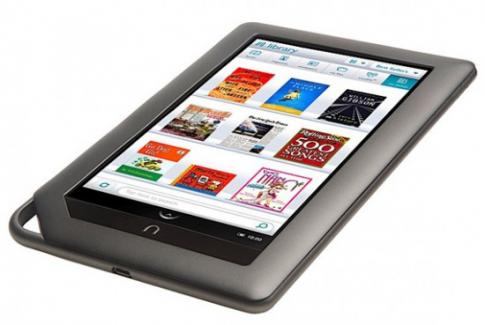
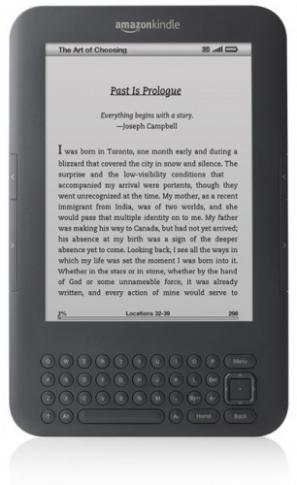
My Comparison of Barnes & Noble’s Nook Color vs. the Amazon Kindle 3G

"I love this book by Duane. I wonder if he's single."

I’ve owned a 3G Kindle for a few months now, and I’ve been pretty happy with it. However, being the tech junkie that I am, when I heard that Barnes & Noble was coming out with a color e-reader, the Nook, I took a quick look at it and then decided it was something I was willing to try out.

I blogged about my problems with buying it in the first place, specifically the dork who worked at Barnes & Noble who told me it could hook up to my computer and transfer my books that way (because I don’t have a wifi connection at home). Turns out he was full of crap, so I have to actually go to a place with wifi in order to download any of the purchases I make. Not a big deal, but a bit annoying when you were planning otherwise.

Right off the start, I have to say that the Nook looks really nice, especially in color. That, however, does bring a couple of deficiencies as well, specifically a very long download time, whereas the Kindle downloads almost instantaneously. Not a huge deal, but somewhat inconvenient. I’m sure if the Kindle had a color version, I’d be going through the same problems, although I have yet to try with a grayscale book on the Nook to see if that’s much faster.

The Nook is a lot heavier than the Kindle. Kind of inconvenient if you’re holding it up for a long time. Never really thought about that until I actually had to do it.

The biggest difference is in choice of content, and I’m really hoping that changes soon. The Kindle has so many choices of things to buy and download. When I bought the Nook, I was looking forward to all sorts of color books and magazines, but their selection is sparse, if almost devoid of content. There are so few magazines who have signed up with the Nook that I find myself really stretching myself to find something I actually want to download. But I wanted to at least see one, so I went with Consumer Reports, which costs $2.40 a month. It’s not bad, but to be honest, I’d never have bought it if it wasn’t the only choice of some content that I wanted to look at. That’s not a good sign when it comes to buying magazines.

My hope is that because the Nook Color is so new that more magazines are right around the corner thinking about signing up. But so far, on the “Coming Soon” list with Barnes & Noble’s Nook content, I don’t see any magazines planning a future launch. If that doesn’t change, the Nook is a doomed product.

So far, there are a few children’s titles that are in color, so if you have kids, it might be a decent purchase, if not a bit expensive. But there just aren’t enough. My hope, again, is that because it is so new that so few publishers have been pushing content to it, but are planning to do so in the future. If not, again, the Nook is doomed.

Price: The price of the Nook Color was $249. With a cover and tax, it cost me about $300. That’s a bit on the high side for me, even though I was willing to pay it just for the convenience of trying it out. Yeah, I’m kind of stupid that way. But if there is not more content released, I just bought a $300 paper weight, and that will piss me off.

The Kindle 3G is $189, and while there is a wifi version for $139, I had to buy the more expensive one because I don’t have wifi at home. For the extra $50, it was worth it. And the amount of content is wonderful. I subscribe to the Washington Post for $14.99 a month (think that’s the price), and it’s definitely worth it to receive the newspaper each and every morning. I had trouble finding this newspaper on the Nook, but others, like the New York Times are on it. Again, the selection was abysmal at best.

Break down:

Barnes & Noble Nook Color (positives)

It’s in color.

There is some unique content (through Barnes & Noble’s PubIt! program, which is a lot like Amazon’s self-publishing for the Kindle).

That’s about it.

This one goes to 11

Nook (negatives)

Heavy

Expensive ($249)

Not a lot of content available for it.

Battery life is pretty low in comparsion to the Kindle (massively low). A charge seems to last about 8-10 hours, according to their documentation. The Kindle lasts all week long and that’s with a lot of use. Again, that might have something to do with the color.

Downloads take a long time.

Kindle (positives)

Fast downloads.

Lots of content. LOTS of content.

Price is $139 (for wifi version) and $189 for (3G/Wifi version)

Lighter than the Nook.

Battery lasts a long time.

"It was the best of times...it was the worst of times...(line?)"

Kindle (negatives)

Not in color. That’s really about it.

******************************************

A final note is that even though I’ve said mostly bad things about the Nook, if they can get past the problem of lack of content, it can become a powerhouse in e-readers. Customers at Barnes & Noble appeared really interested in the product, and a friend of mine keeps talking great about it. But without increased content, especially content that uses color, it will fail horribly.

One area where it could shine, and is almost untouched, is graphic novels. If comic book companies would realize that they now have a way to present their work on an e-reader, and embrace the Nook, both could do a wonderful job in selling this to the most desirable market out there, the teenager/young adult market. But I’m fearing that Barnes & Noble has handled the e-reader in almost the same way Blockbuster handled online movie distribution against Netflix. It is doing too little too late. As long as Barnes & Noble continues to appear to always be one step behind Amazon, they’re going to fail horribly as a book company, which is a whole other issue itself. But it’s in online content and e-readers where the final battle for dominance is going to take place. If someone could go back and tell Blockbuster to embrace the mail market when it didn’t, it could have changed things so much against Netflix. That’s where we are with the e-reader market. Barnes & Noble has a chance to push ahead and dominate. But history tells me that the results will be so much different.

If we choose the wrong e-reader, North Korea wins!