If I Had the Job I Really Wanted

I’ve been giving this a lot of thought lately. Not sure why, but it just keeps coming up in my mind. I wonder what it would take to finally get the job I really want, rather than the job I actually have.

I don’t mean I don’t like my current job. It’s okay. It’s just not really all that exciting. Nor is it really that hard. It’s not even all that interesting. I’m a glorified editor who sometimes creates stuff that’s not really very creative. It requires working for the health care industry for a hospital system, and most of the stuff I do is really designed around rudimentary stuff like registration, insurance and other boring stuff that would cause most people to scream if they had to deal with on a day to day basis. Every now and then I get to contribute on some education for a surgical procedure, but it’s not like anything I contribute really helps the procedure in any way. I just make sure that people can understand it, and that no one in the chain of command (or higher up outside of the chain of command) thinks it was designed by Neanderthals.

But no, I think I’ve figured out the job I’d rather have. I just don’t think I’ll ever be able to get it. It’s not because the job isn’t something I can’t do. I’m highly qualified for it, and if I was able to find an opening, I’d probably be one of their top choices. But I don’t live anywhere near the place where this type of job is accessible, and in order to move to such a place, I’d probably have to be jobless for some time before I actually found something, and that’s never a good situation to be in.

I’m not even talking about a really, highly technical job like law or medicine either. I’m talking about something I do all of the time. As I’m a writer, I realize the job that’s perfect for me. I should be a copy editor, or an editor for a large book company.

I know these jobs are out there, and I know a lot of strong writers got their start in the field by making connections with these types of jobs. I just don’t live anywhere near where such a job might be possible.

This often gets me thinking that I’m living in the wrong place. I even moved back to the wrong place when I came back from South Korea. The San Francisco Bay Area just wasn’t the place for me, even though you’d think those jobs would be available there. I really think I should be living in New York City. I just don’t know how to make that kind of move, as I’m now kind of stuck in West Michigan right now. There’s not a lot of upward mobility when you hit your 40s. You’re kind of stuck with whatever job you can get, and often you have to stick it out, even if it’s not the best match for you.

If there was some way to obtain a job like this from afar (BEFORE moving), that might be the greatest thing ever, but I’ve never been all that successful with trying to hook up a job long distance (even though I did get the current one that way). I just really think that working for a big publishing company as an editor is the one thing I could probably do well. I sure don’t see myself getting a job with the government or anything all that exciting these days.

Oh well.

Government, Intelligence and Why the Future May Not Be So Great

Years ago, I was a counterintelligence agent working for the US Army. It was an interesting career and one I obviously can’t talk too much about, but at one point it ended, I became a civilian and then went on with my life. Shortly after getting out of the service, I applied to the Central Intelligence Agency, was accepted and the day before I was to fly to Washington, D.C. for the final signing, I received a form that I had to fill out before I would be flying out. The paperwork informed me from that point on that EVERYTHING I ever wrote in the future would be subject to having to be cleared by the CIA before it could be published.

Being a writer, I stared at that form and realized there was no way in hell I could sign it. I was writing espionage fiction at that period in my life, and all I could think was that somewhere some paper pusher was going to start deciding what I could and couldn’t write in my novels, mainly because I would have signed a paper allowing someone to do just that. All sorts of fantastical scenarios played in my head to the point that I talked myself out of joining the CIA, turned down the flight and for the next few weeks fielded calls from the recruiting agent who kept explaining I was overreacting. But it was a no deal for me, and that was the end of that chapter in my life.

Fast forward a few decades, and I was actually applying for a position as an agent who conducted background investigations, requiring the same clearance that I had before. As the background investigation was conducted on me, it suddenly stalled when a discovery was made: Some 20 years or so ago, I turned a car back into the dealer because I couldn’t afford to make payments on it. Because I was flat broke back then (and bordering on homeless), I cut ties with that loan agency and they with me. The agent who negotiated taking back the car indicated that that would be the end of it, and we’d part ways amicably. Turns out he lied as the car company charged off the debt and then sold my debt to some credit collector who continued to harass me for many years since that mistake. Welll, 20 years later, during a background investigation, suddenly I was a questionable applicant as I obviously couldn’t be trusted to keep secrets for the government because I had a bad credit item in my past. I was turned down for the clearance.

So, since then, I’ve realized that I’ll probably never be able to work for the government again. I was looking into working for the State Department at one point because my academic research actually yielded an innovative peace process that had been untried before. However, because of this whole clearance thing, I realized that I could never work for the State Department either. To be an administrative assistance in the State Department, you have to be able to qualify for one of the highest clearances. So, that means that in the future, even though I may have discovered a peace process that might yield future success for the world, and especially our country, it won’t go anywhere because the guy who came up with it obviously can’t be trusted.

This got me to thinking that our future is kind of screwed in more ways than one, and not just because we’ll never be able to achieve peace through my academic research but because we are still at the trail end of a major recession, which means a lot of people now have really bad credit. Therefore, when things start to improve, we have a whole new crop of people who can never get security clearances because they have bad credit in their past.

Our credit process has now turned our nation into one that has fewer and fewer qualified people able to serve it, which means that as our choices are limited by those who can maintain a clearance, we lose a lot of intelligent people who may have ran into a problem somewhere in their past. Talk about cutting off the great accomplishments of so many potential people who might want to still serve our nation but can’t mainly because they’re not wanted anymore because of some past incident that was probably not planned or desired.

I remember receiving letters from the clearance agency people indicating that I had to somehow “explain” my credit problem, and all I could think at the time was: “There was this time in my life when I had no money, no job and no hope of ever changing that. What more would you like to know?” Figuring that wouldn’t be good enough for someone in a government job who has probably never experienced that situation, I threw away the letter and figured the government just didn’t want or need me anymore.

I imagine that’s going to be happening a lot in the near future.

The Future of America is in its Past

In case you haven’t noticed it lately, America has stagnated and isn’t really moving forward anymore. I know most people don’t want to face that possibility, and most people reading this (which means anyone aside from my stuffed animals and imaginary friends) will probably just ignore it and hope for the best. Unfortunately, we’re a bit beyond that option, and even though most people will attempt to embrace that plan, we’re kind of screwed if we do.

You see, according to Tyler Cowen’s thesis, The Great Stagnation: How America Ate All the Low-Hanging Fruit of Modern History, Got Sick, and Will (Eventually) Feel Better, we’ve pretty much exhausted all of our free ranges for expansion and exploration, leaving us with pretty much nothing but what we already have. And America was never designed around resting on its laurels; it was designed to expand and develop out, something it can’t do if there’s nowhere else left to go. Now that we’ve entered this inevitable recession, we’re hitting a point where we start to realize that there’s nowhere else for us to go, and that all of those jobs that we expect to come back might just not, and thus, we’re going to have to figure out how to make lemonaide out of already eaten apples. Yeah, I’ve run out of metaphors, similes and allusions. I’m a lot like my country.

Americans live in a system that promises that anyone can do wonders with little as long as that someone is willing to put forth a bit of elbow grease. Unfortunately, that’s kind of a lie, something we’ve been telling each other for generations, even though the lie relied on a lot of extra room to grow that we figured would always be there for expansion. Once that land started running out and the resources as well, we felt we could keep telling the stories long enough to pull a bait and switch, figuring no one would live long enough to really ask any important questions, at least not before we retired and/or died first. Well, we’ve reached the saturation point of that possibility, so now we’re kind of stuck in a future that relies on the lies of the past never being called, like markers in a poker game where we’ve been holding two aces, hoping its the best hand in the game, even though someone else may have had three twos showing all along. Yeah, more bad analogies, metaphors and similies. I’m just full of it today. Or them. Whatever.

Which leaves me with an observation that is probably important because we’re now hitting a point where we’ve already been called on our bluff. Everyone wants to see the hands of the cards we played, and all of the money is already on the table. Man, I’m just going to push this bad analogy all the way to the bank.

So what do we do? We’re in the middle of the unending recession, and we’ve been pushing forward with the belief that it had to end eventually because that’s what recessions tend to do. But if our economy doesn’t really have the power to pull us out of the doldrums, then where do we go from there? What if the recession we’re in happens to be the harbinger of doom that we should have been expecting from the beginning? What if all we have left is that Pandoran conclusion and hope just isn’t enough? Where does a rapidly expanding nation go if there’s no more room within which it can expand?

Part of the solution was the possibility of an untapped area of manifest destiny that offered a never-ending canvas for exploration. By that, I mean the Internet and the ever-expanding territory of a cyber universe. Unfortunately, even that has its limits, as we’ve realized that eventually everything explored in that world has to have some ties to the old world as well. While it might be fascinating to think one could live within a cyberworld, in reality, one still has to maintain a certain existence within normal society, even if to fulfill certain Maslowian needs. Forever expansion means little if someone still has to eat, drink and sleep in normal civilization. The days of Matrix-like exixtence are not yet achievable, so we’re still stuck with having to full basic, simple needs.

Which leaves us with having to find ourselves new frontiers in a walled garden of our own civilizations. The United States could offer endless expansion in the days of praries that went on forever, but once we hit the Pacific Ocean, we started to limit our ability to travel further. Now, everything has been spoken for, so any further expansion comes at a step backwards, a sort of inward despansion, for lack of better word. Much as cell growth is halted and the cells begin to collapse within themselves, feeding off one cell to sustain another, our future is now a tendency to cave in on our progress and trade resources amongst our already established infrastructure as we consolidate and seek to find new frontiers within those already explored. Our future expansion then becomes within, rather than out, mainly because we are without.

If we’re going to survive this change in perspective, we need to realize that we can no longer cannibalize upon outside resources to which we no longer have access. For territory, we must look at that which we already control. For fuel, we can no longer just take from nations that have weak military forces as the world is becoming savvy to that approach and compensating to it as well. We are going to have to consolidate amongst our own people to determine new ways to fuel our movement by either designing new technologies that allow us to use our own resources or to lessen our movement. The simple endothermic physics involved should go without saying, but we’re often not that intelligent when it comes to such matters.

If we’re ever going to figure out our future, we need to look to the rest of the world and see how it has compensated for our future situation already. When Europe ran out of space, it sent colonists to the new world to explore. We are a result of just that. However, when we rebelled and declared ourselves independent, we cut off an avenue of expansion for Europeans, and thus, forced them to realize that their expansion was forever finished, that they would have to learn to live with what they already had. We didn’t think about their reactions or thoughts because we were too busy thinking about how unique we were in comparison to the rest of the world. But in reality, all we were was lucky enough to still have room to grow. Now, we don’t.

So, our future should very much be the same future that was faced by Europeans in the 18th and 19th centuries. When they ran out of space to explore, they consolidated. They began to move back over themselves and create from within. They didn’t just stagnate and disappear as we seem to think will happen to us if we stop expanding and growing. If we’re smart, and sometimes we can be, we would realize that we need to start looking to our future by examining what others like us did in the past. If not, we’re going to continue to try to expand as Germany tried to do in the 1930s, before the rest of the world rose up and stopped them. We might not see ourselves in this light, but if we believe that our expansion is never-ending, and we see ourselves as exceptional to other nations, it’s hard not to see us moving that way. That’s never a good thing.

Unfortunately, I doubt anyone will really listen, and we’ll go that direction regardless of any common sense or rational thinking. American exceptionalism relies on the very nature of believing in irrational outcomes to rational thinking. Think of it as a game theory where the result is an expectation of the highest payoff with the least possible chance of happening, but expecting it nonetheless. That’s kind of where we are today. I’d say more but American Idol is coming on soon, and we all know what’s more important.

Those Rare Movies Where Great Writing Appears Almost from Nowhere

I’ve been kind of consumed by something else lately. I’ve been trying to write Java programming for a personal project of mine. But usually when I get consumed by something like that, every now and then something else manages to hit me out of left field, and I’m left astonished because I never saw it coming. This time around it was a movie I watched on Blue Ray the other day, a movie called Sideways.

I heard the movie was pretty good, so I had bought it on Blue Ray back when Best Buy had it on sale. Of course, buying a movie and then finally seeing it are two different things as my time is usually very limited. But on the weekend, I decided to take a few hours and actually watch the movie I had bought weeks ago.

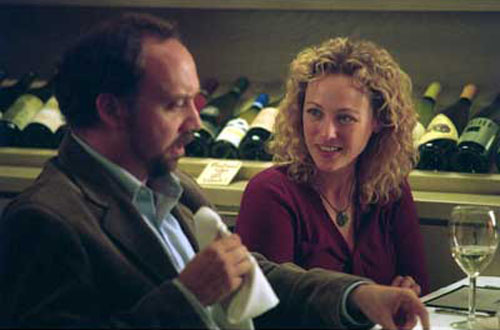
I’m usually not that taken in by movies, as I’ve become a very cynical critic of most movies I see these days. Don’t get me started on the whole remake phenomena that seems to be going on these days. But as I watched Sideways, I realized I was seeing something that was rare. It was not only a very good movie with excellent acting from everyone in it, but the writing was superb. From a writing standpoint, there’s a moment when you’re watching superb writing that you start to realize it, and for me it was pretty deep into the movie because I hadn’t even realized it was affecting me so. But at one point, I even felt the scene hitting me because the writing was so perfect and delivered so well by Paul Giamatti that I was floored by what I was seeing.

The scene was simple, between Giamatti and Virginia Madsen, who were having an intimate conversation about wine. At one point, she asks him why he loves Pinot, and it starts off as such a simple response before it turns into a metaphor for the character Miles, who Giamatti plays. He talks about how the Pinot is a red wine grape that struggles for survival, and unlike the Merlot, he appreciates everything that grape goes through as it can only survive in specific climates and areas but manages to succeed and produce a wonderful tasting wine as a result of its survival. The lines that Giamatti delivers in this scene were so powerful and so poignant that I found myself amazed that this practically appeared from nowhere yet seemed so perfect for the moment that served as its introduction.

When the movie was finished, it made me wish that so many other movies would even attempt a smidgen of the brilliance that existed within this script, but then I realized that so many other movies would shove themselves out of Hollywood’s doors and we’d have to wait for something as wonderful as the writing of that movie again.

Memoir Books Are Being Slowly Replaced by Lazy Writers


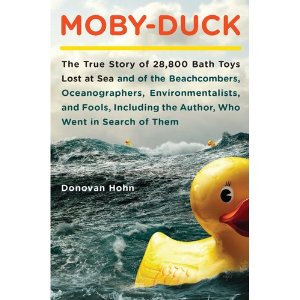
I was in the bookstore the other day looking over the selections of books when I came across a really interesting book of which I had heard nothing so far. But it looked intriguing. It was called Moby-Duck, and as you can see from the picture with this article, it is about a man who goes on a quest to discover what happened to 28,800 bath toys that were lost at sea.

So, why am I talking about this book? Well, think about the story involved in this book. The author, Donovan Hohn, actually put forth a lot of work to find out what happened to these rubber duckies and bath toys after the disappeared. In essence, he went on an epic quest, like the infamous Moby Dick to find what happened to these items. In other words, he went through a hell of a lot of work to get the story that he later transposed to paper so that the rest of us could experience his adventure.

My point is that so few people who write memoirs these days actually go through this amount of work in their adventures before sitting down and writing their “memoirs”. Instead, they suffer one bad relationship, have a bad drinking problem, or do something singularly simple and then try to convince the rest of us that it was actually an epic journey to get from one place to the other. I guess you could say I’m getting a little sick of these kinds of stories that really have no great master journey to them, no odyssey, yet are treated as if they are the epic adventures of a lifetime.

We need more writers out there who are willing to go through a little bit of work to actually come back with the story they need to tell. Instead, we get lazy writers that try to profit off of their innane adventures. And we keep buying this crap because none of us are willing to demand more from the writings that we read.

I felt this way some time ago when I was writing one of my earlier science fiction novels, Thompson’s Bounty, which was about a Coast Guard cutter that gets sent back into the 17th century. When I first started writing the novel, I actually tried to just crank it out without really knowing much about my subject, other than having watched a few old movies about pirates. Then it dawned on me that I wasn’t ready to write the novel. So I contacted the Coast Guard and requested some in person information, which led to going out with a cutter crew for several days over several weekends. It also led to a bunch of long conversations and tours on a Coast Guard base where very knowledgeable people gave me first hand information about the subject I was writing. In the end, I wound up with a book that told the story I wanted to tell instead of one that was peripheral and out of context.

Recently, I’ve been working on a novel that I originally wrote decades ago that takes place in Eastern Europe during the Cold War. Originally, I kind of winged it through the story, but after doing my thesis work on the August Coup in the Soviet Union, I finally had the premise, place and event that really made up the background of the novel I wrote years before. So, I’ve been sitting down and tackling that book from the start, realizing that I now know a lot more information than I first did when I wrote that book back then.

That’s sort of the thing I’m talking about with the kind of reading I’m coming across these days. So much of it can be so much better than it is if authors would take the time to actually do the research that would make their books that much better. I remember a great scene from Billy Crystal’s Throw Mama From the Train when a woman in his creative writing class is describing a submarine story she wrote, and he comments that maybe she should actually know the name of the device she’s describing if she wants to be taken seriously in a story that involves submarines. I take his advice a bit further and say that maybe some time should be given to exploring the lifestyles and events that lead people to the moments that occur in novels so that the reader believes the author is the right person to be writing the story.

We seem to have a lot lazier writers these days with a lot of the stories and memoirs I read, but that doesn’t mean we have to settle for that. We can demand more substance, research and work. We just generally don’t. And we’re the ones who suffer as a result.

The Dilemma of Action or Non-Action in Libya

It probably doesn’t come as much of a surprise to anyone that we’re undergoing a fourth wave of democratiziation in the world right now, with the Middle East being the focus of the current spread. However, what’s not being made much of an issue is timing and how important it is to the success of this particular wave.

When Egypt went through the wave, it was already moved forward enough so that the results were conclusive before any real effort had to be applied. It may not have felt that way if you were living in Egypt, but when it comes to waves of analysis, it was a forward moving mechanism that never had much of a chance of a backlash. Some of the other areas of the Middle East have not been so lucky. Libya happens to be one of these more stubborn areas.

Right now, a skirmish is turning into a full blown civil war in Libya. But you wouldn’t know that if you were in any other place than Libya right now. Qaddafi is fighting for political and physical survival right now, and believe it or not, this is really his make or break time for his future as Libya’s leader.

Which brings me to the influence of outsiders, of which the United States is definitely in this category. Right now, Libya is fighting what could be the start of its civil war, but without assistance from outside, the rebel forces fighting right now might not last much longer. As with many independence movements in the past, western nations now have a chance to influence the future of a nation that is on its way to throwing off the chains of authoritarianism. The important question is: Should the west get involved at all?

Think about that question for a moment because the answer has a lot of huge implications that don’t often get brought up until it is too late. Right now, the United States, and other western governments, can probably make a significant difference by establishing a no-fly zone over Libya and then by escalating to providing assistance to rebel forces, either through supplies and/or through direct action.

But should we? If our sole purpose in life is to develop and establish democracy anywhere we can, then the answer would be pretty obvious. But is that our purpose? Or is our purpose to be completely self-serving, assisting only the interests that directly benefit our nation and its prosperity? Believe it or not, there are many arguments for both sides. In the end, whatever path we choose, it must benefit us in some way, or it’s not a logical path to choose in the first place.

There is a logical argument to not becoming involved at all, even if one is inclined to recognize potential benefits of democracies everywhere. And that’s the axiom that eventually all people are going to have to rise up themselves and throw off the chains of oppressors for themselves. It was the argument used against George W. Bush when he invaded Iraq, claiming a nation-changing strategy was in the best interests of the United States; his detractors claimed that if Iraqis really wanted freedom, it was something they were going to have to pursue themselves, not have handed to them on a silver platter.

The argument is simple. If a people are given a democracy and there is no historical framework for embracing democracy, chances are pretty good that in very little time they will throw it away in the name of security rather than freedom, kind of a reverse Benjamin Franklin-ish claim. However, if they are already embracing the foundations of what leads towards democracy, then the theory is that they don’t need us to push them in that direction because like entropy, they’re going to pursue it themselves as a natural process anyway. It just might take them a little longer than we would have wanted had we pursued the strategy ourselves.

So, using this theory, we would have to argue that the future for Libya could be democracy if its people are willing to make the sacrifices necessary to bring themselves to that situation. If Qaddafi succeeds in suppressing it, then they weren’t ready for it in the first place. But that doesn’t mean that they won’t eventually pursue and receive it. They just weren’t ready at this time.

That’s all fine and dandy if you’re talking theoretics and don’t feel people deserve freedom because not enough of them are capable of achieving it yet. If the opposite approach is valid, meaning that people deserve freedom regardless of the forced servitude status they are currently in, then all means necessary should be used to pursue that state of democracy. This secondary argument points out that slavery is not a positive circumstance for any people just because the dominators have more guns and means to keep their slaves in check. I don’t think anyone would argue that forced slavery is a “good” that any wise people should be living within, and that any means necessary should be enforced to make sure that no one is ever forced into circumstances like that, especially if there is a larger, democratic power out there willing to enforce the idea that freedom is a right for all.

So, the question really narrows down to where we stand on this particular issue. Are we at a point in our own growth that we recognize the inalienable right of all people to live in a society where they are free to choose, or are we still of an older mentality, where we support only what benefits us personally and pretty much cast everyone else out to the idea of every man for himself, until that person can achieve his own better means through personal sacrifice?

I don’t really have the answer to that, but I can point out one thing that is most significant and crucial to the conversation. If we’re going to do something, we need to do it now, because if we wait any longer, the window of freedom will close, and then it all falls back to being talking points and theory.

But what do I know? Really.

E-books Are Pricing Themselves Out of Their Own Market

I don’t know if you’ve noticed this but e-books are becoming a lot more expensive than they were a few months ago. An example is Stieg Larrson’s The Girl With the Dragon Tattoo. Several months ago, it was selling for $5.00. So was its sequel, The Girl Who Played With Fire. Both of them are now priced at $7.99. In those last few months, nothing was added to the books that caused them to be worth more money. As a matter of fact, using the usual models of books, the prices should have gone further down, not up.

At the same time, look at some of the bestselling books also, like Decison Points by George W. Bush. It was $9.99. Now, it’s $14.99. That’s ridiculous. But looking at all books, ALL of the prices are going up.

Basically, Kindle books and e-books in general, were seen as economical and a great deal. Now, they’re not worth the price. They’re really not.

Yes, I own a Kindle, but I think I’m going to stop buying Kindle books for the near future and buy all of my books in hardcover and paperback. The e-book market is pricing itself out of existence.

I’m not sure that’s a great idea, but I guess it’s their choice to make.

The Illustrious iPad 2

Yesterday, Apple did its big announcement of the Ipad 2. Basically, after all is said and done, it’s the original iPad with a few extra bells and whistles. Or the same bells and whistles, but they made the bells chime longer and the whistles a little louder. What was probably more interesting was the fact that Apple is so paranoid about the people that will be replacing Steve Jobs when he retires/dies that they brought Jobs out of sick leave to make his usual announcement. This does not bode well for the future of Apple if they can’t even let the man rest long enough and let his successors actually try to succeed.

Having said all of that, I thought I would then address the Ipad 2 itself. Without getting into the details of the device, like it has the whole camera thing, supposedly a better screen (that might not be immediately available) and, well, nothing else that makes me want to go out and buy one. What is significant about the Ipad itself is that nothing announced so far has me anxious to want to go out and buy one. Yeah, I’ve been in Best Buy a few times where I’ve played with one to see how cool it is, but after I’m done playing with it, I realize that it doesn’t do anything that I don’t already have covered. And unlike my iPhone, it doesn’t combine enough OTHER things that I might want to add it to my toys to replace stuff that has become too encompassing.

And that is definitely the problem of the Ipad. There’s nothing about it that causes me to think it’s worth buying an actual tablet computer. And that’s the problem that Apple is facing in the long haul. Right now, it owns the tablet market, but it is still trying to build a “need” rather than a curiosity for that market. In olden days, when every house has an oven, there was this new device called the microwave oven. And it took a lot of convincing to “convince” housewives that they needed the gadget because an oven was capable of doing everything the new device could do. However, a media campaign that could have riveled the attack at D-Day managed to convince the average American that it was now a need, not a curiosity, or something for the rich only.

That is what the tablet still has to do, and it’s not succeeding. Sure, Apple is selling a lot, but Apple sells a lot of a lot of things that don’t become household givens. Until tablet companies do something that convinces the average person, like me, that we should want and need one of these gadgets, most of us are going to be sitting on the sidelines laughing at the people who bought one but still have no major need for one.

That is the press conference that Apple needs to succeed at. So far, they haven’t done it. As a matter of fact, Apple has recently done everything possible to destroy its own little niche market by trying to own that market completely through draconian rules and charges that benefit Apple only, cutting out other companies from investing in the Apple dynasty. As long as that keeps happening, you’re going to have a lot of people thinking, well maybe I don’t need the Apple one, so they’ll look at the other companies and then suddenly realize they don’t need a tablet at all. So far, the tablet hasn’t been the success that spin doctors really want you to think it is. The majority of Americans haven’t bought into it. A lot of people have, but a lot of people doesn’t translate to market saturation or even market itemization. It’s a gimmick right now, and as long as it remains in that category, it’s going to stay a gimmick.

Now, I know there are people reading this who are thinking, “hey, I bought one and I love it.” That’s fine, but you’re the outliers right now who Apple and tablet companies want to use to convince everyone else that their product is relevant. So, you need to start doing that and earning your pay you’re not receiving from a company that wants to get as much money out of you as possible by limiting your options in getting the best bang from your product. So do their dirty work for them. That’s kind of how the game works. For them. Be the tool they need you to be.

The Act of Writing a Screenplay

I’ve been thinking about writing screenplays for awhile now. So, I saved up all of the money in my piggy bank and bought myself a copy of Final Draft Version 8, a screenwriting software program. Well, it was kind of difficult to figure out how to make sense of it, but I’ve been playing around with it for a few weeks now, and this evening I decided to actually start work on a screenplay.

Well, kind of. I actually realized I needed to figure out how to write a screenplay before I actually start writing a new story. In other words, had to get past the how to before I got to the doing it stage. So, what I did was go back to one of my stories already completed and then work backwards. You see, some years back, I wrote a couple of movies in “fake” screenplay form and then choreographed a movie, which I then put together in The Movies software. I did a whole bunch of them. But I decided to go back to my favorite one and then rewrite the story from a screenplay perspective, rather than the seat of the pants version I did before.

And I’m discovering that writing a screenplay is a whole different animal to type of writing I normally do. But it’s a whole lot of fun. It’s a completely different process of writing that you never really figure on until you sit down and actually try to do it.

The story I’m working on is called Buried Memories, a romantic movie that is more my typical style of writing (meaning it’s not the usual kind of story you’re going to find anywhere else). As I’m taking some liberties with Buried Memories 2.0, it’s going to be a bit different and a lot more robust than the original version. Either way, it’s something new for me to play around with, and after I finish with this project, I’ll probably start writing a screenplay from scratch.

Anyway, if you’re interested in the movie that was originally done for this story, I’m going to try to embed it into this post for you to experience.

Buried Memories

Is it Possible for a Freelance Writer to Make it Today?

This is one of those questions that has been going through my head lately. I’m one of those enigmas of writers who has written a lot of stuff, yet never really managed to break into a writing career. At one point, I had a good start, and then I just stopped, giving up writing, before realizing what a mistake I made. And then I realized I wanted it back more than anything. But I did it at the strangest time, when the Internet was just coming around, and suddenly the old way of doing things was no longer the way things were done. Now, I’m an overwritten writer who has pretty much nothing of a writing career, realizing that I’m probably never going to have one.

So, like most struggling writers, I tried to do the whole e-book thing, and I’m averaging about $25 every three months of sales. Not exactly the illustrious career to get one away from one’s normal day job. And when one has all desires to be a full-time writer, that gets extremely frustrating.

So I find myself wondering if there’s really a future for an unpublished writer who doesn’t just get lucky or happen to be in the right writing school at the right time. Again, being lucky.

I put my book of poetry on Amazon, and it’s done absolutely no sales. I’m not a salesperson, so I really don’t have the ability to figure out what one has to do to interest anyone in buying one’s writing. So the only other option is to just release all of my writing for free, which then still leaves me with the realization that that probably doesn’t make a difference either. People are less willing to read your stuff for free than they are if they actually went to buy it. Sadly, that’s kind of true. They find it has less value if you tried to give it away, so even if it was Hemingway trying to get bullfighters to read his latest book, it wouldn’t make a difference because the stigma is already there because of the whole free thing.

Which leaves me with the wonder if I should just give it all up. My career is going nowhere, and I honestly don’t anticipate it going anywhere in the near future. The only reason I haven’t given it up already is because I really don’t have anything else in the wings to replace it. My job isn’t going to make me happy. Watching TV isn’t going to give me any satisfaction in life. I don’t date and probably couldn’t recognize a woman if I ever saw one (as it’s been so long). Which leaves me with something I’ve been talking about for some time now. Nothing. Writing was pretty much it. And without it, I’m not sure I really have a reason for sticking around anymore. I mean, what’s the point?